How to Prevent Fuel Theft in Your Truck Fleet

Fuel theft and fraud rates in the road freight industry continue to be a concern. As a fleet manager, you will never know what drivers get up to while making deliveries. The only way to be sure is by bringing in technology that will give you more insight into what’s happening in and outside your vehicle, specifically, your fuel tank.

Today we look at anti-fuel theft tactics that you can apply to your fleet.

In this article, you will:

  • See how fuel theft impacts the trucking industry
  • Learn the signs of fuel theft
  • Find out how you can prevent fuel theft
  • Know the different forms of fuel theft and fraud
  • Discover Cartrack’s fuel monitoring solutions

The impact of fuel theft on road freight transport

Earlier this year, an article by BusinessTech revealed that the price of unleaded 93 petrol increased by an astounding 119% over the last four years, similarly the same for unleaded 95 petrol and diesel. This interesting revelation might seem shocking in numbers but if we put more thought into it, we’ve all felt the impact of fuel price hikes. So where does that leave the average truck fleet manager? Under immense pressure to save as much as they can on fuel so they can make a profit while gaining a competitive advantage, that’s where. The increase in the value of fuel is what feeds into the rise in fuel theft and fraud.

Fuel is one of the biggest and most important fleet operational costs, without fuel there’s no business, and the more you pay for it, the less profit you make. With that said, fuel theft is a growing concern for many South African fleet businesses. It is a criminal offence that many don’t realise. Fleet managers need to look into why the fuel goes missing in the first place, how it gets emptied, and how to prevent it.

Fuel theft warning signs

  • Frequent refuelling
    ‍
  • Sudden drops in fuel levels
    ‍
  • Discrepancies on receipts
    ‍
  • Fuel charge at an odd location

How to put an end to and prevent trucking fuel theft

Now let’s look at how you can prevent fuel theft in your trucking fleet:

  • Invest in a smart fuel monitoring system
    The first step to combating any fuel theft is a fuel monitoring system. A fuel monitoring system helps you manage fuel cards, keep track of consumption, use GPS technology for time and location accuracy, and generate detailed reports. If there’s a sudden drop, transactions don’t make sense or drivers are not refuelling at a set location, you will be the first to know.
    ‍
  • Get the best fuel card
    A smart fuel card is a must-have as it’s the quickest way to trace transactions but make sure you pick a provider with enhanced security features. Do your research and compare the benefits of each provider. Look for cards with PIN protections, transaction limits and real-time monitoring. A good fuel card also offers discounts and has a variety of participating fuel stations nationwide.
  • Set daily spending limits and require pins
    In addition to the above mentioned, know how many refills a driver will need per trip and how much each refill should cost, then set daily spending limits and make sure each driver has their own pin.
  • Have regular audits
    Conduct periodic checks of fuel recipes, mileage logs, and maintenance records so you can identify any discrepancies, patterns or trends. This can be done by comparing transactions with fuel consumption data. The fuel transactions should be checked by two people so that one person can pick up an error that the other might have missed. Get external auditors where possible.
  • Anti-fuel theft device
    Invest in fuel anti-theft devices such as fuel cap locks, fuel tank alarms and anti-siphon devices. These will prevent thieves from physically accessing the fuel in the tank.
  • Secure your parking 
    Install CCTV and security lighting in your parking area. The area where the trucks park after a shift should have good lighting and surveillance, preferably motion-detecting lights. The gates should always be locked as well.
  • Defensive Parking
    All trucks must be strategically parked in a way that blocks access to fuel tanks. Use other vehicles or solid structures like a wall, to block access to fuel tanks.
    ‍
  • Train your drivers
    Drivers should know how to handle fuel cards and be aware of the scams going around so they can always be on the lookout for suspicious people. Training drivers also enforces accountability.

Know the different kinds of fuel theft and fraud

Here are a few examples of how thieves trick their way into getting your fuel:

  • Skimming and cloning: A card skimmer is a device that is placed on top of a card reader to get data on a fuel card. The card details are then used to duplicate the card, and fill up other vehicles or make purchases at the fuel station. All the charges will go to the driver.
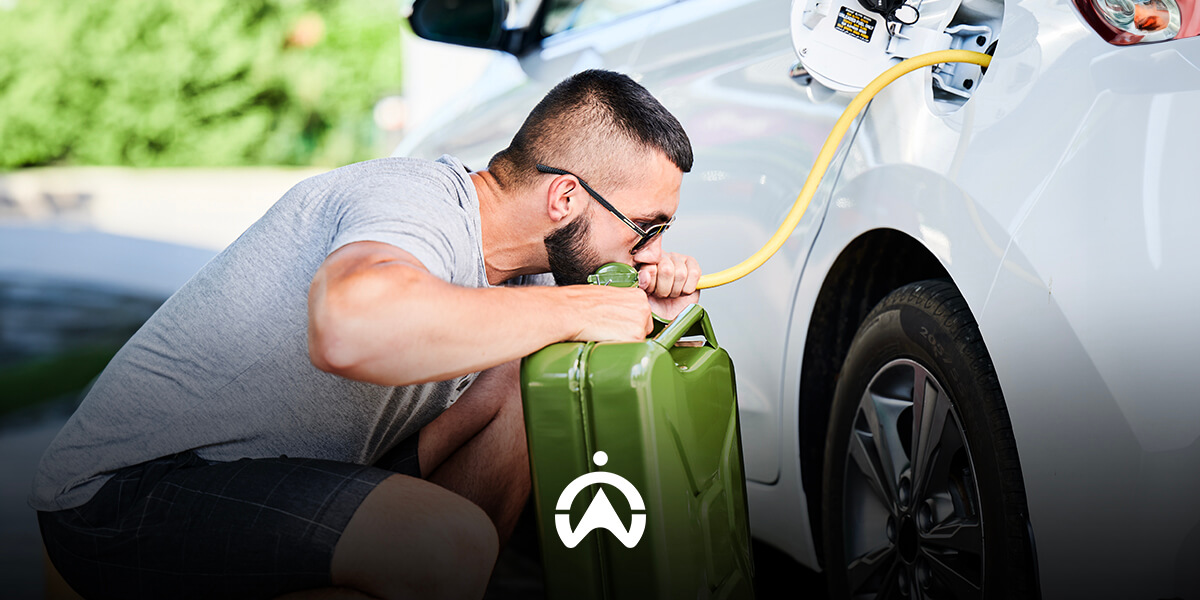
  • Siphoning: Some thieves use their mouth and a hose or an automatic pump to drain fuel out of the tank and place it into a container. The fuel is then transferred from the container to another vehicle or it is sold.
  • Multiple pump transactions: Some drivers collaborate with fuel station employees to merge numerous pump charges into one transaction on the fuel card. The additional pumps’ payments are then shared among them in cash.
  • Neutral driving: This might be a shocker, but many truck drivers drive with the transmission on neutral to manipulate fuel usage by showing lower consumption through mileage. This form of fuel theft also increases vehicle wear and tear and can cause accidents.
  • Unrecorded personal trips: In some instances, drivers manipulate fuel logs or use company fuel cards for personal vehicles.
  • Odometer tampering: This is when drivers reduce, increase, or pause the mileage reading on the vehicle. Some old trucks have a simple system that can be easily manipulated, the modern-day trucks also have some exceptions in their onboard system that allow odometer tampering.

Digitise fuel validations with Cartrack’s fuel management system

Here are some of the features of our all-in-one fuel management system:

  • GPS tracking
    The first step to combating theft for your truck fleet is knowing where your trucks are at all times. Cartrack’s GPS tracking technology gives you full visibility of your fleet so you can notice any deviations that might be taking more of your fuel.
  • MiFleet
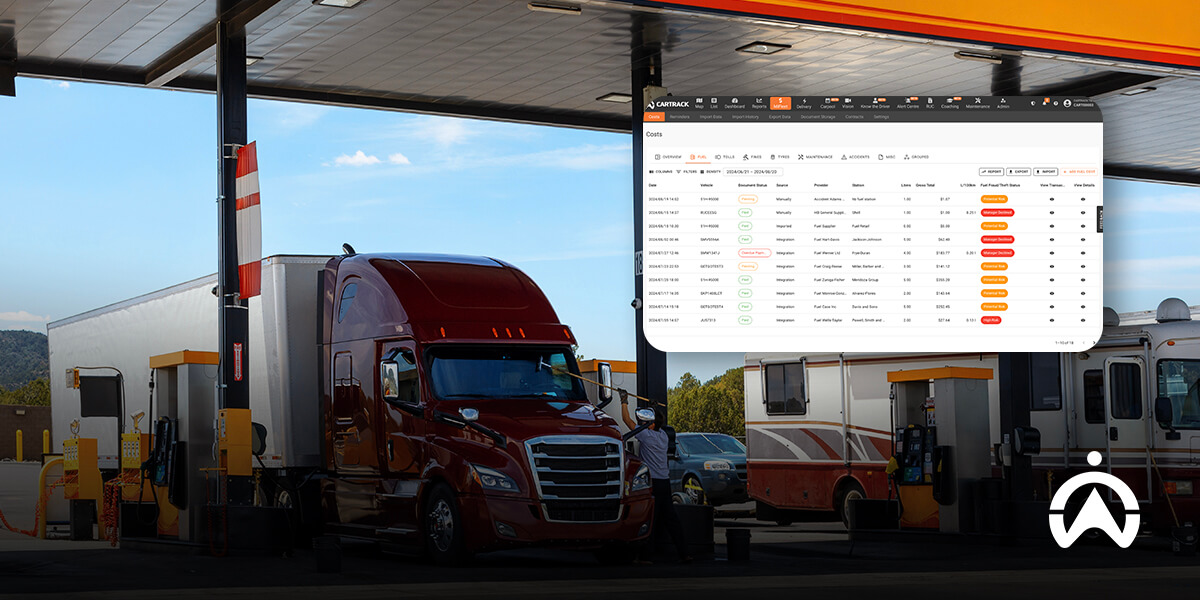
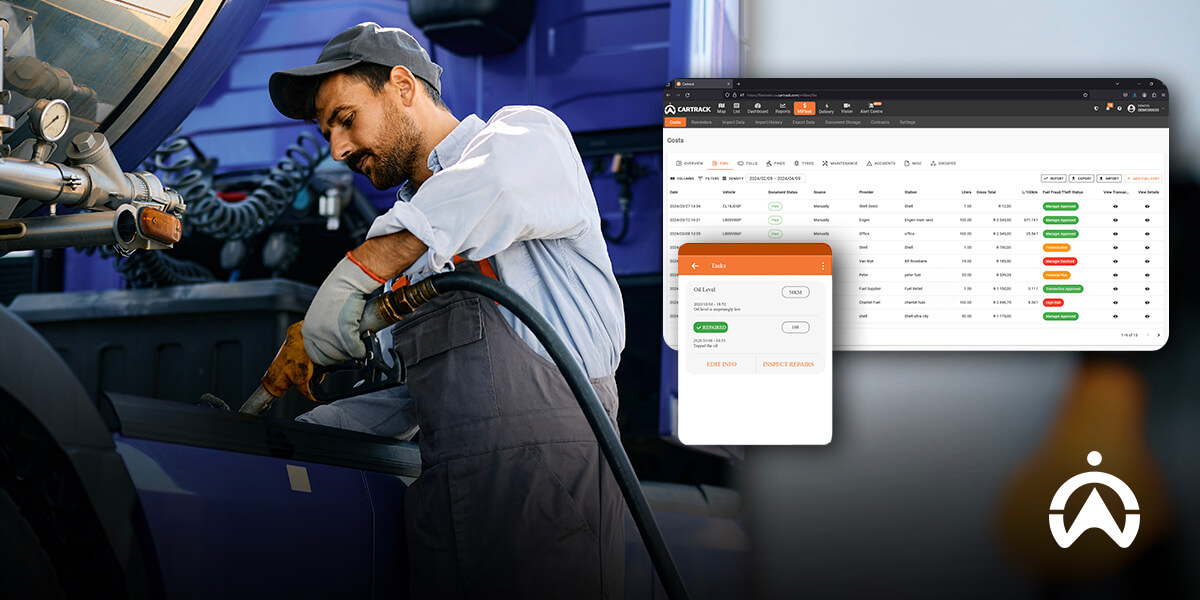
    Let our cost management platform automatically review all your fuel transactions. Mifleet eliminates the manual admin that could take weeks to process. It matches fuel receipts with vehicle telemetry data such as location, litres and tank capacity. You’ll get alerts of any suspicious activity, so you can further investigate and take action.
  • Geofence
    Create a virtual fence around your preferred fuelling stations so you can get alerts when your trucks enter or leave the stations. This ensures that your drivers only refuel at credible and cost-effective stations, that align with the set routes.
  • Fuel probes
    Install a fuel probe, this is an electronic piece of hardware that is placed into your trucks’ fuel tanks and allows the monitoring of fuel levels in real time. It ensures high accuracy in readings and if there are any sudden drops, which could indicate theft, you’ll get an alert and be the first to know.
  • Driver ID tags
    Instantly know which driver was using which truck through our advanced driver identification tags. This enforces driver accountability, meaning should there be any suspensions of fuel theft, drivers will know that they will be held responsible.
  • Fuel reports
    Access detailed reports of refuelling events such as date, time, location and amount. Get fuel report graphs and fuel effect data which compares target ratings against vehicle category.
Choose the best fuel management software — Cartrack Malawi

Our fuel management solution helps you easily detect fuel theft and maintain good fuel consumption levels by giving you accurate information about where the leaks come from. Contact us today to stop the theft, and put money back into your pockets.

Have a look at our frequently asked questions for more fuel-related tips

How to stop fuel theft from trucks? 

Invest in fuel monitoring software and install fuel anti-theft devices such as tank alarms, fuel caps and an anti-siphoning device. ‍

‍
How do you manage fuel for the fleet?
Implement a fuel management system and incorporate telematics, prioritise vehicle maintenance, use fuel cards and keep an eye on transactions, monitor driver behaviour, and lastly train your drivers on fuel-efficient driving habits. ‍

‍
How to prevent gas stealing?
Ensure your vehicle is parked in a secure place and that the fuel cap is locked at all times. 

How do I monitor fleet fuel consumption? 

Invest in GPS telematics as fuel level sensors such as fuel probes. These will give you accurate readings and well as detailed insight. Additionally, telematics also monitors overall vehicle health and driver behaviour which are also important when looking to minimise fuel expenses.

For more details, contact us today.
Tyre Pressure and Tread: The Big Impact It Has On Your Fuel Economy

Whether it’s your fleet or personal vehicle, tyre pressure and tread play a silent but massive role in fuel economy, which is directly linked to fuel consumption and, as a result, fuel costs. 

Tyre pressure is often overlooked—that is, until you are lost and stuck in the middle of nowhere, wondering why your fleet or car used a ridiculous amount of fuel over a relatively short distance, not realising that it may have something to do with your tyre pressure, your tread, or both.

In this article, you will:

  • Explore the definitions of fuel economy, tyre pressure and tread
  • Discover why South Africans should be concerned about fuel economy
  • Understand the effects of overinflated and underinflated tyres on fuel economy
  • Find out the impact of tyre tread and pressure on fuel economy
  • Learn how to skyrocket your fuel economy with Cartrack’s innovative solutions

Navigating fuel economy, tyre pressure and tread

According to Forbes, tyre tread contributes to almost a third of a vehicle’s fuel economy.

Learn to save on fuel costs by educating yourself on fuel economy, tyre pressure, and tread below:

Navigating fuel economy

  • Defining fuel economy: Fuel economy is the distance a vehicle can reach while running on a fixed amount of fuel. You calculate it by dividing the distance you travelled in kilometres by the number of litres in the vehicle. In other words, kilometres per litre (km/l). Many descriptions of this concept rely on the USA’s metric, which translates to mpg or miles per gallon.
    ‍
  • Exploring the calculation: The calculation can become more complex. The distance your vehicle or fleet may be able to travel can be influenced by a lot of factors, including:
    • Car size
      ‍
    • Style of driving
      ‍
    • Cruise control usage
      ‍
    • Cargo weight
      ‍
    • Terrain

The difference between fuel economy and fuel efficiency

It is essential to define fuel efficiency, as many assume fuel efficiency and fuel economy are the same thing.

Fuel economy is specific to distance, and while fuel efficiency is calculated the same way, this concept is simply used to describe how to use fuel, in general, to ensure that as little as possible is used.

Lori Baker’s article for MIT School Of Engineering, “What’s the difference between fuel efficiency and fuel economy” clarifies this difference by explaining that fuel economy means miles per gallon.  On the other hand, fuel efficiency is instead used to describe how efficiently fuel is used.

Navigating tyre pressure and tread

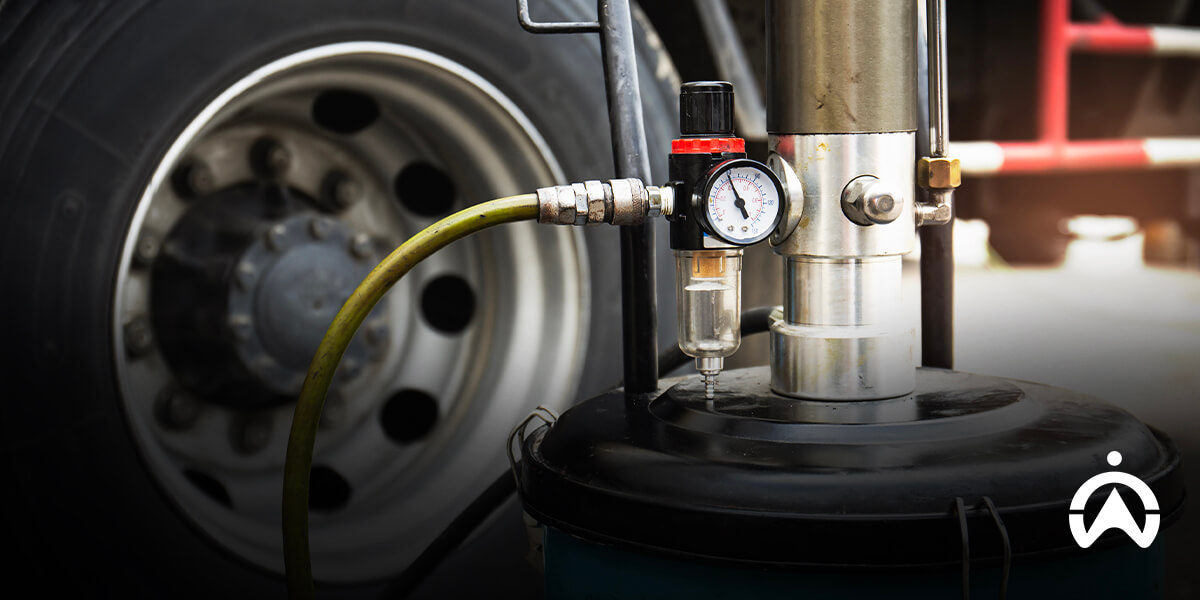
  • Defining tyre pressure: Tyre pressure is the volume of air pumped into a tyre. It helps stabilise vehicles by ensuring that each tyre has the correct pressure.
    ‍
  • Defining tyre tread: Tyre treads are the grooves or patterns on tyre exteriors. These treads are designed to ensure vehicles have a solid grip on the road’s surface.

Why everyday South Africans and businesses should pay attention to fuel economy

Petrol prices have caused everyday South Africans and businesses’ fleet management departments to reach much too deep into their pockets, calling for innovative ways to handle fuel consumption. Riding off the Volvo numbers above, it is clear that improving fuel economy is an effective way to reduce fuel costs, whether you are a fleet manager or an everyday car owner.

Find out more about the cost benefits and other advantages of improving your fuel economy below:

Cost benefits expanded

  • Fuel costs: As mentioned, improving your fuel economy will reduce fuel costs, as less fuel will be used over certain distances. This also means you can budget to drive longer distances with the same amount of fuel you were using before you improved your fuel economy.
    ‍
  • Maintenance costs: If you travel the same distance with less fuel, there will likely be less wear and tear. This wearing away prevents engine maintenance and the associated costs, as well as unnecessary downtime.
    ‍
  • Geographical expansion: Regarding business, if fleet managers choose to use the extra fuel that would have been used at a previously outlined distance, fleet delivery could be geographically expanded to reach a broader customer base. This expansion means fleet managers can obtain more clients and sell more products, improving business expansion overall.
    ‍
  • Net profit and disposable income: Fleet controllers can also simply increase their net profit, and individuals could use the extra money to pay for basic resources or generate disposable income.

Making and saving money while saving the environment

Less fuel consumption means less smoke will be released from the exhaust—this smoke contains harmful gases that negatively impact the environment, such as carbon dioxide, nitrogen oxide and carbon monoxide.

Beyond the positive environmental impact, this can lead to good standing with current or new customers, partners, or other businesses.

Increasing fleet productivity

Using less fuel over a certain distance allows fleet drivers to stop less often to refuel. Fewer stops save time, make deliveries more efficient and improve fleet productivity.

Tyre pressure and tread and its impact on fuel economy

Tyre pressure impacts many parts of your driving experience, from smooth rides to flat tyres. It impacts the safety of the driver and all the passengers or goods in the vehicle. Overall, vehicle performance worsens if tyres are overinflated or underinflated, and high fuel economy is just one of the negative consequences.

Increased Fuel Use

Increased fuel consumption means that a vehicle will travel less distance than it could have if there had been less fuel consumption, directly influencing fuel economy. Both overinflated and underinflated tyres can lead to a climb in fuel consumption.

Underinflated tyres

  •  Expanding the tyre’s contact with the road increases rolling resistance, boosting fuel consumption as the engine works harder. According to Forbes, “Rolling resistance accounts for around 9% of a truck’s fuel consumption.”
    ‍
  •  Impact on fleet management: Three researchers applied this fact to fleets in a 2019 journal article that investigated the influence of tyre pressure on fuel consumption in trucks.  According to their research, tyre pressure is a core factor affecting vehicle efficiency, rolling resistance and fuel consumption.
    ‍
  • Tyre bending: Lower tyre pressure will also increase rolling resistance, leading to tyre bending.

Overinflated tyres 

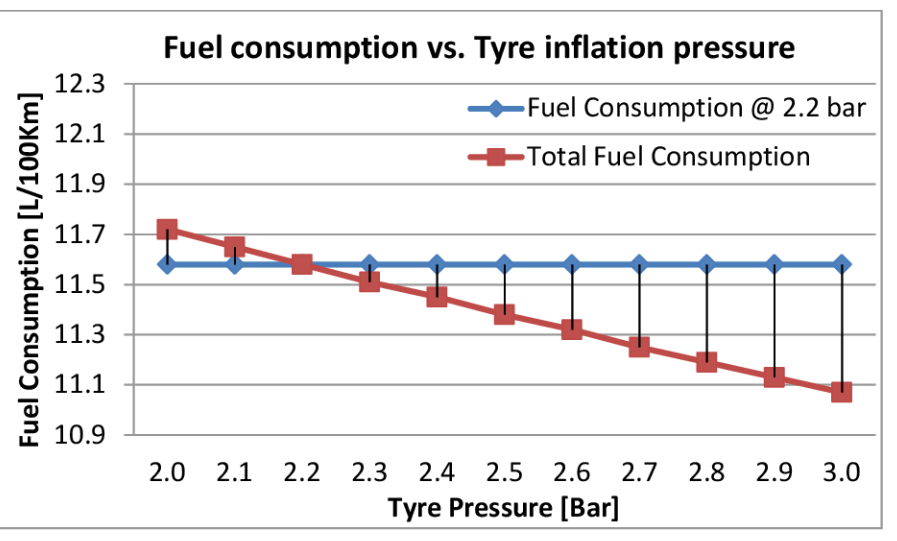
There is a misconception that overinflated tyres can improve fuel economy. While this can be true to a slight extent, the more overinflated the tyre and the longer the overinflation continues, the more opposing results can occur. The relationship between overinflated tyres and fuel consumption is more complex.

The graph below shows the assumption that fuel consumption falls with more inflation. As the tyre inflates to 3.0 bars of tyre pressure (represented by the red line), fuel consumption decreases to 10.9 at 1/100 or 1 litre per kilometre (represented by the blue line). These numbers are all accurate, but there is more to it.


While tyre overinflation may not be directly related to elevated fuel consumption, it causes wear and tear over time, which increases rolling resistance. This results in a rise in fuel consumption, bringing about a swell in fuel economy.

Tyre tread and its impact on fuel economy

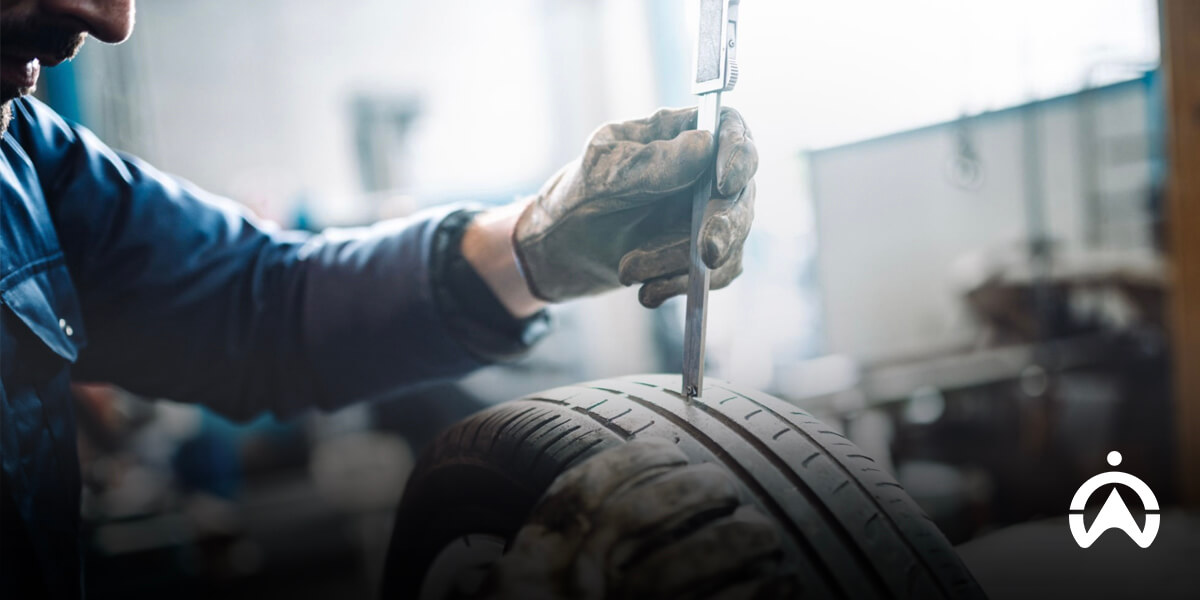
Tyre tread and patterns also affect fuel economy, sometimes overlapping with tyre pressure. For example, when overinflated tyres wear and tear, the tyre tread wears out, especially in the centre, and so, once again, rolling resistance climbs.

Discover more about tyre tread, patterns and their relation to fuel economy:

  • Increased tyre grip: The greater the tread depth, the more grip the vehicle has, leading to better fuel economy and vice versa. This fuel economy boost is because the car won’t need as much fuel for movement.
    ‍
  • Deforming tyres: Tread patterns, which help vehicle traction, significantly influence fuel consumption, either negatively or positively, based on the vehicle type and context of where and what condition the vehicle or fleet is driving in. Some of these examples include:
    • ‍Rib patterns: Rib patterns are overwhelmingly recommended because they have lower resistance and are parallel to the tyres on the road.
      ‍
    • ‍Standard energy tyres: Standard energy tyres are not recommended for low fuel economy in private vehicles, as their patterns are not designed to improve fuel efficiency but create more rolling resistance. However, these tyres are still used in most vehicles. According to a Tyre World Medium article, they are manufactured for the general population to provide durability and comfort.
      ‍
    •  Aggressive tread patterns: It is not recommended to employ aggressive tread patterns on highways, as they can heighten rolling resistance. These tread patterns are constructed for off-road use.

Skyrocket your fuel economy with Cartrack’s innovative solutions

Cartrack’s innovative solutions will help you prevent and detect a possible increase in fuel economy. Explore more below:

  • Automated Preventative Maintenance: With our automated preventative maintenance solution, fleet managers can easily track any maintenance needs and tend to them before they become a more significant, more expensive, and time-consuming issue, with more in-depth fixes and longer downtime. These solutions include real-time alerts so you can know precisely when it’s time to put more air in or replace tyres, making sure that there is no delay in ensuring that your fuel economy is at a healthy level.
    ‍
  • Fuel Monitoring: Cartrack’s fuel consumption monitoring can help you track your fleet’s fuel usage and note any spikes in usage. While this does not necessarily mean that the tyres are the issue, it can point to other problems affecting your fuel economy, including your tyres, and so can help you address them ahead of time.
    ‍
  • Driver behaviour: Using our driver behaviour solutions, such as driver scorecards and driver behaviour reports, fleet managers can monitor whether drivers engage in behaviours that potentially damage their tyres.
    ‍
  • Driver scorecards: Driver scorecards allow you to observe your drivers for harsh behaviours and reward them with high ratings if they behave well. Some of these harsh behaviours, such as speeding or harsh acceleration, can damage tyres. In other words, incentivising drivers to drive safely, whether through high ratings or motivating them through other means, such as bonuses or raises, can help you avoid damaging your fleet’s tyres and negatively impacting your fuel economy.
    ‍
  • Driver behaviour reports: Driver behaviour reports provide in-depth insight into your driver’s habits, such as keeping track of all harsh behaviours for every driver over time. Once again, this can help you spot behaviours damaging your fleets’ tyres. You can also request instant trip reports to help combat harsh behaviours in real time.
    ‍
  • Car tyre deals: If you are not running a fleet and are looking to improve your fuel economy as a personal-use driver, Cartrack experts can negotiate car tyre deals for you, ensuring you get prime tyres for fuel economy. 

Answering your all-consuming fuel economy questions (FAQs)

Q: How do tyres reduce fuel consumption? 

A: As mentioned, tread patterns can reduce fuel consumption depending on various factors, such as tyre pressure, whether the pressure is set correctly, and whether it is over- or underinflated.

In addition, wheel alignment, size, and weight can reduce fuel consumption, among many other factors.

Wheel alignment can reduce or increase fuel consumption depending on whether they’re misaligned. Misaligned wheels drag, so they use more fuel, requiring the engine to work harder.

Adequately aligned wheels, however, have the opposite effect. There won’t be as much drag, the engine will be less stressed, and fuel consumption will be lower.

Tyre weight affects rolling resistance in that the lighter the tyre, the less rolling resistance there is, and vice versa, decreasing and increasing fuel consumption subsequently.

Q: What is the best tyre pressure?

A: Tyre pressure is measured in bars or PSI (pounds per square inch). While every vehicle has required tyre pressure, the generally recommended and accepted pressure measurement is between 28 and 36 PSI, which converts to approximately 1.9 to 2.5 bars.

Q: How can I choose the right tyres for better fuel economy?

A: Investing in energy-efficient tyres, also known as “eco-tyres” or “green tyres,” is one great way to choose the right tyres for better fuel economy. These tyres are low-resistant. While they may be high-priced, the costs you will save in the long run will outweigh the initial expenses.

Q: How can I improve my fuel economy?

A: There are many ways you can improve fuel economy, including ensuring that your tyre pressure is at the correct PSI or bar and getting them pumped when necessary is one way to do so. Another is looking after and choosing the right tyres and ensuring your wheel alignment is in order.

Regular maintenance and no speeding, rapid acceleration, or coasting are also recommended. Try to maintain a consistent speed or move into cruise control when suitable. Remove any extra weight or unnecessary cargo from your vehicle or fleet.

Get a grip on your fleet by investing in Cartrack’s fleet management solutions

At Cartrack Malawi, we aim to simplify and automate your fleet management experience with various solutions such as real-time tracking, increasing delivery efficiency and route optimisation.

Contact us today to increase your fleet’s grip on the road and your profits.

How To Reduce Fuel Consumption

Fuel usually accounts for the majority of any fleet’s budget, and if it’s not properly managed, the costs can balloon, potentially ruining your budgeting abilities or even, in a worst-case scenario, running your business down. The question is, how do you keep it on track in a way that doesn’t take too much of your time so you don’t exceed the budget?

Let’s look at what affects fuel consumption, what changes you can implement, and how Cartrack Malawi can help you.

In this article, you will:

  • Learn what fuel consumption is
  • Understand what affects fuel consumption
  • See which driving habits decrease fuel efficiency
  • Find out how Cartrack Malawi simplifies fuel monitoring
  • Get more answers from our FAQ section

A quick background on fuel consumption

Fuel consumption refers to a measurement of how much fuel a vehicle uses over time. It calculates how many kilometres the car can travel for every litre of fuel used. A study done by Energy Education revealed that not all the fuel consumed is being used to power the vehicle directly; about 3-11% of the fuel being consumed is used to overcome rolling resistance. This is why it is important to implement driving techniques to reduce fuel consumption.

What affects fuel consumption?

Looking at vehicle parts first, here are some of the things that will cause more money to be spent on fuel:

  • Engine size
    We all know that the larger the engine, the more fuel it requires; why so? Well, that’s because larger engines burn more fuel and air than smaller ones under the same driving conditions, and for an engine to run smoothly, there needs to be a balance of fuel and air mixing. Carburettors were traditionally responsible for mixing and sending it to the engine cylinders for ignition and powering the vehicle, but nowadays, vehicles have fuel injectors, which serve the same purpose but are more precise and have fewer emissions.
  • Tyre pressure and wheel alignment
    There is always friction between the tyres and the road surface. The bumpier the road, the more friction, and this is called rolling resistance. An underinflated tyre creates more resistance and therefore requires more energy, and means what? More fuel! The National Highway Traffic Safety Administration (NHTSA) in the USA revealed that a 1 per cent decrease in tyre pressure equates to a 0.3 per cent reduction in fuel economy. A tyre that is underinflated by 10 per cent increases fuel consumption by 2 per cent. So make sure you know the rolling resistance grade for your tyres when making a purchase, it’s usually on the label. Additionally, wheel alignment is also important, as the correct alignment reduces tyre drag and rolling resistance, further enhancing fuel efficiency.
  • Vehicle maintenance
    Are you skipping your service dates? Well, you should know that a vehicle that is serviced regularly helps maintain the engine’s fuel efficiency. When a vehicle gets serviced, the technician checks vital components such as air filters, fuel injectors and spark plugs. Here’s how they work:- Air filters: Air filters prevent small particles like dust or dirt from entering and damaging the engine. If an air filter is clogged, it restricts airflow, which causes the engine to work harder and consume more fuel. During service, the air filter can be checked and replaced if necessary.

    – Faulty spark plugs: Spark plugs provide the spark that ignites the air and fuel mixture, which powers the engine. So when they aren’t “sparking” correctly due to wear and tear, they affect the combustion, which results in increased fuel consumption.

    – Fuel injectors: The fuel system also needs to be regularly maintained so it can efficiently deliver fuel to the engine as fuel injectors often get clogged. Through regular inspection, this can be detected, and the injectors will be cleaned or replaced.

    When properly maintained, these components ensure combustion and smooth engine performance, which in turn results in less fuel consumption.

  • Vehicle body weight
    A light vehicle requires less energy from the engine, and a heavier one requires more. So if the vehicle is heavy, it will need to overcome more resistance which means it must burn more fuel to match the resistance.
  • Engine oil quality
    The engine oil helps minimise friction, remove contaminants, protect engine components, and regulate the temperature. There are different types of engine oils, such as:-Conventional oil: This one works with most vehicles and is less expensive than the other oil options. You can find it in most grocery stores or other convenient shops, such as ones at the filling station. It works best with vehicles that don’t have high mileage, but it has to be changed more frequently. In addition, the oil is very thick, which means it moves slower in colder conditions.
    ‍
    -Synthetic oil
    : These oils are man-made from chemically modified components, such as petroleum, but the base is always distilled crude oil. They are designed to flow quickly in both warm and cold temperatures, and they provide higher levels of protection and engine performance than conventional oils. However, they are also more expensive.

    –Semi-synthetic oil: Sometimes called synthetic blend motor oil, this is a mixture of fully synthetic oil and conventional oil. It is a pocket-friendly option that still offers some of the benefits of fully synthetic oil.

    –High-mileage oil: Vehicles with a high mileage or older engine have specific requirements due to the potential for failing seals or oil leaks. A high-mileage oil helps look after the seals and reduce the leaks.

    Choosing the wrong oil for your vehicle can result in the engine consuming more fuel than necessary.


Is your driving behaviour increasing your fuel consumption? Your go-to checklist

Let’s look at a few driving habits that you should be keeping your eye on:

  • Speeding: The faster you go the more fuel is used per kilometre. Speeding increases the aerodynamic drag which causes the engine to burn fuel quicker than it should leading to more fuel being used.
    ‍
  • ‍Idling: Keeping the engine running while the vehicle is in motion is certainly a waste of fuel. This mostly happens in traffic or when picking up or dropping off deliveries. If most vehicles in your fleet are doing this, then it means there will be a lot of frequent tank refills. Idling also causes vehicle wear and tear and shortens lifespan.
    ‍
  • ‍Revving: The higher the revolutions per minute (RPM), the faster the fuel injectors have to work to inject fuel into the engine, meaning more fuel will be needed. Revving the engine also increases the number of times the gears have to be changed, meaning the engine has to adjust, increasing the amount of fuel needed.
    ‍
  • ‍Rapid Acceleration: The harder you accelerate, the more fuel you will use compared to gradually accelerating to the desired speed. Harsh acceleration burns more fuel because it tells the engine that more speed is required. Remember that more speed means more power and more power means more fuel.
    ‍
  • ‍Driving in the wrong gear: Every gear has a speed limit, and driving at a higher speed in lower gears will increase the RMPs, meaning the engine will consume more fuel. Using high gears while driving uphill or when cornering also wastes fuel. Drivers need to know not to drive at higher gears at low speeds and lower gears at high speeds.
    ‍
  • ‍Deviations and poor route planning: Drivers often take their own routes to get to destinations instead of the one that was set out initially; some even make stops along the way for personal reasons and that just adds on to the pile of things that waste fuel. Additionally, poor route planning such as having a lot of short trips scheduled instead of one big trip can have a major impact on fuel consumption.

How to reduce fuel consumption using Cartrack’s advanced telematics

Telematics provide fleet managers with data that will give them insight into every aspect of the fleet. The technology provides you with real-time data on driver behaviour, vehicle performance, and vehicle location; through this, you can pick up fuel consumption patterns or all things that might empty your pockets by decreasing your fleet’s fuel efficiency.

Cartrack provides fuel monitoring tools to elevate your fleet business and save costs. Depending on what you need, here are a few:

  • MiFleet
    Get a cost management platform that automatically reviews all your fuel transactions. Mifleet matches fuel receipts with telemetry data and alerts you about potential fuel theft. It also saves you time by eliminating manual admin and reducing human error.
  • Fuel sensors
    This is a technology that monitors the real-time level of fuel inside the tank. A good example of a fuel sensor would be Cartrack’s fuel probe. A fuel probe is an electronic device that can be placed inside the fuel tank to detect changes in fuel levels and give accurate real-time readings. They are not only used in vehicle fuel tanks but can also be used for measuring in-house fuel tanks found in mines.
  • Advanced Driver Assistance Systems (ADAS)
    ADAS is a powerful tool that uses camera-based sensors, intelligent algorithms, artificial intelligence (AI), and machine learning technology to enhance driver awareness by warning them of potential blind spots or forward collisions.
  • AI-powered Multi Vision Cameras
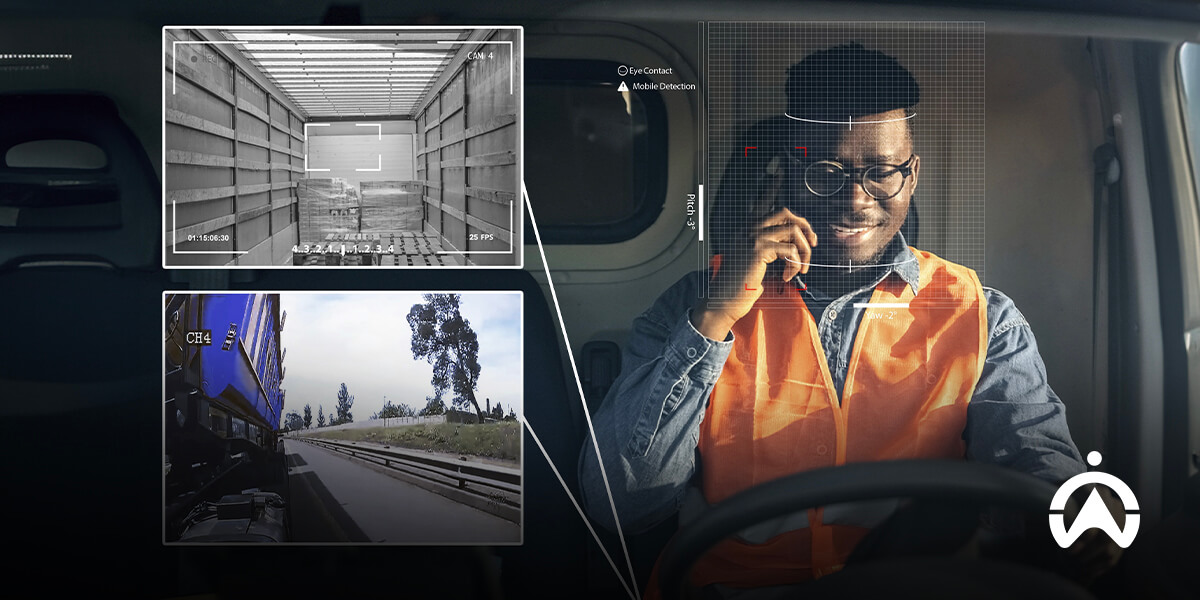
    With our smart camera features, your drivers will receive real-time audible alerts whenever distracted driving is detected, such as cell phone use, yawning, or smoking. This will allow them to quickly correct their behaviour and avoid having to brake harshly or idle for too long in traffic because of distractions. It also helps prevent possible accidents.
  • Preventative Maintenance
    As mentioned before, the engine plays a vital role in fuel consumption, and a well-maintained vehicle will save you a fortune. Cartrack’s Preventative Maintenance feature gives you real-time alerts of any engine faults and automated maintenance schedules for each vehicle. You know each car is due for servicing, so avoid unexpected breakdowns.

Reduce your fuel consumption and unlock fuel savings with Cartrack Malawi

Cartrack Malawi is an industry leader in fuel management. Our features are easily accessible and all on one platform. With us, you’ll save on fuel and every other aspect of your fleet. Join us today.

Got questions? We’ve got you! Discover the answers to some of the frequently asked questions about fuel consumption.

  • How can I reduce my car’s fuel consumption?
    Follow your car’s servicing recommendations and avoid driving habits such as speeding or harsh acceleration.
  • How do I fix high fuel consumption?
    Check your tyre pressure, don’t speed, avoid idling, watch your RMPs and make sure your engine is in good condition.
  • What can we do to reduce the use of fuel?
    Avoid careless driving habits such as revving your engine to warm it up every morning or idling for too long, and make sure you do not skip vehicle service dates so they can pick up issues on time.
  • Why is my car consuming so much fuel?
    There’s no straight answer to that, as there can be any reason why. In most cases, it’s because of driving habits such as speeding and idling, but it could also be related to vehicle maintenance or the size of your engine.

Let us take care of your fuel concerns. Contact us today.

Why Fleet Management Solutions is The Lifeline for Emergency Services

In an emergency, every second counts. Whether it’s the police, paramedics or private security, first responders work under the immense pressure of getting to the scene just in time to save lives. They encounter many obstacles along the way, and their day-to-day can be very unpredictable.

Let’s look at these challenges and how fleet management software can help emergency service providers navigate their daily predicaments.

In this article, you will:

  • Get an overview of the emergency services industry
  • See a GPS tracking unit can simplify the life of a first responder
  • Understand the daily challenges of emergency service vehicles
  • Learn how Cartrack assisted BCI Security
  • Discover Cartrack’s best solutions for emergency service fleets
  • Tap into our FAQ section for more answers

An overview of the emergency services industry

Emergency service providers are something we can’t live without, and it is crucial that they give us the quickest response possible. Whether there’s a fire, a house break-in or an injury during an accident, someone always needs some sort of aid. Emergency service vehicles are always on the road and can get costly, especially when fleet managers can’t see what their drivers are getting up to.

Which services are considered emergency services in South Africa?

Emergency services are, at first sight, identified by vehicles with emergency lights, staff in uniform, and a general understanding by the public that these individuals have a sense of authority in emergency situations. Some of the top qualifiers include:

  • Emergency medical services
    ‍
  • Emergency security services (The police)
    ‍
  • Fire and Rescue services
    ‍
  • The South African National Defense Force (SANDF)

These are primarily public services, so are private services like private security considered emergency services? Some South Africans may argue that while private security services don’t have the same authority as the SAPS, they also respond to emergency situations. However, while acknowledging their contributions to general safety, so this may be more a matter of personal opinion.


Daily challenges that show why fleet management solutions is the lifeline for emergency services

A lot can go wrong when running such a business. Here are some of the obstacles that come with running a fleet of emergency service vehicles:

  • Poor connectivity: Some areas, especially rural, lack connectivity and have lousy infrastructure, making it difficult for responders to navigate and, therefore, leading to a slower response time.
  • Limited funding: Any service provider needs to stick to the budget. Fuel cannot be accurately monitored or accounted for without a fleet management system, as it is hard to differentiate between business and private trips, plus the cost of maintaining the vehicles.
    ‍
  • Traffic congestion: In urban areas, emergency services often struggle with substantial delays due to heavy traffic, impacting the response times and outcomes.
  • Compliance and regulation: Fleet managers must ensure all vehicles are licenced and in good condition. All drivers must have a valid driver’s licence, and all vehicles must comply with the National Road Traffic Act,1996 or the relevant vehicle registration and safety legislation, as applicable.
  • Unexpected downtime: Imagine calling an ambulance because someone just fainted. You’re unsure if that person is alive and don’t even know the cause, only for them to arrive two hours later when you’ve managed to wake the person up. You complained, and after an investigation, you found out that they took too long because the vehicle broke down while on the way. That’s what some people have had to face, and unfortunately, they could do nothing at the time.
  • Safety risks: Emergency service workers risk their lives almost daily. They go to high-risk areas. encounter violent people and face hostile situations.
  • Driver behaviour: Some drivers take advantage of their job title by switching on the siren and speeding when there is no emergency they have been called for. This leads to possible accidents that could have been avoided, increases vehicle wear and tear, plus is an abuse of resources.
  • Deviations: While waiting for the call, some first responders end up stepping out of their assigned zones to run personal errands. When a call comes in, they end up being even further from the scene than they should be, another reason they take time to get there. It is also another source of fuel wastage.
  • Fatigue: Humans have limits to their abilities and need adequate sleep daily to perform at their best. The stakes are always high for first responders; they are exposed to a lot of traumatic experiences, and their roles are physically demanding. In most cases, they work 12-hour shifts for four consecutive days a week, and the thought of it sounds exhausting. This results in them driving around while stressed and tired, leaving room for mistakes to happen while on the job.

The benefits of Cartrack’s fleet management system for emergency services

Here are Cartrack solutions that are specially tailored to boost your fleet’s efficiency:

  • Geofence
    Emergency vehicles must be strategically placed in key locations for faster response time. Ensure the response teams remain in their assigned areas by creating virtual boundaries around the areas. You’ll get alerts whenever the vehicles enter or leave the area, which will help you know when responders have left their station.
    ‍
  • Panic Button
    Install panic buttons inside your emergency response vehicles so drivers can receive an immediate response from command centre managers for backup when needed.
    ‍
  • Preventative Maintenance
    Get automated alerts of vehicle service dates and reminders of appointments such as licence renewals or toll payments so you can ensure your vehicles are always in good health and still have the legal right to be on the road. Helping you avoid unnecessary downtime.
    ‍
  • Specialised Sensors
    Our IoT device ensures you know everything about your fleet, such as specialised sensors. These sensors can detect and give you alerts when the emergency lights are activated, making it easier for you to know whether the sirens were on for a reason or unnecessarily, helping you avoid legal issues.
    ‍
  • Driver ID Tags
    Track your response drivers’ patrol hours with our driver identification tags. This makes it easier to see who was driving and validate the start and end of every shift. It also increases driver accountability and boosts shift productivity.
    ‍
  • Driver Risk Reports
    Use our driver reports to see when drivers are over the speed limit, cornering or braking harshly at times when there is no emergency so you can coach them accordingly and improve your fleet’s responses with more responsible behaviour.

Cartrack Malawi— Saving lives one fleet at a time

We are industry leaders in all things fleet management. By choosing Cartrack Malawi for your emergency services business, you ensure accuracy, faster responses, maximum savings, and an improved brand image. Contact us today.
Let’s answer more of your emergency service fleet management questions

  • Why is fleet management system important?
    Fleet management makes your business more efficient and safe and boosts productivity.
  • What are the purposes of fleet management?
    The purpose of fleet management is to supervise and oversee all fleet operations so you can save costs, enhance productivity, boost profit, and meet client expectations.

  • What is fleet security management?
    It ensures the safety and security of vehicles and drivers, the cargo and all other data that must be protected.
    ‍
  • What is the purpose of emergency services?
    To ensure public safety, security and health by immediately aiding those needing help. 

Digitalise your emergency service business operations with Cartrack’s fleet management solutions. Contact us for a free quote!

Fleet Controller Duties: What Are the Top 7 Responsibilities You Need to Know

Fleet controllers are responsible for many parts of a complex and coordinated fleet system, including the products, suppliers, delivery drivers, customers, and more. If one piece of the puzzle goes missing, the system may struggle. Managing a fleet is challenging as you must take care of these multiple moving parts– all requiring the same concerted effort.

Join us and learn how to meet these expectations by exploring these top seven fleet controller responsibilities.

In this article, you will:

  • Learn about the importance of the fleet controller’s role
  • Explore fleet controllers’ top seven responsibilities
  • Learn what skills and qualities fleet managers need to execute these responsibilities
  • Discover each responsibility’s complementary Cartrack solutions
  • See how you can get the most out of our FleetWeb platform

Why are fleet controllers’ duties essential?

If fleet managers do not successfully implement their duties in one area, this will likely have a knock-on effect, negatively influencing more than one feature of their fleet management strategy.

This rapidly expanding field also pressures fleet managers to keep up with the constant evolution in the fleet management industry and technology while also working within their company’s interests.

A rapidly expanding and multidisciplinary role 

Explore the versatile and rapidly expanding world of fleet managers here:

  • Versatile duties: Many fleet controller responsibilities are interconnected, such as scheduling maintenance and driver safety.  While separate responsibilities, they interlink in that scheduling maintenance influences driver safety.
    ‍
  • A rapidly expanding industry and field: The fleet management industry constantly expands, with new responsibilities, industry trends, skills, and software to keep up with.
    ‍
  • Business/company interests: Fleet managers work for companies whose profits and reputation can be affected by the fleet controller’s job performance.

The top 7 fleet controller responsibilities

With so much to juggle comes a lot of responsibility—witness the mountain of fleet controller tasks become easier to tackle under the sheer effectiveness of these seven fleet manager responsibilities.

1. Recording and analysing the data that provide essential vehicle health insights

For the purpose of data collection, fleet owners- and controllers need to keep track of essential information that affects everyday operations. This is because data collection and analysis helps them make various informed decisions. For example, if data from oil changes and vehicle performance is not collected, they may not realise they need to implement preventative maintenance. This could lead to the vehicle needing corrective maintenance, services, and fixes, as well as suffering unnecessary costs, not to mention downtime.

Find out more about their data duties below:

  • Record and preserve data: A comprehensive record of every vehicle, including oil changes, performance, and expenses such as driver expenditure and fuel costs.
    ‍
  • Analyse data: This involves spotting potential and current issues and looking for ways to cut costs and handle finances well. For example, fleet managers can use data to inform route optimisation, which can help reduce costs as vehicles will likely drive shorter distances and use less fuel.

Ideal skills or qualities for this responsibility include an in-depth understanding of data, such as interpreting, analysing, and applying data, working with databases, and understanding statistics.

Employ our data-defined CANBus-enabled vehicle diagnostics 

CANBus provides fleet managers with real-time diagnostic data on their vehicles, such as odometer readings, EV charging insights, engine diagnostics, driver behaviour, fuel insights, and odometer readings. 

2. Maintenance schedules for work readiness

Putting together and implementing maintenance schedules is essential because focusing on vehicle health ensures its maximum function. Neglecting this responsibility can lead to too much downtime and avoidable maintenance costs. All these issues could have been avoided if fleet controllers had implemented preventative maintenance.

Lastly, poor maintenance can jeopardise drivers’ safety. The vehicle could break down on the road, leaving the driver stranded. Wear and tear can also affect their vehicles’ response time, making it more challenging to brake or manoeuvre the car safely.

Let’s see how you can avoid these negative consequences by taking on the following responsibilities:

Schedule, record, and implement maintenance

  • Work readiness: This responsibility ensures work readiness, extends vehicle life expectancy, and meets industry standards.
    ‍
  • Scheduling flexibility: Fleet managers must be prepared to adjust schedules based on unexpected events.
    ‍
  • Implementation: You can implement this internally or work with a third party, such as a repair shop.

Ideal skills or qualities for this responsibility include excellent time management, flexibility, and an understanding of servicing and all kinds of maintenance, including preventative, proactive, predictive, and corrective maintenance.

Cartrack’s automated preventative maintenance solutions simplify fleet management

We offer many solutions to automate preventative maintenance, such as real time alerts or vehicle diagnostics. These solutions use telematics software to anticipate possible vehicle issues. These alerts include worn brake pads, engine problems, and more.

3. Tracking the fleet in real time with the use of software

It has become common practice for fleet controllers to use software, usually GPS systems, to prevent theft or hijacking and fuel overconsumption. Without tracking software, these issues could lead to unnecessary expenses and delays.

Tracking vehicles

Optimal skills or qualities for this responsibility include a good understanding of logistics and the ability to work with fleet tracking software.

Use Our Live GPS Solution to help you track your fleet in real time 

Our Live GPS solution provides real time visibility of your fleet from their position, speed and direction. It also includes geofencing, the ability to detect driving behaviours, fuel monitoring, trip reports and trip history.


4. Safety and compliance management 

Fleet controllers should take safety and compliance management seriously. Negligence will endanger drivers, and the managers, fleet department, and perhaps even the business or company could face fees at best and severe legal issues at worst.

The dangers of negligence include accidents, which could lead to vehicle or truck damage, resulting in avoidable repairs, services, and maintenance costs. Accidents also lead to hefty insurance fees. Other forms of negligence include breaking the rules of the road, audits, and licensing issues.

Here’s a look into the fleet manager’s responsibilities related to safety and compliance management:

Ensuring safety

Ensuring compliance

  • Rules of the road: Ensure that drivers understand and follow all the rules of the road.
    ‍
  • Internal audits: Ensure that all internal audits are correct and ethically sound.
    ‍
  • Licenses and tabs: Regularly ensure that licenses and tabs are valid.

The top skills or qualities for this responsibility include understanding the relevant safety provisions and laws, such as rules of the road, auditing, tax compliance, and licensing. Fleet controllers should also have a good grasp of vehicle maintenance and implementing safety policies and regulations.

Explore Cartrack LiveVision AI camera technology to detect non-compliance and secure safety

Cartrack’s LiveVision warns of forward collisions. It detects cell phone usage, yawning, smoking, and tired or distracted drivers, making it the perfect tool to detect driver behaviour from all angles. LiveVision is powered by artificial intelligence and has eight cameras that live stream and record video.

5. Driver management to improve performance for high retention and safety issues

Bad performance, such as arriving late, lousy communication, or unfriendliness, can lead to unsatisfied customers and suppliers. If managers can’t help drivers grow, they may feel unsatisfied, which could eventually result in a high turnover rate.

This possible neglect of management duties can also result in more severe outcomes, putting the drivers in harm’s way, as they have yet to be trained to fully understand all safety protocols.

Let’s find out about fleet controllers’ duty toward their drivers:

‍Monitoring drivers

  • Fleet controllers should put together and manage safety policies for the drivers, reducing the chance of accidents and the possibility of legal issues.
    ‍
  • They should use software that tracks driver habits, such as speeding, harsh braking, cornering, idling, and harsh acceleration.
    ‍
  • Fleet managers should provide clear instructions, consistent communication and constructive feedback.
    ‍
  • Keeping attendance tabs is a vital management duty.

Coaching and increasing productivity 

  •  Education and training: Educating increases productivity as drivers can implement their tasks with better quality. Each driver needs to customise this guidance depending on skill and experience.
    ‍
  • Regular upskilling: Fleet controllers should train them not only when they begin working but also make it a regular occurrence.
    ‍
  • Incentives: Fleet managers should praise and reward their drivers for producing high-quality work.
    ‍
  • Safety compliance training: Beyond the employees’ work duties and responsibilities, these managers should train drivers on safety compliance

Ideal skills or qualities for this responsibility include training and communicating, holding drivers accountable, and providing consistent feedback.

Employ Cartrack’s all-in-one fleet management solution, FleetWeb, for driver excellence

FleetWeb is a multilayered solution that perfectly matches the interconnected world of fleet management– it keeps all the puzzle pieces intact.  With the Fleet option, you can track and manage your drivers’ activity and behaviour.

Beyond tracking each driver’s location and speed in real time, the platform will also allow you to rewind your trip to see when your driver was idling, speeding, or using fuel. The platform provides information on all the drivers’ behaviours, including speeding, road speed infractions, harsh acceleration, harsh braking, and harsh turning.

Fleet managers can use these recorded behaviours to discover what the drivers need to be coached on. Each vehicle has a driving behaviour score, meaning fleet managers can track whether the driver or drivers are implementing the coaching lessons.
‍
This is only a peek into how fleet management can empower you and your drivers.

6. Effective admin and cost management

Disorganisation can lead to goals not being met, organisation not being streamlined, loss or mismanagement of money, and the lack of records of important information that is legally required, such as taxes and licenses.

Responsibilities under the umbrella of effective admin and cost management include:
‍

Effective administration

Keep your finger on the pulse of all the moving parts to ensure the operations run smoothly and everything is in order. These moving parts include:

  • Fuel
    ‍
  • Driver behaviour
    ‍
  • Suppliers
    ‍
  • Contracts
    ‍
  • Data
    ‍
  • Reports

Cost management

Track costs to ensure that money is spent wisely and ethically and that a profit is made. These costs include:

  • Invoices
    ‍
  • Orders
    ‍
  • Receipts
    ‍
  • Budgeting
    ‍
  • Strategies to increase profits, i.e., fewer fuel costs, better routes, and eliminating unnecessary expenses.
    ‍
  • Insurance
    ‍
  • Warranties
    ‍
  • Tolls
    ‍
  • Taxes
    ‍
  • Fuel
    ‍
  • Contracts

Ideal skills or qualities for this responsibility include being financially literate, business savvy, detail-orientated, strategically-minded, and mathematically literate.

Discover MiFleet for a comprehensive solution to all your admin and cost management needs

MiFleet is a comprehensive fleet management software which forms part of FleetWeb. It helps you manage fleet admin and costs.

  • Effective administration includes fuel-related costs, driver behaviour tracking, recording supplier information, and driver license expiration.
    ‍
  • Cost management includes cost summary reports, monthly costs and contract storage. 

7.  Effective communication 

Bad communication makes executing work much more challenging. When delegating tasks, if the drivers don’t understand instructions, they will be unable to follow them correctly or up to standard.

If the fleet control manager is not clear on which routes to take, for example, the drivers will likely take longer to reach their destination, or even worse, not reach it at all, leaving customers unhappy with the service.

Some of these responsibilities that lead to productive communication include:

The ability to effectively supervise as well as communicate directions and instructions

  • The ability to communicate clearly so that all those under them understand their tasks and duties and implement them correctly
    ‍
  • The ability to provide feedback and mentor drivers so they improve at their job
    ‍
  • A communication style that builds respect and leads employees to listen to them naturally
    ‍
  • The ability to engage in dialogue and listen to truck drivers
    ‍
  • The ability to report to those above them in higher managerial positions with clarity

Ideal skills or qualities for this responsibility include the ability to be well-spoken and articulate, emotionally intelligent, and concise, as well as the ability to adapt communication styles depending on who you’re talking to at an individual level and whether you’re talking to your employees or those in higher managerial positions.

Put your trust in Cartrack’s Delivery to optimise and simplify communication

The Delivery Application optimises and simplifies communication for everyone, from the fleet controller to the drivers and customers. The solution does this through:

  • Updates for customers and fleet managers on drivers accepting, starting and finishing their jobs.
    ‍
  • E-signs for job completion proof
    ‍
  • Route optimisation
    ‍
  • All job instructions can be given to the driver through the Delivery App.

Get the most out of our feature-rich platform with Cartrack Fleet Management training 

If there’s one major fleet controller responsibility, it’s that fleet controllers should always be willing to learn.

Our fleet management sessions help you improve at your vocation via our solutions.

More specifically, we teach you how to use our fleet management solutions in the best way possible so that they can provide you and your fleet with all their benefits.

Make juggling fleet controller duties easy. Contact us today.
FAQs about fleet controllers and the wider industry

Q: What makes a good fleet controller?

A:  Fleet management is multi-varied, with all responsibilities crossing over one another. This is why a good fleet controller is someone capable of multitasking. They need to do so effectively and with ease.

Multitasking is only possible with excellent time management skills, flexibility, remaining calm under pressure, and innovation and decisiveness.

Q: What is a fleet job description? 

A: A fleet manager is responsible for the vehicles and drivers within a fleet. They are expected to encourage productivity in the vehicles and fleet and keep them in good health and condition. Overall, fleet controllers focus on the fleet’s performance.

They are also responsible for the drivers and fleet and other influential aspects of the overall fleet process. This includes policies, compliance, and any related holdings.

Q: What are the functions of a fleet?

A: Fleets have many functions, including fleet management, vehicle telematics, vehicle maintenance, compliance with regulations, tracking, driver management, licensing, and vehicle maintenance.

Q: What should you look for in a fleet management company?

A: You should ask yourself numerous questions, and a lot of research should go into finding a fleet management company. However, some important aspects to take into account include their customer service, whether they at least provide tracking and route planning, and whether they are compliant with all necessary protocols and safety regulations.

Cartrack’s solutions are so vast and varied that no fleet management task or issue goes untouched. Contact us to discover more of our endless features.

What Causes High Fuel Consumption in Petrol Engines

Vehicles with petrol engines are well known for their performance and fuel-hungry tendencies if they’re not managed properly. Understanding what causes high fuel consumption is the first step in better fuel management.

In this blog, we will cover everything from what causes high fuel consumption in your fleet to how telematics can assist you in reaching your fuel-saving goals. So, let’s dive right in.

In this article, you will:

  • Get an understanding of what causes high fuel consumption
  • See the difference between petrol and diesel engines and how it impacts your fuel usage
  • See how fuel consumption influences your business operations
  • Get tips on how to reduce your fleet’s fuel consumption
  • Get an understanding of how telematics might influence your fuel consumption

The causes of high fuel consumption in petrol engines

Whether we’re fleet managers or private vehicle owners, we’ve all dreaded driving into the petrol station at some point. Or even on multiple occasions because we know that a cent will leave our pockets for every drop filling our tanks. High fuel consumption in petrol engines is caused by many factors, such as:

  • Driver behaviour:
    Have you ever thought, “I am an excellent driver”, as you skidded and almost bumped the sidewalk while going around a sharp corner? Or, have you ever thought that this must be going through one of your drivers’ minds when you see them coming around that corner? We hope not! 
    Managing your drivers’ bad driving habits can be challenging
    , especially if you don’t know their bad habits, so being able to monitor their driving can help you increase workplace safety and compliance.
    ‍
  • Vehicle maintenance:
    Imagine driving with your windows down, music blasting, and the wind blowing through your hair, and suddenly, all your warning lights go on, and your car sputters to a pathetic halt. Did you forget to service your vehicle? Staying on top of your vehicle maintenance and regular servicing can feel like admin, but it is crucial for avoiding downtime, optimising your vehicle’s fuel efficiency, and ensuring uninterrupted off-key singing as you face the daily traffic.
    ‍
  • Vehicle load management:
    Most of us have seen a truck on the highway that’s so overloaded that it looks like it will topple over as soon as it hits the next pothole. Whether you’re a fleet driver or manager or you’re helping your cousin move to a new town, it’s crucial to understand the risks of overloading and how this can affect your fleet or vehicle’s fuel efficiency. Stick to the vehicle’s limits to allow your engine and fuel budget to thrive.
    ‍
  • Traffic conditions:
    Sitting in traffic sometimes looks like this: Singing a song (off-key again), wondering whether the traffic would have been better if you left just ten minutes earlier. Staring into space—or at fellow motorists—and wishing you could just switch to the lane you’re supposed to be in but are unable to do so because traffic is packed like a buffet lunch plate on a Sunday afternoon. Worst of all, your petrol engine is idling, wasting precious fuel.Did you know that idling a 3-litre vehicle for 10 minutes can waste approximately 300ml of fuel?

    That is more than a cup of fuel wasted every 10 minutes.

Whether you’re driving your private vehicle or managing a fleet, the factors contributing to fuel efficiency remain relatively the same. So, would it make a difference if these vehicles ran on diesel? Let’s compare the two.


The engine showdown: petrol vs diesel

First-time vehicle buyers often don’t think about whether they want a petrol engine or a diesel engine vehicle. Let’s be honest: our first five questions are something along the lines of: what does it look like, what brand is it, what colour is it, what’s the mileage, where is it, and does it have Bluetooth capabilities so that I can play music? Let’s look at some of the major differences between petrol and diesel engines:

Category Petrol engine Diesel engine
Fuel efficiency Less fuel efficient, however, they are generally more responsive and better suited for smaller vehicles. More fuel efficient because of their higher compression ratio which results in better mileage.
Power and Torque Has higher horsepower, making them better suited for speeding. Produces higher torque, which is great for towing.
Maintenance costs Usually cheaper. Generally more expensive because of complex components.
Emissions It produces fewer nitrogen oxides but more carbon dioxide, negatively affecting greenhouse gas emissions. Emits more nitrogen oxides, resulting in higher air pollution. However, DPFs have improved this.
Engine longevity Tend to have shorter lifespans, but the evolution of technology is slowly closing the gap between petrol and diesel engines in this category. Have longer lifespans, and that’s why they are more often used in commercial vehicles.
Noise and vibration They are quieter and offer a better driving experience because of their smoothness. Tend to have noisier engines with more vibrations; however more modern diesel engines have reduced these effects a lot.
Fuel costs Tend to be less expensive however the price between diesel and petrol doesn’t generally differ significantly. More expensive in general; however, the price can fluctuate.

Commercial and personal vehicles have different purposes; even industry-specific commercial vehicles’ purposes can differ vastly. There are benefits to both petrol and diesel engines that make them suitable for specific purposes, making both of them relevant and valid options.

Petrol engines: the fuel-mongers 

There are various reasons why petrol engines use a lot of fuel. Let’s look at some of them:

  1.  Lower thermal efficiency:
    In general, petrol engines have lower thermal efficiency than diesel engines. What does this mean? Engine thermal efficiency is the percentage of the fuel’s energy used to power the engine rather than using it for other components such as the exhaust or coolant. A higher thermal efficiency means that the engine uses fuel more effectively.
    ‍
  1. Stoichiometric ratio:
    A stoichiometric ratio refers to the ideal balance of air and fuel in an engine, which allows an engine to use fuel efficiently without leaving any unburned fuel or extra air behind. Petrol engines can be pretty finicky, and because of their finicky nature, they require precise air-fuel ratios (approximately 14.7:1) for the most desirable combustion conditions. To ensure that combustion is complete, petrol engines tend to use more fuel, specifically when the vehicle is overloaded or accelerates regularly.
    ‍
  1. Three-for-one: Driving conditions, driver behaviour and petrol engines:
    Driving conditions, bad driving habits, and a petrol engine equals high fuel consumption every time. Poor driving conditions include stop-and-go traffic, which consumes more petrol because of frequent idling and acceleration. Bad driving behaviour includes aggressive acceleration and braking, resulting in higher fuel usage.
    ‍
  1. Energy density of fuel:
    Petrol engines tend to have a lower compression ratio than diesel engines, which makes them less fuel efficient and use more fuel.
    ‍
  1. Higher RPM operation:
    Petrol engines operate at higher revolutions per minute (RPM) than diesel engines do. Higher RPMs lead to higher fuel consumption because more fuel is injected into the vehicle’s engine to maintain the speed and power at which the vehicle is operating.

How does high fuel consumption affect the value of your vehicle?

The higher your vehicle’s fuel consumption is, the more it will affect the value of your vehicle. Especially when you want to resell it, here’s how:

  • Lowered resale value: Potential buyers might think twice before buying a petrol-engine vehicle because it is less fuel-efficient. This decrease in demand can negatively affect your resale value. Another contributor to your vehicle’s lowered resale value is the fact that the vehicle will be more expensive to operate.
    ‍
  • Speedy depreciation: Your vehicle’s value can decline faster because of its poor fuel efficiency.
    ‍
  • Environmental impact: With the rise of ecological consciousness, many buyers might consider buying a more fuel-efficient option because vehicles with higher fuel consumption are less environmentally friendly.

How do fuel costs influence your operational dynamics?

Fuel consumption is one of the biggest expenses of any fleet business. Here are four ways that it can impact different parts of your business:

  1. Rising operational costs
    1. Increased fuel prices: Fuel prices regularly yo-yo in South Africa because of factors such as global oil prices and fluctuating currency exchange rates. A rise in fuel prices directly impacts businesses’ operational costs, especially if they rely on vehicles for services such as making deliveries.
      ‍
    2. Managing your budget: Operational budgets must constantly be adjusted because of fuel expenses, which impacts the availability of funds for other operational needs such as maintenance and staffing.
      ‍
  2. Profit margin implications
    1. Profit decline: Organisations with slim margins can have a smaller profit margin caused by their fleet’s high fuel consumption. The more fuel the fleet needs, the bigger the impact on the business’s profits, especially for businesses that operate in transportation or delivery services.
      ‍
    2. Adjusting prices of services and products: To maintain profitability, businesses might have to change the prices of their products and services, which might negatively affect their standing as competitors and their customers’ satisfaction.
      ‍
  3. Supply chain efficiency
    1. A rise in logistics costs: Your supply chain efficiency might be influenced by higher product costs caused by high fuel consumption, primarily if your fleet operates in the manufacturing, retail or distribution industries.
      ‍
    2. A need for route optimisation: Organisations might consider investing in route optimisation tools. Although it might be an additional expense every month, it will reduce fuel costs wasted on unoptimised travelling routes.
      ‍
  4. Fleet management challenges
    1. Maintaining your fleet vehicles: Wear and tear on your vehicle is often a result of higher fuel consumption because it increases the strain on your engine. When a vehicle uses more fuel, it works harder due to aggressive driving, cargo overload, or inefficient operations.
      ‍
    2. A lack of fuel-efficient vehicles: Organisations might have to consider investing in more fuel-efficient cars to combat high fuel consumption and costs.

How Cartrack can help you skyrocket your petrol engine’s fuel efficiency

Managing your fleet while trying to lower your fleet’s fuel consumption, or even just managing it better, can be pretty tricky. At Cartrack, we offer multiple solutions to every fleet management problem you might have, some of which include:

  • At Cartrack, we can help you optimise fleet drivers’ routes.
    ‍
  • We can help you track your drivers’ behaviour and identify any harsh driving habits they might have, all while giving you coaching tools to improve those behaviours.
    ‍
  • You can get a range of different reports to monitor your fleet’s fuel consumption, driver behaviour, and CO2 emissions, among other things.
    ‍
  • Create maintenance reminders and get notified in advance when your vehicles are due for a service.

Fuel-saving hacks to reduce your fleet’s fuel consumption

We all love a good money-saving hack, am I right? Let’s take a look at some tips to reduce your fleet’s fuel consumption costs:

  1. Avoid aggressive driving, such as harsh acceleration and harsh braking. You should instead maintain a steady speed.
    ‍
  2. Don’t idle your vehicle for long periods. Instead, turn your vehicle off, and in the colder weather conditions, don’t idle your vehicle for more than 30 seconds to 1 minute.
    ‍
  3. Plan your and your fleet drivers’ routes to avoid traffic and other congestion issues, such as accidents.
    ‍
  4. Don’t miss a vehicle service. You might want to skip this one, but you shouldn’t. The more you extend your fleet maintenance, the more problems your fleet might experience later.
    ‍
  5. Be mindful of how much cargo you load on your fleet vehicles, and make sure that your load is evenly distributed to prevent unnecessary strain on just one side of your vehicle.
    ‍
  6. Don’t overuse your air conditioning. In the hotter months, when temperatures reach the dreaded 30°Cs, the first thing we want to do when we get in our vehicles is turn on the air conditioning on full blast but we should try to refrain from doing that. You should park your car under the shade or leave your window open just a bit to get ventilation.
    ‍
  7. Use high-quality fuel only. Support your mainstream fueling stations where you know the fuel quality is up to standard. Dirty fuel can cause different problems in your vehicles, such as engine breakdowns.
    ‍
  8. Make the most of the telematics technology that’s available to you. Improve your fleet’s fuel consumption by leveraging the telematics technology that’s available to you. In this next section, we will look a bit more into this.

How telematics can help you manage fuel consumption

Telematics can help manage and improve your fuel consumption; here’s how:

  • Monitoring live driver behaviour: You can keep track of your entire fleet and drivers’ behaviour, such as harsh acceleration and speeding. With the accurate data the telematics device receives, you can improve driver behaviour through coaching.
    ‍
  • Optimising routes: You can optimise the routes that your drivers take in real time, which allows you to save on fuel costs.
    ‍
  • Vehicle maintenance alerts: Regular maintenance can save you money on vehicle breakdowns. You can set up maintenance alerts for each vehicle or your entire fleet.
    ‍
  • Tracking your fleet’s fuel usage: Telematics can give you a detailed overview of your fleet’s fuel usage patterns. By analysing these patterns, you can identify where your fleet tends to waste fuel or use excessive fuel the most, you can then address these areas.
    ‍
  • Reducing vehicle idle duration: When your drivers idle for long periods, they are wasting fuel without being productive. Telematics systems can monitor the duration and how often your fleet drivers idle your vehicles.
    ‍
  • Integrating systems with your current fleet management systems: Combining telematics systems with your current fleet management systems allows you to operate more cohesively. By combining data from different sources, you can make better-informed decisions about how to reduce fuel consumption.

Don’t let fuel costs rule you: rule it with Cartrack Malawi

Contact Cartrack Malawi today and discover a new way to lower fuel consumption in your petrol engine.

Frequently Asked Questions about High Fuel Consumption

  • How do you fix high fuel consumption?
    There are several ways that you can “fix” your fleet’s high fuel consumption, here are a few:

    1. Don’t speed
      ‍
    2. Take your vehicle for regular maintenance checks
      ‍
    3. Make use of fuel additives
      ‍
    4. Keep an eye on your RPMs
      ‍
    5. If you’re driving a modern vehicle – utilise the cruise control function
      ‍
  • Why is my petrol car using so much fuel?
    There isn’t just one answer to this question, as there are several factors that might cause your vehicle to use a lot of fuel; some of these factors are:

    1. Aggressive driving behaviour – harsh acceleration and braking
      ‍
    2. Excessive idling
      ‍
    3. Regularly being stuck in traffic or stop-and-go
      ‍
    4. Not having the correct oil and filters
      ‍
    5. Your clutch might be worn
      ‍
  • What are the possible causes of high fuel consumption?
    High fuel consumption can have different origins, such as:

    1. Aggressive driving
      ‍
    2. Driving in the wrong gear
      ‍
    3. Idling too often and for too long
      ‍
    4. Not changing your oil regularly
      ‍
    5. Using your air conditioning too often
      ‍
  • Can injectors cause high fuel consumption?
    Yes, injectors can cause high fuel consumption. If your injectors are dirty or worn out, they can burn fuel at a faster pace, which increases fuel consumption.

Affordable Vehicle Tracking and Fleet Management Solutions For Your Business

Running a fleet comes with many challenges such as ensuring that drivers are safe on the road, fuel is being used wisely, and the admin is done correctly. Fleet managers must keep up with daily operations while making sure they stay on budget which is why they need cost-effective fleet management software that will give them value for money.

Let’s dive into what to look at when seeking affordable vehicle tracking and fleet management solutions.

In this article, you will:

  • Get to know more about fleet management
  • Discover how vehicle tracking and fleet solutions reduce costs
  • See who benefits from this technology
  • Learn the importance of vehicle tracking and fleet management in different industries
  • Find out how Cartrack solutions are an affordable game-changer

The benefits of a affordable vehicle tracking and fleet management solutions for your business

Let’s briefly discuss how fleet management works before we go into the affordability aspect.

Fleet management overview

Fleet managers need to make sure that all vehicles are in excellent condition to perform their various functions but they often come across challenges with keeping records of daily activities such as the monitoring of drivers and vehicles, maintenance schedules, compliance documents, tax, fuel transactions etc. That’s where fleet management software, telematics and GPS tracking systems come in to save time and money.

The top vehicle tracking and fleet management solutions that boost business ROI

Integrating all these systems creates an opportunity to reduce operational costs and boost efficiency, turning on the affordability switch in your business. Here’s how:

  • Live location tracking: A vehicle GPS tracking system allows you to see the exact location of your fleet vehicles in real time. Fleet managers can easily spot any deviations or when too much time is spent in one place than expected, allowing them to use the given data to investigate and make amendments that will enhance efficiency and give value for money.
  • Enhances safety: Telematics software provides fleet managers with detailed insight into how drivers and vehicles perform on the road. If drivers are speeding, cornering harshly or tailgating, then fleet managers can pick up the pattern and their actions could be corrected through training. This will then improve driver behaviour and reduce the risk of accidents, leading to a lot of money being spent on repairs and replacements and increasing the fleet’s lifespan. Driver behaviour also influences the amount of fuel consumed, which we will go into in our next point.
  • Lower fuel expenses: Driving habits such as harsh braking and excessive idling increase fuel consumption, meaning the vehicle will cost more than it should to move around, plus it increases vehicle wear and tear as well. A fuel monitoring system will assist in monitoring live fuel levels using sensors, as well as trace discrepancies in fuel transitions.
  • Better route planning: Using GPS technology, fleet managers can minimise travel time and delays through advanced route planning tools that factor in vehicle types, traffic conditions, delivery deadlines and driver availability to determine the most effective route for each vehicle and the best way to complete tasks. This once again slows down fuel consumption.
  • Less time on admin: Through powerful software, everything is digitalised. Paper-based administration has more human errors, and the time spent can be used to perform other tasks. A fleet management system also eliminates the need to log on to multiple platforms to access the information you need.
  • Simplifies compliance and regulations: Staying on par with the laws is essential for every business, and fleet management software takes away your worries by monitoring driver hours of service (HOS), vehicle health, and fuel tax summaries.
  • Customer Satisfaction: When drivers are well-behaved on the road and client expectations are met, the company will get good reviews and more referrals which will bring in more business.

Reduced operational costs give fleet businesses the advantage of making their services more affordable, which can increase competitiveness, attract more clients, and boost profits. The price you pay saves you more money than not paying at all.


Who benefits from this technology?

Vehicle tracking and fleet management solutions are used by various industries, here are some examples to name few:

  • Transportation and logistics
    This is a large sector that relies on vehicles such as trucks and vans trailers to transport goods across the country. Routes need to be planned carefully and cargo needs to be safe and well taken care of. Using fleet management software is the best way to successfully run these types of businesses as it is created to streamline fleet-related operations, show where all vehicles are, and enhance overall efficiency.
  • Delivery companies
    With a high demand for deliveries to be made as soon as yesterday, delivery management software is a must-have. GPS tracking technology gives delivery businesses full visibility of their fleet, making it easier to plan routes and dispatch. This technology also allows clients to receive an alert when their order is on its way, while drivers can also communicate with clients, updating them on any delays. They don’t have to go through the hassle of driving around with paperwork that customers need to sign to show that they received the parcel.
  • Construction
    Building materials and equipment such as concrete and steel need to be transported daily from one point to another on construction sites. This creates the need for heavy-duty trucks to be monitored so fleet managers can monitor the time it takes to complete tasks and ensure that they are done safely.
  • Healthcare
    The vehicle location in the medical sector needs to be visible at all times and carefully monitored. Ambulances transport injured people during emergencies, and some vans and trucks are used to carry medical supplies, while others transport blood samples to labs. Fleet management software would make it easier to plan routes so the medical equipment reaches its destination on time and that any temperature-sensitive cargo that needs to be monitored is taken care of.

Unlock massive fleet savings with Cartrack Malawi

Cartrack’s all-in-one vehicle tracking and fleet management solution is not only affordable but unlocks affordability within your business. Here are some of our budget-friendly solutions that will give you even more profits:

  • Live location
    See where your vehicles are at all times using Cartrack’s GPS live location feature. You can access satellite or smart map views and monitor stops daily to spot patterns, such as route deviations, that could be wasting time, fuel, and money.
  • Geofence
    Create virtual barriers around areas of your choice so you can receive alerts every time your fleet vehicles enter or leave the area. This feature can be used to see how long it takes vehicles to enter and leave delivery locations, demarcate the areas you wish your vehicles not to be in, or monitor driver working hours by receiving alerts when they enter and leave your warehouse.
  • Driver monitoring
    Cartrack has various solutions set for monitoring driver behaviour to ensure safety and reduce the cost of repairs and replacement, such as:
    ‍

    • Advanced Driver Assistance Systems (ADAS): These systems are a collection of advanced digital technologies and work using camera-based sensors, intelligent algorithms, as well as artificial intelligence (AI) machine learning to enhance driver awareness and therefore improve safety. Drivers get real-time audible wherever potential hazards such as blind spots or forward collisions are detected.  ADAS also gives you access to in-cab voice calls to address risk factors and a panic button for emergencies, which is ideal for industries such as mining.
      ‍
    • AI LiveVision: ‍Our AI-powered LiveVison camera solutions monitor driver distractions that could put them at risk, such as drowsiness, cell phone use and smoking. Drivers receive real-time audible alerts wherever these distractions are detected, allowing them to quickly correct their behaviour. You also get full 24-hour access to the footage so you can check in on drivers whenever there is a need.
      ‍
    • Driver coaching: This feature allows fleet managers to spot patterns through risk reports and videos of daily or monthly driving violations, such as a seatbelt not being used or cellphone use. You can see the number of incidents that were repeated and how many times the driver has been coached on that specific violation. You can also leave notes for each coaching session so there is a record of what was discussed after the last incident. This powerful tool can be used to train drivers based on their individual coaching needs as well as to see if there is a trend among the drivers so you can investigate further and find the root cause.
      ‍
    • Driver Scorecards: This tool monitors driver events such as harsh acceleration or speeding and then gives them ratings. It’s a good way to spot improvements, reward drivers, and pinpoint what they need training on.
      ‍
    • Driver ID tag: This is yet another great way to keep in touch with what drivers get up to daily. Driver Identification tags are assigned to each driver so you can easily identify which driver is using which vehicle. You can assign tags based on driver experience to ensure specific vehicles are driven only by drivers who are licenced for them, and you will also be able to differentiate between business and private trips. These tags can also be used to monitor driver working hours so you can ensure that drivers are not overbooked and fatigued.
  • Fuel management
    Monitor the live fuel levels of your fleet, access fuel reports, and detect fuel theft with Cartrack’s fuel management solutions that are specially curated for your business needs, such as:
    ‍

    • MiFleet: This is a cost management platform that helps you validate fuel transitions with telematics data such as location, litres and tank capacity so you can detect fuel card theft or fraud.
    • Fuel sensors: These allow you to see the live fuel tank levels so you can spot any sudden drops in fuel that could indicate fuel theft. The data for each vehicle’s fuel levels can be accessed on your platform. It’s translated in a way that is easy to understand and helps you gather the information you need for further investigations.
  • Temperature monitoring
    Ensure that temperature-sensitive cargo, such as food, stays fresh and reaches its destination in good condition with our temperature monitoring solutions. These sensors alert you whenever the temperature in refrigerated trucks or trailers changes.
  • Preventative maintenance
    This feature monitors each vehicle’s health and alerts you to potential faults and the next service date so that unexpected vehicle repairs and replacements do not require more money and disturb the schedule.

Stay ahead of the game by investing in Cartrack’s affordable fleet management solutions

Whether it’s a construction, delivery or taxi business, we specialise in everything related to fleet management. Contact us today to realise your fleet’s full potential.

How to Start a Successful Delivery Business

E-commerce businesses, drop shipping, and food delivery businesses globally have led to an increased demand for reliable, affordable, and customer-centric courier and delivery service providers. So, launching a delivery business start-up or expanding your business to offer delivery service is an excellent idea!

This is an attractive prospect for you to get into because it requires very little start-up costs. In fact, you could probably start a delivery business right now with the vehicle and cell phone you have. But to run a successful delivery business, you need a lot more effort and strategy.

This complete guide on how to start and run a successful delivery business using Cartrack’s delivery fleet management system is exactly what you need to get started.

In this article, you will:

  • Get a step-by-step guide to starting a delivery business
  • Understand the behind the scenes of a successful delivery business
  • See what you need to get started with a delivery business
  • Identify the biggest challenge to your delivery business success
  • Discover how Cartrack’s delivery fleet management software can help you achieve a successful delivery business
  • Uncover whether delivery fleet management is right for your business

Our 5-step guide to starting a successful delivery business

The delivery sector is expanding and is projected to grow at accelerated rates over the next few years.

Here’s why you should start a delivery business:

  • The increased demand and the growing e-commerce industry require reliable delivery service businesses.
    ‍
  • Your business could provide this service to different companies on a small and large scale.
    ‍
  • The initial investment and operational costs of a delivery business are relatively low.
    ‍
  • As your business and customer base grows, you can easily expand your fleet, services, location, and client base.
    ‍
  • The technology and innovations, such as fleet management systems in the logistics industry, make it a thousand times easier for businesses to run a delivery business and become successful.

Starting a delivery business is relatively easy, but growing it into a successful business will require more effort. To achieve business success, you first need to understand what goes on behind the scenes of such a business.

When you imagine a successful delivery business, what companies come to mind? Are you considering a delivery giant offering same-day express delivery or a smaller delivery business that ensures quality and timely delivery of your online orders?

Starting a successful business is no easy task. Here is what goes on behind the scenes to make your business a success:

  • Aiming to ensure on-time-in-full delivery of products and orders to retailers and customers.
    ‍
  • Protecting brand reputation and ensuring customer loyalty and satisfaction.
    ‍
  • Providing the best pricing options for customers and clients.
    ‍
  • Real-time delivery progress, reliable order tracking, and multiple delivery options for customers.
    ‍
  • Happy drivers with a good work-life balance.
    ‍
  • A clear business goal and vision, understanding of the delivery market, and legal compliance.

Whether you are a business person looking to launch a delivery/courier business or you’re hoping to expand your business and offer delivery services to fulfil your customer’s needs, this guide will help you bring your business out of imagination into reality, and finally, business success.


Step 1: Identify your delivery business niche

The delivery business is a fast-growing market, with businesses offering food delivery, drop-shipping, gift delivery, courier service, medical equipment, supply delivery, and even after-hours delivery. The best way to start your delivery business is to first decide on your niche and prepare a business plan.

Here are five top delivery business niches worth looking at:

  • Food, grocery, and alcohol delivery
    This industry is projected to have a market revenue of US $22.61 million in 2025. You can offer delivery service for restaurants, supermarkets, and liquor stores through on-demand and convenient customer services. You can also pick up and deliver or make and deliver catered meals for events, meetings, and parties through a catering delivery service.
    ‍
  • Flower and gift delivery
    Who doesn’t love flowers and gifts? The market growth rate for this business is projected to keep growing in Malawi. You can offer same-day or next-day delivery for fresh flowers and gifts for special occasions like birthdays, anniversaries, etc.
    ‍
  • OTC and prescription delivery
    Partner with local pharmacies and offer customers reliable over-the-counter and prescription medication delivery services. The OTC pharmaceuticals market for online sales is projected compound annual growth rate for the next four years (CAGR 2025-2029) will be 15.2% and reach US$4.9m revenue by 2029 in Malawi.
    ‍
  • Pet food, supplement, and supply delivery
    Work with pet stores and vets or offer your own branded products to deliver food, medication, and other supplies to pet owners. Revenue of pet products are expected to grow by 13.05% annually in Malawi, with a projected market volume of US$11.44m by 2029.
    ‍
  • Courier services
    Deliver packages, documents, and other items for businesses and individuals with same-day, next-day, and more delivery options available to customers. In Malawi, this market is dominated by major players, with even global competitors influencing the market.

These quick insights into each of these niche delivery businesses in Malawi and the projected market revenue and market growth over the next few years are useful ways to understand the potential profitability of your own delivery business. The more the market demand and e-commerce industry grow in Malawi, the more opportunity there is for your business to offer a delivery service to the market.

Each industry has unique challenges, but once you’ve decided on a niche delivery service, it is easier to build a business plan detailing your mission, conduct market research, consider your financial investment, and estimate your return on investment (ROI).

Finally, remember to choose a business structure and register your business with the Companies and Intellectual Property Commission (CIPC).

Step 2: What you need to get started

With your delivery business plan and official registration from the CIPC in place, it’s time for you to invest in the necessary fleet, equipment, and other supplies for your business.

Consider making these investments for your delivery business:

  • The right vehicle(s)
    You’ll need the right vehicle for the job/delivery service you plan on providing and selecting the right vehicles is crucial for your delivery efficiency. Whether you decide to invest in a new or old vehicle, such as a cargo van, light-duty truck, compact car, motorcycle, or other unique vehicle is entirely up to you. Alternatively, this is also a great option if you simply use your own vehicle for deliveries. One of the most important things when choosing the right vehicle is your fleet’s operating costs, so investing in budget-friendly, low-fuel consumption and good fuel economy vehicles is important. To protect your brand image consider opting for more eco-friendly vehicles too.
    ‍
  • The perfect delivery drivers
    Drivers play a crucial role in the success of your delivery business, and their performance and behaviour can impact key aspects of your operations from customer satisfaction to operational costs, and your brand reputation too. Training the perfect delivery drivers requires coaching to improve driver behaviour and prevent reckless driving, speeding, harsh braking and dangerous driving habits. Ensure that your drivers have the correct driver’s licence and personal insurance for their protection in the event of an accident.
    ‍
  • The right insurance and protection
    Insurance will be your saving grace if your customer or client’s parcel or product is damaged or stolen in transit or one of your vehicle (s) is damaged or stolen. You need to secure the right insurance for your business, which may include business liability insurance, goods in transit (GIT) insurance, courier insurance, and public liability insurance. When starting your business, you will also want to add an extra layer of security, primarily to protect against vehicle and cargo theft. One of the best protections you can opt for is stolen vehicle recovery services from a company like Cartrack.
    ‍
  • The best technology for delivery management
    Delivery management technology is your best friend for your business’s success. In addition to investing in the right vehicle, purchasing smart devices like a tablet or smartphone for drivers, and getting a GPS tracking system from Cartrack. You’ll want to add delivery service software such as Cartrack Delivery that can help you perfect delivery tracking and progress, plan the best route for drivers, automate processes, monitor your drivers, keep track of your vehicle maintenance, generate customised reports on your fleet and business and more.

Starting a delivery business is relatively easy, but growing it to be successful will require more effort. To achieve business success, you need to mitigate risks and proactively prevent the biggest challenges in delivery businesses from affecting you.

Step 3: Address the biggest challenges to your delivery business success

  • Parcel management
    Getting parcels to your customers’ doorstep seems easy enough right? The challenge comes with ensuring that the customer’s order is processed properly, to the correct item specifications and delivery address, and all information is properly recorded to plan the delivery logistics.  Mistakes can happen more easily without adequate routing and scheduling, real-time visibility, or proper capturing of the delivery information, especially if you or your fleet manager has to complete this process manually.
    ‍
  • On-time deliveries
    Timely delivery is essential for customer satisfaction, brand reputation, and your business’s competitive advantage. A delivery business requires efficient logistics and operational processes, as most successful companies prioritise on-time delivery. This is a brilliant way to increase sales as customers know they can trust a business that delivers their orders. Ensuring timely deliveries can be challenging for your business due to driver productivity and other delays, which can directly cost you sales.
    ‍
  • Fleet fuel management
    Fuel is most likely the biggest operational cost your delivery businesses will face, so managing your fleet’s fuel costs will be a major challenge. High fuel costs affect your business’s profitability and the service pricing you can offer customers, making it even more difficult for you to run a successful business. You’ll have to manage the costs and fleet consumption and ensure your business’s cost efficiency.
    ‍
  • Driver productivity and work-force optimisation
    Your drivers and fleet staff’s productivity can directly affect business sales and profitability, but how can you ensure they are productive and efficient? Operational efficiency is a major business challenge, but delivery fleet software and other technologies can help your business address this.
    ‍
  • Unplanned vehicle downtime 
    Any vehicle downtime due to maintenance, breakdowns, repairs, vehicle servicing, etc. can result in reduced productivity, financial business loss, customer satisfaction issues and even more problems for your delivery business.
    ‍
  • Measuring customer satisfaction
    Getting client and customer feedback is important for your business, but old methods of sending surveys or completing a form can discourage customers from giving a review. Knowing how your customers feel about your delivery service is essential for improving service quality and enhancing customer experience.
    ‍
  • Fleet logistics management
    This involves efficiently planning and coordinating delivery vehicles to optimise delivery routes and driver schedules. This is one of the biggest challenges for delivery businesses and gets more complicated as your fleet and business expand.

You may be concerned about whether your new start-up or business strategy, even with the right equipment and a good customer base, can compete with larger delivery service providers and popular third-party logistics companies, but would you believe us if we told you that there is enough cake for everyone to share in the market? What’s more, delivery technology and other innovations from companies like Cartrack make it easier for start-up businesses like yours to compete with delivery giants.

Step 4: Using technology for your delivery business

Delivery fleet management software is a top strategy for addressing your delivery business challenges and ensuring business success. At Cartrack, we’ve designed the perfect software for new delivery businesses. Cartrack delivery is an all-in-one tool equipped with cloud-based software and a mobile delivery app to optimise your delivery business and empower your drivers.

Take a look at these Cartrack Delivery features and benefits you can experience in your delivery business.

  • Automated and streamlined processes: Enjoy a more efficient method of uploading driver information, and assigning jobs to drivers.
    ‍
  • Driver visibility: Gain real-time visibility on job progress and driver location, and intervene or communicate delivery delays. Managers can also receive updates about driver availability for new tasks.
    ‍
  • Route planning and route optimisation: Ensure timely delivery by arranging delivery schedules in advance based on job priority, driver availability, and shortest route. Alternatively, auto-plan your deliveries with the route optimisation feature that organises jobs in the most logical order.
    ‍
  • Two-way communication: Managers and drivers enjoy two-way communication, and drivers receive instant notifications when work orders are changed.
    ‍
  • Customer communication: Customers receive an automated notification once the driver is on the way, with a link to live track their delivery and are notified when delivery is complete.

Step 5: Establishing a good customer-base

Your business’s long-term success depends on its customer base. Once you have chosen a niche area and invested in fleet, equipment, and software, it’s time to focus on building a good customer base by providing quality service.

Here are some strategies for effectively building and maintaining loyal customers:

  • Deliver a positive customer experience every time
    ‍
  • Focus on reliable and timely delivery
    ‍
  • Offer a competitive price
    ‍
  • Build a positive brand image and market your business with customer reviews
    ‍
  • Introduce a referral program for deliveries
    ‍
  • Participate in local community events
    ‍
  • Offer other value-added services to customers
    ‍
  • Gather customer’s feedback

Here’s how Cartrack has helped businesses like Mr Build in South Africa run a successful and well-known business with delivery.

Cartrack Case Study: Mr Build

Mr Build is a well-known hardware store specialising in woodworking, timber, cement, plumbing, and a wide range of home decor. Over the years, Mr Build has grown with a total workforce of 200 people across different branches and a fleet of about 40 vehicles that deliver building and DIY materials to customers around South Africa.

As the business expanded, Mr Build found tracking where their drivers and vehicles were during deliveries was challenging. They could not update customers on their delivery without knowing if the driver was experiencing delays, which ultimately affected customer satisfaction.

Cartrack’s fleet management software was able to help Mr Build with:

  • Seeing exactly where their vehicles are at any given time and the vehicle history to see all trips completed.
    ‍
  • Mr Build avoids the manual and costly processes of checking up on drivers by calling to locate drivers.
    ‍
  • Reducing delays and unnecessary route deviations and boosting driver accountability and productivity.
    ‍
  • Improving customer satisfaction by updating them on the delivery process and managing their expectations.
    ‍
  • With the addition of CarWatch, managers get alerted the moment there is any unauthorised vehicle movement, and Cartrack’s 24-hour recovery team can respond immediately in the event of a vehicle theft. This helps them better manage risk and increase the chance of vehicle recovery during a theft or hijacking.

The manager at Mr Build, had this to say about Cartrack:

“Cartrack helps us monitor the fleet much better, I always know where all the vehicles are. There’s no part of the day where I have to look for a vehicle or driver. If I can’t get a hold of the driver, I know where the truck is.”  

Mohammed Haider Yacoob – Manager, Mr Build Tzaneen


How to achieve a successful delivery business with Cartrack’s fleet management software

Our fleet management software helps businesses in several industries unlock another level of efficiency and profitability.

Beyond Cartrack Delivery, here are other tools and software services that can help you achieve a successful delivery business:

  • MiFleet 
    Our cost and accounting software makes it easier for businesses to manage the varying financial costs of running their fleet. For your delivery business, this can help you ensure that every cent you spend on deliveries is accounted for. Track and authorise fuel costs such as driver refuelling, fuel card transactions, driver working hours, labour costs, and other costs such as repairs, services, and maintenance.
    ‍
  • Fuel management
    Our advanced fuel management system has hardware and software that ensure your delivery fleet runs optimally and economically. Track and monitor your fleet’s fuel consumption accurately, eliminate fuel-inefficient behaviours like driver idling, route deviations, poor route planning, and identify any fuel fraud in your fleet.
    ‍
  • Fleet management reports
    Get valuable insights into your delivery business operations with customised reports on driver behaviour and productivity, cost management, vehicle history and maintenance reports. Each of these reports can help you make data-driven decisions for your business.
    ‍
  • Maintenance and service reminders
    Regular maintenance and servicing of your delivery fleet is the best way to prevent unexpected breakdowns, minimise vehicle downtime and costly repairs, and ensure that vehicles are always ready for delivery. See your vehicle’s maintenance history and set upcoming service reminders so you can keep up with your fleet’s maintenance. This also helps you ensure driver safety, extend vehicle lifespan, and enhance fuel efficiency.

Achieve a successful delivery business with Cartrack Malawi

Launching a delivery business is simple, but transforming it into a profitable and successful business requires strategy.

So let’s get started; contact us for a Cartrack Delivery and fleet management software demo today.

Car Insurance Fraud: How A Dashcam Will Protect You and More

Vehicle owners in Malawi are always at risk of theft, hijackings, accidents, vehicle damage from bad weather such as flooding or hailing, or even their car being intentionally vandalised by someone else, and that’s why many people opt to get car insurance and tracking devices to protect and secure them when unexpected things happen.

Sometimes drivers can also become victims of fraud and scams that put not only their lives at risk but also their pockets and car insurance.

Car insurance fraud is on the rise in Malawi, and Cartrack vision cameras are the one onboard tool you need to protect yourself and your business from such scams.

In this article, you will:

  • Find out more about dashcams and what they do
  • Discover how dashcams protect you and your loved ones from car insurance fraud
  • Delve into how dashcams protect fleets
  • Unpack the Cartrack Vision Camera solutions and the benefits of these dashcams
  • Finally have the best answers to frequently asked questions about dashcams

How dashcams protect you from car insurance fraud

Car insurance fraud is not a new type of scheme, as vehicle owners and sometimes pedestrians have been known to cook up scams to either reduce their insurance premiums or receive a larger claim payout from the insurer. In Malawi, some pedestrians also cook up scams to claim from the Road Fund Administration for personal injury.

According to a Business Tech news article on car insurance fraud, it is estimated that approximately 32% of insurance claims are false. RFA has also reported that they prevented fraudulent claims to the value of almost R2.7bn over the past three financial years. This also points to the problem of car insurance fraud.

There are different types of car insurance fraud that motorists and other pedestrians may attempt, including

  • False claims
    ‍
  • Faking car theft
    ‍
  • Staged vehicle or personal accidents
    ‍
  • Faking injuries from an accident

But how would a dashcam protect you from such car insurance fraud? Let’s find out.

 How a dashcam can save you from false claims

Imagine you are driving back home after a long day of work and are stuck in bumper-to-bumper traffic due to the robots not working because of load shedding. You’ve noticed this one menacing driver recklessly switching and shifting between lanes when they suddenly jump ahead of you and abruptly stop, causing a rear-end collision. Still, thankfully, the damage isn’t too bad, as both cars just have a slight dent. You and the other driver stop to assess the damage and decide to exchange insurance information and resolve the matter later.

After the legitimate accident, the other driver’s insurance claim now includes more serious damages to the body of the car, the windows, and the side mirror. The other driver swears you were at fault in the accident and caused the vehicle damage, but you are not even certain about this, because you don’t remember the driver’s rear-end lights braking before. This is one of the most common insurance fraud scams: a staged car accident.

In such an incident, an onboard camera like Cartrack’s vision camera for individual vehicle owners would help you and protect you from car insurance fraud through video evidence of the events of that day of the accident. With access to this footage, you could still prove your innocence, assess the extent of the damage, and see whether you are the victim of a staged vehicle accident or car insurance fraud.

Cartrack’s Vision Camera: Capture everything

Cartrack’s vision camera is a user-friendly road-facing recording camera. Users can request footage based on date and time, and download the footage on the Cartrack app. Parents of young teen drivers can watch over their teens by live-streaming from the Cartrack app to ensure they arrive safely every time. Remote retrieval with these cameras is a powerful way for drivers to protect themselves from all sorts of car insurance scams and even reject car insurance claims.

This feature-rich and easy-to-install camera provides users with

  • Live-stream video with audio
    ‍
  • Remote footage retrieval after events via the Cartrack App
    ‍‍
  • Live GPS tracking for information on vehicle location

Dashcams can help you not only protect against fraudulent insurance claims, but also:

  • Provides valuable evidence in the event of an accident in your vehicle.
    ‍
  • Capture pedestrian scams, like trying to jump in front of your vehicle.
    ‍
  • Continuously record activity around your vehicle including attempts to vandalise your car and other damage to your vehicle.
    ‍
  • Provide evidence for other drivers and activities you witness.

For businesses, the more advanced AI detection technology which comes with our SmartCabin cameras doubles the protection from car insurance fraud and other problems.

Let’s unpack this dashcam technology better suited for business vehicles below:


How dashcams protect your fleet from car insurance fraud

With live GPS fleet tracking, you gain increased fleet visibility to see your driver’s location, performance, and activity, but when your fleet is out on the road, there is no way of telling what happens between your driver, other motorists, and pedestrians.

For example, was your driver distracted by their cell phone while driving and so failed to see the vehicle switching into their lane, or did the other motorist cut too close to your truck driver while changing lanes, causing the accident?

Without any evidence, your driver-truck accidents become he says versus she says, which is difficult to prove to insurers or investigative officers and increases costs for you. This is only one example of an event where a fleet manager will never know if their drivers are being honest about events when something bad happens, like an accident, or whether someone is attempting to scam your driver.

Yes, it is true. Your drivers are also vulnerable to scams and car insurance fraud risks while out on the road, which is why Cartrack offers solutions designed to help you navigate these tricky situations with ease.

Cartrack’s Vision SmartCabin Camera: See everything to protect your fleet

A fleet dashcam is a perfect solution to protect your drivers and business fleet, but it’s not just your vehicle’s front view that is important; with an in-cabin camera, you can also get a cabin-facing view to ensure your driver’s safety.

The Cartrack SmartCabin is a dual road-facing and in-cabin-facing camera equipped with the following features:

  • Forward collision warning sensors: Help prevent possible collisions by audibly notifying the driver of an obstacle ahead of them.
    ‍
  • AI-detected events (in-cabin camera): This smart camera detects dangerous driver behaviours such as distracted and fatigued driving, mobile phone, and smoking detection to warn the driver to quit dangerous actions.
    ‍
  • Livestream video with audio: Fleet managers can livestream drives to carry out spot checks and check their activity to enforce responsible and compliant behaviour.
    ‍
  • Auto-answer in cabin mic and speaker: Facilitate two-way communication between manager and driver, or the Cartrack command centre to address any issues.
    ‍
  • Remote footage retrieval: Fleet managers can request footage or download footage after events based on date and time.

A dashcam can protect your business from car insurance fraud on your fleet.

Protect drivers

In the case of a legitimate accident, that was not the driver’s fault. You can safeguard your driver by using event-based footage and other driver telematics information to help prove your driver’s no-fault and help them avoid unfair claims against them.

Improve driver performance and accountability

Camera footage can be used to train drivers, help them improve their performance, and increase accountability. Alternatively, by spot-checking drivers and live streaming their activity, fleet managers can ensure productive and responsible working hours.

Expedite Insurance Claims

Video recording and footage give an account of the events before and after an accident, and this helps speed up your insurance claims process and ensure your vehicle is repaired faster so you can avoid vehicle downtime.

Choosing the best dashcam: The top five features to look for

Dashcams can protect you and more, but it’s important to choose the right dashcam with these 5 top features to look for when you decide to add this extra layer of security and protection.

#1 Good battery life and reliable storage

Car insurance fraud scams don’t happen every day, but your dashcam records every journey you take. Imagine if your camera storage was full on the fateful day you or your fleet driver were involved in an accident. A good battery life and enough storage space are the top features to look out for with a dashcam.

#2 Video image quality and night vision

Not all dashcams are made equal; some have poor video quality; you cannot see the number plate of the vehicle or other details. Buying a dashcam with good video quality is important, especially for live streaming.

#3 Camera affordability

Car cameras are a security investment worth making, but that does not mean your business should go bankrupt by purchasing a camera. The affordability of the camera is something you must consider for yourself and your businesses too.

#4 Easy set-up and sleek design

Setting up a dashcam should be easy. For example, Cartrack has a plug-and-play option for rental cars, so there is no vehicle damage caused by camera mounting and hardware installation in the vehicle.

#5 GPS connectivity

An in-built GPS tracker adds some extra functionality to your dashcam and improves its reliability, especially when it comes to car insurance fraud.


Enhance on the road safety with Cartrack’s Vision Cameras

Vehicle dashcams are the protective tool you, your loved ones, and your fleet need to prove your innocence and avoid car insurance fraud and other scams.

Cartrack’s vision camera solutions are designed to enhance everyday road safety and protect you.

Contact us for a demo here.

Truck Maintenance: How to Service a Truck

Truck service is the robust backbone for a healthy and long-living truck fleet! For this reason, placing it high on your to-do list while educating yourself on the “whats” and “hows” of taking care of your fleet is a good idea.

According to a press release by the American Truck Association, the 2022 freight cost in the United States of America (USA) consisted of 80.7% trucking, or $940.8 billion in revenue, with a clear sign of trucks taking charge when it comes to providing various goods and services worldwide.

Truck service is thus the ultimate bedrock for long-lasting vehicles and driver safety, and ignoring it can have severe consequences.

However, solutions lie around the corner – let’s take a peek.

In this article, you will:

  • Discover the negative consequences of ignoring truck service
  • Distinguish between truck service and maintenance
  • Discover the negative consequences of ignoring truck maintenance
  • Uncover the different types of truck maintenance
  • Learn about what maintenance needs to be done to a truck
  • Discover more about Cartrack’s fleet maintenance and service solutions

How to service a truck: a guide to minor and major services

To service a truck, you usually respond to what is wrong with your vehicle or fleet at that moment and determine what needs fixing. Service is not regular or scheduled but somewhat responsive. However, if you choose, you can receive general services, which fall under minor and major services.

Let’s find out more about the two to gain a deeper understanding.

Minor services include:

  • Oil and filter changes
    ‍
  • Brake pad inspection
    ‍
  • Fan belt inspection
    ‍
  • Checking the clutch fluid
    ‍
  • Checking tyre pressure

Major services include:

  • Full vehicle inspection
    ‍
  • Replacing brake pads, or spark plugs if needed
    ‍
  • Inspecting the speedometer or brake leaks if needed
    ‍
  • Cleaning general components

The cost of ignoring truck service

Each minor and major truck service is an important milestone for your fleet’s health. Here’s what happens if you don’t service your trucks when you should.

Decreased reliability and longevity

When you service your truck, you get a healthy engine. This, in turn, increases the engine’s and the truck’s lifespan. Failing to do so will lead to a damaged engine with a limited lifespan.

Reduced Safety and security

Service focuses on all parts of a vehicle, all of which play an important role in the overall functioning of the truck system. Establishing that all these parts are in order leads to a secure truck without any unforeseen risks of failure.

Loss of costs, business, and clients

While servicing your truck, especially on a recommended regular basis, can be costly, it is an investment that will save you significant money in the long term. Neglecting to service your truck will increase the likelihood of issues and problems, shorten the truck’s lifespan, and drain your pocket.

Servicing also increases fuel efficiency, which helps save some extra cash.


An introduction to truck maintenance

Truck maintenance is the consistent and regular caretaking of your truck or fleet for various basic issues, such as checking oil or brakes. This goes hand in hand with service, but definite differences distinguish them from one another.

The difference between truck maintenance and truck service

The most straightforward way to tell the difference between maintenance and service is that maintenance is a broad approach to caring for your vehicle or truck, while service is a more specific approach to vehicle upkeep.

While maintenance and service can include similar methods of taking care of trucks, such as checking oil and brake inspection, maintenance implements this on a more regular basis. In contrast, services occur only on an as-needed basis.

Maintenance involves a regular schedule that consistently focuses on what vehicles need. This includes inspections, filter or oil changes, and checking tyre pressure. Service is not a consistent approach but a particular, targeted one. Service is sometimes only implemented when something is especially wrong with a truck or vehicle—fixing headlights or tending to engine damage are two examples.

Both are incredibly important. Maintenance ensures a long vehicle lifespan. Services are always available if a vehicle or truck faces more particular problems—usually due to maintenance neglect.

In its 2014 document, “Better Truck Maintenance,” The Abu Dhabi Department of Transport stressed the importance of truck maintenance. The document stated, “A planned safety inspection and maintenance system aimed at meeting the annual test standard at all times will improve truck operating standards, reduce truck accidents, and, as a result, improve road safety.”

The cost of ignoring truck maintenance

Truck Maintenance shares points of negative consequences when you do not approach them seriously, but they show up in completely different ways.

Decreased reliability and longevity

Constant and planned maintenance increases truck reliability and lifespan and ensures that many of the vehicle’s parts are in consistently good health. Neglecting maintenance and steering from the consistency of a schedule will cause quick deterioration and increased vehicle downtime that negatively affects your fleet’s efficiency.

Reduced Safety and security

Rules and regulations are there for a reason. From the state of your vehicle lights to flat tyres, brake problems, and many other issues, these laws ensure that your truck is roadworthy—ensuring your safety and that of other road users.

It is easy to predict that if you do not follow these regulations and rules, you might end up in a world of trouble, having hurt yourself and, worse, others.

Loss of costs, business, and clients

Delays cost businesses. Companies need to implement a maintenance plan to avoid unnecessarily losing profits. Beyond profit loss, it can affect your business’s productivity. This leaves customers disgruntled or no longer desire to purchase your services or products–Ouch!

The different types of truck maintenance

There are many types of truck maintenance, each with a different role. Learning about the “whats” and “hows” of these maintenance types will help us understand them deeply.

These factors will also influence how you, your team, or professionals approach your own “how-to” method.

For this reason, placing them high on your to-do list while educating yourself on the “whats” and “hows” of taking care of your fleet is a good idea.

They include corrective maintenance, preventive maintenance, condition-based maintenance, predictive maintenance, and proactive maintenance.

Corrective maintenance

Corrective maintenance is implemented after an issue or breakage has already happened. It is also sometimes referred to as “reactive maintenance.”

Preventive maintenance

Prevention is always better than cure—this is the exact concept that preventive maintenance is based on. This well-known principle applies to maintenance as well as medicine. Preventive maintenance allows for early identification of issues so they do not snowball into unmanageable crises.

We have many solutions and systems geared toward preventive maintenance, such as risk reports. These reports on our fleet management app note harsh driver behaviour, such as speeding or harsh braking. This prevents possible future vehicle damage and threats to driver safety.

Condition-based maintenance

Condition-based maintenance is different in that it rids the need for scheduled maintenance. Instead, using collected information, it predicts when trucks will require maintenance and what kind of maintenance they need.

Predictive maintenance

Predictive maintenance combines data with prediction models to understand, diagnose, and tackle possible fleet-related complications awaiting on the horizon.

Using our application’s Dashboard can help you tackle future problems. Compare different data from your fleet of trucks over your chosen period–this will help you track and tackle multiple issues.

You can choose three out of these empowering seven options to source data from:

Proactive maintenance

Proactive maintenance will use information, analytics, and data to understand specific future problems. This will allow it to apply preemptive solutions that focus on fundamental issues.

What maintenance needs to be done on a truck?

Now that we understand the basics of maintenance and service, we can finally learn how to take care of trucks. This topic is all but simple – so here is an easy-to-reference-starter-pack list:

  • A regular schedule: Businesses or truck owners should maintain a regular truck maintenance schedule. Consistency is key!
    ‍
  • Oil checking: Regular oil checks safeguard all vehicles, including truck engines. If you don’t consistently do this, engine failure lurks around the corner–no one wants that.
    ‍
  • Keep on the pulse: Keeping up to date with what and when maintenance has been performed is a great way to ensure that your trucks are getting the tender care they need and deserve.

Using Cartrack’s application, you can access the MiFleet option. Using this solution, you can keep track of and download maintenance reports over your chosen period.

  • Tyre maintenance: Regular tyre upkeep ensures that trucks run smoothly and promptly. MiFleet can also keep track of tyre operations. It sends the relevant person or business a report of these operations. These reports outline the information according to the person or company’s chosen timeframe.
    ‍
  • Inspecting brakes: Overlooking brake inspection will lead to nothing but regret, especially if they stop working mid-journey and you’re stuck in the land of nowhere.
    ‍
  • Battery health: A working and healthy battery is vital for a functioning and reliable vehicle.
    ‍
  • Air filtration: A clogged air filter reduces power, while a well-functioning one contributes to a smooth-running engine. Ensure that you schedule regular air filtration cleanings.
    ‍
  • Exterior lighting: Exterior lighting secures your safety and that of other road users. Make sure to replace any exterior lighting that is not working.
    ‍
  • Clutch and gearbox: The clutch and gearbox are used regularly on the road and should be inspected.
    ‍
  • Listen to the professionals: Invest in a professional, such as a repair shop or an experienced, hands-on engineer. If this is impossible, do not stray from the owner’s manual.

The importance of professional assistance

It is easy to look at trucks in isolation and how they affect those closely connected to them. From negative profits to driver safety, these close-to-home considerations are crucial. However, in the broader society, from shops that buy in bulk to consumers who need their vital goods and services, there is a chain reaction to companies neglecting their fleets’ health, with more reaching consequences.

This is why companies, big or small, should consider investing in professional services instead of maintaining and servicing trucks manually.


Get the best fleet maintenance and service solutions with Cartrack Malawi

If you’re looking for professional assistance, Cartrack Malawi provides an all-in-one solution for all your maintenance needs.

Maintenance and service solutions

Our maintenance services offer many benefits, such as automated scheduling, a reduction in waste-of-time downtime, and pre-trip inspections. They also include updated maintenance logs, service management, and less money spent on overall maintenance.

Let’s discover the details:

  • Maintenance logs: By recording digitalisation, you consistently document maintenance-related tasks for records and reference purposes, so accurate data is available whenever you need it. Service management is another type of maintenance logging that allows you to track whether your vehicles or trucks are en route to being serviced.
    ‍
  • Real-time engine diagnostics: Cartrack’s vehicle diagnostic tools are CANBus-powered. CANBus allows all your vehicle’s parts to transmit and, in a sense, “talk” with one another. These communications between parts can then diagnose engine issues, helping you to react before damage becomes too extensive and costly.
    ‍
  • Preventive maintenance: Preventative maintenance alerts let you know proactively when you need to take your vehicle in for maintenance or service. These alerts are triggered based on the vehicle’s odometer readings, which show when the next service is due based on the kilometers travelled or recent service dates provided on maintenance logs.
    ‍
  • Vehicle inspection checklists: Use our Field Service/Delivery App to create pre-trip or vehicle inspection checklists based on your fleet and business’s unique needs.

Keep your fleet’s health on track with Cartrack Malawi

From service and maintenance to security and driver safety, Cartrack Malawi cares about your fleet’s longevity from all angles. Take control of your fleet’s health—contact Cartrack Malawi today.

Your pressing questions answered

Q1. What maintenance needs to be done on a diesel truck?

Filters are a significant issue for the health of a diesel truck. Therefore, filthy filters are a massive maintenance no-no. Fuel filter change is paramount and highly emphasised in diesel truck maintenance.

Frequent oil and air filter changes, as well as coolants, are also vital.

Q2. How do you keep a diesel engine healthy?

In line with general diesel truck maintenance, dirty fuel filters should not exist, so changing fuel filters is a must. You should also clean your engine regularly, replace oil when needed, and keep an eye on your air filter.

Q3. What is basic maintenance for a semi-truck?

Temperature and weather are core to how you approach semi truck maintenance, with differing atmospheres calling for different specifics.

For example, warm weather calls for inspecting the air conditioner. The electrical system should be checked for corrosion, and the wires should be secure. Keeping an eye on the tyre pressure is also very important. During the heat, it is also essential to have an annual flush, pressure test, and draining of the coolant.

Q4. How long is the useful life of a truck?

The lifespan of trucks depends on the model and type and, of course, how well they are maintained. For the most part, the average truck will last up to or slightly over a decade.

With Cartrack Malawi, our various solutions will propel your truck or fleet’s lifespan to its ultimate limit. Contact us today to discover your fleet’s fountain of youth.