Truck Leasing for Start-Up Businesses – What You Need to Know

Leasing trucks to start-up businesses is proving to be a very lucrative opportunity. Many new businesses are desperate for trucks, but are often being barred from getting them because of strict bank specifications. We’re seeing a preference for leasing trucks instead of owning them, because the benefits seem to outweigh the drawbacks.

Malawian businesses, especially smaller enterprises and start-ups, regularly face funding challenges from the get-go. According to research on access to entrepreneurial finance in Malawi, the country’s small business landscape is genuinely struggling to cope with limited access to capital and formal credit. This is largely due to a gap between traditional banking requirements and the harsh business realities of start-ups, with many entrepreneurs unable to meet collateral, credit history, and documentation requirements demanded by lenders.

To combat the complexities of the rigorous, demanding, and expensive financial pressures start-ups face, offering flexible truck leasing could be the most effective solution for you to take a shot at underserved and eager clients. Keep reading to find out more about truck leasing and the role Cartrack’s fleet tools can play in ensuring your contracts & assets are protected.

Why is truck leasing for start-up businesses booming?

Truck leasing for start-up businesses is booming because the logistics industry and its demand are changing. Clients are looking for the convenience of getting their businesses up and running NOW, and leasing providers/lessors can substantially cash in on a significant gap in the market.

Everybody wins!

Let’s take a closer look at this:

What are the driving factors behind leasing instead of buying?

For start-ups, the factors that are driving leasing instead of buying include:

💰 Stronger money management in the current economy

A new business buying a fleet of trucks must be prepared to spend a massive upfront cost. This puts a business at risk of debt it may not be able to pay off on its own.

Down payments for trucks can be substantial, depending on the lender and financing arrangement, meaning businesses may need to raise a significant amount of capital before taking ownership of a vehicle. This can be tremendously tough and financially heavy on new businesses.

❓ What does this mean for you, the leasing company? You’re not only allowing your clients to hit the ground running; you’re also positioning yourself as a dependable long-term partner. This is especially true if your leasing structure is flexible and open to small and medium-sized enterprises (SMEs).

📦 The explosion of last-mile delivery and e-commerce

The local market for couriers and deliveries is growing at an unprecedented rate, creating an ever-growing need for efficient last-mile logistics. Malawians want fast and secure delivery, from couriered packages to food orders.

There’s room for that, and many start-ups are filling the explosive space.

❓ What does this mean for you, the leasing company? Start-ups don’t always have the necessary credit history or banking requirements to purchase trucks brand new. But by leasing to them, you kill two birds with one stone: you directly support their market entry while receiving a steady monthly income.


🤕 Flexibility and no more ownership headaches

Strict, limiting lease agreements are largely a thing of the past. Owning a truck means owning it for better or for worse—and being left to deal with everything from depreciation value to out-of-warranty maintenance.

Start-ups can escape that through leasing, and if they need to downsize or upgrade at any time, they can do so easily and practically.

❓ What does this mean for you, the leasing company? While you’ll be taking on most of the risk, you’ll ultimately have complete control. As a result, start-ups get a more predictable cost expectation from you.

Flexibility is something that isn’t always experienced with ownership, making you the most appealing option to newbie business owners.

Offering extra perks to start-ups, like maintenance packages, also minimises financial stresses and allows businesses to focus on their business growth and operations. In turn, this positions you as a reliable and long-lasting supplier—not just a vehicle provider.

🧑‍💻 Sophisticated software

Nowadays it’s far easier to monitor your fleet and keep track of everything from movement to maintenance. Fleet management platforms have evened out the playing field, letting the smaller companies, start-ups, and underdogs have the same access to technologies & information as bigger companies—all while being able to scale with them.

❓ What does this mean for you, the leasing company? Your fleet management is totally revolutionised. You can keep a keen eye on your leased trucks without having to lift a finger. All of it can be viewed remotely. This means that even while your trucks are out there and on the roads, you can keep your business protected from negligence and liability.

It also helps start-ups operate immediately without hindering their ability to grow over time.

Can Cartrack’s fleet management system secure your leasing success and manage the risks?

Yes, Cartrack’s fleet management system can secure your leasing success by providing all the necessary tools and resources to ensure everything remains in order. We understand the fears that come with handing over expensive assets. How those trucks are being treated and whether they’ll still be in good condition upon return are just some of those core concerns.

A powerful, unified, and smooth fleet management system is your ticket to success.

Here’s how Cartrack fulfils this role:

  • 24/7 tracking and recovery: You want to ensure your assets are protected. Constant visibility and stolen vehicle recovery (SVR) are your best bet, especially when your trucks are used for commercial business and are therefore targets of criminal activity. This ensures stolen or compromised leased trucks are addressed immediately.
    ‍
  • Predictive maintenance: One of the most common things lessees fall behind on is timely maintenance, which causes costly problems down the road. With our predictive maintenance features you can ensure your trucks are tended to before downtime negatively affects both you and your client.
    ‍
  • Cost and liability management: Our MiFleet tool closely tracks all costs, from toll fees to traffic fines. Although these costs & penalties will be directed to you, MiFleet can provide timestamps, detailed driver logs, and other accurate telematics data that help you redirect them to the lessees.
    ‍
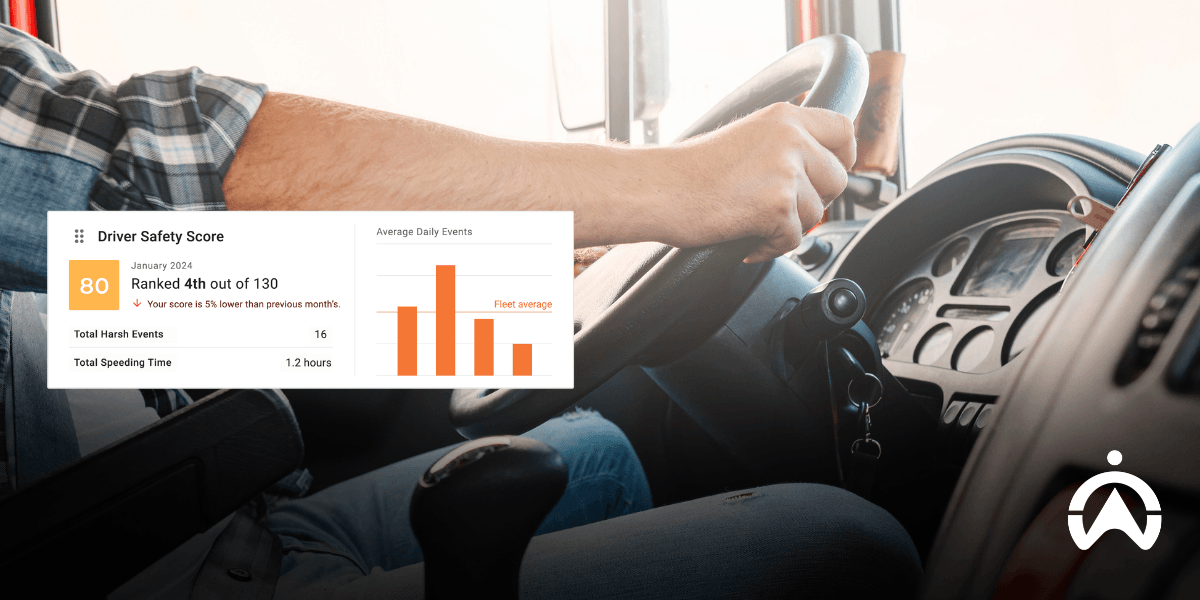
  • Driver monitoring: Through our AI-powered cameras and driver scorecards, you can monitor and record the lessees’ drivers and their behaviours on the roads. If they’re practising reckless behaviours, you can hold lessees accountable with real, tangible data.
    ‍
  • Industry-specialised sensors: You can fit your truck with fuel sensors, temperature sensors for specialised cargo bays, and more. If a lessee fails to maintain the right temperature for the cargo they’re transporting, you can be immediately notified, rectify that issue, and avoid spoilage claims with the right insights backing your statements.

Final takeaway: The roadmap to smarter leasing

The truck leasing business is seeing a serious commercial boom with start-ups, and it’s the kind of boom you’ll want to get involved in. This opens up a world of opportunity for you, but there’s also an understandable hesitancy with investing in new businesses.

Become the leasing partner that new businesses are fighting tooth and nail for, without lying awake every night concerned over the protection of your fleet. Actively choosing to bring together Cartrack’s smart systems with your transport leasing business means you make way for profitable, consistent growth. All of this while simultaneously championing the economy and supporting the little guy.

Don’t let the perceived risks of leasing to start-ups put the brakes on your profitability. Get a personalised quote with Cartrack today, and let’s keep your fleet (and the businesses you support) moving smoothly. 

Frequently asked questions on truck leasing and start-ups

How can I make money with just a truck?

You can make money with just a truck by offering moving and removal services, as well as renting out your truck. The most common moving and removing services include:

  • Helping people move homes
  • Removing junk & assisting people in clearing out unwanted clutter
  • Helping businesses move materials
  • Assisting with transportation for large appliance repairs
  • Towing cars

What are the top tips for a leasing business?

The top tips for leasing businesses include:

  • Having concrete, binding contracts in place with business partners that have been extensively vetted
  • Maintaining the correct and up-to-date licenses and permits
  • Ensuring that you have a fleet management system so you can proactively manage maintenance and have access to tools like GPS tracking & telematics for fleet safety
  • Ensure your renters or lessees are insured

Reactive vs. Planned Fleet Management: How Are You Choosing to Run Your Business

The way you manage your fleet will directly impact how much profit you yield. When you work your fleet until it’s completely broken, this is known as reactive management, which ends up costing your business more. But when you implement a proactive fleet management system, your profits will keep your business running and your pockets full.

When it comes to fleet costs, maintenance takes up quite a large portion of your costs. And with fuel costs already costing you an arm and leg, businesses need to see where they can save as much as possible. A major part of planned fleet management includes predictive maintenance.

According to industry research, predictive maintenance can:

  • “Reduce maintenance costs by 25 – 30%
  • Eliminate breakdowns by 70 – 75%
  • Reduce downtime by 35 – 45%
  • Increase production by 20 – 25%”

This is why investing in software and hardware from a provider like Cartrack Malawi can help your business plan better. This keeps your fleets on the road and your profits in your pocket.

What is the difference between reactive and planned fleet management?

Reactive fleet management is when you’re only aware of problems in your fleet after they’ve already occurred and are disrupting the workflow. Planned fleet management is when you’ve implemented hardware and software to monitor your fleet in real time. So you’re aware of how every part of your fleet is operating and can spot a problem before it impacts your operations.

What does a reactive fleet look like?

To get an easy understanding of what a fleet that’s run with reactive management looks like, let’s build a scenario. Barry has a delivery warehouse in Lilongwe, Malawi. He has 15 delivery trucks, 8 delivery motorbikes, 6 forklifts and 2 pallet jacks.

The problem

In the past 6 months, 8 of his trucks have broken down while en route to deliver goods to customers. 5 of the motorbikes are constantly in for repairs and mechanical issues. 4 of the forklifts are always breaking down, and the 1 pallet jack is faulty, but Barry doesn’t have enough funds to fix it. And on top of this, Barry is spending way more than he budgeted on fuel for his fleet.

So what does this mean for Barry’s business? Currently he’s behind on deliveries, and customers are leaving negative reviews online because of this. On top of that, some of his clients have stopped using his business to deliver their goods to customers.

Warehouse workers are frustrated that their workflow is constantly disrupted because of faulty or broken down machinery. And drivers are frustrated because they’re not meeting their targets due to vehicles being constantly out of service.

The reason

The main reason Barry can’t get any of this under control is because he doesn’t have full visibility of his fleet. He doesn’t know:

  • where he’s wasting money
  • how operators are handling their vehicles/machines
  • which machines are always in use
  • which vehicles/machines are never being used
  • what routes his drivers are taking, and
  • if fuel is being stolen. 

What does a proactive fleet look like?

Katlego has a delivery business in Lilongwe, Malawi. He has 19 delivery trucks, 6 delivery motorbikes, 4 forklifts and 3 pallet jacks. Before Katlego signed up to Cartrack’s fleet management system, he was experiencing similar problems as Barry, but now thanks to valuable data and insights his operations are running smoothly.

How did Cartrack’s fleet management system help?

Thanks to predictive maintenance insights from the system, Katlego was able to spot any failing parts in his trucks, motorbikes, and machinery before they actually broke down and disrupted his operations.

Data and insights informed Katlego which machines were always in use and which ones were never in use. This way, he was able to right-size his fleet to match the needs of his operations and rotate machines & vehicles among his staff so none were overused.

AI cameras and telematics gave Katlego valuable insights into how his drivers were operating his trucks. He was able to spot reckless driving habits like speeding and unnecessary idling that not only waste fuel but also damage vehicle parts. Cartrack also provided him with driver scorecards so he could individually coach and monitor each driver. 

MiFleet and fuel sensors allowed Katlego to accurately monitor fuel usage in his fleet. He was quickly able to spot drivers who were stealing fuel by not filling their trucks completely and tapping the rest of the fuel into their own jerry cans.

Advanced GPS telematics helped Katlego optimise his routes for his drivers so they always have the most efficient route to their destinations, saving time and fuel. Cartrack’s delivery management software optimised his delivery operations so he, his drivers and his customers were always aware of what was happening with their deliveries.

Why does reactive fleet management cost your business more?

When you have a reactive fleet management approach, it costs you more money because you don’t have actual insights to keep your fleet profitable. When you move to a planned or proactive fleet management system, it will initially cost you more because you need hardware and software. However, this will soon pay for itself.

Reactive management works great in the beginning because everything is new and works. But the longer you operate in a reactive state, the bigger your problems will get.

Planned fleet management allows you to actually see every aspect of your fleet, and if you use a provider that has it all, you’ll be able to monitor everything from one platform. Planned fleet management means you’ll know:

  • How your drivers are performing
  • How your staff are handling vehicles and machinery
  • When vehicles and machines need repairs or replacements (before they actually break down)
  • Where every drop of fuel is really going
  • Which routes your drivers are using
  • When to get a replacement vehicle 
  • If you’re overutilising or underutilising vehicles & machinery

How to transition to planned fleet management

If your business and fleet are stuck in the nonstop crisis-after-crisis way of functioning, it’s because of one thing: poor fleet visibility. The best way to transition into a more organised and functional fleet management style is to invest in a fleet management system.

How do I make sure I choose the right system for my business?

There are two main things any business should do when choosing a fleet management system.

  1. Look for a reputable business that can grow with your organisation and provide you with complete operational insights.
  2. Start with a trial. Try the system out on a vehicle or two and see how you find the system. Is it easy to use? Do you get the insights you need?

Once you do these two things, full implementation will be the next step for your business. You want full visibility of your entire fleet operations. This includes:

  • Driver behaviour & performance
  • Maintenance
  • Fuel usage
  • Fleet admin
  • Asset locations
  • Fleet performance
  • Vehicle utilisation rates
  • Delivery times
  • Fleet costs

How does Cartrack’s fleet management system give you full visibility of your entire fleet operations?

Cartrack is often only associated with vehicle tracking, especially in Malawi. But did you know that a major part of our business is to help businesses with fleets gain full operational control? So, if you’re looking for a fleet partner to help you transition from reactive fleet management to planned fleet management, this is how Cartrack can help you!

Driver behaviour & performance

Our driver management system can help prevent accidents by improving how your drivers are behaving on the roads. We have a smart camera system that’s powered by AI that will provide real-time in-cabin alerts when your drivers are showing signs of questionable driving. This includes:

  • Not wearing their seatbelt
  • Sleepiness
  • Looking at their phones
  • Smoking 
  • Tailgating

On top of this, you’ll have access to driver scorecards which allow you to coach each driver on their specific driving habits!


Maintenance

At Cartrack Malawi we understand the importance of having your fleet on the road and not in the workshop. When your machines and vehicles break down unexpectedly, it causes unplanned operational downtime, which costs profits.

Our advanced telematics system is able to accurately monitor the health of your vehicles, spotting a fault before it completely breaks down. It also allows you to set inspection checks so your vehicles are always monitored, as well as maintenance alerts so you’ll know when each vehicle is due for its service.

Fuel usage

Our fuel management system takes the guesswork out of your fleet’s fuel usage. You’ll instantly spot leakage, theft, fuel card fraud and inaccuracy. Our system makes sure you have eyes on every drop of fuel in your fleet.

Fleet admin

When your admin is done on multiple different systems or even worse, on actual paper… things get lost and unorganised. Having a Cartrack fleet management system can digitise and simplify all administration tasks for your fleet, so you’ll never be scratching your head trying to remember when a driver worked over time or if fines were paid.

Asset locations

To successfully implement a planned fleet management system, you need to know where every vehicle and machine is in your business. Cartrack’s advanced GPS tracking devices allow you to keep an eye on every asset in your fleet, yes, even your non-powered assets!

You can also set up geofences that alert you when any asset enters or leaves set zones.

Fleet performance

Are deliveries being made on time? Are your drivers working their set hours? Are you using the right size vehicles for each load? Is your fleet meeting its KPIs? Cartrack’s fleet management system can ensure you have all the data you need to measure and keep track of your fleet’s performance.

Vehicle utilisation rates

Do you know how effectively you’re using your fleet? Cartrack allows you to monitor every aspect of your fleet from one platform. You’ll get:

  • Real-time usage data
  • Downtime insights
  • Insights on underutilised vehicles. 

Delivery times

Having accurate delivery times keeps you organised and your clients happy. Cartrack can make sure your drivers take the best route, and the drivers closest to a delivery destination are designated to deliver those parcels.

A planned fleet management system includes having proper insights into deliveries so you can ensure that all deliveries are all happening when they should.

Fleet costs

The most important thing every fleet owner needs to know is how much their fleet is costing them to operate. This way they can see if they’re operating at a loss or not. Cartrack’s fleet management system provides you with insights and reports on your entire fleet operation.

With Cartrack you’ll have complete visibility into your fleet, from drivers to wasted costs. This allows you to successfully run your business with planned fleet management instead of running around putting out fires.

For more insights on fleet management, contact us and we’ll be more than happy to assist you!

FAQs

How does proactive fleet management improve driver satisfaction and retention?

Proactive fleet management improves driver satisfaction and retention by increasing the lifespan and safety of your vehicles. It also strengthens communication between management and staff. These factors greatly affect how valued your drivers feel, and when they feel seen and cared for, they’re more likely to continue working for you.

How often should I review and update my fleet management strategy?

It’s recommended that you review your fleet management strategy at least every quarter to once a year. This way you’ll have enough data to know where your fleet needs improvements and what’s working for your fleet. This information allows you to accurately update where necessary.

What is the 80/20 rule in maintenance?

The 80/20 rule comes from the Pareto Principle. This is a statistical concept stating that 80% of consequences stem from 20% of causes. For maintenance it translates to 80% of your downtime; maintenance costs and production losses are caused by roughly 20% of your assets.

The Best Way to Budget for Your Fleet Management

The best way to budget for fleet management is to know exactly how much it costs to run your fleet. This requires you to take your fixed costs, like financing and insurance, and your variable costs, like fuel and maintenance, to accurately evaluate every expense per vehicle.

Did you know that human factors contribute to over 90% of road accidents and fatalities? Now you might be thinking, what does that have to do with managing your fleet? But when you have a tool that actively monitors your drivers, you can significantly improve how they’re driving, which directly impacts how much money your fleet is using.

When you invest in a robust fleet management system like the one from Cartrack Malawi, you can easily make sure your fleet is staying on budget! Let’s see how.

Why do you need a tool to budget for your fleet?

You need a tool to budget for your fleet so that you’re able to accurately manage and control the high operational costs that come with running a fleet. Even if you only have a fleet of five cars, you need a tool to assist you with truly working out the TOC of your fleet. It’s almost impossible without one.

What’s blowing your budget in your fleet?

There are some major factors, both expected and unexpected, that can affect your fleet’s budget. When you don’t accurately monitor and track these things, your business will basically be throwing money away. You won’t truly know how much money your fleet is wasting; therefore, you won’t know how to stop it from happening.

There these are:

  • Fuel
  • Vehicle loss
  • Insurance
  • Maintenance
  • Negative driver behaviour
  • Hidden costs

Let’s break these down👇

Fuel

It’s common knowledge that fuel is one of the biggest expenses of any business. Refuelling your vehicles isn’t the only time your business is spending money on fuel. Fuel is also costing you money when it’s being wasted from excessive idling or stolen through syphoning. Ultimately businesses end up spending more money on fuel than what’s actually necessary.

Vehicle loss

When a vehicle is stolen/hijacked, a business is hit in multiple ways.

  • Vehicle replacement costs
  • Operational downtime
  • Loss of stock (stolen with the vehicle)
  • Increased insurance premiums
  • Additional admin costs

Depending on the type of insurance you have, excess fees alone can result in significant out-of-pocket expenses, and that probably doesn’t even cover the goods lost in the process.

On top of that, if you don’t have a spare vehicle, you’re going to lose money from the unexpected operational downtime.

That’s why when you don’t have the proper tools to protect the vehicles in your fleet, it’s like you’re just leaving money lying around for anyone to take.


Insurance

When you have a fleet, no matter the size, you need to have insurance. Trucks carrying cargo are more likely to have insanely high insurance rates. This is because trucks are not only very expensive, but they also spend a lot of time on the roads, travel on dangerous roads at odd hours, and often carry expensive loads.

Maintenance

Maintenance costs can rack up quite the bill for businesses. From smaller services like oil changes, brake pads and new tyres to major breakdowns and repairs that put your truck out of service for a while, these all end up costing your business money.

When you’re not monitoring the health of your vehicles, they’ll break down when you least expect it and reduce their lifespan, costing you thousands and thousands of rands. And it’s not just the repairs that cost you money; it’s the unexpected operational downtime that costs you as well.

Driver behaviour

While often forgotten, driver behaviour plays a major role in fleet waste costs. Driver behaviour affects costs through:

  • Excessive fuel usage: Aggressive speeding and harsh braking can cause your vehicle to use up to 30% more fuel.
    ‍
  • Engine wear & tear: Excessive idling, revving a cold engine, and shifting gears aggressively all place strain on the transmission and engine, meaning your vehicles will need repairs more frequently.
  • Damaged brakes & tyres: Speeding and harsh braking will burn through your brake pads and tyres, requiring replacements more often than usual.

Hidden costs

There are quite a few hidden things that are wasting money in your fleet, and you might not even realise it! These are:

  • Unauthorised vehicle use: Drivers using the company vehicles after hours or for personal trips waste fuel paid for by the company.
    ‍
  • Accidents without evidence: If an accident occurs and you have no evidence as to who was at fault, your company can end up footing the bill for fraudulent claims.
    ‍
  • Compliance penalties: When you don’t have the right tools to monitor your drivers, when it comes to a disciplinary process, you won’t have evidence to back your claims. Additionally, inaccurate logbooks can cause issues with MRA.

How does a fleet management system help you manage your fleet’s budget?

A fleet management system helps you manage your fleet’s budget by helping you see your fleet’s TOC. It uses a combination of hardware and software to accurately track and monitor your vehicles, assets, drivers and admin so that you have a complete overview of your operations all on one platform.

Let’s take the 6 main costs of a fleet and see how an FMS helps with these.

Fuel

A fleet management system helps you manage your fleet’s fuel budget in the following ways:

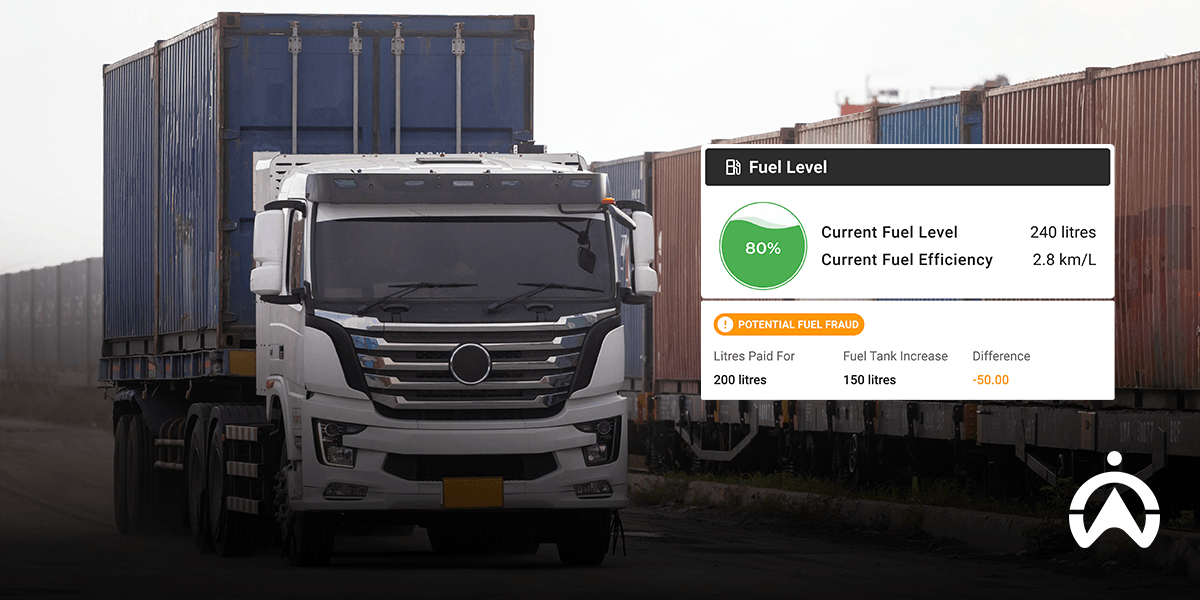
  • ‍Automatic transaction matching: Fuel card transactions work together with the telematics data, comparing the fuel purchased to the vehicle’s actual tank capacity at that exact moment. This way you’ll easily be able to catch any abnormalities.
    ‍
  • ‍Fuel monitoring: This is done with fuel level sensors that track every drop of fuel in the most accurate way. You’ll get an immediate alert if there’s a sudden drop in fuel. This way, you can spot fuel theft instantly!
    ‍
  • ‍Route optimisation: When your vehicles are travelling on inefficiently planned routes, they’ll end up wasting more fuel. This is because they’re not using an optimised route to get them to their destination more efficiently. FMS has a route optimisation feature that automatically provides your drivers with the best route possible, saving you time and money.
    ‍
  • ‍The Cartrack Malawi bonus: Our MiFleet cost management tool will automate all the logging of your fuel expenses so you can stop manual receipt capturing and prevent card fraud!

Vehicle loss

Vehicle theft and unauthorised vehicle use can lead to operational disruptions and financial losses for businesses in Malawi. A vehicle tracking solution from a provider like Cartrack Malawi can help improve fleet security, increase visibility, and assist with vehicle recovery when required.

For example, if you have a fleet of 60 trucks, you’re more likely to be a statistic. Tracking devices that are part of a comprehensive fleet management system can save your business hundreds of thousands of rands in the event of theft.

The Cartrack Malawi bonus: We have an anti-jamming Cartrack Tag that uses our unique radio frequency so we can track your vehicle even if the signal is blocked on your main tracking unit!

Insurance

How do you bring down the exuberant insurance costs? Having an insurance-approved tracking device installed in every vehicle in your fleet can play a major role in this. Installing cameras coupled with telematics data will greatly assist with accident claims as well! These tools can bring down the amount of money your business is spending on accidents and insurance.

The Cartrack Malawi bonus: Our track record makes us a top choice among insurance companies in Malawi!

Maintenance

An FMS can help you schedule and manage all vehicle maintenance tasks, from daily inspections to a gearbox showing signs of a malfunction. These insights mean your fleet is always in tip-top shape, and when a major repair needs to happen, you will have already known and prepared for it, avoiding a potential accident or unexpected breakdown.

These insights allow you to not only save money but also accurately budget for repairs as well.

The Cartrack Malawi bonus: We have custom sensor integrations for specialised machinery that can monitor the equipment. Providing you with data to assess their condition so you can implement preventative maintenance to keep these optimised for use and minimise unexpected breakdowns.


Driver behaviour

With a fleet management system, you can accurately monitor how your drivers are performing on the roads. The telematics device paired with AI-powered cameras allows you to not only have the data to see how your drivers were performing but also the visual data to see what they were doing while driving as well.

The major benefit is that the AI cameras not only immediately alert you as the fleet manager to a driving event, but they also come with instant in-cabin alerts so the driver is able to immediately correct their mistake.

The Cartrack Malawi bonus: Our system includes driver scorecards so your drivers are automatically rated on their driving performance, allowing you to individually coach each driver based on problem areas!

Hidden costs

When it comes to all those pesky hidden costs, let’s look at how having Cartrack’s fleet management system can help your budget:

  • Unauthorised vehicle use: Geofences allow you to monitor when a vehicle leaves an area it’s not supposed to. Driver ID tags will only allow authorised drivers to use certain vehicles, and you can see exactly who started a vehicle at any given time.
    ‍
  • Accidents without evidence: Our AI-powered cameras not only keep an eye on the road so you’ll have evidence for any dispute, but they also keep an eye on the driver for any reckless driving so that you’re able to coach them! This way you’ll save on fake claims as well as fuel and possible accidents from better driving.
    ‍
  • Compliance penalties: Our driver reports and cameras will provide you with indisputable evidence for any disciplinary cases. And our automated, tax-ready logbooks help ensure accurate record-keeping, making it easier to comply with requirements from the Malawi Revenue Authority (MRA).

The Cartrack Malawi bonus: Worried about how much you’re spending on lost or damaged stock? Our camera solutions can be placed inside the cargo area to monitor & record every time the door is opened, so you have eyes on your stock anytime anyone is near it!

‍If you’re ready to have a complete understanding of your fleet’s TCO, then give us a call to see how we can help you save money and budget more effectively!

FAQs

How do you create an efficient budget plan for managing your fleet?

To create an efficient fleet budget, take a data-driven approach. This approach will help to place your expenses into fixed and variable costs, lay out clear operational goals and guide you on how your vehicles are performing and which ones should be replaced or removed.

What is the fastest way to reduce my fleet’s variable budget costs?

The fastest way to reduce your fleet’s variable budget costs is through driver behaviour. When you manage and coach your drivers to drive better, you bring down variable costs drastically. Harsh braking and aggressive speeding both burn more fuel and place more strain on wear & tear parts.

What features should you look for in a fleet management tool?

Look for features that can grow with your business, offer seamless integration with software you already have, and make sure you always have mobile access to important information. Your platform should also give you easy-to-understand route info, GPS pinpoints, and driver behaviour alerts. Beyond these important features, also look for software with fuel management, predictive maintenance scheduling, and automated workflows.

Stop Data Fatigue in Your Trucking Company

You stop data fatigue in your trucking company by consolidating, prioritising, and actioning the information that comes through. This can’t be done with fleet management software that simply feeds you tonnes of information. Use AI-powered systems that make sense of your data so you can actually do something about it.

The global telematics market is expanding rapidly, bringing advanced tracking technology directly to African logistics networks. That’s a lot of data! We’re talking location points, camera footage, vehicle activity… THE WORKS! But what are you supposed to do with all this data?

Is it really helpful, or are we just being bombarded with information without the pragmatic tools to TAKE ACTION? Cartrack addresses this important question right here, so keep scrolling.

What is data fatigue in the trucking industry?

Data fatigue is when your trucking company receives a bunch of data about your drivers & vehicles without giving you context or the ability to take action. It also describes the problem of having disconnected data that isn’t coherent with other data. This leaves you without a “big picture” view of what’s going on or what to do about it.

In short: “Data fatigue is having information without insight.”

If you’re a fleet manager that uses a fleet management system, it’s probably an issue you deal with all the time. There are causes to this problem, and more often than not it’s the fleet management system you’re using.

Types of data that might be confusing you

When we talk about data, what are we referring to? Any information that’s fed from an IoT (Internet of Things) device to your fleet software platform is considered “data”, and it comes in different forms.:

  • Video footage
  • Location points on a map
  • Alerts
  • Vehicle diagnostics
  • Fuel levels
  • Vehicle speed, idling and sudden stops
  • Routes and route deviations
  • Fleet costs
  • Delivery reports like invoices & PODs
  • Vehicle access
  • Points of interest and geofences

These are just SOME of the data points you’re probably dealing with. There are a lot more, and all of it can become too much—or hard to prioritise. This is known as “data fatigue”, and it can be prevented.

Is it time for an upgrade? You decide.

Are you ready to get more out of your FMS? Let’s see if it’s possible.

Truck driver sitting inside a truck cab, illustrating how to stop data fatigue in your trucking company through better fleet visibility and simplified reporting

What causes data fatigue in logistics and what are pragmatic solutions?

Data fatigue can be caused by two things: a fleet management system that’s outdated or unable to interpret the data it collects, or the fleet manager’s inability to make sense of said data. AI has drastically changed the way data is interpreted, making it easier for fleet managers to make better organisational decisions—and provide justification for making them.

Which of the following data fatigue symptoms are you currently struggling with?

Lack of priority

One of the biggest challenges for fleet managers is organising their data so that small problems give way to more urgent ones. A truck driver that’s yawning isn’t as important as another driver that’s taking aggressive corners.

How can you know which one demands your attention more urgently?
‍

The problem?

You’re sitting at your desk getting multiple real-time data feeds showing you where your truck drivers are, and what their respective trucks are doing. There are 36 trucks out at that moment, and 14 of them are sending you alerts.

You’re not sure which alerts are actually urgent and which can be addressed at a later stage. It’s too much, so you focus on a truck that’s idling for too long rather than the guy who’s about to fall asleep at the wheel!
‍

The solution!

You just upgraded to Cartrack’s FMS, which allows you to set alerts according to priority. You’re immediately aware of the truck driver who’s just worked a long shift and needs to stop & rest before he causes a catastrophic accident. The driver that’s idling at a robot needs to be called and told to take a better route, but that can wait for now.

Data points that don’t talk to each other

Coherency is missing in many data-collecting FM systems. And it’s an underrated feature to say the least! Without coherency, all you have is information overload. The human brain can’t easily make connections between multiple data points quickly enough to make a real positive impact on their decision-making. 

Do you have a big-picture view of your fleet right now?
‍

The problem?

One screen shows you the location of all your drivers. Another is listing alerts that require your attention. Another is showing you different routes each driver is taking. You even have a dedicated screen showing you live driver footage.

All of this is valuable, but only if it’s connected. You begin to realise that your sole job as a fleet manager is wrecking your brain trying to connect the dots between locations, alerts, driver profiles, and camera footage. It’s all too much, and you end up wasting time.

Oops, you’re so distracted you completely forgot about that truck that needs a service! Guess that means logistical downtime… 3 deliveries will probably be late. Feeling overwhelmed yet?
‍

The solution!

AI can see the connections between all your data points. It’s constantly running algorithms that provide calculated outcomes that are RELEVANT to what needs to be done. Take context, add prioritisation, and you have enough to make a quick decision that saves money, time, and reputation.

Oh and by the way… Don’t worry about that truck that needs a service. Your new FMS from Cartrack scheduled that for you automatically 2 weeks ago. It’s all taken care of.

Data that’s not actionable

Knowing and doing are two different things. Decisions need to be made, and it’s your job to make them. You might be aware of a collision 300 kms away in Lenasia, but what can you realistically do about it from your office in Bloemfontein?

Do you have the tools to protect your drivers and your trucks if something bad happened right now?
‍

The problem?

One of your trucks just broke down. Not the end of the world, but you’re sitting 200 kms away, feeling kind of helpless. You’ll have to call roadside assistance and give them the location of the truck, but you’re not sure if the problem is really that serious—neither is your non-mechanically-minded driver.

Little do you know, it’s nothing more than a corroded battery terminal. Easy to fix, but you just lost thousands on towing, a mechanic, and the downtime caused.
‍

The solution!

You were wise enough to get Cartrack’s add-on roadside and medical assistance. An expert already knew where to find your driver and knew exactly how to temporarily fix the battery problem. The delivery only suffered a 45-minute delay.

Fleet of semi-trucks with Cartrack vehicle tracking and trip management software, helping stop data fatigue in your trucking company

How should fleet management software remedy data fatigue?

Effective fleet management software will remedy data fatigue by offering a system that’s comprehensible, coherent, and capable. These 3 Cs point to data that’s easy to understand, provides context, and is accompanied by tools that enable immediate action. Older systems that neglect these abilities will fall away as more advanced ones take their place.

Data that’s comprehensible

This has a lot to do with user interface (UI). This is where the data is presented on your screen. Does it make sense? Is it easy to interpret? If it is, you can make a quick decision. If it’s not, you’re actually wasting more time than you’re saving.

Cartrack offers a fleet management platform that’s compatible with your phone and PC. Information at your fingertips; 24/7. It’s not showing you irrelevant data—it’s showing you exactly what you need to know in real time, enabling you to make a call right there & then.

Data that’s coherent & connected

Your company spent good money for an FMS that provides different KINDS of data. This could be video footage, location data, driver information, vehicle diagnostics, and even delivery progress.

These points need to work together, or else it’s left to you to make sense of it all. Algorithms run by Cartrack’s AI fleet software will show you what’s URGENT, and what needs to be ACTIONED. Plus, it gives you the tools to take that action immediately.
‍

Why?

Because it’s already made the necessary connections between all those complex data points. All you need to do is make a decision based on the simple-to-read information on your screen.

Data that’s capable of influence

While AI might make some of us apprehensive, it’s actually come a long way to make our lives a lot easier. This is especially true in the realm of fleet management, because AI tools are now automating much of the tasks you did before it arrived.

Not only are Cartrack’s vehicle cameras identifying potential driving hazards, they’re also WARNING drivers of those hazards in real time!

Not only does our software predict your vehicle maintenance needs, it proactively SCHEDULES service appointments for you!

Get the picture? Cartrack is offering you software that TAKES ACTION—because let’s face it; you’re busy enough! 

Which FMS in Malawi provides INSIGHT over information?

If you’ve been paying attention, you already know that Cartrack is among the top fleet software management platforms that provide INSIGHT over information.

Is data important? YES! But not as important as context. Real life is happening all the time, and as a fleet manager, you’re responsible for so much.

Get fleet software that’s clear, simple, connected, and leads to action. Anything less is likely hurting your profits, placing your drivers at risk, and causing more problems than it’s solving.

Get an upgrade.

Frequently asked questions about data fatigue in trucking

What can I realistically do if my truck driver is driving recklessly?

If your truck driver is far away and you notice they’re driving recklessly through your telematics system, you can either contact the driver immediately or rely on automated correction. For example: Cartrack offers cameras that speak to your drivers with alerts, telling them to correct their behaviour in real time.

How can truck drivers be held accountable for their driving actions?

Truck drivers can and should be held accountable for their driving actions with the help of telematics. This is a combination of vehicle diagnostics that’s coupled with vehicle cameras, giving you a full picture of what they’re doing. If a problem is highlighted, you can use irrefutable evidence in your training sessions to correct bad driving.

How do I protect my trucks from theft and GPS signal jamming?

Protect your trucks from theft and GPS signal jamming with the Cartrack Tag. This intuitive little device acts as a backup tracker for your vehicles because it’s easy to hide, and doesn’t rely on cellular signals to keep your assets visible. So if your tracking device is being jammed, we’ll still be able to track your vehicle.

Why You Need a Utilities Fleet Management System for All Your Providers of Gas, Water and More

Utilities that provide our cities with gas, water and electricity need a fleet management system to stay on top of which drivers are where, and when they’ve completed a task. These are the services that keep our cities & homes functional, so speed and efficiency are paramount.

Malawi supplies a total of about 4.5 Mtoe (Million Tonnes of Oil Equivalent) of energy each year, according to research compiled by global energy databases. This pool of energy is managed by ESCOM, which means they decide who gets switched on and who gets switched off.

Many of these organisations also works alongside individual gas & water management entities, and road travel is a big part of each one. If you manage one of these entities, pay attention as Cartrack explores the need for FMS in utilities.

Why do utilities need fleet software to manage their drivers and fleet?

Utilities should manage their drivers and keep track of their vehicles using software because thousands of people rely on their services for basic home & business needs. Because road travel can prove precarious at times, keeping drivers safe, on time, and accountable is how risks are managed and service is maintained.

The “fleets” you see servicing communities (like maintenance trucks for water & power or rubbish collection vehicles) are a mix of government-owned and privately managed services.

How does this work? While the responsibility for the service lies with the provincial government, the active management of vehicles is mostly outsourced to private specialists.

This means that each individual area within a country is affected by how efficient those fleets are. If a utilities fleet is badly run, the residents of that city or town will suffer as a result.

Risky business: How utility providers manage unique industry risks

Utility providers can protect their drivers through regular coaching, vehicle camera systems, and a proactive maintenance strategy. It’s also important to protect each vehicle too, because your drivers rely on these vehicles to get from point A to point B safely.

More importantly, residents need to be protected. Utility workers are performing tasks that could cause explosions (gas), electrocution or fire (electricity) or even flooding (water). With fleet management software you can control your fleet better and manage these risks to better prevent them.

Safety culture

Utility workers do the same job day in and day out. This can breed complacency, which is a hotbed for incidents. Managing your fleet beyond just its vehicles helps you create a safety culture that keeps your workers accountable.

It’s not just about your drivers—it’s about ALL your workers.

This is never more true than in situations where your utility workers are in high-risk areas. This is when they and you need to be on high alert. 

Fleet management software comes with handy tools like geo-fencing which alerts you to those times when these high-risk visits are actually happening—helping you prioritise your attention. It also comes with panic buttons so that your workers can urgently alert you to a crisis if one happens—helping you to react fast to mitigate disaster. 

Driver behaviour

Drivers can be their own worst enemies sometimes. Accidents in fleets are often caused by distracted driving, cellphone use, or speeding. Time to take control! Minimise these habits and you’ll have a significant effect on the common risks drivers face. You’ll also keep the residents you serve safe from fire hazards, gas explosions and flooding from burst water pipes.

How?

  • ‍Camera setups for vehicles integrate well with coaching systems. Having both lets you train your drivers with FOCUS. It removes doubt about where your drivers are struggling and gives you indisputable footage that you can use to adjust risky driver habits.
    ‍
  • ‍CAN bus integration reads important diagnostics about your vehicles in real-time, allowing you to set up alerts when drivers are speeding or get into a collision. CAN bus also reads real-time power-related actions of other equipment like cranes, lifts and pumps, which are right there in the midst of the most dangerous areas.

Whether you choose one of these or both, you’ll get valuable, high-quality data to keep your drivers on the straight & narrow. 

Truck driver operating a utility vehicle, illustrating how a utilities fleet management system improves fleet visibility and driver monitoring

Third-party and other incidents

What about everyone else on the road? Your drivers are at risk every day due to the bad driving of others—not to mention damaged roads, unexpected obstacles, and extreme weather conditions.

  • ‍For third-party risks: Vehicle camera systems keep others accountable when they surround or encounter your utility drivers. Not just on the road, but while they’re working too.
    ‍
  • ‍For damaged roads and obstacles: Route optimisation software can help your drivers avoid bad routes by instantly redirecting them to safer, quicker ones.
    ‍
  • ‍For extreme weather: Emergency roadside and medical assistance is available for those who want to safeguard their drivers against weather-related accidents or breakdowns.

Vehicle protection

The vehicles are what carry your utility service deliverers. If driver safety comes first, vehicle safety is a close second. But is tracking enough these days? Thieves are wisening up to tracking devices and using jammers to scramble their signal.

As usual, Cartrack is one step ahead. We use hardwired tracking devices AND offer the Cartrack Tag as a backup if your regular device gets jammed.

If you really want to upgrade the security of your utility vehicles, consider our freely installed cameras that record everything that happens in and/or around your vehicle. Vandalism, theft, or hijackings—our cameras pick up everything!

The service delivery bridge: Satisfying residents

At the heart of fleet management for utilities is a focus on service delivery. Unlike most fleets, utility fleets keep the wheels turning for residents & businesses, placing high importance on speed, scheduling, and proof-of-service. Can FMS meet the challenge? Yes—and more.

Priority scheduling

When it comes to turning someone’s water back on or delivering a canister of gas before nighttime supper, priority plays a role. In utilities, certain tasks are more important than others, which is why scheduling is so important.

Cartrack’s workforce optimisation app boosts your utility service productivity by automating task assignment and optimising the workflows of your technicians. It does this using AI-powered algorithms that prioritise some jobs over others based on your managerial discretion.

Getting there FAST

Good service means speedy arrivals. Part of what Cartrack’s workforce optimisation software does is provide you with optimised routes so your drivers bypass traffic, damaged roads, and long routes. Residents and business owners will appreciate your dedication to quick utility fixes like switching on their power or getting their water turned back on.

Completing tasks

When one of your technicians finishes their task, you have to rely on their word. So does the resident. This can often lead to disputes that are nuanced in various ways. But when you have conclusive evidence of a job being completed, disputes become much easier to resolve.

For utility companies, this saves time & money, enabling your team to complete more tasks per day. Whether it’s a digital photo, an electronic signature, or a digital copy of a document, tasks flow more seamlessly when you have a system that WORKS.

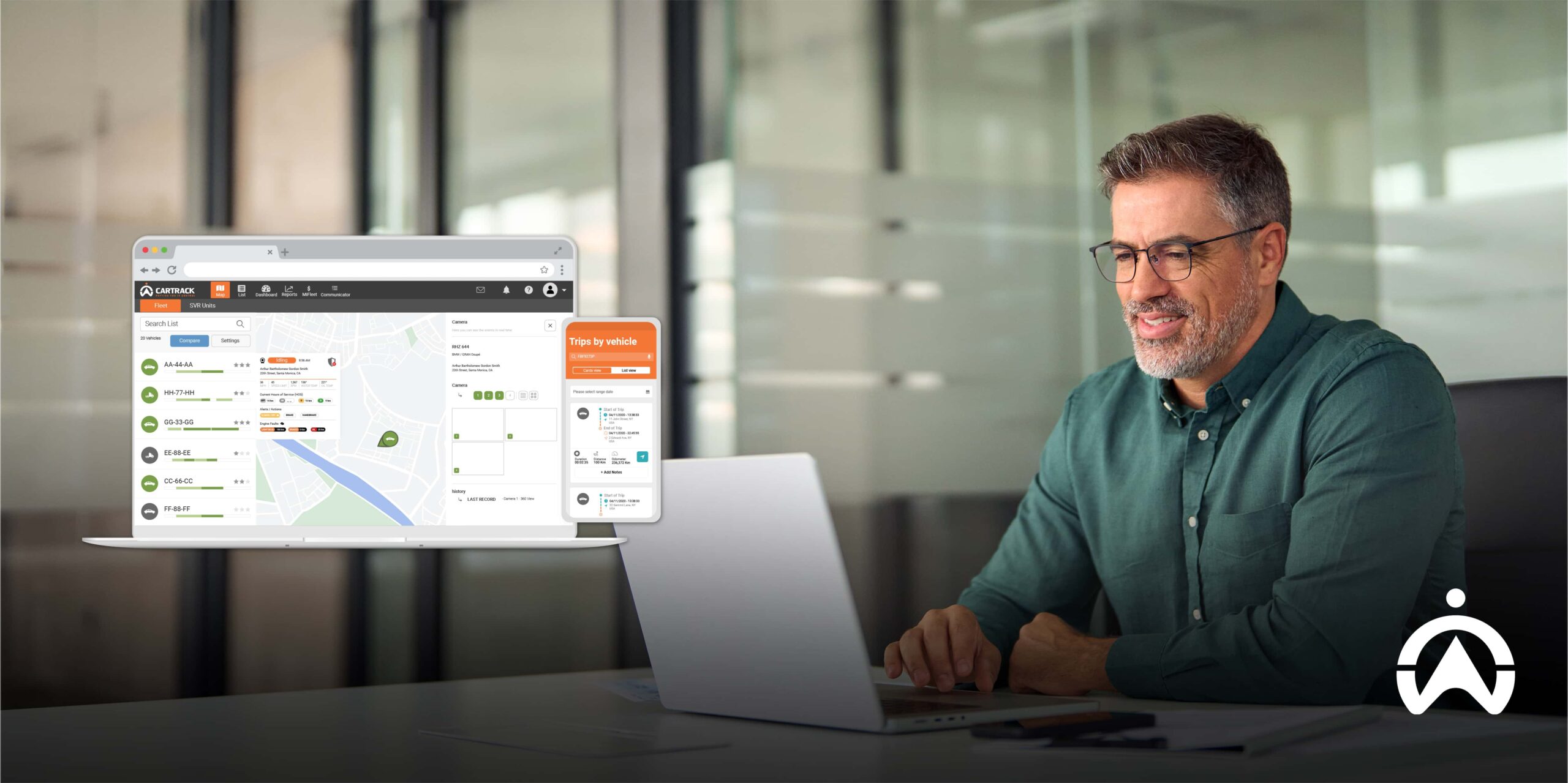
Manager using the Cartrack fleet management system with live vehicle tracking and trip data for utility fleet operations

It’s still a business: Keeping profit margins high

At the end of the day, a utilities company needs to turn a profit. It’s a business after all, and money keeps things running—not just for the business, but for the town or city being served as well. To keep profit margins high, using a fleet management system is being regarded as a necessity rather than a luxury.

Why pay for something unless it’s delivering a decent ROI? Let’s find out how FMS safeguards your profits. 

Negotiating insurance

Every vehicle in your utilities fleet needs to be insured. This is one of the biggest overheads you’ll have, and risk profiles affect just how big it ends up being. You may not know this, but insurance companies LOVE high-security features on your vehicles. They lower your risk profile and make disputes easy to resolve.

Adding alert systems, vehicle cameras and tracking devices to your vehicles gives you the leverage to negotiate your insurance premiums. And let’s be frank: every rand you can save makes a difference to your annual profit over time. 

More service… higher profits

A good FMS should be designed to help your team service more residents. Through route optimisation, task completion evidence and fuel savings, your team can reach more people in less time. Your productivity goes up, and invariably, so do your profits. 

Fuel cost management

Fuel is where you should see the biggest savings. Some fleet companies that use Cartrack report up to 24% savings on their fuel overheads. Why shouldn’t utilities companies enjoy similar results? Your vehicles are on the road A LOT, so every small adjustment you make adds up.

What’s the best fleet management software for utility fleets?

When it comes to features that fit the daily operations of utility fleets, Cartrack emerges as a solid fleet management service provider. Our security features are layered, and you get to choose which ones you want without paying for ones you don’t use.

It’s also worth looking at a solution that helps your fleet operate seamlessly, because this means better safety, higher profits, and a good reputation that just keeps developing over time.

Talk to our consultants about what you need, and we’ll discuss a range of features that will keep your utility fleet flowing, keeping your area of residents supplied and satisfied. 

Frequently asked questions about utilities fleet management systems

How do utility fleets differ from other fleets?

Utility fleets differ from other fleets in that they’re an essential service rather than a luxury or commercial service. Their vehicles are often on the road more often than those of other fleets, and they must regularly operate and function well in rural areas.

How do my technicians provide proof of job completion?

Technicians can record proof of a completed job by either recording a digital signature or taking a screenshot of a signed document. They can also take mobile pictures of a completed task (like a switch or a fixed water pipe) and these will be kept on the FMS system if it needs to be referred to later.

Can FMS be used to notify residents of impending water or power disruptions?

Cartrack’s FMS can’t be used to notify a large area of people about water or power disruptions. It can notify individual residents of scheduled tasks who may have called or emailed about a problem and provided their details, but this is rare. In utilities, FMS is mostly used to simply increase efficiency.

ESG in Your Fleet Management and Understanding Your Carbon Footprint

Implementing ESG in your fleet management strategy and understanding your carbon footprint is incredibly important for fleets in 2026 and beyond. It’s a challenge for businesses to manage their carbon footprint while customer demands rise, and the need to stay ahead of their competitors intensifies.

Real-world studies have shown that adopting eco-driving strategies—those that focus on speeding, harsh acceleration, and idling—can cut your fuel consumption and CO₂ emissions by 5% to 12% almost immediately.  

This proves that you don’t need to replace your entire fleet with electric vehicles overnight to make a significant impact. By simply using data and software to improve how your drivers are handling your vehicles, you can significantly reduce your carbon footprint! 

What are the key ESG metrics for fleet performance reporting?

The key ESG metrics for fleet performance reporting are centred around lowering your environmental impact, improving driver safety, and upholding operational governance. The ESG metrics you should monitor are:

  • scope 1, 2, & 3 GHG emissions,
  • fuel and energy consumption,
  • driver safety score, 
  • driver turnover rates,
  • regulatory compliance rate, and
  • supplier ESG standards.

How can I integrate ESG principles into my fleet management strategy?

Integrating ESG principles into your fleet management strategy starts with taking actionable steps like prioritising driver safety, optimising routes, and introducing electric or hybrid vehicles into your fleet. By applying these practices into your daily operations, you’ll ensure the long-term success of your sustainability goals while minimising your fleet’s environmental impact.

Let’s take a deeper look into these principles… 

Corporate citizenship in fleet management

Corporate citizenship is the extent to which businesses are responsible for their actions and impact on their community, the environment and their employees. Environmental, social and governance (ESG) principles need to be embedded into the core of a company’s strategy.

A strong corporate citizenship is what builds a company’s reputation, develops customer and employee loyalty, and can result in an increase in shareholder interest and lower regulatory pressure.

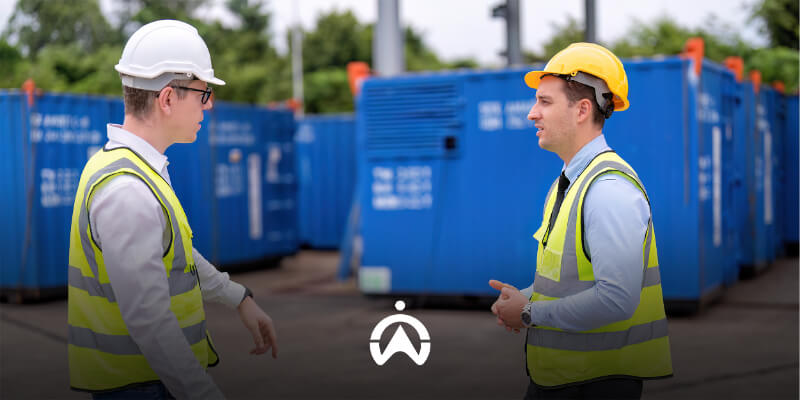
Three warehouse workers in high-visibility jackets standing in front of fleet trucks, highlighting ESG in fleet management practices.

The environmental footprint (the “E” in ESG)

According to research, “the transport sector accounts for approximately 16% of global greenhouse gas emissions… particularly in road transport, which remains the main contributor to these emissions”.

To successfully reduce your environmental footprint, here are some of the things you can implement in your fleet:

  • Optimise route efficiency: Digitalising route planning allows you to reduce the amount of time your fleet spends on the road and automatically finds them the most efficient routes to travel.
    ‍
  • Predictive maintenance: When your vehicles are regularly maintained, you’ll ensure that all your vehicles’ engines are operating at optimal efficiency with effective combustion. Having digital inspection reports and engine diagnostics will simplify this process for your fleet managers, and you’ll ensure your fleet is performing efficiently at all times.
    ‍

Social and community impact (the “S” in ESG)

Get the latest tech in your fleets to further your teams’ success—rather than using it to reprimand them. Shift your corporate mindset from blame to empowerment. Here’s how you can start:

  • Prioritising driver safety: Tech like driver scorecards and AI-powered cameras that can detect high-risk driver behaviour (like speeding or distracted driving) provide real-time, audible, in-cabin alerts so drivers can self-correct.
    ‍
  • Promote transparency & trust: Automatic and accurate reporting of working hours lets you guarantee fair compensation and legitimate overtime claims, eliminating any disputes between workers and management.

Governance and compliance (the “G” in ESG)

You need to make sure your operations remain objective and reliable to eliminate any bias in the workplace. This is done through data-driven decisions from a single source of truth and information.

This can be achieved through:

  • Regulatory compliance: Digital tools can help you ensure that your drivers aren’t exceeding governed working hours and that mandatory document renewals like licences and maintenance certifications are up-to-date.
    ‍
  • Privacy & data protection: You have to make sure that your fleet systems are GDPR compliant and offer “private mode” features for your drivers so that vehicle data during personal time is hidden.

Steps to implement sustainable fleet management practices

Take these steps to successfully implement sustainable fleet management practices in your business:

  • Assess your fleet
  • Introduce alternative vehicles into your fleet
  • Implement a telematics system
  • Train drivers to drive more eco-friendly
  • Install renewable energy sources
  • Set up a fuel management strategy

Assess your fleet

Before you start implementing any sustainable and eco-friendly practices into your operations, you have to first accurately assess your current fleet. Find out how much fuel your fleet is currently using, how the engines are currently performing, and what the average mileage of your fleet is.

Introduce alternative vehicles into your fleet

Mixing your fleet with hybrids, electric or hydrogen-fuelled vehicles is an expensive but great way to reduce your carbon footprint. If you’re feeling a bit hesitant to upgrade your entire fleet in Malawi (because infrastructure for these vehicles is still in its preliminary stage), start off with one or two vehicles to test their feasibility.

Hand holding an electric vehicle charging plug at a station, demonstrating how to lower your carbon footprint through green fleet management.

Implement a telematics system

Installing telematics systems in the entirety of your fleet is the best way to build a sustainable fleet. Telematics will provide you with insights on driver behaviour like speeding, idling and harsh braking, which all burn more fuel and increase your carbon footprint.

GPS tracking and AI-powered software assist with route optimisation so your drivers will use more efficient routes. Subsequently, you’ll consume less fuel and spend less time on the roads.

Telematics also gives insights into how your vehicles are performing. Preventative maintenance tools will ensure your vehicles are performing optimally at all times. Poorly maintained vehicles are less fuel efficient and have a shortened life span, which contributes negatively to your sustainability goals.

Train drivers to drive more eco-friendly

The cheapest way to build a sustainable fleet is by training your drivers to have more eco-friendly driving habits. The way your drivers handle the vehicles on the road directly impacts how much fuel they consume.

Train your drivers to practise driving habits like:

  • Smooth acceleration
  • Proper gear shifting
  • Keeping an optimal speed
  • No excessive idling

All of these can contribute to substantial fuel savings and reduced emissions.

Install renewable energy sources

If you have electric vehicles in your fleet, you should install solar-powered charging stations in your depots. When you invest in sustainable infrastructure in your business, you not only guarantee long-term savings; you also significantly reduce your business’ carbon footprint.

Set up a fuel management strategy

The best way to understand and minimise your fleet’s carbon footprint is by setting up a fuel management strategy. Using a combination of hardware and software, you can accurately monitor the fuel usage of each vehicle and machine in your business.

A comprehensive fuel management system includes:

  • Driver behaviour monitoring
  • Proactive maintenance
  • Fuel usage reports
  • Insights into preventing/spotting fuel theft and fuel card fraud

If you’re ready to understand your carbon footprint and successfully implement ESG in your fleet management, contact us today to get our comprehensive fleet management system and all our add-ons to help make your fleet greener!

Frequently Asked Questions

How to calculate my fleet’s carbon footprint accurately?

Accurately calculate your fleet’s carbon footprint with either a mathematical estimation or a telematics measurement. Estimating involves multiplying the total litres of fuel consumed by 2.68kg (diesel) or 2.32kg (petrol). Telematics is more accurate, providing real-time data on fuel consumption, idling and mileage, giving you automated reports that show accurate vehicle performance and monthly emission totals.

How can a fleet reduce its carbon footprint through route optimisation software?

Route optimisation can reduce your fleet’s carbon footprint by minimising your fleet’s fuel consumption on the road. Advanced route optimisation will use real-time data and GPS tech to automatically update your drivers’ routes, finding them the most efficient and shortest route possible.

How can telematics data reduce a fleet’s carbon footprint?

Telematics data can reduce a fleet’s carbon footprint by providing your business with relevant data that measures your sustainability. A telematics system will provide you with insights on driver behaviour, vehicle performance and fuel management insights, which all work to reduce your fleet’s overall carbon footprint.

How to Prevent Generator Theft in Your Business

To prevent generator theft in your business, ensure it’s locked behind a steel cage, secured in a well-ventilated structure, marked/etched with your business logo, and tracked. The best results come from a combination of traditional and advanced security measures. Not only do they help you save on replacement costs, but they also ensure you keep downtime minimised.

Businesses across Malawi are facing an increasing challenge of equipment theft. With frequent power disruptions linked to the national electricity supply situation, many organisations have had to invest more heavily in backup power solutions such as generators.

This growing reliance on generators has led to increased operational costs as businesses try to keep operations running during outages. In this context, generator theft protection has become an essential part of business risk management and should be factored into any operational budget, especially given the reliance on backup power during supply interruptions from the Electricity Supply Corporation of Malawi grid.

Let us guide you through the dos and don’ts of generator security. Read our blog to understand why thieves target energy equipment, get insights on the best protection methods, and see how Cartrack can become your partner in generator tracking & safety. 

What can you do to protect your generator from being stolen?

To protect your generator from being stolen, you should:

  • Track the asset
  • Secure it in a well-ventilated structure
  • Keep it locked behind a steel frame
  • Add high-quality chains and locks
  • Reinforce security and protection measures around your building
  • Permanently mark/etch your generator with the brand logo
  • Anchor your generator (if it’s a fixed structure)

Bringing together a combination of traditional security methods with advanced technological ones is what could save you from disappearing generators.

Traditional and practical solutions

To protect your generator using traditional and practical solutions, consider the following:

  • ‍🍃Secure the generator in a well-ventilated structure: Keep your generator hidden and away from prying eyes within a closed structure, like a shed. The structure MUST be well ventilated, positioned away from your workers, and (if applicable) far from your personal property.
    ‍
    In the process of creating energy, generators produce carbon monoxide, which can be extremely lethal. They can also potentially overheat.
    ‍
  • ‍⛓️Keep the generator locked behind a steel frame: A steel frame or cage is a straightforward method to keep your generator protected, especially if it’s a type of steel that’s reinforced and created with strong welds.
    ‍
  • ‍🔩Anchor the generator: In addition to locking the generator, fixing your generator to the ground makes it that much harder to steal. This can be done by securing the cage or using concrete anchors.
    ‍
  • ‍🔐Add high-quality chains and locks: Use high-grade, heavy-duty chains and locks to secure the steel cage that the generator’s in. This might seem like a very obvious and not too secure method, but it’ll still add that extra layer and make stealing it that much harder.
    ‍
  • ‍✍️Permanently mark/etch your generator: If your generator is clearly and permanently marked with your business logo or serial numbers, this makes it far more difficult for thieves to resell it. Buyers will suspect that what’s being sold is stolen and may not want to purchase the item.

Advanced security measures

To protect your generator using advanced security measures, consider the following:

  • ‍📍Track the generator: Use a portable or asset tracker for your generator. If some thieves do manage to run off with it, then you have a good chance of getting it back if you’ve partnered with a reliable tracking company, much like Cartrack.
    ‍
  • ‍⏺️ Reinforce security and protection measures around your building: Up the security and camera presence around your business’ grounds. Consider motion cameras, sophisticated alarm & tamper systems, electric fences, and access control or biometric systems.
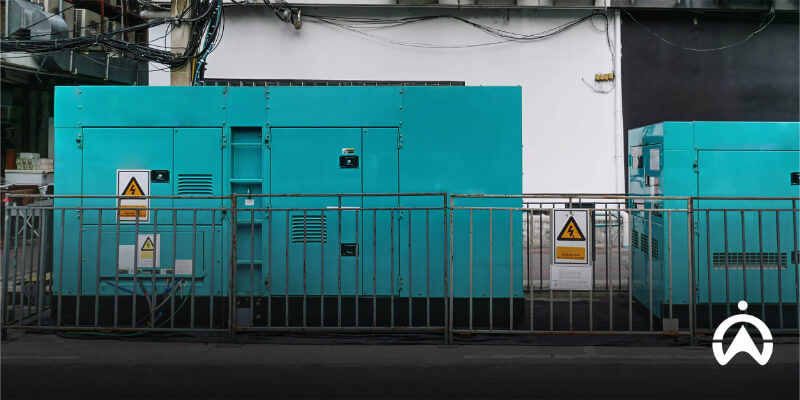
Large teal industrial generators secured behind a metal fence to prevent business generator theft.

Why is generator security and safety important for your business?

Generator security and safety are important for your business because not only are they a necessary component to keeping your business going, but they also encourage you to take responsibility for your setup. Generators work by burning fuel (usually diesel) to produce electricity, and this process generates carbon monoxide.

Carbon monoxide is dangerous because it’s a silent killer. It’s odourless and colourless, so you don’t always know it’s present unless you have a carbon monoxide detector. It can also quickly become an electrical or fire hazard if you don’t handle your generator properly, and the last thing you want is to injure yourself or another staff member.

Keeping your generator secure keeps your business going and downtime minimised. This results in numerous benefits, like happy customers through operational consistency, keeping profits up, and general overall improved security in your business.

Why do thieves target generators and other business equipment?

Thieves target generators and other business equipment because it can be an easy and rewarding opportunity. The biggest reason is the large profit; typical business equipment and generators can be resold in second-hand markets for very high prices.

Reseller thieves also make it easy for buyers to purchase the stolen equipment, selling without the hassle of thorough verification.

Thieves also tend to take advantage of bigger warehouses or facilities because equipment isn’t always looked after properly, or the site is just a little more vulnerable with numerous entry points. If your generator or equipment isn’t permanently marked with a business logo, number, or name, this makes it even easier for thieves to resell.

Make sure you implement all the safety measures possible to maximise your risk management.

How can Cartrack help you keep your generators protected?

Cartrack can help you keep your generators protected by offering the Cartrack Tag. The Tag is a portable tracking and backup anti-jamming device that can be used in vehicles and for asset tracking. It’s perfect for your generators because it’s discreet and wireless, making it tough for thieves to make off with them without us knowing—even if they try.

The Cartrack Tag is completely unaffected by signal jamming, which is a technique that many thieves use to steal vehicles and other GPS-tracked assets. This is because the Tag doesn’t depend on cellular networks; it operates on its own radio frequency.

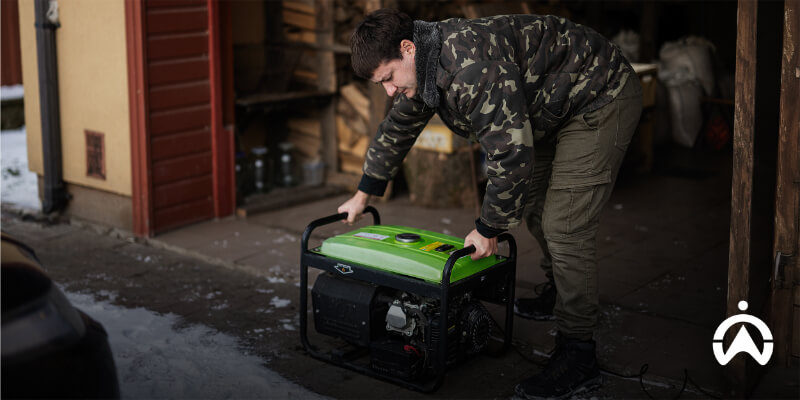
A person in a camouflage jacket securing a green portable generator outdoors to prevent business equipment theft during winter.

How does the Cartrack Tag work?

The Tag’s radio frequency is called the CPRF (Cartrack Proprietary Radio Frequency) Network. This network acts like a beacon of sorts, sending out consistent pings. The Tag then uses a method that we call ‘crowd searching’.

If someone takes your generator and puts it in a moving vehicle, any other vehicle equipped with a hardwired tracking device that it passes will report your stolen car. This data allows our control room to accurately locate the Tag, and ultimately your generator!

If you want to look at this from a different angle, think of this process as a relay race. The Tag is essentially ‘passing the baton’ to every car fitted with a hardwired device on the road; each of the devices is a teammate.

The teammates send locational data back to the control room. Thanks to hardwired devices being heavily present in so many vehicles across the country, our coverage is extensive and powerful.

How’s this type of monitoring best for my generator?

The Tag pings every 40 seconds, sending a notification of the generator’s location to our control room. It’s important to note that you won’t see the location of your Tagged generator; only our control room team will. Customer visibility is restricted to elevate the level of security and stop potential thieves from seeing where your generators are.

But don’t fret; we see this as discreet protection and one of our biggest strengths. Criminals are typically looking for the most obvious systems, and yet our Tag works silently in the background, away from malicious eyes.

Final takeaway: Safeguard your energy source

Your generator keeps your business alive during blackouts and outages, which makes protecting it an absolute priority. By blending physical barriers with clever, discreet tracking technology and advanced measures, your investment will remain right where it “generates” the most value.

With Cartrack you can secure your equipment, protect your revenue, and keep the power going.

Keep the power on and the thieves off. Call Cartrack to get your safety and tracking solution for your generator today!

Frequently asked questions about generator theft and protection

Where should you not put a portable generator?

You shouldn’t put a portable generator in a completely enclosed space, inside your home, or near your house. Keep it in an outside structure like a shed. Ensure that the place is clean and free from wet conditions, that the structure is far enough from your home, and that it has airflow to avoid carbon monoxide buildup.

Can I put a tarp over my generator?

No, you can’t put a tarp over your generator, because it’ll become a fire hazard by blocking airflow and trapping carbon monoxide. The best thing to do is to place the generator in a dry, safe structure with sufficient airflow. Technically, you can cover your generator with a tarp, but only when the generator is off.

What is the responsibility of generator owners?

The responsibility of generator owners is to be strict about safety guidelines and to keep everyone protected from carbon monoxide poisoning and fire hazards. Owners should ensure generators are installed & stored properly, they’re regularly maintained, and they comply with any safety/responsibility requirements.

Top Fleet Management System for Your Forestry Management

To successfully manage your forestry operations, you need to invest in the top fleet management system available. A fleet management system can help your forestry operations by providing you with:

  • real-time tracking,
  • route optimisation,
  • fuel and driver management,
  • enhanced safety, and
  • overall operational productivity.

Fuel is a major cost for forestry enterprises, and with global tensions causing fuel to rise ,a fleet management system is essential. An FMS can greatly assist with monitoring fuel usage in your entire forestry fleet, and this is only one of the perks of having one!

‍Cartrack’s fleet management system is designed to give your business complete operational intelligence. You’ll not only have eyes on your entire fleet, but also data to back up your operations. If you’re ready to learn about how Cartrack is the top fleet management system for your forestry operations, then keep scrolling.

Why do you need a fleet management system for forestry management?

You need a fleet management system for forestry management so that you can optimise your entire forestry operations. An FMS can ensure that your operations that are based in remote locations are running smoothly and safely while giving you data-driven insights into how your fleet is operating.

What are the core features of a fleet management system for forestry?

The core features of a fleet management system for forestry should be designed to handle the particular complexities that come with handling heavy machinery in remote and challenging environments. The system needs to assist forestry fleet management in tracking their fleet, equipment, fuel, maintenance, and driver behaviour.

Let’s break down the importance of all the core features of FMS and forestry.

Tracking in remote areas

A lot, if not most, of your team, equipment, machinery and vehicles will be working in really remote areas. Having advanced tracking devices installed on your vehicles, machinery and equipment is a great advantage for forestry fleet managers because you’ll have eyes on where your entire fleet is, no matter where you are.

Geofencing

Geofencing is a tool that can assist forestry fleet managers in creating virtual boundaries to prevent unauthorised operations, ensure that certain equipment and machinery stay in selected areas, and minimise illegal logging.

Monitoring fuel

Fuel is a major cost for forestry fleets, and the price of fuel is currently a precarious situation. Fleet managers in the forestry industry need to accurately track and monitor fuel usage within their entire operations. This is the only way you’ll be able to make proper decisions on how to save on fuel and how much to accurately budget for fuel costs.

Maintenance

In the forestry industry you have a lot of equipment and vehicles that need to be well maintained so they can perform at optimal levels at all times. An advanced fleet management system will keep track of all vehicle and machinery maintenance. It monitors their health and alerts you when they require maintenance so you can avoid unexpected downtime.


Driver/operator monitoring

It may feel like an impossible task to monitor every driver and operator in your forestry fleet, but there are tools you can implement to assist with this. Let’s check them out:

  • AI cameras: AI cameras in and around your vehicles will give you eyes on your drivers and their surroundings. You can spot fatigued or distracted driving and even if they’re smoking or not wearing a seatbelt. They’ll also get an instant alert to correct their behaviour.
    ‍
  • Panic buttons: These will help keep your drivers and operators safe in an emergency situation, which is especially useful in remote working spaces.
    ‍
  • Driver ID tags: This will assist with keeping track of who is using what vehicle/machinery at all times. You can also grant certain drivers permission to operate specialised machinery.
    ‍
  • Seat pressure sensors: You’ll be alerted when someone sits inside your vehicle’s driver and passenger seats, so you’ll know your vehicle’s/machinery’s occupancy rate at every point.

Environmental compliance

FMS can assist your forestry operations in achieving environmental compliance in the following ways;

  • reduce fuel usage
  • ensure that your machines and vehicles are running efficiently
  • prevent excessive idling
  • setting up geofences to prevent entrance into conservation areas, and
  • monitor logging equipment to stop illegal logging.

Route optimisation

FMS uses real-time data and advanced GPS tech to calculate, analyse and predict the most efficient routes for your fleets. FMS takes everything into consideration, from traffic conditions, road closures and vehicle capacity, to find the most efficient route.

Main problems in forestry and how Cartrack’s FMS solves them

There are few problems that forestry businesses face daily, and a lot of these problems can be solved if you have a top fleet management system (like the one from Cartrack) integrated into your operations. Problems like visibility, high fuel consumption, fuel theft, unexpected downtime, driver fatigue, overloading, and asset security.

Let’s take a deeper look into the problems forestry operations face and the FMS solutions!

Visibility in “dead” zones

Problem: Forestry operations are based in areas with little to no cell signal, thanks to dense forests. This means fleet managers often have “blind spots” and can’t see what’s happening with the machinery and vehicles.

Solution: Cartrack’s devices have offline data logging that automatically updates when they’re back online, meaning fleet managers will have no lost or missed data on their remote fleets.

High fuel consumption

Problem: Forestry operations have heavy machinery that already consumes a lot of fuel. Factors like poor routing, excessive idling and aggressive driving habits are all things that waste fuel.

Solution: Cartrack’s FMS will pull data reports on driver behaviour, so you’ll know exactly when your drivers and operators have been speeding, idling or braking & cornering harshly. With these insights, fleet managers are able to train drivers and machine operators, fully equipped with the data to back up their training sessions.

Fuel theft

Problem: The majority of logging operations are in secluded areas, and with ever-increasing fuel costs, your bulk fuel tanks and machine reservoirs are a desirable target for thieves.

Solution: Fuel calibration and fuel sensors. At Cartrack we have fuel sensors that are calibrated to each and every fuel tank, regardless of shape or size. We’ve got three sensors to choose from (fuel probe, CAN bus, and fuel analogue) that will give you data and immediate alerts on your fuel. This lets you account for every drop of fuel and easily detect fuel theft or even a leak.

Encroachments into protected zones

Problem: Your team accidentally logs in a protected ecological zone or moves into a neighbour’s property. These can end up giving your operations major fines as well as damage to your business’ reputation.

Solution: Cartrack has a cool feature called geofencing. This allows you to create virtual boundaries around specific areas, and when someone leaves or enters a geofenced area, an alert is triggered and fleet managers are immediately notified.

Unplanned downtime

Problem: When a machine or vehicle unexpectedly breaks down in the middle of a forest, it halts operations and affects the efficiency of the entire team. Causing fleet managers to lose time and money.

Solution: Cartrack’s FMS has a predictive maintenance feature. This system monitors mileage, engine health, tyres, and other wear & tear parts and will alert fleet managers when a vehicle or machine needs to go in for maintenance. Our system also allows you to create maintenance schedules and will send you automatic maintenance reminder alerts!

Driver fatigue & distraction

Problem: Logging drivers are often on long, remote, gravel routes. These routes are considered high-risk environments that experience many distraction- and fatigue-related accidents.

Solution: Cartrack’s AI-powered cameras can help with this. Our AI camera solutions monitor your drivers and pick up any distracted (eyes off the road) or fatigued driving (yawning and drooping eyelids). Drivers get instant in-cabin alerts, and fleet managers are notified on their fleet page. This way drivers can correct themselves and fleet managers can set up driver training.

Overloading & underloading log trucks

Problem: Many forestry operations face problems regarding the overloading or underloading of logging trucks. Overloading can lead to an increase in wear & tear on your vehicles, breaks, tyres and shocks. Underloading means your fleet is just “hauling air”, and this diminishes your profit per tonne.

Solution: At Cartrack we have a specialised sensor called ‘Cargo Protect Weight Management‘. This sensor is designed to monitor the weight of the cargo in a vehicle as well as detect any loading or offloading. Having this data means fleet managers will know exactly when a vehicle is being overloaded or underloaded and can efficiently recommend the ideal load.

Inefficient skidding & extraction paths

Problem: Forestry operations use machines called skidders that drag logs from the cutting area to the landing area for processing. When these machines take an inefficient path, they create soil buildup and waste fuel—not only for themselves but also for other vehicles in your fleets taking the same routes.

Solution: Monitoring these routes with Cartrack’s customisable route optimisation will allow you to know exactly which routes the skidders are using so you can find a more efficient route. You’ll also be able to train the rest of your team to use that alternative efficient route so they don’t get caught up in the skidders’ paths.

Unauthorised use of specialised machinery

Problem: A lot of machines and vehicles used in logging require specialised licences to be safely operated. Remote operations mean that fleet managers can’t always control who’s using these vehicles and machines.

Solution: Cartrack’s Driver ID tags let you control which driver is authorised to use which machine and vehicle. Each driver will get a unique tag that they have to tap on a sensor in the vehicle/machine for it to start. If they aren’t authorised to use it, the vehicle/machine won’t start.

Challenges in calculating cost-per-load

Problem: You don’t have enough data to know which logging compartments are profitable and which ones are costing you too much in labour and fuel.

Solution: Cartrack’s entire FMS is designed to give you complete operational insights. All the components work together to give you accurate data on every part of your fleet. You can get data & reports on:

  • Vehicle trip and location history
  • Driver performance
  • Fuel consumption
  • Vehicle health 
  • Driver vehicle inspections
  • Tasking and scheduling
  • Drivers & assets

Asset tracking & security

Problem: Forestry operations use very expensive assets often left overnight in remote work areas. These expensive assets are at a higher risk of being stolen.

Solution: Cartrack has world-class GPS trackers, remote immobilisation and stolen vehicle recovery (SVR). Our system lets you keep track of all your assets from the palm of your hand, no matter where you are. If your assets are taken, we’ll send out our highly trained team to try and recover them for you. Remote immobilisation allows you to shut down any stolen machinery to prevent it from working or moving.

A major component of a top fleet management system is a quality GPS tracking system. If you want operational insights and want to protect your fleet, you need GPS tracking. So let’s take a look into how this feature works with FMS and your forestry management.


How to successfully integrate GPS tracking into forestry fleet management software

To successfully integrate GPS tracking into forestry fleet management, it requires a more specialised method that includes an API-first approach and ruggedised hardware integration. This is because you’re not just tracking a fleet of trucks on the road; you need to track and monitor specialised vehicles and machinery that are in extreme and remote environments.

Ruggedised hardware integration

First you need to install hardware that can handle the rugged environment that your entire fleet will be working in. Cartrack has multiple types of tracking devices that are tamper-proof and designed to last in extreme environments.

API-first approach

Your forestry operations are made up of different vehicles, machines and equipment, each requiring specialised tracking units. The API-first approach is the only way this can be successfully integrated into your operations.

The API-first approach takes all your disconnected information and easily connects it. The fleet management platform you use should seamlessly integrate with most if not all of the systems in your forestry operations.

What are the benefits of real-time GPS tracking for logging trucks in Malawi

The benefits of real-time tracking for logging trucks in Malawi are an improvement in productivity, efficiency and safety. Having real-time GPS tracking means you can:

  • Keep your vehicles & stock safe
  • Give your drivers the most efficient routes to travel
  • Improve driver safety 
  • Save on fuel
  • Have better visibility

Having a fleet on Malawian roads is a stressful situation for any business. For forestry industries that have logging trucks, even more so. If a truck is hijacked and the logs are stolen, lost or damaged, it’s not something that can be easily replaced. Trees unfortunately don’t grow overnight.

A top fleet management system works with real-time GPS tracking to give you accurate data on where your logging trucks are at all times. Not only will you have added visibility on your fleet, but you’ll also have the tools to keep them safe. When you choose a tracking device from a world-class company like Cartrack, you’ll have a dedicated recovery team that will go out to try and get your vehicle back for you.

Malawian roads aren’t in the best shape, traffic congestion is a nightmare, and there’s always a robot out somewhere. Real-time GPS tracking can instantly and automatically provide your drivers with an efficient route, minimising fuel wastage, ultimately saving you time and money.

Final thoughts

The top fleet management system for your forestry management is one that gives you complete operational intelligence. This is why Cartrack comes out on top. We’ve got everything you’ve thought of (and things you haven’t) to make your forestry management efficient, compliant and profitable.

So get in touch with one of our friendly operators today to keep your forestry fleet evergreen! 

FAQs

How does GPS tracking work in remote forestry areas with poor cellular signal?

Most common GPS tracking works in remote forestry areas that have poor cellular service by using satellite-based systems to determine the location. Cartrack also has a device called the Cartrack Tag. It’s a wireless device that uses a proprietary Radio Frequency (RF) network that gives strong visibility even when your GPS isn’t working.

How can fleet management help prevent illegal logging?

Fleet management helps prevent illegal logging by making use of GPS tracking, telematics, and geofencing. Fleet managers can then accurately monitor the movement and usage of logging equipment in real-time, ensuring that logging activities are only happening in authorised zones.

Can the software help reduce the high maintenance costs of off-road equipment?

Yes, FSM can help reduce the high maintenance costs of off-road equipment by helping you move from a reactive approach to a proactive one. Predictive maintenance keeps track of specific components in your equipment and alerts you when they’re wearing out. This way you can plan for it to be maintained and avoid unexpected downtime.

What Type of Alerts Should Your Fleet Management Platform Have?

The alerts your fleet management platform should include (or should at least have the capacity for) are SMS alerts, driver alerts, panic alerts, and accident alerts. You can gain even more value from your FMS if it includes fuel fraud alerts, cargo monitoring alerts, and idling alerts.

Light delivery vehicles make up a relatively small but notable proportion of crashes, while trucks account for an even smaller share. And besides what these accidents cost their respective fleet companies, the loss of life or resulting disability is immeasurable.

In this article we’ll cover a total of 8 fleet management alerts that you should have to avoid these kinds of events. First we’ll cover what the alert is and how it works. Then we’ll move on to the ROI benefits of the alert. Finally, we’ll show you how Cartrack Malawi has developed a system that makes these alerts possible, accessible, and highly functional.

What are 8 alerts every fleet platform should offer?

The 8 alerts every fleet platform should offer are:

  1. Driver monitoring alerts
  2. SMS alerts for task completion
  3. Panic alerts
  4. Alerts for idling
  5. Collision alerts
  6. Fuel-related alerts
  7. Cargo door sensor alerts
  8. Temperature fluctuation alerts for cargo containers

These alerts solve a range of issues from cargo protection to full-on accident prevention.

Let’s take a look at each one more closely. 

Driver monitoring alerts

An alert warning you about bad driver behaviour is an essential tool in any fleet management system. Not only do your drivers represent your brand, they also affect the safety of other motorists on the road. But most importantly, bad driving puts THEIR OWN SAFETY at risk, which is something you want to avoid.

What is it and how does it work?

Driver monitoring is somewhat multi-layered.

Layer 1: Monitor what the vehicle is doing and receive alerts when there’s speeding, harsh braking, or aggressive cornering.

Layer 2: Use AI vehicle cameras to watch drivers and make sure they’re not:

  • Getting distracted
  • Falling asleep
  • Smoking, eating, or drinking

Layer 3: Use the above vehicle & driver data to coach each driver. Keep track of these training sessions and get alerted when agreed-to corrections aren’t being adhered to.

It’s a helpful system. You could be at home, in the office, or on the road yourself and STILL get alerted to what’s going on with your drivers hundreds of kilometres away!

What are the ROI benefits of having this alert?

Driver safety holds massive financial returns. If your drivers are keeping to sound driving habits, they’re protecting your vehicles, themselves, and other motorists.

The result? Your vehicles experience less wear & tear. Your use of fuel goes down. Fatality and accident risks go down. Your insurance premiums might even go down! It’s an all-round win for your fleet.

How can Cartrack Malawi help?

Cartrack Malawi offers all 3 of these layers. Speak to us about getting a CAN Bus reader attached to your vehicles so you can monitor vehicle behaviour.

Optional: Go a step further and ask us about free installation on our AI vehicle cameras where you can watch your drivers in real time and even get alerted to when they’re compromising their driving.

Also optional: Now go all out… and get Cartrack’s driver coaching setup, making sure your drivers stick to habits that save you money and minimise fleet risk.


SMS alerts for deliveries

Much of what you do as a fleet manager is based on the logistics and tasks of your drivers. It’s a big-picture job that can feel a bit ‘blind’ at times (since you’re not there to direct your drivers on every aspect of their jobs). SMS alerts solve this issue.

What is it and how does it work?

SMS alerts give you small details on delivery processes. This is especially helpful with last-mile deliveries but can also benefit any fleet where the drivers complete “tasks” of any kind. SMS alerts give you updates at every stage of each process.

Stage 1: A parcel (or cargo) is being picked up (or loaded).

Stage 2: It’s on route. The ETA is approximated and sent to you. SMS Received… How convenient!

Stage 3: The driver has arrived. The package is delivered. The cargo has been offloaded. Signatures are recorded. Photos have been taken as proof. Services have been rendered. Done and dusted… Now on to the next one.

What are the ROI benefits of having this alert?

The ROI of getting SMS alerts is EFFICIENCY. The more efficient your drivers are, the better you manage them. The better (and quicker) you manage them, the more deliveries they accomplish in a day.

Simply put: Less time with blind management = more revenue for efficient deliveries!

How can Cartrack Malawi help?

Cartrack Malawi helps you crush the competition by offering a delivery and field service app where every driver is managed semi-automatically. You get a big-picture view of what’s going on with each driver and how they all fit together into your day’s schedule.

It’s workforce optimisation at its finest, and it costs less than you think. Ask us about it. 

Panic button alerts

Keeping your drivers safe is an essential investment within your fleet. Why? Because a lot of crime happens on the roads. Theft. Hi-jacking. These are real threats—not just against your drivers & vehicles but to your bottom line as well.

What is it and how does it work?

A panic button is installed discreetly within each vehicle. Only the driver knows where it is, and pressing it alerts our control centre to danger. You also receive a panic alert, keeping you abreast of risks while your driver is on the road.

What are the ROI benefits of having this alert?

Don’t get security features that cost money unless they SAVE & MAKE you money in return. The return on investment for panic button alerts is obvious:

  • Less unresolved theft
  • Safer drivers
  • Less downtime
  • Potentially lower insurance

How can Cartrack Malawi help?

The point of panic alerts is ACTION. Cartrack Malawi has emergency teams and recovery teams on standby, and they’re always ready to spring into action when danger or breakdowns threaten your drivers and the logistics of your cargo.

Prolonged idling alerts

Idling results in an obscene amount of money out of your fuel budget. Getting alerts to prolonged idling gives you more control, and the power to DO SOMETHING ABOUT IT.

What is it and how does it work?

Once again, CAN Bus is the hero of this story. A clamp is attached to the ‘nervous system’ of your vehicle, detects idling, times how long idling occurs each time, and alerts you to it immediately.

What are the ROI benefits of having this alert?

Imagine the cumulative effects of less idling across your fleet. Those small idling sessions build up over time and can potentially result in thousands of rands over a 12-month period.

Saving this amount of money is a game changer for fleets, so wouldn’t you want to take control of it to lower your overheads?

How can Cartrack Malawi help?

Cartrack Malawi offers a comprehensive fuel monitoring platform that puts usage and waste into perspective. But we also give you the control of getting alerted to idling so you can take steps to curb it or make it less frequent.

Collision alerts

Getting emergency help to your drivers when they’re far away from you as the fleet manager is an invaluable feature that every fleet management platform should include. Your vehicles are important, but your drivers even MORE so.

What is it and how does it work?

You’ll get alerted to any collision, whether severe or insignificant, and we will too. Coupling these alerts with an emergency reaction team gives you extra peace of mind while your drivers are out on the road. You’re prioritising their safety, and you’ll be aware of a collision event when it happens—not hours after.

What are the ROI benefits of having this alert?

Not enough is said about the ROI benefits of protecting fleet drivers. Keeping them safe plays into driver retention, giving you the ability to build a strong team of individuals who feel protected.

If a collision does occur, your drivers will get expert emergency services on the scene as quickly as possible!

How can Cartrack Malawi help?

Even with vehicle safety features, collisions can have devastating effects. Cartrack Malawi adds an extra layer of driver protection by alerting you to accidents so you can contact your driver to see if they’re okay. If they can’t be contacted, we’ll be there to investigate and help where we can.

Want to learn more about collision alerts? Contact one of our consultants, and we’ll show you how to implement this into your fleet—along with all the other alerts on this list. 


Fuel monitoring alerts

With fuel prices on the rise, even the smallest wastage builds up over time, affecting your fleet budget negatively. Not to mention the larger fuel anomalies that take place like theft, fraud, or leaks. A fuel alert lets you know when any of these three things is happening.

What is it and how does it work?

Sensors are placed within the fuel tanks of your vehicles. These sensors give readings that are way more accurate than the standard tank sensors your vehicles are equipped with.

The readings are then fed to a fuel monitoring software platform, algorithms are run, and pertinent information is sent to you to analyse or investigate.

What are the ROI benefits of having this alert?

Detecting fuel waste comes with massive ROI benefits. The larger your fleet, the more cumulative these savings become. Fuel is expensive, but it’s likely to go up even more! Are you doing everything you can to use fuel sparingly?

How can Cartrack Malawi help?

Cartrack Malawi provides and installs state-of-the-art fuel sensors that connect to our fuel monitoring platform. Our system is also scalable, so it continues to save you money as your fleet grows!

Cargo door alerts

If your cargo isn’t monitored as efficiently as your vehicles and your drivers, you run the risk of suffering loss from the compromise of your most valuable products. This isn’t just about keeping cargo contained for quality purposes; it’s also about protecting it from being tampered with or stolen. 

What is it and how does it work?

Door sensors are great on their own, because they alert you every time your cargo doors are opened or closed.

But you can add even more security to this feature by seeing exactly what’s taking place every time the doors open—IN REAL TIME. Cameras can be coupled to door sensor alerts, so you can tune in to what’s occurring by watching it LIVE.

What are the ROI benefits of having this alert?

This system protects your cargo from theft, border patrol tampering, and he-said-she-said disputes. You’ll have a record of exactly what time the doors were opened, and with cameras you’ll have video evidence of what transpired.

How can Cartrack Malawi help?

Door sensors are a valuable installation provided by Cartrack Malawi. We’ll also advise you on cameras if you want those too. These only activate when the doors open, giving you a relevant series of footage that can be used if your cargo is compromised.

Temperature alerts

Got temperature-sensitive cargo? You could save on a lot of waste if you were monitoring cargo temperatures at all times. This goes beyond door sensors by checking and providing the real-time temperature of your containers. It’s perfect for food delivery, as well as medical supply cargo carriers.

What is it and how does it work?

If the temperature rises, you’ll know about it. You can set limits that reflect the bare minimum or maximum temperature your cargo needs to remain at. This works with specialised sensors that feed to a trigger alert, and that alert goes straight to you when something isn’t quite what it should be.

What are the ROI benefits of having this alert?

Having this alert might not be necessary for every fleet, but if you deal with perishable food or medical supplies, IT’S A MUST!

Tonnes of food is wasted in the delivery process every year. Do you want to carry those costs, or are you prepared to put measures in place to prevent it?

How can Cartrack Malawi help?

Cartrack Malawi develops these sensors within Malawi, and our software and alerts system is compatible with your mobile device & PCs. We’re standing by to schedule a full temperature monitoring system for your containers that carry heat- or cold-sensitive cargo.

What’s the main idea behind fleet alerts?

The main idea behind getting fleet alerts is AWARENESS. Being in the know about what’s going on with your drivers, your vehicles, and your cargo results in high ROI, more efficiency, and an overall stronger brand reputation.

Knowledge is POWER in the world of fleet management. Take control back and get the most essential alerts directly on your phone.

In today’s fleet arena, it’s the only way to REALLY manage effectively.  

Frequently asked questions about fleet platform alerts

Are Cartrack alerts sent to my phone or my computer?

Many of Cartrack’s alerts are sent straight to your phone, but Cartrack also has various software packages that receive alerts too. Think of our platform, FleetWeb, as your control centre. Whatever software package you subscribe to, adds a channel to it, allowing you to manage a fleet category. SMSs can be activated with some, but others are platform-based.

Which fleet alert will save me the most money?

The fleet alert that will save you the most money will depend on your fleet structure & size, but the strongest contenders are fuel alerts and driver monitoring alerts. These relate directly to your largest costs (fuel & salaries), so keeping an eye on them will ultimately save you on costs.

What devices are used to generate fleet management platform alerts?

The devices used to generate fleet management alerts are fuel sensors, AI cameras, various sensors for doors and temperature monitoring, and CAN Bus clamps. These often work well together to give you a full picture of what’s happening in your fleet, but they’re also individually helpful if related to the specific nuance of YOUR fleet.

How to Increase Driver Retention and Save on Recruitment Costs

To increase driver retention and save on recruitment costs, you must create an environment that emphasises the wellbeing and upliftment of your drivers. The two core reasons why businesses see a high turnover rate are that drivers feel underpaid and unappreciated, and addressing this can make all the difference.

As of 2026, the financial impact of high driver turnover has begun to significantly affect fleet sustainability in Malawi. Studies indicate that replacing a single truck driver places a substantial financial burden on companies, putting pressure on operational budgets and long-term fleet efficiency. This is a concrete reason why retention is the better, financially savvy route.

Don’t drown your business in hiring costs; change the way your business operates and shows care for its employees. In this blog, you’ll see how you can improve driver retention, what you can do to protect your overall gain, and how Cartrack can help you achieve a positive business environment.

What can you do to maintain driver retention and avoid financial loss?

To maintain driver retention and avoid financial loss, you should transform the way your business treats its drivers. If you’re facing a high turnover rate, you must be able to take a step back and re-strategise, thinking carefully about the ways you can enhance your approach with drivers. Most importantly, value their feedback and be willing to listen.

Truck driver shortages have been an ongoing issue for years now, and they’re heavily impacting the supply and transportation sector. This kind of shortage has a ripple effect, damaging businesses like yours and hurting the industries in connection to them. Maintaining driver retention is more important than ever. 

What is driver retention?

Driver retention means keeping your drivers loyal to your company, so much so that they stay on for a long time. Retaining drivers means you’re going in the right direction, keeping your drivers happy enough that they choose to remain a part of your team. Most drivers move on to different companies because they feel unhappy, underpaid, or overworked.

According to extensive research studies, it’s believed that most drivers leave their positions because compensation doesn’t match their expectations. The second most common reason is largely that they feel disrespected and unappreciated. This is why, beyond pay & benefits, a positive, nurturing environment is the key to retaining your drivers.

What’s the true price of hiring a new driver instead of retaining one?

When you hire a new driver instead of taking measures to retain one, you’re not just faced with the hiring costs. Every time a driver leaves, you have to invest in so much more than the recruitment process. More than that, you might end up with a bad hire that could cost your business even more than anticipated.

Consider these other contributing costs:

  • Advertising and marketing for the role
  • Onboarding and training
  • Insurance (which tends to be greater with high turnovers)
  • Loss of productivity/downtime
  • Loss of unused equipment/assets (diminished equipment)
Delivery driver in a red uniform handing over a package from their van, illustrating strategies to increase driver retention.

What are the top ways to increase driver retention?

The 7 ways to increase driver retention include:

  1. Paying drivers competitive salaries and offering valuable benefits
  2. Putting driver safety and wellbeing first
  3. Engaging intentionally with drivers
  4. Investing in good-quality tools and technologies
  5. Maintaining open communication
  6. Introducing strong mentorship, training, and development programmes
  7. Implementing incentives and rewards

Let’s break these crucial points down for you.

1. Paying drivers competitive salaries and offering valuable benefits

This is one of the most important points to consider. Do your research carefully and understand the market value for drivers. Even if you do have an interested driver, you might lose them the moment you present a weak compensation package. Keep a competitive edge and remember that the market has shifted post-pandemic.

In addition to pay, offer valuable benefits. Think about offerings like medical aid, performance bonuses, and other benefits that could make your compensation package stand out above the rest of them. Also remember to be completely transparent about the salary and benefits structure. You want to support your drivers, not catch them out.

2. Putting driver safety and wellbeing first

Drivers work extremely long days and are the foundation of your business, so invest in their wellbeing. Put their mental health first and offer enough time off. When you do this, your drivers have a far better quality of life with better sleep, less chance of chronic health issues, and a better outlook on their job. This then encourages a positive cycle and work/life balance.

Safety is also a massive point here. Ensure that you’re compliant and meeting safety measures to the best of your ability. Invest in the right tools to make safety processes simpler, ensure that your drivers are properly trained, regularly review your safety protocols & policies, and check that your equipment/assets are well maintained and meet safety standards.

3. Engaging intentionally with drivers

Be intentional about your engagement with your drivers. Really listen to them when they’re giving you feedback or expressing their grievances. You can encourage things like regular check-ins or focus groups so that drivers are engaged and feeling heard.

When you take the steps to make those changes, you’ll likely leave your drivers pleasantly surprised and feeling valued, transforming the vibe of the workplace.

4. Investing in good-quality tools and technologies

When you have the best in fleet and safety technologies, this not only ups the safety factor for your drivers, but also makes everything far easier for everyone involved. Automated processes and AI-powered tools mean your drivers can focus on driving and not be held back by other tasks, especially admin-related ones.

When you use the tools at your disposal, especially through a fleet platform like Cartrack’s FleetWeb, then you’re a step closer to a smoother, better-functioning environment. This takes the stress out of daily tasks for both you and your drivers.

5. Maintaining open communication

This point brings together general safety, intentional engagement, and good-quality technologies. As an owner or fleet manager, it’s important that you’re on standby and ready to help if an emergency happens while drivers are on the road. With a sophisticated fleet platform and advanced technology, you can make in-cabin calling and react swiftly if your driver encounters issues on the road.

Achieving this shows your drivers that you’re attentive and there for them when something goes wrong. Again, it pushes forward the notion that you care about their safety.

6. Introducing strong mentorship, training, and development programmes

Mentorship and development programmes can take your drivers far. These initiatives show that you’re invested in the growth of your drivers – not in stagnancy – and therefore in business development. Offering mentorship can also help your drivers (especially new ones) feel confident and less withdrawn about doing tasks and even engaging with you as management.

Ensure that your drivers have a clear and comprehensive onboarding process, so that you and the drivers are feeling confident from day one. It’s also best to keep regular training an ongoing thing, especially if you intend to keep your software and tools updated.

7. Implementing incentives and rewards

Few things encourage employees more than incentives and rewards. Whether it’s public recognition or tangible prizes, these are supportive, motivational, and engaging ways to show appreciation for your drivers that go above and beyond. This also creates healthy competition between drivers, because they’re motivated to adopt better driving habits, knowing that their efforts will be recognised and rewarded.

Gamification is one of the best strategies to implement here. You’ll be able to use actual insights to drive game-like mechanics like leaderboards and prizes. Drivers are often far more involved with a gamification approach; it’s a smarter, safer, and more entertaining approach.

Delivery driver standing confidently by a loaded van, representing high driver retention and reduced recruitment costs for logistics businesses.

How does Cartrack help you retain drivers?

Cartrack can help you retain drivers by giving you the comprehensive, accurate data needed to propel your retention strategies. From driver scorecards to metrics for gamification, we provide you with the tools required to transform your business environment and keep your drivers happy. Our comprehensive and insight-driven fleet solutions are where you need to start.

We have AI-capable camera solutions for your fleet, which capture distracted or reckless driving. We have driver scorecards, which keep track of how your drivers are behaving on the roads. These can help you monitor and reward drivers who are exhibiting responsible behaviours. The recorded AI events can also be used for coaching, so that drivers get valuable feedback for improvement.

Our optimised processes, like routes and real-time dispatching, lead to quicker and safer journeys for your drivers, all while allowing you to efficiently handle unexpected changes. In that same vein, you can ensure instant communication between you and your drivers through our in-cabin calling options or in-app messaging.

Your drivers can also focus on driving instead of being burdened by other tedious tasks. Everything is made hassle-free; not only is our app user-friendly, but manual entries are a thing of the past thanks to automated scheduling, proof of delivery submissions, and more. With monitored vehicle health and proactive maintenance, the chances of your drivers getting stuck on the road are massively reduced.

Final takeaway: More retaining, less recruiting

Changing your mindset, genuinely tuning into your drivers, and equipping them with the right tools and support is what will make your business. You’ll build a team of drivers that not only shares your commitment to success, but is also dedicated and loyal. Don’t just stop at keeping your trucks on the road; let your true empathy shine through. It’s a highly effective, proactive way that safeguards your company’s culture and profits while keeping you connected to your drivers.

Let Cartrack get you on the right path. We’ve got everything you need to ensure your drivers stay motivated and educated. And with happy drivers, you’ll have a much happier business environment and bottom line.

Want to keep your best drivers behind the wheel? Speak to our Cartrack professionals today for actionable tips on improving driver engagement and minimising high turnover.

Frequently asked questions about driver retention

What is the best way to reduce driver fatigue?

The best way to reduce driver fatigue is to:

  • ensure your drivers are getting enough sleep before long trips (at least 7-9 hours),
  • you’ve enforced a regular breaks-and-stops policy, and
  • ensure that drivers are well hydrated and eating light, healthy meals (because heavy, fatty-rich meals cause sleepiness).

How to reduce recruitment costs?

To reduce recruitment costs, you should:

  • use tools and technology to help you better sort through the process,
  • hire internally where possible,
  • utilise career & social media pages,
  • incentivise referral programmes, and
  • ensure that your job description is as clear as possible (to avoid receiving resumes that don’t match).

What is the 80/20 rule in hiring?

The 80/20 rule in hiring, otherwise known as the Pareto Principle, is the idea that 80% of your success in hiring candidates comes from the top 20% of applicants. So, instead of looking at every applicant evenly, you focus more on those with the best skills across the board and take it from there