How to Monitor EV Battery Health With Telematics

Telematics monitors your EV battery health by using the vehicle data it captures to keep track of the State of Health (SoH), the State of Charge (SoC), and the thermal data. If you want to prevent range anxiety and improve battery health, you should be keeping an eye on these metrics.

According to a comparative study that was conducted in 2025 on more than 30,000 electric vehicles and the lowest-performing 1% of the group saw a battery health drop of 80.8%. However, the average battery health for the majority of the EVs aged at around 4 to 5 years old, maintained 93.5%

What this data proves is that the performance gap isn’t caused by age and usage. It shows that operational habits are the main cause of battery health decline. This is where telematics comes in. Telematics data will give you a comprehensive overview of your entire fleet so you can make sure your EV vehicles are always performing at their best and that they’ll last you a long time.

Why should you monitor your EV’s battery health?

You should monitor your EV’s battery health so that you can protect your investment. EVs are significantly more expensive compared to your normal ICE vehicles. The parts of these vehicles also cost a pretty penny, and when you keep a watchful eye on your battery health, you can ensure that your asset is going to last you a long time.

When you monitor your EV’s battery health, you can get the most out of your driving range and make sure everything is working as it should, ensuring the safety of the driver. Another benefit is that you can prevent battery degradation, and you’re ultimately protecting your vehicle’s resale value.

Another major reason you should monitor your EV’s battery health is because you can resell EV batteries. They’re often used for home solar backups. Telematics gives you reports that let you prove that your EV batteries still have a high SoH so that you can get the most value out of the batteries you’re selling.

What is EV battery degradation?

EV battery degradation is just the simple and natural process of your battery’s ability to hold a charge over time. We’ve all experienced this with our cellphones; when it’s new, it could last you two days, but after a few years, you’re charging it multiple times a day. For electric vehicles, battery degradation directly affects your driving range and performance.

How to prevent EV battery degradation

It’s important to note that most battery degradation happens in the first couple of years, and then it’ll slowly decline after that. To minimise battery degradation, you can do the following things:

  • Don’t charge your EV to 100% or let it drop to 0%. Keep the battery charge between 20% and 80%.
    ‍
  • Avoid parking your EV in spots where it’ll be exposed to harsh temperatures.
    ‍
  • Do regular battery health checks; this way you’ll pick up on a minor issue that could be affecting your EV’s battery.
    ‍
  • Predictive maintenance on your vehicle will keep it running at its best.
    ‍
  • Limit DC fast charging because it heats up your batteries too much.
    ‍
  • Don’t let your EV sit idle at a constant high or low battery percentage.
    ‍
  • Drive smoother; driving aggressively will accelerate the wear on your vehicle and battery.
    ‍
  • Keep software updated. Make sure you’re installing any updates to your EV software, as these updates can improve the battery management system (BMS) of your EV.
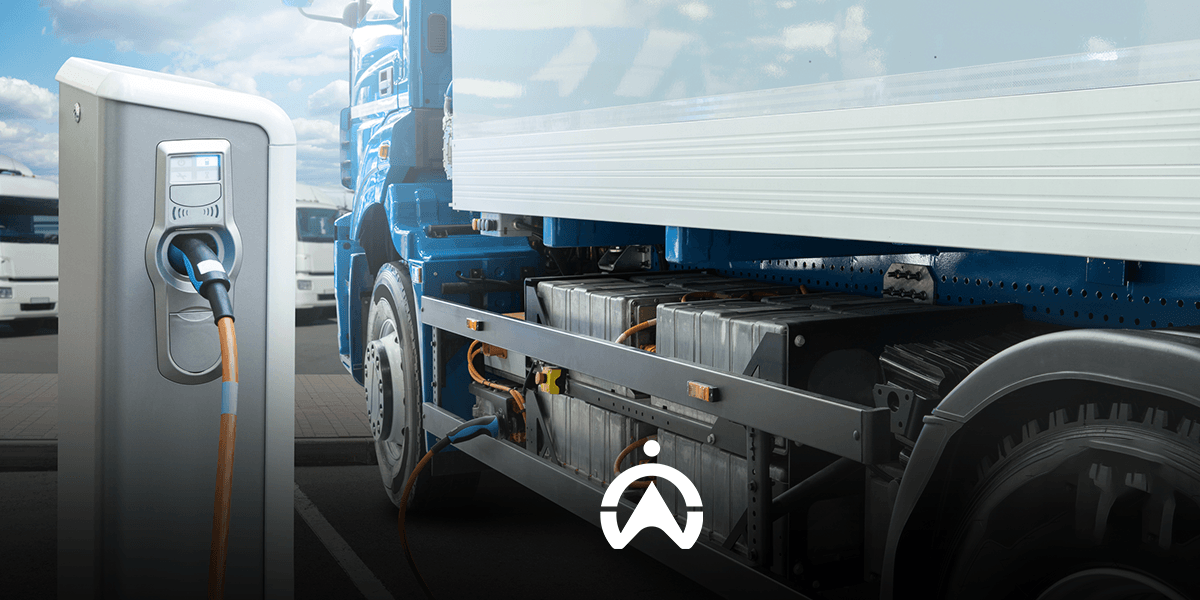
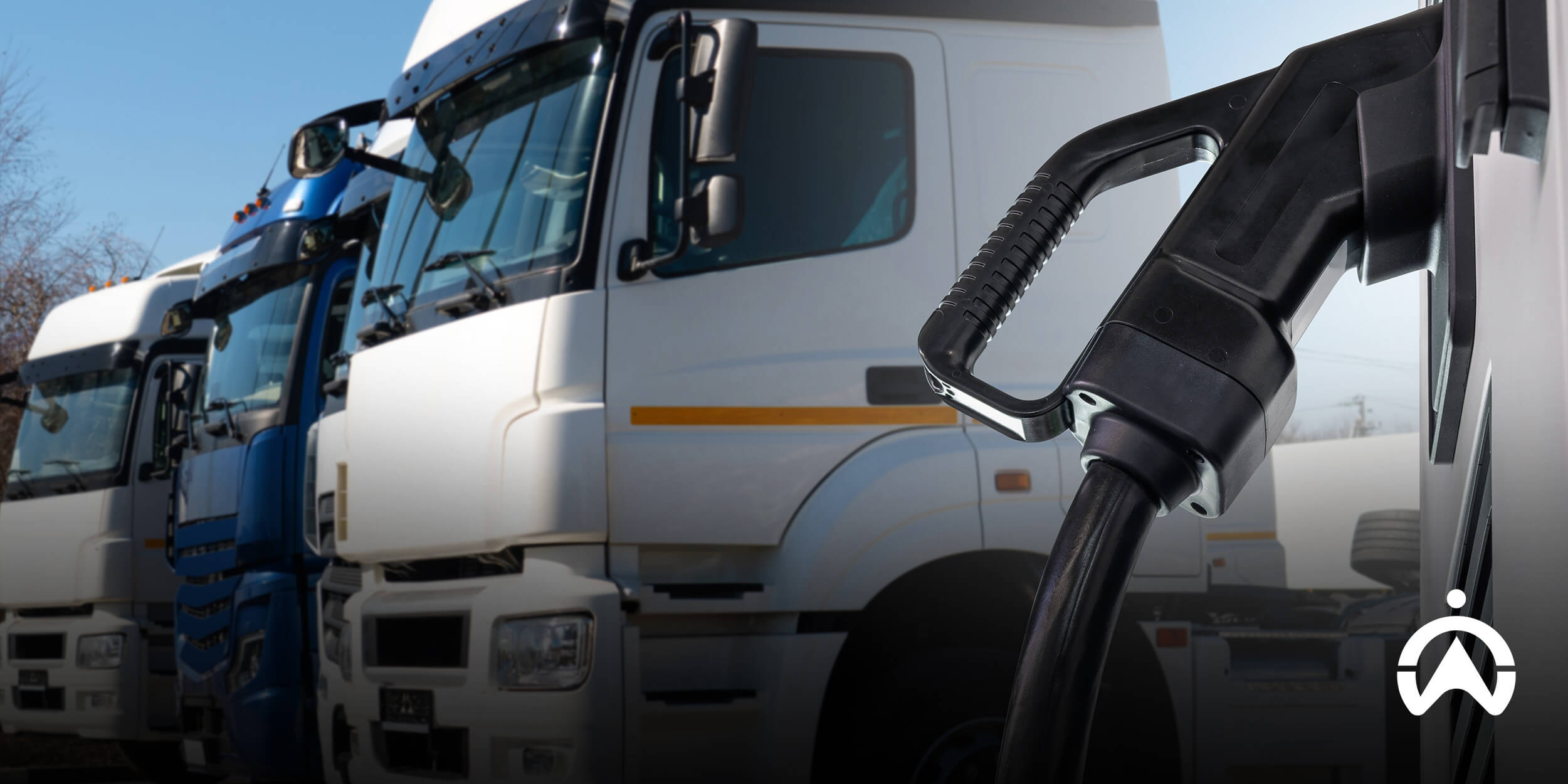
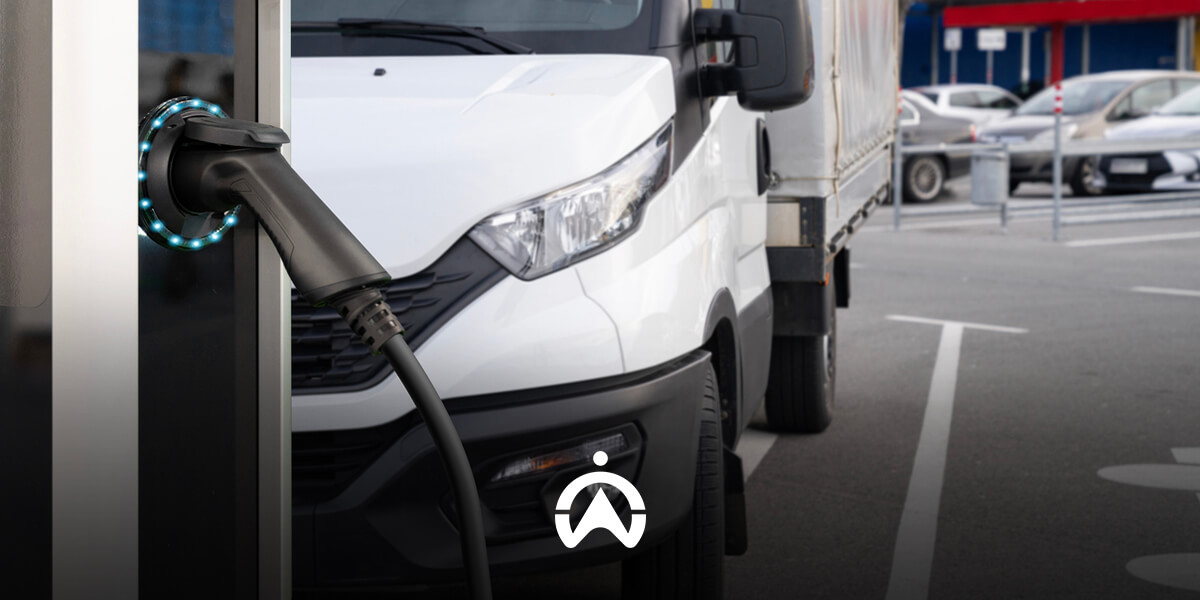
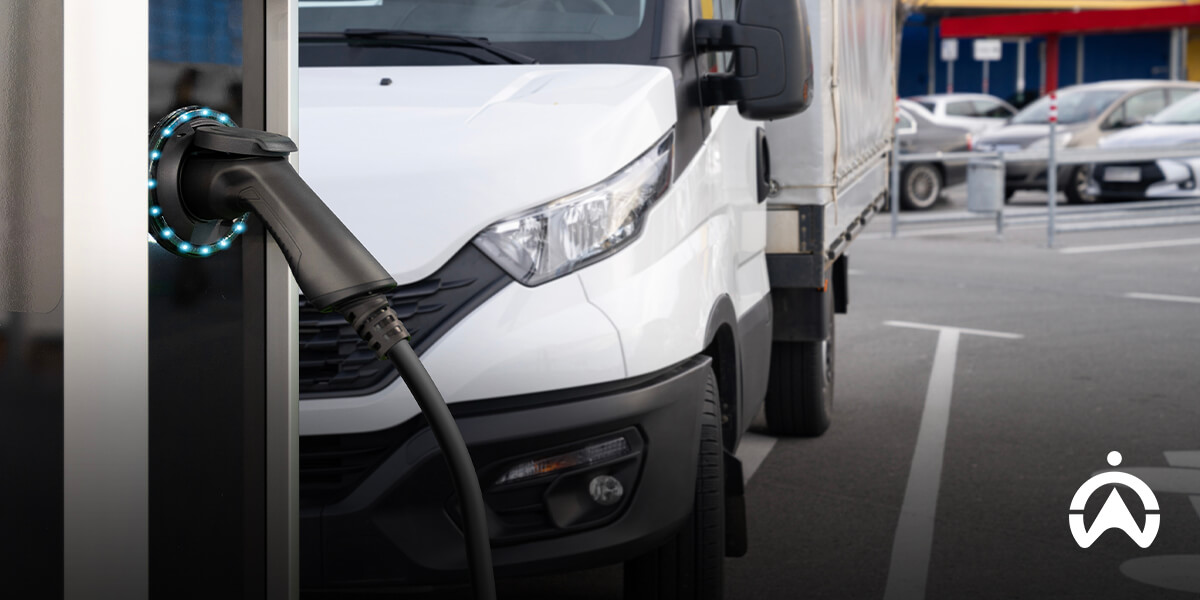
Commercial semi-truck refueling, illustrating the transition to fleet telematics systems that monitor EV battery health.

How is telematics used for EVs?

Telematics is used for EVs by tracking and monitoring your EV in real time; it’ll track energy usage data and charging time slots. But above that, a telematics system can optimise your entire EV fleet, thanks to features like maintenance alerts and energy consumption reports.

How can a telematics system optimise your EV fleet operations?

A telematics system can optimise your EV fleet operations by giving you complete insights into how your EVs are performing. With the insights provided you’ll be able to schedule vehicle charging during quiet periods and identify which electric vehicle in your fleet is best for each trip that’s needed each day.

Real-time GPS tracking lets you adjust schedules on the go, and the detailed reports you receive will provide you with the evidence you need to improve any strategies and productivity. Having a telematics system for your EV fleet not only assists with battery health, but it also transforms the way you manage your entire operation.

Key features of a telematics system for EVs

The key features of a telematics system for EVs include battery monitoring, charging insights, route optimisation, driver behaviour, predictive maintenance and range prediction. If you’re unsure as to why you need a telematics system for the EVs in your fleet, here’s a breakdown of the features you’ll get.

Real-time battery monitoring

The most important thing you need to do if you have an EV in your fleet is that you have to keep track of SoC, SoH, temperature and voltages. Without these insights, the integrity of the batteries is compromised. By monitoring the battery health, you’ll be able to keep them in the best condition for as long as possible. We know EVs are expensive, so this makes sure you get the most out of your vehicle.

Charging status alerts

To power your EVs, their batteries need to be charged. As a fleet owner you need to know the charging status of each and every EV in your fleet. A telematics system will send you notifications for all types of charging statuses (completed, interrupted, and low battery.)

Charging insights

You also need charging insights on your EVs. With telematics you’re able to get insights on each electric vehicle’s charging history, and on top of that you can create a proactive charging schedule. By having a proactive charging schedule, you’ll never be behind schedule because some of your EVs didn’t get charged the day before.

Range prediction

Range anxiety is a real problem for anyone who owns an EV. Telematics is the solution to ease your worries with predictive insights. These insights will let you know how far your EVs can travel by looking at energy use, charging habits, and the terrain that’ll be travelled. This way you’ll know exactly when your vehicle needs to be stopped to get recharged.

Diagnostics and predictive maintenance

Parts for electric vehicles are not exactly cheap. But when you connect your EVs with a telematics system, you’ll get alerts on all exterior, system and battery issues so you can schedule maintenance before they affect your fleet. A simple thing like having underinflated tyres can cause a major decrease in the KMs your EV will get.

Driver behaviour

From the stats mentioned at the beginning of this blog, we see that the longevity of your EV’s battery is directly linked to driver behaviour. Telematics will give you comprehensive insights on exactly how your drivers are handling your EVs; are they speeding, taking corners aggressively or braking harshly? This data will allow you to give your drivers proper coaching to handle the EVs, and you can ultimately improve the lifespan and performance of your EVs.

Route optimisation

You want to get the most KMs out of your EVs, and you can achieve this with a telematics system. Thanks to advanced GPS tech, telematics can help plan the best routes for your EVs to take, making sure they avoid traffic, unkept roads and unnecessarily long routes, all of which contribute to decreased energy use.
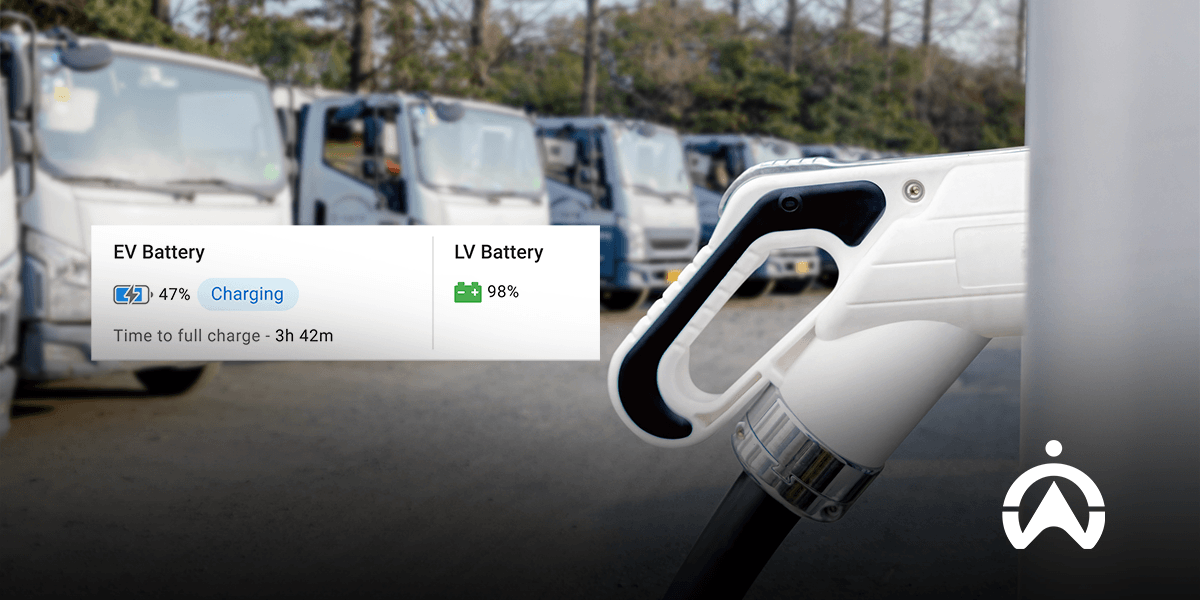
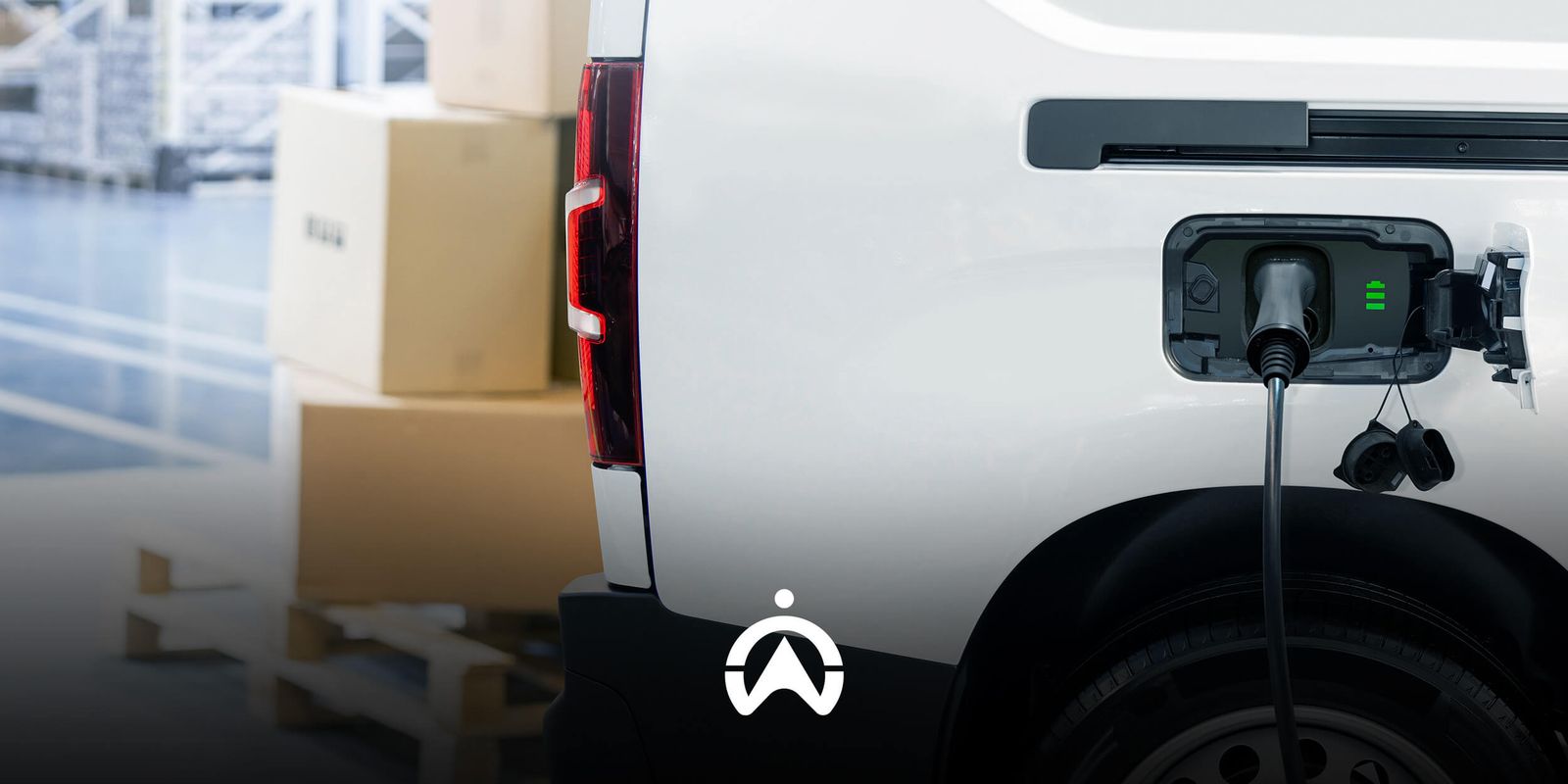
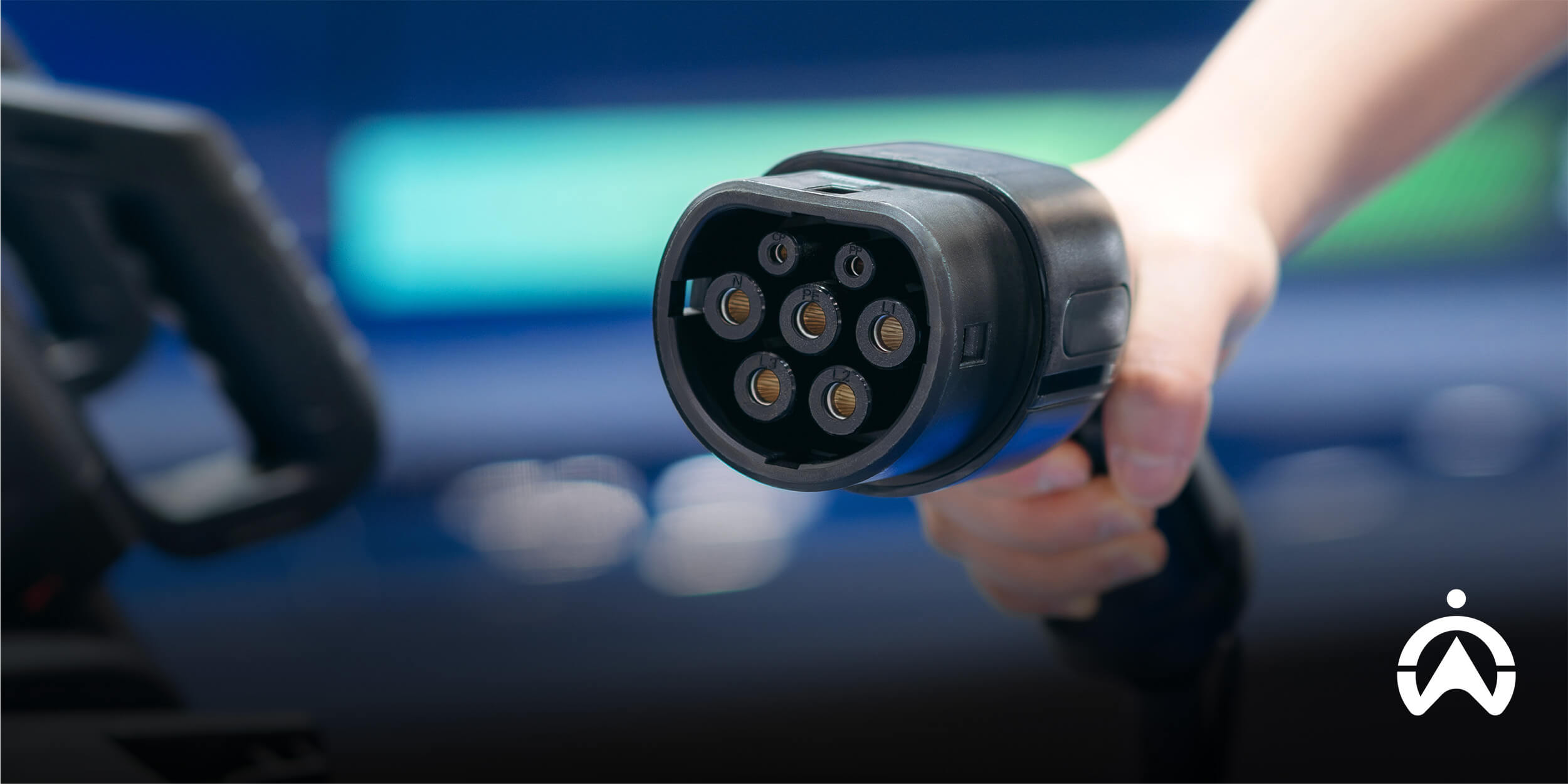
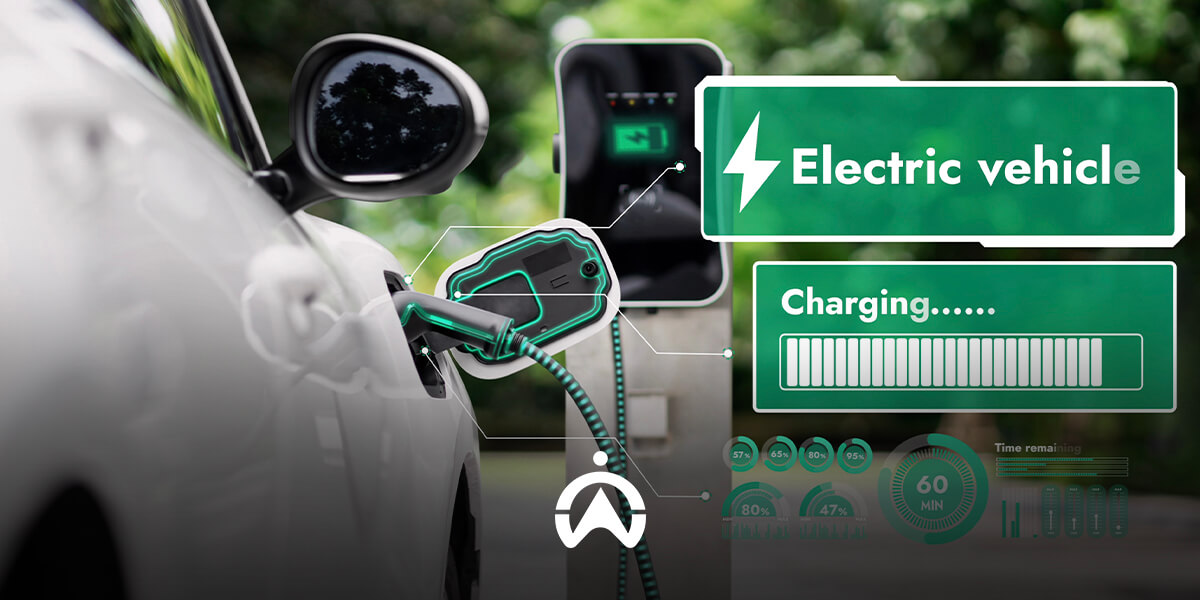
Close-up of an electric vehicle charging connector with a telematics display showing EV battery health at 47% and LV battery at 98%.

How to do an EV battery health check

To do a detailed EV battery health check, there are a few things you need to do, such as check the battery health, the actual EV range, and the SoH and install a telematics system. By following this procedure, you’ll be able to make sure your EV’s battery health is in tip-top condition.

  • Battery capacity: Charge your 400 kWh truck to 200 kWh and see if the SoC goes to 50%. This is how you can check the battery management system in your vehicle.
    ‍
  • EV range: Monitor if your vehicle’s actual range at a full charge is the same compared to the estimate given by WLTP.
    ‍
  • Monitor the SoH: Your EV has a built-in battery health monitoring system. To access this information, you’ll need an on-board diagnostic device, which can tap into the BMS and check the overall health of your battery.
    ‍
  • Telematics system: Installing a telematics system in your EV is one of the most accurate ways to test your EV battery health. It’ll use in-vehicle sensors and GPS to record real-time data on the battery status, charging patterns, and energy utilisation.

Why choose Cartrack as your EV fleet partner

You should choose Cartrack as your EV fleet partner because our telematics software is designed to work on any fleet. It doesn’t matter if your fleet is fully EV or if it’s mixed. You’re able to use one single platform for all of them. And we don’t just work with your LMVs or trucks; we can work on your electric scooters, forklifts and buses too.

With Cartrack, we’ll provide you with:

  • Real-time battery management
  • Predictive maintenance
  • Mixed fleet efficiency
  • Driver behaviour monitoring and scoring
  • Asset protection
  • ESG reporting

If you’re ready to optimise your EV fleets and improve their battery health, contact us today to help your electric fleets go further. 

FAQs

Are EVs and hybrid cars the same?

No, even though they are often grouped together, EVs and hybrid cars are not the same.

  • Electric vehicles are solely powered by an electric motor and a battery pack.
  • Hybrid vehicles are powered by a combination of an electric motor and a petrol engine

What are the negatives of buying an electric car?

There are a few negatives of buying an electric car; these are:

  • A high initial cost to buy the vehicle
  • Limited driving range compared to a ICE
  • Charging times can be lengthy
  • Expensive repairs
  • A lack of charging infrastructure in public spaces

Are there any challenges when implementing telematics?

The possible challenges you can face when implementing a telematics system in your fleet are upfront costs and complete system integration. You’ll also need to train your staff on how the telematics system is going to work and how to use it.

How Cartrack Boosts Your Operational Intelligence in Your Business

Cartrack Malawi boosts operational intelligence in your business by providing intelligible data that’s not only informative, but also ACTIONABLE. Our telematics (whether video footage, vehicle metrics, or driver performance) puts you in control of your business and enables you to make better decisions without having to rely on guesswork.

According to a research paper by Harvard Business, there are 4 steps to embracing digital intelligence. These include:

  • Adopting a digital mindset
  • Encouraging that mindset within your organisation
  • Understanding how to interpret data
  • Putting it all into action

If this research is accurate, some business owners have a lot of catching up to do. While some business leaders have adopted a technology-centered approach to their operations, a large majority are still on the fence. If you’re one of them, read this vital blog on thinking differently about how business will be done in the future.

What is operational intelligence in business?

Operational intelligence is KNOWING what’s going on in your company (data), collecting that data and interpreting it (insights), and then making decisions according to those insights. Done correctly, this will lead to company growth, risk management and a boost in brand reputation.

Operational control

As the old adage goes, knowledge is power. In business, knowledge that’s applied, equals control. This is all about leveraging the data you collect to promote the interests of your business. The more you know, the more opportunities you’ll have to shape things the way you want them.

Informed decision making

Managers of companies have often had to guess what the right decision is. Historically, they’ve gone on instinct or intuition. A manager who has a gut feeling about something will make a decision based on emotion or even what he or she hears from others. It’s mostly conjecture, and mistakes are made—A LOT!

The future of business is very different. Thanks to AI technology, guesswork and tummy cramps are no longer the basis for making a decision. With data at your fingertips, you can make decisions that are backed up with indisputable FACTS.

Competitiveness

Operational intelligence is at the heart of competition. This is especially relevant in countries where the opportunity to compete is immense. Why? Because as is usually the case, certain countries are behind the technological curve. There exists an old fashioned kind of people, who like to do business… “the way it’s always been done”.

But those who venture out of their comfort zones and actually embrace the same kind of AI technology being embraced by forward-thinking businesses, scale at an international level. There are many examples of this in different locations, but none are as obvious as the insurance industry where new players have entered the market with AI-run call centers, enabling them to charge MUCH lower premiums.

Accurate reporting

Every company has stakeholders. You might be the only one in yours, but if your business is large enough, chances are you have shareholders, partners, or affiliates that rely on YOUR good decision making. Being the manager who’s “on the ground” gives you some insight into how the business runs and what decisions need to be made. But this isn’t always well received by other stakeholders.

Reporting is an essential aspect to any organisation. It’s not just about “this is what happened”. It’s also about, “this is why I made these decisions—and these are the results!” True operational intelligence justifies its decision-making by reporting the WHAT, the WHY, and the HOW.

Risk management

Operational intelligence would be pointless if it didn’t also solve problems. But what if it could solve problems before they happen? That’s what the future truly holds for organisations like yours—risk mitigation.

Data always points in a particular direction. That direction becomes predictive with the help of AI algorithms (and they’re only getting smarter). It tells you what’s likely to happen unless you take action. It even tells you what action to take. This is where data becomes actionable, not just informative.

ESG (Environment, Social, Governance)

The future holds some interesting things for companies in terms of ESG regulations. Similar to other score-based legislations, companies (and even customers) will begin to do business with organisations that are perceived as responsible.

Responsible in what way?

  • First; responsible with regards to the environment and their overall carbon footprint on the planet. (E for Environment)
  • Second; responsible in how they protect and care for their employees. (S for Social)
  • Third; responsible in how their company processes work and how ethical those processes are. (G for Governance)
Business leader using laptop to improve operational intelligence with Cartrack business insights.

What does your fleet have to do with operational intelligence?

Your fleet often has EVERYTHING to do with operational intelligence, because logistics is the lifeblood of so many companies (whether they realise it or not). Not only is road logistics becoming more integral to your country’s economy, but how you drive, where you drive, and how you’re perceived while you drive all play a part in your company’s success.

The unavoidable importance of road logistics

The ports in some countries are virtually unsalvageable. The rails are no better. Companies are turning to road logistics as an only alternative to get products to where they need to be. With this comes a bunch of other fleet challenges that need to be addressed.

How you address those challenges can make or break you as an organisation. It all comes down to how you run your fleet, because roads are fast becoming the only logistical way to distribute goods and services.

Customer perception

But here’s the interesting thing about focusing your operations on the road—your customers are there on the same road with you! This introduces a couple of questions you can’t ignore:

  • How can I make sure my customers have a good perception of my company?
  • How can I ensure my drivers aren’t putting my customers (and the public in general) in danger?
  • How can I service my customers as well as possible without compromising on my budget?

If you’re asking these questions, you’re on the right track. We’ve got the answers, and they all lie in operational intelligence. 

Asset management and asset protection

If you have vehicles in your organisation, chances are the bulk of your overheads go towards keeping them on the road. We’re not just talking about fuel, we’re also talking about driver salaries, vehicle maintenance, and the cost of the vehicles themselves!

Since much of your resources are allocated to your fleet, it only makes sense to derive your operational intelligence from that fleet. This is where the rubber meets the road. If you can manage your fleet, you can manage your business. This is where your investment should be.

The increase of last-mile logistics

Receipt of your product or service by the end user is one of the trickiest steps to get right. Customers are fussy. Their online reviews can heavily influence your brand. They want convenience and ease when ordering, not to mention when they decide to return a product.

It’s a complicated process that requires finesse. Even small companies need to pay attention to how their logistics affect their end users. Not only is this the most expensive part of your distribution process, it’s also the one that carries the most risks.

If you’re fully convinced that operational intelligence lies in your road fleet and distribution processes, read on to find out how you can apply these principles.   

How can your business adopt operational intelligence?

Your business should adopt operational intelligence by embracing technological advancements that focus on your logistics processes. You also need to adapt your staff to those advancements, and focus more on data (and how to interpret it using AI) as your source for making decisions.

Step 1: Accept the fact that “digital” and AI are here to stay

Avoiding technology is a huge mistake. Companies that don’t adapt won’t grow, and most will probably fall away. AI-driven software will soon become a vital part of running your company, especially if you’re managing vehicles.

Step 2: Transform your workforce to think in digital language

You can’t do this alone. Training is an essential step to transforming your business and adopting technology. You want to bring your team along this journey with you and your stakeholders. Afterall, they’re the ones that will carry out the operations.

You’ve already changed your mind about technology. Now it’s time to change theirs too.

Step 3: Learn the data language of your company

Interpreting data is a valuable skill every manager has to learn at some point or another. Cartrack Malawi does much of this for you, but remember that each company has different interests, and your company has a language that’s different to everyone else’s.
‍

Example 1: If you run a farm, your data will pertain to machinery AND vehicles. Who uses them? Where are they when you need them? What’s the condition of each one?

Example 2: If you run a lift provider, your data will focus more on driver safety, driver behaviour, and the rate at which your drivers can serve passengers.

Example 3: If you run a logistics company, your data will focus on vehicle condition, driver fatigue rates, and fuel monitoring.

Know your data like the back of your hand and you’ll quickly learn how to discern between a good decision and a bad one. 

Step 4: Determine how to execute on interpreted data

Now it’s time to take action! You have all the facts you need. You’ve made a series of sound judgments. The final step is to execute. Steer your ship in the right direction. But how?

Did you discover that your fleet is wasting a portion of fuel because of idling? Coach your drivers accordingly.

Did you discover that one of your vehicles isn’t braking as well as it should? Book it in for maintenance.

What about the big decisions? Should you scale? Should you purchase new vehicles? Can you afford to pay 5 new drivers? Is it time to tap into another section of your industry?

The data can help you make these decisions, you just need to know how and when to take action. Cartrack Malawi gives you this level of operational intelligence—from the small stuff to the significant, business-altering decisions, our tools are designed to give your information AND help you execute on it.

Laptop displaying Cartrack fleet dashboard beside truck, showing how Cartrack boosts operational intelligence in your business.

What will happen to companies that DON’T adopt technology?

Companies that wait too long to adopt digital means of running their business are at risk of becoming irrelevant or becoming overshadowed by their competitors (or even by new players in the market). This has already started to happen in the insurance industry, and will soon spread to other sectors.

Technology is like a big wave in the ocean. You can either grab your surfboard and catch the wave, or you can duck under the water and let it pass you by. If you have more than a few competitors, you might just get smacked by that wave without any chance of recovery.

How will you handle the technology trend? Will you take advantage of it and ride your business to new heights, or will you be left behind and allow others to dominate your industry?

Why choose Cartrack Malawi as your operational intelligence partner?

Cartrack Malawi is intelligence-led, meaning we simplify your decision making based on facts, data, and irrefutable evidence. Our AI-powered software is also performance-driven, directing those decisions in ways that improve your daily operations and further YOUR business interests.

Choose Cartrack Malawi if you want a service-strong company that’ll guide you every step of the way. Call us to have an honest conversation about what your objectives are and how you plan to get there.

It all comes down to operational intelligence. Having it can make all the difference in how your business performs. Not having it will leave you where you are and possibly shrink your operations over time.

Choose wisely.

FAQs

What does Cartrack Malawi do?

Cartrack Malawi acts as a business partner that focuses on one of the most expensive aspects of your company—your vehicle fleet. They maintain that collecting, interpreting, and acting upon data derived from your fleet will significantly transform the way your company operates by simplifying decision-making and boosting daily operations.

Can Cartrack Malawi’s software save my company money?

Yes, Cartrack Malawi’s software is actually designed to save your company money. Not just by identifying waste, but by growing your organisation and increasing profits. The idea behind this software is to boost your operational outcomes and help you successfully compete in an ever-changing arena.

Can Cartrack Malawi manage my fleet for me?

Yes, Cartrack Malawi can manage your fleet for you because they provide Camera & Telematics Bureau Services. Using a combination of vehicle and driver telematics data, they offer many essential services for your fleet like route optimisation, driver monitoring, fuel management, vehicle maintenance, and more!

What Is the Total Cost of Ownership (TCO) for Electric Vehicles for Fleet Companies – Is Petrol Still Better?

The total cost of ownership (TCO) for electric vehicles is better than that of petrol-based vehicles. While it’s difficult to see at first (especially because EVs have high initial costs), they’ll ultimately reflect far better long-term benefits and savings for your fleet.

Despite the fact that initial costs are still higher than those for ICE vehicles, insights show that EVs reduce lifetime operating costs to less than half of petrol or diesel vehicles. Compact EV (small-sized, city-ready vehicles) fleets have monthly operating expenses around MK1,020,000.

The world of EVs might feel like uncharted waters, but you don’t have to dive into the deep end. Keep reading as we break down and help you understand the TCO for EVs, compare costs across EVs and ICE (internal combustion engine) cars, and see how Cartrack can keep your TCO low and cost-effective.

Is the total cost of ownership for EVs better than for ICE vehicles?

Yes, the total cost of ownership for EVs is better than for ICE vehicles. EVs have lower fuel costs and fewer moving parts. This means that fuel, which is typically the largest expense, is far less of a concern. Maintenance is still required for EVs too, though far less often because they don’t need oil changes and similar services.

While the initial costs of an EV might seem incredibly daunting, it’s the long-term savings and successes that reflect a lower overall TCO. Not only is this option an environmentally conscious and future-forward one, but it’ll also prove to be a smart financial choice for your business.

What factors affect the total cost of ownership for electric vehicles in Malawi?

The factors that affect the total cost of ownership for electric vehicles in Malawi include the high purchase prices and import taxes, charging infrastructure, depreciation or resale value, and more.

Let’s look at each of these factors:

  • ‍Purchasing and initial costs: This is the highest cost and is usually the biggest concern for fleet owners and managers like yourself. Purchasing costs are so high because EVs are usually significantly more expensive than ICE vehicles, and there are other costs to consider, like import and tax charges. These costs can be managed and reduced through government-initiated incentives, so always research your options.You’re also likely going to use a financing plan for your fleet. This is another factor to keep in mind, as big loans with intense interest rates will also determine your overall purchasing cost. All vehicles have import charges and taxes attached, but EVs have higher import duty costs.
    ‍
  • ‍Energy: This is the next biggest cost, which is the case for any fleet in the world. For EVs, energy costs are far better and more cost-effective compared to ICE vehicles. Not only is electricity a cheaper energy solution, but it’s also more stable than the ever-fluctuating prices of petrol or diesel. Long-term outcomes will show the positive impact EV energy has on TCO.If you decide to pair your charging infrastructure with solar energy, you’ll reduce charging costs even further.
    ‍
  • ‍Maintenance: Though more specialised in their parts and battery design, EVs are the key to lower maintenance costs. EVs have fewer moving parts; there aren’t oil changes, complex transmissions, valves, belts, or other parts. At most, an EV has a handful of moving parts at a time. This means maintenance is far more manageable and done less often, resulting in savings and a reduced TCO.
    ‍
  • ‍Insurance: Insurance will likely be more expensive for your EVs than for ICE vehicles. This is because EVs are made with specialised materials and contain a very high-end battery, increasing their overall costs. EVs also require specialised technicians, who might charge even more than usual for their time.
    ‍
  • ‍Licensing: Licensing and vehicle registration fees are necessary for your vehicles to continue operating lawfully on local roads. Permits are also a consideration depending on what types of vehicles you have in your fleet, but this could almost certainly be the case for EVs. These fees need to be paid annually and are applicable to all vehicles—not just ICE types.
    ‍
  • ‍Accidents: This is another critical element of TCO for EVs. If your EVs are involved in an accident, chances are the downtime would be quite significant because of the specialised nature of EVs, their parts, and the uniquely skilled labourers required. In addition to this, the repairs or replacement would be costly if you consider the complex internal system and specialised materials.
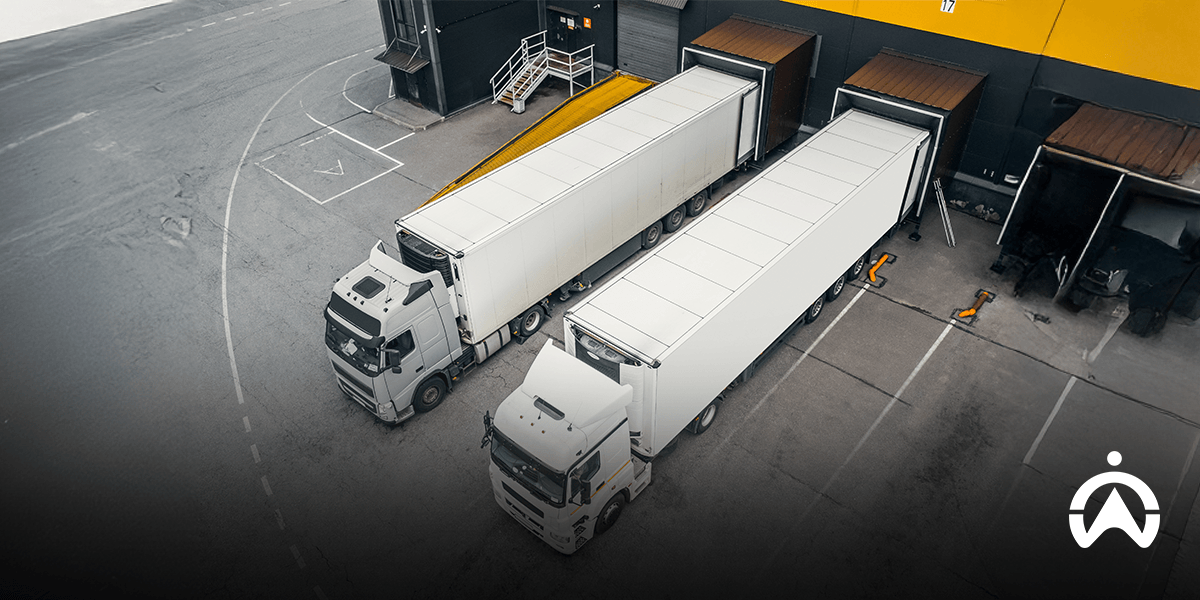
Two semi-trucks at warehouse loading docks, illustrating total cost of ownership for electric vehicles in fleet operations.

How to compare running costs of an electric vehicle versus a petrol car in Malawi

You can compare the running costs of an electric vehicle versus a petrol car in Malawi by researching existing data and looking over your own fleet reports. Just as you would for an electrification roadmap, the key to obtaining supporting data is to comb through other real-world examples and information on other electrified fleets.

To make an informed comparison, think about the following:

  • Fuel vs electricity: Look at fuel use versus electricity usage. Don’t forget to consider electricity tariffs.
    ‍
  • Insurance for each vehicle type: Remember that EV insurance plans will likely be more expensive. Either way, think about what you’d want your insurance plan to look like and what you’d need to get a more accurate overview.
    ‍
  • Maintenance schedules for each vehicle type: Your schedule for an ICE vehicle would probably include more regular scheduled servicing than that of an EV.
    ‍
  • Depreciation and resale values for each vehicle type: Consider the fact that EVs usually depreciate in value faster than ICE vehicles.
    ‍
  • Route planning and what it means for each vehicle type: ICE vehicles mainly save on money and fuel when routes are optimised, while EVs undoubtedly need route planning to avoid range anxiety.

What are typical insurance premiums for electric vehicles locally?

Typical insurance premiums for electric vehicles locally are much higher than premiums for ICE vehicles. This is because EVs have specialised, and therefore more expensive, batteries and parts, which also means the labour and specialised technicians are pricier too. It’s understood that insurance for an EV could be anywhere from 10% to 15% more expensive than for ICE vehicles.

Factors that contribute to insurance premiums for EVs

  • ‍The car’s higher value: EVs are typically more expensive than ICE vehicles, and this is one of the first starting points for an insurance premium. So, comprehensive premiums will have to account for that, especially if an incident occurs and the EV needs to be replaced.
    ‍
  • ‍Specialised and trained technicians: Because EVs are still relatively new to the market, they require uniquely skilled technicians, who are usually few and far between. This means mechanics with EV training might charge more for their services.
    ‍
  • ‍Batteries and car parts: Much like the trained technicians, EV batteries and parts are unique and specialised, coming at a premium. This also means EV parts might not be readily available and have to be shipped from other countries when needed.
    ‍
  • ‍Safety features: EVs tend to have many security & safety measures in place, like crash detection, cameras, and sensors. It’s complicated though. While these features should reduce premiums, they could potentially backfire. EVs are still at a high risk of battery fires and pedestrian collisions.
    ‍
  • ‍Car performance: As part of a car’s insurance coverage, an insurer will look at the car’s performance: how fast it goes and how quickly it gets to high speeds. This is a kind of safety review. Because EVs are powerful and reach high speeds quickly, insurers might see this as a hazard, leading to a higher premium.

Is the insurance landscape changing for EVs?

Yes, the insurance landscape is changing for EVs. The EV market is currently expanding across the globe. There are changes in transportation policies in numerous countries. For example, Hong Kong has introduced major tax relief opportunities for businesses that have or are looking to invest in EVs, helping individuals and businesses save exponentially (even up to millions).

Malawi is relatively closely following in these steps, providing incentives and looking towards the future of transportation and logistics. With this increase in popularity, we’re seeing that insurance premiums for EVs aren’t what they used to be, though they’re still higher than ICE vehicles.

Our EV adoption is slower than in most countries, but the demand is still there and continuously moving in an upward trajectory.

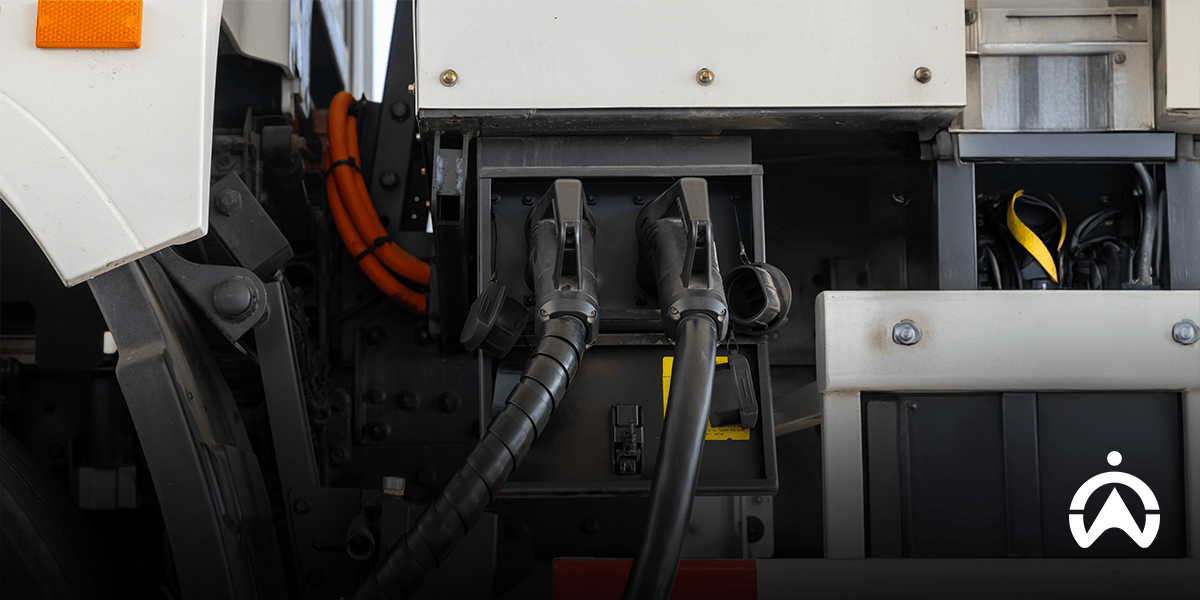
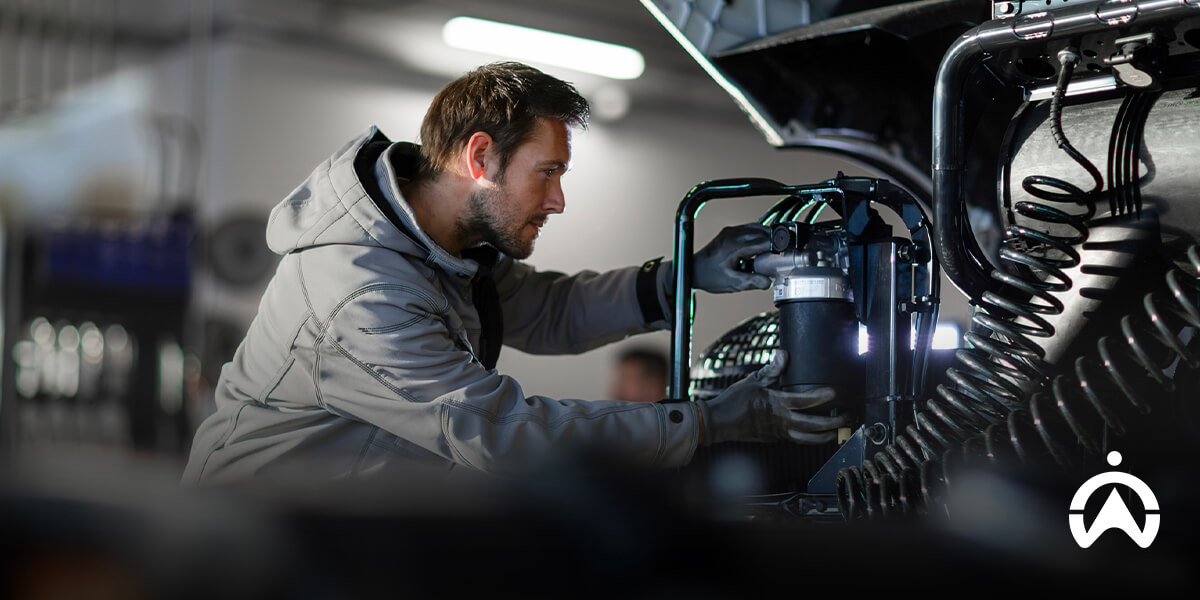
Close-up of truck electrical connectors, supporting total cost of ownership for electric vehicles in fleet maintenance.

Can Cartrack help you reduce costs and overall TCO?

Yes, Cartrack can help you reduce costs and overall TCO for your EV. Thanks to our fleet management software, FleetWeb, you don’t have to be concerned about handling all the admin and wasting business time. Your processes are automated, and you’re equipped with all the essential tools for seamless management. Smarter insights mean smoother operations, reduced damage, and minimal downtime.

FleetWeb is a comprehensive system that works just as well for EV fleets as it does for ICE fleets. Our features help you manage your operations more responsibly and save towards a better TCO.

Here’s how we can help reduce your total cost of ownership:

  • ‍Fuel management: Our software will monitor your fleet’s fuel use. With our fuel probes, you can keep track of how much fuel is in the tank at any given point. If sudden level drops happen (from acts like syphoning or fuel theft), then you’ll immediately be notified. All of this can help you manage fuel expenses, catch theft or fraud, and understand where waste occurs so you can quickly fix that.
    ‍
  • ‍Safety and security: Full visibility and anti-jamming properties are what we offer. We understand that as a manager/owner, you want to know where your fleet vehicles are at all times & be able to monitor the safety of drivers and cargo. Our tools can help you keep a close eye and stay in control at all times.Additionally, our high-end anti-jamming and recovery technologies will ensure that if a disaster strikes and a vehicle is stolen, our team will immediately take action and be ready to help with the recovery.
    ‍
  • ‍Driver behaviour monitoring: Poor driver road habits can mean spending extra. If your drivers are reckless and driving dangerously, this could equate to more fuel being used (because of speeding, taking corners sharply, etc.), increased wear & tear on the vehicle, and general threats to safety.Our AI camera solutions and driver scorecards ensure you keep a close eye on drivers while being able to coach them with actual records of their scores and footage of triggered events.
    ‍
  • ‍Optimisation: From routes to operational processes, optimisation is a major key to saving money. Our software will help your drivers take the most efficient routes when they’re on the road, automate workflows, and make obtaining reports so simple. Optimisation is extra important in the case of EVs; range anxiety can be easily managed this way.
    ‍
  • ‍Proactive maintenance: Regular vehicle diagnostics ensure that your EVs stay in top condition. Get notifications on vehicle upkeep and the best scheduled times to service your vehicles. You’ll also get notifications regarding faults or failures. This feature is perfect for ensuring your fleet’s health and avoiding costly downtime. 

Final takeaway: EVs are your fleet’s future

In the end, the TCO of electric fleet vehicles is still lower than that of petrol-powered vehicles. Many factors and considerations might throw off your personal verdict, but it’s the long-term successes that are a true reflection of this finding. And the numbers don’t lie!

Understanding the TCO for EV fleets is the key to discovering whether dipping your toes into electrification is something your business is ready for. EVs have the ability to outperform traditional vehicles, and transforming or mixing your fleet could be the key to remaining competitive. If you’re ready to keep your EV’s TCO down, Cartrack can handle that for you.

Call us today to optimise your EV fleet and save on operational costs! 

Frequently asked questions for the TCO of EV fleets

Why do EVs lose their value so quickly?

EVs lose their value so quickly because they’re expensive when initially purchased, but there’s also a bit of a mismatch when it comes to the retail demand. Although fleets are keeping the demand for EVs present, interest from private or individual motorists is starting to wane. People are also hesitant to buy second-hand.

How much does EV charging cost compared to petrol?

In this particular case, an electric vehicle (EV) can cost significantly less per kilometre to run compared to petrol vehicles, depending on electricity tariffs and fuel prices. While EV charging costs can be relatively low on a per-kilometre basis, petrol vehicles generally have higher running costs due to fluctuating fuel prices.

What is the 80/20 rule for electric cars?

The 80/20 rule for electric cars states that EVs should always be charged and operating between 20% and 80% battery, without moving outside of those percentage boundaries. Doing this is said to help manage range anxiety and keep the battery in peak condition.

Is insurance higher on electric cars?

Yes, insurance is usually higher on electric cars due to their specialised, newer technological parts and labour. EVs have expensive & specially designed batteries that need the help of uniquely skilled technicians and parts once the time for maintenance comes. Some insurers also haven’t caught up with the emergence of EV technology, immediately making EV premiums more expensive.

The Only Fleet Electrification Roadmap You Will Need

Fleet electrification is the process of gradually transitioning your fleet from traditional ICE (internal combustion engine) vehicles to EVs (electric vehicles). You’ll need a roadmap for this process because of the scale of the transition. You’ll also want to successfully manage the uncertainty of this change without taking an unnecessary hit to the pocket.

According to the International Energy Agency (IEA), the end of 2024 showed that we can expect the number of EVs to triple by 2030. It’s a clear indication that there’s a demand for EVs in businesses to be met, and delivery & logistics companies are moving toward greener operations.

In this blog, we’ll help you tackle the unknown and put you at ease about taking the first step to electrification. Let us guide you through what electrification means, give you a practical breakdown of the step-by-step roadmap, and explain how Cartrack can help you take the electrification leap.

What is fleet electrification, and why does it need a roadmap?

Fleet electrification refers to the process of transforming your fleet of ICE vehicles to EVs. This is typically a gradual process, taking up to years at a time, and usually resulting in a mixed fleet. Fleet electrification needs a roadmap because roadmaps are a meaningful, step-by-step process of what you need to do.

Have you ever written an essay for a school English exam and been asked to produce a mind map with it? An electrification roadmap is the same line of thinking. Your English essay’s mind map needed to show proof of structure, the direction your essay was going to take, and demonstrate to the exam marker that there was thought & effort put in before executing.

When you have a roadmap in place, there’s little room for surprise. Not all plans will be 100% foolproof, but it’s much better to operate from a place of confidence and preemptiveness than insecurity.

What steps are needed for a successful transition to electrification?

The steps needed for a successful transition to electrification include:

  • assessing your fleet
  • creating a detailed plan
  • examining resources and infrastructure
  • showing transparency, and
  • monitoring your fleet post-implementation.

A successful approach includes these five key steps, as they tackle the preparation and execution of a smart transitional period.

1. Look at your current fleet’s standing and needs

Your first step is to assess your fleet. Get comfortable with where your business is and what your existing fleet looks like. Take stock of factors like vehicle utilisation, the kind of vehicles you’re using and what they’re being used for, as well as high-emission vehicles that could possibly be the first to replace. Most importantly, examine your expenses.

The next part of this step is asking yourself why. Why do you want to transform your fleet? Are you trying to keep up with trends and what’s popular? Are you noticing a change in the seriousness of regulatory and compliance matters? Is there pressure from your clients to go green? This is a pivotal step to take, so be honest about the ‘why’.

Finally, weigh up the pros and cons. See what will and won’t work for your fleet, if you’re financially capable of making the transition, and whether this change will be a benefit to both you and your clients/customers.

2. Create a detailed plan and rollout

Perfect; you’ve tackled the pre-planning and highlighted the intentions of your transition. Now it’s time to think about what the electrification process would actually look like. First, research, research, research! Support your plan by looking at data and insights from other companies that have already put electrification into action. Check out factors like costs, distance travelled, and carbon emissions.

Next, understand that this is going to be a gradual and phased approach. Be patient and understand that the delivery of EV vehicles can easily take months, maybe even years. Choosing the phased approach gives you time to stick with your financial timeline while also carefully going along with your operational and compliance objectives.

This also ensures a strong and strategic electrified move that has room for steady growth. 

We previously mentioned vehicle utilisation. You could examine which vehicles are reaching the end of their lifespan or have the potential to be sold. Those vehicles will be the first to get replaced. Most importantly, look into purchasing options. Aim to buy EVs locally, especially if there’s a chance the dealership has in-house knowledge and assistance for your fleet.

Close-up of a fuel nozzle in the foreground with multiple commercial trucks lined up under a clear blue sky, illustrating the transition phase within a fleet electrification roadmap from traditional fuel vehicles to electric fleets.

3. Ensure you have the right resources and infrastructure

EVs come with their own unique sets of challenges, which is why matters must be clear for you and your drivers. Your concern is no longer petrol and fuel cards, but charging stations and potentially charging cards (which help you top up and pay for your vehicle’s electricity). You’ll have to install chargers on the work premises, especially because stations are relatively limited.

Consider installing solar panels as a sustainable way to keep chargers on the work premises powered. Compare the types of chargers available; remember that what’s cheapest isn’t always the best option. Above price, evaluate charging time (and so downtime) and the impact it has on vehicle batteries and their degradation rate.

Don’t forget about software! Yes, the hardware is important, but it’s the software that helps you effectively manage your fleet and all the information that’s put out by the devices. Your lifeline is powerful fleet management software (FMS), like our FleetWeb. Our FMS helps you navigate the unique challenges that EVs face, like range anxiety, charging schedules, and predictive maintenance.

4. Create necessary regulations and remain transparent

If you’re a manager, talk to your company’s supervisor or boss. The higher-ups need to know what you’ve been planning. Keep detailed records of all the research you’ve done, and consider presenting it to them in an easy and comprehensible way so that they feel just as confident as you do.

Continuing from step 3’s point about new infrastructure and on-site charging stations, develop and adjust policies that accommodate these new challenges. Explain to your drivers why this step has been taken and what it means for the business. Finally, ensure that drivers are caught up on new regulations and necessary training, and make ongoing training available.

5. Keep an eye on your fleet and its changes

Any business change demands close monitoring. Keep an eye on what electrification has done for your fleet, from mileage and charging patterns to carbon emissions. Stay in touch with your dealership to get professional tips on any concerns or questions you may have. With all this information, you can potentially continue to plan a wider electrification adoption strategy.

Don’t leave your drivers out of the bigger picture. Chat to your drivers and get feedback on how they’re experiencing operating EVs. This will help your drivers feel included and their voices heard amidst the big-scale changes taking place.

What can Cartrack do to make your electrification process easier?

Cartrack can make your electrification process easier by introducing telematics under a smooth, seamless FMS. With telematics, you ensure your battery remains carefully monitored and that running costs are lowered. You have access to your fleet’s trip histories, which is key to optimising routes and keeping batteries in good shape. This reduces energy and saves on expenses.

We also help ease your stress regarding range anxiety. Our system not only helps manage and plan better routes, but also monitors vehicle batteries in real time and quickly detects charging stations along the way. Our predictive maintenance via vehicle analytics helps avoid downtime, giving you information on battery health, brake health, and tyre conditions.

Overall, we offer a platform that works just as smoothly for EVs as it does for ICE vehicles. This makes the transition and change even easier, because you won’t have to worry about using multiple platforms. We also have all the tools necessary to keep your new mixed fleet in tip-top shape, with a dedicated team ready to answer any questions along the way.

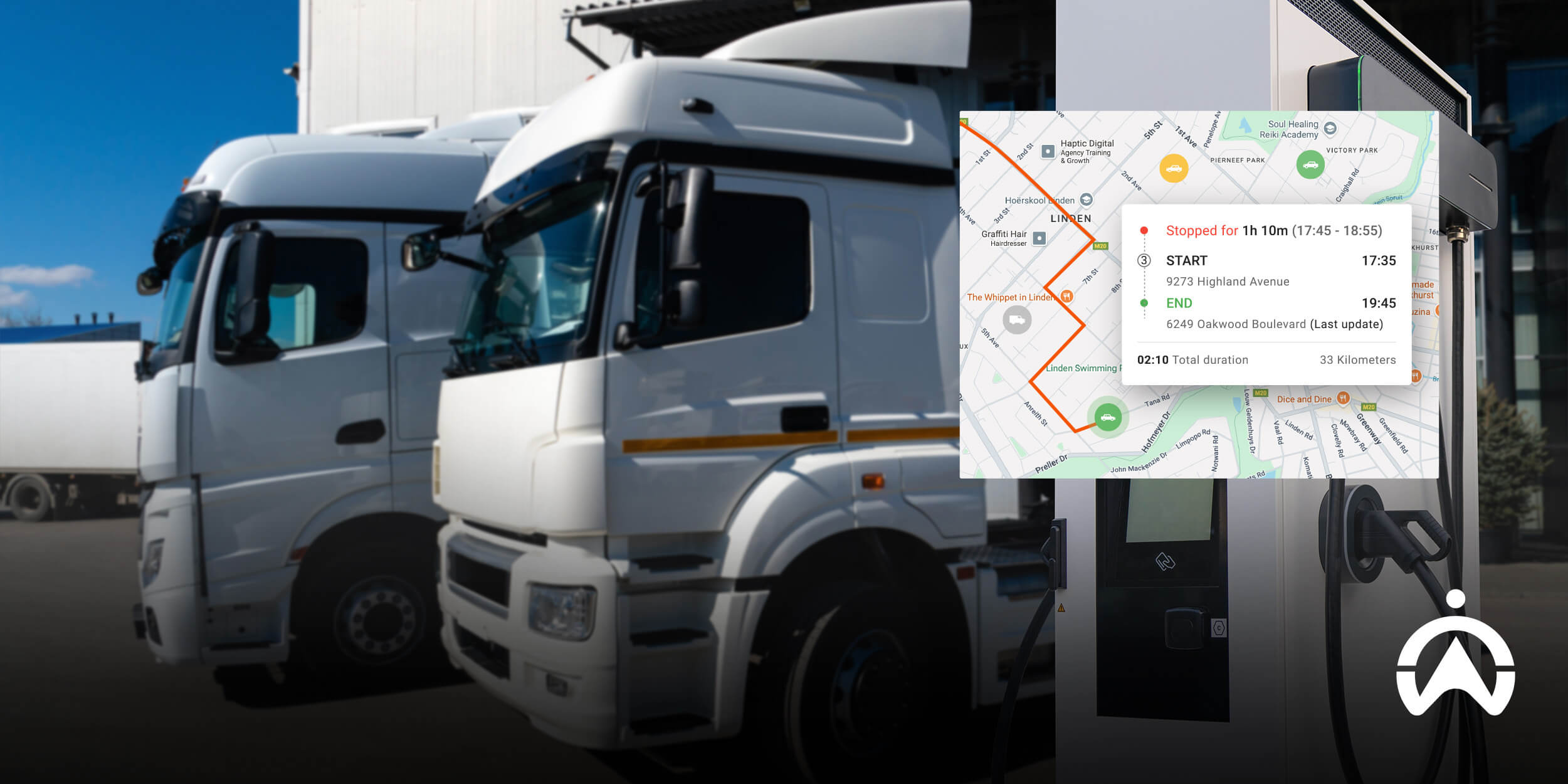
Two trucks at facility with route and charging map overlay, supporting a fleet electrification roadmap.

Final takeaway: Electrification roadmaps are the key to smooth sailing

Fleet electrification is about taking a slow and steady approach, which is why roadmaps are essential for your complete confidence. If you have a solid plan and transparent communication, you’ll have a better chance of succeeding in your electrifying efforts.

Cartrack gets you the most out of your electrification process. We support your management of changes, progress, and challenges, while also helping you meet your sustainability goals. We’re here to guide you to a greener, cost-saving fleet that’s secure for the future.

Willing to take the leap and make a greener change to your fleet? Reach out to any of our Cartrack professionals and get complete guidance on your electrification process.

FAQs

What is fleet processing?

Fleet processing is essentially in line with the definition of fleet management. It’s processing the steps of managing your fleet vehicles, ensuring that they’re being used correctly & fairly, and that tasks are being distributed effectively. It’s also about being able to have full fleet visibility, which allows you, as a manager, to react quickly in cases of delays and emergencies.

Where will EVs be in 5 years?

In 5 years, it’s likely that EVs will have grown quite rapidly in popularity, and we’ll see many more mixed fleets. It’s well known within the fleet industry that carbon emission regulations are getting stricter by the year. Businesses are looking to EVs to leave a greener print, as well as ease the stresses of meeting stringent compliance.

What are the 4 major components of a fleet management system?

The 4 major components of a fleet management system are:

  • live GPS tracking
  • maintenance & vehicle servicing
  • driver monitoring, and
  • telematics

All of these components come together to form the core of a successful and fully operational FMS. Without them, you’d be struggling to act early in cases of emergencies and maintain full control.

How do I create a fleet management plan?

You create a fleet management plan by:

  • understanding what your business goals are
  • looking at your fleet and seeing if any assets need to be changed or updated
  • examining the future of your business, where it’s going, and what new tools or technologies you might need, and
  • carrying out the plan accordingly and keeping a close eye on the output

Electrification of the Last-Mile and How a Fleet System Can Help

Electrification of the last-mile means switching from traditional internal combustion engine (ICE) vehicles to electric vehicles (EVs) for the final leg of the delivery journey. A fleet system helps by addressing the unique challenges that come with owning EVs, like battery monitoring, range anxiety, and charging schedules. Smoother operations and going greener are usually at the core of this decision.

With sustainability and emissions regulations becoming stricter, electrification is slowly becoming a no-brainer for most businesses, with a massive transformation already being seen in logistics companies. According to research, blending EVs with optimisation tools raises energy efficiency by 10–25%, shortens delivery times by 15–20%, and cuts emissions by up to 40% compared to traditional logistics methods.

You have the chance to turn your business’ challenges into a complete competitive edge. In this blog, we’ll take you through electrification, the importance of fleet management in that process, and why Cartrack emerges as your ideal electrification partner.

How does a fleet management system support last-mile electrification?

A fleet management system supports last-mile electrification by providing all the insights needed to address the EV hurdles during deliveries. Vehicle data, automation, and visibility are all keys to helping you manage these hurdles, especially range anxiety and energy consumption.

A platform like Cartrack’s FleetWeb has all the vital tools and features, meaning you wouldn’t have to get separate FMSs for your ICE vehicles and EVs. Managing a mixed fleet or going through the gradual electrification process can all be handled with one platform.

Here’s what an advanced platform like FleetWeb can help with:

Why are businesses electrifying their last-mile fleets?

Businesses are electrifying their last-mile fleets to meet environmental goals, manage a better brand perception, and see long-term cost savings.

Making this switch brings down a logistics company’s carbon emissions, which account for at least 30% of greenhouse gases. Electrification of the last-mile is a much easier approach than that of the first or middle miles, because distances are shorter and more predictable. This makes going green in the last mile the most approachable step in the process of electrification.

Consider these reasons why businesses are making the change:

  • Long-term cost efficiency: Thanks to EVs having fewer moving vehicle parts and no reliance on fuel, you can see those savings add up over time.
    ‍
  • Environmental drivers: Businesses are feeling the strain of meeting sustainability and carbon emission regulations, meaning there’s a stronger push towards greener practices.
    ‍
  • Brand perception and customer expectations: Customers are another big part of why fleets go green. Customers are prioritising social responsibility, and how they feel has a direct impact on brand reputation and competitiveness.
Hand holding EV charging connector supporting electrification of the last-mile.

Fleet electrification vs traditional fleets: What changes operationally?

When looking at fleet electrification versus traditional fleets, it’s fuelling-up-and-going that then switches to a careful-planning-and-charging operation. A fleet management system plays a crucial role in this transition, though it still effectively supports both conventional and electric vehicles.

Take a look at the table for a quick and easy overview:

Operational area Traditional last-mile fleet Electrified last-mile fleet How a fleet system helps
Fuel/energy use Fuel-based, price volatile Electricity-based, predictable Tracks usage and efficiency
Maintenance More moving parts Fewer mechanical components Preventive maintenance alerts
Route planning Distance-focused Range- and charge-aware Optimised routing
Driver behaviour Fuel economy-focused Energy efficiency focused Driver performance insights

What challenges come with electrifying the last mile?

The challenges that come with electrifying last-mile delivery include a lack of charging infrastructure, route instability, and potential gaps in data when making the move.

Despite the numerous upsides, these are all the challenges to consider:

  • Range anxiety and route suitability: The worry that an EV’s battery might drain before you reach your destination or a charging station is often the biggest, especially if routes haven’t been optimised or those real-world interferences happen.
    ‍
  • Charging infrastructure planning: In connection with range anxiety, planning for charging becomes crucial as there’s a serious need to balance the availability of EVs with their charging times.
    ‍
  • Vehicle availability and upfront costs: If vehicle availability and initial expenses aren’t properly planned, it could potentially halt your electrification process.
    ‍
  • Driver behaviour and adoption: The unique challenges that come with EVs also affect your drivers and staff. Your drivers will need to adapt to and become comfortable with the different approaches needed to operate an EV.
    ‍
  • Data gaps when transitioning from ICE to EVs: When making the move from ICE vehicles to EVs, gaps in data could occur. This limits your ability to effectively assess whether a smooth transition is possible, unless you adopt an FMS.

What data do you need before electrifying your last-mile fleet?

The data that you need before electrifying your last-mile fleet includes an understanding of vehicle utilisation, trip histories that reflect distances & frequency, and driver behaviour & patterns. In addition, it’s important to take a phased strategy rather than an immediate switch. Having this knowledge readily available drastically reduces the costly business mistakes and potential risks that come with this transition.

These insights are the foundation for every favourable electrification choice. Without them, businesses could miss out on impactful results. Cartrack empowers data-driven electrification planning, helping your business evaluate readiness and confidently make the switch to electric last-mile delivery.

This is all the data to consider before making the change:

Trip distance and frequency

Analysing this helps you understand which routes would work best for EVs, especially because the last-mile is usually the phase that’s electrified first.

Stop duration and dwell times

Idle or stopping times that happen between deliveries or warehouse pickups are key to planning charging schedules. This must be done right so that you don’t end up potentially disrupting uptime.

Vehicle utilisation rates

This lets you know how often a vehicle is being used; vehicles being used less often might be the best choice for electrification, especially at the start of the transition process.

Driver patterns

Knowing your drivers’ habits and driving styles on the road will tell you which drivers might be likely to use a lot of energy on the roads and which would practise safer and more conservative driving habits. This is important when you consider energy usage in EVs.

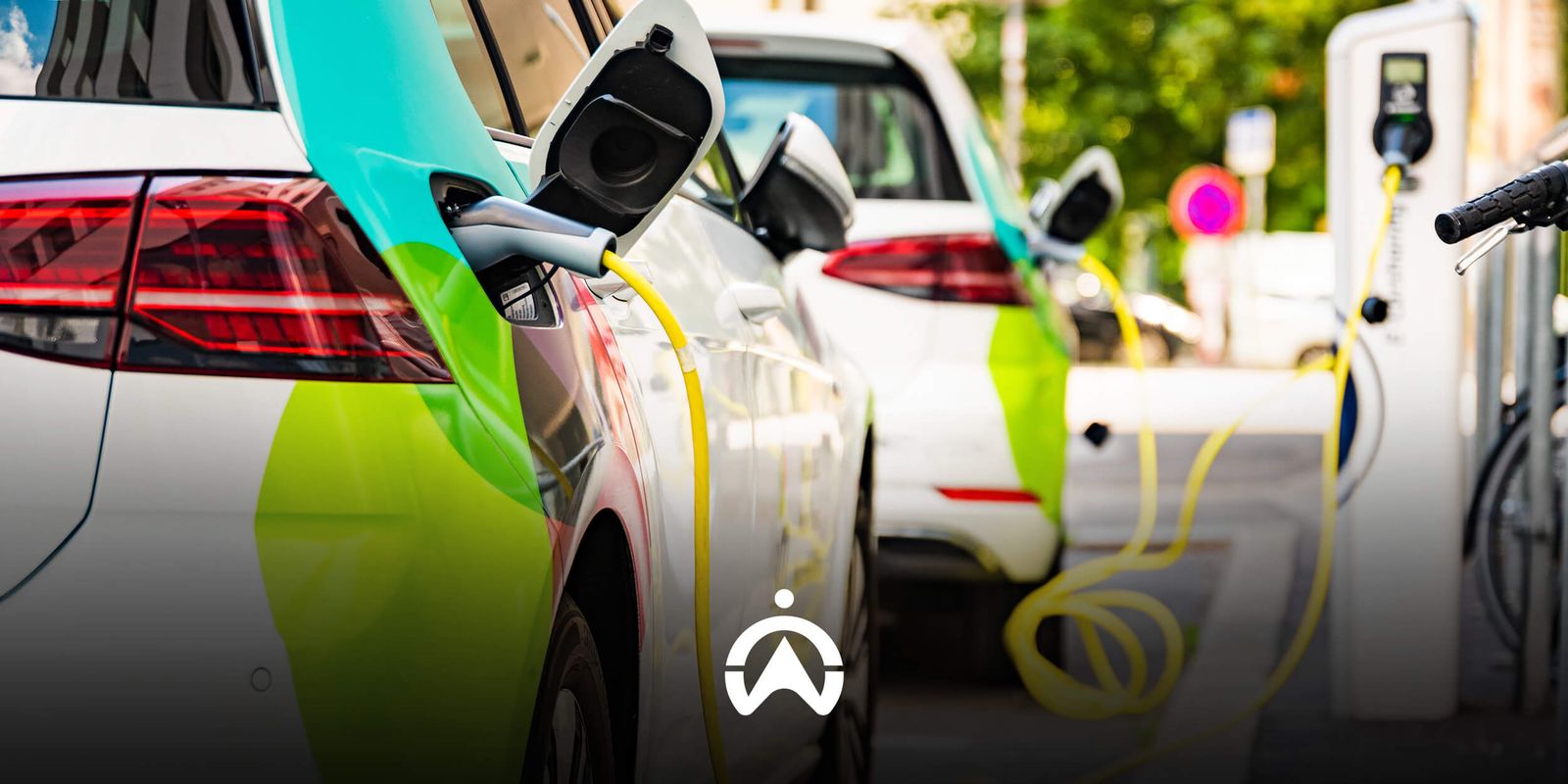
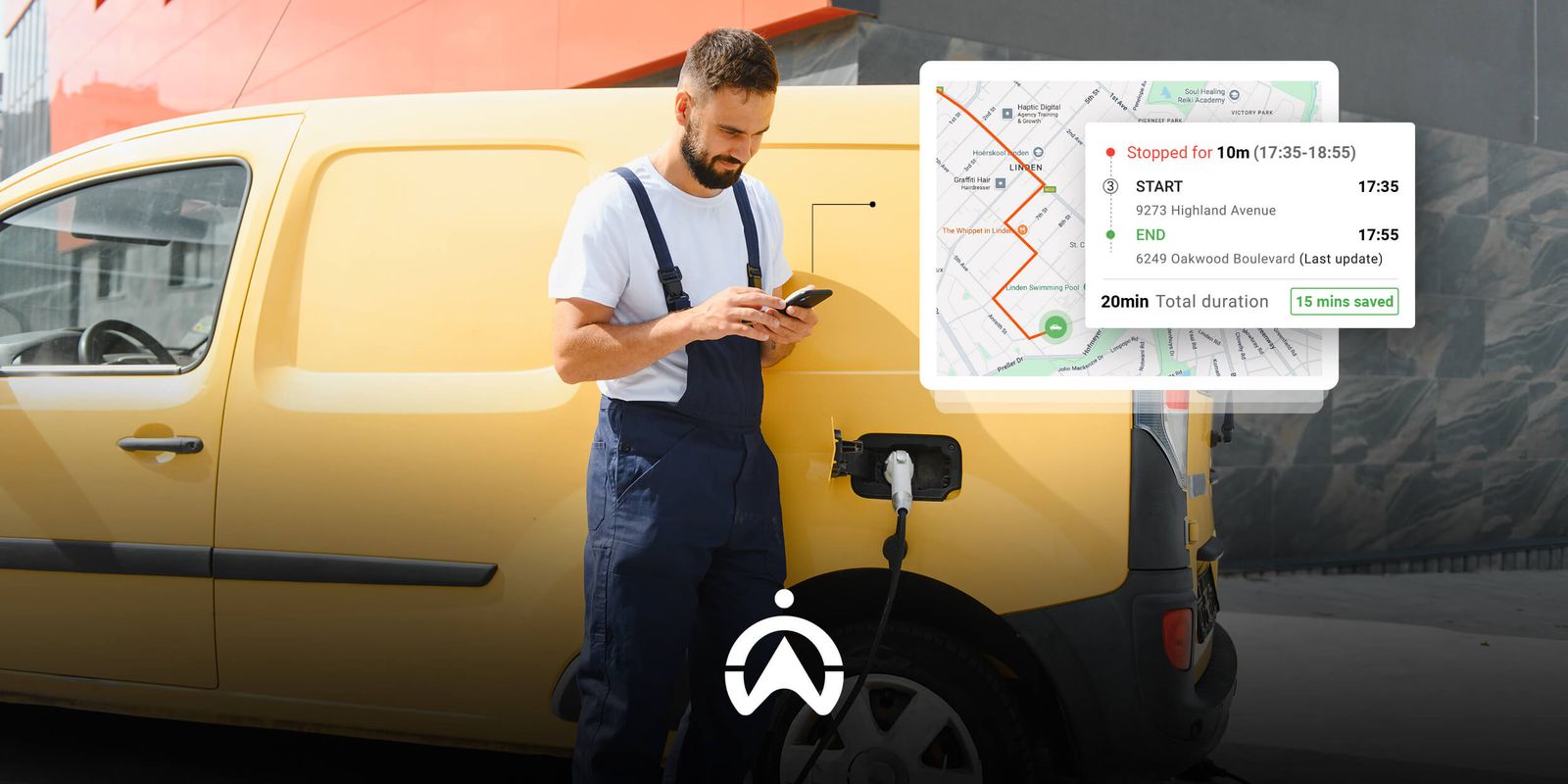
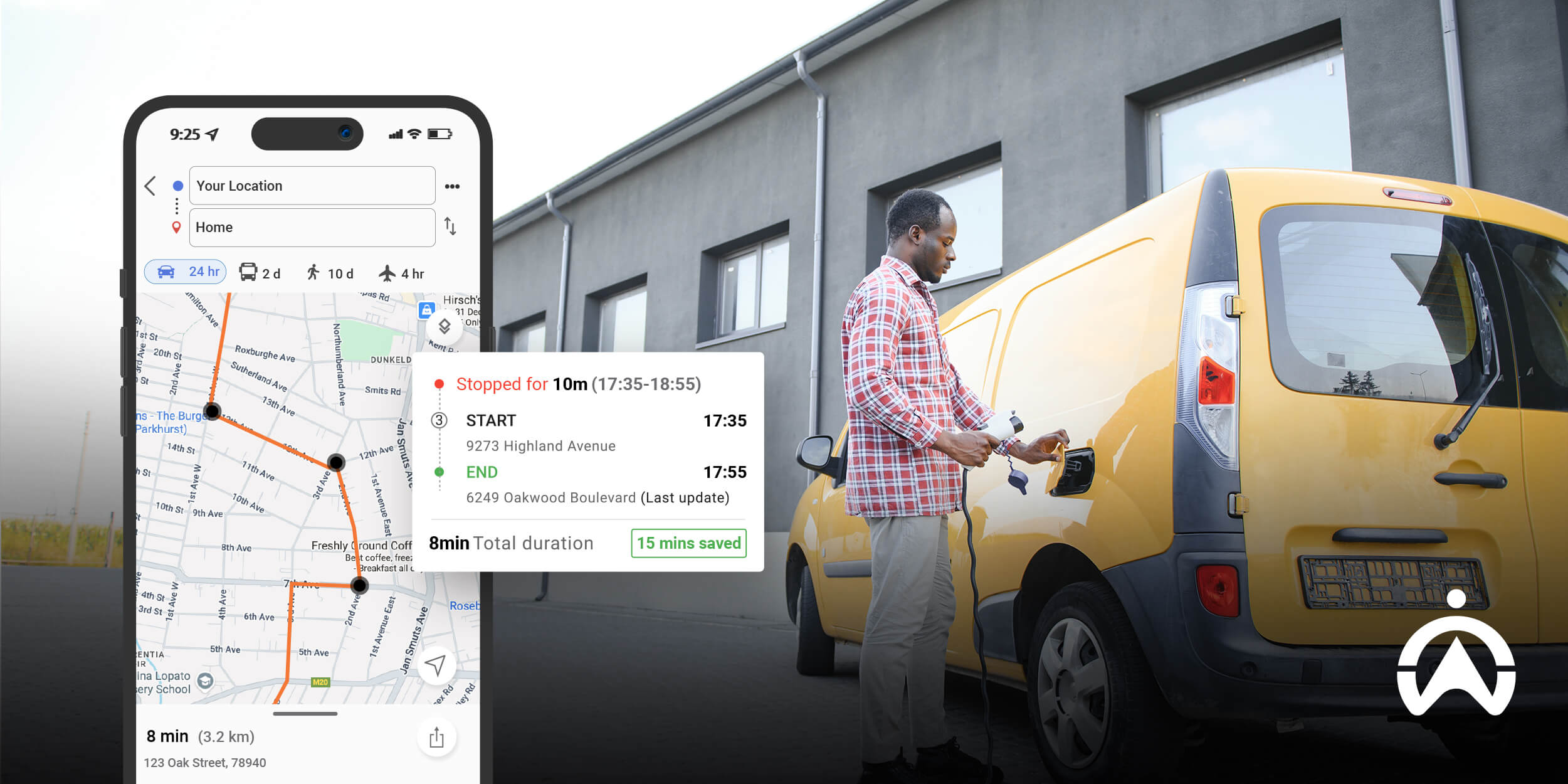
Man charging a yellow electric car with dashboard from Cartrack fleet management system displayed supporting electrification of the last-mile.

How Cartrack supports smarter last-mile electrification

Cartrack supports smarter last-mile electrification by providing you with a full-fledged & sophisticated FMS, detailed reporting, and enough flexibility to support mixed fleets. Thanks to FleetWeb, you can confidently manage everything from one platform that minimises the operational risks associated with electrifying delivery fleets.

Here’s what makes Cartrack your top choice:

  • Readiness and flexibility for mixed fleets (EV and ICE): You can smoothly manage each vehicle type using one integrated platform. Not only do you avoid cross-platform confusion, but you continue to manage and track your fleet without any operational or data disruptions.
    ‍
  • Reporting and insights for operational decision-making: In-depth reports ensure that every business decision you make is a well-informed, data-driven one.
    ‍
  • Alignment with sustainability and efficiency goals: Our analytical insights help you align your electrification efforts with performance and sustainability goals, ensuring that the last mile remains reliable, cost-effective, and measurable for the duration of the transition.

Final takeaway: Is your fleet ready for last-mile electrification?

Your fleet is absolutely ready for last-mile electrification if you’ve got the support of a powerful FMS behind you. Electrification is a gradual journey that needs careful planning and continuous development. Without the right insights, this process becomes more of a hurdle than a successful effort to be a greener operation.

FMSs are essential for minimising that risk. By understanding fleet behaviour, managing mixed fleets, and scaling electrification gradually, you can proactively plan your long-term success.

Plan your last-mile electrification journey with confidence. Speak to Cartrack about meeting sustainability goals without compromising delivery performance.

Frequently Asked Questions

How long does it typically take to see ROI from electrifying a last-mile fleet?

While it ultimately depends on factors like mileage and energy expenses, it can typically take a few years—up to 5—to see ROI from electrifying a last-mile fleet. It might not appear as promising at first because the initial costs of the process are usually high. Eventually, though, savings on fuel and maintenance expenses will be noticeable.

What operational risks should businesses plan for when electrifying last-mile delivery?

The operational risks a business should plan for when electrifying last-mile delivery include limited range, lack of charging facilities, and poorly planned routes that could leave your driver and the vehicle stranded. The best way to avoid these risks is by adopting an FMS that supports better operations.

Does last-mile electrification require changes to existing delivery schedules?

Most of the time, yes; last-mile electrification does require changes to existing delivery schedules. Route planning no longer centres around fuelling stations, but rather range anxiety and charging facilities. This might need you to strategise a bit more carefully to accommodate these specific challenges without facing disruptions.

Top Electric Scooter Fleet Management Solution

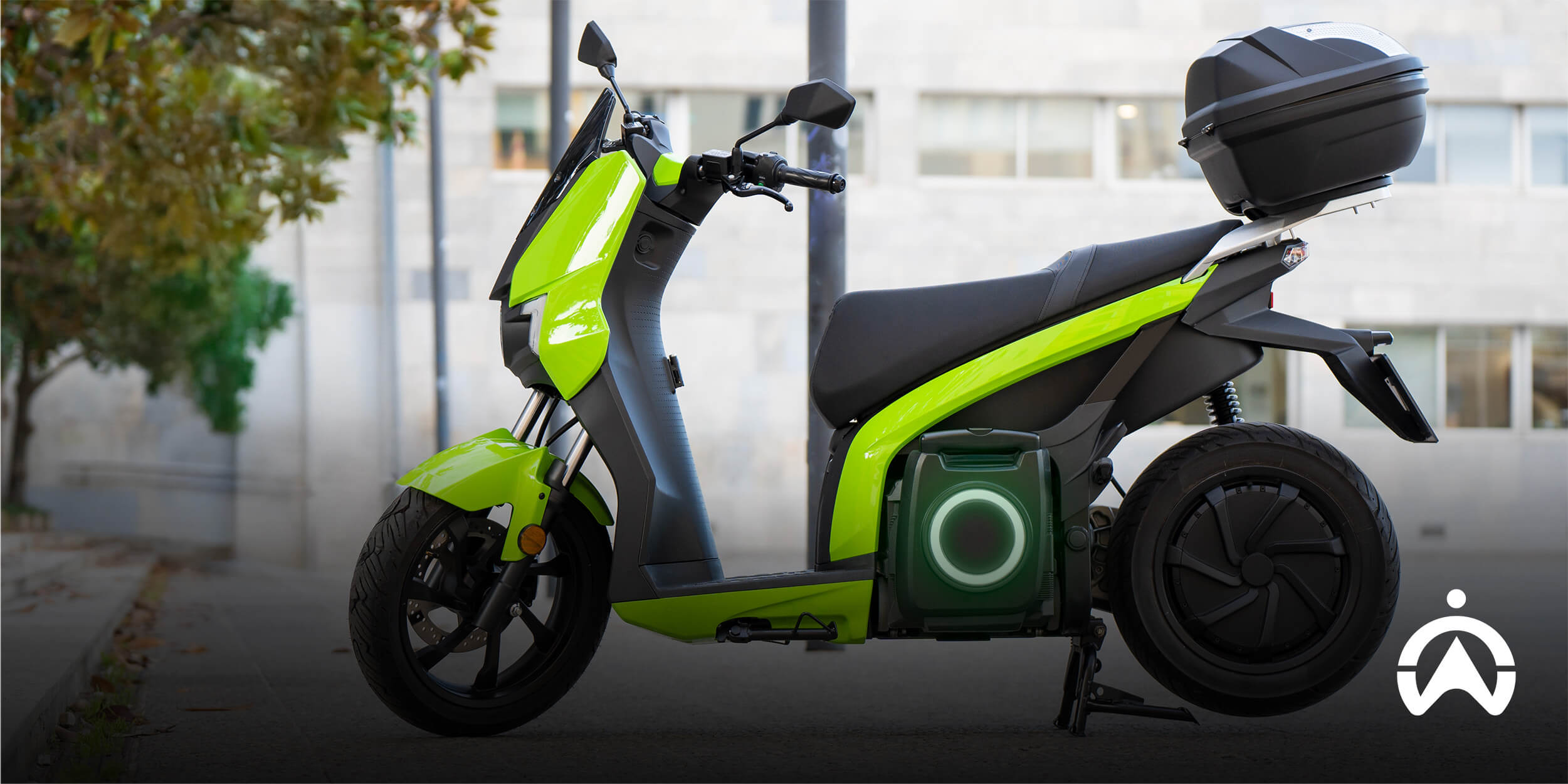
The process of managing an electric scooter fleet involves tracking, maintaining, charging, and protecting your scooters. This ensures that your fleet stays available, safe, and most importantly, profitable. Electric scooters work best in busy urban areas, as this is where they’ll be utilised the most and are most likely to have charging stations to keep your scooters running.

Without having effective operational control, you’ll end up having scooters in your fleet that’ll remain unused, go missing, or deteriorate much faster than expected. For businesses, local authorities, and transport providers, the question isn’t if e-scooters will become popular. The question is rather IF electric scooter fleets can be managed in a way that’s efficient enough to allow for sustainable growth.

With the global shared electric scooter market set to expand from roughly USD 2.15 billion in 2024 to over USD 16 billion by 2029, businesses have to prioritise smart fleet management to sustain growth.

It’s important to remember that electric scooter fleets don’t fail at the point of adoption—they fail during the process of daily management.

That’s why it’s important to partner up with a top fleet management solution provider like Cartrack to make managing and maintaining your electric scooter fleets so much easier!

Why is managing electric scooter fleets more complex than traditional vehicles?

Managing electric scooter fleets is more complex than traditional vehicles because scooters are used more often. On top of that, they operate in smaller local areas, and they depend entirely on battery life and are unfortunately more susceptible to theft and getting damaged.

Electric scooters also act in ways that are much different from cars, vans, or trucks. A single scooter can complete many short trips in one day, they can be used by different people and, depending on the scooter type, across various types of road surfaces. This then causes constant operational pressure on fleet managers.

High-frequency usage creates constant operational pressure

The high frequency of usage in e-scooters changes many things. So unlike traditional fleets that accumulate kilometres slowly over time, scooters experience significant wear & tear on a daily basis. This means that parts like brakes, tyres, gears, and batteries wear out quickly, and all of these small damages can add up quickly if they’re not identified early on.

Having a dedicated EV fleet management solution will help your operators stay on top of daily wear & tear by providing you with real-time insights into your e- scooters usage and condition. Fleet managers will be able to easily identify scooters that are overused and arrange maintenance before small issues turn into costly repairs by tracking ride frequency, distances travelled, and unexpected movements.

This proactive approach will minimise unplanned downtime, extend the lifespan of equipment, and keep all of your e-scooters safe and roadworthy, even with heavy daily use.

Battery dependency turns downtime into lost revenue

The dependence on batteries unfortunately introduces daily risks to your profits. A scooter that has a dead battery is not just “parked” but is technically offline. Having only a limited visibility into the battery’s state-of-charge will result in missed opportunities and income.

Fleet management software helps you avoid revenue loss from battery problems by giving you real-time insights into each scooter’s battery level and usage trends. Instead of discovering flat batteries once scooters are offline, operators can prioritise charging or swapping batteries based on live data.

This approach enables teams to get scooters back on the road quicker, minimise idle time, and ensure assets are ready when demand peaks, safeguarding daily earnings.

Hyper-local operations leave no room for guesswork

The demand for e-scooters can change from one area to another based on the time of day, weather conditions, or current events. That’s why, without real-time data, your scooters will end up gathering in areas with a low demand, while places with high traffic don’t have enough scooters available.

A fleet management solution takes the guesswork out by analysing real-time location and usage data across your fleet. The data you’ll receive will  be able to show you where your scooters are most used during the day—helping you to make smarter distribution choices. This means your scooters will end up in high-demand areas, boosting utilisation and reducing idle assets in low-traffic spots.

Where do electric scooter fleets lose money without realising it?

Electric scooter fleets often lose money through low utilisation, reactive maintenance, and unnoticed asset loss without even realising it. Scooters with flat batteries, hidden damage, or poor placement quietly reduce your earnings, shorten their lifespan, and distort performance data if they’re not actively monitored.

Here’s exactly how your e-scooters are losing money:

Poor utilisation due to lack of visibility

Low usage due to poor visibility happens when scooters are listed as “available” but are actually parked incorrectly or offline because of a low battery. Without having accurate usage data, decisions about distribution simply become guesses.

Reactive maintenance that shortens asset lifespan

Reactive maintenance is one of the main factors that shortens the lifespan of your electric scooter fleet. When you only address faults after your drivers complain, it leads to delays, causing components to fail faster and increasing the replacement costs over time.

Silent asset loss

Silent loss of assets occurs when scooters are moved, damaged, or taken without any notification. This then gradually reduces the overall value of your fleet and distorts your performance metrics.

Electric scooter fleet operations system used to monitor vehicles and performance.

What must an effective electric scooter fleet management solution solve?

An effective electric scooter fleet management solution must solve problems surrounding the real-time visibility of assets, the monitoring of battery health, analytics on usage, and alerts for proactive maintenance. These functions assist fleet managers in reducing downtime, improving utilisation, safeguarding assets, and making informed decisions about operations in urban areas that are heavily populated.

Real-time asset visibility

Operators must know the exact location of every scooter, how long it’s been in its idle state, and whether it’s making any unexpected moves.

Battery health and charging intelligence

Information about the state of charge, charging history, and battery performance trends helps you to prioritise field operations and reduce downtime.

Usage and demand pattern analysis

Understanding when and where scooters are used helps fleets match supply with real demand instead of relying on guesswork.

Proactive maintenance triggers

Spotting impacts, unusual movements, or any odd usage patterns can help identify potential faults before they turn into breakdowns or safety issues.

Why generic fleet tools fall short for electric scooters

Generic fleet management tools struggle with electric scooters since they’re designed for infrequently used vehicles rather than assets that need constant, high-density usage and rely on batteries. Operators often lack the detailed insights into usage and battery status necessary for effective daily management of scooters.

Lack of insights

  • Your scooter fleets need daily, not monthly, insights

Inability to monitor battery logistics

  • This is an electric vehicle, which means it operates with a battery life, not petrol or diesel
  • Cartrack has a comprehensive fleet management system—that works perfectly with electric vehicle fleets—that enables you to monitor your e-scooter’s battery health, charge levels, and energy usage. Plus, we offer predictive maintenance for battery wear, preventing unplanned downtime and optimising charging.

How data-driven control improves electric scooter fleet performance

Data-driven fleet management improves scooter fleet performance by increasing their availability, reducing downtime, and helping operators make smarter utilisation decisions. Real-time insights into usage, battery levels, and movement patterns empower operators to enhance their operations, improve safety, and extend the lifespan of their assets.

Smarter utilisation decisions

If your e-scooter fleet is in an area that’s not utilising them to their full potential, you’re wasting money and your drivers time.

For example, let’s say you have an e-scooter fleet that does Uber Eats deliveries, and all 12 of your drivers are in a small rural town that has only two fast food restaurants—you’re going to be operating at a loss. However, if you place one driver there and spread the rest out in busy suburbs that have plenty of restaurants—you’ll be utilising your fleet in the most profitable way.

This is why having a fleet management solution is important. You’ll get data that will help you improve your electric scooter fleet’s utilisation rate. 

Reducing downtime through predictive insights

You have three e-scooters out of use because they need to be serviced, two have been parked in the basement parking for three months, four of your scooters can be used because they need to be charged and one just pulled up with a faulty battery. Does this sound familiar?

A data-driven fleet management system is the tool that ensures this chaos doesn’t happen. You’ll receive predictive insights that let you proactively keep your fleet maintained instead of you being reactive only once an issue arises. Predictive maintenance also enhances the lifespan of your fleet.

Improving safety

When it comes to electric scooters, accidents happen more often compared to regular fleets. Now, it’s also difficult to know if it’s the fault of your drivers or the fault of other vehicles. This is where a data-driven fleet management system works its magic.

You’ll get:

  • Real-time monitoring of vehicle and driver behaviour
  • Monitoring of driver performance
  • Customised driver safety policies
  • Proactive tracking on maintenance and servicing that keeps your e-scooters road-ready
Electric scooter fleet management dashboard showing real-time tracking and analytics.

What to look for in an electric scooter fleet partner

Electric scooter fleet operators should team up with a fleet partner who can deliver reliable connectivity in any local area. You should look for a partner with experience in high-risk environments and who offers scalable, data-driven tools. These are the features that guarantee consistent visibility, enhanced asset protection, and better control over operations as your fleets grow.

Proven experience in high-risk fleet environments

Having an e-scooter fleet partner with experience in high-risk environments is crucial. Your fleet partner should understand asset protection, theft prevention, and how to operate effectively in busy urban settings.

*Cartrack has been in operation since 2004 and has recovered over 100 000 vehicles in the past 10 years! 

Local network reliability and support

It’s crucial to have reliable local connectivity and constant support. Fleet data is only valuable when it’s consistently accessible, even in challenging network conditions.

*Cartrack has 24/7 support to assist you with any emergencies, and our systems are designed to work even in remote local areas! 

Scalability without operational complexity

You need scalability that doesn’t complicate things as you grow. As your fleets grow, management systems should be able to simplify operations rather than add to the administrative workload.

*Cartrack’s fleet management system is designed to grow with your fleet!

How Cartrack supports electric scooter fleets

Cartrack supports electric scooter fleets with real-time tracking, operational insights, and asset protection that’s tailored for busy urban environments. These tools are essential for operators and fleet managers, allowing them to keep an eye on usage, manage battery downtime, reduce losses, and ensure that their fleets are always accessible.

Real-time tracking built for high-density fleets

At Cartrack we offer real-time tracking for urban electric scooter fleets, making sure your operators have continuous visibility of scooter locations, movements, and status at all times.

Actionable data, not just dashboards

With Cartrack you can access actionable operational insights. Our fleet management system turns data into clear information, supporting your daily decision-making beyond just reporting.

Protecting assets and extending fleet life

By monitoring usage patterns and spotting unusual behaviour, Cartrack can help to protect your assets and optimise their lifecycle, reducing losses and extending the lifespan of your electric scooters.

Conclusion: Control determines whether electric scooter fleets scale or stall

The success or failure of electric scooter fleets relies heavily on effective operational control, not just demand. By using fleet management solutions (like the one from Cartrack) that offer real-time visibility, insights into battery health, and proactive maintenance, operators can reduce risks, protect their assets, and manage fleet growth sustainably in urban environments.

Nowadays, having real-time visibility, battery intelligence, and proactive maintenance is essential, not just a nice-to-have.

For businesses that are looking to establish sustainable electric scooter operations, they must remember that the right fleet management solution focuses on a few things. This includes maximising value, uptime, and insights from each scooter already on the streets, rather than merely increasing their numbers.

Remember that managing electric scooters isn’t about adding more vehicles—it’s about extracting more value from each scooter already on the street.

If you’re ready to get the top electric scooter fleet management solution for your fleet, contact Cartack today!

FAQs

How do electric scooter fleets perform during periods of load shedding?

Electric scooter fleet performance during load shedding relies on two main factors: battery planning and operational visibility. Fleets that utilise real-time battery monitoring gain a major edge. They can prioritise charging, manage battery rotation effectively, and redeploy scooters to the areas where they’re needed most.

Can electric scooter fleet data be integrated with existing business systems?

Yes, you can seamlessly integrate electric scooter fleet data with your existing business systems. This can be done through APIs or data exports. This type of integration lets organisations connect fleet insights with billing platforms, operational dashboards, maintenance systems, and reporting tools. However, this depends on the fleet management system you get.

What insurance and liability considerations apply to electric scooter fleets in Malawi?

In Malawi, when it comes to insuring electric scooter fleets, you must cover theft, damage, third-party injury, and public liability. To back up claims, assess risks, and comply with regulations, having accurate tracking data, detailed usage records, and a history of incidents is crucial. This information also lets fleet operators demonstrate that they’re managing their operations responsibly.

EV Route Optimisation: How to Get the Best Routes

Optimising your EV (electric vehicle) routes keeps your business and logistics operation running smoothly. With route optimisation, you can easily manage and predict your EV’s charging requirements and energy consumption. The key to getting the best routes is to invest in a powerful fleet management platform that can combine the necessary tools to maximise efficiency.

Range limits, charging times, and fluctuating energy use are just some of the factors that make EVs unique in their challenges. Research highlights that customised EV route planning can massively slash energy use and operating costs. In fact, smart routing can reduce energy consumption by around 31% in real-world simulations, proving that strategic route and charging planning maximise fleet efficiency.

As the move to electrify fleets grows, it’s essential to know what planning is required to keep rising costs and downtime at bay. In this blog, we’ll tackle the importance of EV route optimisation, implementing the right tools, and why Cartrack’s platform is your best choice.

How do you get the best routes for your EV fleet?

You get the best routes for your EV fleet by adopting EV fleet software and using its specialised features. EVs have their own set of unique needs and vulnerabilities, and unlike internal combustion engine (ICE) vehicles, factors like charging habits and battery limits need to be considered for total productivity.

EV routing doesn’t just stop at finding the fastest route; it ensures vehicles can complete their journeys within battery limits. This keeps vehicles on the road longer, lowers operating costs, and improves reliability. Comprehensive data is also crucial to effective route optimisation. It allows you to make informed decisions, avoid range issues, and quickly adapt routes when conditions change.

By combining extensive data with smart charging planning and dynamic rerouting, you truly enhance operational reliability. These features ensure your routes are not just quick but also efficient, safe, and customised for EV operations.

What is EV route optimisation?

EV route optimisation combines technology and smart planning to get the best, fastest routes for EVs. This type of planning accounts for operational requirements, such as maintaining low energy consumption and ensuring that charging points are always nearby. In contrast to ICE vehicles, EVs need battery performance feedback, information on charging stations, range limits, and the like; which is why route planning is so crucial.

Why does optimising EV routes matter for fleets?

Optimising EV routes matters for fleets because there are so many factors to keep in consideration—it’s not just about planning the fastest journey. Route optimisation has a direct impact on factors such as overall fleet costs, service punctuality, battery health, and range anxiety. The smallest inconsideration could ultimately mean serious downtime.

Key insight points include:

  • Energy consumption varies by terrain, speed, and load: If the terrain is rough or uneven, energy consumption will likely be higher. This should always be anticipated when planning a route.
    ‍
  • Long idle time and traffic drains EV range: Depending on the nature of your business, your EVs might stop and start or idle quite often during trips. This will drain the battery quicker than normal, so it’s important to take note of this.
    ‍
  • Poor planning leads to unnecessary charging stops and higher charging costs: Opting not to prepare routes means you risk your EVs making unplanned stops or using chargers that weren’t planned for, which creates major downtime and could negatively impact the vehicle battery.
    ‍
  • Optimisation protects battery lifespan: Route planning is an obvious must with EVs. Apart from other benefits, optimisation actually extends the lifespan of your battery and vehicle, minimising battery deterioration.

Which factors drain EV range the fastest?

The factors that drain EV range the fastest include extreme temperatures and terrain.

Have a look at the different factors:

  • Extreme temperatures: Extreme temperatures going either way will cause your EV to consume more energy from battery thermal controls.
  • Weight: If the vehicle is bearing a heavy weight from the load it’s carrying, it means the vehicle requires more energy to function (move, accelerate, or even maintain speed).
  • Terrain: Rough or uneven terrain uses up a lot more energy, especially if there are uphill or many short stops.
  • Speed: Going faster in an EV uses more energy than when maintaining a steady or cruising speed.

Can free apps optimise EV routes for fleets?

Technically, yes, free apps can optimise EV routes for fleets, but they definitely fall short. Google Maps, Waze, and other navigation apps are more suited for individuals and personal trips.

These are some of the limitations:

  • Trip-based, not fleet-wide: Free apps like these are usually more accommodating towards single trips taken by individuals, not many trips taken by numerous drivers at a time.
  • No driver allocation or job scheduling: Unlike fleet management platforms, free apps won’t assist with task delegation and potential changes that need to be dealt with urgently.
  • Limited charging network visibility: Free apps might be able to show where charging stations are, but they don’t offer the necessary extra features like charger type or provider.
  • No TCO insights, no cost, or energy reporting: Fleet management platforms offer detailed reports and insights, which are not offered by free navigation apps.
  • No integration with EV telematics or maintenance data: One of the most important features of a fleet management solution is integration, especially considering how important range, battery health, and vehicle status data are. Free apps don’t allow for precise planning and proactive maintenance.

What makes EV route planning different from ICE route planning?

EV route planning is different from ICE route planning in that it needs to account for key factors like charging, range, and traffic times. On the other hand, ICE vehicles are more focused on refuelling and the network that exists around that.

Take a look at this table to compare considerations quickly:

Factor EV Route Considerations ICE Route Considerations
Refuelling/charging Slow charging, limited stations, and peak pricing Quick, abundant, low route impact
Range Highly variable depending on battery, load, and weather More stable and predictable
Terrain Uphill drains battery; downhill regenerates Minor impact on fuel consumption
Traffic/idle time Significant battery loss Minimal fuel impact
Speed impact Going faster means a much higher drain Marginal impact
Smart navigation for electric vehicle route optimisation

How does EV route optimisation software help?

Route optimisation software helps by bringing technology and careful planning together to ensure optimal operation. Because there are specific factors to think about that don’t apply to ICE vehicles, route optimisation systems that support EVs must implement practical alerts, consistent & live data, and advanced algorithms.

Sophisticated systems, like Cartrack’s, provide key features like:

Real-time battery and energy forecasting

Before routes can be optimised, battery and energy should always be visible, and the data should be continuously collected for projection and predictive purposes. These consistent updates, along with forecasts based on elements like traffic and weather, can help you confidently plan trips without worrying about range challenges.

Charging stop scheduling

The software should be able to help you pre-emptively plan charging stops, even before the battery runs dangerously low. It comfortably balances charging speed, station availability, and estimated SoC (state of charge) to prevent long detours and unplanned stops.

Live traffic and terrain predictions

An electric vehicle’s range isn’t constant. The amount of energy used is affected by regular stops, inclines, and traffic congestion. To choose routes that minimise energy loss and help preserve the vehicle’s range, optimisation software must take into account real-time traffic and terrain data.

Charging cost avoidance by planning cheaper stations ahead of time

Not all charging points are quite the same. Some cost more, charge slower, or get crowded during peak times. But with route optimisation tools, you can spot cost-effective stations and plan your charging stops wisely, leaving you to save money while preserving exceptional service quality.

The EV route optimisation cycle (step-by-step checklist)

The EV route optimisation cycle isn’t something that can be done just once; it requires continuous effort to maintain that strong level of efficiency. For your fleet, this means working consistently on maintaining the accuracy of routes, ensuring they remain cost-effective, and making them flexible enough to adjust to changes that occur in the real world.

Look at this quick 6-step checklist when optimising:

  1. Check real-time SoC (state of charge) and battery health
  2. Analyse energy forecast (load, terrain, weather)
  3. Plan a route with charge stops
  4. Assign jobs to drivers and vehicles
  5. Monitor routes live and update automatically
  6. Review energy usage and trip analytics

Final takeaway

EV route optimisation has become an essential and competitive advantage for fleets. Without accurate and energy-efficient route planning, the reality is your fleet will battle high costs, unreliable schedules, delays in charging, and faster battery wear. On the contrary, optimised electric vehicle routes provide predictable performance, improved cost management, and consistent quality of service.

As electric vehicle fleets and electrification expand, depending on manual planning and basic navigation tools won’t properly address the complexities associated with EV driving conditions. If your business is focusing on efficiency and sustainability over the long term, investing in route optimisation and the correct tools that Cartrack can provide isn’t merely an option, but rather a requirement.

Never worry about EV range again. Get reliable routes, protected battery health, and lower operating costs with Cartrack’s EV-ready fleet software.

Frequently Asked Questions

Can fleets optimise routes without EV telematics?

No, fleets can’t optimise routes without EV telematics, because it’s the information provided by telematics that assists with challenges like range issues and unplanned charging. Technically, it’s somewhat possible, but the forecasting would be extremely limited, and the planning would be made purely based on estimates—not on facts.

Can drivers override optimised EV routes?

Yes, drivers can override optimised EV routes in cases where deviations are necessary. Not all trips will go as expected, but the software will always record these deviations. As a result, you’ll be alerted as a manager and can take the necessary steps to adjust and change plans accordingly.

How does route planning handle sudden energy drops or weather changes?

Route planning handles sudden energy drops or weather changes by making the required changes in real time. Because these changes can profoundly affect how your EV operates and its running time, rerouting or seeking alternative charging places can be considered.

Does EV route optimisation work with mixed ICE and EV fleets?

Yes, EV route optimisation does work with mixed ICE and EV fleets. If you have a sophisticated fleet management system, like Fleetweb, there’s no need to adopt different platforms for each vehicle type. An advanced system should work just as well for optimisation for all vehicles and support businesses if they’re looking to transition to electrification.

Myth or Fact: Electric Vehicles Don’t Need Any Maintenance?

The idea that electric vehicles need absolutely no maintenance is a myth. They may need less maintenance than your average ICE (internal combustion engine) vehicle, but it’s still required. It’s easy to understand where that myth comes from, considering the upkeep is simpler and operations are typically less environmentally harmful.

With no engine, exhaust, or oil systems, a 2025 report focused on the African market found that maintaining an electric vehicle costs around US $0.061 per mile, compared to US $0.101 per mile for petrol vehicles. This is roughly 40% less overall. However, even something as simple as worn tyres or a cooling system fault can cause expensive downtime and shorten a vehicle’s life if you’re not careful.

Knowing exactly what maintenance EVs still need is key to keeping your fleet running smoothly and profitably. In this article, we’ll separate myth from fact while helping you better understand EV maintenance. Moreover, we’ll show you how Cartrack’s smart fleet management tools can keep your electric vehicles in top shape.

Myth or fact? The truth behind EV maintenance

The verdict? Myth. The truth behind EV maintenance is that EVs require less maintenance than your petrol or diesel vehicles, but upkeep is still required. Regular servicing and treatment are the keys to keeping your electric vehicle running smoothly. If maintenance is neglected, you run the risk of damaged battery health and compromised vehicle safety.

To get a better idea, take a quick look at our Myth Meter:

80% Myth  ▮▮▮▮▮▮▮▮▮▮▮▮▮▮▮▮▮▯▯  20% Fact

Skipping these checks might not seem like a big deal, but it can significantly shorten battery life, limit driving range, and put safety at risk. In a fleet, these potential issues can add up fast. One neglected EV can cause ripple effects, leading to downtime, higher repair bills, and unnecessary strain on operations.

Why the ‘no maintenance’ myth exists

The ‘no maintenance’ myth exists because the simplicity and convenience of electric vehicles lead to the creation of this narrative. ICE vehicles have so many moving parts and components that are interconnected, making them far more susceptible to wear and tear. However, fewer parts don’t mean fewer responsibilities, and EVs need their software and electrical systems kept in shape.

Get a quick breakdown, separating myth from fact, and look at this table:

Myth Fact
EVs don’t have engines, so nothing needs servicing EVs still require regular checks on brakes, tyres, suspension, and cooling systems to stay road-ready.
EV batteries last forever Battery performance naturally degrades over time and needs ongoing monitoring and thermal management.
Regenerative braking eliminates brake wear completely It reduces brake wear but doesn’t eliminate it—systems still need periodic inspection and maintenance.
EV software updates are optional Software updates are essential for battery efficiency, safety systems, and diagnostic accuracy.
Tyre wear is the same as in petrol vehicles EVs are heavier and have higher torque, leading to faster tyre wear and more frequent replacements.

Core areas of EV maintenance you can’t ignore

Ensure the longevity of your electric vehicle by paying attention to the core areas of EV maintenance that shouldn’t be ignored. These include software and electronics, cooling systems, brakes, and tyres.

Let’s break down key maintenance categories:

  • Cooling systems: If cooling systems aren’t kept in check, it could lead to overheating or slow down the performance of the vehicle. Proper thermal management means complete circulation and no coolant leaks.
    ‍
  • Brakes and tyres: Any vehicle is susceptible to wear and tear, but EVs are typically heavier than ICE vehicles. As a result, there’s usually more strain on brake pads and tyres, leading to the importance of regular checks and servicing.
    ‍
  • Software and electronics: EVs rely far more on internal software than ICE vehicles, ensuring energy and performance are optimal and diagnostics are always logged. Routine software updates can maintain and even improve these features.
    ‍
  • Suspension and steering: Again, the weight of EVs (particularly their batteries) puts strain on the car, more so on its suspension. Regular inspections and alignment checks prevent the vehicle from potential damage and instability.
Technician performing electric vehicle fleet maintenance in workshop.

What are the hidden costs and risks of neglecting EV maintenance?

The hidden costs and risks of neglecting EV maintenance include safety hazards and reduced battery lifespan. As you can imagine, these issues are greatly increased in the context of a fleet. Staying on top of maintenance of your EV vehicles will save you from headaches down the road, preventing you from expensive repair costs and major downtime.

Look at the potential risks:

Reduced battery lifespan

As mentioned, the battery is the most crucial component of the EV. Because almost all the components are connected to it, it serves as the heart of the vehicle. Not maintaining its health can lead right to battery degradation. Battery degradation means ineffective charging, poor circulation, and old, outdated software.

According to a report by Simon-Kucher & Partners, EV battery packs account for 30–40% of a vehicle’s total cost. Lack of maintenance can cost you more than the savings you’re supposed to get from EVs.

Safety hazards

Although you might not need to concern yourself about safety issues like engine fires, EVs still do bring about new kinds of safety hazards to consider. Moreover, safety hazards aren’t just about keeping the vehicle in check; they’re also about meeting compliance standards.

Consider routine inspections to stay compliant, but also ensure your vehicles are in the best condition. Inspections can keep you abreast of wear and tear, damaged cooling systems, and defective electrical components.

Higher long-term operational costs

Predictive maintenance is the best solution for preventing high long-term costs. Avoiding maintenance can only end up costing you more over time, proving counterproductive when you’re trying to save or be profitable. The more time your EV spends off the road, the more likely you are to lose business income.

Fleet impact

An EV’s downtime in a personal capacity is annoying and frustrating at most, but in a fleet? This is an exponential matter. An EV that isn’t serviced can mean the following:

  • Massive downtime
  • Disorganised schedules
  • Loss of important insights
  • Strain on existing EVs within the fleet

Keeping up with smart EV fleet maintenance

Keeping up with smart EV fleet maintenance is about staying up to date and always doing the right thing. It’s essential to dedicate time and remain mindful of regular maintenance. Invest in your EV fleet; get the right fleet management platform to ensure optimal performance, prevent downtime, and keep track of maintenance.

The best practices for EV care include:

  • Scheduled software updates: Software is at the centre, critical for diagnostics and battery control. Keep your software updated to ensure your fleet is not only running optimally, but also on the latest software version at all times.
    ‍
  • Battery health monitoring: Keep your battery health in the best condition by ensuring thermal management is carefully monitored and charge cycles are tracked. This circumvents expensive replacements.
    ‍
  • Tyre and brake inspections: The EV’s internal batteries put extra weight on tyres and brakes. It’s worth carrying out regular inspections to ensure you don’t fall prey to decommissioned EV fleet vehicles.
    ‍
  • Cooling and electrical system checks: Any part of the vehicle that overheats is in danger of becoming damaged. Keep the most critical systems safe and cool by performing regular EV maintenance check-ups.

Fleet management software for EVs helps automate and monitor the following:

  • Predictive maintenance alerts: This is your key to spotting problem areas before they become real issues. Get notifications set up that alert you to potential anomalies and preventative maintenance—enough so that you can intervene accordingly.
    ‍
  • Performance trends and data insights: To get a comprehensive overview of your vehicles’ and fleet’s performance, invest in a platform that has a digestible dashboard and allows you to automate the process of scheduling maintenance.
Smartphone showing carbon data for electric vehicle fleet maintenance on highway.

Cartrack’s role in simplifying EV maintenance

Cartrack’s role in simplifying EV maintenance is ultimately about being the best fleet management provider for your electric vehicles. When you’ve got the right tools, it’s much easier to successfully keep control over your vehicles and their maintenance needs.

Cartrack is an enabler of proactive maintenance through the following:

  • Real-time vehicle diagnostics: Thanks to Cartrack’s telematics, all information and insights collected from fleet vehicles are monitored. As a fleet manager, you’re immediately notified of diagnostic issues or vehicle health matters via alerts.
    ‍
  • Battery health and temperature monitoring: Cartrack’s fleet software can keep track of your EV’s battery health and status, notifying you of any early signs of wear and tear.
    ‍
  • Driver behaviour insights: Driver habits are directly linked to an EV’s overall health. Bad driving means greater chances of deterioration and energy consumption. Through telematics and driver scorecards, you can monitor and coach drivers as necessary through FleetWeb.
    ‍
  • Predictive maintenance scheduling: Our advanced insights help forecast when maintenance is required before costly breakdowns happen. This helps prevent prolonged downtime.

Putting all this together means Cartrack gives businesses the tools to keep their electric fleets in top shape. The result? Greater uptime, longer EV lifespans, and lower overall maintenance costs. There’s also the satisfaction of running a sustainable operation that’s driven by the numbers.

Final takeaway

Electric vehicles have actually made fleet maintenance a whole lot simpler, and the fact remains they’re still needed. You wouldn’t have to do the same routine engine checks that you would with a petrol or diesel model, but EVs still need regular care to keep them running smoothly and safely without breaking the bank.

As a fleet manager, it’s important that you stay on top of maintenance. It isn’t really something you can put off. Regular inspections, keeping an eye on battery health, and proactive servicing that’s guided by all the right data are what you need to keep your vehicles on the road and running at their best.

Manage your electric or hybrid fleet with total control. Chat with a Cartrack expert to discover how our fleet management tools keep your vehicles running efficiently, every kilometre of the way.

FAQs

What is the biggest problem with electric vehicles?

The biggest problem with electric vehicles is infrastructure and battery degradation. Over time, just about every EV’s battery will naturally lose some of its capacity, which in turn can cut down on its range and efficiency. For fleets, not having enough charging points can make things even worse.

What’s the most expensive part of maintaining an electric vehicle?

The most expensive part of maintaining an electric vehicle is the battery, as it’s costly when it comes to either maintaining it or replacing it. It can be as high as 40% of an EV’s total value, so keeping an eye out for thermal control and regular diagnostic checks is key to making sure that investment lasts.

What is the 80% rule for electric vehicles?

The 80% rule for electric vehicles suggests it’s far better for the health of the battery to charge to 80% than to charge to 100%. This method is the best way to keep your EV’s battery at a more stable temperature and extend its lifespan in general. It’s especially important for EV fleets that’ll charge numerous times in a day.

Why does no one want to drive EVs anymore?

It’s not necessarily that no one wants to drive EVs anymore, but there are concerns around ease of access and infrastructure needs. The popularity of EVs continues to increase, but the availability of charging stations, the necessary battery technology, and maintenance tools aren’t widely available. Advances in technology are slowly addressing these issues, but there’s still a way to go.

Top 9 Electric Vehicle Myths That You Need to Know

There are a lot of myths surrounding electric vehicles (EVs), but it’s important to note that EVs aren’t just a buzzword. They’re rapidly becoming a significant part of fleet and business mobility strategies. However, there are still plenty of myths and misconceptions that hold companies back from adopting them.

According to the International Energy Agency (IEA), in 2024 global EV sales topped 17 million, pushing EVs to account for over 20% of new car sales worldwide. These figures demonstrate that EVs are becoming more mainstream and are no longer considered a niche product.

For any business considering green mobility, understanding and dispelling these myths is key. In this blog, we’ll tackle the top 9 electric vehicle myths you need to know—and why you shouldn’t let them stop your fleet from evolving.

Before looking at each myth, let’s take a moment to understand why they continue to exist. Many are based on outdated data, limitations of early-generation electric cars, or misconceptions from passenger car use cases.

Why it’s crucial to debunk electric vehicle myths

It’s crucial to debunk electric vehicle myths because misconceptions discourage decision-makers from investing in EVs in advance or correctly. In reality, accurate data assists businesses in avoiding oversights, lowering risk, and maximising productivity. Better planning for charging infrastructure, total cost of ownership, and integration with risk and compliance systems is made possible by busting EV myths.

Myth 1 — EVs don’t have enough range

A major concern when it comes to EVs is that they don’t have enough range. It’s true that the early EVs did struggle with range, but thanks to battery and energy density improvements, it has dramatically improved.

In fact, the average modern EV has a range of 300-400 kilometres per charge, more than enough for many business fleet routes. For many commercial routes, such as deliveries, sales rounds, and local services, range isn’t the constraint it once was.

Fleets benefit from knowing route patterns. For example, if 90% of routes fall under 250 km, then an EV’s range should be sufficient. Although there’s still a need for long-haul route planning for some operations, “range anxiety” is exaggerated for many other routes.

Myth 2 — Charging takes too long

While it’s true that refilling a vehicle with an internal combustion engine (ICE) is much faster than charging an EV, charging doesn’t actually take as long as you think. In fact, fast charging can give an 80% charge in roughly 30 minutes in many EVs.

Charger technology has advanced in public places and depots. Downtime is reduced through high-power DC fast chargers, smart charging scheduling, and overnight depot charging. In practice, many fleets charge during off-peak hours or during driver breaks.

When you compare this to refuelling ICE vehicles—driver wait time, queuing, fuel price fluctuations—charging can be far more predictable when managed correctly.

Myth 3 — EVs are more expensive to own

In actuality, EVs frequently have lower costs per kilometre over the course of a vehicle’s life. The upfront price may be higher, but lower energy (electricity vs. fuel) costs, lower maintenance (fewer moving parts, no oil changes, simpler drivetrains), and incentives frequently tip the scales in its favour.

Additionally, during specific periods, some governments or utilities provide tax breaks, grants, or reduced electricity prices.

When fleet managers run total cost of ownership (TCO) models, EVs frequently come out favourably, especially for higher-usage vehicles.

Myth 4 — EVs can’t handle heavy loads or long trips

Another major misconception is that EVs can’t handle heavy loads or long trips, when they actually can. Many EVs are built with strong torque and a capable load capacity. Electric motors are able to deliver instant torque, which is helpful for heavy loads or hilly terrain. Many manufacturers now offer electric vans, trucks or utility vehicles.

Long trips will require charging infrastructure planning, but for medium-duty logistics and urban freights, EVs are practical. Some EV versions of existing trucks show performance that’s on par with diesel in certain scenarios. This is sure to only improve with time.

An electric vehicle charging connector plugged into a station, with a white delivery truck parked nearby.

Myth 5 — The power grid can’t support EV growth

The myth that the power grid can’t support EV growth may not be the case. Smart charging tools aid in load management, and grids are also evolving. Electricity systems are making investments in demand response, energy storage, and upgrades. Smart chargers have the ability to dynamically adjust charging rates or move loads to off-peak times. Demand curves are also made smoother by integration with renewable energy sources (like wind and solar).

With proper planning, adding EVs to a fleet won’t overwhelm a grid—it’s a manageable engineering challenge.

Myth 6 – EV batteries wear out too quickly

Many believe that EV batteries wear out too quickly, but in reality, they often last 8–15 years or more, depending on usage and care. Yes, battery degradation is real, but it’s slower than many expect. Many manufacturers also offer warranties (e.g., 8 years / 160,000 km or similar).

Many batteries maintain 70–80% capacity well into later years. You can also extend the battery life by not fully charging it, not letting the battery get very low before charging, and not exposing it to extreme temperatures. In real-world fleets, battery replacement is a minority expense within the lifetime of the vehicle.

Myth 7 – EVs aren’t really sustainable

When comparing internal combustion engines to full lifecycle emissions, they’re more sustainable. Although EVs do have upstream emissions from manufacturing and battery production, they typically emit fewer carbon emissions over the course of their lifetimes than ICE vehicles, particularly when the energy is low-carbon.

The “sustainability” argument is strengthened when recycling and advancements in battery technology are included. EV fleets can significantly lower emissions associated with transportation when aiming to meet ESG targets or carbon reporting.

Myth 8 – There aren’t enough charging stations

Actually, the infrastructure for charging is growing quickly, and private stations are possible. Cities, highways, and business centres are seeing an increase in the number of public charging stations.

Installing on-site or depot chargers provides control and coverage in various fleet situations. Combining public and private charging usually works well, even in places with limited coverage.

Businesses can frequently overcome the “lack of stations” issue by implementing a hybrid scheme that combines public network use with private depot charging.

Myth 9 – EVs are just a passing trend

The last myth is that EVs are just a trend. They’re not. Global momentum and regulatory shifts indicate long-term popularity.

Electrification is being strongly supported by both markets and policies. Internal combustion is being phased out by several automakers. Over the next ten years, EVs are expected to account for the majority of new car sales. EVs are a long-term solution because of customer desires, carbon regulations, and ESG concerns.

For a fleet, dismissing EVs as a passing trend is risky. You may miss the wave rather than ride it.

Side-by-Side: Myth vs Reality

Having a clear comparison is helpful before jumping into a more in-depth conversation or operational planning session. By resolving misunderstandings, it immediately lowers risk in executive planning, budgeting, and decision-making. Companies are able to steer clear of overly complex solutions or overestimating challenges.

Businesses can develop realistic, affordable rollout plans and meet sustainability targets by having confidence in the true potential and limitations of EVs. This also helps them maintain their competitiveness in a changing mobility market.

Myth Reality Implication for Business / Fleet
EVs have insufficient range Many EVs now deliver 300–500 km+ on a single charge Fits many daily routes without range issues
Charging takes too long DC fast charging (80 % in 20–40 mins), plus overnight depot charging Downtime is manageable and predictable
Too expensive Lower energy and maintenance costs, incentives Total cost of ownership often favours EVs
Poor for heavy loads Electric motors deliver strong torque, usable in vans/trucks Viable option for many logistics tasks
Grid can’t cope Smart charging, grid upgrades and energy storage help EV growth manageable with planning
Batteries degrade fast Warranties and real-world data support 8–15+ year life Battery replacement is rarely prohibitive
Not truly sustainable Lifecycle emissions lower than ICE, especially with clean grid Aligns with ESG and carbon goals
Not enough chargers Charging networks are growing & depot charging Charging accessibility is improving rapidly
Just a trend Sales, regulation and investments indicate staying power It’s a strategic, long-term shift

The Business case for acting now

Putting off the introduction of electric vehicles could lead to higher costs and missed opportunities. Businesses that wait run the risk of losing market share as laws become more stringent and consumer demands shift. By acting early, you can get incentives and establish your fleet as environmentally conscious and progressive.

Act now to:

  • Secure access to government or utility incentives before they phase out.
  • Lock in lower long-term operating costs compared to ICE vehicles.
  • Build a stronger ESG profile to meet stakeholder expectations.
  • Improve brand reputation with customers who value sustainability.
  • Get ahead of competitors who are slower to adapt.
A hand holds a smartphone displaying carbon footprint data, including CO2 emissions and trees needed for offsetting, against a blurred car background.

The benefits of using EVs for your fleet in Malawi

The benefits of using EVs for your Malawian fleet are lower operating costs, improved fleet reliability, a better driver experience, sustainability and future-proofing. Making the switch to EVs has immediate benefits for your fleet and your bottom line, so it’s not just about complying with regulations.

Businesses stand to benefit financially, operationally, and in terms of their reputation by reducing emissions. Because of these advantages, EVs are a better long-term investment than traditional cars.

  • Improved fleet reliability: Fewer moving parts mean fewer breakdowns and less downtime.
  • Better driver experience: Quieter, smoother vehicles improve driver satisfaction and reduce fatigue.
  • Sustainability gains: Demonstrate real progress towards ESG goals and carbon reporting.
  • Future-proofing: Position your business ahead of regulations and industry changes.

How Cartrack supports your EV transition

Cartrack supports your EV transition in the following ways. From monitoring battery health, charge levels, and energy usage to integrating risk compliance and sustainability reporting. Cartrack ensures that your fleet’s EV rollout is measurable, optimised, and aligned with corporate goals. Our risk management and compliance tools make it easier to track, audit and report on your EV operations.

With Cartrack, you can confidently and intelligently manage EVs rather than just adopting them. Electric cars have long since outlived their infancy. There are more and more antiquated misconceptions regarding range, cost, infrastructure, battery life, and sustainability. Busting these myths is more than just academic for companies and fleets—it’s crucial for long-term planning, risk reduction, and wise investment.

If you’re considering electrifying your fleet, let Cartrack help you to make the transition smooth, measurable and safe. Visit our Sustainability & Compliance page to see how our tools support your EV journey.

Frequently asked questions about electric vehicles

Do EVs hold their resale value?

Yes, EVs are starting to hold value better as demand grows. In Malawi, the second-hand EV market is still small, but it’s expanding fast. Businesses that invest now can expect stronger resale opportunities in the future, especially as more drivers and fleets shift to electric.

Are electric vehicles reliable for business fleets?

Yes, EVs are increasingly dependable when properly managed. Many fleets report strong uptime, and EVs have fewer mechanical parts (no oil, fewer fluids, fewer moving components). Regular maintenance checks, battery monitoring and software updates typically keep reliability high.

How do EV running costs compare to petrol or diesel vehicles?

EV running costs are usually lower per km. Electricity is often cheaper and more stable in price than fuel. Maintenance costs drop (no oil, fewer moving parts). When you factor in incentives or tax breaks, the gap widens further in EVs’ favour.

Can EVs really reduce my company’s carbon footprint?

Yes, EVs really do reduce your company’s carbon footprint over their full lifecycle. EVs tend to emit less CO₂ than ICE vehicles. Even considering manufacturing emissions, the operational emissions are far lower—especially when charged from a clean grid. For businesses with ESG targets, switching to EVs is one of the more tangible carbon reduction levers.

Are EVs practical for fleets in Malawi?

Yes, EVs are becoming more practical for your fleet in Malawi. More public fast-charging stations are rolling out, and you can also install depot chargers for your vehicles. With electricity still cheaper than petrol or diesel, you’ll cut operating costs while building a greener, future-ready fleet.

Will EV adoption affect fleet productivity?

No, EV adoption won’t affect fleet production if it’s planned well. In fact, it often improves reliability and predictability. By aligning charging times (overnight, off-peak), pairing with route planning and using real-time monitoring, EVs can match or surpass ICE fleet productivity. Predictable energy costs and fewer mechanical failures help too.

Fleet Management for Electric Cars – How to Stop Range Anxiety

Are you tired of rising fuel costs and taxes on CO2 emissions? It might just be time to pull the plug on traditional vehicles and bring your fleet to the future by going electric.

Not only do electric vehicles cut down on operational costs and boost productivity, they’re also environmentally friendly. But there’s one thing holding fleet managers back from completely integrating into a fully electric fleet — it’s a little thing called range anxiety.

In this article, you will:

  • Learn about range anxiety and how to overcome it
  • Get a breakdown of the differences between hybrid and fully electric vehicles
  • Cover potential cost savings methods for managing electric vehicles
  • Explore new advancements in EV battery technology and their impact on the future
  • Learn how to build and maintain your EV fleet with Cartrack as your trusted fleet management partner

The future of electric vehicles

Managing an electric fleet that doesn’t require fuel to run is every fleet manager’s dream, right? However, despite growing interest, a 2019 Kia Motors study found that 80% of fleet managers were held back from making the switch due to range anxiety — the fear of an EV not having enough charge to reach its destination during travel.

Although EVs have come a long way in terms of range, it’s understandable that range anxiety remains a concern for many. But fear not, there are several measures you can take to ease any anxious feelings.

Let’s explore the facts and figures that come along with EV range anxiety and be range-assured.

The two types of electric vehicles

Electric fleets have been a trending topic recently, and we see why. These vehicles can be used in light-duty, medium/heavy-duty and even off-road applications. EVs can match or surpass their gas-fuelled counterparts, plus they’re quieter.

Electric vehicles (EVs) run on batteries and electric motors rather than petrol or diesel fuel like conventional vehicles. Electric vehicles come in two main types – battery electric vehicles (BEVs) and plug-in hybrid electric vehicles (PHEVs).

BEVs are powered entirely by electricity stored in batteries, while PHEVs feature both an electric motor and a regular petrol or diesel engine. Although PHEVs have a longer range than BEVs, they still produce emissions using their internal combustion engines.

When it comes to fleet management, it’s important to consider which type of electric vehicle is the best fit for your needs. For example, if you’re looking to go green and save on fuel costs, a BEV might be the way to go, as they produce zero gas emissions.

However, if you need increased fuel efficiency and a longer range for certain tasks, a PHEV might be a better option. It’s all about finding the right balance for your fleet’s needs.


How do electric vehicles work?

An electric vehicle’s battery powers an electric motor, which turns the wheels to propel the car forward. When the battery is depleted, it needs to be recharged by plugging the car into an electrical outlet or charging station. The battery can be recharged using a standard household outlet, but it will take much longer than using a dedicated charging station.

One cool thing about EVs is that they can also recharge their batteries while driving. This happens when the driver applies the brakes, and the car converts the energy from slowing down into electricity to recharge the battery. This is called regenerative braking.

Overcoming range anxiety

Let’s walk through one of the major challenges of electric vehicles — range anxiety.

With all the benefits that come along with this type of vehicle, fleet managers have grown worried about whether EVs can get the job done and not die on them in the process.

Simply put, range anxiety is the fear of whether EVs have enough energy stored to cover the distance of their journey. This growing EV anxiety seems to be the number one reason most fleets have not migrated to a fully electric fleet, plus the concern that the initial transition will be too costly for some businesses.

How did range anxiety start?

The fear of EVs was sparked when its primary models, despite being fully charged, showed a low mileage range. This created a poor reputation within the transportation industry.

Charging vehicles had to be considered before the EVs could hit the road to complete daily tasks, and drivers were often finding that they couldn’t get much more than 112 km from a fully charged battery, so the question is, “How often does the fleet have to pause production just to charge?”. The irregular mileage per full battery did worse for their already poor reputation.

Naturally, no fleet manager wants to stress about rescuing stranded drivers and retrieving broken-down corporate vehicles. But when it comes down to it, if you’re thinking about going electric, should a lack of battery range be a significant concern? And what can you do to avoid it?

Improvements in EV battery technology

Since the first mode, EV batteries have been improved to last longer and charge faster. Here are the current stats on the estimated vehicle range of over 321 km on a few EVs:

Light commercial vehicles:

  1. Nissan e-NV200 – up to 275 km
  2. Renault Kangoo ZE – up to 200 km
  3. Peugeot Partner Electric – up to 275 km
  4. Citroen Berlingo Electric – up to 275 km
  5. Mercedes-Benz eVito – up to 150 km

Heavy trucks:

  1. Tesla Semi – up to 800 km
  2. Freightliner eCascadia – up to 400 km
  3. Volvo VNR Electric – up to 240 km
  4. Peterbilt 579EV – up to 320 km
  5. Kenworth K270E and K370E – up to 240 km

Factors that impact EV range

A major factor in range anxiety was the lack of charging infrastructure, but in countries that struggle with power outages and power availability, unfortunately, this strengthens EV anxiety.

Countries like America have taken initiatives to build more charging stations to meet demand, and motor companies like Ford are also supporting the expansion of charging infrastructure.

Besides resource availability, other factors that impact the EV range come down to three other major categories:

Driving behaviour: With traditional fuel vehicles, negative driving habits can reduce fuel economy, the same can be said about electric vehicles. Speeding, harsh braking, and quick acceleration all consume extra energy, resulting in less range and increased vehicle wear and tear.

Weather and vehicle temperatures: Temperature is one of the most reported causes of restricted range, however, it is frequently misunderstood. Lithium-ion batteries operate poorly in low conditions, but EVs have advanced battery thermal management systems that keep them at ideal temperatures. Some energy is consumed by these systems, but most of any range loss is caused by energy used by an air conditioner to heat up or cool down the vehicle’s interior.

Longevity: Much like the batteries in our cellular devices, all rechargeable batteries eventually lose their ability to store their full energy potential, this reduction in durability is referred to as battery degradation. For an EV, this coincides with reduced range over time.

Fortunately, data shows that this decline in battery health is only 2.3% a year, simply meaning an EV with a 434 km range would have an effective range of around 363 km after about seven years.

Doesn’t data like this ease your fears about EV range? Below are additional ways to reduce range anxiety within your fleet.


What can be done to reduce range anxiety?

Buying electric vehicles can be a challenge, especially for businesses with range anxiety. But there are several ways you can ease this concern.

1. Providing driver training

Your drivers are the key to getting the most range out of your EVs. Improving driver behaviour by training your drivers in economic driving practices like avoiding idling, maintaining normal speeds and avoiding abrupt acceleration or stopping can lead to reduced wastage of vehicle resources and negatively impact energy economy and range.

2. Planning ahead

Optimise charging schedules to ensure EVs are job-ready at the start of every shift. Even fast-charging stations can take up to 30 minutes to fully power a standard electric vehicle, so understanding where charging stations are along scheduled routes and dedicating recharging times to assist with range anxiety is crucial. Driver training mentioned above also helps with sustaining energy by encouraging drivers to make appropriate use of regenerative braking, which sends excess vehicle energy back to your EV’s batteries while you slow down, ensuring increased EV range as they drive.

3. Keeping vehicles well maintained

A thorough preventative maintenance routine keeps fleet operating expenses low. Maintaining proper tyre pressure in the case of EVs, for example, can help you get the most mileage out of each charge. Keeping your EV’s tyres under-inflated can cause a significant decrease in mileage. Every one pound per square inch (PSI) decrease in tyre pressure leads to a 0.4% decrease in mileage. To maximise your EV’s range, it’s important to know the recommended PSI for your tyres and check them regularly, as tyre pressure can fluctuate by one PSI for every ten degrees Fahrenheit change in air temperature, therefore schedule tyre pressure inspections as the seasons change.

4. Support EV drivers with real-time data

Once drivers take their electric cars on the road, you’ll want to reassure them that they’re not alone. Monitoring vehicles’ state of charge allows managers to prevent vehicles with low charges from running out of energy. Also, fleet managers can monitor EV charge levels and update routes to point drivers to nearby charging stations in case they need to reroute or recharge unexpectedly.

Maintenance costs of an electric fleet

As a fleet manager, it’s important to consider the maintenance and cost of electric vehicles compared to traditional gasoline or diesel vehicles.

One major advantage of EVs is that they have fewer moving parts than traditional vehicles, which means less maintenance. For example, EVs don’t need oil changes, spark plug replacements, or cam belts. Instead, regular maintenance for EVs includes:

  • Brake inspections
  • Tyre rotations
  • Checking the battery’s health

Which brings down their maintenance expenses to a minimum. So, what about fuel costs? EVs are generally cheaper to fuel than traditional vehicles since electricity is typically cheaper than petrol or diesel.

Sounds good so far, right?

But, there is one setback. When it comes to the upfront cost of purchasing EVs, they can be more expensive than traditional fuel vehicles, but some factors can decrease that cost. Many European countries, like the UK and France, offer incentives such as tax credits, rebates, low-emission zones (LMZ) and free parking spots for electric vehicles. Additionally, EVs have lower operating costs than traditional vehicles because of the cheaper price of electricity compared to gasoline, and their minimal maintenance due to fewer moving parts. All these factors can offset the running price over time and make EVs more cost-effective.


Additionally, EVs obviously have lower emissions than traditional vehicles which helps fleet managers meet sustainability goals and comply with local emissions regulations.

Fleet managers may need to invest in workplace charging stations, or use public charging spots. While private charging stations can involve some upfront costs, many public charging stations offer free charging, if not, fleet managers won’t spend that much, as the current cost of electricity for commercial customers is often much cheaper than fuel prices per litre.

Charging options in EVs that ease range anxiety


Here are five recent developments in EV battery technology that fleet managers should put on their radar.

  1. Solid-State Batteries: Solid-state batteries are a promising new technology that replaces the liquid electrolyte used in traditional lithium-ion batteries with a solid electrolyte. This makes the battery safer and more stable, with a longer lifespan and higher energy density. Companies like Toyota and Solid Power are currently working on developing solid-state batteries, with some expected to be ready for use in EVs in the next few years.
  2. Silicon Anodes: Anodes are a key component of lithium-ion batteries, and recent research has shown that replacing the traditional graphite anode with one made of silicon could significantly increase energy density. Companies like Tesla, are currently working on developing silicon anodes, which could lead to EVs with longer ranges and shorter charging times.
  3. Recycling: As EV production increases, so does the need for battery recycling to reduce waste and recover valuable materials like lithium and cobalt. Many companies, including Tesla and Volkswagen, have announced plans to build recycling facilities, and new technologies like hydrometallurgy and pyrometallurgy are being developed to make the process more efficient.
  4. Battery Swapping: Battery swapping is a technology that allows drivers to exchange their depleted EV battery for a fully charged one at a charging station. This could potentially reduce charging times and increase the convenience of EV ownership.
  5. Rapid Charging: Charging times for EVs are improving rapidly, with many new models able to charge to 80% in less than 30 minutes using fast-charging technology. Companies like Ionity, which is a joint venture between BMW, Ford, Volkswagen, and Daimler, are building a network of fast-charging stations across Europe to support long-distance EV travel.

There is no doubt that the future of EVs is bright, and as technology continues to improve, we can expect to see even more impressive advancements in the years to come.

How can a fleet management system help you get the most out of your electric vehicles?


Fleet management can help fleet managers by providing real-time data on vehicle performance, battery life, costs and more. Companies that provide complete fleet management solutions, like Cartrack, can help fleet managers understand vehicle insights and fully optimise their fleets.

Our battery management solution provides real-time monitoring of the battery’s state of charge and temperature, allowing you to optimise battery life and prevent unexpected downtime.

Our fleet management platform and mobile app offer predictive analytics, which uses historical data and machine learning algorithms to predict when maintenance or replacement of the battery will be needed, reducing maintenance costs and ensuring the longevity of your vehicles.

Cartrack helps you stay compliant with local regulations and ensure your fleet meets sustainability goals. We offer support by informing you of how to take advantage of incentives and subsidies for the adoption of EVs. Many countries, like the USA, provide these incentives and promote the switch from fuel to electric vehicles.

Cartrack eases your range anxiety with smart reports. These reports display your speed while charging and our detailed trip reports show the energy consumed per trip. This information keeps you constantly updated on your range status and offers comprehensive reports through our fleet system so you no longer have to feel anxious about your EV’s range capabilities.

With Cartrack, you’ll have access to all the tools and insights you need to manage your EV fleet efficiently and cost-effectively. Our personalised solutions are tailored to your specific needs, ensuring that you get the most out of your EV fleet. Experience the future of fleet management with Cartrack.

Get fleet management solutions that work

Stay ahead of the competition and get the most out of your electric vehicles with Cartrack’s easy-to-use platform.

Learn how Cartrack can help you optimise your electric fleet for cost savings and sustainability. 

Contact us today for a free quote.

Frequently Asked Questions

Can Cartrack’s platform help plan charging stops during a route?

Yes, Cartrack’s platform can help plan charging stops during a route, with tools that show live tracking with range visibility and charging stations that are along the driver’s route. Route optimisation plays a huge role here; planning your route means taking into account average usage patterns, where charging stations are, and how far you can go.

What impact does fast charging vs slow charging have on battery health over time?

The impact of slow charging and fast charging over time will show that fast charging produces more heat, causing more wear and tear, and slow charging is gentler on the battery. Slow charging will ultimately preserve your EV’s battery life, although fast chargers are often used when a quick turnaround is needed.

How does outside temperature affect EV battery range, and how can a fleet manager monitor this?

Outside temperature affects EV battery range by reducing its performance in extreme weather (hot or cold). In the cold, the battery management system (BMS) heats the battery to keep it at the best temperature, which drains it. In the heat, the battery degrades. The AC cools the cabin to stop the battery’s cooling system from overheating, eating into your range.