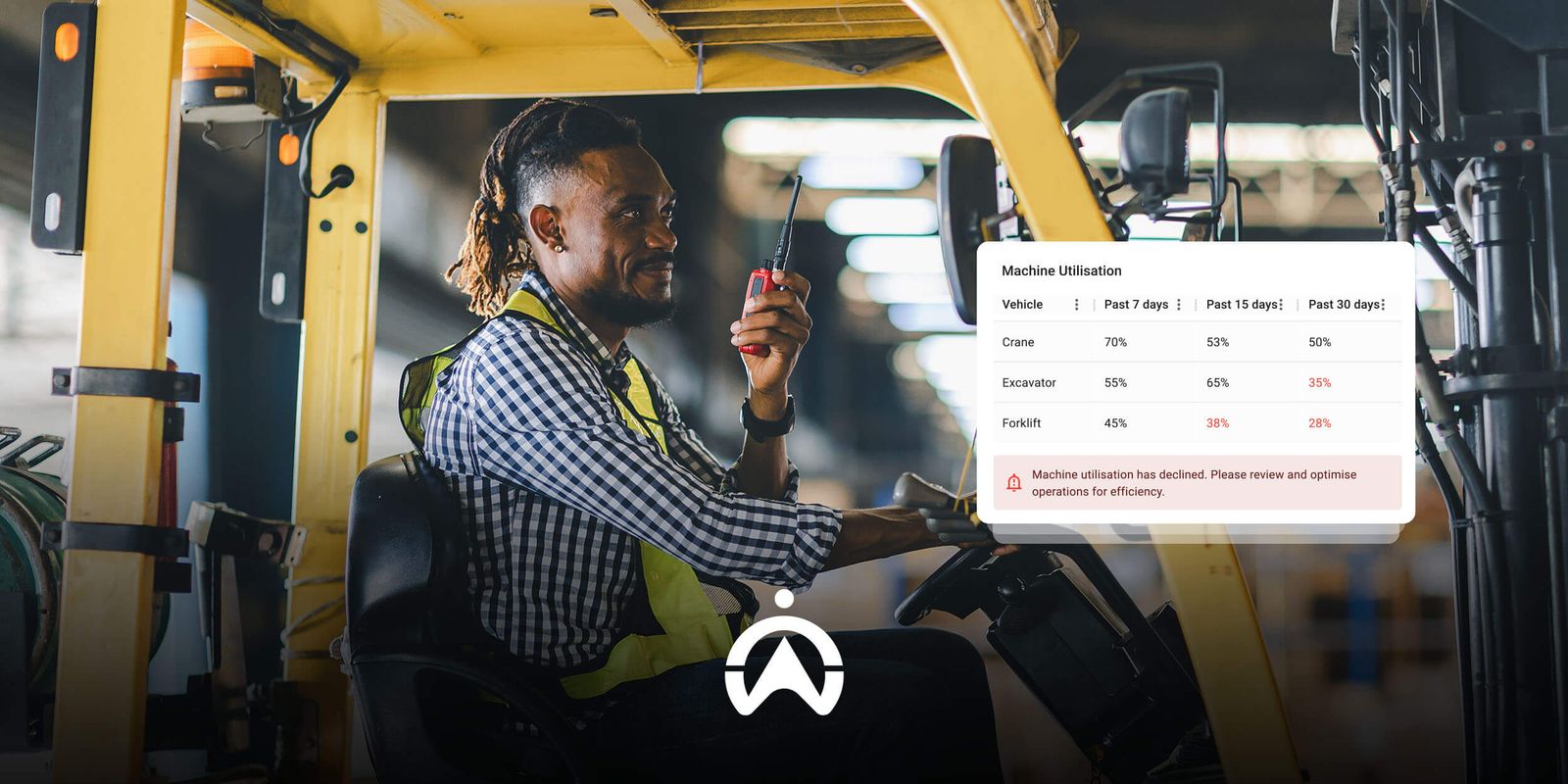
Forklift Fleet Management Software – Get Full Control

Do you have full control of your forklifts? If you don’t have fleet management software for them, then unfortunately you don’t. A forklift FMS will provide you with complete operational intelligence and control over the entirety of your fleet. This includes your trucks, trailers, drivers, deliveries, bakkies, sales vehicles, heavy machinery, and the often-forgotten about… forklifts.

Now you may be asking yourself, ‘Why do your forklifts need FMS?’ 

They rarely, if ever, leave your warehouses, but they still:

  • Require maintenance
  • Need operators to have specialised licences 
  • Have to meet safety compliance regulations

Did you know that the global forklift fleet management software market is expected to reach 81.4 billion dollars by 2033, with a CAGR of 13.2% from 2025 to 2033? This is thanks to operations requiring real-time insights, IoT integrations, and predictive maintenance to assist with cutting down operational costs and boosting efficiency.

How does fleet management software work for forklifts?

Fleet management software provides real-time monitoring, predictive maintenance, compliance, operator management, analytical data and reports for your forklifts. This is useful because every vehicle and machine you own plays a vital role in how your operations run and the profits you’ll yield.

Let’s put a scenario together to answer this question.
‍

Banele has a warehouse that holds expensive furniture for a luxury brand. He has 26 forklifts and 30 staff members working in the warehouse. He has an elderly lady that handles all the paperwork and staff documentation. Unfortunately, the warehouse hasn’t been making much profit over the past year, and there are constant unexpected breakdowns of forklifts as well as furniture getting damaged when they’re being moved around.

Banele has decided to implement a full fleet management software solution and added ID tags and AI cameras for all of his forklifts. This is what he discovered…

  • Only 15 of the 26 forklifts are being used
  • 6 of these forklifts are always in rotation
  • Those 6 are the ones that are constantly breaking down
  • Only 18 members of his staff have specialised licences to operate forklifts
  • Staff members that don’t have the specialised licences are operating forklifts
  • Some of the drivers are using their phones while operating the machines
  • Staff members are taking the forklifts out of the warehouse
  • 8 of the forklifts require maintenance
  • Operators are leaving forklifts idle for long periods of time, wasting gas and battery life

Thanks to all of the insights from the FMS, Banele has been able to see exactly what’s eating into his operational profits. He’s now able to give his team proper training when it comes to using the forklifts and ensuring that only operators with the specialised licence can operate the forklifts.

He now makes sure the forklifts are being rotated amongst drivers so that all of them are getting used equally and there aren’t only a handful that are getting overworked. He has also gotten rid of the 6 overused forklifts, keeping a spare 5 for when the others are having maintenance work done.

The FMS provided Banele with all the operational data on his forklift fleet to ensure they’re meeting safety compliance regulations, being properly maintained, staying in the right zones, and that they’re all being used safely and efficiently.

How to choose a forklift fleet management software solution?

When choosing a forklift fleet management software solution, you must first take a good look at your operations and find out what information you need. Do you need:

  • Operational data?
  • To keep an eye on forklift operators?
  • To manage maintenance?
  • To control who uses the forklifts?
  • Real-time tracking?

For all of these, you can trust Cartrack to give you complete operational intelligence of your entire forklift fleet. 
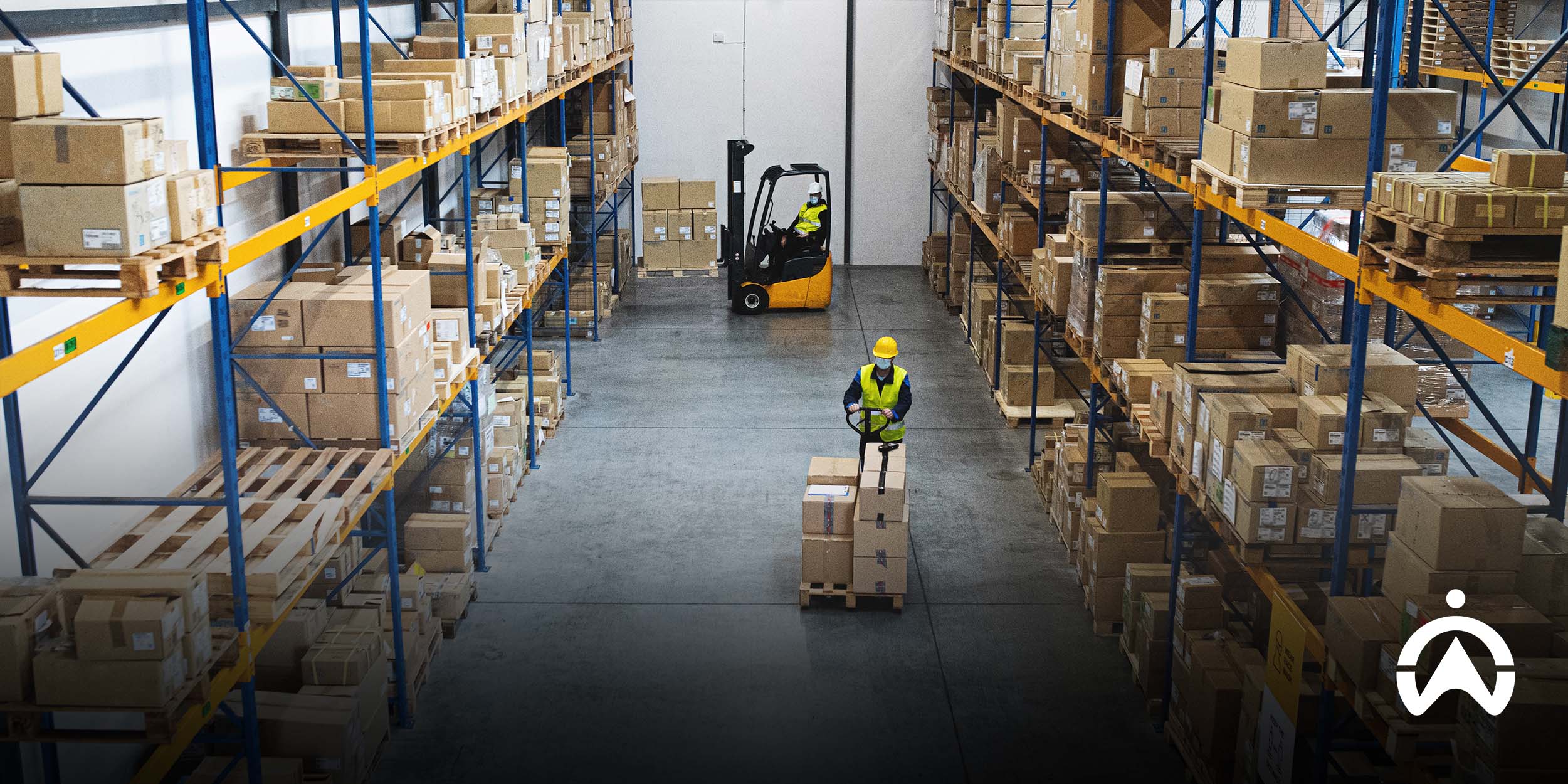
Warehouse workers wearing safety gear organize pallets and stocked racks, showcasing efficient operations managed by forklift fleet management software.

How can you improve forklift fleet efficiency in your warehouses?

You can improve forklift fleet efficiency in your warehouses through regular maintenance, keeping operators trained, and tracking operational data. However, these are just some of the ways you can improve efficiency with your warehouse forklift fleet. Let’s take a deeper dive into some more forklift fleet efficiency tips.

Utilisation and layout tweaks

One of the fastest ways to improve forklift fleet efficiency in your warehouse is through utilisation and layout adjustments, such as the following:

  • Optimising the layout and design of aisles (making them wider and only one-way routes for forklifts)
  • Packing the fast-moving and high-volume products closer to the dispatch area
  • Ensuring that aisles are well lit and there are clear safety signs up.

Maintenance & tech

The smartest way to improve forklift fleet efficiency in your warehouse is by incorporating your predictive maintenance tech and AI cameras.

Predictive maintenance will:

  • Prevent unexpected breakdowns
  • Reduce unexpected downtimes
  • Extend your forklift’s lifespan
  • Improve fuel/energy efficiency
  • Prevent safety-related incidents

AI cameras provide you with:

  • Driver monitoring (distracted driving)
  • 360-degree visibility
  • Collision prevention
  • In-cab alerts
  • On-demand footage

Fleet management software

The most efficient way to improve forklift fleet efficiency in your warehouse is by integrating your fleet with fleet management software.

FMS will provide you with:

  • Utilisation rates
  • Energy/fuel consumption
  • Operating hours
  • Forklift diagnostics
  • Geofencing
  • Operator driving behaviour (speeding, collisions, harsh braking)

Combining all of these in your forklift fleet will completely transform your forklift fleet’s operational efficiency!

The benefits of using telematics in forklift fleet management

The benefits of using telematics in forklift fleet management include improving safety and productivity, managing scalability, identifying inefficiencies, and tracking forklifts. These benefits will improve how your forklift fleet operates in your business, so let’s take a look at them.

Improved safety

A telematics system can improve the safety of your forklift fleet. Forklifts are quite powerful and can be a hazard in your warehouse, especially if they’re being used incorrectly.

Having a telematics system can aid in preventing the safety hazards that come with having a forklift. You’ll receive insights on how your operators are handling your forklifts, if they’re speeding, braking harshly, or taking corners aggressively.

Increase productivity

If your fleets are productive, profits will be high. When you invest in a telematics system, you can monitor and track each and every forklift in your fleet. You’ll have insights on idle time, load weight and operating hours, (to name only a few), and with all the data you’ll receive, you’ll easily see how each of your forklifts is performing. 

This means you’ll keep all forklifts maintained before they unexpectedly break down or redistribute work to other forklift operators.

Identify inefficiencies

Telematics are brilliant for identifying inefficiencies in your fleet. You’ll have the data to understand how each forklift and its operator are performing, which means you can investigate the why. Is the problem poorly optimised routes or lack of communication between warehouse workers, or possibly forklifts and equipment being overworked?

Either way, you’ll have the data to help you see what’s wrong and can tackle the problem head-on, preventing it from reoccurring.

Manage scalability

As your operation expands, the more forklifts you’re likely to get. Having telematics simplifies this process. Think about it… the more forklifts you have, the more you need to keep track of, on top of everything else you’re handling.

Telematics will easily give you eyes on your entire fleet from one single platform. And it doesn’t matter if you have multiple warehouses across Malawi; you’ll see them all.

Keep track of forklifts

Telematics allows you to remotely keep track of all of your forklifts. If you have multiple warehouses or work sites, it’s easy for one to get misplaced; and when you’re spending time looking for a missing forklift, you’re wasting valuable time and money.

Control who uses your forklifts

Just like code B/08 licensed drivers can’t drive a truck, those without specialised licences can’t operate a forklift. By getting a driver ID tag with your telematics system, you’ll ensure that only licensed drivers can operate your forklifts.
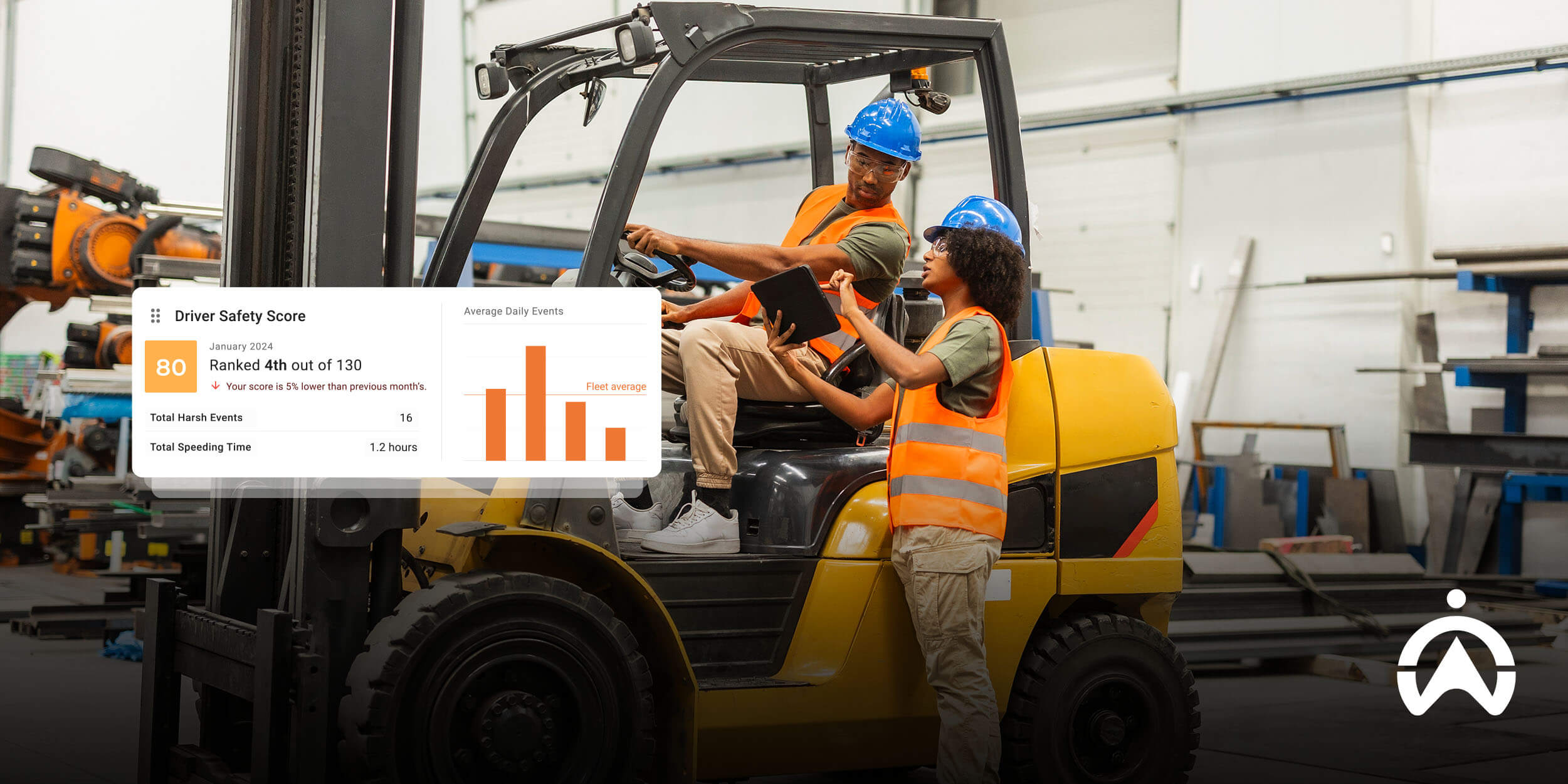
Two warehouse workers in safety gear reviewing forklift operation data and driver safety scores on a digital dashboard using forklift fleet management software in an industrial warehouse setting.

Reasons to get a forklift fleet management software solution from Cartrack

The reason you should get a forklift fleet management software solution from Cartrack is because we provide you with everything you need to get complete operational intelligence. We don’t just provide telematics, or dashcams, or GPS tracking units… We provide all of that and more. But with Cartrack, you completely optimise the way your entire operations run.

Driver ID Tags

At Cartrack we have a cool little tool called DID tags. These help you automatically pick up who’s using a forklift using their identification number. We have a couple of tags you can choose from:

  • Driver ID: This is a simple tag that identifies who is using a forklift.
  • Driver ID start prevent: This tag is assigned to a driver, and it’ll not start the forklift unless the tag is presented.
  • DID with configuration: This tag is configured to a specific vehicle, which’ll prevent others from using it.

One platform

As a fleet manager, your workload is high, and you already have many tasks to juggle. At Cartrack we want to make your life as easy as possible, which is why our fleet management software allows you to add your entire fleet to one single, user-friendly platform.

You’ll not only be able to keep an eye on your forklifts, but you can also add delivery vehicles, dump trucks and any other vehicle/machine in your fleet. Our software makes managing your entire fleet operations a breeze.

World-class AI cameras

Not only can you get fleet management software from Cartrack, but we also have top-of-the-range AI cameras. Installing these on your forklifts will not only give you direct eyes on your operators, but your operators will also get instant alerts on fatigue, distraction, not wearing a seatbelt, and even smoking.

This allows your operators to self-correct before causing an accident, but it’ll also give you insights into what to coach them on.

Driver scorecards

Speaking of coaching, with Cartrack we provide you with a tool called ‘Driver Scorecards’. These work by monitoring driver behaviour and removing points from them with each infraction. Driver scorecards allow you to:

  • Prevent wasted profits on avoidable accidents
  • Create healthy competition with your operators (rewards for good driving)
  • Increase safety in your fleet

Geofencing

Cartack’s fleet management software allows you to put up geofences. These are incredibly helpful with keeping your forklifts where they need to be. Once you set up the boundaries, you’ll get an alert if your forklifts leave those areas.

Predictive maintenance & automated maintenance scheduling

Something that really affects your profits and productivity is unexpected breakdowns and downtime. Cartrack’s fleet management system constantly monitors your forklifts’ engines, batteries and tyres. It’ll send you an alert when you should schedule maintenance and what maintenance is needed for each forklift.

Our platform also automates the maintenance schedules for each of your forklifts by using utilisation hours and the time of the last service.

Real-time tracking

As a fleet manager you have to keep track of all of your forklifts. Cartrack’s fleet management software gives you real-time tracking on your entire fleet. You’ll have eyes on your fleet in the palm of your hands!

Remote immobilisation

As discussed, you need a specialised licence to operate a forklift. Cartrack can provide you with remote immobilisation so you can remotely stop a forklift from working if it’s not being used by authorised personnel.

This is also helpful in the event of theft, as you can stop a forklift with the push of a button, no matter where you are! 

So, if you’re ready to optimise how your forklifts operate, give us a call today! 

Frequently asked questions about a forklift fleet management software solution

Where to buy forklift fleet tracking devices locally?

You can buy a local forklift fleet tracking device straight from the provider that Malawians love the most—Cartrack. We don’t just track your forklifts; if they get stolen, we have a highly trained team that’ll go out and get them back for you!

How to choose a forklift fleet management system for a logistics company?

When choosing a forklift fleet management system for your logistics company, ask yourself these questions:

  • What technology and features are included in the fleet software?
  • How reliable is the fleet management system?
  • What level of customer support is provided?
  • How transparent are the costs?
  • What security measures are in place?
  • Do they have a proven track record?

Can I reduce my forklift fleet size without losing productivity?

Yes, you can reduce your forklift fleet size without losing productivity if you have a fleet management system. The software will help you see which forklifts are just collecting dust and not being used, and you’ll be able to successfully downsize without it ever affecting productivity.
What is Cold Chain Temperature Monitoring, and What is Best for Your Business?

Cold chain temperature monitoring uses a blend of tools and technologies to track and manage the temperature of perishable or temperature-sensitive goods, ensuring they remain cool during transportation. What’s best for your business is strong and reliable temperature sensors combined with a powerful fleet management system and GPS tracking.

In Malawi’s export sector, logistics delays can lead to significant financial losses, particularly in the agricultural industry. Large volumes of perishable goods, such as fruits, are often at risk during storage and transport due to challenges in maintaining a consistent cold chain. Breaks in the cold chain can result in spoilage, reduced product quality, and financial losses for exporters. This highlights key challenges in risk management and emphasises the need to maintain proper temperatures.

Don’t let your business suffer immeasurable loss, financial strain, and damage to your brand. In this blog, we’ll help you understand more about temperature monitoring, ways to maximise control of the climate for your perishables, and why Cartrack can help you successfully transport your food.

Which cold chain monitoring solution fits your business?

The cold chain monitoring solution that fits your business includes a strong temperature management system like FleetWeb, paired with the right sensors to help you maintain total control. Cold chain monitoring is a core part of your business’ supply chain. From production and preparation to distribution, your goods should remain safe and temperature-controlled.

You also might benefit greatly from numerous sensors in your cargo bay, obtaining more accurate readings and better reporting.

What’s cold chain temperature monitoring?

Cold chain temperature monitoring is about combining sensors and powerful software technology to effectively manage your perishable goods. This is typically while in transit, but can also include storage. Temperatures are set and managed in real time. The link to a fleet management system (FMS) keeps you alerted to temperature changes, cargo door activity, and potential hardware/sensor malfunctions.

These temperature-sensitive goods typically include (but aren’t limited to) frozen foods like fresh fruits and vegetables, deep-frozen foods like meat and seafood, and pharmaceuticals like vaccines.

What devices are used to keep cold chain cargo bays at certain temperatures?

Devices used to keep cold chain cargo bays at certain temperatures are tools like cargo door sensors, temperature sensors, live GPS tracking, and an FMS.

Take a look at each and why they matter:

  • Cargo door sensors: Keep track of when and how often your cargo doors are opened and closed. Also, get an immediate notification when your doors are opened by unauthorised people.
    ‍
  • Temperature sensors: Temperature monitoring and probes monitor your vehicle’s cargo bay climate at all times. Get immediate notifications of changes and temperature shifts. Use numerous probes in your refrigeration trailer for better readings.
    ‍
  • Live GPS tracking: The integration of IoT (Internet of Things) devices and GPS tracking helps produce accurate alerts, as well as detailed histories and insights.
    ‍
  • Fleet management system: Although not a device, an FMS brings all the hardware outputs together. It stores all the necessary data collected for you to retrieve whenever you need it.

Why does temperature monitoring matter?

Temperature monitoring matters because sensitive goods need to be handled correctly and with care. Temperature variations can result in spoilt, damaged, or ineffective goods if not tended to as quickly as possible, which is why immediate and regular notifications are important.

Compliance and regulations must be met. Because strict regulations are put in place, especially in the pharmaceutical sector, temperature monitoring is vital. The connected monitoring system allows you and your drivers to react quickly, but also keeps records of changes that prove adherence.

What methods are used for temperature monitoring in cold chain logistics?

Methods that are used for temperature monitoring in cold chain logistics include keeping food at the right temperature, driving carefully to avoid collisions, and keeping cargo bays free from external air.

Keeping food at the right temperature is the most important and evident point. Driving carefully to avoid collisions is an important part of minimising damage. When your drivers move recklessly on the roads, there’s a greater chance of ruining not only your cargo but also the connected sensors as well.

Finally, keeping air out of the refrigerator or trailer is a passive but effective way for you to proactively ensure your goods are kept fresh. This is maintained by keeping the cargo doors closed & sealed, and ensuring your drivers are completing pre-trip inspections to make sure doors are secured.

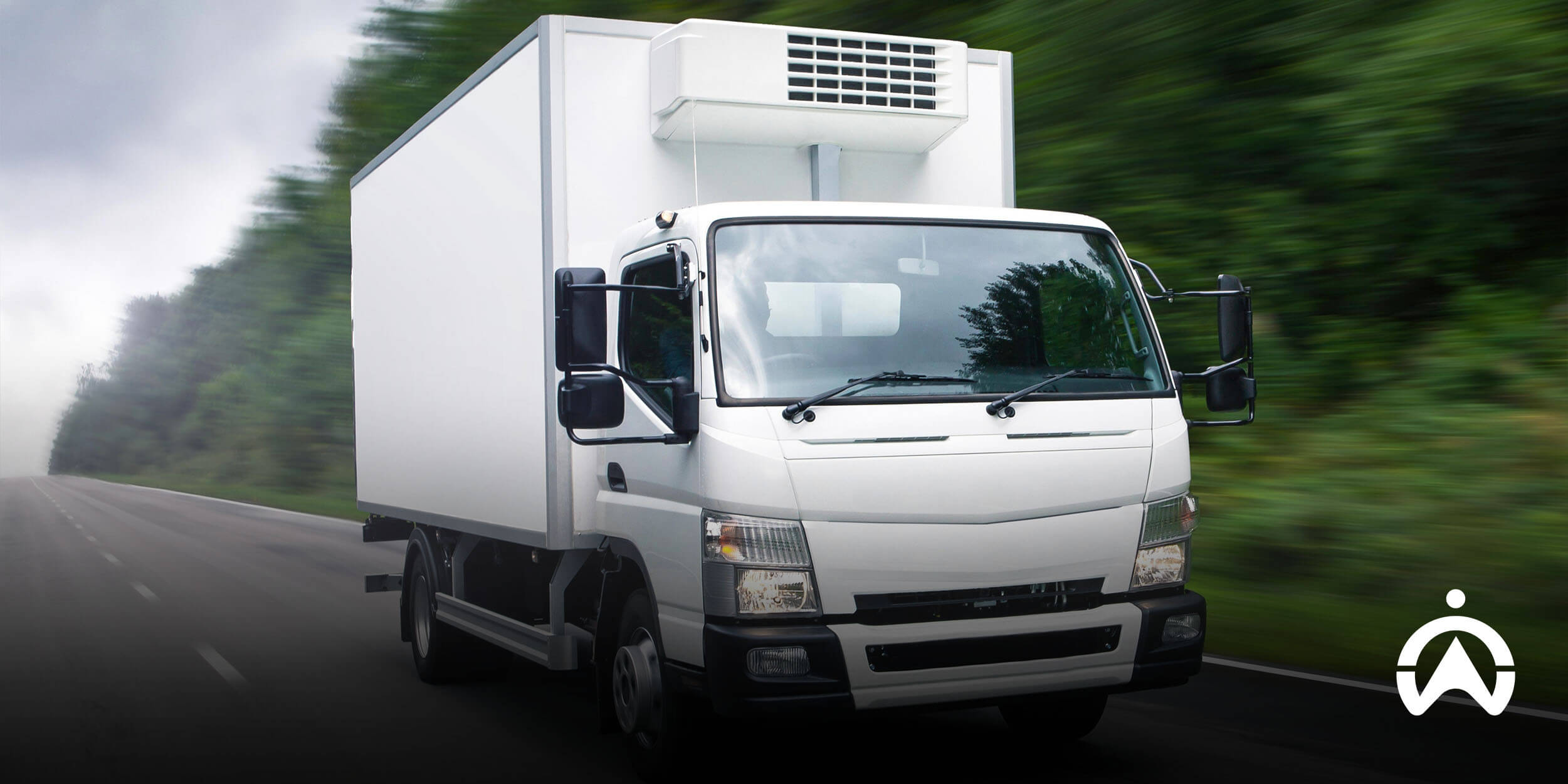
Refrigerated delivery truck on highway supporting cold chain temperature monitoring during food transport.

How do fleet operations affect your temperature monitoring needs?

Fleet operations affect your temperature monitoring needs when certain elements aren’t planned for, especially when considering how long certain transit trips can be. Factors like immediate alerts and reaction/recovery time are the key to keeping products of high quality. Cold chain management looks a bit different for each business, so it’s important to carefully configure things as necessary.

Food and beverages

Food and beverages need a high level of management when it comes to cargo bay climate control. It helps that food and drinks are pre-packaged airtight, but as their package instructions will typically show, thawing and refreezing isn’t good for the food. Consistently doing so will reduce the quality of the products.

Fluids

Fluids, whether we’re talking about dairy, medical liquids, or raw chemicals, need extremely high levels of control. In fact, fluids might have some of the highest levels of compliance and strict regulations attached to them.

Most of the time, hardware and sensors extend to measuring the liquid itself, together with measuring the climate in the cargo bay.

Organic foods

Organic foods also need an extremely high and strict level of management. Organic foods are quite special and different from other products because they need a specific climate to remain fresh and undamaged. Climate control goes beyond just ensuring it’s cold enough; it needs a precise and delicate balance between cold and humidity.

This needs to closely resemble the ideal climate in the real world.

Which industry sectors rely on temperature monitoring?

The industry sectors that rely on temperature monitoring go beyond food, healthcare, and pharmaceuticals. It also includes the floral business, biological technologies, and chemical manufacturing. Some industries are more obvious than others, but each has its own key reason for cargo climate control.

Let’s take a quick look:

  • Food: From foods and beverages to agricultural products; perishables, fresh produce, and dairy products are kept safe, nutritional, and edible.
    ‍
  • Healthcare: Supplies like blood, organs, and test samples from patients are kept uncompromised and unspoiled, especially during transportation in urgent, life-threatening moments. This temperature management extends to vehicles like hearses and ambulances.
    ‍
  • Pharmaceuticals: Through cooling control, vaccines and medicines maintain quality and effectiveness. A single spoilt batch can have dire medical consequences.
    ‍
  • Floral business: Flowers and plants remain unwilted and fresh from the nursery to the florist’s store.
    ‍
  • Biotechnology: Biological technologies demand rigorous temperature standards to stay viable.
    ‍
  • Chemical manufacturing: Sensitive chemicals and raw materials remain stable and unspoiled when kept at low temperatures.

Myth vs Fact: Clearing up some misconceptions about cold chain logistics

When looking at some myths versus facts regarding cold chain logistics, it’s easy to make some assumptions that could potentially lead you astray. Temperature management is fragile and elaborate. You’d rather be certain than play a guessing game when it comes to the quality of your goods.

Myth: Small businesses don’t need temperature monitoring

False; small businesses do need temperature monitoring. The size of the business doesn’t change the importance of keeping goods protected and ensuring compliance. In fact, a smaller business might feel an even greater impact on its finances because it has more to lose if goods are spoilt, losses are faced, or there’s damage to the business reputation.

Myth: Cold chain temperature monitoring is too expensive

False; cold chain temperature monitoring isn’t too expensive, although the initial costs might make it seem that way. Like most valuable systems, the upfront costs are usually far higher and might deter you at first. But it’s the long-term value that’ll prove otherwise. Poor temperature management means major losses and customer disappointment.

Myth: Temperature control doesn’t have to be a delicate process

False; temperature control is quite a delicate process and has to be followed to a ‘T’; that’s the nature of sensitive goods risk management. Small mistakes are unfortunately harmful if not corrected quickly and carefully, leading to spoilt foods, ineffective vaccines, unviable organs and the like.

Myth: Slight variations in temperature are okay

False; slight variations aren’t okay and should always be addressed as quickly as possible. If you have a temperature range to work within, that’s perfectly fine, but don’t veer outside of it.

Perishables are extremely finicky, and operating outside the established temperature range could immediately spoil the goods. It would also mean you’re not complying with the relevant health and safety regulations.

Myth: Temperature-controlled cargoes are bad for the environment

False; temperature-controlled cargoes aren’t bad for the environment, despite requiring reasonable amounts of energy to keep the cooling power going. The notion that energy use equates to harm to the environment ignores the work that cooling and refrigeration do to keep food fresh, unspoiled, and unwasted.

Reduced food waste plays a massive role in sustainability. Proper management of trucks and cooling equipment can also keep carbon emissions low. By avoiding old, underperforming trucks and monitoring sensor performance, you can keep your carbon emissions low.

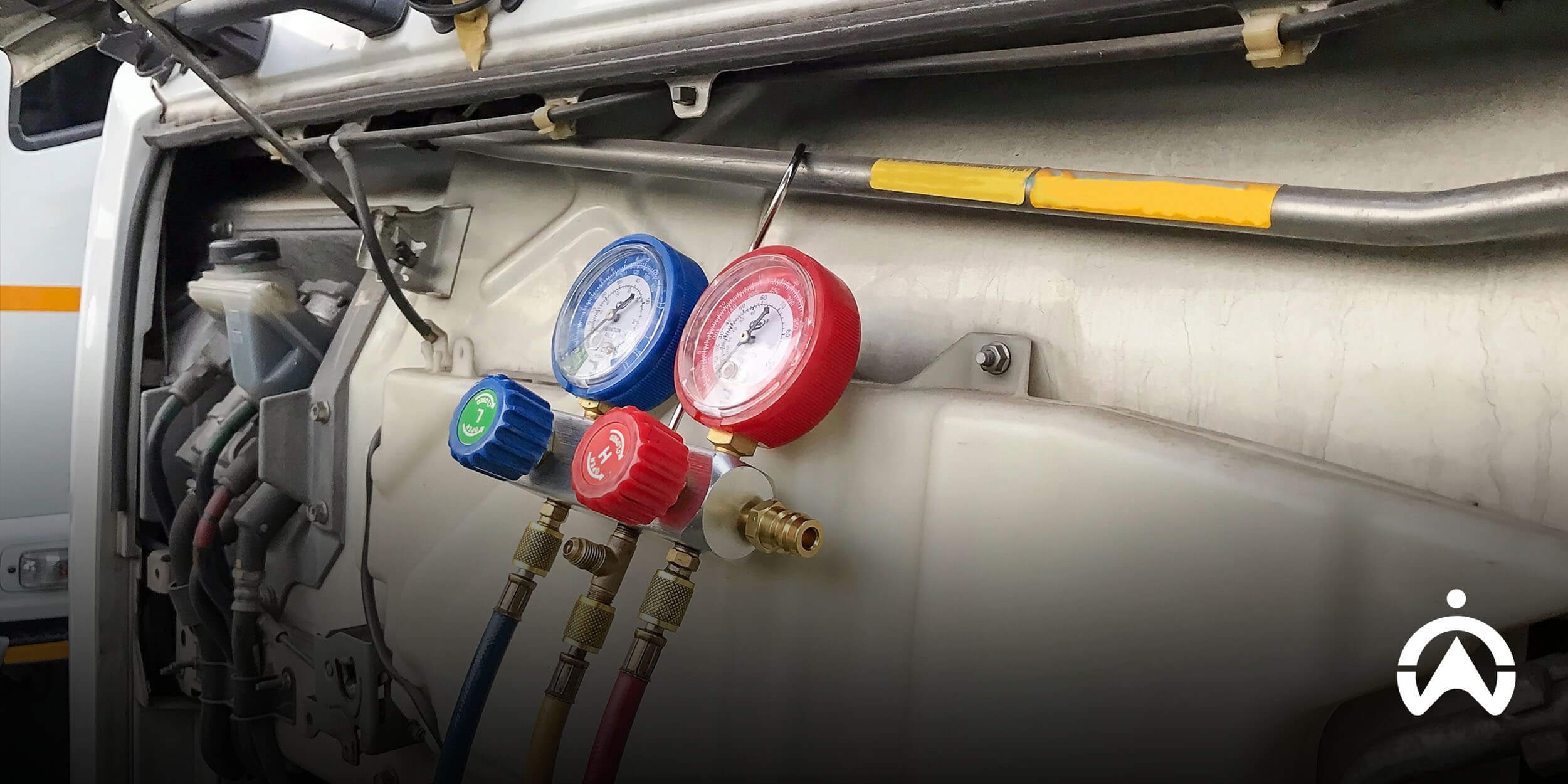
Technician using HVAC pressure gauges on refrigerated vehicle, supporting Cartrack cold chain temperature monitoring.

Which cold chain temperature monitoring system is best for Malawian fleets?

The best cold chain temperature monitoring system is one that allows you to keep track of your sensitive cargo at all times. This means choosing to implement a total ecosystem that’s efficient and keeps you notified at all times. As mentioned, achieving this is about getting the right hardware and connecting it to a sophisticated FMS and GPS tracking.

Cartrack could be your partner in long-term food and pharmaceutical risk management. With us, you’ll have all the tools needed to keep your sensitive foods or goods safe and temperature-controlled. We have industry-specialised sensors, like temperature and cargo door monitoring, which can be added to your overall fleet package. You’ll also have total control over temperature management with FleetWeb.

FleetWeb, thanks to GPS tracking and IoT technologies, will send you consistent alerts about temperature changes and shifts. These immediate notifications ensure you can quickly and urgently contact the driver or replace refrigeration trailers if necessary. FleetWeb also helps you achieve operational visibility, allowing you to keep an eye on your fleet while using trip data to optimise driver routes.

Finally, know that you can automate and digitally organise your temperature monitoring, keeping you compliant and in line with food and pharmaceutical regulations. Your temperature monitoring stores detailed records, ensuring that all the insights are available whenever needed.

Final takeaway: Stay on top of your inventory

You no longer have to worry about the state of your goods when they’re being transported. With the right solution, featuring a strong temperature monitoring system like FleetWeb and paired with the right sensors, you’ll maintain total control. Product quality can be maintained, waste can be reduced, and compliance matters can be met.

Cartrack’s got your back. Not only do we fully equip you with the necessary tools, but we also ensure you’re able to achieve operational efficiency through proactive efforts and complete visibility. You can lead the way and stay ahead of your competitors while our fleet systems and sensors do the heavy lifting.

Are you ready to see the most optimised execution of your cold chain temperature management? Speak to a Cartrack specialist today to keep your goods in check!

Frequently asked questions about cold chain temperature monitoring

What are the 4 types of temperature sensors?

The 4 types of temperature sensors are:

  • thermocouples, the most common type, are used in everything from your home to businesses
  • negative temperature coefficient thermistors (NTC), which are also quite accurate but not as good as RTDs
  • semiconductor-based sensors, which aren’t the most accurate and have slow responses, and
  • resistance temperature detector (RTD), which is usually considered the most reliable.

What temperature is recommended for the cold chain?

The temperature recommended for the cold chain depends on what you’re transporting and whether they’re being transported during the warmer months. Temperatures are also set according to the manufacturer’s recommendations. For example, deep-frozen foods are kept at around -30 degrees, whereas vaccines must be kept cool but never frozen between 2 and 8 degrees.

What are the 3 Ps in the supply chain?

The 3 Ps in supply chain are:

  • processes, which focus on the way things move and how products are managed from start to finish
  • people, which centres around taking care of and uplifting the people who are involved in handling the logistics, and
  • physical resources, which are the tools used to make the processes possible and manageable.

Is cold chain expensive to maintain?

Yes, cold chain can be expensive to maintain because of its intricate nature. Temperature management involves very specific hardware, constant & strict monitoring according to regulation, and routine maintenance. These all add up to high electricity & fuel use, as well as higher overall costs.

Get the Best Bus Fleet Management Software

The best bus fleet management software should always include top-of-the-range technology that specifically impacts bus companies and their drivers. This would include vehicle camera security, route optimisation abilities, and intuitive scheduling. Ultimately, the best bus fleet management software in Malawi is depicted by how passengers view your brand.

Malawi’s bus industry, while smaller and less formalised, remains an important part of public passenger transport, especially for intercity travel. Together with minibuses, it supports the movement of people and plays a role in the country’s economic activity.

Cartrack has its Fleet Management Software (FMS) active in many public transportation entities, because we’ve designed it to solve a number of common problems faced by these companies. In this article, we’ll look at those problems and show you how FMS successfully mitigates them.

What should bus fleet software be able to do?

Modern-day fleet software for buses should be able to streamline your scheduling, keep your passengers safe, and prevent late arrivals at bus stops. It should also help to prevent vandalism of buses, regulate fuel use, and gradually increase the growth & profitability of the bus service in question (whether private or government-run).

At the heart of bus FMS should be the desire to mitigate problems that everyday bus drivers, bus company stakeholders, and even bus passengers face.

What are these problems? Glad you asked… keep reading.

What are some of the problems bus companies face?

The problems faced by bus companies today include unhappy customers (passengers), which is usually caused by late pickups, scheduling confusion, and even physical danger. Overall, these problems lead to financial issues too, because profitability is affected due to the gradual development of a bad reputation.

Cartrack deals with bus companies on a daily basis, and we’ve summarised the problems they face within 10 main points. Which of these 10 have you experienced while managing YOUR bus or shuttle service?

Late pickups

Consistently late pickups form one of the top problems faced by bus companies. Drivers simply can’t get their timing perfect every time due to traffic, bad road conditions, or bad planning. If this happens often enough, the brand becomes synonymous with UNRELIABILITY, leading to passengers opting or preferring other bus brands.

Late drop-offs

Passengers often rely on bus transport for work arrivals, school drop-offs, and important appointments. If the drop-off is later than scheduled, it greatly disrupts the plans of each passenger. Word spreads quickly among bus passengers, and new potential customers will be told to avoid a certain bus brand if possible—and this can SINK a bus company fast!

Scheduling conflicts

When multiple buses are assigned to an identical or similar route, it can lead to confusion when stops conflict with one another. This also happens because of other bus companies whose stops may conflict with those of your drivers. Without a smooth flow of stops and drop-offs, time is wasted, passengers are frustrated, and money is lost.

Unruly bus drivers

Bus service fleet managers often struggle to manage the backlash that comes with risky driving within their team. No matter how carefully they vet drivers before employing them, risky driving still takes place within the bus industry. If it happens often enough, eventually passengers get hurt, vehicles get damaged, and insurance costs skyrocket.

High fuel costs

Not a stranger to any industry that uses road transport, high fuel costs are among the biggest issues bus companies face today in Malawi. The stopping and starting of vehicles in urban settings can be murder on petrol & diesel tanks, so conserving fuel is a MUST if bus companies want to see viable profits.

Passenger safety

The safety of bus passengers on every trip is an essential part of any bus or shuttle service. Drivers have a responsibility to keep their patrons safe, but this isn’t always easy. Incidents tend to happen in small confined spaces, and passengers experiencing theft is another problem bus drivers deal with daily.

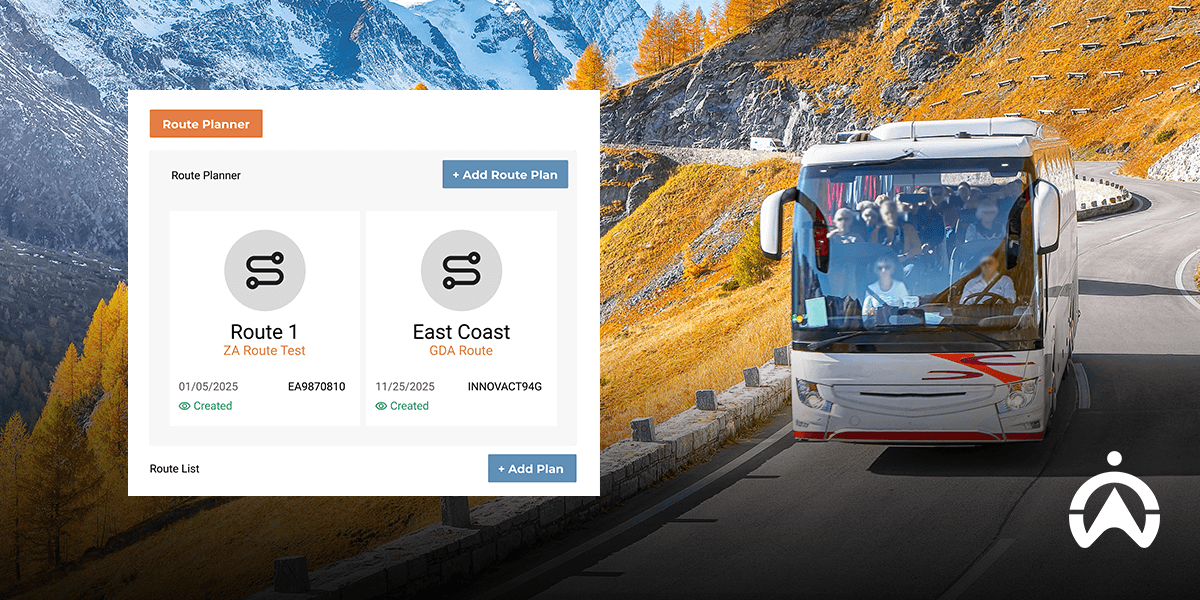
Bus fleet management system overview displaying routes, schedules, and vehicle data.

Vandalism

Because of how large they are, parking a bus is always a risk. Leaving it unattended isn’t always an option, because vandalism is a real problem—especially in particular areas. Insurance prices can go up if buses operate in unsafe areas, and bus companies need ways to lower their insurance costs while upping their vehicle safety.

Strict road compliance standards

Buses are held to a higher standard compared to many other types of road vehicles. They’re large & bulky, and have the potential to cause devastation on our roads. Keeping buses well maintained and road worthy is often a full time job! If a bus gets stopped by road authorities due to non-compliance, this just exacerbates the problem more because of downtime.

Lack of profitability

You might think running a bus service or shuttle company is a profitable endeavour, but considering the challenges we’ve already listed above, it’s not always as cut-and-dry as it seems. Many new bus companies start only to fail years (or even months) down the line. In today’s Malawi, how can bus companies turn enough of a profit to be able to grow and expand their fleet of buses?

Passenger dissatisfaction

Considering theft, safety, bad driving, and unreliability in bus travel, passengers are sure to have their say. With online reviews now a popular way to determine good service, some bus brands are gaining a reputation that leads to them being avoided. There’s always a competing bus company willing to replace a bad one, so keeping passengers happy is a MUST!

When we hear about all these challenges, it might seem impossible to run a bus service effectively. But the truth is, technology has come a long way to massively improve the bus industry. Fleet management software for bus fleets is designed to solve these problems. Feel free to contact a consultant at Cartrack to see exactly how, or keep reading. 

How will bus companies benefit from fleet management software?

Bus companies will benefit from fleet management software in the following ways:

  • Smarter scheduling
  • Happier passengers
  • Better fuel management
  • Higher level of security for passengers
  • Higher level of security for vehicles
  • Higher profitability
  • Safer driving
  • Consistent vehicle maintenance
  • Better road compliance
  • Consistency in on-time pick-ups and drop-offs

What does Cartrack bring to bus companies?

Cartrack has developed fleet management software with bus companies in mind. There are a number of helpful features designed to make the day-to-day fleet management of a bus company easier and more profitable.

As you read further, notice how each of the following directly tackles the list of challenges mentioned above. Ask yourself, “What’s the biggest challenge I have within my bus service right now?” Now, let’s see if the solution can be found!

Smarter scheduling for buses

To solve the issue of schedule mix-ups, late pickups, and late (or missed) drop-offs, Cartrack has developed software that gives you a big-picture view of all your vehicles, who’s driving them, and where each one is scheduled to be.

This allows you to foresee late arrivals, reroute buses, or re-assign drivers at a whim. The software works with AI, and automates most of the thinking for you, allowing you to make better scheduling decisions as and when they matter most.

Better route optimising

Avoiding lateness with buses is better than managing it when it happens. Route optimisation analyses traffic, roadblocks, and bad road conditions to give your bus drivers the best possible routes from the get-go. This helps them to bypass all of those pesky delays and get more passengers to where they need to be.

External & internal bus security

Cartrack has developed industry-leading AI dashcams and vehicle cameras that work to monitor all angles of your bus. This includes the inside of the bus, showing you the driver as well as the passengers. If an incident occurs—whether an accident or something among the passengers—these cameras will pick it up and archive it in case you need it for insurance or the authorities.

Insurance companies will also appreciate this extra level of security. Often they’ll lower your insurance premiums if they know you have this feature, because it makes their claims process so much easier and cheaper.

Fuel monitoring and fuel preservation strategies

The chance to save on fuel costs should grab the attention of any bus fleet manager. It’s at the top of your expense list and should be reviewed often if you want to turn a decent profit. Some fleets have reported a fuel cost reduction of 24% after using Cartrack’s fuel monitoring devices and software. From fuel sensors to fuel management software, bus companies like yours can greatly benefit!

Predictive bus maintenance

Keeping your buses on the road is just as important as running them affordably. If a bus is in the shop for maintenance, it can be days worth of income losses. Not to mention the people who rely on that bus to get to where they need to be, which also affects your reputation.

Cartrack uses AI to predict when a bus will need maintenance ahead of time. It does this by analysing the vehicle’s current condition, its last service, and how often it’s on the road. By predicting maintenance instead of scheduling it, your buses will have less downtime and run better throughout the year. Predictive maintenance also allows you to mitigate downtime by scheduling another bus to replace the one that’s being maintained.

It’s also worth mentioning that this intuitive way of scheduling maintenance will keep your buses compliant with road laws. That means fewer fines for you, and less chance of buses being impounded.

Driver monitoring & coaching

As we’ve already mentioned, bus driver behaviour matters. The safety of your bus passengers and those who encounter your drivers on the road are put in danger every time your drivers do something reckless. Unsafe driving is mitigated by targeted monitoring that highlights driver coaching.

How does it work? Drivers are rated according to how fast they drive, how harshly they take corners, and even what they do while they drive. Distractions, smoking, eating & drinking, and unsafe driving are immediately flagged in real-time, allowing you to target your driver coaching to keep them compliant.

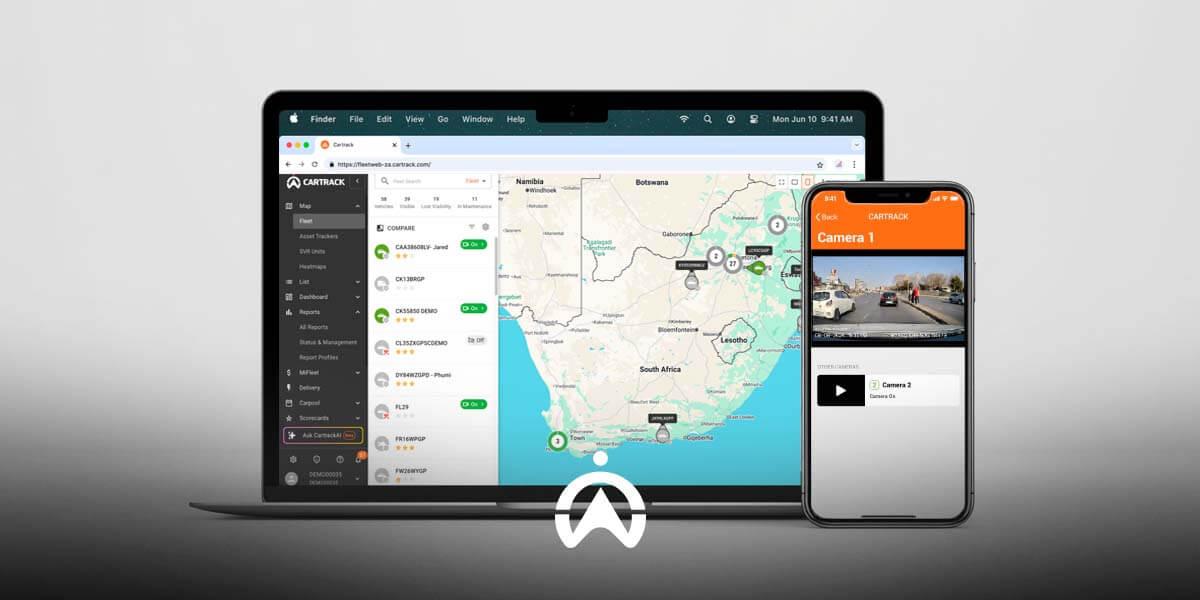
Real-time bus Cartrack fleet tracking dashboard showing bus locations and performance metrics.

How does bus FMS specifically improve the customer experience?

From a customer experience perspective, fleet management software has a number of benefits that directly impact how passengers perceive your bus brand. If brand reputation is important to you, then take a look at how much you’ll benefit from having Cartrack as your bus fleet management partner.

  • Passengers experience a sense of safety when using your buses.
  • They learn to trust your brand as a reliable one and recommend it to others.
  • They receive faster resolution in cases of theft and other incidents.
  • When reviewing your bus company or shuttle service, reviews will be positive.

How can bus-specific FMS be distinguished from regular FMS?

Bus-specific fleet management software can be distinguished from regular FMS in the features you choose. Cartrack allows you to tailor your FMS features so that you only pay for what you use. This means you can pick FMS features based on what works for your bus or shuttle service and optimise the benefits most important to you.

Will bus FMS eventually pay for itself?

It’s almost certain that FMS eventually pays for itself. Not only can it save your bus or shuttle service thousands of rands every year, but it also allows your company to grow and develop through fleet expansion and higher profits.

Here’s a quick overview of how FMS pays for itself within your bus or shuttle service:

Area What the software does How it saves money
Fuel use Tracks routes and driving Less fuel wasted
Driver time Plans better schedules Fewer paid idle hours
Vehicle care Reminds teams of servicing Fewer breakdown costs
Repairs Finds issues early Smaller repair bills
Safety Monitors driving behaviour Fewer accidents
Insurance Provides driving data Lower insurance costs
Admin work Automates reports and logs Less staff time needed

Which bus fleet management software should you choose?

You should choose fleet management software for your bus service that caters to the challenges you and your drivers face each day. Use a company like Cartrack that stays at the forefront of bus service management software  when it comes to AI-integration, camera quality, telematics device technology, and customer service.

Frequently Asked Questions

How do buses schedule their routes without FMS?

Without fleet software management, bus and shuttle companies use manual rosters, paper logs, and a telephone to manage their schedules and routes. Companies who still use these methods often deliver a very haphazard service. Fortunately FMS has come a long way to automate many of these tasks and digitise documentation so that it’s archived and accessible.

What features should I choose for my fleet management software if I run a bus service?

The specific FMS features you should consider for your bus or shuttle service include:

  • A vehicle camera system that monitors the inside and outside of the bus
  • GPS tracking that delivers accurate live locations of your vehicles
  • Scheduling software
  • Fuel monitoring software that highlights waste
  • Maintenance software that predicts when your buses need maintenance

Is bus theft a problem in Malawi?

Bus theft and bus hijacking is something that happens in Malawi, but it’s not as prevalent a crime as car and bakkie hijacking. Issues like bus passenger theft, bus vandalism, and bus accidents are more common than the theft of actual buses.

Does FMS help to protect passengers on buses?

Yes, FMS does help to protect your bus passengers by integrating AI camera technology with incident detection. But mostly, fleet management software helps keep passengers safe through driver monitoring which encourages safer driving habits. FMS also keeps buses running in good condition, which is great for passenger safety.

How to Manage Your Light Commercial Vehicles (LCV) Effectively With Fleet Software

To manage your light commercial vehicles effectively with fleet software, you should invest in a platform that’ll directly tackle the biggest challenges LCVs face. LCV fleets deal with some unique vulnerabilities due to their frequent journeys. Wear and tear, fuel wastage, unexpected downtime, and more are just some of the main concerns.

LCVs are some of the most widely utilised vehicles within Malawi, typically being used for deliveries, trade work, and other services. Transport studies in Malawi show that road transport carries over 70% of freight in the country, highlighting the heavy reliance on road networks for the movement of goods. This underscores the need for effective fleet management to ensure better vehicle control and enhanced safety.

In this blog, we’ll discuss how using fleet software can completely change the way you manage your LCV fleet. Get more clarity, efficiency, and cost control for your business—all with the help of Cartrack.

Why do LCV fleets need a different management approach?

LCV fleets need a different management approach because they usually deal with different conditions compared to bigger fleets, indicating a need for a fresh and unique take. Fleet management software allows LCV operators to keep an eye on and tackle these specific challenges, ensuring smooth operations.

These are some of the key points to discuss and consider:

  • Higher daily mileage: Because of their urban nature, LCVs tend to cover more distance in a day with all those deliveries and quick trips, which can lead to extra wear & tear.
  • High stop-start driving: The multi-stop trips are frequent, which means there’s a lot of stopping and starting. This puts more pressure on the engine and fuel amount.
  • More driver variation: Most of the time, there are drivers on rotation when it comes to LCVs, which can be confusing when driver behaviour monitoring is a consideration.
  • Increased wear & tear: As mentioned, daily trips with stop-and-starts mean more wear & tear, affecting the lifespan of the vehicle.
  • Greater exposure to urban congestion: The busyness and traffic jams of the city can put a lot of pressure on vehicles and their drivers.
  • Customer deadline pressure: High customer expectations and tight delivery windows add extra pressure to meet those expectations and deliver good service.

What is a light commercial vehicle (LCV)?

A light commercial vehicle is a vehicle that typically includes vans, bakkies, small trucks, and other vehicles weighing under 3,500 kg. They’re used for jobs like deliveries, repairs, and similar services.

These are the industries LCVs are usually involved in:

  • Deliveries (courier services, retail, and e-commerce)
  • Repairs and field services
  • Transportation (of people/passengers)

What does fleet management software help you manage in an LCV fleet?

Fleet management software helps you manage things like compliance, safety, and overall operational efficiency.

These are the main benefits of fleet management software:

  • Tracking: See where your vehicles are at all times and how well they’re getting around.
  • Maintenance: Plan regular servicing to prevent expensive downtime.
  • Fuel management: Look into fuel use and cut down on waste.
  • Driver management: Encourage better driver behaviour, responsibility, and safety.
  • Safety & compliance: Make sure vehicles stick to compliance standards and regulations.
  • Productivity & cost control: Plan the best routes, minimise delays, and improve business performance.

How much does fleet management software for LCVs cost?

The cost of fleet management software depends on a few factors, like who your service provider is, what features you choose, your business needs, hardware, etc. Prices typically feature flexible monthly rates depending on your needs, but can vary based on your specific requirements. Ultimately, the ROI usually surpasses any of the upfront costs, regardless of how high they may be.

Cartrack can offer you a package that best suits your specific business needs, without surprise fees or pricing that isn’t transparent.


Core challenges for LCV fleet managers (and how software solves them)

The core challenges for LCV fleet managers include wear & tear and high fuel costs. Software solves these by providing the tools needed to address the challenges. Features like GPS tracking, driver monitoring, and fuel consumption reports are just a few of the tools that can transform your LCV fleet management.

Take a look at this breakdown:

LCV challenge: Growing fuel costs

How fleet software helps: LCVs usually have many stop-and-start routes, idle often, and generally make their way only around urban areas—all of which contribute to more fuel use. Fleet software helps by tracking fuel use, analysing consumption, and getting idling alerts. This way, you can spot where fuel’s going to waste, avoid inefficient routes, and so much more.

LCV challenge: Higher-than-usual wear & tear

How fleet software helps: On top of the multi-stops, trips that happen frequently contribute to vehicle degradation. Fleet software helps by offering predictive maintenance notifications, which can help in preventing expensive and unexpected downtime.

LCV challenge: Route delays

How fleet software helps: Working in urban areas means there’s bound to be congestion during trips, and these unfortunately affect delivery times. Fleet software helps by not only optimising routes for the quickest and most efficient trips, but also sharing real-time route updates to keep drivers on the quickest routes.

LCV challenge: Dangerous driving

How fleet software helps: On top of the multi-stops and potential route delays, the pressure to deliver on time means there are likely some reckless on-road behaviours from drivers. Fleet software helps by monitoring driver habits, scoring behaviours and providing feedback for coaching. This can help you improve safety among your drivers.

LCV challenge: Unauthorised use or theft

How fleet software helps: With LCV vehicles, there are usually many people using or sharing one vehicle. But more than this, after-hours use and theft can really hit your business through increased liability. Fleet software helps by bringing together live GPS tracking, movement alerts, and remote vehicle immobilisation to stop misuse and help recover stolen vehicles quickly.

LCV challenge: Lack of visibility

How fleet software helps: LCVs are constantly on the move between locations, customers, and depots, so it can be a bit tricky to keep tabs on them without solid managerial control. Fleet software helps by displaying vehicle locations, fuel data, driving habits, and other features on one dashboard, giving managers the full overview required.

How to manage your LCV fleet more efficiently with Cartrack’s fleet software

You can manage your LCV fleet more efficiently with Cartrack’s fleet software, which has the tools that directly tackle your business challenges. Some of these tools include smart fuel usage insights, proactive maintenance alerts, and in-depth driver analytics that help cut running costs.

These are some practical, actionable steps:

Monitor fuel usage and reduce unnecessary costs

Fuel tends to be the biggest daily expense for most fleets, more especially LCV fleets with intense city trips. Our live fuel tracking gives you a clear view of how much fuel each trip and vehicle uses, plus alerts you when a vehicle is idling for too long.

Fuel card integration can also help you detect any odd spending, allowing you to take targeted action to reduce fuel waste.

Improve driver behaviour and safety

Driver habits on the road, unfortunately, significantly impact fuel consumption and accident risk. Our AI-powered camera systems and driver scorecards assess driver behaviour and highlight harsh driving.

Analytics and insights can also highlight recurring patterns, so you can give drivers coaching to help them drive better. This all contributes to a safer, more cost-effective fleet.

Keep every LCV roadworthy with predictive maintenance

LCVs put in so much work daily, and our predictive maintenance features track mileage, engine diagnostics, and service history to predict when they might need attention. Our software will send automated service reminders to catch issues early, preventing breakdowns and saving you further stress.

Increase delivery and service efficiency with route optimisation

For delivery companies, technicians, and other businesses that rely on LCVs, quick and efficient trips are vital. Our system uses live traffic data and trip patterns to suggest the best routes and accurate ETAs. This helps drivers reach their destinations faster, spend less time in traffic, and improve customer service.

Protect your vehicles with real-time GPS tracking

Between theft and unauthorised use, our real-time GPS tracking keeps you in the loop about your LCVs. You’ll get alerts for geofenced vehicles or vehicles parked suspiciously. For high-risk cases, you can even immobilise the vehicle remotely, keeping your assets safe.

Consolidate all LCV data into one dashboard

Our system combines all your data into one dashboard, so you can quickly see driver behaviour, vehicle locations, fuel usage, and other features. This clarity helps you compare performance, quickly make informed decisions, and streamline your operations across the board.


What KPIs should LCV fleet managers track?

The KPIs that managers need to track are in five key categories: financial, maintenance, operational efficiency, compliance, and customer satisfaction. Some of these factors within these categories include fuel consumption, cost per kilometre, and delivery times. Measuring KPIs is the best way for you to bring down costs and easily identify gaps in performance.

These are measurable indicators relevant to light commercial operations:

  • Fuel consumption per trip or vehicle
  • Idling time
  • Driver behaviour score
  • Delivery and service completion times
  • Vehicle utilisation
  • Maintenance and services
  • Downtime and breakdown frequency
  • Cost per kilometre

Final takeaway

Light commercial vehicles work hard, and they don’t come cheap! Staying on top of things is a priority. With a bit of smart software, moving your LCV fleet into high gear is a breeze, making the roads a safer place and keeping maintenance costs under control. This keeps your bottom line nice and healthy.

Cartrack brings all this functionality together into one neat package, so you can spend your time running a fleet that’s operating at its best for your business and your customers, instead of wasting time on trying to sort out the latest issue.

Manage your vans and light commercial vehicles with confidence. Speak to a Cartrack specialist and start optimising your fleet today.

FAQs

Do LCV drivers need special training to use fleet systems?

No, LCV drivers don’t need special training to use fleet systems, but some quick, basic onboarding training from your provider can really help speed up the process. Fleet systems should be user-friendly enough to operate comfortably, but a bit of training helps everyone get the hang of the features that boost safety and performance.

Does fleet software help with improving customer delivery or service times?

Yes, fleet software does help with improving customer delivery or service times, as it provides all the necessary features that support live GPS tracking and direct communication. Having these tools means that you can manage any unexpected and urgent changes swiftly, which maintains that solid and reliable relationship with your customers.

How quickly can an LCV fleet be onboarded to Cartrack’s platform?

An LCV fleet can be onboarded to Cartrack’s platform very quickly, but it depends on how big your fleet is and how soon you request our technicians to come out and complete installations. Once everything is complete, though, the system begins to run immediately, and insights start to come in.

Looking for Oil, Gas, and Mining Fleet Management Software Solutions?

Managing fleets of vehicles, heavy machinery, and mobile workforces in the oil, gas, and mining sectors isn’t a walk in the park. These industries operate in tough conditions, depend on numerous fleets, and constantly face pressure to reduce risks while keeping costs in check. That’s where the right fleet management software can transform your operations.

According to Forbes, fleets using such systems report up to 20% improvements in fuel efficiency and maintenance cost savings through data analytics. This highlights just how crucial fleet management software solutions are when you’re working with remote sites and high-value assets—insights like these are not just nice to have; they’re vital.

Before settling on a solution, take a moment to grasp the daily challenges your fleet encounters and explore how modern fleet management tools (like the one from Cartrack) can streamline, secure, and enhance every aspect of your operations.

Your oil, gas & mining fleet software buying checklist

When looking for oil, gas, and mining fleet management solutions, you need a buying checklist. Make your list of buying criteria start with the basics: visibility, reliability, accuracy, and remote site capabilities. You will also want to evaluate ease of integration, automation capabilities, reporting needs, and scale capabilities.

These are very basic and will help you to make comparisons with confidence. You will be aware of things that might be below your standards. However before buying your fleet management software, you need to know and understand the unique challenges that oil, gas, and mining fleets face.

The challenges unique to oil, gas and mining fleets

Everything from super remote locations to high fuel consumption and frequent maintenance are some of the unique challenges that oil, gas and mining fleets face.  However, once you understand how much these challenges cost you, you’ll see why relying on outdated methods just isn’t enough anymore.

Remote sites and large geographic spread

Oil fields, drilling sites, and mines are usually located quite far from major towns, which makes managing a scattered fleet incredibly challenging. With long distances, limited visibility, and communication channels, it’s difficult for teams to track vehicles, equipment, and drivers in real time.

High fuel consumption and wastage risks

Fuel is one of the largest operating expenses, and the chances of wastage, idling, or fuel theft rise significantly in remote areas. Without detailed reporting, spotting suspicious fuel drops, tank syphoning, or drivers wasting fuel due to inefficient route planning becomes nearly impossible for fleet managers in the oil, gas, and mining industries to spot.

Wear and tear, harsh conditions, and frequent maintenance

Mining, gas and oil vehicles aren’t just heavily utilised; they operate in dust, heat, mud, and rough terrain daily. These harsh conditions fast-track wear and tear, making unplanned breakdowns a major risk. When a vehicle or machine stops working, it’s not just downtime—it’s a loss of production.

Safety, compliance, and operator risk

Oil, mining and gas industries have extremely strict safety standards. If not monitored properly, drivers might speed, choose unsafe routes, skip safety checks, or enter restricted zones. This exposes operators to massive liabilities, compliance failures, and preventable accidents.

Cost control and profitability pressures

Fluctuating oil prices, increasing operational costs, and strict investor expectations mean that every wasted litre of fuel or hour of downtime directly affects your profitability. This is when fleet data becomes a crucial tool for making smarter, quicker financial decisions.

The cost of inefficiency in harsh industrial environments

Inefficiencies in the oil, gas, and mining sectors lead to significant financial losses that escalate quickly. Lack of visibility increases fuel wastage, delays maintenance, complicates safety enforcement, and lowers output, all of which undermine operational resilience in industries reliant on consistent productivity.

Unplanned downtime creates operational bottlenecks

You’ve probably seen it before—unplanned downtime creates operational delays. When haul trucks break down or drilling-support vehicles fail, entire sites slow down or even come to a halt. These delays disrupt production timelines, contractor schedules, and on-site safety. Advanced predictive maintenance tools (like the ones from Cartrack) enable operators to address issues early, preventing downtime from impacting operations.

Lost fuel = lost margin

One of the most disregarded impacts on profitability is fuel loss. Whether it’s theft, idling, unauthorised trips, or route inefficiencies, operators often spot fuel discrepancies only at the end of the month—when it’s way too late to recover losses. Real-time reports solve this problem immediately.

Inefficient asset allocation raises costs

Inefficient asset allocation also drives up costs. Without accurate usage data, some vehicles become overworked while others sit idle. This poor allocation results in uneven wear, additional maintenance, and higher replacement costs. Proper fleet management tools—like the ones provided by Cartrack—optimise utilisation, ensuring every asset is used effectively.

Industrial fleet monitoring for mining and energy sectors

What fleet management software can do

Fleet management software can do so much more than just simple GPS tracking. It can provide you and your oil, gas or mining business with complete operational visibility, cost control, safety enhancements and predictive planning tools that maximise the value of every vehicle and asset.

Real-time GPS tracking and visibility

Real-time tracking shows you where every truck, bakkie, loader, rig, or support vehicle is at any moment. This becomes super important when you’re managing dozens of vehicles across several remote sites. Live tracking ensures faster task assignment, safer routes, and fewer delays on site.

Fuel monitoring and fuel-use analytics

Fuel monitoring tools track consumption in real time, allowing you to spot unusual drops, potential theft, fuel card fraud, and inefficient driving behaviours. With comprehensive reports, you can eliminate idling, optimise routes, and save thousands of rand each month by reducing unnecessary fuel usage across your fleet.

Predictive maintenance and equipment health monitoring

Predictive maintenance uses real-time engine data, usage hours, temperature readings, and fault codes to warn you before a breakdown happens. This proactive approach helps you avoid unplanned downtime, costly repairs, and safety incidents caused by equipment failure. In heavy industries, these insights can avert significant operational losses.

Safety, compliance, and driver-behaviour tracking

Monitoring driver behaviour notifies you of speeding, harsh braking, sudden acceleration, fatigue indicators, and risky driving patterns. These insights help prevent accidents and safeguard your operators. Geofencing also keeps vehicles out of unsafe, restricted, or high-risk areas, ensuring strong compliance.

Centralised fleet analytics and cost control

A unified dashboard provides you with a clear view of fuel consumption, maintenance requirements, utilisation rates, safety alerts, tyre wear, and cost trends—all in one place. This central perspective empowers your operations, safety, and finance teams to collaborate effectively, plan smarter, and reduce unnecessary expenses.

Cartrack’s fleet management software can help your team with all of this and more!

Common mistakes businesses make when managing industrial fleets

There are some common mistakes that businesses make when managing industrial fleets, such as outdated processes, manual tracking, or fragmented systems. These mistakes can cause many fleets to limit efficiency unintentionally. Being aware of those oversights will save you from costly operational setbacks.

Manual reporting

Manual logs are slow, inconsistent, and error-prone. Issues are often spotted by operators only AFTER they’ve caused costly problems. But automated data ensures decisions are based on current, accurate information.

Not having real-time fuel tracking

Checking fuel figures only at the end of the month will leave the fleet manager unaware of theft or wastage. Real-time tracking catches discrepancies INSTANTLY, enabling them to conduct an immediate investigation.

Delaying maintenance based on assumptions

Servicing based on guesswork or a fixed schedule ignores the actual conditions of the engine. Predictive tools, on the other hand, use live data to recommend precise service timing, hence preventing breakdowns and prolonging the life of assets. This feature is invaluable to the oil, gas and mining industries, where unexpected breakdowns can cause a loss of profit.

Benefits for oil, gas and mining operators

The benefits that fleet management software solutions provide for oil, mining and gas operators are plentiful. The right software helps you run a safer, leaner, and more efficient operation. From cost control to compliance, the impact is immediate and measurable.

Reduced operational costs and improved fuel efficiency

Fuel often represents a significant percentage of your operational expenses, particularly for fleets that cover long distances or have a lot of on-site idling (like oil, gas and mining). Fleet management software helps in minimising fuel waste, optimising routes, and identifying theft so you can significantly cut fuel costs. This ultimately boosts your profitability without the need to alter your fleet size.

Minimise downtime and lower maintenance expenses

With predictive maintenance and real-time diagnostics, you can quickly identify issues before they escalate into costly breakdowns. Early warnings will allow your team to schedule repairs during planned downtimes rather than scrambling during emergencies. This shift enhances uptime and keeps critical machinery productive.

Better safety and lower risk exposure

By monitoring operator performance, you can address risky driving behaviours before accidents happen. Tracking incidents and maintaining compliance records creates reliable audit trails. This proactive approach minimises the chances of injuries, equipment damage, and expensive claims or penalties.

More visibility across remote and dispersed sites

When you’re managing assets across multiple mines or oil fields, having real-time tracking enables quicker responses, prevents delays, and ensures accountability within your team. Additionally, centralised visibility is vital, especially in areas with poor network coverage, all while enhancing your overall asset utilisation.

Data-driven decision-making and long-term planning

By analysing historical fleet data, you uncover trends that might otherwise go unnoticed. This allows you to forecast fuel budgets, plan maintenance cycles, estimate asset lifespans, and prepare for regulatory audits. These insights empower you to make smarter, faster decisions, reducing risk and safeguarding your operational margins.

If you are ready to reap the benefits of fleet management software, contact us today!

How telematics improves environmental compliance

Telematics can help companies improve and comply with sustainability standards and reduce their environmental impact through measurable improvements. In 2025, we can see that environmental regulations are growing stricter and stricter across all industrial sectors, by both the government and the public.

Lower emissions through reduced idling

Idling is seen as one of the major contributors to unnecessary CO₂ output. Telematics helps you to identify excessive idling, which in turn helps in reducing fuel waste and consequent emissions.

Optimised routes reduce fuel burn

Accurate route planning means less fuel is being burnt by the engines. This ultimately helps your mining, oil or gas fleet meet their sustainability goals without compromising on productivity.

Better maintenance improves efficiency

A well-maintained engine uses less fuel and also emits fewer emissions. So having predictive maintenance will help you keep your fleet vehicles in peak condition.

Tracking heavy-duty vehicles across remote industrial sites

Why choose Cartrack for your oil, gas & mining fleet

You should choose Cartrack for your oil, gas and mining fleet because Cartrack is tailor-made for use in these industries. Industries with heavy vehicles, remote sites, and strict standards for the safety of personnel will all benefit from our fleet management software. Our telematics, tracking, and analytics are specifically designed to thrive in challenging operational environments.

Industry-specific tools for extreme conditions

Cartrack fully understands the unique challenges of mining, gas and oil operations. This is why tracking units and sensors are built to resist heat, dust, vibration, and general rough handling to make sure that you always get accurate data, even in the most extreme environments.

More than just GPS tracking

Cartrack provides a complete ecosystem for fleet management, which includes fuel reporting, maintenance scheduling, cost and usage analytics, tracking of driver behaviour, alerts, operational insights, and full telematics visibility. It gives you everything you need in a single easy-to-use platform.

Did you know that Cartrack has driver identification tags (DID) so that you can control who is able to use specialised vehicles based off the licences of the drivers they have? 

Stronger safety and compliance support

From in-vehicle fatigue alerts to geofencing and risk-based driver monitoring, Cartrack provides a comprehensive selection of safety tools that aid in reducing accidents and maintaining compliance. Our features are further supported for audit logs, insurance claims, and investigation processes in the event of incidents.

Did you know that many mining, oil and gas companies that have Cartrack’s fleet management software solutions have won CCMA cases thanks to the evidence the software provided! 

Flexible and scalable for mixed fleets

Mining and oil operators often manage a variety of asset types—from heavy rigs to supervisors’ bakkies. Cartrack enables you to monitor all these assets in one place, allowing for seamless scaling as your operations expand without the need to switch platforms.

Local support and infrastructure

Cartrack’s operations span across Malawi and across the globe, ensuring that you enjoy rapid responses, excellent network coverage, speedier installation times, and regional know-how. Having such a local footprint makes it ideal for remote operations where uptime is critical and troubleshooting needs to be provided quickly.

Did you know that Cartrack has a less than two-minute response time after a reported incident?

How to get started with fleet management in your operation

To get started with fleet management in your oil, gas or mining operation, you need to assess your fleet, define your goals and KPIs, test the system with a couple of your vehicles first, then scale the system across your entire fleet, and finally integrate the system with your entire team.

Implementing a reliable fleet management system is easier than many companies expect. With the right approach, you can begin optimising your fleet within days.

Assess your fleet and operational needs

Start by identifying your most significant challenges: fuel losses, downtime, safety issues, route inefficiencies, or lack of visibility? These specific pain points will be your guide to setting distinct goals and selecting the right features to prioritise during setup.

Define your goals and KPIs

Set measurable goals, such as reducing fuel consumption by a certain percent, cutting downtime hours, improving safety scores, or enhancing utilisation. This set of KPIs will then help guide your implementation and keep your teams focused on meaningful outcomes.

Run a pilot with a sample group of vehicles

A pilot test offers great insight into how the system performs in your real-world oil, gas or mining conditions. Choose a representative mix of haul trucks, service vehicles, or maintenance bakkies, and monitor the improvements in fuel efficiency, maintenance, and safety throughout the trial period.

Scale the system across your entire fleet

Once the pilot proves its value, you can roll out the system across all vehicles and equipment. Use the insights gained from the pilot to refine alerts, reporting tools, configurations, and maintenance schedules for each asset type.

Integrate the system with operations, safety, and finance teams

To get the most out of your fleet data, make sure it reaches the right people: operations can boost productivity, safety teams can minimise risks, and finance can manage costs more effectively. This collaborative approach brings multiple benefits and drives long-term success.

Conclusion

Oil, gas, and mining operate in high-pressure, high-risk, and high-cost environments. You need clear visibility into your operations, real-time data, and predictive tools—all seamlessly integrated into a solid system for managing assets across various worksites. Fleet management software puts everything in one platform.

Cartrack’s GPS tracking and telematics system can help your mining, oil, and gas fleet cut costs and downtime while boosting safety, compliance, and daily productivity.

So if you’re serious about getting more value from your fleet, now’s the perfect time to upgrade; contact one of our helpful consultants to give you a quote today!

Frequently Asked Questions

Can tracking software still work in remote sites with poor network coverage?

Yes, modern fleet tracking systems are built to handle operations remotely and can store data when the connection drops. When that vehicle or asset reconnects, all buffered data will upload automatically. Some platforms even use satellite communication, ensuring visibility and smooth operations, even in tough, off-grid conditions.

How do I manage both heavy machinery and light utility vehicles on one platform?

An advanced fleet platform will allow you to monitor both heavy machinery and light vehicles from a single dashboard. You’ll get specialised metrics, such as engine hours, payloads, and idling for machinery, and trip and driver behaviour data for utility vehicles. This gives you a unified view that simplifies reporting, maintenance planning, and overall operational control.

What formats are available to export reports for auditing, compliance, and stakeholder presentations?

Advanced systems support the export of reports in a host of formats, including PDF, Excel, and CSV, making the creation of audit-ready fuel logs, safety records, maintenance histories, and compliance summaries simple and seamless to share. You can quickly tailor reports for internal reviews, external regulators, and stakeholders who need operational insight and clarity.

Custom Fleet Management Software Made Just for Your Business

Having custom fleet management software that’s made just for your business means you’ll have a system that’s shaped around your daily operations, your workflows, and your fleet structure. A fleet management software that isn’t customisable will limit you, resulting in some of your business needs not being met.

According to the Global Fleet Management Market Report 2024–2032, fleet operations usually make up about 20–35% of a company’s total operating costs. As delivery deadlines tighten, businesses need smarter, data-driven systems to boost fleet productivity and cut unnecessary costs. Fleet management software that’s made just for your business ensures that you get the exact tools you need to achieve your business goals.

In today’s article, we explore the features and benefits of custom fleet management solutions and help you choose one that’s best for you.

Why custom fleet software matters today

In today’s fast-paced business environment, custom fleet software matters because it offers solutions that are tailored for businesses with special operational requirements. One-size-fits-all solutions often fall short when it comes to giving each business what it truly needs to meet industry demands.

Let’s have a look at the characteristics of custom fleet management software:

Types of customisation

Custom fleet monitoring software allows you to design a dashboard with features that are tailored around your operations. You can set up alerts based on what you need to be highly aware of and the type of information each staff member with dashboard access is allowed to see. This way, all managers and supervisors only get reports on what they should solely focus on.

With custom fleet management software, you also get advanced system integration capabilities. You can connect your existing business tools with the system. This is called Application Programming Interface (API). With API capabilities, you can connect various systems, for example, integrating fuel cards to track fuel transactions on your fleet platform.

Growth-ready (scalability)

A ready-made fleet management solution might require you to get a new system later as the business expands. But with custom fleet management software, you can adjust as the business grows. A scalable setup lets you easily add more vehicles, users, and assets while still keeping everything running smoothly. It also helps you easily adjust to any new regulations, ensuring your fleet remains compliant.

Real cost efficiency

A customisable fleet monitoring system can save you costs in many ways. You choose what you need and therefore don’t pay for what you don’t use. For example, there’s no need for you to have a temperature monitoring system if your drivers aren’t transporting any fresh produce. It also helps you cut down on paying for multiple subscriptions to keep your fleet running.

Team approaching truck while reviewing site report using custom fleet management software.

Which businesses benefit most from custom fleet software?

Businesses that benefit the most from custom fleet software are:

  • Logistics and last-mile delivery
  • Mining and construction
  • Cold chain logistics
  • Companies with mixed fleets
  • Corporate fleets

These industries gain the most value because custom software fits their specific workflows, addresses their operational challenges, and helps them perfectly meet their compliance needs.

Here are examples of how each industry benefits from fleet software that’s tailored for them:

Logistics and last-mile delivery

The online shopping boom has made this industry more complex and in need of solutions that help speed up the delivery process. With a customisable fleet management solution you can choose features that are delivery-focused. For example, you can add route optimisation software to your fleet management platform so it can help you plan faster and more efficient routes.

Mining, construction, and yellow machinery

The mining and construction industries come with many safety hazards, and for that reason, the fleet management solutions they go for are usually safety-focused. They need fleet maintenance software to check if all vehicles and machinery are in good condition and safe to use. The maintenance software also helps with tracking equipment utilisation, which helps them avoid overworking certain assets, resulting in breakdowns.

Fleet managers in these industries also need to know how operators behave to ensure they don’t put themselves and fellow workers in danger. Advanced technologies like AI-powered cameras are needed, as they can spot potential danger and alert drivers in time. This also helps with training staff on safer habits.

Refrigerated transport and cold-chain

The cold chain logistics industry mainly focuses on tracking vehicle locations and ensuring that the goods they carry are delivered in perfect condition and on time to avoid penalties. They need solutions like temperature monitoring sensors, cargo door sensors, and route optimisation software. They can set up the system to get detailed records of every step in the delivery process to ensure compliance.

Mixed fleets

A customisable fleet management software service allows businesses with mixed vehicle categories and assets to have settings for each category. For example, the maximum speed you’ll allow for a van is not the same for a truck, meaning you need to set up different speed alerts for each vehicle type. Custom fleet management software makes running a mixed fleet less complicated.

Corporate fleets

Many companies that aren’t in the fleet industry have vehicles they use to get to clients and perform their duties. Most staff members share vehicles, which can get complicated when it comes to knowing who’s taking which vehicle, on which day, and what other vehicles are available. A typical vehicle tracking system helps company fleet managers locate each vehicle and ensure that they aren’t misused.

With a customisable fleet solution, they can add a carpooling solution, which helps them simplify vehicle bookings. Each person who uses the vehicles can see which vehicles are in use and for how long, as well as which dates have no bookings.

Features you can customise in the Cartrack fleet management system

On the Cartrack fleet system, you can:

  • Make live tracking configurations
  • Set custom driver behaviour rules
  • Create fleet maintenance settings
  • Choose what users have access to
  • Tailor reports
  • Add safety and security automations

Our solutions are designed to give you full control over how you run your fleet, with a system that works the way you prefer.

Here’s a breakdown of how you can customise each of these solutions:

Live tracking configurations

To have better control of where your vehicles go, you can set up geofences. These are virtual boundaries that help safeguard your fleet and make it easier to keep up with vehicle whereabouts. You’ll get alerts whenever your vehicle enters or exits those boundaries. The boundaries could be for safety reasons, like ensuring drivers don’t go to high-risk areas, or you can use them to keep up with operations, like when drivers enter or leave warehouses.

Another tracking feature that you can add to your fleet platform is our route optimisation software tool. All you have to do is enter the locations each driver has to go to and all relevant information, and the system will suggest the best way to get there. This software factors in things like historical traffic patterns and road conditions to help you find the most efficient routes.

Custom driver behaviour rules

With our customisable driver management tools, you can set up alerts for risky or fuel-inefficient driving habits. For example, you can set up speed limitations for each vehicle type and get alerts when drivers have gone over the limit. You can also customise the camera alerts you’ll receive based on what’s most important to you.

Maintenance settings

Our fleet system allows you to import your fleet’s service history and recommended schedules. This way, you’ll have all your fleet maintenance information on one platform, and you can set up reminders so you don’t miss schedules. Our customisable platform also gives you the option to create digital vehicle inspection checklists based on the compliance requirements for each vehicle type.

You can also set the system to alert you when a vehicle reaches a certain mileage or engine hours, which might mean it’s time for an oil change, tyre rotation, or other maintenance services.

Permissions and user access

With the Cartrack fleet management platform, you can decide who gets to see what data. We know that some information should stay private from other team members. You can customise main user and sub-user settings to limit access to specific dashboards and tailor the data for each department.

Team discussing truck data and locations using custom fleet management software.

Proven results for fleets of all sizes | Cartrack case studies

Over the years, we’ve partnered with businesses from various industries and have seen how our custom fleet management software has helped transform operations and boost profits. This proves that no matter the fleet size or industry, our tailored solutions can drive efficiency, improve safety, and provide clear results.

Here are two case studies of companies from different industries who use our service:

Case study: AVIS

Avis is one of the world’s largest vehicle rental companies in the world. They first opened in 1946, and today they have a fleet of rentals in over 5,000 locations in 165 countries worldwide. Their business success is dependent on providing customers with a reliable, efficient and safe vehicle rental service.

Avis needs a simple system to keep an eye on their big fleet of rental cars. They wanted insights and data to track and enhance vehicle usage, health, and longevity. They were on the lookout for a reliable vehicle tracking service to ensure the safety of their vehicles and clients from theft and hijackings. Here’s how we helped them:

GPS tracking

Our GPS and tracking software allows Avis to monitor vehicle activity and provide accurate mileage data. This helps them ensure their rental vehicles are maintained at the right mileage milestones so they remain in good working order for their clients. These preventative maintenance measures minimise fleet breakdowns and downtime.

Data-driven fleet decisions

Avis can access historical data on vehicle usage from the Cartrack dashboard, giving them a clear view of trends and performance. This insight helps them spot which vehicles are cost-effective and in demand for rentals. With this information, Avis can make smart choices about buying or selling vehicles for their fleet.

Vehicle protection

Through our professional installation techniques, vehicle safety tools and 24-hour recovery team, Avis is able to reduce the risk of vehicle theft and increase their chances of vehicle recovery within their fleet. In turn, this reduces Avis’ costs associated with vehicle loss and allows the company to offer competitive rental rates.

Geofencing

With our geofencing feature, Avis’s fleet managers are able to set virtual boundaries to mark no-go or high-risk zones. They get alerts if customers are about to enter these areas with their rentals, adding an extra layer of risk management.
‍

“We chose Cartrack largely due to their strong brand, track record of delivery, and commitment to customer service. We are thrilled with the benefits this partnership has delivered for our business.” Armour Gittings | General Manager, Investigations Department, Avis.

Case study: BCI Security

BCI offers a full range of private security protection services, including armed response, guarding, canine solutions, and technical teams, covering the whole security spectrum.

They had no way of ensuring their response units remained within their assigned areas. They also needed a way to instantly locate their vehicles and monitor driver behaviour. Not having a fleet management system prevented their driver response times and control room from being as quick and efficient as possible in emergencies. Here’s how we helped them:

Geofence alerts

Our geofencing feature allows BCI to set virtual parameters around assigned areas. They get alerts whenever drivers enter or leave those zones, helping them ensure their response units are always active and present in their assigned areas. This ensures that they respond to client emergencies as quickly as possible. The geofence reports are also useful in giving BCI’s clients an accurate indication of patrol activity in their areas and making drivers more accountable.

Live location tracking

BCI Security can pinpoint exactly where reaction officers are with Cartrack’s live GPS tracking and can quickly locate their nearest response unit to the location in need of a response, allowing them to improve response times. This also boosts accountability and service delivery as BCI can verify that response units were at the scene.

Driver behaviour alerts

Their fleet managers can easily keep an eye on driver behaviour and get custom alerts for risky driving habits like harsh braking and cornering. They can also set guidelines for when speeding is acceptable during emergencies.

This information helps educate drivers, reducing avoidable incidents that could harm them, their vehicles, communities, and BCI’s reputation. It’s a smart way to reduce unnecessary wear and tear on vehicles, helping the fleet last longer.
‍

“Cartrack suited and understood our business from the start. We feel much safer with the Cartrack system, and their service is great; you are not just a number with them. Without them, we just wouldn’t be as efficient.” Johnny Loots | CEO, BCI Security

Upgrade to a fleet solution designed around your operations

Cartrack fleet solutions are designed to specifically cater to your fleet operational requirements. With us, you get a system that helps you cut costs, improve vehicle performance, enhance safety, and scale operations. Reach out to us to get a fleet consultant who can help you choose solutions that’ll work best for your business.

FAQs

What is the best fleet management software to choose?

The best fleet management software to choose depends on your needs, but Cartrack is a strong contender, as it offers customisable solutions that you can tailor for your specific needs. We offer a range of features, including live tracking, preventative maintenance, route planning software, and fuel monitoring tools.

What are fleet tools?

Fleet tools are software and hardware solutions that help you manage your fleet operations. They include GPS tracking systems, fuel monitoring systems, vehicle maintenance software, and driver solutions. Fleet tools are essential for fleet management as they help improve operations, enhance safety, and reduce costs.

Is fleet software hard to implement?

No, implementing fleet software is not hard, but it also depends on the service provider you choose. The Cartrack fleet management software is designed to be user-friendly, making it easy to understand. We also have fleet consultants who are always there to assist you if there’s anything you don’t understand.