South Africa
 Botswana
 Kenya
 Namibia
 Mozambique
 Nigeria
 Swaziland
 Tanzania
 Zimbabwe
 Hong Kong
 Indonesia
 Singapore
 Malaysia
 Philippines
 Thailand
 New Zealand
 Vietnam
 Poland
 Portugal
 Spain
 United Arab Emirates

Cartrack Malawi boosts operational intelligence in your business by providing intelligible data that’s not only informative, but also ACTIONABLE. Our telematics (whether video footage, vehicle metrics, or driver performance) puts you in control of your business and enables you to make better decisions without having to rely on guesswork.
According to a research paper by Harvard Business, there are 4 steps to embracing digital intelligence. These include:
- Adopting a digital mindset
- Encouraging that mindset within your organisation
- Understanding how to interpret data
- Putting it all into action
If this research is accurate, some business owners have a lot of catching up to do. While some business leaders have adopted a technology-centered approach to their operations, a large majority are still on the fence. If you’re one of them, read this vital blog on thinking differently about how business will be done in the future.
What is operational intelligence in business?
Operational intelligence is KNOWING what’s going on in your company (data), collecting that data and interpreting it (insights), and then making decisions according to those insights. Done correctly, this will lead to company growth, risk management and a boost in brand reputation.
Operational control
As the old adage goes, knowledge is power. In business, knowledge that’s applied, equals control. This is all about leveraging the data you collect to promote the interests of your business. The more you know, the more opportunities you’ll have to shape things the way you want them.
Informed decision making
Managers of companies have often had to guess what the right decision is. Historically, they’ve gone on instinct or intuition. A manager who has a gut feeling about something will make a decision based on emotion or even what he or she hears from others. It’s mostly conjecture, and mistakes are made—A LOT!
The future of business is very different. Thanks to AI technology, guesswork and tummy cramps are no longer the basis for making a decision. With data at your fingertips, you can make decisions that are backed up with indisputable FACTS.
Competitiveness
Operational intelligence is at the heart of competition. This is especially relevant in countries where the opportunity to compete is immense. Why? Because as is usually the case, certain countries are behind the technological curve. There exists an old fashioned kind of people, who like to do business… “the way it’s always been done”.
But those who venture out of their comfort zones and actually embrace the same kind of AI technology being embraced by forward-thinking businesses, scale at an international level. There are many examples of this in different locations, but none are as obvious as the insurance industry where new players have entered the market with AI-run call centers, enabling them to charge MUCH lower premiums.
Accurate reporting
Every company has stakeholders. You might be the only one in yours, but if your business is large enough, chances are you have shareholders, partners, or affiliates that rely on YOUR good decision making. Being the manager who’s “on the ground” gives you some insight into how the business runs and what decisions need to be made. But this isn’t always well received by other stakeholders.
Reporting is an essential aspect to any organisation. It’s not just about “this is what happened”. It’s also about, “this is why I made these decisions—and these are the results!” True operational intelligence justifies its decision-making by reporting the WHAT, the WHY, and the HOW.
Risk management
Operational intelligence would be pointless if it didn’t also solve problems. But what if it could solve problems before they happen? That’s what the future truly holds for organisations like yours—risk mitigation.
Data always points in a particular direction. That direction becomes predictive with the help of AI algorithms (and they’re only getting smarter). It tells you what’s likely to happen unless you take action. It even tells you what action to take. This is where data becomes actionable, not just informative.
ESG (Environment, Social, Governance)
The future holds some interesting things for companies in terms of ESG regulations. Similar to other score-based legislations, companies (and even customers) will begin to do business with organisations that are perceived as responsible.
Responsible in what way?
- First; responsible with regards to the environment and their overall carbon footprint on the planet. (E for Environment)
- Second; responsible in how they protect and care for their employees. (S for Social)
- Third; responsible in how their company processes work and how ethical those processes are. (G for Governance)

What does your fleet have to do with operational intelligence?
Your fleet often has EVERYTHING to do with operational intelligence, because logistics is the lifeblood of so many companies (whether they realise it or not). Not only is road logistics becoming more integral to your country’s economy, but how you drive, where you drive, and how you’re perceived while you drive all play a part in your company’s success.
The unavoidable importance of road logistics
The ports in some countries are virtually unsalvageable. The rails are no better. Companies are turning to road logistics as an only alternative to get products to where they need to be. With this comes a bunch of other fleet challenges that need to be addressed.
How you address those challenges can make or break you as an organisation. It all comes down to how you run your fleet, because roads are fast becoming the only logistical way to distribute goods and services.
Customer perception
But here’s the interesting thing about focusing your operations on the road—your customers are there on the same road with you! This introduces a couple of questions you can’t ignore:
- How can I make sure my customers have a good perception of my company?
- How can I ensure my drivers aren’t putting my customers (and the public in general) in danger?
- How can I service my customers as well as possible without compromising on my budget?
If you’re asking these questions, you’re on the right track. We’ve got the answers, and they all lie in operational intelligence.
Asset management and asset protection
If you have vehicles in your organisation, chances are the bulk of your overheads go towards keeping them on the road. We’re not just talking about fuel, we’re also talking about driver salaries, vehicle maintenance, and the cost of the vehicles themselves!
Since much of your resources are allocated to your fleet, it only makes sense to derive your operational intelligence from that fleet. This is where the rubber meets the road. If you can manage your fleet, you can manage your business. This is where your investment should be.
The increase of last-mile logistics
Receipt of your product or service by the end user is one of the trickiest steps to get right. Customers are fussy. Their online reviews can heavily influence your brand. They want convenience and ease when ordering, not to mention when they decide to return a product.
It’s a complicated process that requires finesse. Even small companies need to pay attention to how their logistics affect their end users. Not only is this the most expensive part of your distribution process, it’s also the one that carries the most risks.
If you’re fully convinced that operational intelligence lies in your road fleet and distribution processes, read on to find out how you can apply these principles.
How can your business adopt operational intelligence?
Your business should adopt operational intelligence by embracing technological advancements that focus on your logistics processes. You also need to adapt your staff to those advancements, and focus more on data (and how to interpret it using AI) as your source for making decisions.
Step 1: Accept the fact that “digital” and AI are here to stay
Avoiding technology is a huge mistake. Companies that don’t adapt won’t grow, and most will probably fall away. AI-driven software will soon become a vital part of running your company, especially if you’re managing vehicles.
Step 2: Transform your workforce to think in digital language
You can’t do this alone. Training is an essential step to transforming your business and adopting technology. You want to bring your team along this journey with you and your stakeholders. Afterall, they’re the ones that will carry out the operations.
You’ve already changed your mind about technology. Now it’s time to change theirs too.
Step 3: Learn the data language of your company
Interpreting data is a valuable skill every manager has to learn at some point or another. Cartrack Malawi does much of this for you, but remember that each company has different interests, and your company has a language that’s different to everyone else’s.
Example 1: If you run a farm, your data will pertain to machinery AND vehicles. Who uses them? Where are they when you need them? What’s the condition of each one?
Example 2: If you run a lift provider, your data will focus more on driver safety, driver behaviour, and the rate at which your drivers can serve passengers.
Example 3: If you run a logistics company, your data will focus on vehicle condition, driver fatigue rates, and fuel monitoring.
Know your data like the back of your hand and you’ll quickly learn how to discern between a good decision and a bad one.
Step 4: Determine how to execute on interpreted data
Now it’s time to take action! You have all the facts you need. You’ve made a series of sound judgments. The final step is to execute. Steer your ship in the right direction. But how?
Did you discover that your fleet is wasting a portion of fuel because of idling? Coach your drivers accordingly.
Did you discover that one of your vehicles isn’t braking as well as it should? Book it in for maintenance.
What about the big decisions? Should you scale? Should you purchase new vehicles? Can you afford to pay 5 new drivers? Is it time to tap into another section of your industry?
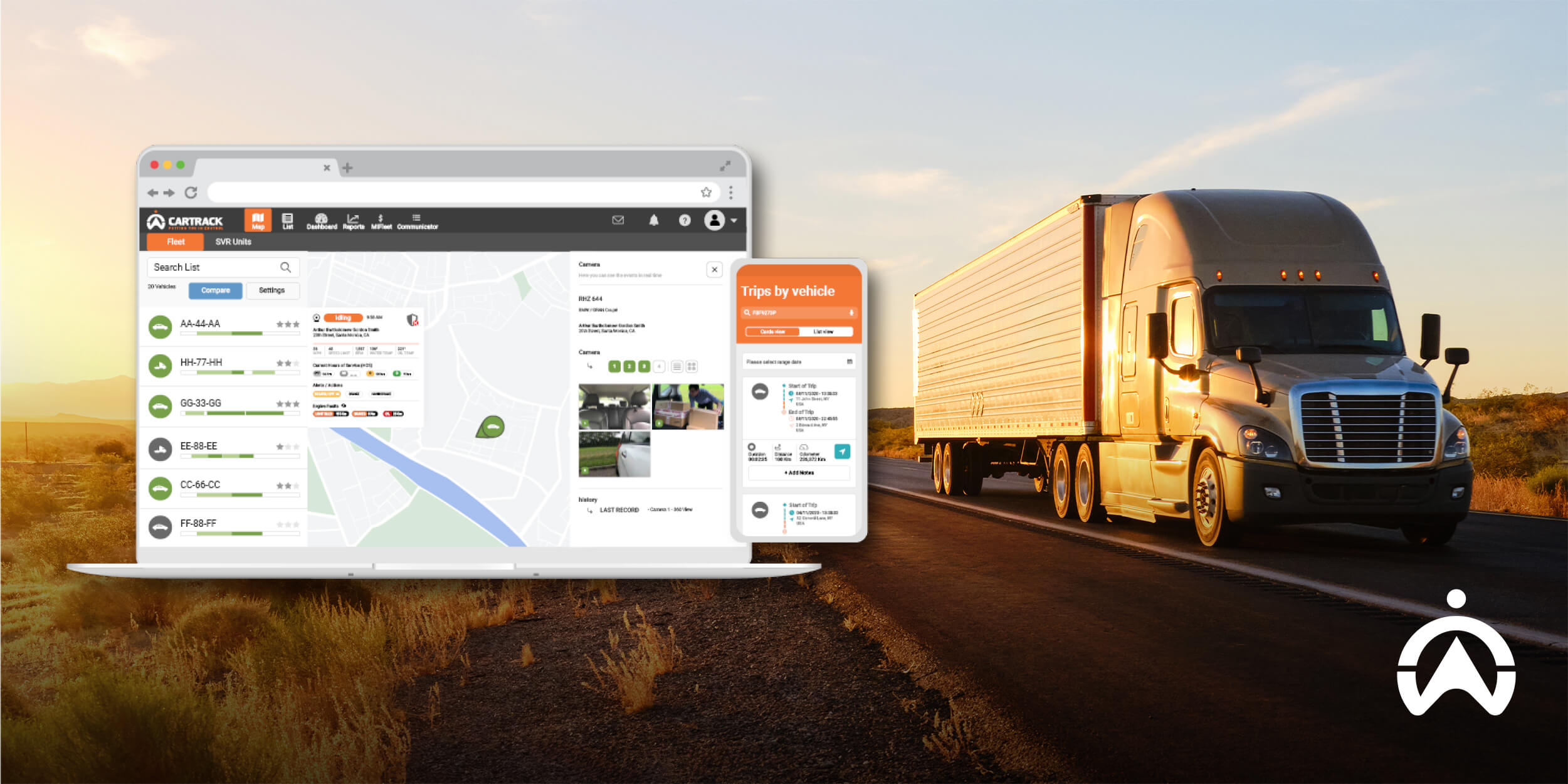
The data can help you make these decisions, you just need to know how and when to take action. Cartrack Malawi gives you this level of operational intelligence—from the small stuff to the significant, business-altering decisions, our tools are designed to give your information AND help you execute on it.
What will happen to companies that DON’T adopt technology?
Companies that wait too long to adopt digital means of running their business are at risk of becoming irrelevant or becoming overshadowed by their competitors (or even by new players in the market). This has already started to happen in the insurance industry, and will soon spread to other sectors.
Technology is like a big wave in the ocean. You can either grab your surfboard and catch the wave, or you can duck under the water and let it pass you by. If you have more than a few competitors, you might just get smacked by that wave without any chance of recovery.
How will you handle the technology trend? Will you take advantage of it and ride your business to new heights, or will you be left behind and allow others to dominate your industry?
Why choose Cartrack Malawi as your operational intelligence partner?
Cartrack Malawi is intelligence-led, meaning we simplify your decision making based on facts, data, and irrefutable evidence. Our AI-powered software is also performance-driven, directing those decisions in ways that improve your daily operations and further YOUR business interests.
Choose Cartrack Malawi if you want a service-strong company that’ll guide you every step of the way. Call us to have an honest conversation about what your objectives are and how you plan to get there.
It all comes down to operational intelligence. Having it can make all the difference in how your business performs. Not having it will leave you where you are and possibly shrink your operations over time.
Choose wisely.
FAQs
What does Cartrack Malawi do?
Cartrack Malawi acts as a business partner that focuses on one of the most expensive aspects of your company—your vehicle fleet. They maintain that collecting, interpreting, and acting upon data derived from your fleet will significantly transform the way your company operates by simplifying decision-making and boosting daily operations.
Can Cartrack Malawi’s software save my company money?
Yes, Cartrack Malawi’s software is actually designed to save your company money. Not just by identifying waste, but by growing your organisation and increasing profits. The idea behind this software is to boost your operational outcomes and help you successfully compete in an ever-changing arena.
Can Cartrack Malawi manage my fleet for me?
Yes, Cartrack Malawi can manage your fleet for you because they provide Camera & Telematics Bureau Services. Using a combination of vehicle and driver telematics data, they offer many essential services for your fleet like route optimisation, driver monitoring, fuel management, vehicle maintenance, and more!