Reactive vs. Planned Fleet Management: How Are You Choosing to Run Your Business

The way you manage your fleet will directly impact how much profit you yield. When you work your fleet until it’s completely broken, this is known as reactive management, which ends up costing your business more. But when you implement a proactive fleet management system, your profits will keep your business running and your pockets full.

When it comes to fleet costs, maintenance takes up quite a large portion of your costs. And with fuel costs already costing you an arm and leg, businesses need to see where they can save as much as possible. A major part of planned fleet management includes predictive maintenance.

According to industry research, predictive maintenance can:

  • “Reduce maintenance costs by 25 – 30%
  • Eliminate breakdowns by 70 – 75%
  • Reduce downtime by 35 – 45%
  • Increase production by 20 – 25%”

This is why investing in software and hardware from a provider like Cartrack Malawi can help your business plan better. This keeps your fleets on the road and your profits in your pocket.

What is the difference between reactive and planned fleet management?

Reactive fleet management is when you’re only aware of problems in your fleet after they’ve already occurred and are disrupting the workflow. Planned fleet management is when you’ve implemented hardware and software to monitor your fleet in real time. So you’re aware of how every part of your fleet is operating and can spot a problem before it impacts your operations.

What does a reactive fleet look like?

To get an easy understanding of what a fleet that’s run with reactive management looks like, let’s build a scenario. Barry has a delivery warehouse in Lilongwe, Malawi. He has 15 delivery trucks, 8 delivery motorbikes, 6 forklifts and 2 pallet jacks.

The problem

In the past 6 months, 8 of his trucks have broken down while en route to deliver goods to customers. 5 of the motorbikes are constantly in for repairs and mechanical issues. 4 of the forklifts are always breaking down, and the 1 pallet jack is faulty, but Barry doesn’t have enough funds to fix it. And on top of this, Barry is spending way more than he budgeted on fuel for his fleet.

So what does this mean for Barry’s business? Currently he’s behind on deliveries, and customers are leaving negative reviews online because of this. On top of that, some of his clients have stopped using his business to deliver their goods to customers.

Warehouse workers are frustrated that their workflow is constantly disrupted because of faulty or broken down machinery. And drivers are frustrated because they’re not meeting their targets due to vehicles being constantly out of service.

The reason

The main reason Barry can’t get any of this under control is because he doesn’t have full visibility of his fleet. He doesn’t know:

  • where he’s wasting money
  • how operators are handling their vehicles/machines
  • which machines are always in use
  • which vehicles/machines are never being used
  • what routes his drivers are taking, and
  • if fuel is being stolen. 

What does a proactive fleet look like?

Katlego has a delivery business in Lilongwe, Malawi. He has 19 delivery trucks, 6 delivery motorbikes, 4 forklifts and 3 pallet jacks. Before Katlego signed up to Cartrack’s fleet management system, he was experiencing similar problems as Barry, but now thanks to valuable data and insights his operations are running smoothly.

How did Cartrack’s fleet management system help?

Thanks to predictive maintenance insights from the system, Katlego was able to spot any failing parts in his trucks, motorbikes, and machinery before they actually broke down and disrupted his operations.

Data and insights informed Katlego which machines were always in use and which ones were never in use. This way, he was able to right-size his fleet to match the needs of his operations and rotate machines & vehicles among his staff so none were overused.

AI cameras and telematics gave Katlego valuable insights into how his drivers were operating his trucks. He was able to spot reckless driving habits like speeding and unnecessary idling that not only waste fuel but also damage vehicle parts. Cartrack also provided him with driver scorecards so he could individually coach and monitor each driver. 

MiFleet and fuel sensors allowed Katlego to accurately monitor fuel usage in his fleet. He was quickly able to spot drivers who were stealing fuel by not filling their trucks completely and tapping the rest of the fuel into their own jerry cans.

Advanced GPS telematics helped Katlego optimise his routes for his drivers so they always have the most efficient route to their destinations, saving time and fuel. Cartrack’s delivery management software optimised his delivery operations so he, his drivers and his customers were always aware of what was happening with their deliveries.

Why does reactive fleet management cost your business more?

When you have a reactive fleet management approach, it costs you more money because you don’t have actual insights to keep your fleet profitable. When you move to a planned or proactive fleet management system, it will initially cost you more because you need hardware and software. However, this will soon pay for itself.

Reactive management works great in the beginning because everything is new and works. But the longer you operate in a reactive state, the bigger your problems will get.

Planned fleet management allows you to actually see every aspect of your fleet, and if you use a provider that has it all, you’ll be able to monitor everything from one platform. Planned fleet management means you’ll know:

  • How your drivers are performing
  • How your staff are handling vehicles and machinery
  • When vehicles and machines need repairs or replacements (before they actually break down)
  • Where every drop of fuel is really going
  • Which routes your drivers are using
  • When to get a replacement vehicle 
  • If you’re overutilising or underutilising vehicles & machinery

How to transition to planned fleet management

If your business and fleet are stuck in the nonstop crisis-after-crisis way of functioning, it’s because of one thing: poor fleet visibility. The best way to transition into a more organised and functional fleet management style is to invest in a fleet management system.

How do I make sure I choose the right system for my business?

There are two main things any business should do when choosing a fleet management system.

  1. Look for a reputable business that can grow with your organisation and provide you with complete operational insights.
  2. Start with a trial. Try the system out on a vehicle or two and see how you find the system. Is it easy to use? Do you get the insights you need?

Once you do these two things, full implementation will be the next step for your business. You want full visibility of your entire fleet operations. This includes:

  • Driver behaviour & performance
  • Maintenance
  • Fuel usage
  • Fleet admin
  • Asset locations
  • Fleet performance
  • Vehicle utilisation rates
  • Delivery times
  • Fleet costs

How does Cartrack’s fleet management system give you full visibility of your entire fleet operations?

Cartrack is often only associated with vehicle tracking, especially in Malawi. But did you know that a major part of our business is to help businesses with fleets gain full operational control? So, if you’re looking for a fleet partner to help you transition from reactive fleet management to planned fleet management, this is how Cartrack can help you!

Driver behaviour & performance

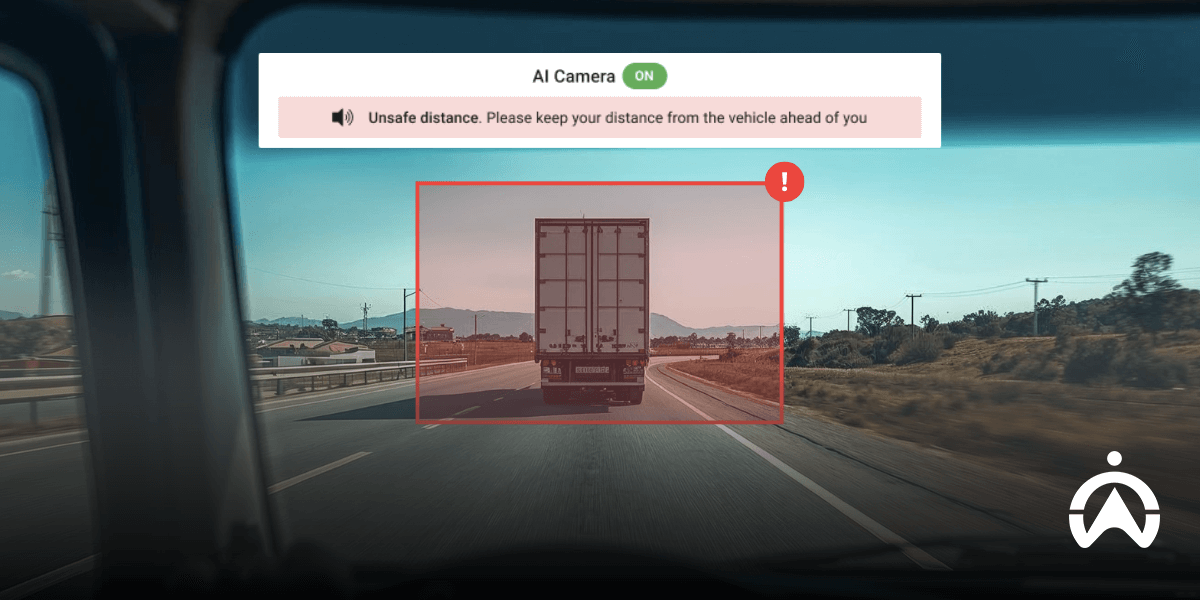
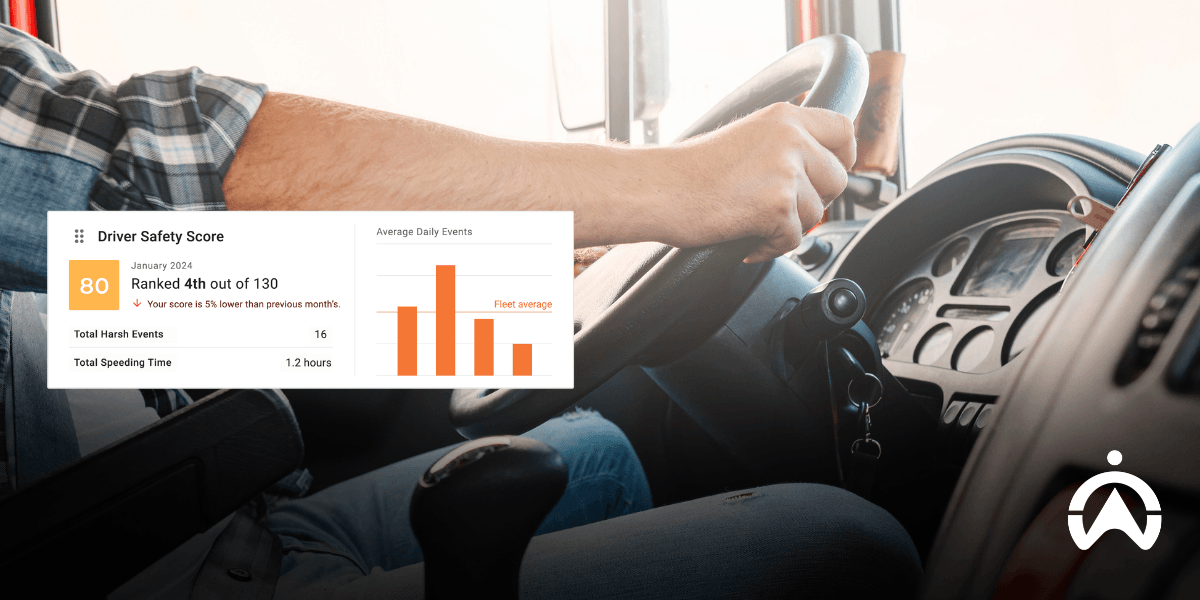
Our driver management system can help prevent accidents by improving how your drivers are behaving on the roads. We have a smart camera system that’s powered by AI that will provide real-time in-cabin alerts when your drivers are showing signs of questionable driving. This includes:

  • Not wearing their seatbelt
  • Sleepiness
  • Looking at their phones
  • Smoking 
  • Tailgating

On top of this, you’ll have access to driver scorecards which allow you to coach each driver on their specific driving habits!

Maintenance

At Cartrack Malawi we understand the importance of having your fleet on the road and not in the workshop. When your machines and vehicles break down unexpectedly, it causes unplanned operational downtime, which costs profits.

Our advanced telematics system is able to accurately monitor the health of your vehicles, spotting a fault before it completely breaks down. It also allows you to set inspection checks so your vehicles are always monitored, as well as maintenance alerts so you’ll know when each vehicle is due for its service.

Fuel usage

Our fuel management system takes the guesswork out of your fleet’s fuel usage. You’ll instantly spot leakage, theft, fuel card fraud and inaccuracy. Our system makes sure you have eyes on every drop of fuel in your fleet.

Fleet admin

When your admin is done on multiple different systems or even worse, on actual paper… things get lost and unorganised. Having a Cartrack fleet management system can digitise and simplify all administration tasks for your fleet, so you’ll never be scratching your head trying to remember when a driver worked over time or if fines were paid.

Asset locations

To successfully implement a planned fleet management system, you need to know where every vehicle and machine is in your business. Cartrack’s advanced GPS tracking devices allow you to keep an eye on every asset in your fleet, yes, even your non-powered assets!

You can also set up geofences that alert you when any asset enters or leaves set zones.

Fleet performance

Are deliveries being made on time? Are your drivers working their set hours? Are you using the right size vehicles for each load? Is your fleet meeting its KPIs? Cartrack’s fleet management system can ensure you have all the data you need to measure and keep track of your fleet’s performance.

Vehicle utilisation rates

Do you know how effectively you’re using your fleet? Cartrack allows you to monitor every aspect of your fleet from one platform. You’ll get:

  • Real-time usage data
  • Downtime insights
  • Insights on underutilised vehicles. 

Delivery times

Having accurate delivery times keeps you organised and your clients happy. Cartrack can make sure your drivers take the best route, and the drivers closest to a delivery destination are designated to deliver those parcels.

A planned fleet management system includes having proper insights into deliveries so you can ensure that all deliveries are all happening when they should.

Fleet costs

The most important thing every fleet owner needs to know is how much their fleet is costing them to operate. This way they can see if they’re operating at a loss or not. Cartrack’s fleet management system provides you with insights and reports on your entire fleet operation.

With Cartrack you’ll have complete visibility into your fleet, from drivers to wasted costs. This allows you to successfully run your business with planned fleet management instead of running around putting out fires.

For more insights on fleet management, contact us and we’ll be more than happy to assist you!

FAQs

How does proactive fleet management improve driver satisfaction and retention?

Proactive fleet management improves driver satisfaction and retention by increasing the lifespan and safety of your vehicles. It also strengthens communication between management and staff. These factors greatly affect how valued your drivers feel, and when they feel seen and cared for, they’re more likely to continue working for you.

How often should I review and update my fleet management strategy?

It’s recommended that you review your fleet management strategy at least every quarter to once a year. This way you’ll have enough data to know where your fleet needs improvements and what’s working for your fleet. This information allows you to accurately update where necessary.

What is the 80/20 rule in maintenance?

The 80/20 rule comes from the Pareto Principle. This is a statistical concept stating that 80% of consequences stem from 20% of causes. For maintenance it translates to 80% of your downtime; maintenance costs and production losses are caused by roughly 20% of your assets.


What Type of Alerts Should Your Fleet Management Platform Have?

The alerts your fleet management platform should include (or should at least have the capacity for) are SMS alerts, driver alerts, panic alerts, and accident alerts. You can gain even more value from your FMS if it includes fuel fraud alerts, cargo monitoring alerts, and idling alerts.

Light delivery vehicles make up a relatively small but notable proportion of crashes, while trucks account for an even smaller share. And besides what these accidents cost their respective fleet companies, the loss of life or resulting disability is immeasurable.

In this article we’ll cover a total of 8 fleet management alerts that you should have to avoid these kinds of events. First we’ll cover what the alert is and how it works. Then we’ll move on to the ROI benefits of the alert. Finally, we’ll show you how Cartrack Malawi has developed a system that makes these alerts possible, accessible, and highly functional.

What are 8 alerts every fleet platform should offer?

The 8 alerts every fleet platform should offer are:

  1. Driver monitoring alerts
  2. SMS alerts for task completion
  3. Panic alerts
  4. Alerts for idling
  5. Collision alerts
  6. Fuel-related alerts
  7. Cargo door sensor alerts
  8. Temperature fluctuation alerts for cargo containers

These alerts solve a range of issues from cargo protection to full-on accident prevention.

Let’s take a look at each one more closely. 

Driver monitoring alerts

An alert warning you about bad driver behaviour is an essential tool in any fleet management system. Not only do your drivers represent your brand, they also affect the safety of other motorists on the road. But most importantly, bad driving puts THEIR OWN SAFETY at risk, which is something you want to avoid.

What is it and how does it work?

Driver monitoring is somewhat multi-layered.

Layer 1: Monitor what the vehicle is doing and receive alerts when there’s speeding, harsh braking, or aggressive cornering.

Layer 2: Use AI vehicle cameras to watch drivers and make sure they’re not:

  • Getting distracted
  • Falling asleep
  • Smoking, eating, or drinking

Layer 3: Use the above vehicle & driver data to coach each driver. Keep track of these training sessions and get alerted when agreed-to corrections aren’t being adhered to.

It’s a helpful system. You could be at home, in the office, or on the road yourself and STILL get alerted to what’s going on with your drivers hundreds of kilometres away!

What are the ROI benefits of having this alert?

Driver safety holds massive financial returns. If your drivers are keeping to sound driving habits, they’re protecting your vehicles, themselves, and other motorists.

The result? Your vehicles experience less wear & tear. Your use of fuel goes down. Fatality and accident risks go down. Your insurance premiums might even go down! It’s an all-round win for your fleet.

How can Cartrack Malawi help?

Cartrack Malawi offers all 3 of these layers. Speak to us about getting a CAN Bus reader attached to your vehicles so you can monitor vehicle behaviour.

Optional: Go a step further and ask us about free installation on our AI vehicle cameras where you can watch your drivers in real time and even get alerted to when they’re compromising their driving.

Also optional: Now go all out… and get Cartrack’s driver coaching setup, making sure your drivers stick to habits that save you money and minimise fleet risk.


SMS alerts for deliveries

Much of what you do as a fleet manager is based on the logistics and tasks of your drivers. It’s a big-picture job that can feel a bit ‘blind’ at times (since you’re not there to direct your drivers on every aspect of their jobs). SMS alerts solve this issue.

What is it and how does it work?

SMS alerts give you small details on delivery processes. This is especially helpful with last-mile deliveries but can also benefit any fleet where the drivers complete “tasks” of any kind. SMS alerts give you updates at every stage of each process.

Stage 1: A parcel (or cargo) is being picked up (or loaded).

Stage 2: It’s on route. The ETA is approximated and sent to you. SMS Received… How convenient!

Stage 3: The driver has arrived. The package is delivered. The cargo has been offloaded. Signatures are recorded. Photos have been taken as proof. Services have been rendered. Done and dusted… Now on to the next one.

What are the ROI benefits of having this alert?

The ROI of getting SMS alerts is EFFICIENCY. The more efficient your drivers are, the better you manage them. The better (and quicker) you manage them, the more deliveries they accomplish in a day.

Simply put: Less time with blind management = more revenue for efficient deliveries!

How can Cartrack Malawi help?

Cartrack Malawi helps you crush the competition by offering a delivery and field service app where every driver is managed semi-automatically. You get a big-picture view of what’s going on with each driver and how they all fit together into your day’s schedule.

It’s workforce optimisation at its finest, and it costs less than you think. Ask us about it. 

Panic button alerts

Keeping your drivers safe is an essential investment within your fleet. Why? Because a lot of crime happens on the roads. Theft. Hi-jacking. These are real threats—not just against your drivers & vehicles but to your bottom line as well.

What is it and how does it work?

A panic button is installed discreetly within each vehicle. Only the driver knows where it is, and pressing it alerts our control centre to danger. You also receive a panic alert, keeping you abreast of risks while your driver is on the road.

What are the ROI benefits of having this alert?

Don’t get security features that cost money unless they SAVE & MAKE you money in return. The return on investment for panic button alerts is obvious:

  • Less unresolved theft
  • Safer drivers
  • Less downtime
  • Potentially lower insurance

How can Cartrack Malawi help?

The point of panic alerts is ACTION. Cartrack Malawi has emergency teams and recovery teams on standby, and they’re always ready to spring into action when danger or breakdowns threaten your drivers and the logistics of your cargo.

Prolonged idling alerts

Idling results in an obscene amount of money out of your fuel budget. Getting alerts to prolonged idling gives you more control, and the power to DO SOMETHING ABOUT IT.

What is it and how does it work?

Once again, CAN Bus is the hero of this story. A clamp is attached to the ‘nervous system’ of your vehicle, detects idling, times how long idling occurs each time, and alerts you to it immediately.

What are the ROI benefits of having this alert?

Imagine the cumulative effects of less idling across your fleet. Those small idling sessions build up over time and can potentially result in thousands of rands over a 12-month period.

Saving this amount of money is a game changer for fleets, so wouldn’t you want to take control of it to lower your overheads?

How can Cartrack Malawi help?

Cartrack Malawi offers a comprehensive fuel monitoring platform that puts usage and waste into perspective. But we also give you the control of getting alerted to idling so you can take steps to curb it or make it less frequent.

Collision alerts

Getting emergency help to your drivers when they’re far away from you as the fleet manager is an invaluable feature that every fleet management platform should include. Your vehicles are important, but your drivers even MORE so.

What is it and how does it work?

You’ll get alerted to any collision, whether severe or insignificant, and we will too. Coupling these alerts with an emergency reaction team gives you extra peace of mind while your drivers are out on the road. You’re prioritising their safety, and you’ll be aware of a collision event when it happens—not hours after.

What are the ROI benefits of having this alert?

Not enough is said about the ROI benefits of protecting fleet drivers. Keeping them safe plays into driver retention, giving you the ability to build a strong team of individuals who feel protected.

If a collision does occur, your drivers will get expert emergency services on the scene as quickly as possible!

How can Cartrack Malawi help?

Even with vehicle safety features, collisions can have devastating effects. Cartrack Malawi adds an extra layer of driver protection by alerting you to accidents so you can contact your driver to see if they’re okay. If they can’t be contacted, we’ll be there to investigate and help where we can.

Want to learn more about collision alerts? Contact one of our consultants, and we’ll show you how to implement this into your fleet—along with all the other alerts on this list. 


Fuel monitoring alerts

With fuel prices on the rise, even the smallest wastage builds up over time, affecting your fleet budget negatively. Not to mention the larger fuel anomalies that take place like theft, fraud, or leaks. A fuel alert lets you know when any of these three things is happening.

What is it and how does it work?

Sensors are placed within the fuel tanks of your vehicles. These sensors give readings that are way more accurate than the standard tank sensors your vehicles are equipped with.

The readings are then fed to a fuel monitoring software platform, algorithms are run, and pertinent information is sent to you to analyse or investigate.

What are the ROI benefits of having this alert?

Detecting fuel waste comes with massive ROI benefits. The larger your fleet, the more cumulative these savings become. Fuel is expensive, but it’s likely to go up even more! Are you doing everything you can to use fuel sparingly?

How can Cartrack Malawi help?

Cartrack Malawi provides and installs state-of-the-art fuel sensors that connect to our fuel monitoring platform. Our system is also scalable, so it continues to save you money as your fleet grows!

Cargo door alerts

If your cargo isn’t monitored as efficiently as your vehicles and your drivers, you run the risk of suffering loss from the compromise of your most valuable products. This isn’t just about keeping cargo contained for quality purposes; it’s also about protecting it from being tampered with or stolen. 

What is it and how does it work?

Door sensors are great on their own, because they alert you every time your cargo doors are opened or closed.

But you can add even more security to this feature by seeing exactly what’s taking place every time the doors open—IN REAL TIME. Cameras can be coupled to door sensor alerts, so you can tune in to what’s occurring by watching it LIVE.

What are the ROI benefits of having this alert?

This system protects your cargo from theft, border patrol tampering, and he-said-she-said disputes. You’ll have a record of exactly what time the doors were opened, and with cameras you’ll have video evidence of what transpired.

How can Cartrack Malawi help?

Door sensors are a valuable installation provided by Cartrack Malawi. We’ll also advise you on cameras if you want those too. These only activate when the doors open, giving you a relevant series of footage that can be used if your cargo is compromised.

Temperature alerts

Got temperature-sensitive cargo? You could save on a lot of waste if you were monitoring cargo temperatures at all times. This goes beyond door sensors by checking and providing the real-time temperature of your containers. It’s perfect for food delivery, as well as medical supply cargo carriers.

What is it and how does it work?

If the temperature rises, you’ll know about it. You can set limits that reflect the bare minimum or maximum temperature your cargo needs to remain at. This works with specialised sensors that feed to a trigger alert, and that alert goes straight to you when something isn’t quite what it should be.

What are the ROI benefits of having this alert?

Having this alert might not be necessary for every fleet, but if you deal with perishable food or medical supplies, IT’S A MUST!

Tonnes of food is wasted in the delivery process every year. Do you want to carry those costs, or are you prepared to put measures in place to prevent it?

How can Cartrack Malawi help?

Cartrack Malawi develops these sensors within Malawi, and our software and alerts system is compatible with your mobile device & PCs. We’re standing by to schedule a full temperature monitoring system for your containers that carry heat- or cold-sensitive cargo.

What’s the main idea behind fleet alerts?

The main idea behind getting fleet alerts is AWARENESS. Being in the know about what’s going on with your drivers, your vehicles, and your cargo results in high ROI, more efficiency, and an overall stronger brand reputation.

Knowledge is POWER in the world of fleet management. Take control back and get the most essential alerts directly on your phone.

In today’s fleet arena, it’s the only way to REALLY manage effectively.  

Frequently asked questions about fleet platform alerts

Are Cartrack alerts sent to my phone or my computer?

Many of Cartrack’s alerts are sent straight to your phone, but Cartrack also has various software packages that receive alerts too. Think of our platform, FleetWeb, as your control centre. Whatever software package you subscribe to, adds a channel to it, allowing you to manage a fleet category. SMSs can be activated with some, but others are platform-based.

Which fleet alert will save me the most money?

The fleet alert that will save you the most money will depend on your fleet structure & size, but the strongest contenders are fuel alerts and driver monitoring alerts. These relate directly to your largest costs (fuel & salaries), so keeping an eye on them will ultimately save you on costs.

What devices are used to generate fleet management platform alerts?

The devices used to generate fleet management alerts are fuel sensors, AI cameras, various sensors for doors and temperature monitoring, and CAN Bus clamps. These often work well together to give you a full picture of what’s happening in your fleet, but they’re also individually helpful if related to the specific nuance of YOUR fleet.

How to Increase Driver Retention and Save on Recruitment Costs

To increase driver retention and save on recruitment costs, you must create an environment that emphasises the wellbeing and upliftment of your drivers. The two core reasons why businesses see a high turnover rate are that drivers feel underpaid and unappreciated, and addressing this can make all the difference.

As of 2026, the financial impact of high driver turnover has begun to significantly affect fleet sustainability in Malawi. Studies indicate that replacing a single truck driver places a substantial financial burden on companies, putting pressure on operational budgets and long-term fleet efficiency. This is a concrete reason why retention is the better, financially savvy route.

Don’t drown your business in hiring costs; change the way your business operates and shows care for its employees. In this blog, you’ll see how you can improve driver retention, what you can do to protect your overall gain, and how Cartrack can help you achieve a positive business environment.

What can you do to maintain driver retention and avoid financial loss?

To maintain driver retention and avoid financial loss, you should transform the way your business treats its drivers. If you’re facing a high turnover rate, you must be able to take a step back and re-strategise, thinking carefully about the ways you can enhance your approach with drivers. Most importantly, value their feedback and be willing to listen.

Truck driver shortages have been an ongoing issue for years now, and they’re heavily impacting the supply and transportation sector. This kind of shortage has a ripple effect, damaging businesses like yours and hurting the industries in connection to them. Maintaining driver retention is more important than ever. 

What is driver retention?

Driver retention means keeping your drivers loyal to your company, so much so that they stay on for a long time. Retaining drivers means you’re going in the right direction, keeping your drivers happy enough that they choose to remain a part of your team. Most drivers move on to different companies because they feel unhappy, underpaid, or overworked.

According to extensive research studies, it’s believed that most drivers leave their positions because compensation doesn’t match their expectations. The second most common reason is largely that they feel disrespected and unappreciated. This is why, beyond pay & benefits, a positive, nurturing environment is the key to retaining your drivers.

What’s the true price of hiring a new driver instead of retaining one?

When you hire a new driver instead of taking measures to retain one, you’re not just faced with the hiring costs. Every time a driver leaves, you have to invest in so much more than the recruitment process. More than that, you might end up with a bad hire that could cost your business even more than anticipated.

Consider these other contributing costs:

  • Advertising and marketing for the role
  • Onboarding and training
  • Insurance (which tends to be greater with high turnovers)
  • Loss of productivity/downtime
  • Loss of unused equipment/assets (diminished equipment)
Delivery driver in a red uniform handing over a package from their van, illustrating strategies to increase driver retention.

What are the top ways to increase driver retention?

The 7 ways to increase driver retention include:

  1. Paying drivers competitive salaries and offering valuable benefits
  2. Putting driver safety and wellbeing first
  3. Engaging intentionally with drivers
  4. Investing in good-quality tools and technologies
  5. Maintaining open communication
  6. Introducing strong mentorship, training, and development programmes
  7. Implementing incentives and rewards

Let’s break these crucial points down for you.

1. Paying drivers competitive salaries and offering valuable benefits

This is one of the most important points to consider. Do your research carefully and understand the market value for drivers. Even if you do have an interested driver, you might lose them the moment you present a weak compensation package. Keep a competitive edge and remember that the market has shifted post-pandemic.

In addition to pay, offer valuable benefits. Think about offerings like medical aid, performance bonuses, and other benefits that could make your compensation package stand out above the rest of them. Also remember to be completely transparent about the salary and benefits structure. You want to support your drivers, not catch them out.

2. Putting driver safety and wellbeing first

Drivers work extremely long days and are the foundation of your business, so invest in their wellbeing. Put their mental health first and offer enough time off. When you do this, your drivers have a far better quality of life with better sleep, less chance of chronic health issues, and a better outlook on their job. This then encourages a positive cycle and work/life balance.

Safety is also a massive point here. Ensure that you’re compliant and meeting safety measures to the best of your ability. Invest in the right tools to make safety processes simpler, ensure that your drivers are properly trained, regularly review your safety protocols & policies, and check that your equipment/assets are well maintained and meet safety standards.

3. Engaging intentionally with drivers

Be intentional about your engagement with your drivers. Really listen to them when they’re giving you feedback or expressing their grievances. You can encourage things like regular check-ins or focus groups so that drivers are engaged and feeling heard.

When you take the steps to make those changes, you’ll likely leave your drivers pleasantly surprised and feeling valued, transforming the vibe of the workplace.

4. Investing in good-quality tools and technologies

When you have the best in fleet and safety technologies, this not only ups the safety factor for your drivers, but also makes everything far easier for everyone involved. Automated processes and AI-powered tools mean your drivers can focus on driving and not be held back by other tasks, especially admin-related ones.

When you use the tools at your disposal, especially through a fleet platform like Cartrack’s FleetWeb, then you’re a step closer to a smoother, better-functioning environment. This takes the stress out of daily tasks for both you and your drivers.

5. Maintaining open communication

This point brings together general safety, intentional engagement, and good-quality technologies. As an owner or fleet manager, it’s important that you’re on standby and ready to help if an emergency happens while drivers are on the road. With a sophisticated fleet platform and advanced technology, you can make in-cabin calling and react swiftly if your driver encounters issues on the road.

Achieving this shows your drivers that you’re attentive and there for them when something goes wrong. Again, it pushes forward the notion that you care about their safety.

6. Introducing strong mentorship, training, and development programmes

Mentorship and development programmes can take your drivers far. These initiatives show that you’re invested in the growth of your drivers – not in stagnancy – and therefore in business development. Offering mentorship can also help your drivers (especially new ones) feel confident and less withdrawn about doing tasks and even engaging with you as management.

Ensure that your drivers have a clear and comprehensive onboarding process, so that you and the drivers are feeling confident from day one. It’s also best to keep regular training an ongoing thing, especially if you intend to keep your software and tools updated.

7. Implementing incentives and rewards

Few things encourage employees more than incentives and rewards. Whether it’s public recognition or tangible prizes, these are supportive, motivational, and engaging ways to show appreciation for your drivers that go above and beyond. This also creates healthy competition between drivers, because they’re motivated to adopt better driving habits, knowing that their efforts will be recognised and rewarded.

Gamification is one of the best strategies to implement here. You’ll be able to use actual insights to drive game-like mechanics like leaderboards and prizes. Drivers are often far more involved with a gamification approach; it’s a smarter, safer, and more entertaining approach.

Delivery driver standing confidently by a loaded van, representing high driver retention and reduced recruitment costs for logistics businesses.

How does Cartrack help you retain drivers?

Cartrack can help you retain drivers by giving you the comprehensive, accurate data needed to propel your retention strategies. From driver scorecards to metrics for gamification, we provide you with the tools required to transform your business environment and keep your drivers happy. Our comprehensive and insight-driven fleet solutions are where you need to start.

We have AI-capable camera solutions for your fleet, which capture distracted or reckless driving. We have driver scorecards, which keep track of how your drivers are behaving on the roads. These can help you monitor and reward drivers who are exhibiting responsible behaviours. The recorded AI events can also be used for coaching, so that drivers get valuable feedback for improvement.

Our optimised processes, like routes and real-time dispatching, lead to quicker and safer journeys for your drivers, all while allowing you to efficiently handle unexpected changes. In that same vein, you can ensure instant communication between you and your drivers through our in-cabin calling options or in-app messaging.

Your drivers can also focus on driving instead of being burdened by other tedious tasks. Everything is made hassle-free; not only is our app user-friendly, but manual entries are a thing of the past thanks to automated scheduling, proof of delivery submissions, and more. With monitored vehicle health and proactive maintenance, the chances of your drivers getting stuck on the road are massively reduced.

Final takeaway: More retaining, less recruiting

Changing your mindset, genuinely tuning into your drivers, and equipping them with the right tools and support is what will make your business. You’ll build a team of drivers that not only shares your commitment to success, but is also dedicated and loyal. Don’t just stop at keeping your trucks on the road; let your true empathy shine through. It’s a highly effective, proactive way that safeguards your company’s culture and profits while keeping you connected to your drivers.

Let Cartrack get you on the right path. We’ve got everything you need to ensure your drivers stay motivated and educated. And with happy drivers, you’ll have a much happier business environment and bottom line.

Want to keep your best drivers behind the wheel? Speak to our Cartrack professionals today for actionable tips on improving driver engagement and minimising high turnover.

Frequently asked questions about driver retention

What is the best way to reduce driver fatigue?

The best way to reduce driver fatigue is to:

  • ensure your drivers are getting enough sleep before long trips (at least 7-9 hours),
  • you’ve enforced a regular breaks-and-stops policy, and
  • ensure that drivers are well hydrated and eating light, healthy meals (because heavy, fatty-rich meals cause sleepiness).

How to reduce recruitment costs?

To reduce recruitment costs, you should:

  • use tools and technology to help you better sort through the process,
  • hire internally where possible,
  • utilise career & social media pages,
  • incentivise referral programmes, and
  • ensure that your job description is as clear as possible (to avoid receiving resumes that don’t match).

What is the 80/20 rule in hiring?

The 80/20 rule in hiring, otherwise known as the Pareto Principle, is the idea that 80% of your success in hiring candidates comes from the top 20% of applicants. So, instead of looking at every applicant evenly, you focus more on those with the best skills across the board and take it from there

How to Boost Driver Safety With Fleet Gamification

To boost driver safety with fleet gamification, you take mundane, everyday tasks and make them fun by implementing game-like mechanics. You incentivise your drivers’ tasks by introducing concepts like leaderboards, rewards, and point systems to motivate them. This helps and encourages your drivers to meet the necessary standards of improved safety, compliance, and other protection matters.

Gamification is a great way to keep your drivers engaged and motivated about doing the right thing. Statistics show that up to 80% of gamified platforms have more involvement from drivers, with 70% of employees saying they feel motivated by and enjoy the benefits gamification brings to their work. This keeps drivers encouraged and not closely monitored.

You can change the way your drivers see safety and compliance while building better relationships with them. In this blog, you’ll understand what gamification is, how to include it in your fleet strategies, and how Cartrack can make this a success for your business.

What does fleet gamification have to do with driver safety?

Fleet gamification has everything to do with driver safety and how you approach the safety culture within your business. Safety is always one of the most important aspects of a business, especially in logistics or delivery. So the question then becomes: how do you ensure your drivers are meeting safety standards without feeling mistrusted or under too much pressure?

This is why gamification is a powerful solution for your team. This strategy turns the mundane and boring into something to look forward to, becoming an encouragement for drivers rather than a source of stress. When drivers feel motivated to do better, they will do better, especially when they know that management isn’t breathing down their necks.

Gamification is also the key to keeping the driver safety strategies alive. To keep the motivation and encouragement flowing, you can adjust rewards based on the collective performance of the drivers. This means you not only maintain the enthusiasm, but you also carry out your initiatives successfully and without boring your drivers.

What are some of the driver safety risks that need attention?

Some of the driver safety risks that need attention include the various kinds of distracted driving, aggressive driving, and exhaustion management. For the sake of your drivers’ lives and your business reputation, paying careful attention to and correcting these behaviours should be your number one priority. This is where gamification comes in.

Distracted driving

From using the phone and smoking, to eating while driving, these are some of the behaviours that need to be addressed from a typical driver management safety perspective. Distracted driving means your eyes are off the road, but even the quickest diversion could swiftly lead to an accident.

A gamified approach could do something like reward a top driver who has the least number of recorded events.

Fatigue treatment

Exhaustion must be correctly managed so that your drivers aren’t putting themselves, their lives, and the lives of others in danger. In addition to this, fleet vehicles and cargo could also be lost or damaged as a result of dozing off behind the wheel.

A gamified approach could reward drivers for logging enough rest stops or resting according to the guidelines set by your business.

Speeding and aggressive driving

Drivers who drive too fast, cut the corners they take, don’t follow the rules of the road, or just act unpredictably while driving are displaying total recklessness. This kind of behaviour not only puts drivers and other road users in danger, but also threatens your business brand.

A gamified approach could reward drivers for maintaining smooth and safe driving over time.

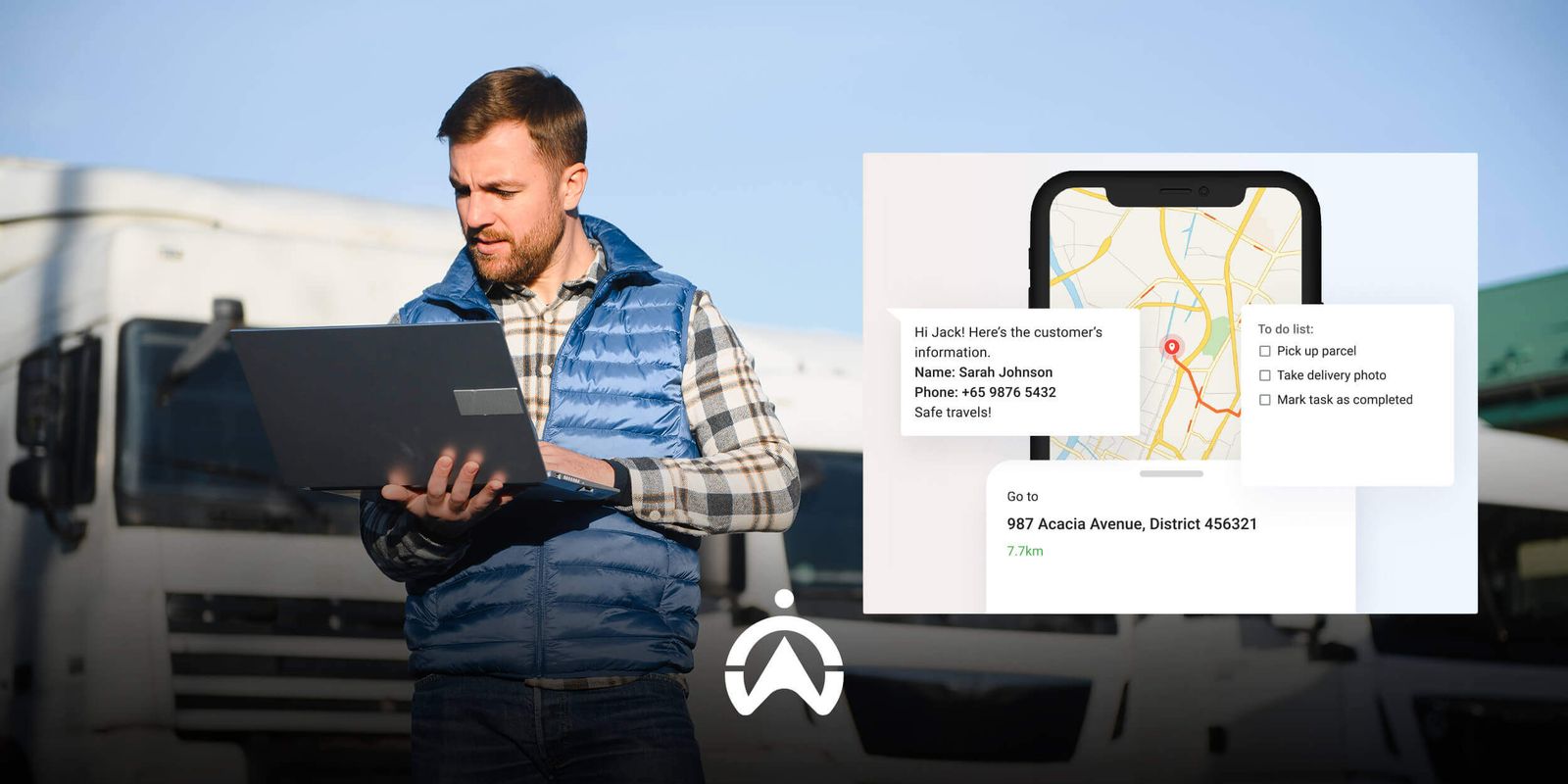
Driver speaking on phone in transport yard, supporting fleet gamification and driver safety initiatives.

Vehicle condition

Driver safety isn’t just about driving behaviours; it’s also about the condition of the vehicle and the care taken. Although proper and scheduled maintenance is mostly on your part as management (and your fleet system), a driver is still expected to do vehicle checks and inspections regularly to keep them safe.

A gamified approach could reward a driver for accurately completing full inspections for a prolonged time.

How can you implement gamification to meet these safety goals?

You can implement gamification to meet these safety goals by clearly and carefully introducing the strategy to your drivers. Everyone should be on the same page and understand how the point & ranking systems work, what the rewards & incentives are, and the importance of healthy competition.

At the end of the day, gamification works on the psychology of people and the favourable outcomes they create from positive feedback. Direct incentives and rewards are great, but soft rewards are just as important. Always remember to encourage your drivers, give them words of affirmation, and publicly acknowledge their achievements.

What are some examples of gamification in a fleet?

Examples of gamification in a fleet include displaying leaderboards, offering rewards and incentives, and openly praising drivers for their achievements. What’s even better? Our platform has API capabilities, meaning you can seamlessly connect any third-party tools or programmes you may decide to use for gamification purposes.

Check out these key examples:

  • Leaderboards: Leaderboards show the names and rankings of each driver, giving them the chance to see where they stand in comparison to one another. This facilitates healthy competition amongst the drivers and provides an opportunity for drivers to encourage each other.
    ‍
  • Rewards and incentives: From cash and vouchers to time off, they’re an extremely effective way to motivate your drivers. With an exciting reward at the end, they may put in some extra work towards meeting safety and compliance goals. 
    ‍
  • Badges: Usually, these aren’t physical badges but rather an icon shown next to the driver’s name. This could signal meeting milestones, being employee of the month, or other notable achievements.
    ‍
  • Collective performance: Although healthy competition is encouraged, it can also be great fun for your drivers to come together as a team and achieve goals together. Group efforts on top of individual ones can truly foster that overall safety culture. Drivers encourage each other instead, and everyone benefits in the end.
    ‍
  • Praise and words of affirmation: As previously mentioned, acknowledging drivers’ achievements can go a long way to elevate their confidence. Public recognition can boost self-esteem, improve professional relationships, and help ease the pressures of the job.

How is gamification in fleets BETTER than traditional safety enforcement?

Gamification in fleets is better than traditional safety enforcement because it adds a level of excitement and incentive. When your drivers are engaged and rewarded, it’s likely they’ll want to meet compliance regulations and be safer on the roads. This combats traditional safety enforcement, which can be rather repetitive, frustrating, and discouraging.

Picture this:

You’re dealing with a driver or two who’ve been consistently triggering events via their AI-supported dashcam, from using their phones while driving to speeding. You give them another one of those long lectures and coaching sessions, and the repetitive, irritated nature of your feedback leaves your drivers upset and demotivated. They’re unhappy, you’re unhappy, and now tension sits heavy in the air.

This kind of tension can prove to be a disaster for you, your business, and the wellbeing of everyone involved. Professional relationships are fractured, safety is threatened, and employee retention is lower. All of this could ultimately be prevented if you considered introducing gamification into your fleet safety strategies.

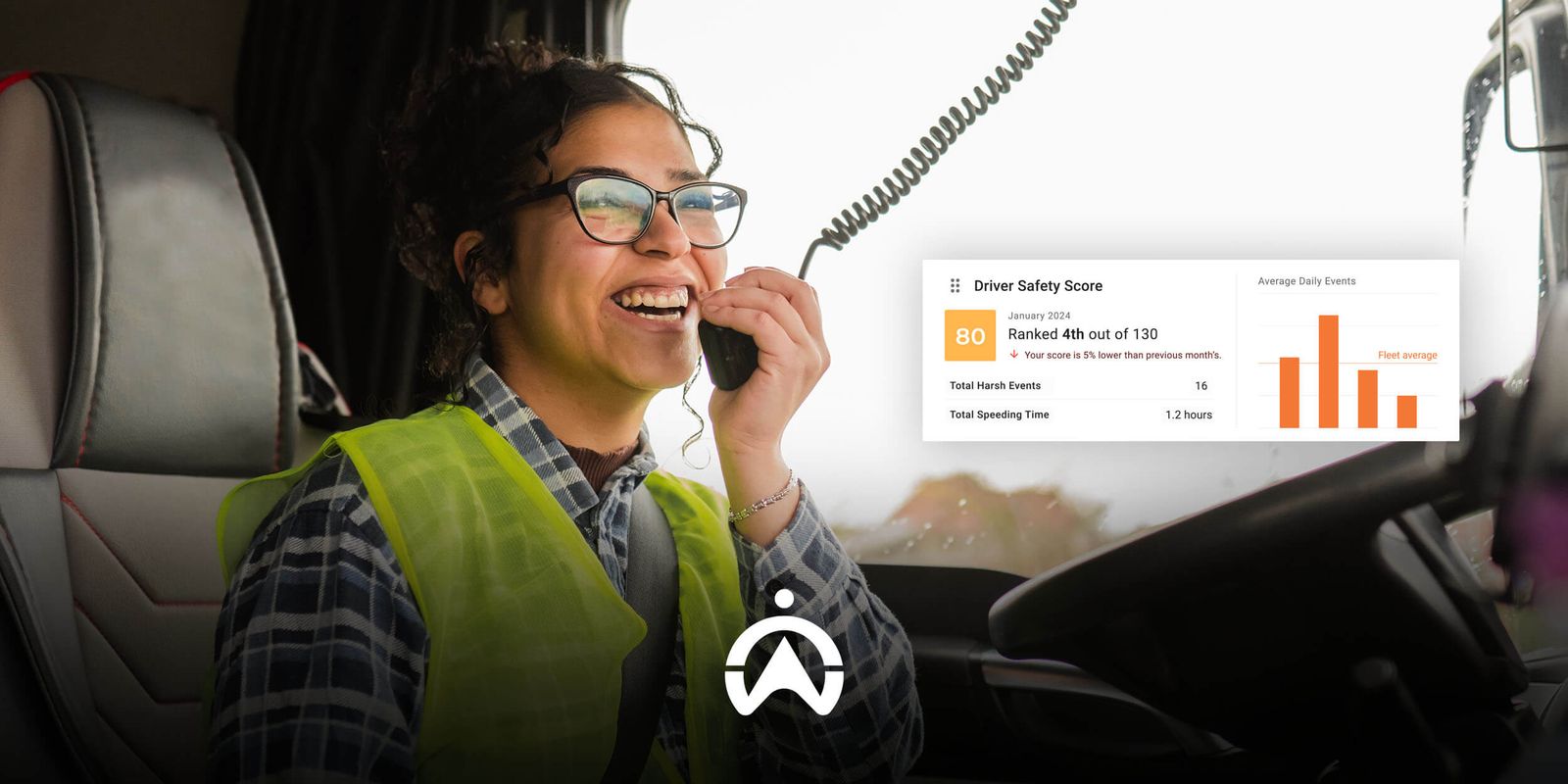
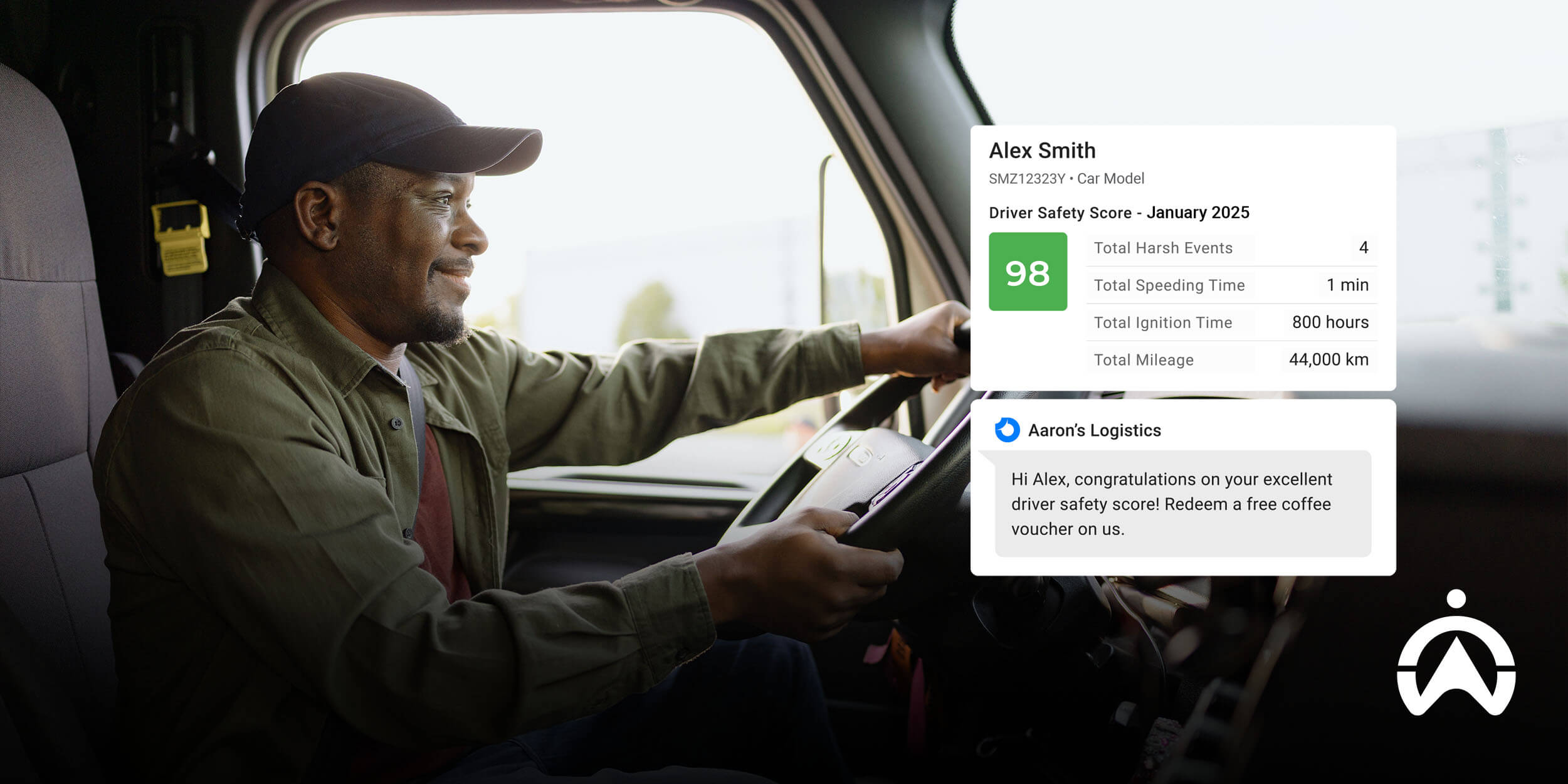
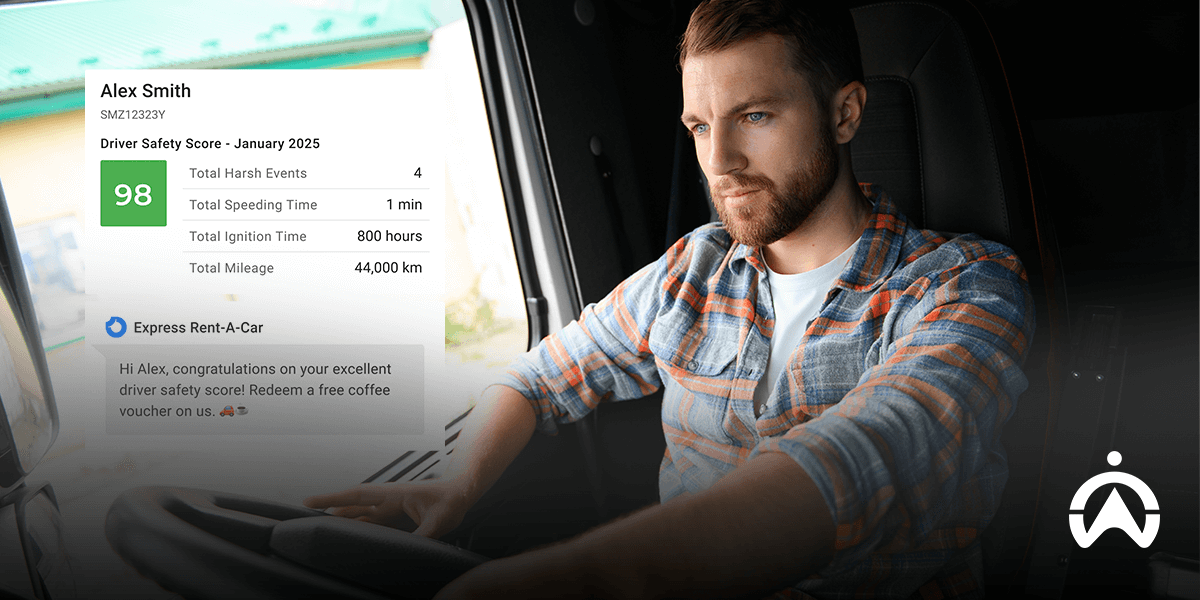
Truck driver viewing safety score and reward message, highlighting fleet gamification and driver safety performance.

What can Cartrack do to support your gamification goals?

Cartrack can support your gamification goals by being the trusted partner you choose for long-term success. At the core of gamification, you need a powerful and user-friendly fleet management system and sophisticated software that helps you identify the safety protocols and events that need addressing. We have all of that, and more.

Not only do we have a variety of dashcam options with AI capabilities, but we also have live GPS tracking with a strong connection, telematics, driver scorecards, API features, and much more. These are the tools and features you’d need to successfully manage gamification within your fleet, and we make it a simple process for you.

We want to help you make safety easy and completely achievable. We understand the impact of prevention before post-incident attention, and that’s why we’re here to accompany you on your gamifying journey and prove ourselves as long-term partners for your success.

Final takeaway: gamification as a catalyst for safety

At the end of the day, the well-being of your drivers and the way their safety is managed overall is undoubtedly one of the most important aspects of fleet management. You can still have a focus on safety policies, regulations, and compliance without enforcing traditional and redundant methods to achieve that safety.

Gamification could be the tool that sets your company apart from the rest, combining your concern for safety and compliance with deep care for your drivers and their overall health. When that’s achieved, your business becomes a flourishing, well-oiled, compliant machine that puts its people and safety first.

Are you ready to see how gamification can elevate your drivers and fleet? Speak to a Cartrack professional today and get started on a safer, smarter, and more entertaining strategy to achieve driver safety.

Frequently asked questions related to safety gamification in fleet management

What software should I get for managing my fleet?

The software you should get for your fleet incorporates GPS tracking, telematics, and AI capabilities, so that you get a complete and accurate overview of your fleet and its whereabouts. Cartrack’s FleetWeb is a perfect solution; we offer all of this and more for your traditional, electric, or mixed fleet.

What are 7 ways to improve fleet safety?

7 ways to improve fleet safety include:

  1. introducing AI capabilities in your fleet management
  2. adapting preventative maintenance
  3. opting for gamification for your drivers
  4. monitoring and coaching your drivers
  5. having advanced dashcams and sensors
  6. location-specific alerts & geofencing, and
  7. managing driver permissions and driver tags

How do you effectively manage a fleet?

You effectively manage a fleet by bringing together the necessary hardware, software, and fleet strategy to optimise your fleet’s productivity. Hardware ensures you have the right devices; software collects and translates the data from the hardware; and a strong fleet strategy carefully maps out the planning and smooth execution of your operations.

The Best Tourism Fleet Management Solution and Why

The best tourism fleet management solution should offer you ways to save on your fleet costs, ways to simplify your operations, and keep your passengers safe. Passengers also have high expectations these days, and considering the competitiveness of the tourism industry, you want to implement technology that satisfies those expectations.

Malawi is becoming an increasingly popular holiday destination thanks to its stunning landscapes, welcoming people, rich culture, and Lake Malawi’s clear waters. According to the Malawi Tourism Council, the country welcomed approximately 1.2 million tourists in 2025, reflecting steady growth in international arrivals. To cash in on this and ensure your business is the top choice for tourists, you must invest in proper fleet management software.

Today, we’re here to show you what it takes to be one of the best tourism fleet management solution and why we, at Cartrack, stand out from the rest.

What makes tourism FMS stand out as “The Best”?

What makes tourism FMS the best is the software it has to offer. A lot of tourism fleet companies out there use outdated software that doesn’t really solve issues and is actually a waste of money. You need a system that makes use of things like AI to bring you a futuristic approach to managing your fleet.

What are some obstacles tourism fleet managers encounter?

Some of the obstacles that tourism fleet managers encounter include:

  • Fuel costs being way over the budget
  • Planning efficient routes takes time
  • Breakdowns while in transit
  • Driver misconduct
  • Customer dissatisfaction

This results in companies losing a lot of money and clients.

Here’s a closer look:

Fuel costs are going way over budget

High fuel costs can be caused by idling for too long, reckless driving, or fuel fraud & theft. But with no technology in place, there’s no way to pinpoint what exactly is causing these high fuel expenses. As fuel takes up a big chunk of daily operational costs, this can result in a big loss in revenue.

Planning efficient routes takes time

Figuring out the most efficient way to drive tourists around the city without leaving out monumental sites can be quite the challenge. There are things like traffic, road closures, and varying vehicle sizes that must be considered to determine the best way to go about each tour. This can be time-consuming and may result in a lot of human error.

Vehicles break down while in transit

Fleet managers often overlook things like booking vehicles in for service and ensuring that drivers check vehicle conditions before and after trips. This is especially true during peak seasons, when there’s “no time” to waste. By neglecting vehicle maintenance, you create a bigger issue of constant breakdowns. This leads to more downtime and expensive repair costs.

Driver misconduct

Knowing how drivers behave when carrying passengers is difficult. Some drivers speed through the trips and never obey road rules, leaving your customers terrified and not enjoying the ride. The worst thing that could happen due to bad driver behaviour is an accident where passengers get severe injuries, or even die as a result. Aggressive driving habits also lead to more vehicle wear & tear and an increase in fuel consumption.

Customer dissatisfaction

The tourism industry relies heavily on customer reviews, and in most cases customers only make public reviews if they’ve received impeccable or extremely horrible service. Customer reviews always make a huge difference, and we live in a time where social media makes the most impact. How many times have you seen a good review of a place on TikTok and thought to yourself, “Hmmm, I definitely need to try that”?

There are some small businesses that’ve literally skyrocketed in profits because someone went on the internet and shared their wonderful experience. There are also those whose businesses have hit complete rock bottom because of the power of social media.

Bus driver navigating route, supported by tourism fleet management system.

What do tourism fleet managers actually need?

As a tourism fleet manager, you need technology that’ll help you make better decisions, save costs, and bring you more customers. This means investing in a reliable fleet management system that provides things like:

  • Live GPS tracking
  • Route optimisation software
  • Aggressive driving alerts
  • Fuel consumption reports
  • Digital maintenance reports
  • A vehicle booking system

Live GPS tracking

You’ll always know where your vehicles are if you have GPS tracking on them. If the driver is supposed to be picking up people at the airport and they’re not there yet, you’ll see what’s causing the delay. Our system shows you which vehicles are on the move, idle, or completely off. This gives you complete control over your fleet.

Software to help you plan better routes

Planning better routes means finding and exploring different ways for drivers to get to their destinations and choosing the best option. Route planning software speeds up that process, saving you time and giving you more fuel-efficient routes. Your drivers will experience less traffic and hiccups on the road, because this software usually factors in road conditions before giving its suggestion.

Aggressive driving alerts

GPS tracking units have telematics, which is a technology that can detect when drivers are driving recklessly. You’ll be notified of this and be able to address your concerns with your drivers. This also helps you see which drivers need training for improvement. When drivers know you’re watching, they’ll behave better, giving your customers a better experience.

Fuel consumption reports

With a fleet management system, you also get to see accurate mileage readings, cross-check fuel receipts with the distance travelled, and track live in-tank fuel levels. These features will show you exactly how most of your fuel is being wasted and if there’s any theft or fraud. A fleet management system is the best way to reduce fuel expenses, which are a large portion of operational costs.

Digital maintenance reports

Don’t wait for vehicles to break down before fixing them; be proactive! This means using fleet management software for up-to-date vehicle servicing and repairs. Through a fleet management system, you’ll also get warnings of potential mechanical failures, so you can fix them before they cause breakdowns. This saves you money that could be spent on unexpected repairs. It also helps to ensure your vehicles are roadworthy.

A vehicle booking system

Too many disconnected apps result in time being wasted going through the different platforms and aligning your plans. With a fleet management system, you’ll have the option of integrating your vehicle booking system with the platform, so you know which vehicles are booked and for how long. This helps you avoid booking clashes or missed cancellations. Alternatively, you can use the platform’s own booking system.

Understanding the connection between a bad tourism experience and your profits

Bad tourism experiences lead to more people being reluctant to use your services, which results in your business making less profit. Most of the time, this doesn’t happen overnight but rather slowly as more people experience unpleasant service and leave reviews. But in today’s world, where social media influences the choices of many, a massive overnight loss is possible.

Picture this: You have a group of eight friends who’ve booked your shuttle services to transport them to a popular festival in your city. The festival happens only once a year and features some big international artists. The people who booked your services flew from another city just to attend that event. The event is two hours away from their accommodation in a remote area (making e-hailing a not-so-fitting option).

1. Booking time confusion

Now comes the time to pick them up. Your driver gets there at 13:00 and calls to say he’s arrived. Your clients are puzzled because they scheduled a 16:00 pick-up, and they’re not even there yet.

You realise there’s a mix-up with the booking times, and the driver won’t get the chance to pick them up later because there are other clients to pick up and all your other vehicles are busy. Your clients are left angry and stranded because they have no other way of getting to the event.

2. The breakdown

A few hours later, after a long search, you finally see a gap and find a vehicle that’s available. Your clients are picked up at 18:00, meaning they’re already late. Just when you thought things couldn’t possibly get worse, the vehicle breaks down mid-transit, and the matter takes another hour to get resolved. By this time, you already know that some bad reviews are coming.

3. The review

But wait, it gets worse! Two days later, one of the people from that group recorded a video detailing all that happened on the day of the festival and how your shuttle services ruined their day. The video goes viral, and just like that, the whole world knows never to use your services. More people cancel the bookings they made, and your business takes a huge downturn.

How this could have been avoided

A fleet management system could have saved you from all that trouble with a proper preventative maintenance plan and a more accurate vehicle booking system that helps you avoid clashes.

Remember that your customers are humans who most certainly are understanding. If there’s one small hiccup, they might be a bit lenient because, hey man, life happens! But if they encounter too many issues with your service, you’ve lost them. You want to make sure you give every customer the best possible service, and that means trying your best to eliminate all potential issues relating to your fleet. That’s where fleet management technology comes in!

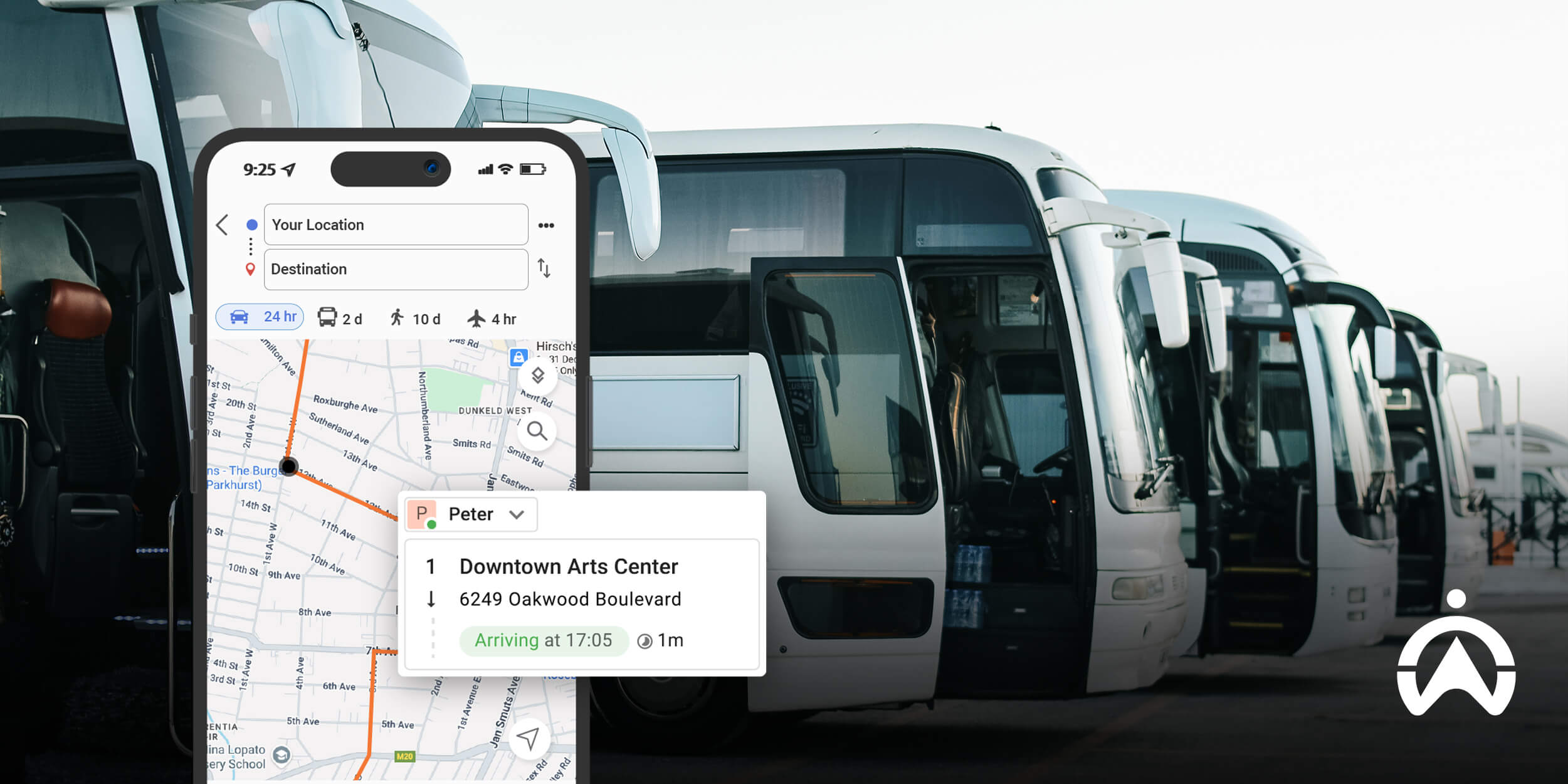
Smartphone showing bus tracking and arrival times powered by tourism fleet management.

Why is Cartrack considered by many to be the best tourism FMS?

At Cartrack, we’re considered by many to be the best tourism FMS because of the solutions we offer. You can’t manage what you can’t see, and we help you see! Through our GPS tracker, cameras, and sensors, you’ll get a full view of everything relating to your fleet at the palm of your hand.

Here’s what we offer:

Route optimisation software

Our route optimisation software factors in things like traffic trends, road conditions, and the time your drivers have to get to their destinations. All you need to do is input the driver destinations, and the software will suggest the best options for your drivers to get there. These suggestions will most certainly be more fuel-efficient—and often quicker.

Carpool

The Cartrack Carpool feature is a vehicle booking system for shared company vehicles. It helps eliminate things like booking time confusion. It shows which vehicle is in use, what time it’ll be back, and which one hasn’t been returned on time. Drivers can either reserve the vehicles themselves, and then you’ll get a notification, or you can do it yourself. Carpooling is a great way to improve vehicle utilisation and keep up with vehicle availability.

If you prefer the booking system that you already have, you can integrate it into our system so you won’t have to go through too many apps to run your fleet.

MiFleet

Being on top of things involves staying in control of operational costs. MiFleet is our cost management tool that you can add to your package to track the real cost of things like fuel, repairs, and toll fees. For example, you can use this platform to check for fraud. How? The software factors in refuel receipts, tank capacity, fuel station location, and distance to determine if the transaction is accurate. If the numbers don’t add up, it’ll flag the transaction as high risk.

Fuel sensor

Another way to stay on top of fuel costs is by installing our fuel sensors in each of your vehicles. These sensors will give you live fuel levels. If there’s a sudden drop in fuel levels, then you’ll know it could be due to theft or a leak. Fuel sensors help you stop theft, sometimes as it happens.

Preventative maintenance

Our preventative maintenance system ensures that your vehicles are always in good shape. You can start by importing all vehicle maintenance schedules onto our platform so we can give you reminders. From there, you can create a vehicle inspection checklist on our platform that drivers can use to inspect certain vehicle components before starting a trip. This ensures that all vehicles are safe to use, and you’ll get feedback so you know what needs to be fixed.

Our preventive maintenance system also alerts you to things like worn-out brake pads and engine faults. This is so you can quickly repair or replace vehicle components before they become a bigger issue and cause breakdowns.

Vehicle cameras

We have a selection of camera solutions you can choose from to ensure your drivers are safe on the road and that your customers are comfortable and receiving good service. For example, our AI Tri-Vision cameras enforce safe driving practices by detecting distractions like when drivers are on their phone or smoking. The cameras release audible alerts for such behaviours, so drivers can quickly make corrections and focus on the road.

Through our camera solutions, you can also ensure that your drivers aren’t picking up passengers who aren’t booked with your company during trips for personal gain.

Driver behaviour reports

Through our telematics system, you’ll get to see if drivers operate your vehicles safely. You’ll get reports of speeding, harsh braking, harsh cornering, and rapid acceleration. You’ll also be able to see when drivers idle for too long, which is another way that fuel goes down the drain. Through these reports, you’ll be able to address your concerns and promote safer and more fuel-efficient driving habits.

Geofence

With our geofence feature, you can ensure your drivers remain within their designated areas. This tool allows you to create virtual borders around areas of your choice, so you get alerts wherever your drivers enter or leave those areas.

Let Cartrack help you take control of your tourism fleet

Malawi is attracting more and more tourists, and your business needs to be at the forefront and ready to handle the large volume. With Cartrack by your side, you’re assured a safer, healthier, and more profitable tourism fleet. So reach out to us, and take us with you on your journeys.

Frequently asked questions about tourism fleet management

What are fleet management best practices in tourism?

Fleet management best practices for tourism include:

  • Investing in a fleet management system
  • Making sure that vehicles are well-maintained.
  • Monitoring driver behaviour.
  • Teaching your drivers basic customer service skills.
  • Monitoring fuel usage through sensors.
  • Investing in route planning software.

How do I measure fleet management objectives in tourism?

To measure fleet management objectives, you must look at important metrics like:

  • Total Cost of Ownership (TCO)
  • Vehicle utilisation rate
  • Fuel cost per kilometre
  • Repair turnaround time
  • Vehicle accident rate

Measuring these metrics correctly requires a fleet management system, which will also help you find better ways to run your fleet.

Is fleet management software really worth it?

Yes, fleet management software is most certainly worth it. It helps you save operational costs, prevent accidents, and remain compliant. Through a fleet management system, you’ll have full control over your fleet and therefore make smarter decisions based on the data you’ll receive.

How to Go From Reactive Safety to Proactive in Your Fleet

To go from reactive to proactive safety in your fleet, you need to invest in an advanced telematics system with AI cameras. An advanced telematics system uses predictive maintenance to let you know what’s happening with your truck’s mechanical side, while AI cameras show you how your drivers are behaving behind the wheel.

It’s Monday morning, and just before you’re about to take a sip of your coffee, your phone rings—one of your trucks carrying really expensive cargo was just in an accident because the brakes failed.

Now the absolute nightmare begins between your client waiting on their shipment, making sure your driver is okay, calling your insurance company and dealing with the police. If this sounds familiar or like something you’re constantly anxious about, it’s time you move from reactive safety in your fleet to proactive safety.

According to estimates from the Malawi Department of Transport, road accidents place a significant economic burden on the country, potentially costing around 1–2% of Malawi’s GDP each year—which further proves that switching from a reactive to a proactive system is not only beneficial for your operations but for the economy too.

So what do these economic issues have to do with fleet owners in the B2B industry? Well, this can increase your insurance premiums—costing you more in the long run. So, if you’re interested in shifting your entire fleet from a reactive mind-set to a proactive one, you need to focus on three things:

  1. Real-time visibility
  2. Predictive technology
  3. Coaching-first culture

This blog breaks down exactly how to change your ‘wait for the shoe to drop’ method to making sure those shoelaces are tied in a neat little bow, never unexpectedly making you trip.

The reactive cycle

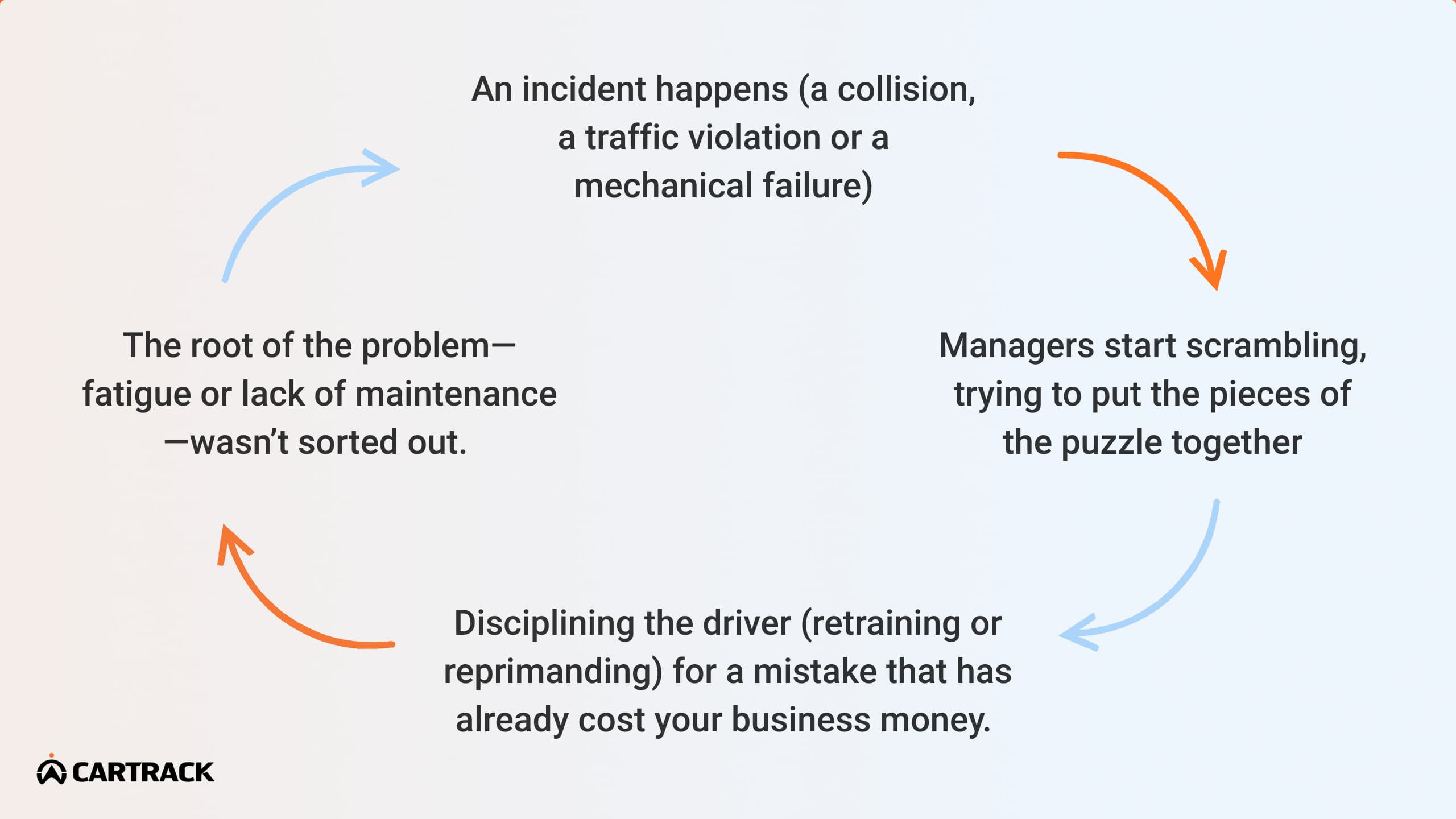
Businesses that don’t have proactive safety measures in place are often stuck in this reactive cycle. The cycle starts with an incident happening and your team working to find out what exactly happened. Then managers start reprimanding drivers, and at the end of the day the root of the problem hasn’t been sorted out, so the cycle starts again.


What fleet managers and business owners need to understand is that the main risk to your business is not higher insurance premiums, unexpected maintenance costs or downtime. The biggest risk to your business with only having reactive fleet safety in place is the damage it’ll do to your brand image and your drivers’ wellbeing.

What is the proactive safety approach?

The proactive safety approach is when you have tech like dashcams and advanced telematics installed in your fleet that helps in preventing accidents or unexpected breakdowns. This approach is the best way to keep your business profitable, your drivers safe and your clients happy.

Imagine you’re at work on Friday afternoon after a long week, and you have exactly 5 mins before you clock out for the day when the phone rings… You’re hoping it’s just your wife calling you, asking to get some bread before you come home. Unfortunately, it’s the police calling to let you know that your 18-wheeler truck was just in a major accident and your driver (who has been with you for the past 6 years) has passed away.

The brakes of your truck failed. It crashed on a downhill into another car, and there are multiple fatalities. The worst thing that can happen has officially happened, and it could have been avoided, but your fleet isn’t equipped with proactive safety tech. Now, you’re dealing with insurance, the police, a lawsuit, and a grieving family and team.

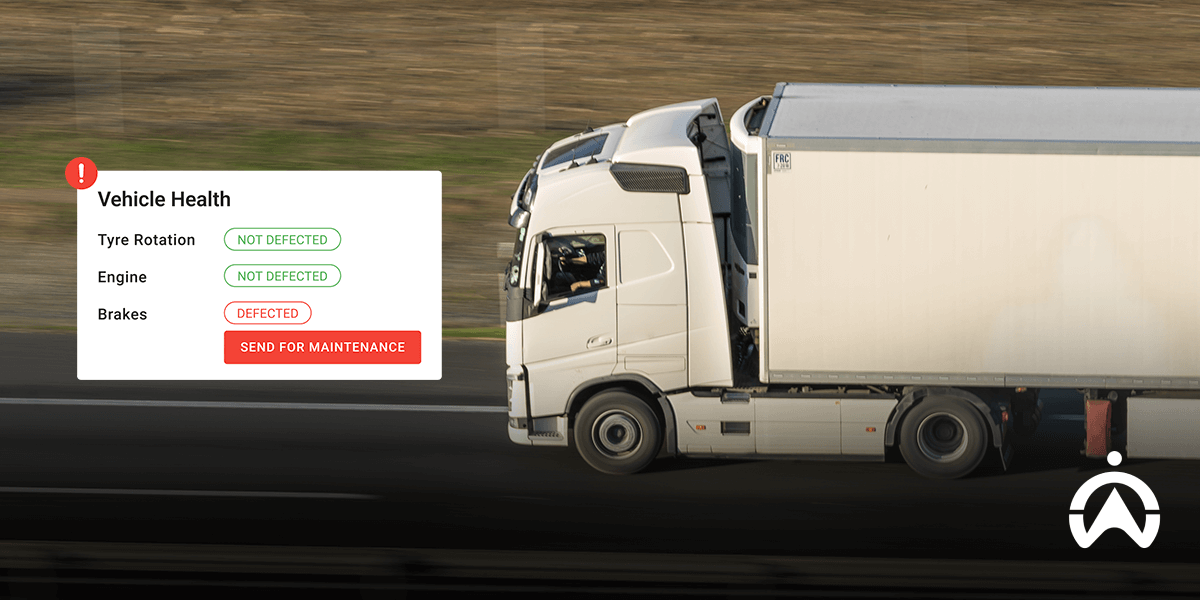
Having a telematics device installed could have alerted you two weeks ago that the brakes on that truck needed to be replaced and that your driver was constantly speeding. So you could have had time to change the brakes and coach your driver on his bad speeding habit, preventing all the events that followed.

The 3 characteristics of a proactive fleet

There are three main characteristics to having a proactive fleet; these are predictive intelligence, condition-based maintenance and having a coaching-first culture. When you implement these three things in your fleet, you improve the safety of your vehicles and your drivers, and overall, you improve your ROI.

1. Predictive intelligence (foresight)

Instead of you looking at GPS breadcrumbs to see where a driver was when they were speeding, a proactive fleet uses AI to monitor micro-behaviours.

  • The goal: To catch the yawn (fatigue) or the downward glance (distraction) seconds before it leads to a lane swerve.
  • The tech: AI-powered sensors and live vision cameras that process data directly on the device to provide instant feedback.

2. Condition-based maintenance

A proactive fleet doesn’t wait for the check engine light to go on or for a driver to report a “funny noise”.

  • The goal: To eliminate unplanned breakdowns that cause delivery delays and safety hazards.
  • The tech: CAN-bus integration that monitors engine health, tyre pressure, and brake wear in real time, triggering a service alert the moment a part begins to change from its normal performance.

3. A culture of coaching-first

So instead of just dishing out warnings left, right and centre to your drivers who make mistakes. Rather take the data you get and proactively coach your drivers to create better driving habits.

  • The goal: To lower insurance premiums and raise employee morale.
  • The tech: Make use of driver scorecards and gamification that motivates your drivers to have safer driving habits.
White truck with brake defect alert, enabling reactive safety to proactive in your fleet with Cartrack predictive maintenance insights.

Overcoming the “big brother” culture shift

The biggest hurdle you’ll probably face with introducing proactive safety measures in your fleet is pushback from your drivers. They might feel like you don’t trust them or even feel uncomfortable being constantly “watched”. The solution to this is transparency.

  • Proof of innocence: Show drivers footage where AI cameras proved a driver wasn’t at fault in a dispute.
  • Privacy: Clarify that AI fatigue monitoring isn’t spying—it’s a life-saving tool that only records high-risk events.

Here’s real video footage from a Cartrack dashcam of a recent accident that helped prove a trucker’s innocence in a fatal accident:


How can Cartrack help you with proactive fleet safety?

Cartrack can 100% help you with proactive fleet safety thanks to our years of experience and world-class technology. Features such as AI-powered visibility, real-time coaching, predictive maintenance and driver scorecards all help to move your fleet from a reactive one to a proactive one.

Visibility and real-time coaching

At Cartrack we have some really high-tech AI-powered cameras that will be the backbone of your shift to being proactive with safety in your fleet. This is because our cameras process information super fast and will be able to not only alert fleet managers of these events but also immediately alert the driver so they can self-correct.

How is this proactive?

If you don’t get real-time alerts to risky driving behaviours and your system only tells you once you pull a report, you can only coach your driver after they’ve done something that has put their life and the lives of others at risk.

This is basically pointless. Having a system that alerts you and your driver immediately allows both of you the opportunity to fix the problem while it’s actually happening. Not only can you correct behaviours, but it can also give you valuable insights into your drivers.

Let’s say you review footage and reports, and you see that every Wednesday, over the past three weeks, your driver David is constantly yawning and showing exhaustion (which is a safety risk). You’re now able to discuss with him that this is a pattern you’ve noticed and find out what’s going on in order to find a solution that works for both of you.

The result? An employee who feels seen and taken care of, and the peace of mind knowing that no accidents are going to happen because of David dozing off behind the wheel.

Driver scorecards and gamification

One of the biggest struggles you’ll have with a reactive strategy is getting your drivers to make safer habits while on the road. A proactive approach will help with this. At Cartrack we’ll provide you with a fun tool called ‘driver scorecards’. This will help you, as the fleet manager, see where your drivers are going wrong and can let your drivers actually see how many times they’re making the same mistakes.

This approach will create a culture shift when it comes to safety and how unsafe driving is handled.

So how do driver scorecards work?

First, all your drivers start off with a score of 100, and then points are deducted based on the infraction that occurred. What this means is that a driver with a low score is your higher-risk driver and is a hazard to your operations.

Another bonus is that as the fleet manager, you have the power to create your own rating system, so if you feel that distracted driving (like using the phone or eating while driving) is a very high-risk event, you could make the rating for this 35, while harsh acceleration to you is considered a low event and has a score of 1.

What is the benefit of driver scorecards?

Having these scorecards shouldn’t be there to stress you or your drivers out. It should work as a tool that helps to bring awareness to bad driving habits and helps your team to want to be safer on the road.

Ultimately using driver scorecards will benefit the company as a whole, because if your drivers are driving well, it’ll build a positive brand image around your trucks (who notoriously have a bad reputation on the roads).

How does gamification work?

People love rewards. When you incentivise good driving, you’ll have more good drivers. So think of an incentive that works with your drivers, and let the healthy competition start.

Types of incentives could be:

  • Cash bonuses
  • Half day off
  • Free meal from the company

By adding gamification into your fleet, your drivers will be motivated to have better driving habits, without the constant need of management keeping them in check. Gamification and scorecards will help keep your cargo, trucks and drivers safer.
‍

Fun fact: the scorecard is free with all of our fleet management systems! 

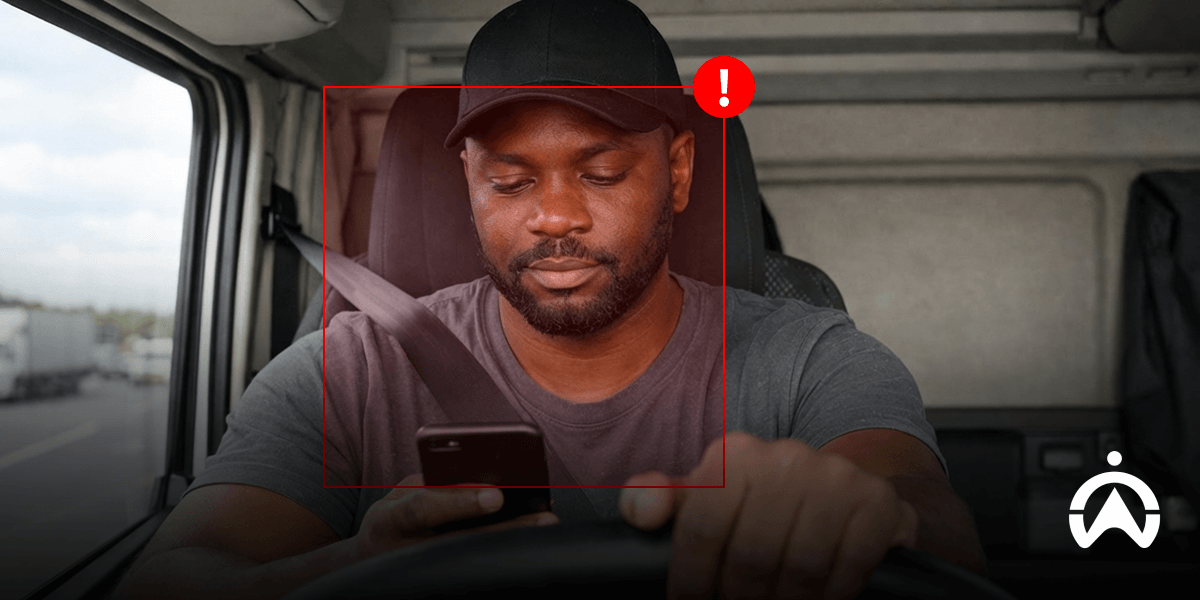
Driver holding phone while driving, highlighting shift from reactive safety to proactive fleet safety with Cartrack driver monitoring system.

How does proactivity improve your business’s ROI?

Proactivity can improve your business’s ROI by lowering the chances of accidents and breakdowns that all drain profits. According to industry data, reactive fleets are 65% more likely to experience a crash compared to those who have proactive safety systems in place.

To help you visualise all this, think of the Heinrich Pyramid. This pyramid is based on the law of probability: “In a workplace, for every accident that causes a major injury, there are 29 accidents that cause minor injuries and 300 accidents that cause no injuries.”

And we can look at this with your fleet as well; for every one major accident that happened, there were 300 near misses. Having proactive safety measures in place focuses on the 300, making sure that 1 never happens.

A story of chaos to control

To make all of this wonderful but weighty information just a little more digestible, here’s a fictional but very probable story of how switching from a reactive fleet to a proactive fleet with Cartrack can improve your business. This is a story of a logistics company called Mobile Movers (a made-up example of a Cartrack client).

Mobile Movers has been experiencing constant issues with their fleet, from speeding tickets and drivers who are constantly quitting to unexpected downtime from random breakdowns. All of these lead to the company losing time and money.

They then decided to sign up to get Cartrack’s telematics tech, which is linked to the vehicle’s CAN-bus system and AI Live Vision cameras. Now they have predictive maintenance that alerts the fleet managers of everything that’s happening with the vehicle and when they should book the trucks in for a service.

With the AI cameras, the fleet managers can now see what’s happening in and out of the vehicle. Their drivers can now prove their innocence in an accident and have the ability to self-correct when they make a mistake on the road, like being distracted or falling asleep.

Thanks to driver reports, fleet managers can now support their drivers and positively coach them to make safer driving habits and implement gamification to incentivise better driving. This proactive approach has made the drivers at Mobile Movers feel seen and protected, meaning that fewer drivers quit and chose to stay where they were seen as a person and not a number on a sheet.

The competitive advantage of certainty

Having a proactive safety system in your fleet is a sure way to have a competitive advantage—of certainty at least. If your fleet is waiting to react to problems as they arrive, there’ll be an endless list of problems every single day.

But when you handle the safety of your fleet proactively, your list basically becomes nonexistent because you can see a problem from a mile away and stop it in its tracks.

So don’t wait for the call of the next incident; call Cartrack and let us help your fleet see around the corners.

FAQs

Will proactive safety tech lead to higher driver turnover?

No, proactive safety tech shouldn’t lead to a higher driver turnover. It should help with keeping your drivers exactly where they are. But this is really up to you as the fleet manager or owner. If you’re using the information to positively coach your team and not to punish them, they should feel safer and cared for.

Is proactive safety only for large, enterprise-level fleets?

No, proactive safety is not only for large, enterprise-level fleets. In fact, smaller businesses would actually benefit the most, as they don’t have the financial cushioning to help when a vehicle is in a major accident or has unexpected downtime because of a mechanical breakdown.

How do we ensure our fleet data doesn’t become a cybersecurity risk?

To ensure that your fleet data doesn’t become a cybersecurity risk, get a provider (like Cartrack) that uses end-to-end encryption and stores data on top-tier secure servers. Proactive systems enable you to only allow authorised staff to access sensitive driver footage or vehicle locations, keeping your operational intelligence safe.

What is Short-Haul Trucking?

Short-haul trucking is the transportation of goods via truck, over distances that are comparatively shorter than long-haul trucking. Usually, it refers to truck transport over distances of 50 km to 200 km, typically connecting major towns or districts within a region in Malawi.

According to the Malawi Police Service, in 2023, hundreds of road fatalities involved trucks, with a significant portion affecting pedestrians. This highlights the role of short-haul trucking in both urban and rural areas. Can accidents like these be reduced without compromising speed and efficiency?

In this blog, Cartrack will do more than answer the question, “What is short-haul trucking?” We’ll create a comprehensive industry guide and help you develop your own short-haul trucking operations to make it more profitable, more reliable, and more efficient.

What does short-haul trucking refer to?

Short-haul trucking in Malawi refers to any truck-driven transportation that covers less than 200 kilometers. It’s a huge and important industry that includes last-mile deliveries, retail distribution, and manufacturing supply. Construction and infrastructure logistics are also included as industries that rely on short-haul trucking, as well as the all-important cold-chain logistics that regularly supply our retail stores.

How does short-haul trucking differ from long-haul trucking?

Short-haul trucking differs from long-haul trucking in distance, duration, and usually the type of truck used. Those large trucks you see on cross province highways are usually driven by long-haul truck drivers, while short-haul trucks often (but not always) use smaller vehicles.

Distance

Long-haul trucking usually covers long distances that cross from one province to another. Sometimes they even cross the border into neighbouring African countries. More often than not, short-haul truck drivers remain within their province and distribute goods to destinations that are relatively close.

Duration

A big difference between long-haul trucking and short-haul trucking is how long it takes for the delivery to happen. Long-haul truckers often work long, taxing hours navigating the road, which is why you might see them parked on the side of a highway sleeping or eating before moving again.

Vehicles

Because logistics companies want to get as much of their goods from one place to another (in order to save on fuel), long-haul truck drivers often work with large, heavily-loaded trucks. Short-haul truckers do too, but it’s more common for them to drive smaller trucks that carry fewer goods.

Regulations

Both long-haul & short-haul truck drivers must adhere to appropriate regulations respectively that might differ slightly. For example, long-haul truckers might have to pack and secure their loads in a certain manner, whereas short-haul truckers are travelling short enough distances to be less strict in this regard.

Short haul trucking fleet loading cargo at warehouse dock with forklift unloading crates.

A day in the life of a short-haul trucker

A day in the life of a short-haul truck driver comes with its own unique set of perks, challenges, and nuances. It’s different for everyone, but most must work long hours that start early and end late. They also have various responsibilities that relate to their vehicles, their driving behaviour, and their deadlines.

What are the challenges faced by short-haul truck drivers?

The next time you see a short-haul truck driver on the road, consider the challenges they deal with on a daily basis:

  • Truck maintenance and road compliance
  • Tight deadlines for reaching their destinations (without breaking road laws)
  • Keeping the condition of their cargo in good shape
  • Ensuring vehicle security when parked
  • Navigating multiple stops in a single day
  • Dealing with traffic and the worsening road infrastructure

How is technology shaping the short-haul truck industry?

Fleet management companies have attempted to address many of these problems, and Cartrack has managed to come to the forefront of solving them ALL. Technology (in the form of telematics, AI-powered fleet software, and IoT (internet of things)) is evolving fast, and we’re the company in Malawi that’s driving it!

Just look at the ways we’ve made short-haul truck driving more efficient, safer, and more profitable:

  • Cartrack has developed predictive maintenance scheduling to keep short-haul trucks in peak condition, reducing downtime, reducing fuel use, and increasing overall vehicle efficiency.
    ‍
  • We’ve developed the most refined route optimisation software that takes traffic, road conditions, and temporary roadblocks into account.
    ‍
  • Our vehicle security cameras keep an eye on your cargo, automatically switching on and off based on your settings (whether the door is open, whether the vehicle is running, etc.)
    ‍
  • Cartrack’s temperature monitoring sensors are made for short-haul trips where perishable goods are transported.
    ‍
  • Our vehicle cameras come with a “parking mode” setting, switching on automatically if the cameras or your vehicle is tampered with.
    ‍
  • Short-haul truck owners will love our fuel management software that tracks fuel use and enables you to make changes that can save up to 24% of your fuel expenses.

Now imagine having these features for your own short-haul truck company. Imagine the increase in profits, the satisfaction of your drivers, and the improvement in your reputation in the eyes of your customers!

Give us a call to discuss the implementation of these features for your short-haul fleet.

Why is short-haul trucking vital to the economy?

Short-haul trucking is vital to the economy because it forms the backbone of construction, infrastructure, and last-mile delivery. It’s short-haul trucks that stock our retail stores, deliver essential materials for building, and deliver our online store packages. Without this vital chain in supply, our economy would come to a virtual standstill.

It’d be difficult to think of an industry in Malawi that isn’t supported by short-haul trucking. But for the purposes of this read, let’s just look at a few.

That last-mile connection

That online shopping you do is a drop in the ocean compared to the myriad industries that rely on last-mile deliveries. This is the final part of any delivery before it reaches the end consumer, and includes retail, manufacturing, printing, cold-chain, appliances, and many more.

The short-haul EV experiment

The interesting thing about short-haul trucks is that they’re the perfect sector for electric vehicle experimentation. Why? Because the distances are relatively short, and troubleshooting can be dealt with much easier.

EV trucks are being seriously considered for future short-haul trucking. At this point, small delivery scooters and electric bikes are being used to completely bypass fuel costs. Can you imagine the savings if this could be extended to small & large trucks as well?

Small trade companies

Plumbers, electricians, roof repairmen, and other trades rely on short-haul trucking for their supplies, materials, and even their tools. Can you imagine how your area would come to a standstill if there was no one to fix the essentials at your home?

Truck driver reviewing safety score and mileage report on dashboard, representing short haul trucking performance metrics.

Tips for short-haul truckers in Malawi’s demanding work environment

At Cartrack, we talk to truck drivers of all kinds. We listen. We learn. We put ourselves in their shoes. As fleet software developers. We’re always trying to make their lives easier & safer, while optimising the operations side of things for their managers too.

Here are some tips for short-haul truck drivers (and the hard-working individuals who manage them):

Tip #1: Focus on strategic route planning rather than speed

Tip #2: Stay safe and drive responsibly

Tip #3: Know your vehicle and how to keep it in good condition

Tip #4: Prepare by being well rested and nourished

Strategy vs speed

A map application on your phone can give you the quickest route to a destination. But only route optimisation software gives you time-based, road-based, and event-based route optimisation that’s applicable to each driver while they’re working.

Responsible driving

Cartrack has simplified driver coaching with AI cameras and GPS tracking that detects little things like:

  • Harsh cornering
  • Sudden braking
  • Distracted driving
  • Seatbelt use
  • Fatigue

If you see a gap in the way you drive your short-haul truck, your managers can focus their training based on the things you struggle with most.

Vehicle health

AI has come a long way to make vehicle maintenance a much easier task. A calendar app can schedule short-haul truck maintenance, but only fleet software coupled with AI can PREDICT when a vehicle needs its next service.

Driver health

You’ll be the best version of yourself if you’re well-rested and energised for the day. Eat a nutritious meal before starting your day, and always ensure you go to bed at a reasonable time. Remember that eating, drinking, smoking, and nodding off have no place in the worklife of a truck driver. Stay safe out there, and if possible, rely on technology that detects these warning signs and warns you while you’re driving.

Partner with the company that keeps driver safety and vehicle health a priority. Consultants are standing by to help you develop the perfect FMS package for your fleet.

Frequently asked questions about short-haul trucking

How many hours is a short haul?

A short haul can take anywhere between 1 and 5 hours, depending on the area being travelled, the conditions of the road, and traffic congestion. Short-haul trucks are designed to travel relatively shorter distances compared to long-haul trucks, so a reasonable speed, cargo space, and manoeuvrability are key to choosing the right short-haul truck.

What is the average salary of a truck driver in Malawi?

The average salary of a truck driver in Malawi ranges from approximately MWK 400,000 to MWK 1,500,000 per month. The variation is based on experience, working hours, and the type of cargo being transported. Some truck drivers work long hours and are compensated for the stress and pressure of meeting their deadlines.

What is the difference between trucking and freight?

Trucking refers to the mode of transportation while freight refers to the cargo itself. If you’re talking about trucking, you’re pointing to road travelling with a truck while carrying a load on board. If you’re talking about freight, you could be referring to any product load in the context of ships, trains, planes, or road vehicles.

What are the challenges of long-haul trucking?

The challenges of long-haul trucking include long hours, limited vehicle manoeuvrability, and delivery pressure. Long-haul truckers also need to manage their time well, since they get very little time to eat, rest &; recharge, or use the restroom. Many are permitted to stop mid-travel and rest along the side of the road if their route is extra long.

How You Can Achieve “API-First” in Your Logistics With the Right Fleet Management System

You can achieve API-first in your logistics with the right fleet management system, and Cartrack can meet your company’s needs. When you adopt API (Application Programming Interfaces)-first strategies, you’re choosing software designed to easily connect with other systems you’re already using, like accounting software. So, instead of data sitting in different tools, it’s all collected in one user-friendly dashboard.

According to GlobeNewswire, only 24% of companies have a clear view of 75-100% of their total shipments. This highlights that even with digital tools, many organisations still miss out on complete, end-to-end operational insight. Deciding to adopt an API-first approach means having a total & reliable view of your business operations, remaining competitive, and standing out above the rest.

An API-first approach for your business is the best approach. In this blog, we look at the importance of an API-first system, why you need the right fleet management software, and how Cartrack should be the partner you trust to help you achieve this.

How does the right fleet management system enable API-first logistics strategies?

The right fleet management system enables API-first logistics strategies by taking on the role of a complete, central system that connects all the disconnected information. By linking numerous systems, smooth integration and seamless operations become the priority, easily connecting tools like telematics, ERPs, and TMSs. This crafts a seamless network for smooth data sharing.

If we look at it simply, an API-first approach is like using a universal plug. It’s designed to fit into almost any socket, so you wouldn’t have to think about redesigning or getting a new plug any time you introduce a new tool. Everything connects flawlessly, without the hassle of having to rewire everything.

What does “API first” actually mean in logistics?

“API-first” in logistics actually means you start by building the door before you try to build the rest of the house. It’s about designing a tool with smooth integration in mind from the start, so that it can easily connect and communicate with most other integrations. This is especially important when you consider how fast fleet industry technology continues to change.

The API-first approach is becoming more popular thanks to its extreme speed and flexibility, and with the need to avoid problems that slow productivity, it’s proving to be a logistical necessity.

There are different API systems available. Let’s establish these and take a look at the differences between them:

  • API-first vs API-available: Unlike API-first systems, API-available systems are available, but their abilities are limited, and they’re not equipped to accommodate many outside systems.
    ‍
  • API-first vs legacy, siloed systems: Unlike API-first systems, legacy, siloed systems are outdated and usually work independently of more sophisticated systems. Their data is also locked within separate tools, contributing to the issue of fragmented data that needs to be manually pulled.

Why logistics operations are moving towards an API-first approach

Logistics operations are moving towards an API-first approach because it’s fast and effective. Besides fleet technology quickly evolving, growing customer expectations are one of the biggest factors. With deliveries, customers want to be kept in the loop about the movement of their parcels. Live movement updates, estimated ETAs, and open communication are necessary, but almost impossible without an integrated system.

Your logistics company also depends on various systems, like ERPs (Enterprise Resource Planning), TMSs (Transportation Management Systems), and billing & accounting software. Over time, the number of these tools might grow. You can maximise your time and efforts by ensuring you have the right API-first FMS (fleet management system) on your side. This reduces manual work and potential data errors.

How APIs support real-time visibility across logistics operations

APIs support real-time visibility across logistics operations by being a bridge between different systems. Thanks to fleet APIs (telematics, GPS, maintenance, etc.), fleet data is quickly and efficiently being communicated across all systems. APIs enable this, meaning vehicle location and alerts are live and immediate.

As mentioned, live and continuously updated information is perfect for keeping customers informed. Beyond that, it’s incredibly helpful when it comes to situational management. There will always be real-world challenges that arise, like potential route deviations or unexpected delays. But live information helps you quickly act and respond to these situations.

API-supported visibility puts control back into your hands, allowing you to react quickly and with an informed mind in urgent situations.

Where traditional fleet systems fall short

Traditional fleet systems fall short by being unprepared for the interconnectedness that’s required in modern logistics fleet management. API-first FMSs can tackle all of the rising issues here by putting data accessibility at the forefront, automating processes, and supporting all connected components at once.

Here’s how:

  • Limited or closed integrations: Traditional systems that have limited or closed integrations make it harder for information to be shared outside of the system itself. If there’s the ability to share data, it’ll likely have to be done manually, instead of an automatic exchange of data.
    ‍
  • Heavy reliance on manual exports: Any manual work in logistics comes with a laundry list of downsides, including human error, duplications, data gaps, and more. This is especially the case when the information is spread across multiple streams.
    ‍
  • Insight delays and inconsistencies: To continue our previous point, heavy reliance on manual processes can not only slow down productivity but also cause discrepancies as well. If your company continues to grow, those discrepancies can become more obvious.
Fleet manager standing by truck representing an API-first fleet management system.

What systems should your fleet management platform integrate with?

Your fleet management platform should integrate with almost every system that’s part of your logistics management, especially ones like ERP, TMS, telematics, and finance platforms. Fixed connections should be a thing of the past. Your golden ticket is to look towards smooth data flow that happens in real time, not delayed data analysis.

Look at some of these common logistics integrations:

Transport management systems (TMS)

Integration with transport management systems (TMS) allows you to clearly see all the fleet data available. It brings together features like trip status and dispatching with real-time and real-world fleet data, improving routes, providing proof of delivery (POD), and bettering operational processes.

Enterprise resource planning (ERP) and finance platforms

Integration with enterprise resource planning (ERP) and finance platforms means you not only have a complete overview of finances and operations, but also automation of data sharing between these systems. So expenses, invoices, and other costs can be quickly and easily totalled to calculate the total cost of ownership (TCO).

Customer portals and dashboards

Integration of customer portals and dashboards links back to growing customer expectations. The sharing of live data means alignment with these demands, supporting features like efficient communication, consistently updated ETAs, and delivery timeframe transparency. All this can be done without a heavier workload for you or your staff.

Compliance and safety systems

Integration of compliance and safety systems lets you have access to and look over data like driver behaviour, MDVR (mobile digital video recorder) footage, and other event histories. If safety-related or compliance issues came up, it’d be easy to pull the necessary data that would support your arguments or legal adherence.

Fleet data as a shared digital backbone

Looking at fleet data as a shared digital backbone clearly shows just how centralised the network is. When we look at fleet data as a network, we see that it’s a connection of information from vehicle sensors, operational systems, and diagnostics. This information reflects your entire operation, bringing together data and planning, execution, and performance management.

Everything that happens when your vehicles are out in the field—from stops and delays to pings and alerts—is recorded as data. If that data is limited or closed, the data isn’t very valuable. If it’s supported by an API-first approach, then all the streams of data can be understood by one overarching system and used to improve your workflow.

All of this changes how we look at GPS data, understanding that it goes beyond tracking and actually turns that data into insights that inform;

  • operational intelligence
  • route planning
  • customer communication
  • compliance, and
  • financial reporting.

Decisions now rely on live data reflecting real-world conditions, not on assumptions or outdated reports.

Can API-first systems help reduce operational costs?

Yes, AP-first systems can help reduce operational costs by eliminating waste across multiple operations simultaneously. You might’ve fallen into the trap of trying to identify inefficiencies and correct them one by one, but an API-first approach makes it easier to deal with the bigger picture.

Here’s how operational costs are minimised:

  • Reduced administrative effort: Thanks to automation, this benefit is evident almost immediately. You and your team are not spending as much time on manual processes and reports, which means you’re all focusing on more important operational tasks.
    ‍
  • Fewer data errors and disputes: In linking back to the above point, manually carrying out tasks can lead to discrepancies and outdated information. But by getting automated data from a single source, you can easily export reports and other essential data for disputes, compliance matters, and more.
    ‍
  • Better route optimisation through shared data: Because of live location information being shared, you can make changes to routes as real-world delays and interruptions happen. Gathering this data over time lets you optimise routes, ensures your fleet keeps running at its best, and reduces fuel costs and delivery waste.
    ‍
  • Smarter resource allocation: Live visibility into all aspects of your fleet gives you enough insights to make data-based decisions. Because of this, you can manage your assets, drivers, and resources far better. Taking this step will, over time, decrease your operational costs and help you continue to make better choices for your business.

What to look for in an API-first fleet management system

When looking for an API-first fleet management system, it’s important to consider key criteria such as well-documented APIs and a flexible platform that easily grows with your business. It’s worthwhile to deeply evaluate and spend time choosing the right API-first FMS for you, especially when you consider that not all platforms are as accommodating as others.

Consider these major factors:

  • Well-documented APIs: A strong API FMS has well-documented APIs, making data very easy to understand and access. Clearly documented APIs help cut down on time wasted on implementation and potential integration errors.
    ‍
  • Secure authentication and access control: Your fleet data is important and sensitive, so it should be treated as such. An API-focused FMS should not only keep your shared data secure, but it should also allow you to control who is and isn’t allowed access to it.
    ‍
  • Scalable architecture: Your business is likely to grow or develop in ways that you might not expect, and an API-focused FMS should be able to grow with you. You’ll want the system you choose to be able to handle these changes and further integrations without crashing.
    ‍
  • Support and onboarding: This is one of the most important factors. Your FMS provider shouldn’t only fully support you during the setup process, but should also continue to guide and support you over time. This guarantees a stronger partnership and better long-term success.

Getting started with an API-first approach to fleet management

When getting started with an API-first approach to fleet management, it’s important to assess your current systems, identify your integration priorities, and pick the right FMS partner.

Look at these practical steps:

  • Assess current systems: Look for the parts of your operation that need to be automated, and identify the integration gaps.
    ‍
  • Identify integration priorities: It might be best not to try to integrate everything at once. See which systems are the most important, and take it one step at a time.
    ‍
  • Choose the right fleet management partner: This is your golden ticket. The right provider will provide support, knowledge, and a powerful platform. Cartrack simplifies this by offering an integration-ready platform and the know-how to link your fleet data.

Common concerns about API-first logistics (and how to overcome them)

Common concerns about API-first logistics usually centre around potential integration disruptions, in-house developers, and the size of the business.

If these are some of your concerns, let’s address them:

“Is this only for large enterprises?”
Absolutely not. This approach is just as valuable for a smaller business as it is for a larger one. It provides the same benefits and can grow with your business.
‍

“Will integrations disrupt daily operations?”
No, especially when the integrations have been implemented properly, and the platform you’ve chosen is a strong and capable one. As mentioned before, the integrations can be connected gradually to ensure smooth operations.
‍

“Do I need in-house developers?”
No; that isn’t necessarily a requirement. The right provider will make it possible and easy from the start, guiding the integration process and continuing to provide support as time passes.

A Cartrack delivery app interface displays job details alongside a motion-blurred truck transporting a tank on a highway.

How Cartrack supports an API-first logistics strategy

Cartrack supports API-first logistics strategies by providing an FMS that’s designed just for you. We have a platform that’s prepared to connect with almost every existing logistics system and provide you with comprehensive data. Our network is also secure, so you never have to worry about the safeguarding of your fleet data.

Here’s how we stand out:

  • Integration readiness: Our platform is the meaning of ‘API-first’. We’ve built a system that’s put integration first, ultimately keeping your business and its success at the forefront.
    ‍
  • Data reliability: We ensure that your fleet data is safe and secure, but also accurate and updated in real time.
    ‍
  • Flexibility for logistics environments: Looking to expand your business or bring in new integrations? Perfect; that’s not an issue for us! With Cartrack, you can keep working from one platform while introducing fresh integrations and growth to your business.

Final takeaway: why API-first logistics starts with the right fleet system

API-first logistics is all about creating operations that adapt, scale, and stay connected amidst growing complexities. APIs are the key to enabling seamless live data sharing between systems.

Fleet data is the heart of logistics, and the fleet system works as the main support for an API-first approach. When this data is reliable and accessible, it fosters flexibility, resilience, and smarter decision-making for your logistics network.

See how API-ready data can support your logistics operations. Speak to Cartrack about building a more connected, API-first logistics environment.

Frequently Asked Questions

Do API integrations affect system performance or reliability?

No, API integrations don’t affect system performance or reliability, but this is only if integrations have been done correctly. When implementation is successful, the integrations will continue to share data. This’ll then improve the performance and keep the integrity of your circulated information.

Can API-first logistics support future technologies like AI and automation?

Yes, API-first logistics can support future technologies like AI and automation. An API approach is already a flexible data foundation, simplifying the adoption of technologies like AI-driven analytics, automation tools, and sophisticated optimisation systems. This is achieved without needing to overhaul your existing infrastructure.

What internal changes are needed to support an API-first approach?

The internal changes that are needed to support an API-first approach basically centre around standardising processes. You need to be able to have a thorough overview of who is and isn’t allowed access to data, bring the technical teams closer together, and adopt the general understanding that manual processes are a thing of the past.

Collision Avoidance vs Crash Detection: How to Have Both in Your Fleet Business

Your fleet business can avoid collisions and get crash detection by investing in sensors. These sensors can detect impact, working well with dashcams that have artificial intelligence technology and can warn drivers BEFORE the impact takes place. This way, you’ll get all-round protection for your drivers.

One helps prevent your drivers from causing accidents, and if the accidents do happen, the other will ensure they get immediate assistance.

According to the World Health Organisation, approximately 1.19 million people die each year because of road traffic crashes. We see stories on the news about horrible accidents on common Malawian roads.  To mitigate this, every road user needs to take full responsibility for their actions, and if you’re running a business, your company is liable for how YOUR drivers behave.

If you’re wondering which of the two (between crash detection technology and collision avoidance technology) you need for your business, then the straight answer is, BOTH. Today, we’re breaking down the importance of both technologies so you can make a more informed decision.

What is a collision avoidance system?

A collision avoidance system is a safety process that helps drivers avoid accidents. The system consists of various technologies such as

  • Cameras
  • GPS
  • G-force sensors
  • Artificial intelligence
  • Radar

These technologies work together to monitor what’s happening in and around the vehicle. If they pick up a dangerous situation, they alert drivers through a light or sound.

The key features of a collision avoidance system

Forward Collision Warning (FCW)

This is an accident prevention system that scans the road ahead and warns drivers of potential hazards. It uses cameras, radar, and other sensors. The sensors are usually located in front of the vehicle to be able to detect how far it is from a vehicle or object that’s ahead. It also measures the speed at which the vehicle is moving. Some FCW systems can only detect other moving vehicles, while others can detect both moving and stationary vehicles.

Lane Departure Warning (LDW)

A Lane Departure Warning system monitors road markings and the vehicle’s position within the lane. This is done through camera technology and artificial intelligence (AI). If the system detects that the driver has or will unintentionally stray out of the lane, it’ll give a warning. It’s a system that’s very useful to drivers who spend long hours on the highway.

Blind-Spot Monitoring (BSM)

Blind-Spot Monitoring refers to using radar sensors and cameras to scan the areas alongside and behind the vehicle. This is done in order to catch the vehicles your drivers can’t see when changing lanes. If drivers activate the indicator to change lanes, they’ll get alerts if it’s unsafe to do so.

Pedestrian detection

As the name suggests, this is a system that uses sensors and cameras to monitor things happening on the road. If the system picks up pedestrians near the vehicle, it’ll send out an alert. Some systems can also spot the presence of cyclists.

The noticeable positive outcomes of a collision avoidance system

The first thing you’ll notice is a reduction in the frequency of accidents. This will have a ripple effect on the amount of money your business will save. Fewer accidents mean less money being spent on unexpected repairs. It also means fewer insurance claims, which improves your fleet’s insurance risk profile and, therefore, results in lower premiums in the long run.

Furthermore, the system provides detailed data on driver performance. This allows you, as the fleet manager, to see common driver mistakes and address these issues. It also encourages driver accountability.

What is a crash detection system?

A crash detection system is a technology that automatically detects severe vehicle impact and alerts emergency services. The system consists of three core components, mainly:

  • Sensors: such as an accelerometer to detect impact.
  • A processing unit: to interpret sensor data.
  • Communication modules, such as GPS and GSM, are used to send alerts and location information.

The key features of a crash detection system

Impact sensing

Gravitational force (G-force) sensors measure acceleration. During normal vehicle movement, the sensors are relatively constant, but once there’s a sudden shift, like a forceful impact or a hard stop, it may imply a potential collision. Data from the accelerometer is crucial for identifying an accident.

Another sensor that plays a key role in impact detection is a gyroscope. It tracks the vehicle’s position and direction and constantly monitors tilt and rotation. This means it can detect if a vehicle has rolled over, flipped, or is at an unusual angle after impact. The gyroscope sensor helps the system differentiate between a normal turn and one where the vehicle is losing stability. Some systems also have pressure sensors, which help detect impact from the sides.

Independent logging

Once the accident is detected by the sensors, it sends an immediate alert to your system service provider using communication modules such as cellular networks. Once they receive the alert, they’ll call to check and then send immediate help to the accident scene.

Real-time GPS tracking

GPS tracking technology is crucial to the crash detection system being effective. It helps pinpoint exactly where the accident has occurred, even in remote areas. This helps emergency services get to the scene faster, which can potentially save lives in cases of severe incidents. In addition, it helps ensure that insurers have access to accurate information about the incident.

The difference a crash detection system makes

Imagine if one of your drivers who travels across the country gets into an accident in the middle of nowhere. If they’re able to call for help, they might not be able to quickly describe their location, as they’re likely in shock and in a place with few identifiable landmarks. This makes it difficult for emergency services to pinpoint their location, delaying the assistance the driver so desperately needs.

A crash detection system ensures that your drivers get help as soon as possible, saving time and possibly minimising damage and injuries.

Bird’s-eye view of two trucks parked closely, illustrating collision avoidance vs crash detection scenarios.

Collision avoidance vs crash detection | key differences

The key differences between collision avoidance and crash detection lie in their purpose, timing, and the technologies used. One is for increasing driver awareness to prevent accidents, and the other is for a faster response time if there’s ever an accident.

Here’s a side-by-side table comparison of the two:

Feature Collision Avoidance Crash Detection
Timing Works before an accident happens to prevent it Works after an accident happens to respond to it
Purpose Helps avoid accidents by warning or correcting the driver Helps reduce the impact and sends help quickly after a crash
Technology Focus Uses sensors and AI to spot danger and take action Uses built-in sensors to detect sudden impact and send alerts
Example Scenario A driver gets a warning to brake or steer away when drifting into another lane The system detects a crash and alerts emergency services automatically

What are the pitfalls of having only one system?

The pitfalls of having only one system instead of both at the same time are that you’ll lose the opportunity to prevent accidents or miss the chance to get your drivers quick assistance. Both systems provide the data that you need for fleet safety; one system alone isn’t efficient. As a fleet manager, you need to apply proactive and reactive measures to give your vehicles and drivers all-around protection.

Here’s why you need a dual-layer defence strategy for accidents:

The “missed data” problem

A collision avoidance system mainly focuses on preventing accidents. However, the driver might not always react in time, which will result in an accident, and your drivers will need quick assistance to possibly reduce the damage. Some collision avoidance systems may record telematics data, which gives you the sequence of events leading to the incident. However, they may not capture the full context, such as the severity of the impact.

The “too late” problem

Crash detection, on the other hand, only activates after an incident. By then, the costs and downtime have already set in. While fast emergency response is important, it doesn’t prevent the damage and financial loss that come with frequent accidents.

How to implement both crash detection and collision avoidance systems in your fleet

You can implement both crash detection and collision avoidance systems into your fleet by firstly investing in a fleet management service that offers both technologies on one platform. From there, you must ensure all staff members understand how they work. Lastly, you also need to perform regular reviews to monitor the progress.

Let’s break it down into three simple steps:

Step 1: Choose a single system that handles both collision avoidance and crash detection

With a fleet management service that has both systems, you’ll save time because you won’t have to look for accident-related information on different software platforms. It also saves you the cost of paying for the systems separately. Should you encounter any issues, you’ll have only one service provider to contact, and they can troubleshoot both systems to ensure they work well together.

Step 2: Train drivers and fleet managers

It’s important that you educate your drivers and other relevant staff members on how each system works. Your drivers must know about the type of alerts they’ll receive, and they must understand what the alerts mean. By educating your drivers, you ensure that they understand the impact of accidents from a business perspective. This will encourage better driving habits, improving your overall safety in the long run.

In addition, your managers must know how to access data and accurately interpret it. This will ensure accurate use of both systems, therefore improving the overall safety of your fleet and drivers.

Step 3: Monitor, review, and optimise

It’s also important that you regularly review incident reports. This way, you’ll know what risky driver behaviours are common, so you can address them. Based on the reports, you can set up group training programmes for common behaviours or individual sessions for each driver. Regularly checking this data ensures the effectiveness of these systems and that your business gets the full value of the integrated system.

Collision avoidance vs crash detection alert displayed by Cartrack AI cameras for unsafe following distance.

Protect your fleet and maximise ROI with Cartrack’s ultimate system for protection against accidents

Cartrack is one of the leading providers of vehicle safety systems. We offer a variety of safety features such as telematics, AI cameras, crash detection, and driver coaching. Through this, you’ll get an all-round comprehensive solution to reduce accident rates and costs, all on one platform.

Have a look at our three top features for crash detection and collision avoidance:

Crash Detection

Our crash detection system automatically detects when one of your fleet vehicles is involved in an accident. It instantly sends an alert to our control room service, and from there, we’ll notify you. Our crash detection service works hand in hand with our GPS trackers, as they’ll provide location data that’ll make it easier for the emergency services to know where to go.

AI dashcam

The AI dashcam camera solution can help drivers avoid accidents by monitoring blind spots, lane changes, pedestrians, and possible forward collisions. Once detected, the system then warns drivers in the form of real-time audible alerts so they can quickly respond to the situation. You’ll receive reports of these incidents, so you’re made aware and can address your concerns.

Our AI cameras take driver safety a step further by detecting driver distractions such as cellphone use, smoking, and drowsiness. They also give out real-time audible alerts for such behaviours so drivers can focus on the road ahead.

Coaching

The Cartrack Coaching platform helps you input data to provide targeted feedback. It collects driver incidents from the AI camera, then puts them on one platform. With this, you can identify trends within your teams and the number of repeated offences of a specific behaviour from each individual. From there, drivers will be sent for coaching based on their specific problem areas, and all discussions from the coaching session can be recorded on the platform.

Cartrack’s integrated collision avoidance and crash detection system can keep drivers safe and operations efficient

Using both our collision avoidance and crash detection systems gives fleets the best chance to prevent accidents and respond quickly if they occur. Reach out to us and safeguard your fleet with our multi-layered safety solution.

Frequently Asked Questions about collision avoidance and crash detection

Is collision avoidance worth it?

Yes, collision avoidance is worth it because it reduces the frequency of accidents in your fleet. It enhances driver awareness by giving them instant alerts of safety hazards. This technology helps save lives and the costs your vehicle could incur from insurance and repair fees.

What is the 3-step crash prevention formula?

The 3-step crash prevention formula is Recognise, Understand, and Act. ‘Recognise’ simply means you need to be aware of your surroundings to identify potential risks. ‘Understand’ means you must be prepared and know what to do to defend yourself, e.g., maintaining a safe following distance. ‘Act’ means you must make the decision on time to avoid the collision.

Key Skills Your Truck Drivers Should Have in Your Fleet Company

The must-have skills for every driver include good communication, defensive driving, using navigation tools, basic knowledge of road rules, and being able to spot vehicle issues early. With these, you ensure enhanced safety, reduced costs, and more efficient fleet operations.

Truck drivers are the backbone of a fleet company. They’re the link between the company and its customers. They’re directly responsible for delivering goods safely and on time. Without skilled, dependable drivers, your fleet operations face the risk of delays and higher safety risks. This, in the long run, increases the likelihood of financial loss for your business.

According to MiningDoc, skilled drivers maintain higher alertness to avoid fatigue-related accidents and manage fuel use efficiently. This improves safety and reduces costs. Driver skills go beyond just holding a valid driver’s licence. As a fleet manager, it’s important that you know what skills to look out for and which technology can help you achieve a skilled workforce.

Must-have skills for professional truck drivers

To better help you understand the kind of skills your drivers need, we’ve broken them down into two categories: soft skills and hard skills. Hard skills refer to the technical, job-specific abilities, and soft skills refer to how drivers interact with people or situations. Both skill types can be taught through training.

Let’s have a look:

Hard skills

  • Technical driving expertise
    Drivers need to know how the trucks they operate behave in different conditions. A small delivery van reacts differently to a big semi-trailer. Drivers must know how vehicles respond when they’re empty versus fully loaded. They also need to understand how the vehicles react in the rain or on steep hills. The better your drivers understand your vehicles, the safer they can drive them.
    ‍
  • Defensive driving
    Defensive driving is all about thinking ahead and reacting fast. Your drivers can’t control what other drivers do, but they can control how they react. When they spot a sudden road hazard, they need to know what to do to prevent accidents. Your drivers must take defensive driving courses. This makes them more alert and saves your business from the costs of accidents.
    ‍
  • Knowledge of road rules and compliance
    Professional drivers need to know things like speed limits, weight restrictions, traffic signs, and any other special rules that only apply to trucks. Through this, they’ll avoid fines and keep themselves and others safe. Once they fully understand these road laws, they become more responsible and trustworthy.
    ‍
  • Vehicle safety checks
    It’s important that drivers check their trucks before the start of every journey, and they need to know what faulty signs to look for. Vehicle components such as brakes, tyres, lights, and mirrors must all be in top condition. By checking these things regularly, they can spot small problems before they turn into big ones. These pre-trip inspections ensure safety and help them avoid costly, unexpected breakdowns.
    ‍
  • Navigation and technology use
    Your drivers must know how to use technologies such as GPS navigation systems and fleet management software. GPS ensures they can follow routes accurately and avoid taking wrong turns or getting lost. This saves time and reduces fuel waste.
    ‍
  • Time management & reliability
    Being on time is important, but it shouldn’t be at the cost of speeding. Drivers need to know how to balance safety and punctuality. This keeps operations running smoothly and efficiently. When drivers are always on time, they strengthen their trust with customers who count on accurate deliveries, making the company look good.

Soft Skills

  • Communication
    Fleet operations depend on communication. Drivers must be able to keep dispatchers updated about their status. They also need to properly understand instructions and report delays as early as possible. Clear communication helps to avoid confusion and improve teamwork. It also ensures smoother fleet coordination and improved client relationships.
    ‍
  • Customer service and professionalism
    Drivers are often the face of your company, even if they only interact with clients for a few minutes. How they greet a customer, handle a delivery, or deal with a problem reflects on your company. They must always be polite, friendly, and professional. This shows respect and builds trust. Customers are more likely to come back or leave positive feedback when your drivers treat them well.
    ‍
  • Problem-solving
    Things don’t always go as planned. Traffic congestion, bad weather, or mechanical issues can slow things down. Your drivers must be able to quickly think of solutions. By solving problems quickly, they keep your deliveries on track and reduce stress for the rest of your team. A driver’s ability to handle unexpected situations makes them invaluable to your company.
    ‍
  • Stress management and endurance
    Driving for long hours and having tight deadlines can be stressful for your drivers. Drivers must know how to manage the pressure to avoid frustration. This ensures they’re always focused and maintain a high standard throughout their long shifts. It also results in fewer accidents that are linked to stress and fatigue.
    ‍
  • Adaptability and continuous learning
    The world of fleet driving is always changing. New rules, new technology, and new company policies come up regularly. Drivers need to be adaptable to change instead of resisting it. Whether it’s a new GPS system, a safer driving method, or updated safety regulations, they must always be willing to improve their performance. Willingness to learn shows professionalism and ensures that your fleet remains competitive and compliant.
A collection of road signs including a yield sign, right turn arrow, truck direction signs, and a green traffic light.

The role of technology in developing driver skills

Technology plays a huge role in enhancing the skills of drivers. Traditional driver training methods often limit themselves to reactive measures. This means correcting behaviours long after they happen, which doesn’t always work. However, with the right technology in place, you’ll have a reactive framework in place, which has proven to be more effective.

Key players in improving professional driving standards—Telematics and AI

  • Telematics: The use of telematics in fleet management has been a game-changer. This technology provides you with real-time reporting of driving habits such as speeding and harsh cornering. For instance, telematics can detect when a driver accelerates too quickly. As a fleet manager, you’ll also receive reports of driver actions as they happen. From there, you can tailor the training to focus specifically on that issue.
    ‍
  • AI technology: Another powerful tool that’s redefining fleet driver training is artificial intelligence (AI). This technology often comes with fleet dashcams. It analyses various unsafe driving habits, like not wearing seatbelts and using cellphones. The cameras then release real-time audible alerts so drivers can quickly adjust their actions on the go.

Telematics and AI tools can then be integrated into one tool that specifically focuses on driver training. This is what we at Cartrack call a driver coaching platform, where all recorded incidents are turned into insightful data that displays the patterns of each driver and the team.

You can then use this data to send drivers for training based on each incident and have a full record on the platform of training discussions.

How Cartrack helps you build safer, smarter, and more skilled drivers

Our fleet management solutions help you keep an eye on driver performance so you can identify each driver’s specific coaching needs. It also ensures your drivers are always safe on the road and that your fleet meets compliance requirements.

Here are some of our top features for enhancing the skillset of your workforce: 

  • Route optimisation for better navigation
    Our route optimisation software is there to help you plan faster, more fuel-efficient routes for your drivers. Through monitoring historical route patterns, this software ensures that drivers avoid delays.
    ‍
    With this easy-to-use system, drivers avoid things like road closures and traffic congestion. Your drivers will better understand these alternative routes the more they use them. This helps them gain better navigation skills in situations where there’s no signal to help.
    ‍
  • AI Dual Vision camera for driver alertness
    The Cartrack AI Dual Vision dashcam solution ensures that drivers remain aware of their distracted driving habits. This powerful gadget can spot behaviours such as fatigue, cellphone use, and smoking. It then sends out an audible alert so drivers can quickly rectify their actions. You’ll get reports of these actions, which will make it easier for you to spot patterns, address issues, and send your drivers for training.
    ‍
  • Driver coaching platform
    Training your drivers makes them feel more confident and supported. This develops your team and reduces turnover. For this reason, Cartrack has a driver coaching platform.
    This feature monitors the behaviours of all drivers through reports from our telematics devices and cameras. They can spot repeated offences such as speeding, reckless driving, and even smoking.

    From there, you can schedule drivers for coaching sessions so they can improve their skills. All discussions of the coaching sessions will be noted on this platform so that other coaches can see what was discussed in previous sessions.

  • Driver scorecards
    Rewarding drivers for good behaviour and skill improvement helps boost employee morale. For this reason, we have a driver scorecard program on our platform. This feature rates how well each driver behaves on the road. Now you can reward the ones with the best ratings through incentives or by giving them public recognition.
A truck driver seated in a vehicle, navigating a map displaying a route and destination information on a digital screen.

Support your team with smarter fleet solutions

Truck driver skills are important for anyone working in the industry. If you’re a fleet manager who’s looking to hire new drivers, it’s important that you know what to look for. It’s also essential that you know the skills your current drivers need to improve on.

Investing in driver training and support brings many benefits to both the company and your truck drivers. Over time, through our technology, you’ll have a culture where people and technology complement each other. This leads to lower costs, higher compliance, and a better reputation for the business. Reach out to us and enhance the skills of your workforce.

Frequently Asked Questions

What is a fleet strategy?

A fleet strategy refers to a detailed plan that guides a business on how to manage a fleet of vehicles and assets to achieve a set of business goals. The intended outcomes of implementing a fleet strategy usually involve lower fuel costs, better maintenance scheduling, and improved safety. A good fleet strategy helps the business run smoothly and more efficiently.

What are the metrics of fleet management?

The metrics of fleet management are the key points that fleet managers can use to measure fleet performance. They include vehicle utilisation rate, driver behaviour, route efficiency, repair turnover, preventative maintenance, fuel consumption, and the Total Cost of Ownership. These are some ways to keep up with all aspects of the fleet and boost profits.

What is a typical day for a fleet manager?

A typical day for a fleet manager involves anything that aims for the smooth operations of a company’s vehicles. Fleet managers assign vehicles to drivers, track performance, manage paperwork, plan routes, and ensure that drivers adhere to compliance regulations. They’re also somewhat responsible for client satisfaction.

How does fleet tracking improve safety and compliance?

Fleet tracking improves safety and compliance by providing real-time reports on driving habits such as speeding, sudden braking, harsh cornering, and aggressive acceleration. Each incident is accounted for, allowing fleet managers to intervene and provide each driver with training. Fleet tracking also automates driver working hours, ensuring drivers get enough breaks in between. All this improves fleet safety and compliance.

What industries benefit the most from fleet management?

The industries that benefit the most from fleet management are transportation and logistics, construction, mining, utilities, e-commerce, and agriculture. These sectors mostly depend on vehicles to move goods from one point to the other or to provide services. Fleet management is there to properly organise all vehicle-related operations, and therefore reduce costs, improve safety, and enhance productivity.

Ready to take your drivers skills to the next level? Join Cartrack today!