ESG in Your Fleet Management and Understanding Your Carbon Footprint

Implementing ESG in your fleet management strategy and understanding your carbon footprint is incredibly important for fleets in 2026 and beyond. It’s a challenge for businesses to manage their carbon footprint while customer demands rise, and the need to stay ahead of their competitors intensifies.

Real-world studies have shown that adopting eco-driving strategies—those that focus on speeding, harsh acceleration, and idling—can cut your fuel consumption and CO₂ emissions by 5% to 12% almost immediately.  

This proves that you don’t need to replace your entire fleet with electric vehicles overnight to make a significant impact. By simply using data and software to improve how your drivers are handling your vehicles, you can significantly reduce your carbon footprint! 

What are the key ESG metrics for fleet performance reporting?

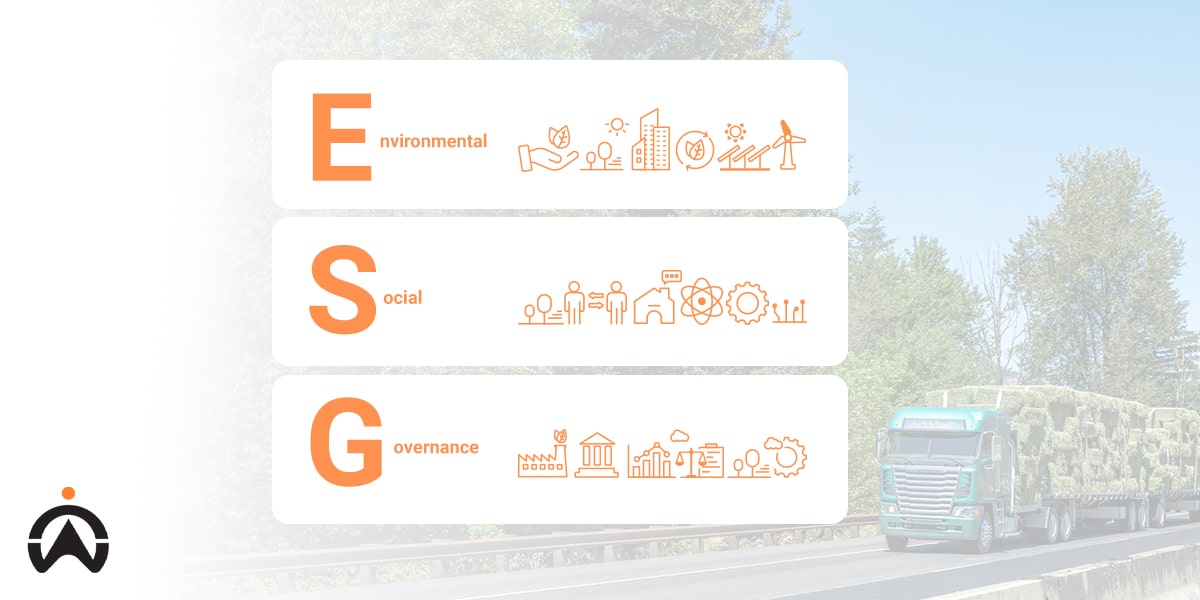
The key ESG metrics for fleet performance reporting are centred around lowering your environmental impact, improving driver safety, and upholding operational governance. The ESG metrics you should monitor are:

  • scope 1, 2, & 3 GHG emissions,
  • fuel and energy consumption,
  • driver safety score, 
  • driver turnover rates,
  • regulatory compliance rate, and
  • supplier ESG standards.

How can I integrate ESG principles into my fleet management strategy?

Integrating ESG principles into your fleet management strategy starts with taking actionable steps like prioritising driver safety, optimising routes, and introducing electric or hybrid vehicles into your fleet. By applying these practices into your daily operations, you’ll ensure the long-term success of your sustainability goals while minimising your fleet’s environmental impact.

Let’s take a deeper look into these principles… 

Corporate citizenship in fleet management

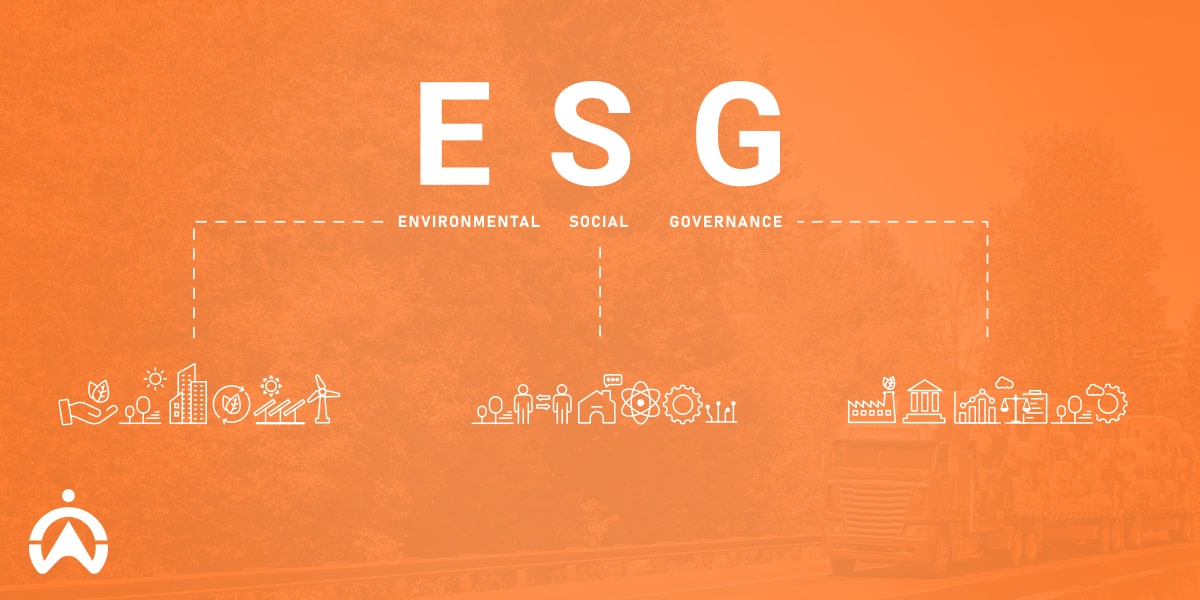
Corporate citizenship is the extent to which businesses are responsible for their actions and impact on their community, the environment and their employees. Environmental, social and governance (ESG) principles need to be embedded into the core of a company’s strategy.

A strong corporate citizenship is what builds a company’s reputation, develops customer and employee loyalty, and can result in an increase in shareholder interest and lower regulatory pressure.

Three warehouse workers in high-visibility jackets standing in front of fleet trucks, highlighting ESG in fleet management practices.

The environmental footprint (the “E” in ESG)

According to research, “the transport sector accounts for approximately 16% of global greenhouse gas emissions… particularly in road transport, which remains the main contributor to these emissions”.

To successfully reduce your environmental footprint, here are some of the things you can implement in your fleet:

  • Optimise route efficiency: Digitalising route planning allows you to reduce the amount of time your fleet spends on the road and automatically finds them the most efficient routes to travel.
    ‍
  • Predictive maintenance: When your vehicles are regularly maintained, you’ll ensure that all your vehicles’ engines are operating at optimal efficiency with effective combustion. Having digital inspection reports and engine diagnostics will simplify this process for your fleet managers, and you’ll ensure your fleet is performing efficiently at all times.
    ‍

Social and community impact (the “S” in ESG)

Get the latest tech in your fleets to further your teams’ success—rather than using it to reprimand them. Shift your corporate mindset from blame to empowerment. Here’s how you can start:

  • Prioritising driver safety: Tech like driver scorecards and AI-powered cameras that can detect high-risk driver behaviour (like speeding or distracted driving) provide real-time, audible, in-cabin alerts so drivers can self-correct.
    ‍
  • Promote transparency & trust: Automatic and accurate reporting of working hours lets you guarantee fair compensation and legitimate overtime claims, eliminating any disputes between workers and management.

Governance and compliance (the “G” in ESG)

You need to make sure your operations remain objective and reliable to eliminate any bias in the workplace. This is done through data-driven decisions from a single source of truth and information.

This can be achieved through:

  • Regulatory compliance: Digital tools can help you ensure that your drivers aren’t exceeding governed working hours and that mandatory document renewals like licences and maintenance certifications are up-to-date.
    ‍
  • Privacy & data protection: You have to make sure that your fleet systems are GDPR compliant and offer “private mode” features for your drivers so that vehicle data during personal time is hidden.

Steps to implement sustainable fleet management practices

Take these steps to successfully implement sustainable fleet management practices in your business:

  • Assess your fleet
  • Introduce alternative vehicles into your fleet
  • Implement a telematics system
  • Train drivers to drive more eco-friendly
  • Install renewable energy sources
  • Set up a fuel management strategy

Assess your fleet

Before you start implementing any sustainable and eco-friendly practices into your operations, you have to first accurately assess your current fleet. Find out how much fuel your fleet is currently using, how the engines are currently performing, and what the average mileage of your fleet is.

Introduce alternative vehicles into your fleet

Mixing your fleet with hybrids, electric or hydrogen-fuelled vehicles is an expensive but great way to reduce your carbon footprint. If you’re feeling a bit hesitant to upgrade your entire fleet in Malawi (because infrastructure for these vehicles is still in its preliminary stage), start off with one or two vehicles to test their feasibility.
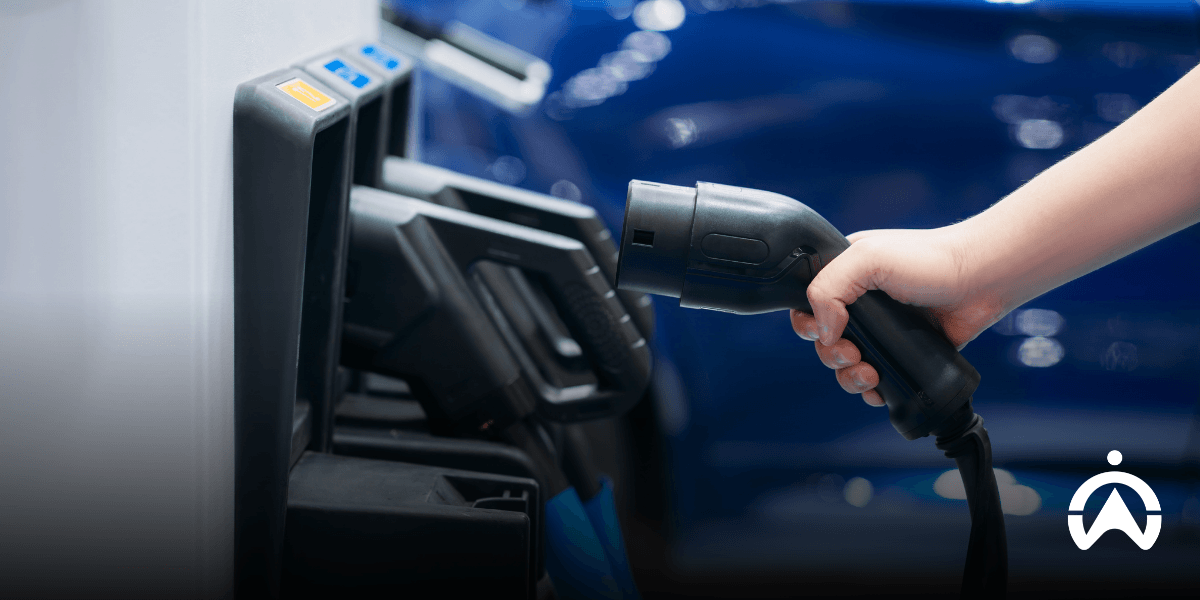
Hand holding an electric vehicle charging plug at a station, demonstrating how to lower your carbon footprint through green fleet management.

Implement a telematics system

Installing telematics systems in the entirety of your fleet is the best way to build a sustainable fleet. Telematics will provide you with insights on driver behaviour like speeding, idling and harsh braking, which all burn more fuel and increase your carbon footprint.

GPS tracking and AI-powered software assist with route optimisation so your drivers will use more efficient routes. Subsequently, you’ll consume less fuel and spend less time on the roads.

Telematics also gives insights into how your vehicles are performing. Preventative maintenance tools will ensure your vehicles are performing optimally at all times. Poorly maintained vehicles are less fuel efficient and have a shortened life span, which contributes negatively to your sustainability goals.

Train drivers to drive more eco-friendly

The cheapest way to build a sustainable fleet is by training your drivers to have more eco-friendly driving habits. The way your drivers handle the vehicles on the road directly impacts how much fuel they consume.

Train your drivers to practise driving habits like:

  • Smooth acceleration
  • Proper gear shifting
  • Keeping an optimal speed
  • No excessive idling

All of these can contribute to substantial fuel savings and reduced emissions.

Install renewable energy sources

If you have electric vehicles in your fleet, you should install solar-powered charging stations in your depots. When you invest in sustainable infrastructure in your business, you not only guarantee long-term savings; you also significantly reduce your business’ carbon footprint.

Set up a fuel management strategy

The best way to understand and minimise your fleet’s carbon footprint is by setting up a fuel management strategy. Using a combination of hardware and software, you can accurately monitor the fuel usage of each vehicle and machine in your business.

A comprehensive fuel management system includes:

  • Driver behaviour monitoring
  • Proactive maintenance
  • Fuel usage reports
  • Insights into preventing/spotting fuel theft and fuel card fraud

If you’re ready to understand your carbon footprint and successfully implement ESG in your fleet management, contact us today to get our comprehensive fleet management system and all our add-ons to help make your fleet greener!

Frequently Asked Questions

How to calculate my fleet’s carbon footprint accurately?

Accurately calculate your fleet’s carbon footprint with either a mathematical estimation or a telematics measurement. Estimating involves multiplying the total litres of fuel consumed by 2.68kg (diesel) or 2.32kg (petrol). Telematics is more accurate, providing real-time data on fuel consumption, idling and mileage, giving you automated reports that show accurate vehicle performance and monthly emission totals.

How can a fleet reduce its carbon footprint through route optimisation software?

Route optimisation can reduce your fleet’s carbon footprint by minimising your fleet’s fuel consumption on the road. Advanced route optimisation will use real-time data and GPS tech to automatically update your drivers’ routes, finding them the most efficient and shortest route possible.

How can telematics data reduce a fleet’s carbon footprint?

Telematics data can reduce a fleet’s carbon footprint by providing your business with relevant data that measures your sustainability. A telematics system will provide you with insights on driver behaviour, vehicle performance and fuel management insights, which all work to reduce your fleet’s overall carbon footprint.
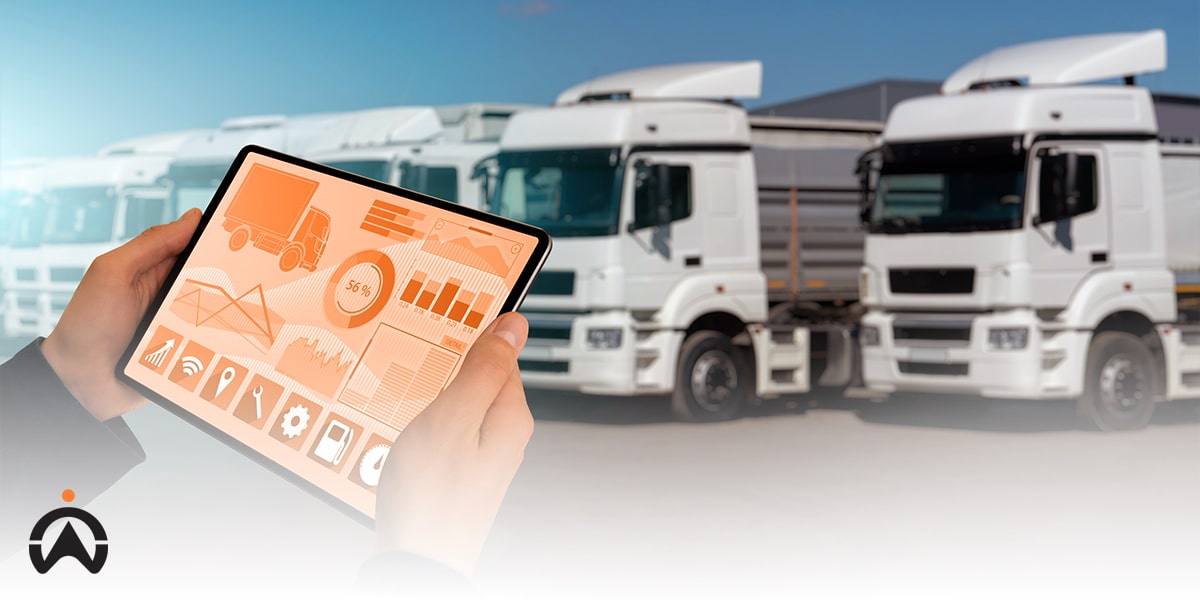
How to improve environmental fleet sustainability with vehicle maintenance

Improving the environment, becoming a more sustainable business and reducing your fleet’s fuel and CO2 emissions sounds pretty good, especially when it means cutting your fleet costs and attracting more customers.

Implementing green initiatives is becoming an increasingly appealing business approach for many fleets. Green fleet practises not only generate a positive public attitude. They also take advantage of “green” government laws and incentives that cut fuel expenses and increase the profitability of your fleet, doesn’t sound like a bad deal does it?

Like most things worth having, transitioning into a cleaner fleet isn’t easy. Fleet managers have to research, plan, and finally, implement the many changes that come with achieving fleet sustainability.

A manager’s role in sustainable fleet management

Fleet management is simply a manager’s day-to-day. They oversee all movements and activities of fleet vehicles and drivers, to ensure deliveries are made and jobs are done on brief and on time. Additionally, they ensure drivers are kept safe, practising good driving behaviour and are compliant with regulations.

Overseeing all fleet operations is sometimes a stressful and overwhelming task. To efficiently be on top of everything, fleet managers use fleet management systems to increase visibility and allow for better management of their assets.

With fleet management systems, fleet managers can achieve: 

  • Reduced overall fleet costs
  • Track vehicle movement
  • Streamline deliveries
  • Improve fleet safety 
  • Increase driver retention 
  • Keep vehicles up to date with scheduled maintenance 
  • Comply with regulations

With all the responsibilities that fall towards fleet managers, the most important part of their job is being able to see the bigger picture and make informed decisions that will bring the business closer to reaching its goals.

With the help of technological innovation within the fleet industry, fleet managers can now do much more than they could in the early 2000s. Technology has paved the way for fleet managers to optimise operations and coordinate their systems and employees. 

Fleet management systems do their part of automating all administrative tasks to equip fleet managers with the necessary insights to efficiently run their fleets.

Almost every decision managers make, they decide in favour of the business. Creating a balance between tightening capacity and increasing demand while dealing with driver shortages, fluctuating fuel prices, and keeping up to date with the industry’s regulations, all contribute to improving the business.

Fleet sustainability

Many businesses are now prioritising sustainability, pushing managers to add one more thing to prioritise – fleet sustainability.

Reducing the fleet’s carbon footprint goes hand in hand with lowering fuel usage and costs. So, to achieve favourable and lowered fleet costs, the first thing to do is to determine how much carbon a fleet contributes.

How do you calculate your fleet carbon footprint?

The amount of COI2 emissions your fleet produces solely depends on how much fuel gets burned, so how much CO2 does your business actually burn? This calculation will help you find an answer. 

There are two ways to efficiently calculate the environmental impact of our fleet.

1. Mathematical estimation.

Find out how many litres of fuel your business buys every month, if you don’t have this information, you can take the number of miles your fleet completes in a month and your average miles-per-gallon (MPG).

With the miles and MPG, you can calculate the number of litres of fuel your fleet burned.
Alternatively, one litre of diesel is 2.68kg, while petrol is 2.32kg. You can multiply your litres by 2.68 or 2.32 and get your kilograms of CO2.

2. Accurate measurement.

This is a more precise method that involves telematics. Telematics is used along with fleet management systems to monitor and track all your vehicles, gathering information from their location and speed to their idling and fuel usage.

Either than estimating, you can see the real MPG of each vehicle at any point in time with live fuel consumption rates and reports that highlight options to improve fleet health and easily get your fleet monthly emission.

How do you calculate your fleet carbon footprint?

Creating a sustainable fleet management strategy 

After deciding on ‘going green’, a sustainable fleet management strategy is created. This is a method that aims to positively impact the environment and reduce the environmental harm your fleet is causing. 

This method ultimately promotes efficient driving and minimises a fleet’s carbon footprint through healthy driving practices such as optimised routes, proactive vehicle maintenance and looking towards integrating electric vehicles (EVs) into a fleet.

All activities a fleet can partake in to reduce environmental, social and economic impact are included in these six key areas:

  • Prioritise cleaner vehicles
  • Utilise electric vehicles
  • Improve staff behaviour
  • Practice effective and timely maintenance
  • Utilise route optimisation
  • Get Cartrack’s fleet management solutions

Electric vehicles for fleets

Electric vehicles have been a trending topic of previous years and still seem quite relevant. These vehicles can be of service in light-duty, medium/heavy-duty and even off-road applications. EVs can match or surpass the performance of their gas-fuelled counterparts plus they’re much quieter.

There are a variety of plug-in vehicles that you can choose from.

Standard electric vehicles (EVs) are fully equipped with a battery rather than a tank and are powered by rechargeable batteries that power multiple motors.

Hybrid vehicles are the best of both. Hybrid vehicles are powered by two engines, one petrol and the other electric. They can use both petrol and electricity to run.

Electric vehicles produce 0% of gas emissions while hybrids produce very low emissions and increase fuel efficiency.

Paint your fleet green

With the sustainable fleet management strategy in hand, it’s time to turn your intentions into actions. A “green fleet” is not so different from a normal one. It can be simply defined as a fleet with sustainable goals of reducing its greenhouse gas emissions and plastic waste.

Every stage of the supply chain, from manufacturing to distribution, can have technological improvements by going green. Creating win-win situations for business, the environment and residents.

Step 1: Reduce your fleet’s fuel usage

Fleet management systems and telematics play a huge part in studying a fleet and compiling all the good and bad information. A report can be sent to a manager detailing not just problematic insights into your fleet but also solutions you can implement to improve fleet operations.

Both speeding and idling waste more fuel than most people know, to combat this, there are a few things recommended.

  • Positive driving behaviour 
  • AI camera technology
  • Driver scoreboard
  • Driver training program

These features can be advantageous not only in reducing the cost of speeding and idling but also in encouraging drivers and ensuring driver safety.

Step 2: Improve vehicle maintenance 

Fleet platforms can track the mileage your vehicle has travelled since its last maintenance and create maintenance schedules to keep up to date with vehicle servicing. Maintenance notifications help managers stay informed about their fleet’s maintenance checks.

The benefits of a healthy vehicle go beyond having a longer service life cycle, burning less fuel and reducing overall fleet costs. Avoiding unforeseen breakdowns saves the business more money than having a vehicle out of service and paying more to repair what’s damaged.

Tips to easily turn your fleet green

It all starts with reducing your fuel consumption and associated emissions. The extensive amount of carbon waste produced does more damage to the environment than most. Depending on the size of your business, you might find that the number of vehicles in your fleet makes a difference in how long you will need to completely change your business for the better.

Go electric
One of the easiest ways to dramatically boost your fleet’s sustainability efforts is to utilise electric or plug-in hybrid vehicles. Even if you choose hybrid vehicles and don’t fully go electric, hybrids will still have a significant change in your monthly fuel consumption and fuel costs.

Vehicle selection
Choosing the right vehicles for your business makes a difference. Bigger might not always be better, it all depends on which products are being transported and which vehicles are making the deliveries.

If your fleet only consists of 18-wheelers yet they are delivering small furniture, it might be wise to use a smaller vehicle that uses less fuel. Selecting green vehicles not only assists with sustainable goals but also reduces the overall running cost of your fleet.

Track fuel consumption
With vehicle telematics, you can see fuel consumption info on your fleet platform automatically. Telematics is considered a go-to in green fleet technology, it can give you some well-needed insight into your fleet and drivers. 

Sometimes it may be difficult to improve all of your drivers’ driving behaviour as they may not be facing the same issues. The best option here might be to train your drivers and teach them useful habits, such as how heavy acceleration uses more fuel than gradual acceleration.

Log and report everything
To create a green fleet system, you must keep track of everything that happens in your fleet. Use fleet technology to track emissions, idling, and other metrics as part of your green fleet operations. Only through tracking data will you be able to assess how successfully your green fleet goals are being met.

These are the building blocks to creating a more sustainable fleet.

Tips to easily turn your fleet green

How does a green fleet help environmental sustainability?

The major objective of a green fleet should be to improve environmental sustainability and reduce the fleet’s carbon footprint. This can be performed in several ways:

Improving driver behaviour – From rapid acceleration to hard brakes and vehicle idling, driver conduct influences your fleet’s green activities, which can be good and bad.

Reduce your carbon footprint – By collaborating with companies like Cartrack, you can have your fleet’s full activities on one platform and achieve lowered carbon emissions. Using Cartrack will not only benefit the environment, but it could also have positive tax implications for your business. 

Electric vehicles – While not every fleet will be able to replace all their gas vehicles with electric ones, it doesn’t hurt to start considering the option and perhaps implementing it in small ways like having a few electric vehicles that drivers can use once in a while. 

Reward your drivers – Rewards aren’t practised in many businesses, but they have been proven to work, especially in boosting driver behaviour and encouraging safer driving.

Use telemetry data – Your telematics already gathers and compiles all the data you need to understand your fleet. This is a treasure trove of viable information on how to increase the sustainability of your fleet. 

Promote fleet sustainability

We are the no. 1 telematics solution that can help better monitor and improve your on-the-ground fleet operations.

  • Cut unnecessary fuel emissions
  • Understand your fleet’s fuel consumption
  • Achieve fleet sustainability with healthy vehicles

Our technology can be used for much more than just tracking your fleet.

Interested? Contact Cartrack Malawi today.