Sometimes, managing your fleet can be difficult, especially if you do not have the time or resources to do it effectively. Having someone else take the reins in your fleet management can take a load off your back and allow you to focus on other operational needs. Discover how you can get the best bureau services with Cartrack Malawi.
In this article, you will:
Gain an understanding of what bureau services are
Explore the pros and cons of using an outsourced fleet management system
Learn what the benefits of outsourcing your fleet management
Delve into what Cartrack’s Bureau Services offer you
Get answers to your questions about outsourced fleet management
What is outsourced fleet management? 5 things you need to know about fleet bureau services
Cost reductions: Your business can save money on hardware and software costs, as well as the salary you would’ve paid someone to manage your operational systems internally.
Improved customer service: Your delivery times can be improved with someone making sure that your drivers get to their destinations on time, and they can share live location links with your customers to ensure customer satisfaction.
Reduced administrative duties: Knowing that someone else is ensuring your admin tasks get done, like scheduling maintenance reminders to avoid truck breakdowns, allows you to focus on your operational duties.
Regulatory compliance: Having an external fleet management team helps ensure that your fleet adheres to road regulations, allowing your company to avoid getting fined for offences such as exceeding road speeds and not paying toll fees on time.
Customisable solutions: Your fleet management solutions can be tailored to suit your specific needs.
The pros and cons of using outsourced fleet management
Pros
Cons
✔ Experts in the field: Providers have teams that are only focused on managing your fleet 24/7.
✘ Data sharing: A third party will access your fleet’s operational data to streamline it and improve your fleet efficiency.
✔ Optimisation of your fleet: Outsourced managers can improve your fleet operations by performing tasks like planning routes, reducing fuel consumption and creating alerts and reminders to improve deliveries and other operations.
✘ Language barriers: You and your fleet manager might not be in the same country, which can cause language barriers and possible miscommunication.
✔ Risk management: Providers are usually well-educated on the road regulations and industry-related compliances they can use to manage your fleet.
✘ Contractual rigidity: You typically sign a long-term contract with your provider, which offers stability to your relationship. However, if you decide to switch providers, it might be challenging to end your contract.
✔ Access to advancing technology: Fleet management providers are usually at the forefront of the latest technological updates they can inform you of to improve the management of your fleet further.
✘ Not being as hands-on: You will have less control of your fleet’s management; however, a dedicated and capable team handles the details for you.
✔ Less company expenditure: By outsourcing fleet management, you can save the initial costs of purchasing all the hardware, software and infrastructure to manage your system and system maintenance fees.
✘ Provider dependence: It is great to have a provider that you know you can rely on, but sometimes their systems need updates that might influence the visibility of your fleet operations.
The benefits of using outsourced fleet management services
Gain operational efficiency through the use of outsourced fleet management
Outsourced fleet management services have various advantages. Some of these include:
Handles all your fleet admin-related tasks: When you outsource your fleet management, you can assign your fleet administration duties to experts. This will allow you to focus on other operational responsibilities while your fleet admin is in the hands of capable professionals who can anticipate and manage potential risks.
Set up your custom alerts, reports & other checks like health checks: Your outsourced fleet management partner can set up custom alerts and reports and check whether your teams are dispatching on time.
Monitors and manages your fleet in real-time: You have a devoted team that monitors and manages your fleet live, so if anything goes wrong, they can address it right away.
The provided solutions are scalable and flexible based on your evolving fleet needs: Having an external fleet management team can make it easier to adjust your solutions as your operations develop and grow. This way, you don’t need to learn new skills about your system because you already have a dedicated team that knows the system and knows what solutions might work best for the changes in your fleet.
What Cartrack’s Bureau Services offers you
Cartrack’s Bureau Services is your all-in-one expert fleet manager who knows our system inside out and knows exactly what your operations need to function optimally and efficiently. Some of the Cartrack-specific features that we offer include:
24/7 fleet support and assistance:
We offer customised update timing. As a rule of thumb, we send hourly updates, even through the midnight hours.
Identify and manage any risk to your fleet:
Our expert fleet managers can quickly identify any possible risks thanks to their trained eyes, which can catch any abnormalities or suspicious events.
Scalability and flexibility of your fleet management system:
Our fleet management service can adjust your system according to the growth of your fleet hassle-free.
Make your fleet more cost-efficient:
Our bureau service can help you optimise your fleet by scheduling preventative fleet maintenance to avoid breakdowns and unplanned downtime and ensure timely deliveries to enhance client satisfaction and recurring business.
Here’s how we manage your fleet admin on your behalf:
Our bureau services are adept in managing your fleet because they have access to the system that gathers your fleet data, such as:
Odometer reading updates
Trip history
Idling time
Kilometres travelled
Harsh events such as speeding
Our experts also set up reports and alerts such as the Fuel Management Report and Accident Reconstruction Report
Alerts & reminders
We do real-time calls to you, as the client, based on the following:
Vehicles entering or exiting high-risk areas
Vehicles entering or exiting loading areas
Changes in driver instructions
Drivers making unauthorised stops or movements that were not pre-approved
Drivers speeding
We also do daily or weekly health checks based on your preferences.
Supercharge your fleet management with Cartrack Malawi
Contact us today and let our expert fleet managers handle your fleet admin worries.
Frequently Asked Questions about Outsourced Fleet Management
What is fleet management outsourcing?
Fleet management outsourcing is when your business uses a third party to manage the administrative duties related to your fleet.
What is the biggest challenge in fleet management?
The biggest challenge in fleet management is currently driver productivity and safety.
What is the biggest importance of fleet management?
Fleet management has various important aspects. Some of these include improving driver and fleet safety, reducing overall fleet costs, and improving delivery services.
What are fleet management services?
Fleet management is ensuring that all the necessary actions occur to ensure your fleet runs smoothly.
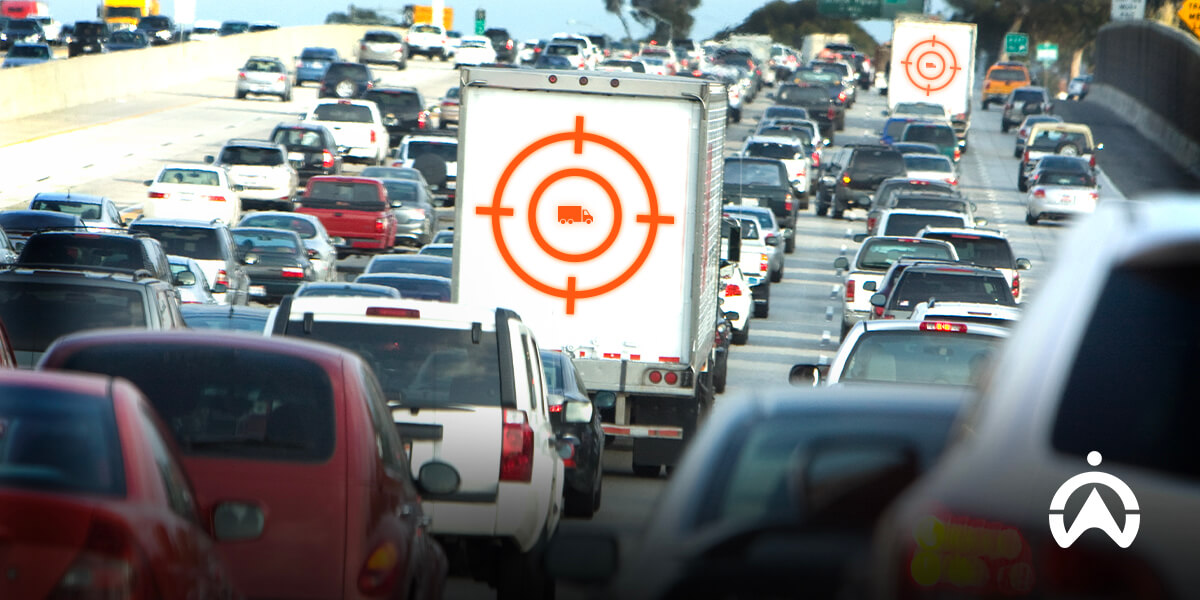
Imagine suddenly receiving an alarming call. One of your fleet vehicles has been hijacked! Your heart immediately sinks as you realise you may have lost clients and revenue, all while putting your drivers in harm’s way.
It’s time to empower yourself and prevent these horror stories from coming to life. We can learn the numbers, prevention tactics and then fuse Cartrack’s advanced and stolen vehicle recovery into the blend.
This is a powerful mix, so let’s get stirring!
In this article, you will:
Come to terms with the reality of hijacking
Learn about the effects of truck hijacking on businesses
Gain knowledge of recent truck hijacking statistics in South Africa
Find out how to protect your drivers and trucks with hijacking prevention methods
Learn more about Cartrack’s safety-driven solutions
But it could never happen to me…
We all have this strange idea that we are unique and free from all the worst experiences. Of course, this is far from the truth. Many people in industries that rely on fleets are painfully aware of the hijacking crisis in South Africa. For this reason, always being emergency-ready is part of every fleet manager’s job.
Statista Research Department confirmed this collective fear in its “Number of truck hijackings in South Africa FY 2009-2023” report. It stated that in South Africa’s 2023 fiscal year, there were just under 2000 truck hijackings–a jump from the previous year. In fact, since 2012’s fiscal year, these hijackings have increased more than twofold, with that year recording 821 events.
The effects of hijacking on businesses
Some issues in life have a domino effect, and hijacking has a “not-so-great” chain reaction that negatively affects business owners, drivers, profits, and customers.
One perfect way to fight against these possible future disasters is by educating yourself! Let’s find out more about what companies may experience from this crime.
Profit Loss
Freight hijackings have a devastating habit of turning supply chains all the way upside down. In January 2023, the Transported Asset Protection Association shared that, within 546 days, R577 million in goods were stolen from supply chains due to hijackings. These hijackings cause companies to lose their goods and services, which they now can’t sell to buyers. Given the soaring number of hijackings in this country, this loss in sales would put a solid dent in returns. The seller likely has to raise their delivery costs because there is more risk. More risk means using more money for these dangerous journeys.
If the business’s fleet experiences ongoing hijackings, it may lose frustrated customers forever!
In a 2020 TimesLive Article by Mpumzi Zuzile titled “‘These people are killing our business’: hijackers target trucking industry,” the writer discussed this challenge. He stated that 1000 fleet vehicles were singled out throughout South Africa in the previous financial year.
Gavin Kelly, the Chief Executive of the Road Freight Association, expressed: “Our members lose goods. They have vehicles damaged. They have drivers threatened. They incur financial losses on top of COVID-19 losses. Their premiums increase, and their drivers become reluctant to drive unsafe routes or times.”
He stated, “There is a continual drain on their ability to earn revenue, and they continue to operate in a continual state of fear and uncertainty.”
Truck accidents are a massive issue on South African roads. A 2023 article in Creamer Media’s Engineering News stated that in 2022, trucks were linked to a mind-blowing 60% of accidents on the N3 toll route. Being constantly alert of possible hijackings can contribute to heavy driver fatigue.
Companies can install our panic button and tracking device to provide drivers with some peace of mind. The panic button can be a comforting friend, always there if the driver is ever in need. It is also a way for businesses to help save their drivers and goods!
South Africa’s recent hijacking statistics
Compared to the rest of the globe, South Africa is known for many things–our diverse culture, our passion for rugby, and the beauty of our many landscapes and provinces. Tragically, crime forms part of that list — hijackings included.
In fact, according to the 2024 World Metrics report, the Rainbow Nation’s truck hijackingsare among the highest in the world. Roughly 30 to 35 occur weekly. Other statistics they shared showed that most of these truck hijackings occur in the Gauteng province—70% of them, to be exact. The report shared that, according to the National Council for Road Safety, black trucks are at a 70% higher risk of being hijacked compared to white trucks, while the reason for this is unknown.
These scary figures point to a broader nationwide crisis. That said, in February 2024, the National Anti-Hijacking Police actually shared some positive numbers. They stated that the year-on-year hijacking digits had grown smaller. Sadly, they claim 66 vehicles are still stolen every single day throughout South Africa.
Hijacking prevention tactics for your company’s truck drivers
While these statistics spark fear, there are always ways to prevent or fight against these terrifying experiences. Great minds have come up with strategies for hijackings. Meanwhile, Cartrack has developed technologically-driven solutions crafted for driver safety. Using Cartrack’s solutions and anti-hijacking tactics together, you have an effective shield to protect you, your driversand your business.
Expand your knowledge
Learning about the different types of hijackings can help you prepare yourself or your fleet for the absolute worst. Educate yourself by reading a list from Arrive Alive of the many kinds of hijackings:
Freight hijackings: These hijackings focus on the goods in the vehicle or truck. The culprits want to steal whatever the vehicle is carrying.
Showmanship hijacking: This hijacking, usually violent or threatening, stems from gang members attempting to show off.
Transport hijacking: This is when the cars hijacked are reused for illegal purposes such as dealing drugs and robberies.
Syndicate hijacking: These are highly organised hijackings connected to syndicates.
Operational hijacking: These hijackings are performed byan organised group that steals and sells vehicle parts.
How to prevent hijacking?
When tackling a problem, we must confront it from where it is standing. It could be a possibility in the future, a present situation, or we could be dealing with the future. Here are some tactics from Arrive Alive that tackle hijacking from all angles — with some of our efficient services and solutions sprinkled throughout.
What preventative measures can we take in case of hijacking?
This is your best bet: avoid it as much as you can. Caution and awareness are your new best friends.
You can develop this friendship by practicing caution around every turn: parking anywhere or entering a driveway is the best time to remain aware, as this is when your vehicle or truck is slowly approaching a standstill. You are also about to open your door–a simply perfect opportunity!
That said, you should always ensure that your doors are closed and locked and your windows are rolled down. Hijackers tend to pounce around traffic lights and intersections. Stay aware.
What procedure should be followed in a hijacking situation?
If the worst has happened, you or your truck drivers don’t have to feel hopeless. There are tactics you can employ. Firstly, always remain calm. If you are still only suspicious that someone is following you, you can always drive into a busy area.
If, however, the worst occurs, it is sometimes possible to simply drive away quickly to get as far as possible in the shortest period from the hijackers. While doing this, you should also hoot loudly.
Cartrack’s panic button can be a lifeline for your truck drivers if they encounter this terrifying situation.
What actions should be taken after a hijacking?
The driver must receive medical attention immediately and go to the police station. The company should also report the incident and handle the insurance.
If you have experienced this kind of traumatic event, you should consider going to a mental health professional to help you process and deal with any distress it may have caused you.
Cartrack is dedicated to your safety and security
Cartrack is a safety-driven company. We provide many services and products geared toward keeping you and your vehicle out of harm’s way. Let’s explore the specifics of some of the products mentioned and how they can ensure truck and driver safety:
Panic button: The panic button is perfect for a trucker in the midst of a hijacking. It has four options: medical emergency, accident, breakdown, and security alert. This button instantly lets our 24/7 control room know something is wrong, and they are always ready to take immediate action.
Cartrack Vision: Our vision solution includes AI-powered live-streaming cameras installed in different areas of your truck, including a driver-facing, in-cabin camera, for increased visibility. Apart from allowing fleet managers to witness the event in real time, the technology also allows you to request footage covering a specific date and time for evidence and insurance claims.
Different problems require different Vision solutions, and multiple fall under this umbrella. A great approach to hijacking is Cartrack’s Multi Vision solution. AI cameras are installed to view the road, cabin, a chosen internal part of the truck like the cargo, and an external place to destroy blindspots. It’s the closest you’ll ever come to a magic pill for hijacking.
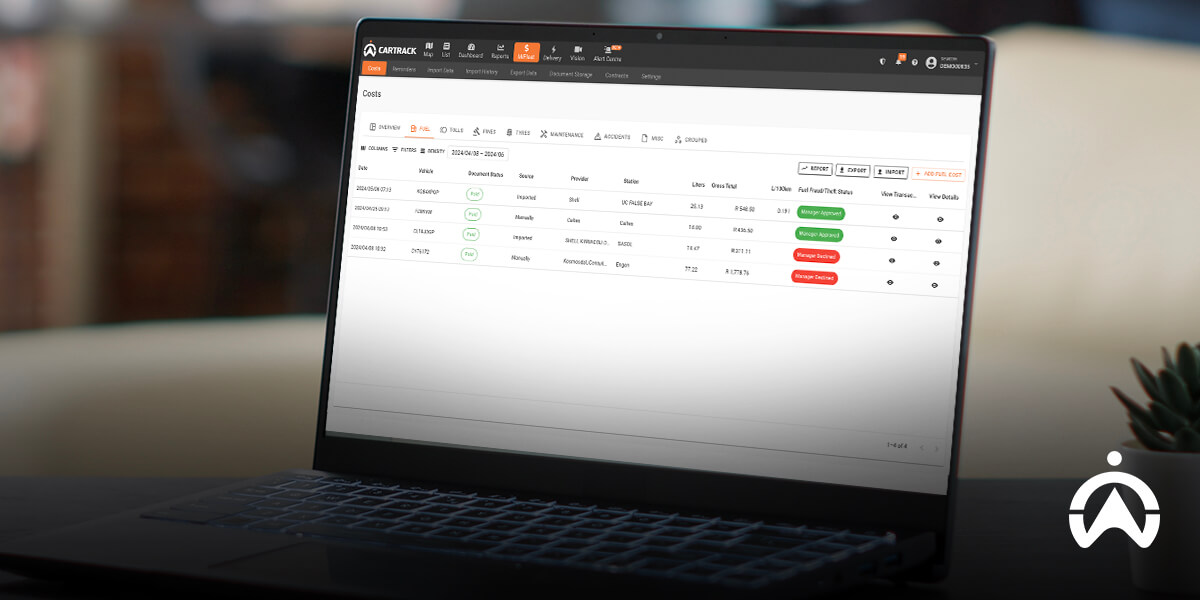
MiFleet: This solution, found on the Cartrack App, can be used to track various costs, such as fuel, tolls, accidents, and insurance. You can also export this information via PDF or Excel. This means you can understand where you’ve lost revenue from a hijack or general operations.
Cartrack keeps your business out of hijackers’ way and on the road to growth
Our services and products will leave hijackers wondering why they even thought about targeting your company. Contact us today to rip that bull’s eye off your back.
FAQs to help you fight crime
Where do most hijackings take place in South Africa?
According to the previously mentioned National Anti-Hijacking Police statistics, the Eastern Cape, Western Cape, Kwazulu Natal, and Limpopo’s hijacking digits reduced year over year.
At the same time, the Northwest’s hijacking statistics increased significantly, with a 14.1% increase and a 13.5% spike.
Do hijackers have a new target in South Africa?
In May 2024, Business Tech claimed that delivery vehicles are considered the ‘new target’ in South Africa. A significant number of hijackers began moving on from what was the go-to hijacking scheme — when these criminals targeted everyday vehicles, usually spotting those considered high-end or popular and stealing and selling the parts.
What are the trucking problems in South Africa?
Beyond hijacking, truckers encounter many problems every day. These include poor road conditions, a lack of skills, corruption, and fatigue from being on the road too long.
The trucking industry faces many challenges as an overall business. These include the high and constantly rising fuel prices in South Africa, a lack of skilled workers, road safety, and environmental concerns.
Is trucking a good business in South Africa?
The trucking business faces a mountain of obstacles. However, it can still be an incredibly well-paid investment. This is if you can navigate a highly competitive and challenging industry and secure the needed funding.
Cartrack Malawi is wholeheartedly committed to the safety of your fleet, goods, and drivers. Return this commitment and secure your business — contact us today.
According to research done by the National Highway Traffic Safety Administration, fuel expenses can take up to 60% of total fleet business costs. With the ever-rising fuel prices, having a fuel management system will save your business a large sum. This is why it is important for every fleet business to have a fuel management system.
Let’s have a closer look at how this works.
In this article, you will:
Learn all things fuel management-related
Discover the disadvantages of running your fleet without a fuel monitoring system
See which fuel monitor would best suit your business
Differentiate between fuel monitoring and fuel management
Everything you need to know about a fuel management system
A fuel management system is a combination of hardware and software technology that is used to optimise fuel consumption in various industries such as mining, construction, and transportation.
Fuel monitoring systems work hand in hand with fleet management software and telematics to be able to translate the data. Here is a brief breakdown of two components of fuel monitoring systems:
Engine Control Unit
Also called an engine control module, this unit controls both the engine and the transmission. It collects data related to fuel consumption, engine operating hours and mileage.
Fuel level sensors
These are filters installed in vehicle tanks to monitor fuel levels. A tube connects to the fuel measuring system, and when fuel is added, it fills the tube and the spaces around it. The information is then sent to a telematics system, which gives readings such as tank capacity, litres and vehicle location.
Disadvantages of running a fleet without a fuel monitoring system
Here are some of the things that can go wrong when your fuel is not being monitored:
Incorrect data analysis: Without a fuel monitoring system, fuel card reports can be misinterpreted, and there is room for many human errors.
Careless driving: Bad driving habits such as harsh braking, speeding, excessive idling, and harsh cornering require more energy from the engine. This means that more fuel needs to be burned, leading to fuel wastage. Aggressive driving not only drains fuel but also causes vehicle wear and tear, leading to unexpected breakdowns, vehicle downtime, and heavy repair costs.
Unnecessary mileage: Fuel monitoring systems work hand-in-hand with GPS technology. This enables you to see the routes that heighten your fleet’s fuel consumption. Without it, it becomes more difficult to track mileage and pinpoint problem areas.
Environmental impact: Businesses are charged more tax for a high fuel consumption. This is due to global warming and the aim is to slow down climate change by lowering greenhouse gas emissions such as the burning of fossil fuels.
Benefits of a fuel management system
There are many benefits that come with having a fuel management system, such as:
Improved driver behaviour
Driving habits such as excessive idling, harsh braking or speeding not only put drivers in danger of possible collusion but also drain fuel faster. With a proper fuel monitoring system in place, fleet managers will be able to monitor driving habits that increase fuel as well as vehicle wear and tear.
Reduces human error Fleet technology simplifies administration and speeds up operations. A fuel monitoring system reduces the manual work and is more accurate, eliminating any miscalculations of fuel expenses.
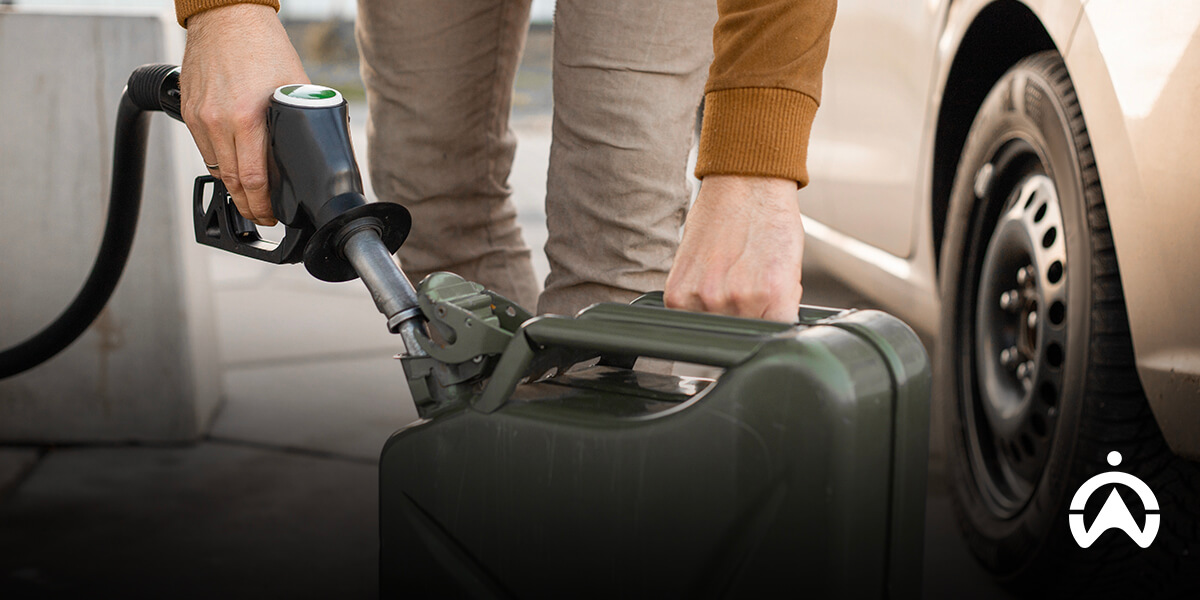
Fuel theft prevention Integrating a fuel card with a fleet management system catalysis the process of matching fuel receipts with the vehicle’s location and fuel level status, making it easier to detect fuel theft.
Reduced maintenance and repair costs Using engine technology to monitor fuel can save your fleet from breaking down and needing more repairs.
The difference between fuel management and fuel monitoring
Fuel management is about gaining full control of all the fuel operations in the business in order to reduce costs. It’s about knowing which vehicle needs refuelling, monitoring driver behaviour, maintenance, and fuel storage, and getting detailed reports. A fuel monitoring system, on the other hand, is the literal real-time tracking of fuel levels using fuel monitoring tools such as a fuel level sensor. Essentially, the fuel monitoring system is a part of fuel management.
What kind of insight can you gain from a fuel management system?
Let’s have a look at Chris, who’s fleet manager at a logistics company. He has noticed that every time a certain driver uses one of his cars, the petrol in the tank doesn’t last long. He always checks receipts for the fuel cards and just doesn’t understand why there are so many refills. So, where does the fuel go?
Chris suspected fuel card fraud, so he decided to get a fuel monitoring system to better assess the situation. To his surprise, it turns out that the driver was always taking a longer route because he was more familiar with it. There’s a bakery on the way that he likes and normally stops by. This route increased the mileage, which is why the driver always needed to refill.
Chris also noticed that the same driver had many incidents of excessive idling. This was because whenever the driver would stop by his favourite bakery, he would leave the engine running, thinking it would just be a quick in and out. However, on some days, there would be a queue, and he’d wait longer for his baked goods. Chris has since coached the driver on driving habits that increase fuel consumption and is now seeing massive improvement.
From this, you can see that very simple and innocent things can have a huge impact on fuel expenses. A quick analysis plus some chats with your drivers can save your fleet a fortune.
Boost your fuel savings with a Cartrack fuel management system!
Cartrack is an industry leader in the fields of telematics and has helped many from different industries, such as transport, construction and mining, to maximise their fuel savings. With us, you get:
You can monitor your vehicle or machinery’s in-tank fuel levels with any of the following three fuel monitoring tools:
Float sensors: Every vehicle comes with a floater and a variable resistor installed inside the tank. This moves up or down as fuel is added or while the vehicle consumes fuel. Cartrack connects to the wires the wire to the IoT device in order to read the voltages produced and translate them into litres. This information is then accessible for your use on our fleet management platform.
Fuel probes: These arefuel level measuring devices that use a float system to track fuel levels. They are for external tanks or fuel tanks that are not connected to the vehicle and are connected to a telematics device inorder to send fuel level data.
CANBus: The Control Area Network bus (CANBus) clamp is connected to our telematics device to enhance the ability of vehicle components, such as the engine and transmission, to “‘communicate” with each other. This then makes it easier for vehicles to detect when fuel is needed, and the data is then stored and sent to our fleet solutions.
Preventative maintenance
An overworked engine uses more fuel. Cartrack has a preventive maintenance feature that tracks engine hours. This feature provides real-time alerts of engine faults and automated maintenance schedules for each vehicle, so you know in advance which vehicles are due for servicing.
Route optimisation
Find the best order for drivers to complete tasks and create job routes for drivers to minimise mileage and fuel consumption.
AI LiveVison
Promote driver safety by installing our AI LiveVison Camera solutions to help you monitor driver behaviour. Drivers get real-time alerts whenever distracted behaviour such as yawning, cell phone use or smoking is detected, allowing the drivers to make corrections quickly. The goal is to avoid driving habits that increase fuel consumption, such as harsh braking, which often happens when the driver is distracted and suddenly has to stop. You can also have external cameras that monitor your fuel cap installed into your vehicles.
Driver Scorecards
Get reports on driver events such as speeding, harsh braking and harsh cornering for each driver so you can use them to coach drivers on their areas of improvement.
Cartrack Malawi makes saving on fuel so easy!
We are an all-around solution for everything related to running a fleet with a user-friendly platform that gives you peace of mind. We are industry leaders in fuel management and all things fleet-related.
Here are some of the most asked questions regarding fuel management
What does a fuel management system do?
A fuel management system is a combination of hardware and software technology that is used to optimise fuel consumption
How does the fuel management unit work?
A fuel management unit (FMU) is a secondary fuel regulator on the return line to the tank. A rise in fuel pressure equals a directly proportional rise in boost.
What is the purpose of a fuel monitoring system?
A fuel monitoring system effectively manages fuel usage by reducing costs, enhancing overall operational efficiency, and meeting regulatory compliance.
What is the management of fuels?
The management of fuel is a process of managing and improving overall fuel usage and costs using telematics.
Ready to fuel on fleet savings? Call +265 999 971 972 or click here so we can call you back.
Great fleet owners understand that fuel management goes beyond reducing fuel budgets or leaving fuel expenses to employees. Instead, they embrace advanced fuel management to future-proof their businesses for long-term success.
Controlling your fleet’s fuel costs requiresfuel monitoring patterns, the right fuel monitoring system, data-driven decisions, and sustainable practices.
If you think you’ve given fuel management your best shot, here are 10 reasons why you may not have mastered fuel management and efficiency just yet.
In this article, you will:
Learn why businesses care about fuel management
Discover the 10 reasons why businesses are failing at fuel management
Get possible solutions for these fuel management challenges
Explore Cartrack’s Fleet Management System and fuel monitoring solutions
Get answers to the most frequently asked questions about fuel and fleet management
10 reasons why you failing at fuel management in your fleet
As your business grows, your fleet operating expenses, such as fuel, will most likely increase with it, but this does not automatically result in increasing profits.
If your fleet is still reporting unreasonably high fuel costs that stifle profits, then there may be other factors affecting your fleet fuel management that you need to pay attention to.
Here are 10 reasons why your business may be failing at fuel management and the fuel management solutions you need to know to combat these challenges.
Lower fuel efficiency: Cars become less fuel efficient as they age, meaning you may not get as much mileage from your refuelling and, therefore, need to pour more.
Increased maintenance needs: Wear and tear over the years also increases your vehicle’s maintenance needs, sometimes including the frequency of fuel system issues.
Alternative Solutions: Transition your fleet
Older in-built technology can make tracking fuel usage difficult. For example, not all vehicles have CANBus technology, which provides more accurate fuel consumption insights.
However, the solution to this weakness is not as simple as just replacing your fleet with the latest vehicle models. Fuel prices are still a major concern for businesses, and fleets that are planning for alternative fuel transition in the next 12 months need to be more strategic to future-proof your business. Consider joining the growing number of fleets, accelerating their EV transition and slowly replacing outdated vehicles with more fuel-efficient ones.
2. Lack of driver training on fuel efficiency
Unnecessary speeding, harsh braking, and excessive idling are fuel-inefficient practices you may be overlooking in your fuel management efforts. An untrained driver is less likely to be aware of how these driving behaviours impact fuel efficiency, so while you are trying to lower your fleet’s fuel costs, these bad driving techniques and habits increase your fleet’s fuel use, causing:
Increased fuel costs: inefficient driving leads to higher fuel consumption per kilometre, directly increasing a fleet’s fuel expenses and making it harder for you to control your fuel costs.
Heightened risk of fraud and misuse: your drivers who are not properly trained, poorly disciplined, or uninformed about your fleet’s standard operating procedures (SOPs) may easily misuse your vehicles, causing increased fuel consumption and costs.
Cartrack solution: Fuel efficiency report
Are you aware of how many litres are consumed per kilometre in your vehicle? (This also changes as your vehicle ages). Abnormal fuel efficiency could either indicate fuel theft, high idling, or poor driving habits. Do you know how to calculate the efficiency of each of your vehicles?
Our fuel efficiency report is designed to help you detect fuel inefficiency in your fleet and introduce measures to reduce your fleet’s fuel consumption, especially from untrained fleet drivers, that impact your fleet’s fuel management significantly and reverse all your efforts to reduce your fleet’s fuel consumption and costs.
3. Short trips (stop and start)
The frequent stop-start with short trips causes poor fuel economy in your fleet. When you start your vehicle, it generally requires more fuel than when it runs at a steady speed. According to AA, trips of two kilometres or less use more fuel than longer trips, and based on your vehicle size, short trips could cost you more fuel unnecessarily.
Beyond increasing fuel costs and lowering your fleet’s fuel inefficiency, short trips could be causing your fuel management woes because short trips are:
Difficult to monitor: Without telematics, fuel monitoring hardware, or a fuel management system, fleet managers find it challenging to track fuel consumption for past trips and optimise fuel usage for short trips.
More susceptible to fuel theft and fraud: Because it’s difficult to monitor or get detailed fuel usage data with vehicles frequently used for short trips, fuel fraud and theft increase the risk.
Cartrack solution: Live GPS tracking and fleet visibility
GPS telematics helps increase the accuracy of a fuel management system. By tracking the location and activity of your vehicle’s movement, you can mitigate fuel theft risks with short trips by comparing your fleet’s fuel consumption against vehicle mileage and activity.
Cartrack’s route optimisation generates the best order for completing tasks and deliveries, helping you get from point A to B, and finally point C most efficiently by generating your route sequence. This software feature is a smarter way for you to combine multiple planned short trips into one longer journey and reduce the number of harmful stop-and-start trips.
With route optimisation, you can instantly order deliveries and service tasks instead of manually planning your route and work order, which is often less fuel-efficient.
4. Carrying unnecessary weight
There’s a relationship between weight and fuel economy, and you’ll have to pay attention to this in your fleet management. An extra kg of weight can cause the engine to work harder and use more fuel when accelerating and braking.
In addition to lowering your fleet’s fuel efficiency and increasing your fuel costs, carrying unnecessary weight in your fleet can surprisingly cause:
Accelerated wear and tear: Excessive or frequent additional weight strains your vehicle. Over time, this increases the wear on your vehicle and the risk of mechanical problems.
Safety risks: Added weight makes it difficult for your drivers to handle your vehicle and compromises vehicle safety.
Cartrack can lighten your load
While the solution seems simple, the less your vehicle weighs, the less fuel it will use. Drivers can avoid carrying unneeded items or extra persons during trips. But the truth is, it’s not only your driver’s additional items (or persons) in the truck that could be slowing down your vehicle or causing fuel management problems. Have you assigned the correct vehicle for the task?
Paying attention to your fleet vehicle capacity helps you ensure that your fuel tank isn’t leaking from unnecessary weight. Cartrack delivery ensures you assign the right vehicle to your drivers for their work and tasks, automatically notifying you when the job might require a larger capacity.
5. Weather conditions
It may be hard to believe, but weather conditions impact your fleet fuel. This is mostly because of how the weather conditions affect your vehicle and the driver’s behaviour. For example, drivers may frequently use the air conditioner on warm summer days which reduces fuel economy by 25%! If you think cutting the AC would work, think again! Driving with the windows down has also proven to affect vehicle aerodynamic drag and increase the need for more fuel.
Colder temperatures also cause higher fuel consumption and difficult driving conditions that force your vehicle’s engine to work harder. Weather conditions affect your fleet in two ways:
Difficult to mitigate: Weather affects both your drivers’ and vehicles’ performance, and fleet managers can find it challenging to mitigate these effects. How weather conditions affect fuel consumption and activity is often overlooked.
Not just temperature: Windy conditions and rainy weather can also affect your fleet’s fuel efficiency.
Cartrack Solution: Get strategic about the weather
The weather isn’t something you can dodge or avoid, so it’s up to you to come up with strategies for your fuel management that account for weather conditions. For example, encourage your drivers not to idle to warm up your vehicle and instead drive gently for a few minutes to warm up the engine. Alternatively, as mentioned earlier, you may want to avoid shorter trips on cold days because the vehicle engine may require more time to reach the right temperature.
Track vehicle activity and idling via the Cartrack FleetWeb. Here, you can customise alerts for vehicle idling or download an idling report to get an overview of the frequency of vehicle idling. By knowing which of your vehicles and drivers are idle, you can quickly address this fuel-inefficient behaviour.
6. Bad driving habits
Some driving habits simply waste your fleet’s fuel, so if you want to save on fuel, start by changing and training your drivers to avoid bad driving habits such as speeding, idling, and aggressive driving like harsh braking or accelerating.
Bad driving habits not only reduce your fleet’s fuel efficiency but also put your drivers and vehicles at risk. These common habits cause:
Increasing full consumption: The costs of bad driving behaviours are estimated to reduce fuel efficiency by 15-30% on the highway and 10-40% on stop-and-go.
Higher maintenance and repair costs: Reckless driving accelerates the wear and tear on your vehicles and could also result in accidents and damage that is costly to replace or repair.
Cartrack Solution: Monitoring drivers
You can mitigate bad driving habits by monitoring your drivers, identifying these habits, and training your drivers to help them improve. Cartrack’s driver monitoring solutions give insights into your driver’s performance on every trip, which helps you build driver-specific training and coaching.
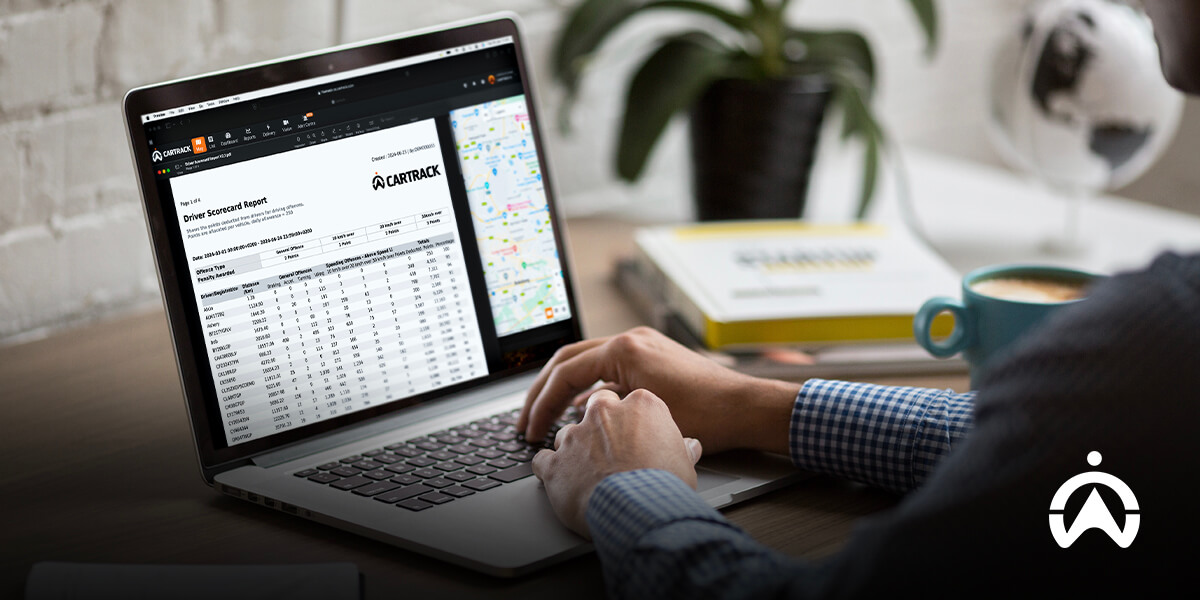
With Cartrack’s driver scorecards, you can score the frequency of high-risk driver actions like speeding, harsh braking, and sharp cornering and create custom alerts for fuel-wasting bad habits to get notifications if your drivers violate rules.
7. Fuel fraud/theft
Fuel fraud and theft have been a fast-growing problem in South Africa, and more businesses are investing in identifying fuel fraud. Without the right fuel monitoring tools, your attempts at fuel management may be unnoticeable because of internal fraud involving employees and fleet staff.
There are a few ways that fleet staff may be frauding your fleet, including claiming fuel not poured into your vehicles, syphoning fuel from your vehicle’s tank, or engaging in other fuel card fraud. What methods are you using to identify fuel theft in your fleet? Even with fuel cards to monitor your fleet’s staff refuelling expense, there can still be fuel fraud or theft in your company, causing:
Unnecessary cost to company: Not monitoring and controlling fuel expenses results in excessive costs to the company that could otherwise be avoided.
Operational disruption: Fuel syphoning and misfueling can cause costly vehicle downtime and affect your fleet’s productivity.
Cartrack Solution: Advanced fuel monitoring
Fuel fraud and theft can cost your business substantially, but without the right fuel monitoring system, it’s very easy for you to miss suspicious activity. Cartrack’s FleetWeb with MiFleet makes it easy for you to monitor fuel theft by sending a notification when there is an increase in fuel consumption and fuel payments that do not align with your vehicle’s mileage.
8. Misuse of fleet vehicles and machinery
Driver deviations, unauthorised activity, or misuse of company vehicles and machinery can each significantly impact your fleet fuel management in several ways, causing serious financial losses. For example, if one of your employees moves your construction equipment to complete personal projects at a different location but leaves the fuel costs up to you, the misuse is costly for you.
Alternatively, your drivers and fleet staff can drain your fuel budget by using vehicles for personal purposes, which results in excessive fuel consumption and high costs. These kinds of unnecessary expenses are delaying your fuel management progress.
Cartrack Solution: Geofence and DID
Cartrack Live GPS tracking and driver identification tools improve your fleet’s fuel management by ensuring that your company vehicles and equipment are not used for personal projects at your expense. Now, you can verify claims for fuel, machinery and vehicle working hours, and other factors by validating where transactions or activities took place and which of your fleet staff were responsible.
9. Poor vehicle/machinery maintenance
Each vehicle and machinery requires specific attention to prolong your fleet’s fuel economy and efficiency. Neglecting maintenance and service tasks like oil changes, air filter replacements, and other engine and tyre checks decreases your fleet’s fuel efficiency.
When you’re managing multiple vehicles and machinery with different ages, performance capacities, and locations, it’s difficult to keep up and arrange maintenance and service tasks for each of your fleets. Overlooking some key maintenance needs in your fleet sets your fuel management efforts back over time by causing:
Increased fuel consumption: Whether engine problems or issues with the fuel system generally, faulty vehicles in your fleet lead to higher fuel usage.
Less fuel efficiency: Neglecting maintenance tasks will affect your fleet’s fuel efficiency, making it difficult for your vehicles to perform overtime.
Cartrack Solution: Service Reminders and Preventative Maintenance
Cartrack makes it easy for you to set customisable reminders to help you keep up with your vehicle’s maintenance and service needs. This is one of many handy tools to improve your fleet’s fuel management. In addition to reminders, Cartrack’s FleetWeb platform helps you get proactive about maintenance. Use historical vehicle maintenance and service information on Cartrack’s FleetWeb to predict and plan the maintenance activities your vehicle needs over time.
10. Lack of modern fleet management system or fuel monitoring system
Your fleet and fuel management systems should be equipped with more modern technologies like GPS and telematics for real-time tracking and communication capability. While you think your fuel management strategy is the best, any lack of real-time tracking capabilities makes it more difficult for you to identify the problems affecting your fleet’s fuel.
Using the correct fuel monitoring tools and hardware for the problem you want to address is also important. If you’ve invested in fuel sensors yet continue to struggle with your fleet’s fuel consumption or insights on fleet fuel use, then it is possible that your fleet fuel problems are due to something else. Without the right fuel monitoring system in place, it is difficult to:
Gain visibility over fuel use: Without the right system, managing and controlling your entire fleet’s fuel consumption becomes more difficult, making it easier for fuel theft or misuse to happen right under your nose.
Optimise your fleet’s fuel use: Fuel monitoring helps you identify your fleet’s fuel use and gives you insights on adjusting to delivery schedules and minimising fuel inefficiencies.
Cartrack Solution: Advanced fuel management
Upgrading your fleet’s fuel management system is the most effective way to monitor its fuel consumption and expenses closely. Our fuel management system helps you identify and address all fleet behaviours affecting its fuel usage and gives you data-driven insights so you can make decisions quickly.
Why care about your business’s fuel management?
Whether you have a small-scale fleet of 5 vehicles or a larger fleet with over 500 vehicles and specialised machinery, overlooking your business’s fuel management can be costly to your business and its future.
If you haven’t introduced controls for better fuel management yet, here are five reasons why you should care about your business’s fuel management.
1. High fuel prices and fleet budgets
Fuel prices in Malawi are frequently adjusted and impacted by several factors. Not paying attention to your fleet’s fuel consumption also means inaccurate budgeting. Without a well-structured budget and accurate fuel management, it’s difficult for you to properly allocate costs and account for other expenses for your vehicles. A fuel tracking system is one of the most effective ways to track and manage your fuel costs.
2. Manual fuel cost accounting
When you’re looking over and managing diverse fleets of vehicles, including low-powered engine-run machinery, that are perhaps located all over the country and even cross-border, then using manual methods for fuel cost accounting is impractical. Plus, there are plenty of automation tools like fuel cards and fuel monitoring systems that provide more accurate fuel cost accounting.
3. Missing fuel fraud, theft, and other risks
Without proper fuel management, you may be missing or overlooking fraudulent fuel activities that drain your fleet. Fraud risks such as fuel theft, misuse, and fuel card fraud can be prevented with the right fuel monitoring measures.
4. Lack of visibility over vehicle use
Due to a lack of fleet visibility, vehicle misuse and abuse by drivers and other employees can easily go unnoticed. Fuel management helps you detect this misuse and ensures that you avoid the costs of this kind of activity falling on you.
5. Environmental impact of running your fleet
Customers are growing to prefer more sustainable initiatives from businesses. Sustainable fleet transformation often requires businesses to purchase new low-emission vehicles or electric vehicles, but getting ahead of your fuel management is one of the most effective ways to improve the environmental impact of your fleet.
Master Fuel Management with Cartrack Malawi
Cartrack’s Fleet Management System is equipped with everything you need for effective fuel management for your fleet’s success. You’ve got the full guide to fleet management systems. Are you ready to get started with Cartrack Malawi?
What are the difficulties in fleet management?
Fuel management is often cited as one of the most difficult challenges for fleets. This is because fuel prices fluctuate constantly, and with every fuel price increase, bad driving habits, and other fleet inefficiency, there is a direct cost to the company.
What is the major problem facing a fleet company?
Managing high costs is a major challenge for fleet management, as it impacts your business’s ability to compete in the market. For example, if your courier business is forced to increase the cost of service to customers, this may force them to find a cheaper courier company.
How can I improve my fleet management?
An advanced fleet management system with other integrated technologies like GPS tracking, cost management software, fuel management software, fleet reporting tools, and delivery and task management tools can all help you improve your fleet management.
How do you manage fuel for the fleet?
This quick step-by-step guide is a starting point for fuel management, but here is a more detailed guide:
Step 1: Gain complete fleet visibility with GPS tracking.
Step 2: Use fuel monitoring systems to monitor and analyse fuel usage.
Step 3: Use route planning and optimisation.
Step 4: Utilise fleet cards to manage refueling.
Step 5: Regularly maintain your fleet.
Get a quick demo of our fuel management system here.
Fleet managers put their trust in their drivers but still need to keep an eye on driving habits in order to avoid fuel drainage, high repair costs or even fatalities. With the right coaching, better driving habits can be achieved, but the question is: What’s the best way to train drivers to improve your quality of service?
Discover the four main reasons why you need a driver coaching system
Learn about the consequences of bad driving habits
Get tips for effective driver coaching
Find out how Cartrack makes driver coaching easier for you
Driver coaching explained: What is it?
Driver coaching is the process of teaching and engaging with fleet drivers to improve their behaviour over time and enhance safety on the road. It is aimed at saving costs and increasing productivity.
Why driver coaching can be challenging
Drivers come with diverse skills; some are experienced, and others are at a beginner level. For example, a new driver might require an in-depth explanation of compliance and regulations, while an experienced driver will probably just need refresher training on advanced defensive driving. This means that the feedback needs to be tailored to each driver’s unique needs, but unfortunately, fleet managers and safety managers do not have time to engage with every single driver due to their ever-so-busy schedules, especially when running a large fleet.
Fleet managers can’t correct what they can’t see. They don’t exactly know what activities drivers get up to on the road, and that makes it difficult to notice patterns or pinpoint the real reason why fuel doesn’t last, why the driver ended up in an accident, or why vehicle parts always need repairing or replacement. Without data analytics from afleet management system, coaching doesn’t work.
4 consequences of bad driver behaviour on fleet businesses you need to know about
Here’s how problematic driving can cause serious profit drainage:
1. Fuel wastage
Fuel amounts to most of the budget for running a fleet and gets worse when not monitored. These are some of the driving habits that can dramatically increase fuel consumption:
Sudden braking: This usually happens when the driver does not keep a safe distance during traffic or is distracted. It uses more fuel because the vehicle’s transmission shifts to a lower gear to regain momentum.
Speeding: A higher speed requires more power from the engine to overcome the drag from wind resistance, tyres, and transmission, which, therefore, burns more fuel.
2. Maintenance
Careless driving habits put a strain on the vehicle and shorten its lifespan due to the constant wear and tear. Here are some examples of careless driving habits that can cause maintenance issues:
Revving a cold engine: Usually done on cold winter mornings when you’re running late and need to get going, excessive revving puts strain on the engine before the oil has had a chance to circulate properly, increasing wear and tear.
Coasting: Keeping your foot on the clutch is called coasting and wears down the pressure plate and bearing before the expected time.
Ignoring warning signs: Drivers need to familiarise themselves with symbols on the dashboard so they know when to stop and take action to prevent further damage or a breakdown. If you see any warning lights relating to the engine, braking, airbag, oil pressure or tyre pressure, then you should pull over and request help immediately.
3. Safety concerns
This is important and more obvious. Reckless driving is one of the leading causes of road accidents. Drivers are responsible not only for their own safety but also for the safety of others. One small distraction or higher speed may cause a huge collision, end lives, and result in major lawsuits or jail time for the driver. This can also cause revenue loss due to unexpected downtime, repairs, and replacements.
4. A bad company rep
The purpose of the “How’s My Driving” sticker at the back of a truck or car belonging to a fleet business is to promote safe driving, which is another good way to monitor driver behaviour. If your drivers are not coached, they stand a chance of always being reported, damaging the company brand as it will be known for bad driving. This becomes more of an issue once more people notice, the word spreads, and clients start to avoid associating themselves with your fleet business. It gets even worse once drivers are caught in accidents, and it’s the same company that comes up.
Tips for effective driver coaching
Driver coaching plays a huge role in the overall business’s revenue, empowers the drivers, and helps them grow their skills. Your approach to doing so is very important; here are a few tips for successful coaching:
Get a driver monitoring system: Telematics eliminates the gap by providing you with real-time data regarding your fleet. This allows you to track driver routes and monitor problematic driver behaviour.
Build rapport with your drivers: Have a positive approach to each session, greet each driver, treat them with respect, ask how the day is going and how the family is doing and let them know how much you appreciate them.
Make time for your drivers: The most serious incidents should be addressed within a day or two, but it is advised that you at least give weekly feedback so it becomes a part of the company culture.
Make communication a two-way street: Coaching should be carried out as a conversation instead of just instructions. Ask the driver his/her side of the story, hear them out, then give directions and ensure they understand the risk of continuing the behaviour.
Give recognition to top drivers: Those doing well should be rewarded, and those showing improvement should be recognised. This encourages the driver and boosts morale.
Be positive when addressing drivers: All feedback should be seen as a way to improve instead of a scare tactic.
Gain driver commitment: Drivers should be encouraged to take accountability for their actions and complete the agreed-upon follow-up actions.
Simplify driver monitoring and coaching with an all-in-one solution
It is evident that driver coaching is essential for every fleet business, and Cartrack, without a doubt, has the best solutions for you and your drivers:
The Cartrack driver coaching tools
Advanced Driver Assistance Systems (ADAS) Enhance driver awareness with Cartrack’s ADAS. This powerful tool uses camera-based sensors, intelligent algorithms, artificial intelligence and machine learning to warn drivers of blind spots and forward collisions.
ADAS coaching tool Cartrack’s on-platform driver coaching feature allows you to see risk reports and videos of daily or monthly driving violations, such as seatbelts not being used, fatigue, or cellphone use. This valuable tool also shows you the number of times a driver repeated an incident as well as how many times they have been coached on that specific violation. You can leave notes for each event, allowing you to keep track of what was discussed in the last coaching session.
Driver scorecards
Our driver scorecards give each of your driver’s ratings based on events such as harsh acceleration or braking. This helps you pinpoint areas for improvement so you know what kind of training they need, and it will also help you reward drivers with the highest ratings.
Driver risk reports
Easily monitor each driver’s progress and identify trends through the insight given by detailed driver reports so you can make informed decisions based on real-time data.
Unlock your drivers’ full potential with the right coaching: Choose Cartrack Malawi
Trust Cartrack Malawi to make you the best coach. Contact us today!
Here are a few driver coaching-related answers to questions you might still have on your mind
What is driver coaching?
The process of educating fleet drivers to improve driver behaviour so you can save on fleet running costs and enhance driver safety.
What is a coach driver?
An employee who drives a bus along a set route to pick up and drop off passengers. Usually for long-distance travelling.
How to improve the behaviour of the bus and taxi drivers?
You can boost the behaviour of bus and taxi drivers by providing training and education on road safety, customer service, and driving techniques that can improve their behaviour on the road.
How important is a good driver?
A good driver lowers the risks of accidents and promotes safety on the road.
Keeping up with who’s driving which vehicle can be quite the challenge, especially for a large fleet. Drivers sometimes forget to manually sign in for the vehicle they’ve used on that day, and if anything happens, you might not know who did it, which is why driver identification plays a crucial role in fleet management.
A driver ID tag simplifies the process and puts you in control of every vehicle. Cartrack specialises in automatic vehicle and driver identification, so let’s get into the nitty-gritty of driver ID tags.
In this article, you will:
Find out how DID tags work
Learn about three different types of Cartrack DID tags
Discover the 7 benefits of driver identification
See how DID tags form part of a driver monitoring system
Get to know driver identification tags – the what, why, and how
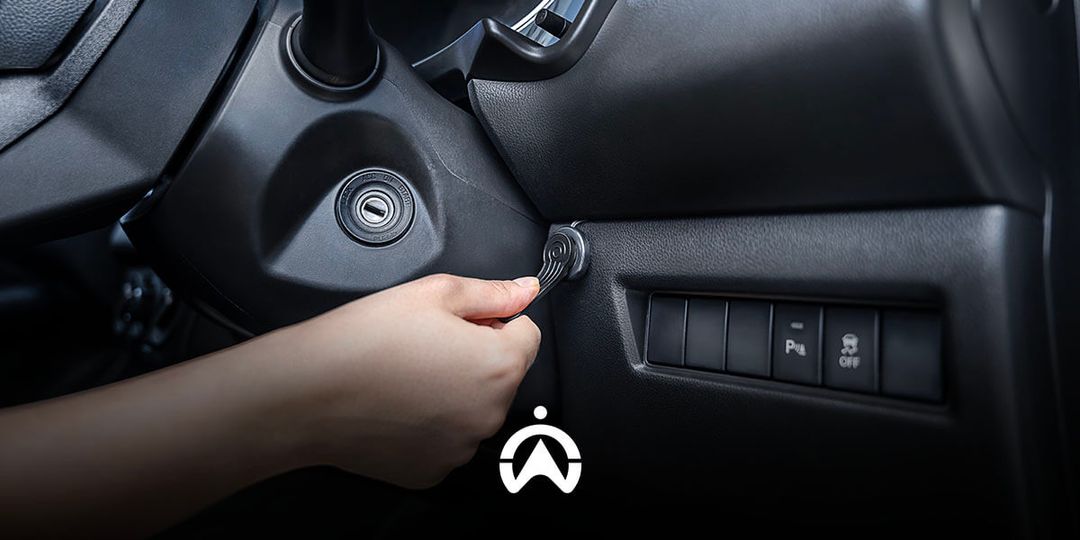
A driver identification (DID) tag is a key-ring-sized tag that is used in conjunction with the ignition key. It serves as an extra layer of protection and makes it easier for you to know who is on duty, who is driving which car and for how long. Look at it as an access card for drivers. If the vehicle is used without a tag, it can be flagged as potential theft. DID tags are essential for fleet management businesses in cold chain and logistics, the construction industry, and the transportation industry.
How do the tags work?
Driver ID tags use Radio-frequency identification (RFID) technology. This is a wireless communication that comprises three components: a reader, an antenna and a tag. The reader is connected to the antenna and transmits radio signals to the tag with added information. The tag also works in conjunction with GPS tracking technology to help monitor your drivers while on the road.
Cartrack’s advanced DID tag solutions
Introducing the three Cartrack driver identification features, specially tailored for your needs:
1. Driver ID
This helps you automatically identify drivers and vehicles using the driver’s identification number. If something ever goes wrong, this tag will be very useful. Drivers can also be assigned two tags, one for work and another for personal use. You can pull out a tag report to keep track of who was driving which car and when.
2. Driver ID start prevent
Eliminate unauthorised vehicle usage with Cartrack’s DID Start Prevent. With this, the tag assigned to the driver will be linked to the start inhibit, meaning the ignition will not go on unless there is a tag. This is ideal in industries such as mining and construction because there is equipment that needs to be protected and accounted for.
3. DID with configuration
This DID tag is configured for a specific vehicle to prevent others from using it. How is this any different from the rest? Well, let’s say you have some abnormal load trucks in your fleet. Not all drivers are qualified to drive trucks of that nature, so you need to control who gets access to them. It’s not easy to remember which driver has the correct license, but with a configured DID tag, you can ensure the tags only work on specific vehicle models. They are assigned to the drivers with licenses that qualify.
7 awesome benefits of a DID tag
These tags are made for your convenience and come with many benefits, such as:
Driver assignment control: Only authorised drivers will be allowed to use the vehicle. If the driver is not recognised, you will receive an alert.
Driver accountability: Any careless driving will be quickly identifiable and tied to the correct driver; this will make it easier to conduct an investigation or correct the behaviour.
Route planning: This helps you ensure that drivers are using the most fuel-efficient routes through the information given in the reports.
Compliance: Driver ID tags help you monitor working hours through automated log reports so you can ensure drivers comply with working time limitations and get enough rest.
Less vehicle misuse: The driver can log the trip as business or private use, and because it works hand in hand with GPS technology, you will be able to see if that indeed was a scheduled trip. Furthermore, if drivers know they are being watched it limits the careless driving that leads to fuel wastage and road accidents.
Improves driver behaviour: Through driver reports, you will see where drivers need to improve, and that will gradually bring about a change in driving habits.
Enhance your driver identification game with Cartrack Malawi
Cartrack provides driver monitoring solutions that all work together for the safety of your fleet. Here are two other features that work hand-in-hand with our driver ID tags:
Driver Scorecards Telematics makes everything possible. Our driver scorecards monitor any high-risk behaviour, such as speeding or harsh cornering. Each driver will get a rating, which will help you identify areas for improvement and provide the opportunity to coach the drivers to improve their driving habits.
Driver Reports
Get driver ID tag assignment reports that show drivers and the tags assigned to them. You can also access business, private or weekend trip reports which show you the start and end details of each trip, helping you keep track of driver working hours as well.
Driver Coaching
Enhance safety and reduce risks by training drivers based on reports. This also increases productivity and boosts savings due to fewer accidents, fuel-efficient driving techniques and reduced maintenance costs.
Advanced Driver Assistance System (ADAS) ADAS uses camera-based sensors, intelligent algorithms, and AI technology to enhance driver awareness and, therefore, increase driver and vehicle safety. This system alerts drivers of blindspots and gives forward collision warnings.
Get to know your drivers better through Cartrack’s fleet management solutions
We make running a fleet less strenuous and help you build a reputable business while saving costs using innovative driver monitoring solutions such as the driver ID tag. Contact us today.
Any other questions? Well, let’s get you sorted.
Take a look at these frequently asked questions about DID tags.
Do driver ID tags monitor driver behaviour like speeding or harsh braking?
Yes, driver ID tags assist managers in monitoring events such as harsh braking and speeding, making it easier for them to identify who was driving and allowing drivers to take accountability.
How can driver ID tags be used to incentivise safe driving habits?
Drivers can get ratings based on the frequency of harsh events, and those showing improvement by getting high ratings can get rewarded. This also helps increase driver buy-in.
How easy are driver ID tags to install and use?
The driver RFID reader is installed in the dashboard and connects to the GPS unit. When the driver enters the vehicle, he/she will touch their ID tag to the face of the reader. The installation process is simple, and drivers are quick to understand how to use it as it is straightforward.
Can driver ID tags help improve fuel efficiency?
Yes. Fleet managers will get reports on route deviations and fuel-draining habits such as harsh braking and cornering, allowing them to coach each individual on how to improve and, therefore, save fuel.
Get the visibility your business deserves with Cartrack’s DID tags
Every fleet business is looking for ways to improve fuel efficiency, increase fuel-related cost savings, and ultimately get their fleet to go further for less.
But if you’re encouraging your drivers to shift to neutral at stops, only refuel on cooler days, or warm up your vehicles for better fuel economy and efficiency, then it’s time to introduce Cartrack’s fuel monitoring system for data-driven fuel management solutions.
Let’s show you how to really improve your fleet’s fuel management.
In this article, you will:
Understand the difference between fuel economy and fuel efficiency
Explore different ways to improve your fleet’s fuel efficiency and economy
Use our step-by-step guide to achieve a more economical and efficient fleet
Get answers to the most frequently asked questions about fuel economy and efficiency
Fuel economy and fuel efficiency explained
Fuel economy and fuel efficiency are both concerned with how well your vehicle uses fuel, but the difference between them lies in the definition.
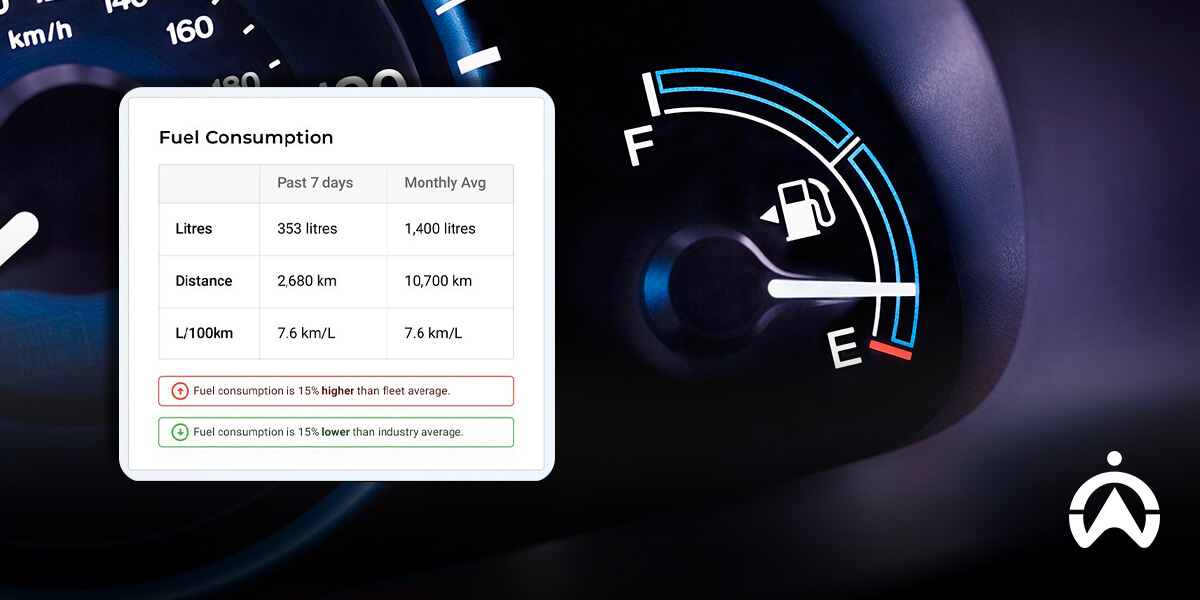
Fuel economy measures the efficiency of your vehicle’s engine and fuel directly using the litre per 100 kilometres (L/100KM) or miles per gallon (MPG).
On the other hand, fuel efficiency is about how well a vehicle uses energy and consumes fuel based on the engine, and other monitored factors such as driving style, idling and speeding habits, vehicle type, and other added vehicle technology.
Every fuel price hike hits hard for South African motorists and fleet companies because the prices are adjusted almost monthly based on local and international factors. So, you have to think carefully about your fleet’s fuel economy to keep up with the monthly fuel price adjustments and avoid exceeding their budget.
By implementing strategies to reduce fuel consumption, you can literally save money on fuel expenses and ensure a return on investment from your motorbikes, cars, trucks or machinery.
An improved environmental impact
Fuel efficiency is closely linked to the environmental impact of your fleet. When it comes to fleet companies, such as businesses in the transportation and logistics industry, greenhouse gas emissions and pollution are a major concern.
By implementing more fuel-efficient measures to reduce fuel consumption or choosing to upgrade their fleet vehicles to more economical vehicles, businesses can also contribute to a more sustainable future.
Maximise driver productivity
Several driver habits may result in unnecessary fuel consumption and decreased productivity. A 2021 research study on drivers’ awareness of fuel-saving factors showed that drivers underestimated how indicators like engine speed, idling, and vehicle rolling without a load can affect vehicle fuel use. By prioritising fuel efficiency in your fleet, you can make a big difference to your overall productivity.
The right fleet management system makes it easier for your business to track your vehicle’s litre-by-litre fuel use and improve fuel consumption and overall fuel efficiency. This allows you to see where changes can be made to improve your fleet’s fuel economy and run a fuel-efficient fleet.
Ready to address your fleet’s fuel economy and achieve ultimate fuel efficiency? Check out these five Cartrack strategies for increasing your fleet fuel efficiency.
How to increase fuel efficiency: 5 new strategies
There are several benefits from taking on the challenge of building a more economical and fuel-efficient fleet, our strategies help you make the process easier:
Method #1 Implementing fleet telematics and management software
Telematics technology and fleet management software are two essential elements to increasing fuel efficiency. These two smart technologies make the best starting point for any business focusing on improving its fleet. With telematics technology, you can track your vehicles and drivers in real time and receive notifications on engine faults or harsh driving events like speeding and excessive idling.
This data is instantly captured and made available via a fleet management system such as Cartrack, which helps you manage all your vehicles on one platform and analyse either individual vehicles’ telematics data over a period or your overall fleet performance to identify areas for improvement. Getting this technology can help you identify and address fuel challenges in your fleet.
Cartrack’s telematics and management software
GPS telematics helps you view fleet-wide inefficiencies like vehicle issues, idling, and poor routing that affect your fleet’s fuel consumption.
Telematics GPS tracking: Yourfleet managers know exactly where their vehicles and machinery are located and gain full visibility of vehicle and driver activity.
Cloud-based software: Our easy-to-use FleetWeb platform and Cartrack App are cloud-based, meaning your fleet managers can live track drivers, make updates, access various reports, get notified about their fleet, and ultimately streamline their workflow from anywhere.
Method #2 Use a fuel management system
Instead of manually calculating your fleet’s fuel consumption or guessing how economical your vehicles are, getting a fuel management system is a smarter, more accurate way of measuring your fleet’s fuel economy and efficiency.
A fuel management system refers to the process of monitoring, managing and improving your fleet’s fuel usage and costs. It uses fuel sensor hardware, software products such as telematics and fleet systems, or cost and accounting software to track fuel usage in real time and calculate fuel efficiency using data-driven reports.
The power of Cartrack’s fuel management solutions
Cartrack’s advanced technology helps you identify your vehicle’s needs and areas for improvement in your fleet. When it comes to fuel management, our telematics technology and fleet management platform, FleetWeb and Cartrack App, make it easy for you to start digging into your fuel problems
Fuel sensors and hardware: With up to three different types of sensors available from Cartrack, you can monitor your fleet’s fuel levels to get a more accurate understanding of your fleet’s fuel consumption and efficiency.
Fuel-specific reports and analytics: Customise, download, and automate fuel-specific reports for different vehicles or groups of vehicles over a specific time period to make data-driven decisions about your fleet’s fuel. Your fleet managers can receive notifications from drivers about activity affecting your fuel such as idling and speeding.
Method #3 Purchase and use fuel-efficient vehicles
A survey by Fleet Advantage revealed that 40.7% of businesses listed improved fuel economy as the big motivating factor for purchasing new trucks. The advancing of new vehicle technology has resulted in an increasing number of businesses operating mixed energy fleets, with EV trucks and hybrid vehicles becoming more popular. Selecting more advanced vehicle engine technology can have a big impact on fleet efficiency as a whole.
Fuel-efficient cars run longer on less fuel, so introducing fuel-efficient bicycles, cars, trucks, machinery, or fuel-powered equipment is worth the investment. The South African Automotive Master Plan (SAAM)outlines several incentives to encourage EV manufacturing and make it possible for the automotive industry to sell more affordable EV vehicles.
Fuel-efficient vehicles in your business would help you reduce fuel consumption and costs, improve your fleet sustainability, and reduce vehicle downtime. But did you know that this can also give your business a competitive advantage?
Customers and clients love using and working with businesses that care about their environmental impact. Your businesses will experience the benefits of fuel-efficient vehicles immediately and in the long run.
Cartrack’s fleet management for sustainability
Our fleet management software helps you manage your mixed energy fleet and track your fleet’s Co2 emissions so you can achieve your fleet’s sustainability target.
Eco-driving report: This unique report highlights your fleet’s effort to reduce its carbon footprint by measuring your drivers’ eco-driving techniques. The eco-driving report is based on your drivers’ vehicle use and calculates the kilometres travelled, excessive idling, speeding, vehicle fuel economy and harsh driving to report on the fleet’s efficiency and environmental impact.
Vehicle maintenance history reports: This report gives information on service history and repairs for specific vehicles. Fleet managers can use this as a data-driven approach to your vehicle replacement when considering purchasing more fuel-efficient vehicles.
Method #4 Monitor and improve driver behaviour
Investing in your drivers is equally as important as investing in new or used vehicles and trucks. Skilled and motivated drivers are proven to help improve productivity, efficiency, and safety for businesses. However, when it comes to fuel efficiency, many businesses miss the chance to get their drivers on board. Inform drivers about the importance of being mindful about how their driving and decisions impact fuel consumption.
Monitoring drivers can help you improve your drivers’ bad habits and equip them with skills to drive your vehicles better. However, other driver activity may be affecting your fleet’s fuel efficiency. For example, fuel-related crimes such as misusing your machinery, fuel theft, or fuel syphoning may be behind your fleet’s fuel inefficiency problems. Alternatively, your drivers may frequently deviate from your route and make stops along the way for personal activity.
If you suspect that other factors may be affecting your fleet’s efficiency, here are some effective Cartrack solutions.
Driver monitoring for fuel efficiency with Cartrack Malawi
Driver ID tags: Help you monitor drivers while using company vehicles, you’ll know who did what with your vehicles at all times, ensuring accountability in your fleet. Know where your driver starts and ends his trip, and pick up driver deviations. Alternatively, a Cartrack trip summary report can show you all the stops, deviations, and other unusual activities.
Cartrack Driver Scorecards: This is a gamified method for monitoring your driver’s activity on the road. The scorecard rates your driver’s performance and deducts points for harsh driving, such as excessive acceleration, harsh braking, and long idling. These scorecards are useful for coaching drivers, helping them understand their own bad driving habits, and working on improving them.
Driver behaviour reports: A behaviour report gives you driver-specific details on harsh braking, speeding, excessive acceleration and idling. With driver behaviour reports, you can pinpoint fuel-inefficient driving habits and train drivers to improve their technique.
Method #5 Improve fleet vehicle maintenance
Proper maintenance on vehicles and other engine-powered machinery helps avoid unplanned downtime and improve your fleet’s fuel efficiency. Regular maintenance can also help maintain an optimised fuel economy, ensuring even your oldest vehicle operates like brand new.
Since fuel efficiency is related to your vehicle’s health, keeping up with your services and maintenance helps improve your fleet’s fuel-efficient performance. Get ahead of your vehicle maintenance by educating your drivers and fleet staff on regular oil changes and tyre pressure checks, for example. Alternatively, pay attention to your real-time telematics data on vehicle health, which reports on potential engine issues which may result in costly repairs and downtime down the line.
Preventative maintenance for fleet fuel efficiency
Our fleet management software helps you keep track of your vehicle and machinery’s maintenance history, upcoming service, and relevant cost with the following tools:
Maintenance reminders: Schedule your vehicle’s maintenance and detail the type of service. Alternatively, based on usage hours and information on the previous service our software notifies you of your next service for each of your vehicles and saves you the headache.
Cartrack’s MiFleet: Cost and accounting management software helps you keep up with your vehicle’s maintenance schedule and manage the costs for repairs, towing, services, tyre changes, and more. This way, you don’t fall behind your fleet’s maintenance or lose track of the cost of your vehicle’s maintenance.
Improve your fleet fuel economy and efficiency with Cartrack Malawi
Telematics-based fuel solutions can really help you improve your fleet fuel economy. They are designed to make achieving fuel efficiency easy, regardless of your vehicle or engine type.
Contact us for a demo of our fuel monitoring system.
Fuel economy and efficiency big FAQs
We like it short and sweet! If you have any further questions, here are some frequently asked questions on fuel economy and efficiency we’ve expertly laid out just for you.
How do you increase fleet efficiency?
Here are nine tried-and-tested solutions from Cartrack that help businesses improve their fleets’ efficiency:
Real-time fleet monitoring
Implementing fleet management software
Monitoring driver performance and improving productivity
Improving communication within your team
Utilising route optimisation
Regular asset maintenance
Eliminating empty miles
Data-driven insights for fleet reports
How can we improve fuel economy?
Businesses can improve fuel economy by:
Using fuel monitoring systems
Keeping up with their vehicle’s maintenance and service
Using more efficient vehicles
Monitoring driver behaviour
How can we improve the efficiency of fuel?
For individuals, there are a few methods to improve fuel efficiency:
Avoid constant and excessive speeding
Regular vehicle maintenance
Be mindful of unnecessary idling
What is the key to achieving better fuel economy?
Telematics-based fuel monitoring solutions are the key to achieving better fuel economy. They make it easier to change, monitor, and ultimately improve your fleet’s fuel practices.
Want to know more about fuel monitoring for your business? Contact us for a demo.
Cartrack over Fuel Matter
Easily improve your fleet’s fuel economy & efficiency with our fuel management solutions.
Fleet management is all about maintaining safety. Without rules put in place, it could affect everything from the safe delivery of goods to the health of your vehicles and the well-being of your drivers.
To combat the rising risks associated with risky driving behaviour, fleet managers are looking towards advanced driving lessons for their fleet.
Let’s unpack how these lessons can impact driver safety.
In this article, you will:
See the importance of advanced driving lessons for fleet drivers
Understand the risks associated with risky driving behaviours
Learn about the benefits of advanced driving training
Get insights into frequently asked questions about advanced driving
Introduction to driver safety and risky driving behaviour
Sometimes, the pressure to meet deadlines and manage workloads can lead to a focus on efficiency over safety. This mindset might compel drivers to take risks and compromise their safety on the road, resulting in incidents.
It’s well known that unsafe driving habits cause most road accidents or incidents that might lead to fatalities or injuries to drivers and bystanders. According to The South African Road Traffic Management Corporation (RTMC), the country has more than 4,600 fatal crashes involving freight vehicles.
Increased operational costs due to accidents and vehicle downtime
Additional expenses for renting vehicles to maintain operations
Costs associated with vehicle maintenance, repairs, or vehicle replacements
Medical expenses for injured drivers
Higher insurance rates due to increased risk
Potential property damage costs
Drivers’ behaviour on the road greatly impacts a business’s finances, reputation, and customer relationships. So, when signs of risky driving behaviour, such as speeding past road limits or vehicle set limits, harsh cornering, abrupt braking, frequent idling, or generally not using turn signals when changing lanes, start to show, fleet managers have to give their drivers the proper tools to ensure they stay safe on the road, complete trips without issues or incidents, deliver packages without damage, and ensure the vehicle they operate is treated with care.
Advanced driving lessons explained
Now that we’ve discussed why driver safety is needed, let’s get into the solution: driver training lessons that go beyond regular driver training.
These do a good job of reteaching drivers to not only drive from one place to another but to do it safely, following the rules of the road, driving within the set road and vehicle speed limit, using turn signals to switch lanes, not getting distracted and more.
Advanced driving lessons can take licensed drivers’ skills to the next level, teaching them safe, fuel-efficient practices such as:
1.Vehicle control:
This means properly handling a vehicle while driving it. This skill is important when operating heavy goods vehicles that must be safely driven to ensure that other vehicles are not affected. This includes smooth acceleration, braking, and controlled steering.
2. Observation:
Avoid distractions and be aware of your surroundings while driving. This includes anticipating risks, being aware of other vehicles on the road, monitoring traffic conditions, and identifying escape routes in case of emergencies like attempted hijackings.
3. Managing speeding:
Drivers learn to adjust speed accordingly based on the vehicle type. road conditions and traffic, so there’s no strain on the vehicle or sudden speeding. Most fleet trucks or vans come with a set vehicle speeding limit that drivers have to obey. Advanced driving lessons assist in getting used to constantly driving at 60 km/h or 80 km/h.
4. Space awareness:
Do you know your vehicle size and how much space it takes on the road? Drivers need to leave enough distance between their vehicles and those around them so they have enough reaction time to slow down or hit the brakes if an incident occurs.This helps with changing lanes, overtaking, turning at traffic stops and parking the vehicle.
5. Fuel-efficient driving: Practising safe driving habits like smooth acceleration, coasting, and minimal idling to reduce fuel consumption. This not only assists in making fuel last and improving fuel consumption rates, but it also keeps the vehicle healthy and less prone to vehicle breakdowns.
After these skills have been practised and theoretically tested, successful drivers receive a badge of honour in the form of a certificate as proof of their advanced driving knowledge and commitment to safety. Drivers can present their certificate to their insurance company and potentially reduce their premiums.
What makes advanced driving courses different?
The difference is in the details. Advanced driving courses provide a better understanding of your vehicle, how to handle it in various situations, and how to prioritise safety on the road.
It teaches drivers skills that aren’t normally taught. Besides considering efficient driving and safety, there’s also information on how to properly operate vehicles in different weather conditions, like driving in heavy rain with slippery roads or on foggy mornings with less visibility, and in emergency situations like reacting to the vehicle ahead suddenly braking at a high speed.
It’s a more practical approach to driver safety than one based on encouragement and incentives.
Going beyond your advanced driving lessons to promote safety and save lives with Cartrack Malawi
After your drivers have taken advanced driver lessons, you need a fleet management platform to ensure driver safety and further manage their progress. Look no further than Cartrack, an industry-leading fleet management and vehicle safety company that thrives on improving driver safety and optimising operations.
Here’s how our features can help you:
1. Advanced driver assistance systems (ADAS) + Smart Cameras with In-Cabin Audio Our advanced cameras show a clear view of the driver’s behaviour, recording events such as distracted driving, yawning, driving while using a mobile device, and more, while offering two-way communication directly to the cabin to advise on correcting driving behaviour for real-time management to improve driver safety.
2. Driver Scorecards + Risk Report Our scorecards provide a clear and concise overview of each driver’s driving performance. This, coupled with our risk reports that indicate risky driving behaviour such as harsh speeding, cornering and braking, shows areas of improvement that managers can improve in advanced driver training.
Cartrack is there when the unexpected happens
Cartrack Solutions doesn’t only manage vehicles and safeguard them against threats; we protect them as well as the drivers inside.
Take a moment and watch Zothile Ngcobo’s heartfelt story about how Cartrack saved her life after her vehicle was involved in a terrible accident due to a collision with a truck.
Take your fleet’s driving skills to the next level
Cartrack technology can enhance and simplify driver safety and the learning experience by providing real-time feedback to both managers and drivers. Our solutions help managers efficiently monitor and analyse driving behaviour, providing real-time insights to improve performance and save lives.
We’ve provided a lot of information for managers and fleet owners, but what about the drivers? As a driver, you may have some questions about advanced driving lessons and how they can affect you. Read on for answers to your burning questions.
Q1. What is the difference between advanced driving and defensive driving?
Advanced driving refers to driving focused on safety and proficiency. It emphasises proactive techniques to anticipate and properly respond to potential road incidents.
Defensive driving focuses more on driving, particularly on minimising the risk of accidents. Drivers anticipate the movements of the vehicles around them. They practise maintaining safe distances and being prepared to react to any potential hazards that might occur.
So what’s the difference?
Q2. What are the benefits of advanced driving?
Driving with safety in mind improves overall driving skills, enhances vehicle control, reduces risks, saves costs and increases road condition awareness.
Advanced driving also emphasises eco-friendly driving practices that save on fuel, reduce wear and tear, decrease vehicle maintenance needs and costs and might potentially lower insurance premiums as well.
Q3. Do you get a certificate for advanced driving?
This depends on where your drivers received the advanced driving lessons, but reputable groups, such as BMW Driving Experience and Toyota Advanced Driving Academy, do provide a certificate upon completion of the program
Q4. How many lessons does the average driver need?
This depends on the driver’s skill level and experience, but around 5-10 lessons might get the job done. However, bear in mind that you need to complete the whole course to be eligible for the advanced driving certificate they award upon completion.
Reach peak safety with the help of Cartrack fleet management solutions. Use our safety features as your tools to elevate your driver’s skills, sharpen their reflexes, and master advanced driving in training.
Whether your daily trips involve driving through busy streets or scenic highways, both present unique challenges and affect your vehicle’s fuel consumption.
Learn about the factors affecting fuel consumption in city and highway driving
Discover the differences in fuel efficiency between urban streets and open highways
Get practical tips to achieve fuel efficiency for both city and highway driving
Understand how Cartrack solutions can improve fuel management and reduce costs
Read a case study on how Cartrack helped Calgan Recliners save fuel
Saving fuel in South Africa
Fuel is a highly demanded, natural material that sometimes feels like it costs an arm and a leg. Depending on the vehicle type and the fuel used (petrol or diesel), the average South African motorist can expect to spend anywhere between R800 and R1200 for one full tank.
Of course, the price of fuel fluctuates, sometimes costing more than expected when it rises and sometimes giving vehicle owners a break when it dips. This is currently the state of fuel updates in South Africa.
According to recent reports, petrol prices have dipped by R1.25, while diesel follows behind with a cut of around R1.19 per litre.
With this in mind, many drivers and fleet owners alike have put their efforts into managing their fuel consumption rate and allocating suitable vehicles based on delivery locations, all in an attempt to take advantage of the decreased fuel prices and save every drop.
City driving vs highway: Which is more fuel efficient?
Not all roads treat your fuel tank the same.
After dispatching your fleet to deliver materials and packages via different roads, have you ever compared the fuel consumption of vehicles that drive through the city to deliver in suburban areas to those that use highways to deliver to factories and warehouses?
If you have, you’ll find that driving through urban streets causes your vehicle more strain, not just with fuel usage but wear and tear as well. Your engine works harder when navigating the streets, changing driving speeds, halting or coming to a complete stop at intersections, and so much more.
Let’s see what makes these two have such an effect on your fuel efficiency:
Driving on urban streets
City driving is full of short streets split by intersections, zebra crossings, traffic lights, and more. Here are the factors that influence your fuel consumption rate.
Stop-and-go driving: Every time you yield at a zebra crossing or slow down to drive over a speed bump, your engine exerts effort to decrease or accelerate speed, putting strain on your engine. Issues like load shedding that cause traffic lights not to work can increase the number of times you need to slow down or stop due to the traffic that can form, leading to higher fuel usage.
Traffic lights and stop signs: When coming to a complete stop, abrupt acceleration can greatly affect your fuel consumption, as can frequently stopping at traffic lights, which causes unnecessary idling. Idling for 2 minutes can burn the same amount of fuel as driving for 1 km.
Driver behaviour through urban infrastructure:How you drive affects how much fuel your vehicle uses. Risky driving behaviour such as harsh acceleration, sharp cornering or sudden braking can negatively impact your fuel consumption.
Driving on open highways
Open highways are easier on your tank, but there are still some downsides that affect your fuel efficiency.
Consistent speeding over long distances: Driving at a steady pace at a moderate speed within a set highway speed limit is more fuel-efficient than constantly changing gears to speed up or slow down. Using cruise control is recommended when driving over long distances on highways to further improve fuel use.
Vehicle weight: The weight of your vehicle plus the weight of materials of cargo you load onto your vehicle plays a role in its fuel consumption. The heavier your vehicle, the more fuel it takes to maintain highway speed. Reducing weight or using more appropriate vehicles that can withstand the extra weight can improve fuel efficiency.
Traffic congestion during peak hours: Unfortunately, traffic congestion on highways, especially if you’re driving during peak hours, can result in spending a considerable amount of time on the highway, which leads to idling and stop-and-go driving.
The simple solution to this is to plan your trips around these busy hours:
Cape Town Peak morning traffic: 05:30 to 10:00
Peak evening traffic: 15:00 to 18:30
Johannesburg Peak morning traffic: 06:00 to 10:00
Peak evening traffic: 15:00 to 18:00
Impact on engine health: Which scenery is better for your engine?
Similar to how these two types of roads affect your fuel consumption, they also affect your car’s engine health. Every day, when you are faced with driving through the city or on open highways when planning a trip or route for your fleet, consider these insights for your engine.
Open roads: Driving through open roads with no traffic or heavy loads to weigh you down can positively influence your engine health. A steady speed with minimal gear adjustments or acceleration can reduce wear and tear of the engine and reduce strain on it to produce power over long highway distances.
City driving: This is where your engine works the most. City driving requires frequent acceleration and braking. This constant speeding up and slowing down can increase strain on the engine and cause significant wear and tear, especially around spark plugs and timing belts. If your vehicle frequently drives around the city, it might require a bit more TLC to continue running smoothly.
Mountain roads: These roads wind around mountains and can sometimes go off-road, which can greatly affect your engine. Climbing steep hills requires a lot of power from your engine. This terrain is usually reserved for bigger vehicles like trucks with more powerful engines, sturdy tyres, higher torque, and stronger brakes, but proper and consistent engine tuning and maintenance are still needed to help mitigate the effects of these roads.
Practicing preventative maintenance management might be your perfect solution to ensure your maintenance bills don’t stack up over time due to city or hilly terrain.
Focus especially on oil changes, filter replacements, and keeping your engine clean from grime or dirt that can accumulate there.
Types of cars suitable for city vs highway driving
How can you determine which driving environment works best for your fleet? Whether your fleet consists of motorcycles or trucks, dispatching the right vehicle to a certain environment doesn’t just impact fleet efficiency and operations but fuel as well.
City driving: Compact cars, hatchbacks, SUVs, vans, and delivery motorbikes are all suitable for manoeuvring the narrow streets, frequent stopping structures and sharp corners of city driving. These vehicles are smaller in size, agile, and have smaller engines.
Highway driving: Trucks, sedans, minivans, and bigger SUVs are vehicle types that are more suitable for highway speeds and can travel longer distances. These often have larger engines, aerodynamic designs, and comfortable cruising capabilities.
Electric vehicles: These vehicle types can thrive in both environments. They come in different vehicle body types, have lower operational costs and produce decreased emissions.
Because of range anxiety, drivers are more comfortable using these vehicles for driving through the city as there are charging stations available or shorter highway trips due to limited charging infrastructure.
Did you know that you could save around R10,00 per year in fuel costs travelling 20,000 km by choosing a hybrid vehicle instead of driving a vehicle using 95 unleaded petrol?
Whether urban or highway, these tips will help take you further for less
1. Maintain steady speed when driving and gently accelerate when needed
It’s easy to maintain speed on the highway, but city streets may require you to speed up and slow down constantly. Remember, your vehicle burns more fuel when it slows down and bursts or accelerates when you hit the gas paddle from a stop.
Consider taking about 5 seconds to accelerate to 20 km per hour from a stop and then maintaining your speed from there.
2. The faster you go, the more fuel you burn
Use cruise control at a steady pace for longer on flat surface roads at the highest gear to decrease your vehicle’s fuel consumption rate.
The optimal speed for fuel efficiency in various vehicles (passenger cars, vans, pickup trucks and SUVs) is between 50 km/h and 80 km/h; any more, your vehicle’s fuel consumption rate increases.
3. Reduce idling
This is a tall order, especially when city streets and highways are jammed during peak hours. If your vehicle has not moved for more than 60 seconds while delivering packages or loading parcels onto it, it is better to switch the engine off than to stay idle.
4. Use safe driving techniques when operating vehicles
How you drive a vehicle can influence how much fuel the vehicle uses. Unsafe driving habits such as speeding, harsh acceleration, and abrupt braking or cornering not only influence fuel economy but also contribute to wear and tear issues that might affect maintenance costs.
5. Don’t fall behind on your vehicle maintenance
The healthier the vehicle, the better its fuel efficiency. Following your vehicle’s maintenance schedule and regularly servicing, it ensures its performance as intended.
Believe it or not, tyre pressure also influences fuel usage. Make sure your tyres are inflated to the recommended amount by your vehicle’s manufacturer, which can be found on the edge of the driver’s seat’s doorpost.
By practising these tips, you’ll not only achieve fuel efficiency for your vehicle(s) but enjoy these benefits as well:
Save on fuel costs
Prevent wear and tear
Lower carbon dioxide emissions
Improve road safety
Extend engine life
Enhance vehicle performance
How Cartrack solutions improve fuel management for both environments
Cartrack is acclaimed as the best vehicle tracking system by The Star readers and other South African motorists who trust its vehicle tracking and fleet management solutions.
They have an extensive line of features all ready to turn your vehicle(s) into well-oiled, optimised machines.
Here’s how Cartrack’s features can help you achieve your fuel efficiency goals no matter which roads you use.
Fuel monitoring
With Cartrack’s CANBus and fuel sensors, managers can accurately track their fleet’s fuel consumption rate by using real-time fuel data and accurate fuel level information.
Route optimisation through city infrastructure
Use Cartrack Delivery to navigate the city’s urban streets. Delivery can optimise your task management by providing routes that are shorter in duration, consume less fuel and avoid traffic or other obstructions to efficiently complete tasks.
Driver training with driver scorecards
Encourage fuel-efficient driving by proactively monitoring driving behaviour through Driver Scorecards and Reports. With these, you can track risky driving behaviours such as speeding, abrupt braking, harsh cornering, and even idling and use the information for training purposes.
To prove this, Cartrack tested its MiFleet cost management tool with its utility fleet of over 700 vehicles. With MiFleet, we reduced total km travelled by more than 5% and fuel consumption per job by over 22%!
Similar positive findings were the case for our client, Calgan Recliners.
Cartrack Delivery case use for fuel-efficiency
Calgan Recliners is a furniture company specialising in recliner chairs and lounge suites. They use their large fleet to deliver their furniture all over South Africa and like many fleets they started facing the challenge of high fuel consumption rates.
Following the results, Cartrack thought of testing their solutions and conducting a test to prove fuel savings using our Delivery tool.
A Cartrack delivery solutions specialist took one of Calgan Recline’s frequently taken routes and their 15 different drop-off points and used Cartrack delivery to provide a more efficient route to take to complete the 15 deliveries.
These were the results: We only drove 167 km, while the Calgan driver usually drove 195 km on the same route, showing a massive 28 km difference. This equated to 7 litres of diesel saved in a single day.
If used for a whole month, Cartrack Delivery could help Calgan Recliners save around R3000 in fuel costs per vehicle.
You can also achieve this level of fuel savings with Cartrack. There is no need to imagine what we can do for your fleet; see it. Partner with Cartrack today and start seeing the difference in your fleet’s fuel consumption and overall fuel costs.
Nothing makes a fleet manager more proud thana fuel-efficient fleet. However, as rewarding as fuel efficiency is for fleets, many don’t know the first step to achieving it.
This blog explores the importance of fuel efficiency and the recommended steps to take to reach it. Let’s start our engine and begin exploring.
In this article, you will:
Learn the factors that influence fleet fuel economy
Discover the tools to calculate the fuel efficiency of your vehicles
Get the answers to your frequently asked questions regarding fuel efficiency
Sustainability on the horizon
Fuel efficiency is a crucial aspect of managing any fleet but due to the fluctuating fuel prices recently, achieving such a goal has proven challenging for many fleet owners.
Malawi is trying to turn the tide by setting their sights on a more sustainable fuel economy. Focusing on improving their vehicle’s fuel economy will not only improve the business’s fleet fuel usage and improve fleet operations for business but also positively affect the surrounding environment and economy, which sounds like a win-win for everyone.
Malawi has expressed interest in creating a more sustainable economy, and vehicles are a good place to start.
Everything you need to know about fuel efficiency
A thriving fleet requires effective fleet management, driver training programs, vehicle selection, andfleet management technology to ensure safety, compliance, and fuel efficiency.
What good is having a well-maintained fleet of various types of vehicles if none of them can use fuel efficiently? On the sustainability journey, the next logical step is to look towards vehicles on the roads and public transport operations, bringing a lens to vehicle fuel efficiency.
Fuel efficiency is measuring how far a vehicle can travel with one litre. Most would assume a litre of fuel can take you far, but not all vehicles will use a litre of fuel the same way. The more miles your vehicle can travel with that one litre, the greater fuel efficiency your vehicle has.
To improve your fleet’s fuel efficiency, you must overcome the many factors that affect vehicle efficiency.
Factors that affect your fuel efficiency
Vehicle size and carrying weight
Fuel quality
Under-inflated tyres
Road conditions and traffic
Driver behaviour
Poor maintenance habits
All of these play a part in the bigger picture. Understanding these is crucial for optimising your fleet’s fuel consumption and reducing costs.
Is my fleet fuel efficient?
After all this information, I’m sure you want to know if your fleet meets the fuel efficiency standard. One way to find out is to follow a few steps that assess your fleet’s vehicle performance, fuel consumption rate, and operational efficiency.
Step 1 Gather data
Your fleet’s fuel consumption rate is a clear indication of whether your fleet knows how to efficiently use fuel or not. Getting this rate can be done manually by looking through fuel receipts or tracking the total distance each vehicle travels. For a faster approach, fleet management software like Cartrack can automatically calculate this for you.
Step 2 Calculate your fuel economy
Once you have the information from step one, you can use it to calculate your fleet’s average fuel consumption per 100 km. All you have to do is divide the amount of fuel used in litres by the distance travelled and multiply by 100.
Step 3 Compare findings
Use the answer from your calculations to compare to industry standards or vehicle manufacturer insights on similar vehicle types.
This might seem like a long process but think of it this way, Calculating your fleet’s fuel consumption can bring light to your fleet efficiency levels and identify areas for improvement. Using this information to improve your fuel economy will result in lower fuel costs and less money spent at the petrol station.
Essential tips for achieving fuel efficiency
The way a vehicle is driven can go a long way in affecting how well its fuel efficiency is. Making small changes such as decreasing the amount of times you idle or abruptly accelerate can save you thousands per year, especially when this is practised across a whole fleet.
Here are other tips that can benefit not only your vehicle but also your wallet in the long run.
Purchase fuel-efficient vehicles
This option is not always available for all businesses but opting for more fuel-efficient vehicles such as electric or hybrid vehicles is a sure way of having a fuel-efficient fleet.
Actively track fuel consumption
After filling up the tank, how long can your vehicle go without refilling again? The steps listed above can help calculate your fuel efficiency and give you insights into improving fuel consumption.
Eliminate unnecessary weight
Be mindful of how you load your fleet as heavier vehicles use more fuel. Allocate the right vehicle to transport heavier material and don’t just cramp your vehicles with unnecessary weight that they can’t carry.
Stop excessive idling
If your vehicle is stagnant for a long period of time, it’s better to switch off the engine than to stay idle. Turn off your engine if you’ve stopped for longer than 30 seconds. Believe it or not, 300 millilitres, or around 1 cup of fuel, can be wasted by idling every 10 minutes.
Improve driver behaviour
Every hatch corner you take or sudden braking highly influences your fuel use. For this reason, many businesses have driver coaching available to ensure their drivers improve their driving skills so they can save on fuel and save costs on vehicle wear and tear.
Fleet management tools for fuel management
Partner with fleet management software like Cartrack that offers GPS vehicle tracking and telematics for vehicle diagnostic information, vehicle usage data, preventative maintenance, driver behaviour along with alerts for risky behaviour and real-time data on how fuel usage with fuel monitoring solutions.
The quicker you start implementing these tips, the faster your fleet and save on fuel and steadily move towards a healthier, more fuel-efficient fleet. The price for not following through can sometimes be greater than the impact on your budget.
The price for inefficient fuel use
Higher fuel costs
Negative environmental impact
Increased wear and tear
Operational inefficiencies
Creates emissions
Cartrack Malawi fleet management solutions for improved fuel economy
Fortunately for Malawian businesses, they don’t have to tackle fuel efficiency alone.
Fleet management software along with companies that offer a variety of fleet management solutions such as Cartrack, is available to assist in improving fuel economy by streamlining every aspect of vehicle management such as vehicle maintenance, vehicle allocation and usage and driver behaviour, which can all contribute to how well your fleet uses the expensive resources.
Let Cartrack be the middleman between your business and achieving peak fuel efficiency. Cartrack has a fully-stacked feature list that is all ready to improve your fleet.
Here’s how Cartrack’s trusted solutions can help your fleet reach fuel efficiency potential:
Driver coaching via Driver scorecards and reports
Preventative vehicle maintenance notifications
Fuel usage reports
Route optimisation for fuel-efficient routes
Cartrack’s MiFleet to keep track of fleet fuel costs
Electric vehicle integration
Go electric: Invest in a greener fleet
Electric vehicles (EVs) have taken the world by storm ever since they were introduced and Malawi is steadily opening up to the idea.
These vehicles aren’t affected by the rising fuel costs that are causing many motorists to reevaluate their fuel budgets, and they aren’t affected by the wear and tear caused by fuel usage. Since no natural resource is used to power these vehicles, they create zero emissions and offer impressive fuel efficiency to boot.
They sound perfect, right? Well not quite, as amazing as they seem to be, they aren’t very practical because of the lack of constant power due to load-shedding.
Despite this, there is still a great deal of interest in these vehicles in many countries, with some businesses opting to operate fully electric fleets.
These are a combination of a traditional combustion engine and an electric motor. These two technologies come together to offer the best of both worlds with fuel efficiency from the electric motor and peak vehicle performance from the combustion engine. If your fleet usually travels around urban areas and your fleet has mostly sedan or hatchback vehicles, then this option could be perfect for you as they are well-equipped for inner-city driving.
Improve fuel usage and slash fuel costs with Cartrack Malawi
Cartrack Malawi is your one-stop shop for fuel efficiency. Put our advanced solutions to the test and start enjoying the benefits of managing a fully efficient fleet.
Do you still have one too many questions floating around your head regarding fuel efficiency and what you have to do to achieve it? Read on to get the information to some popular questions on fuel efficiency.
How to understand fuel efficiency?
To understand your fleet fuel efficiency, you have to evaluate your vehicle’s ability to use fuel to boost its performance. Calculate the distance your vehicles can drive on 1 litre of fuel. This will show you how fuel-efficient your vehicles are. The number you see is determined according to other factors that affect how your vehicle uses fuel such as the vehicle’s weight, maintenance of the vehicle, the type of engine it uses and more.
What is the concept of fuel efficiency?
The concept of fuel efficiency stems from motorists and managers needing to show the limits of their vehicles when it comes to fuel usage. Seeing what 1 litre of fuel can do for their vehicles, how much power can be used from it and what is needed to achieve minimal fuel consumption are all important information to have. This insight would influence the type of fuel you give to your vehicle, its maintenance schedule and the overall health of your vehicle.
How many litres per 100km is good?
If your vehicle is healthy, then lower litres per 100 km indicates good fuel efficiency. But there are other factors such as vehicle type, vehicle weight and size and driving condition that can change the fuel consumption rate.
What determines the efficiency of a fuel?
There’s a list of factors to consider that influence how fuel-efficient your vehicle is including:
Vehicle engine
Vehicle type
Driving habits
Driving terrain
Fuel quality used
And more, if each of these factors are managed with a car then your vehicle is capable of reaching maximum fuel efficiency standards.
Does cruise control save fuel?
This is a common myth that has been passed on from driver to driver over the years. Although it doesn’t directly influence fuel efficiency, cruise control does allow the vehicle to drive at a constant speed, which can improve fuel efficiency because of the steady, non-harmful driving behaviour as there would be no harsh acceleration, idling or deceleration.
 South Africa
 Botswana
 Kenya
 Namibia
 Mozambique
 Nigeria
 Swaziland
 Tanzania
 Zimbabwe
 Hong Kong
 Indonesia
 Singapore
 Malaysia
 Philippines
 Thailand
 New Zealand
 Vietnam
 Poland
 Portugal
 Spain
 United Arab Emirates