How to Extend Your Truck Life Span

Your trucks work hard to travel long distances, carry heavy loads, and traverse roads that are often treacherous & damaged. Looking after your trucks is a wise investment that’ll pay you back in productivity and lower overheads, but only if you know what condition they’re in at all times.

The trucking and logistics sector plays a vital role in Malawi’s economy, supporting trade, agriculture, and the movement of essential goods across the country. As many industry experts point out, trucks are the lifeblood of industry and commerce, keeping businesses supplied and the economy moving.

But the expenses to maintain these trucks are high. Not only is fuel going up, but so is everything else—including truck servicing, parts, and repair costs. If you want a proactive way to keep your trucks healthy as a solid fleet investment, keep reading as Cartrack explores this important topic.

What strategies ensure a longer life span for trucks?

The strategies truck owners should be implementing to ensure a longer life span for their trucks begin with: remote maintenance monitoring, driving behaviour, and routes. These three combined can add months or even years to your trucks’ lifespans, but only if you have the data to make the right decisions when it counts.

How do maintenance alerts work?

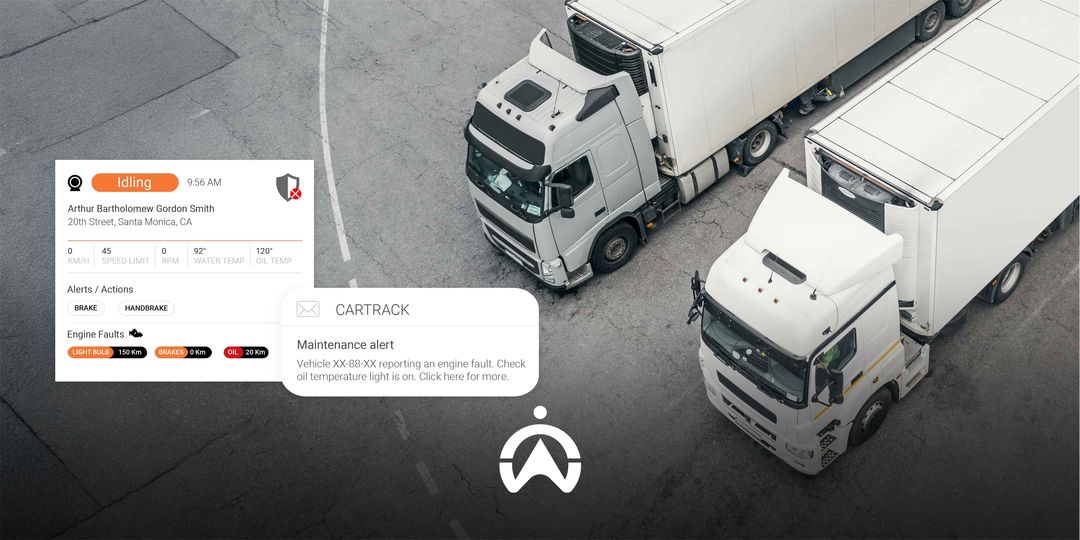
AI has become very proficient at predicting the maintenance needs of your trucks. IoT devices send pertinent information to your software platform that warns you of low fluid levels, worn tyres, or engine problems as soon as they become an issue.

Because you get an early warning, you can either schedule a service or set up the system to auto-schedule it for you. This is an excellent money-saver in three ways:

  • First, your services are scheduled when you need them, protecting the integrity of your trucks.
  • Second, you don’t pay for unnecessary maintenance appointments.
  • Third, you save time through automatic service scheduling and reduce the downtime of the truck in question.

How should drivers be coached on loading & operating your trucks?

  • ‍When it comes to loading: Road safety authorities in Malawi provide regulations and guidelines for the safe loading and operation of trucks, including the transport of oversized or abnormal loads. Drivers should be trained on these requirements to prevent vehicle imbalance, improve road safety, and reduce unnecessary wear and tear on fleet vehicles.
    ‍
  • ‍When it comes to operating trucks: This is a bit more nuanced, because different trucks have different operating guidelines. Your drivers should be coached on COMPANY expectations, which should match up with Malawian road laws.

However, it’s up to you to make sure your drivers continuously stick to these guidelines, which is why you should invest in driver monitoring software. This gives you a more focused coaching strategy, because then you’ll only be training them on individual problem areas.

This coaching will prove invaluable to your organisation, because it’ll incrementally reduce wear & tear on your trucks and keep your drivers safer too. 

Can truck drivers avoid bad roads?

Let’s further reduce wear & tear on your trucks by making sure they avoid those pesky potholes. Route optimisation is a real-time & dynamic way of directing your drivers that keeps them on roads that are in the best condition.

It’s about more than just giving them the “shortest” route—it’s also about keeping your vehicles in top condition on smoother road surfaces.

What accelerates truck wear & tear?

The wear & tear of a truck accelerates when you don’t maintain it during those times when it needs it most. Ensuring that essential fluids are always at acceptable levels and driving the truck appropriately are also important for keeping it in good health.

Truck maintenance negligence and its consequences

The challenge with maintaining your truck is that you’re never aware of what needs to be fixed unless you take it to a mechanic. While large fleets employ onsite mechanics, many rely on the expertise of outsourced professionals.

If the truck doesn’t need maintenance, you lose money by taking it to a truck mechanic who does a few routine checks and sends you on your way. If there IS something wrong with your truck, it may be weeks or even months before its scheduled service, which leads to further breakdown and safety issues before it’s checked.

This is a major cause of accelerated truck wear & tear. Because maintenance isn’t managed properly, the truck’s most essential components suffer damage. This means they need to be replaced when they could’ve been fixed to avoid extensive wear & tear.

Common truck loading mistakes

Each truck has a set capacity, placement, and type of load it can carry. These loading guidelines are prescribed for a reason, but many truck owners & drivers ignore them.

  • Overloading the truck is the most obvious, and this causes massive strain to the engine, the wheels, and other essential components.
  • Cargo fastening can cause goods to fall off and damage various parts of the truck.
  • Imbalanced loads inflict uneven weight distribution, which negatively affects the tyres, the wheel alignment, and the shock absorbers.
  • Packing goods incorrectly can actually make the truck unstable on turns, especially when heavier items are placed on top of lighter ones.

Driving habits that cause wear & tear on trucks

You’re not there to see how your drivers treat your trucks, and too many truck drivers are ignorant to the fact that their driving can raise your maintenance expenses and total cost of ownership (TCO). Constant speeding, unnecessary idling, or dangerous cornering are all habits that should be weeded out of your driving staff’s habits.

The effects of bad roads on trucks

Many countries deal with bad infrastructure, and Malawians are keenly familiar with this problem. Large potholes or crumbling roads increase the wear & tear of your trucks quicker than you’d like to think. Avoiding these roads isn’t always possible, but if you can cut down on routes with damaged roads, it can make a huge difference.

Which diagnostics can predict future truck problems?

Now that you know you can automatically and proactively diagnose truck issues before they become a crippling issue, the next question is, “Which diagnostics?” Let’s highlight some of the many truck diagnostics Cartrack’s AI-powered predictive maintenance offers you.

Most important: Engine

Temperatures, strain, RPM, and other factors tell you exactly when your truck engine is in danger of overheating or ceasing. By catching these problems early, you can save your fleet thousands by intervening before the problem escalates.

Safety is non-negotiable: Brake pads

Brake pads endure various levels of friction and gradual wear. How would you like to ascertain their condition without having to check under the proverbial “hood”? With predictive maintenance software, this information is fed to your laptop or phone, and the information is in real time.

Engine supports: Oil and water levels

Don’t worry about relying on your drivers to fill up the radiator or do an oil top-up. Our software tells you when fluid levels reach critical levels so you’re always in the know.


Truck integrity: Suspension

To traverse the roads of Malawi, you need your trucks’ suspension to be in good condition. But you’re not the one driving those trucks, so having suspension data on-hand is invaluable in case your drivers don’t notice anomalies.

Operational safety: Clutch

The clutch of a truck is one of the more subtle components that doesn’t always indicate damage or wear. But our software detects things you can’t see without doing a thorough inspection, giving you enough warning to do maintenance.

Mobility: Tyres, steering and wheel alignment

Should you be continuously checking each tyre on your multi-tyre trucks? No, that would take way too much time! Simply rely on accurate data that detects tyre issues so that replacements can be made when & if they’re necessary.

How can you prevent truck downtime in your fleet?

Keeping your trucks healthy is important, but not ONLY because of how much they cost as individual investments. These trucks are the lifeblood of your company, and when one isn’t operating, this causes downtime—which costs you money! 

Now, you could rely on old methods: keeping your trucks on a set schedule and paying for check-ups.

You could even rely on cheap methods: getting your trucks serviced by mechanics who do the bare minimum to keep them roadworthy.

Or… you could invest in AI-driven predictive maintenance, focused driver coaching, and preventative route optimisation to keep your trucks going for longer. 

Truck longevity is one of the surest ways to preserve profits, so prioritise your assets and look after them with diligence to reap the rewards. Call Cartrack Malawi for a full quote on running your truck fleet the way experts do. 

Frequently asked questions about extending the lifespan of your truck

What’s the maximum load for an 18-wheeler truck?

The maximum load for an 18-wheeler truck depends on the weight of the vehicle when it’s empty, as well as the axle mass limitation. The weight these trucks can generally carry ranges between 28 and 34 tonnes, but with multi-axle combinations it can go up to as much as 56 tonnes.

Are tolls more expensive for trucks than for cars?

Due to the weight of trucks, tolls are more expensive for trucks. Tolls are usually calculated according to the weight of the vehicle, and these costs work on a tiered metric that charges a set amount based on where your truck falls weight-wise.

How do I prolong the life of my truck?

You prolong the life of your truck by knowing exactly when it needs a service, driving it with care, and avoiding damaged surface areas while driving it. All three of these tips can be done through fleet software technology, saving you more on your truck asset investments.
Truck Maintenance: How to Service a Truck

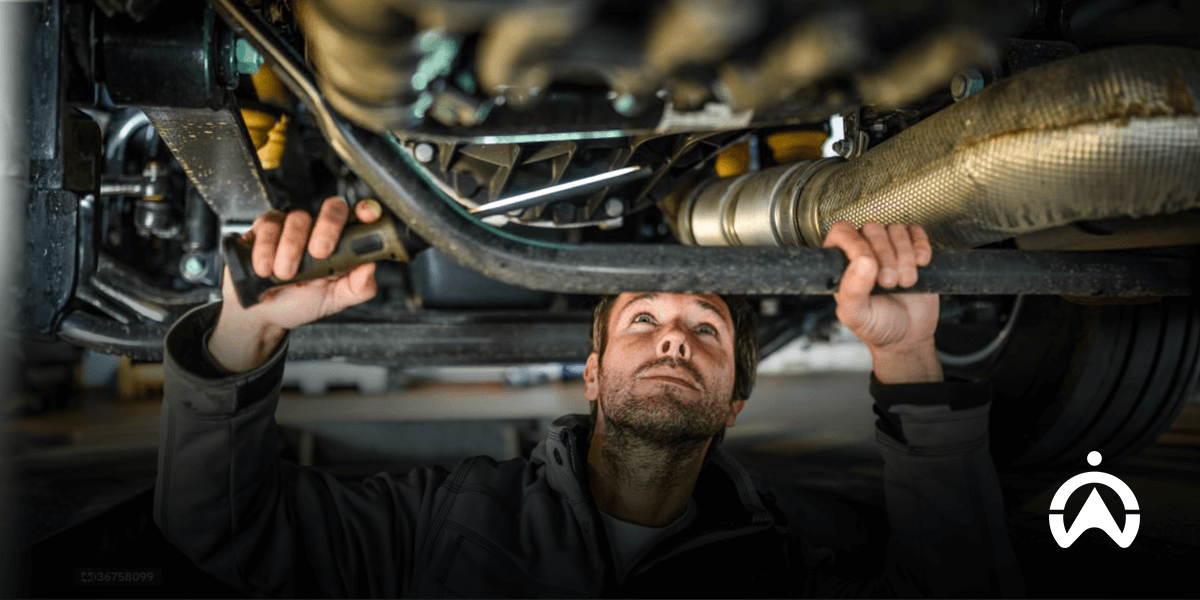
Truck service is the robust backbone for a healthy and long-living truck fleet! For this reason, placing it high on your to-do list while educating yourself on the “whats” and “hows” of taking care of your fleet is a good idea.

According to a press release by the American Truck Association, the 2022 freight cost in the United States of America (USA) consisted of 80.7% trucking, or $940.8 billion in revenue, with a clear sign of trucks taking charge when it comes to providing various goods and services worldwide.

Truck service is thus the ultimate bedrock for long-lasting vehicles and driver safety, and ignoring it can have severe consequences.

However, solutions lie around the corner – let’s take a peek.

In this article, you will:

  • Discover the negative consequences of ignoring truck service
  • Distinguish between truck service and maintenance
  • Discover the negative consequences of ignoring truck maintenance
  • Uncover the different types of truck maintenance
  • Learn about what maintenance needs to be done to a truck
  • Discover more about Cartrack’s fleet maintenance and service solutions

How to service a truck: a guide to minor and major services

To service a truck, you usually respond to what is wrong with your vehicle or fleet at that moment and determine what needs fixing. Service is not regular or scheduled but somewhat responsive. However, if you choose, you can receive general services, which fall under minor and major services.

Let’s find out more about the two to gain a deeper understanding.

Minor services include:

  • Oil and filter changes
    ‍
  • Brake pad inspection
    ‍
  • Fan belt inspection
    ‍
  • Checking the clutch fluid
    ‍
  • Checking tyre pressure

Major services include:

  • Full vehicle inspection
    ‍
  • Replacing brake pads, or spark plugs if needed
    ‍
  • Inspecting the speedometer or brake leaks if needed
    ‍
  • Cleaning general components

The cost of ignoring truck service

Each minor and major truck service is an important milestone for your fleet’s health. Here’s what happens if you don’t service your trucks when you should.

Decreased reliability and longevity

When you service your truck, you get a healthy engine. This, in turn, increases the engine’s and the truck’s lifespan. Failing to do so will lead to a damaged engine with a limited lifespan.

Reduced Safety and security

Service focuses on all parts of a vehicle, all of which play an important role in the overall functioning of the truck system. Establishing that all these parts are in order leads to a secure truck without any unforeseen risks of failure.

Loss of costs, business, and clients

While servicing your truck, especially on a recommended regular basis, can be costly, it is an investment that will save you significant money in the long term. Neglecting to service your truck will increase the likelihood of issues and problems, shorten the truck’s lifespan, and drain your pocket.

Servicing also increases fuel efficiency, which helps save some extra cash.


An introduction to truck maintenance

Truck maintenance is the consistent and regular caretaking of your truck or fleet for various basic issues, such as checking oil or brakes. This goes hand in hand with service, but definite differences distinguish them from one another.

The difference between truck maintenance and truck service

The most straightforward way to tell the difference between maintenance and service is that maintenance is a broad approach to caring for your vehicle or truck, while service is a more specific approach to vehicle upkeep.

While maintenance and service can include similar methods of taking care of trucks, such as checking oil and brake inspection, maintenance implements this on a more regular basis. In contrast, services occur only on an as-needed basis.

Maintenance involves a regular schedule that consistently focuses on what vehicles need. This includes inspections, filter or oil changes, and checking tyre pressure. Service is not a consistent approach but a particular, targeted one. Service is sometimes only implemented when something is especially wrong with a truck or vehicle—fixing headlights or tending to engine damage are two examples.

Both are incredibly important. Maintenance ensures a long vehicle lifespan. Services are always available if a vehicle or truck faces more particular problems—usually due to maintenance neglect.

In its 2014 document, “Better Truck Maintenance,” The Abu Dhabi Department of Transport stressed the importance of truck maintenance. The document stated, “A planned safety inspection and maintenance system aimed at meeting the annual test standard at all times will improve truck operating standards, reduce truck accidents, and, as a result, improve road safety.”

The cost of ignoring truck maintenance

Truck Maintenance shares points of negative consequences when you do not approach them seriously, but they show up in completely different ways.

Decreased reliability and longevity

Constant and planned maintenance increases truck reliability and lifespan and ensures that many of the vehicle’s parts are in consistently good health. Neglecting maintenance and steering from the consistency of a schedule will cause quick deterioration and increased vehicle downtime that negatively affects your fleet’s efficiency.

Reduced Safety and security

Rules and regulations are there for a reason. From the state of your vehicle lights to flat tyres, brake problems, and many other issues, these laws ensure that your truck is roadworthy—ensuring your safety and that of other road users.

It is easy to predict that if you do not follow these regulations and rules, you might end up in a world of trouble, having hurt yourself and, worse, others.

Loss of costs, business, and clients

Delays cost businesses. Companies need to implement a maintenance plan to avoid unnecessarily losing profits. Beyond profit loss, it can affect your business’s productivity. This leaves customers disgruntled or no longer desire to purchase your services or products–Ouch!

The different types of truck maintenance

There are many types of truck maintenance, each with a different role. Learning about the “whats” and “hows” of these maintenance types will help us understand them deeply.

These factors will also influence how you, your team, or professionals approach your own “how-to” method.

For this reason, placing them high on your to-do list while educating yourself on the “whats” and “hows” of taking care of your fleet is a good idea.

They include corrective maintenance, preventive maintenance, condition-based maintenance, predictive maintenance, and proactive maintenance.

Corrective maintenance

Corrective maintenance is implemented after an issue or breakage has already happened. It is also sometimes referred to as “reactive maintenance.”

Preventive maintenance

Prevention is always better than cure—this is the exact concept that preventive maintenance is based on. This well-known principle applies to maintenance as well as medicine. Preventive maintenance allows for early identification of issues so they do not snowball into unmanageable crises.

We have many solutions and systems geared toward preventive maintenance, such as risk reports. These reports on our fleet management app note harsh driver behaviour, such as speeding or harsh braking. This prevents possible future vehicle damage and threats to driver safety.

Condition-based maintenance

Condition-based maintenance is different in that it rids the need for scheduled maintenance. Instead, using collected information, it predicts when trucks will require maintenance and what kind of maintenance they need.

Predictive maintenance

Predictive maintenance combines data with prediction models to understand, diagnose, and tackle possible fleet-related complications awaiting on the horizon.

Using our application’s Dashboard can help you tackle future problems. Compare different data from your fleet of trucks over your chosen period–this will help you track and tackle multiple issues.

You can choose three out of these empowering seven options to source data from:

Proactive maintenance

Proactive maintenance will use information, analytics, and data to understand specific future problems. This will allow it to apply preemptive solutions that focus on fundamental issues.

What maintenance needs to be done on a truck?

Now that we understand the basics of maintenance and service, we can finally learn how to take care of trucks. This topic is all but simple – so here is an easy-to-reference-starter-pack list:

  • A regular schedule: Businesses or truck owners should maintain a regular truck maintenance schedule. Consistency is key!
    ‍
  • Oil checking: Regular oil checks safeguard all vehicles, including truck engines. If you don’t consistently do this, engine failure lurks around the corner–no one wants that.
    ‍
  • Keep on the pulse: Keeping up to date with what and when maintenance has been performed is a great way to ensure that your trucks are getting the tender care they need and deserve.

Using Cartrack’s application, you can access the MiFleet option. Using this solution, you can keep track of and download maintenance reports over your chosen period.

  • Tyre maintenance: Regular tyre upkeep ensures that trucks run smoothly and promptly. MiFleet can also keep track of tyre operations. It sends the relevant person or business a report of these operations. These reports outline the information according to the person or company’s chosen timeframe.
    ‍
  • Inspecting brakes: Overlooking brake inspection will lead to nothing but regret, especially if they stop working mid-journey and you’re stuck in the land of nowhere.
    ‍
  • Battery health: A working and healthy battery is vital for a functioning and reliable vehicle.
    ‍
  • Air filtration: A clogged air filter reduces power, while a well-functioning one contributes to a smooth-running engine. Ensure that you schedule regular air filtration cleanings.
    ‍
  • Exterior lighting: Exterior lighting secures your safety and that of other road users. Make sure to replace any exterior lighting that is not working.
    ‍
  • Clutch and gearbox: The clutch and gearbox are used regularly on the road and should be inspected.
    ‍
  • Listen to the professionals: Invest in a professional, such as a repair shop or an experienced, hands-on engineer. If this is impossible, do not stray from the owner’s manual.

The importance of professional assistance

It is easy to look at trucks in isolation and how they affect those closely connected to them. From negative profits to driver safety, these close-to-home considerations are crucial. However, in the broader society, from shops that buy in bulk to consumers who need their vital goods and services, there is a chain reaction to companies neglecting their fleets’ health, with more reaching consequences.

This is why companies, big or small, should consider investing in professional services instead of maintaining and servicing trucks manually.


Get the best fleet maintenance and service solutions with Cartrack Malawi

If you’re looking for professional assistance, Cartrack Malawi provides an all-in-one solution for all your maintenance needs.

Maintenance and service solutions

Our maintenance services offer many benefits, such as automated scheduling, a reduction in waste-of-time downtime, and pre-trip inspections. They also include updated maintenance logs, service management, and less money spent on overall maintenance.

Let’s discover the details:

  • Maintenance logs: By recording digitalisation, you consistently document maintenance-related tasks for records and reference purposes, so accurate data is available whenever you need it. Service management is another type of maintenance logging that allows you to track whether your vehicles or trucks are en route to being serviced.
    ‍
  • Real-time engine diagnostics: Cartrack’s vehicle diagnostic tools are CANBus-powered. CANBus allows all your vehicle’s parts to transmit and, in a sense, “talk” with one another. These communications between parts can then diagnose engine issues, helping you to react before damage becomes too extensive and costly.
    ‍
  • Preventive maintenance: Preventative maintenance alerts let you know proactively when you need to take your vehicle in for maintenance or service. These alerts are triggered based on the vehicle’s odometer readings, which show when the next service is due based on the kilometers travelled or recent service dates provided on maintenance logs.
    ‍
  • Vehicle inspection checklists: Use our Field Service/Delivery App to create pre-trip or vehicle inspection checklists based on your fleet and business’s unique needs.

Keep your fleet’s health on track with Cartrack Malawi

From service and maintenance to security and driver safety, Cartrack Malawi cares about your fleet’s longevity from all angles. Take control of your fleet’s health—contact Cartrack Malawi today.

Your pressing questions answered

Q1. What maintenance needs to be done on a diesel truck?

Filters are a significant issue for the health of a diesel truck. Therefore, filthy filters are a massive maintenance no-no. Fuel filter change is paramount and highly emphasised in diesel truck maintenance.

Frequent oil and air filter changes, as well as coolants, are also vital.

Q2. How do you keep a diesel engine healthy?

In line with general diesel truck maintenance, dirty fuel filters should not exist, so changing fuel filters is a must. You should also clean your engine regularly, replace oil when needed, and keep an eye on your air filter.

Q3. What is basic maintenance for a semi-truck?

Temperature and weather are core to how you approach semi truck maintenance, with differing atmospheres calling for different specifics.

For example, warm weather calls for inspecting the air conditioner. The electrical system should be checked for corrosion, and the wires should be secure. Keeping an eye on the tyre pressure is also very important. During the heat, it is also essential to have an annual flush, pressure test, and draining of the coolant.

Q4. How long is the useful life of a truck?

The lifespan of trucks depends on the model and type and, of course, how well they are maintained. For the most part, the average truck will last up to or slightly over a decade.

With Cartrack Malawi, our various solutions will propel your truck or fleet’s lifespan to its ultimate limit. Contact us today to discover your fleet’s fountain of youth.