How fleet managers can improve employee productivity and increase efficiency with actionable insights

Have you ever wondered how fleet businesses keep their operations running smoothly, productively, and profitably?

From dispatch to delivery, operation costs to business profits, there is a lot of work involved in fleet management. Behind every productive and successful business is an efficient fleet manager with the best fleet management software.

‍Firstly, what is fleet management?

The term fleet management refers to the management and supervision of vehicles such as cars, trucks, or vans that are used for business purposes. Fleet management does not only refer to a single task but a process involved in overseeing the entire fleet operation, from employee performance to fleet performance.  

The fleet management process includes:

  • Managing fleet vehicles
  • Tracking task completion rates 
  • Improving driver safety and productivity
  • Ensuring vehicle maintenance
  • Analysing fuel costs and managing fuel consumption
  • Optimising routes for on-time deliveries 
  • Using actionable insights to make strategic decisions 

All these tasks are undertaken to increase employee productivity, ensure fleet operations run smoothly, improve customer experience and increase profits while reducing operational costs and time wastage. 

To better understand fleet management, let’s take Bill as an example. Bill is a fleet manager for a small fleet business in the health industry.
‍

What is a fleet manager and what do they do?

As a fleet manager Bill is responsible for all aspects of the fleet business, this includes directing and managing fleet vehicles, resources, and costs. This role requires efficient use of time, and excellent leadership and decision-making skills to effectively oversee fleet assets and increase fleet performance. Even though Bill’s daily routine may differ slightly from that of other fleet managers who work in different fleet industries, they all share common responsibilities which include:

  • Managing, overseeing, and supervising fleet operations
  • Hiring quality drivers and monitoring driver behaviour and performance
  • Creating and managing driver tasks and schedules to maximise productivity
  • Ensuring the fleet remains compliant and avoids unnecessary setbacks
  • Implementing fleet management strategies to reduce fleet costs and increase productivity
  • Creating and using detailed reports
  • Organising paperwork and administration 
  • Ensuring regular vehicle maintenance for operational efficiency and minimising downtime
  • Meeting customer expectations and ensuring a high level of customer satisfaction 

It’s challenging for Bill and other fleet managers to efficiently manage their fleet’s daily tasks while boosting profits. Therefore, they use fleet management software to help them manage small, medium, or large fleets efficiently. This type of system allows them to receive reports, data, information, and actionable insights designed to improve fleet operations and productivity.

Let’s gain a deeper understanding of this fleet management software.

Table with meeting, papers, computers discussing actionable insights
What is a fleet manager and what do they do?

Who uses fleet management software and why? 

Fleet management software is a computer software that simplifies the work of a fleet manager by using GPS tracking so managers can: 

  • Track fleet vehicles and assets 
  • Monitor driver behaviour and performance 
  • Measure task completion rates 
  • Manage and reduce operation costs 
  • Schedule regular vehicle maintenance
  • Ensure fleet compliance

Manually managing all the above can be challenging whether it is one vehicle or an entire fleet. Businesses use fleet management software to simplify the fleet management process by gaining a birds-eye view of the entire fleet operations with an all-in-one platform. This way, Bill or any other fleet manager can improve safety, reduce fleet costs, increase vehicle lifespan, receive real-time fleet alerts, optimise routes, and increase customer satisfaction – all remotely, from his fingertips. 

Fleet management software is useful for any company that needs commercial vehicles and drivers to conduct everyday business. This includes businesses in the following industries:

  • Food transportation 
  • Public or private transportation 
  • Construction
  • Health and emergency services
  • Courier and package delivery services

With the use of fleet management software, fleet managers in the above industries can successfully manage a fleet business by efficiently overseeing driver behaviour, internal and external factors that impact fuel prices, customer expectations, and vehicle maintenance – just to name a few. 

Fleet insights connected in country
Who uses fleet management software and why? 
‍

4 benefits of fleet management software

There are multiple ways that fleet management software benefits fleet operations. Let’s unpack four of these:  

  1. Fleet management provides fleet visibility: Fleet management software integrates vehicle telematics to provide fleet managers with a complete view of all fleet activities. Fleet managers can use real-time visibility or historical data to make data-driven and informed decisions regarding deliveries, routes, tasks, costs, and safety, as well as exonerate drivers or expedite insurance claims.
  2. Fleet management reduces fuel costs and consumption: Fuel costs alone can amount to approximately 40% of fleet expenses. With fleet management software, fuel costs and consumption can be reduced by using GPS vehicle tracking to detect fuel wastage and find solutions, for example:
  • Idle time: A bus wastes 3.5 litres of fuel per hour of idling, a medium-heavy truck wastes 3 litres, and a large sedan wastes 1.5 litres.  With fleet management software, fleet managers can detect idling and educate drivers about the need to reduce idle times.
  • Delivery time: Quickturnaround times translate to less mileage and less fuel used. Fleet managers can use fleet management software to optimise the most efficient routes, access driver and vehicle information, and monitor traffic and weather.To ensure drivers have quicker turnaround times.
  • Driver behaviour: Speeding, harsh braking, and cornering are some of the driver behaviours that waste fuel. Fleet management software allows fleet managers to monitor driver behaviour and receive real-time alerts in the case of poor driver performance.

With Cartrack’s easy-to-use Mi-Fleet software, fleet managers can easily manage and control fuel transactions, pinpoint fuel wastage, and detect fuel fraud. This saves fuel, money, and admin. 

  1. Fleet management increases employee productivity and safety: Managers can ensure fleet operations are both safe and productive by using fleet management software that manages vehicle maintenance, reduces downtime, improves driver behaviour, optimises routes, monitors vehicle and driver safety, and boosts employee efficiency.
  2. Fleet management increases customer satisfaction: In the age of fast internet, online shopping, and same-day delivery, customers have become less patient and have high expectations. 61% of shoppers would like to have their items delivered within three hours of making an online purchase. With GPS tracking as a fleet management solution, fleet managers can increase customer expectations by optimising routes and ensuring that drivers remain on course with delivery schedules. GPS tracking further allows customers to track their deliveries in real-time while fleet managers can keep drivers updated on any emergencies or changes to deliveries. 

Any fleet industry or size can reap these benefits if a fleet operation is efficiently managed. For fleet managers to effectively manage a fleet business, teamwork and well-maintained assets are vital. In contrast, having a non-functional team and ill-maintained assets can lead to an unfulfilled fleet manager role and an unsuccessful business operation. 

Top-four productivity challenges fleet managers face

Productivity is the key to a successful business story. As a fleet manager, Bill’s job is to maximise the fleet’s productivity. The productivity of a fleet operation is dependent on a fleet manager’s ability to efficiently manage the fleet. However, fleet managers may struggle to effectively meet their responsibilities and efficiently manage a fleet operation because their role is dependent on the productivity of employees, the state of the business assets and resources, as well as external factors such as inflation rates. 

These are the top four productivity challenges that fleet managers face: 

  1. Time and energy spent on admin and paperwork: The administrative overload from fleet management tasks such as invoicing, creating reports, creating driver schedules, scheduling vehicle maintenance, and following up with drivers and customers can be challenging and time-consuming. Fleet management software provides an efficient, cost-effective, and paperless way to handle admin by digitising and automating day-to-day operations on one cloud-based platform 
  2. Unplanned vehicle downtime: The time vehicles spend off the road due to incidents such as breakdowns, collisions or delays in maintenance and service schedules, hinders the fleet operations productivity and profits. Rather than waiting for unplanned vehicle downtime, fleet managers can use fleet management software to perform vehicle diagnostics and automate maintenance schedules and reports to keep their vehicles on the road, maximising productivity and ultimately profits.
     
  3. Unsafe driving: Unsafe driver behaviour such as speeding, harsh braking, cornering, and fatigued driving increase the risk of accidents and damaged goods. This means more time and costs spent on repairing vehicles, insurance claims, and replacing and re-delivering customers’ products. By using real-time alerts of poor driver behaviour and driver scorecards for performance-based feedback and training, fleet managers can improve driver behaviour and boost productivity.
  4. Unclear communication:  Another big one is communication or the lack thereof, especially on tasks, schedules, and pick-up and drop-off locations which can lead to an unmotivated and unproductive work environment, as well as time and costs wasted on wrong deliveries. Fleet managers must ensure drivers are well-informed, well-rested, and well-trained.  Fleet management software can automate certain tasks and managers can use actionable insights to improve fleet productivity and efficiency.  

    ‍
Fleet manager with computer / tablet
Top-four productivity challenges fleet managers face
‍

Actionable insights to improve fleet management and employee productivity

Actionable insights can be defined as data and information about a business that can be used to make business decisions and achieve business goals. This refers to data and information that can be translated into action (whether decisions or performance). When used effectively, actionable insights lead to improved employee productivity and business growth.  

This way, Cartrack can help fleet-based businesses get more productivity out of their employees, assets, and resources. 

Top-three actionable insights by Cartrack to help improve employee productivity:

1. Contextualised metrics for strategic decision making:With the use of the fleet’s operational, administrative and financial data, Cartrack produces tangible data so fleet managers gain insight into the fleet operation that they can actually use to make accurate strategic decisions.

For example, the fleet’s operational, administrative and financial data can be used to determine the cost per job. If the cost per job is too high and outweighs the profit per job, fleet managers can use this information to decide on cost changes and direct actions to reduce fuel consumption, optimise routes or decrease idling time.

2. Comparable metrics to pinpoint challenges and solutions: This allows fleet managers to compare metrics across drivers and vehicles to pinpoint leakages, identify challenges and solutions to tackle them, and spot where to optimise time and increase productivity. 

For example, fleet managers can compare cost differences per task per vehicle based on driver behaviour, vehicle maintenance costs, fuel costs, and cost per kilometre. If one vehicle’s costs are significantly higher than others, fleet managers can pinpoint the challenge and tackle it.

This information can be used to further empower, educate or train the driver to use assets, resources, and time more productively.

3. Instant insights to spot unproductiveness:This helps fleet managers instantly find the information needed and stay in the know of any unproductive areas of the fleet operation. Whether it is time per delivery, data on a specific vehicle, or driver behaviour – fleet managers can receive instant insights in case they need the information urgently.

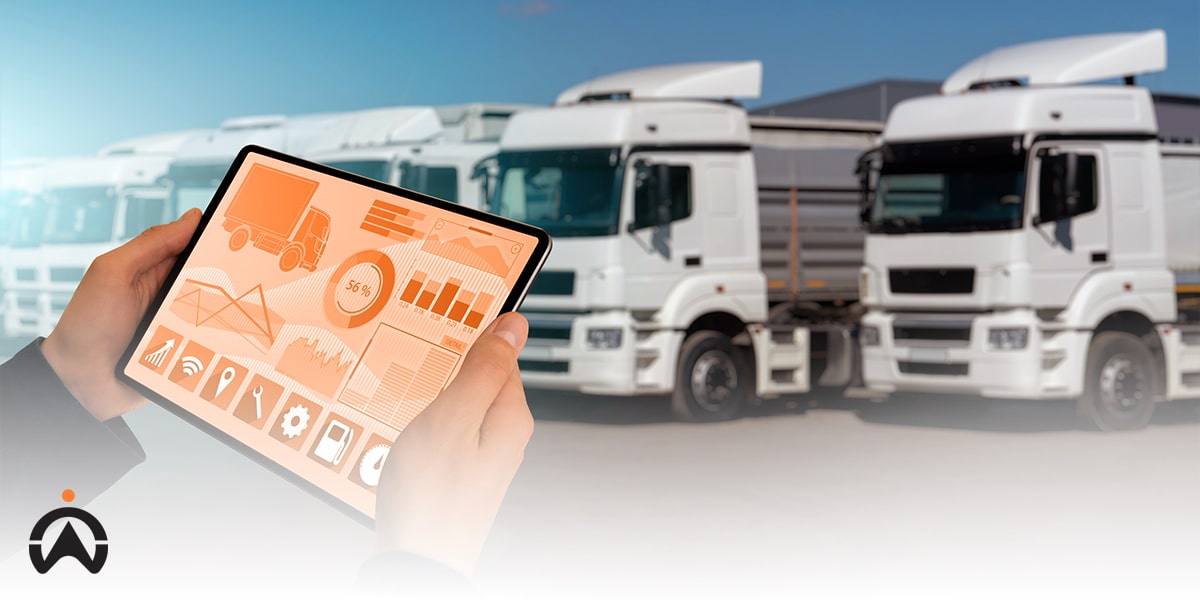
Cartrack gives fleet managers an overview of fuel consumption, unproductive idling, safety, and vehicle utilisation on a dashboard, all within just one click. Fleet managers can further use the filters to specify what information is needed- this saves hours that would be spent analysing data.

 Improve employee productivity with Cartrack today

Get actionable insights to improve employee productivity with Cartrack’s easy-to-use platform that gives you an overview of your fleet’s operation. 

Get a quote today and say goodbye to the downtime! 
How trailer tracking technology helps you manage, monitor and protect your trailers

Trailer tracking is just one of the many tools used to help make a manager’s life easier. With it, you can efficiently monitor and gain access to your assets from anywhere through our cloud-based solution.

It wasn’t that long ago that employees had to go out of their way to get information. Taking time to write down the trailer number, note the location, and record any onboard cargo leaves you with less time to actually use your assets.

When trailers were on the road, manual counting was more challenging and often required a phone call, or two, for the fleet manager to get an exact location. If a trailer went missing during transit or was stolen days could pass before the company found out.

Trailer tracking technology changed all that.

Telematics and asset monitoring for trailers

Although many businesses use GPS trackers for better trailer management, many don’t know the full extent and potential of these little gadgets, i.e a GPS device, in fleet telematics.

Telematics is the smart technology used through a GPS tracking device installed in their vehicles. It gathers and stores all vehicle and trailer data and compiles it for easy management and access through a fleet platform.

Like many fleet technologies, telematics is mainly used for tracking assets like vehicles, trailers, generators, IT devices and expensive equipment. This is used for damage prevention, asset protection and overall asset tracking within the fleet.

What is a trailer tracking device and how does it work?

With GPS technology advancing faster than many people imagined, we are only beginning to realise the true value that it adds to the transportation and logistics industry. One of the most promising uses of this technology is in asset protection through trailer GPS tracking.

There are two parts to the commercial trailer tracking systems.

Battery or solar-powered – A trailer tracking device is attached to the trailer itself which emits a GPS tracking signal that communicates through the use of a cell modem. This allows the user to find out where the trailer is at any given moment.

The software – This is what receives the signals sent by the tracking device. The software can translate the signal from the trailer tracker and put the information onto a map, showing the exact location, whether the trailer is stationary or moving, and in some cases, whether or not it is tethered to a vehicle.

What is a trailer tracking device and how does it work?

Why track your assets?

Businesses invest in many things to generate profits, like their employees, vehicles and overall trailer assets. Physical assets could include any equipment, technology, or machinery that an entity uses to provide a service to themselves or their customers. All these different types of vehicles and site equipment are valuable for the business and need to be protected.

Asset tracking is used to track a business’s assets. It gathers any GPS data related to them, such as their current location, maintenance conditions, when last it was in use, for how long and by whom. This is achieved by equipping the assets with a tracking device.

Asset tracking is useful for: 

  • 24/7 trailer surveillance
  • Movements of the asset
  • Usage of the asset

Apart from your trailer’s protection, asset and trailer tracking is used for productivity and easy management, having a tracking device automatically tells you how long one of your trailers has been used in a day, and by who saves loads of time in calculating, it also helps add up working hours so you can bill clients or pay employees more accurately.

The real-time vision of their trailers gives fleet managers insights into their assets whether on-site or on the road. Using fleet trailer tracking units and software not only makes their job simpler but can also boost the organisation’s bottom line.

Asset tracking devices for theft prevention

So it happened, you clock in one morning, open your emails and read that one of your trailers was damaged or stolen while unattended. Now what? Most of the time, criminals would strip the trailer and remove the trailer’s vehicle identification number (VIN) before you even notice your assets are gone.

This happens all too frequently, costing businesses time and money. Every company that uses trailers understands these struggles. The dangers of leaving your assets unguarded, the area where they are left alone, the chance of the item getting stolen or used without our consent, and the list goes on.

With a trailer tracker, you will immediately know that something has gone wrong. An alert would be immediately sent out, giving you enough time to call the authorities and find your missing trailer, and you can receive all this info via your mobile device. 

Types of trailers that can be tracked

Realistically, GPS trackers can be installed onto any moving vehicles and stationary assets. Cartrack’s tracking units can be easily installed on all types of trailers, and vehicles in use, including:

  • Flatbed trailers
  • Enclosed trailers
  • Equipment trailers
  • Open auto trailers
  • Speciality trailers

While any GPS fleet tracking device would do, partnering with an industry-leading fleet management company like Cartrack would give you numerous benefits and added peace of mind.  

Asset tracking technology

While GPS tracking is the most popular tracking method, there is more than one way of tracking assets. Finding the best asset monitoring solution for your company might be difficult given the variety of asset tracking technology available.

Bluetooth asset tracking/ Beacons: These are remote gadgets that transmit Bluetooth low-energy signals sent to another Bluetooth digital gadget or smart device to establish the location of the beacon itself. 

Radio frequency identification: Passive RFID asset tracking is a form of wireless communication that uses electronic fields to identify and track tags attached to objects. These require RFID reader devices to receive signals from the tag.

GPS-based asset tracking: GPS tracking devices are attached to any assets and can interact via cellular networks or satellites and communicate over long distances while keeping accurate, up-to-date logs for employees.

Most types of mobile asset tracking devices allow for custom alerts, notifications and even geofence set-ups for the safety and protection of your assets.

The best GPS tracking features to look out for

Before choosing an asset tracking solution, always consider your goals and ask yourself: What exactly is my business looking for and what features do we need the most?

The best tracking devices are ones that have the following features:

  • 24/7 real-time location tracking
  • Cloud-based system
  • Theft detection
  • Easy installation
  • Long battery life
  • Solar-powered technology
  • Instant reporting
  • Over-the-air serviceability
  • Interface with user-friendly mapping systems such as Google Maps or others
  • Viewing trailer trip history

Finding one device that offers all these features would be a dream, but realistically most devices are not one-size-fits-all, these features are spread out between devices that are used to track different assets in different environments. 

The best GPS tracking features to look out for

Why does GPS asset tracking matter?

GPS asset tracking is done to improve the use and security of valuable items, in this case, your trailers and the cargo they carry. Companies that fail to track assets correctly could be losing vast sums of money on an annual basis and losing the trust of their customers.

Trailer (and asset) management is an essential component of your business’s supply chain operations. Lost or delayed cargo means lost sales and unhappy customers, which can be detrimental to a business. 

Management may have a better and clearer image of where everything is, and where it is going, by connecting trailer tracking devices and their fleet management system.

By doing this, you can receive:

  • Lowered insurance rates due to aiding in trailer theft recovery
  • Software upgrades can be done digitally and don’t need the removal of the tracking device
  • Optimised asset usage
  • Increased asset and cargo security
  • Improved customer service with accurate and timely information
  • A sealed trailer tracker that can work in harsh weather and road conditions.

Different businesses that can utilise trailer tracking devices

If your assets aren’t frequently monitored, operate in unsafe locations, aren’t being utilised enough or bring value to your business, implementing trailer monitoring would be very beneficial.

No matter the fleet size, almost all industries can benefit from tracking and monitoring their trailers.

  • Landscaping
  • Construction
  • Handyman
  • Tile and flooring installation
  • AC & heating repairs
  • Transport and logistics
  • Utilities

 The benefits trailer tracking can bring your business

A fleet of any size can profit greatly from using a dependable trailer tracking system. With this, you can safeguard your trailers, get visibility and insights into their movements, and much more:

Gain complete trailer visibility – Track all your van trailers on one platform.

Increased trailer utilisation – Monitor trailer utilisation at customer sites and optimise trailers by redeploying under-utilised assets.

Protect cargo – Use smart sensors and camera systems to gain 24-hour cargo monitoring and protection against tampering or unscheduled usage.

Simplify deployment – Trailer tracking can be used on any trailer to keep assets safe.

Increase productivity – Examine past GPS data to see where you can improve trailer efficiency and usage.

Increased trailer safety – Receive instant alerts on trailer status, location, door activity and unauthorised usage for optimum security.

Trailer tracking systems use the data sent to the dispatcher to provide dependable and secure insights to shippers for better management of their various assets.

Secure trailer tracking with industry experts

Cartrack’s GPS trailer tracking technology puts you in control of both your active trailers and non-moving assets.

If you’re looking for advanced safety and tracking features, Cartrack provides real-time security with customisable geofences and alerts for your assets.

Let us help you protect your assets. Contact Cartrack Malawi today.

How to stop vehicle idling and save fuel and business costs

Is idling bad for your car? It sure is. Now imagine if you have an entire fleet idling, it surely will put a dent in your business’s bottom line – and quickly too.

Whether drivers leave the engine running while unloading deliveries, stuck in traffic, taking a roadside phone call, warming up the interior in the winter months or cooling it down in the summer, every second of idling costs.

This is how idling vehicles in your fleet costs you, and we’ll give you ways to cut down on idling and save.

What is vehicle idling?

Idling is when a driver leaves the vehicle engine running when the vehicle is parked. Every day millions of cars and trucks idle unnecessarily, which can have many implications. 

What is an example of idling? 

This could be in stop-and-go traffic, drive-through lines, or loading docks. As well as running the vehicle to power heating, air conditioning, and electronic devices. 

If you are a fleet manager with multiple drivers and vehicles, you’ll want to keep tabs if they are keeping your vehicles on for aircon, offloading while the engine is on, or idling too much in traffic.

So, what is the problem with idling? 

Idling for more than 10 seconds uses more fuel and produces more emissions, contributing more to smog and climate change than stopping and restarting your engine does. Idling also contributes massively to the general wear and tear of a vehicle, a lot more than you’d imagine. 

Let’s dive into this a bit more. 

What is vehicle idling?

How does an engine idle?

On a modern fuel-injected engine, the engine idle is controlled by the engine control unit (ECU) and electrically operated by a simple throttle stop, known as an idle screw. This screw stops the throttle linkage arm from completely shutting the butterfly valve that allows air to enter.

The throttle stop allows the butterfly valve to sit slightly open, which will then let a minimum amount of airflow reach the combustion chamber. This opening is just enough to allow a specific amount of airflow through to keep the engine running when there is no physical throttle input from the gas pedal. 

Then there’s the idle air control valve or IAC valve, which uses sensors that communicate with the ECU to adjust airflow into the engine to achieve the desired engine speed at idle.

This is something to look at next time you think of warming up the engine. 

5 reasons to stop your car from idling

  1.  Less wear and tear on parts

An hour of idling daily adds up to around 102 998 km of engine wear over a year. And that’s just for one vehicle.

According to the American Trucking Association, such wear can increase maintenance costs by almost $2,000 per year and shorten the life of the engine.

The reason is that excessive idling puts a huge amount of stress on your car’s parts. An engine running at idling speed causes twice the wear on internal parts compared to driving at regular speeds.

How does idling harm vehicle engines and systems? 

Idling can cause fuel to wash away the oil which lubricates the motor, causing friction that ages the engine prematurely. Modern engines have fuel consumption regulating sensors, and idling doesn’t warm the engine well enough to enable the sensors to respond, as the fuel-to-air ratio is too rich. Partially combusted fuel can damage engines, spark plugs, and exhaust systems.

A software platform provides driver scorecards that can help increase your vehicles’ lifespan, by decreasing bad driving habits like idling, reducing accidents, and boosting your operational efficiencies. This fuels smart business overall. 

No matter the size of the vehicles in your fleet– parts and maintenance aren’t cheap. You could be using money spent on repeated repairs elsewhere, to grow your business and expand your resources.

  1. Limit health risks

Idling creates the same amount of pollution as when the car is moving. These pollutants have been linked to negative health implications and diseases including asthma, heart disease, chronic bronchitis, and cancer. 

Some studies have even reported that acute exposures have resulted in hospitalisation due to respiratory conditions while cardiovascular health conditions result from chronic exposures to pollution. 

In addition, when sitting in an idling vehicle, there is no air flow to vent the emissions. Therefore, fleet managers should also take measures to stop idling for their Drivers’ health, as they will be exposed to vehicle pollution more so than when the vehicle is moving. 

  1. Protect the environment

According to a recent Convoy survey, reducing carbon emissions remains a critical concern. In 2022, 38% of dispatchers, drivers, and owner-operators feel pressure to reduce carbon emissions in their businesses — a 3% increase from 2021. 

Research by the U.S. Environmental Protection Agency found that transportation produces 29% of U.S. greenhouse gas emissions, the highest of any sector. 

For every 10 minutes your engine is off, you’ll prevent one pound of carbon dioxide from being released (carbon dioxide is the primary contributor to global warming). 

One wasted litre of combusted diesel fuel throws 2,64kg of CO2 into the atmosphere. 

  1. Save on fuel costs

An idling car uses between 0.76 to 2.65 litres of fuel an hour. An idling diesel truck burns approximately 4 litres of fuel an hour. One of the most impactful ways for trucking companies to create sustainability is by using less fuel. Taking measures to drive fewer miles and reduce idling is a way to reduce fuel consumption idling, and thus save on costs. 

Cartrack’s smart dashboard on the software platform shows you how much fuel your fleet uses for unproductive idling. 

  1. Cut business costs 

As mentioned, idling increases maintenance costs for general wear and tear, as well as additional fuel expenditure.

This will have a direct impact on your bottom line, and overall business profits. 

5 reasons to stop your car from idling

 4 ways to reduce vehicle idling with a fleet platform

  1. Driver behaviour reports 

A fleet management platform provides data reports about driver behaviour such as idling, rough driving, speeding, braking, and cornering. If excessive idling is identified, then fleet managers can implement actions to stop this from happening.  

The software reports can also show you which drivers are idling longer than others, so you can notify these drivers accordingly. 

  1. Educate and motivate your drivers

Some people believe restarting the vehicle burns more fuel than leaving it idling, and your drivers could be among them. 

According to the Environmental Defense Fund, idling for 10 seconds wastes more fuel than restarting the engine. 

Debunking these beliefs will encourage your drivers to switch off their engines whenever the vehicle is stationary for more than 10 seconds.

When it comes to fleet management, standard operating procedures for engine idling must be part of a training programme and safety culture. 

Fleet managers should teach drivers about engine idling impacts, and how to avoid idling– to help build best practices at the onset. Ultimately, it will motivate and empower them to improve their driving.

  1. Optimised routes 

By analysing the data provided, you can track where the most idling is taking place and why, and optimise your routes to prevent this.

Traffic congestion is another main cause of increased idle time. 

You can use telematics software to optimise your drivers’ travel routes to avoid heavy traffic where possible, thus reducing idling. 

Cartrack Delivery’s route optimisation feature uses GPS and algorithms to evaluate all the possible routes for drivers to take. The telematics software assesses multiple variables when determining the best routes, including current traffic, accidents, and roadblocks. 

Drivers can adjust their routes in progress or before they start their trips. 

  1. Geofencing

You can use geofencing to reduce the time your truck idles, by putting a geofence around common idling areas. When one of your vehicles enters the geofenced area, the telematics software will send you an alert to show how long the vehicle remains in the area.

Idling on a construction site as an example

It is common for heavy-duty equipment on construction sites to spend significantly long periods with the engine idling, due to the nature of the work– and more than necessary. In these cases, idling should be monitored with the help of idling insights from a fleet platform. Fuel is one of the largest expenses for heavy equipment and vehicles in the construction industry, which is more of a reason for it to be kept under control.

Idling on a construction site as an example

 Save on the fuel and running of your fleet today

Idling can be an expensive problem for your business, but there’s a simple fix. While making drivers aware of more cost-effective habits goes a long way, our GPS and fleet vehicle tracking software can help limit idling.

What’s more? A customisable software dashboard helps you easily monitor other key metrics that matter to your business. Improve your fuel consumption, idle rates, driver safety, fleet running costs, productivity, vehicle usage, and more.

Contact Cartrack today to find out how our expert fleet management solutions can help, as well as the latest fleet technology trends.

6 ways to improve driver behaviour and driving skills with fleet telematics software

Do you need data insights to train your drivers on the dos and don’ts? Are your fuel costs through the roof due to poor driving behaviour? 

No matter your challenge as a fleet manager, there are ways to monitor driver behaviour with the help of telematics software. 

This article is all about what you can do to empower your drivers and improve driving behaviour in your fleet – all of which give numerous business benefits you can’t overlook. 

On top of that, you will discover some factors that affect driver behaviour and driver assessments that can assist you in ensuring you hire the right drivers. 

Do you need data insights to train your drivers on the dos and don’ts?

What is driver behaviour?

Driver behaviour can be defined as the actions a driver performs while operating a motor vehicle. It’s essentially driving methods and a driver’s characteristics, either intentional or unintentional. Typically, driver behaviour is characterised on a spectrum from normal to risky and aggressive.

If you are a fleet manager, it’s useful to understand the factors that can influence your driver’s driving methods, as they can affect your driver’s ability to assess risk and make decisions on the road.

Take a look at some pointers: 

Factors that affect driver behaviour 

  • Distractions: Any action that takes your driver’s eyes off the road is considered a distraction. A common distraction is the use of smartphones for text messages and calls while driving. 
  • Reckless driving: Actions such as speeding, going through a traffic light, changing lanes without indicating, or driving too fast can put other road users at risk, all of which is considered reckless driving.
  • Fatigue: Apart from the actual dangers of falling asleep on the roads, even a tired driver may have slower reaction times than an alert driver, making it more difficult to respond to sudden road hazards.
  • Age and experience: There is a weight of evidence that proves that age and experience have effects on crash risk. For example, studies consistently found that teenage drivers had dramatically higher crash rates than older drivers, particularly drivers older than 25.
  • Driving under the influence: Drunk driving causes nearly half of all fatal accidents and numerous crash injuries every year. In South Africa, 50% of all accidents that occur on the roads involve a member who is over the legal alcohol limit. However, alcohol is not the only substance that can impair a driver’s ability to operate a vehicle. Prescription medications, illegal narcotics, and over-the-counter medicines can all cause confusion, drowsiness, and poor decision-making.

Now that you understand the factors that influence driver behaviour, there’s more you can do to ensure you hire the right drivers for your fleet.

Assessing a driver’s abilities and attitudes to driving can significantly help the employee and employer. The qualities of a good driver are derived from attitude, skills, and knowledge. 

You can consider conducting driver assessments to analyse behaviour and attitude together, after all, they are interconnected.

Here are some, so you can understand your drivers before they hit the road. 

Types of driver behaviour assessments 

  • The driver behaviour questionnaire (DBQ)

Drivers are asked questions about how they drive daily, and can indicate on a scale (0 = never and 5 = nearly all the time) how often they performed each driving behaviour on the list. 

  • Attitudes toward traffic safety scale (ATTS)

Here they asked questions about their views on road safety, which will give a fleet manager an idea about their behaviour and how they approach traffic laws.

  • Driver behaviour transactional analysis (TA)

This test will help you understand how your drivers react under pressure, and their working styles. This model will help you find out information about how they organise their work and time and communicate with each other. 

Types of driver behaviour assessments

 6 ways to improve driver behaviour and safety 

  1. Establish safety policies

Companies should create policies, procedures and safety expectations for drivers to follow. These should be signed by managers and drivers and reviewed regularly to show how committed your company is to reducing traffic-related crashes, injuries, and death. And these policies can be shown to drivers during training sessions, for example, your no-distraction policy.  

  1. Check driver records 

Check driving records and history before bringing new drivers on board. You can filter out those with poor driving history, to avoid future incidents. 

  1. Train drivers 

The best way to instil safe driving methods is to educate your drivers on safety protocol. Show them the consequences of risky driving behaviour, over-speeding, distracted driving, and more. You could also send them on a driver behaviour course to better equip them.

  1. Motivate your drivers 

Training your drivers will motivate and encourage them to perform better, as it creates a space for growth and to develop their skills. Empower your employees with the right set of values for success, creating positive practice.

You could also create incentive programs where they are rewarded for driving well, to enhance their good driving habits. 

Actionable data from a fleet management platform can be used to show your drivers the best way to drive. For example, you can pick up if one driver is idling more than others, and then you can let these drivers know. If others are following safe driving procedures, this can help motivate other drivers to reach that level too. 

  1. Maintain vehicles 

If your vehicles are maintained well, you’ll have a safer fleet overall. They will run better where you can prevent road accidents and protect your drivers. In real time, you can get alerts if there are any engine faults, worn brake pads, oil and water fluctuation, and other diagnostics, so you know when you need to service your vehicles. 

  1. Use vehicle telematics software 

Use the smart data from a fleet management platform to get the insights about driving behaviours and methods you need. You’ll be able to pick up events such as speeding and harsh braking, and put systems in place to stop these incidents in their tracks.

Here’s more on how telematics software can help you monitor the drivers in your fleet. 

6 ways to improve driver behaviour and safety 

How to improve driver behaviour through a fleet telematics management platform

As we know, there is a benefit in identifying unsafe driving methods. Insurance companies always look for ways to reduce insurance claims and road accidents by monitoring safe driving habits on South African roads. 

We also know that safe driving impacts the longevity of a fleet and can help cut costs.

Here’s how a fleet platform can help you improve driver behaviour:

  • Driver behaviour reports

Get driver scorecard data reports from a fleet platform and get the driver insights you need to pick up idling, aggressive driving, speeding, and more – all of which are costly to a fleet. 

Also get detailed reports for each behaviour. Say for instance, speeding is an ongoing trend with one of your drivers, then pull up a detailed speeding analysis. It could have detailed locations, duration and distance travelled over maximum speed limits, so you can get the full picture of a speeding incident. Or maybe your fuel costs spiked, get an excessive idling report to see if this is the cause. 

On-demand trip reports can also be retrieved if you want to analyse and compare all your vehicles, and the drivers using those vehicles. 

These reports will help fleet managers take real-time measures to mitigate issues.

  • Driver behaviour alerts and reminders

With all the daily tasks a fleet manager faces, a fleet platform will help with its alerts and reminder features. Managers can customise driver behaviour alerts and receive the info they feel is necessary. So they can create a trigger alert for when the ignition is on and off, and choose where they want the alert to go, i.e. email. Or get alerts in real-time when safety rules aren’t followed, and correct this immediately. 

Drivers can get preventative in-cabin alerts in real-time too, so they know when they are breaking the rules of the road or safety violations. For instance, if they are not leaving a proper distance from the other vehicle.  Also create reminders for certain events, so for example, maybe you want to be reminded to check a certain route a driver is taking, to see if speeding persists. 

  • AI-powered cameras

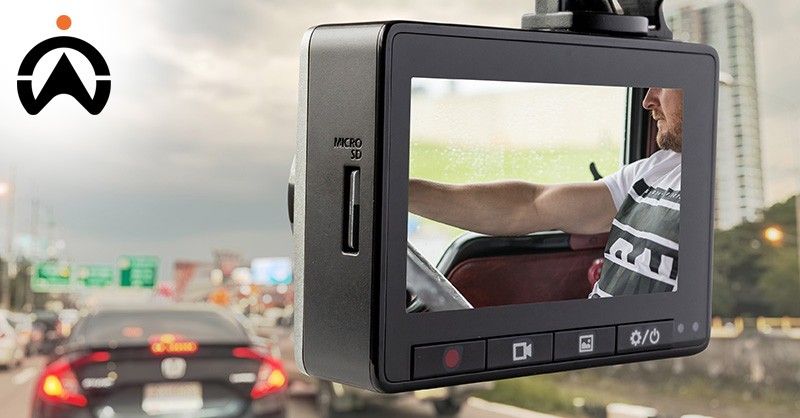
Get up to eight internal or external cameras to help keep your drivers, fleet, and cargo safe. These cameras can pick up all sorts of detection including front collision warnings, smoke detection, distracted driving, yawning, and more. Smart In-cabin screens keep your drivers safe and they can get visibility of their blind spots, and the cameras alert them in real-time of any dangers or issues. With the footage, you’ll also be able to protect drivers from false accident claims. In the event of poor driving, fleet managers can also use the footage to bring up the incident with the driver in question. 

Benefits of improving driver behaviour monitoring system

Choose Cartrack’s software and GPS tracking system and you’ll get these benefits: 

  • Reduce costs as poor driver behaviour will be picked up and accidents can be prevented
  • Ensure compliance with the law in your company
  • Identify harsh driving methods to ensure safety compliance on the roads and to protect your fleet
  • Protect your drivers as they will be notified in real-time if they are not driving correctly
  • Provide accountability with driver ID tags or identification
  • Save on running costs such as fuel and maintenance, and increase your vehicle’s longevity

Make your fleet and driver’s behaviour as safe as possible, with fleet management software from Cartrack. 

Get in touch with us today.

How to improve environmental fleet sustainability with vehicle maintenance

Improving the environment, becoming a more sustainable business and reducing your fleet’s fuel and CO2 emissions sounds pretty good, especially when it means cutting your fleet costs and attracting more customers.

Implementing green initiatives is becoming an increasingly appealing business approach for many fleets. Green fleet practises not only generate a positive public attitude. They also take advantage of “green” government laws and incentives that cut fuel expenses and increase the profitability of your fleet, doesn’t sound like a bad deal does it?

Like most things worth having, transitioning into a cleaner fleet isn’t easy. Fleet managers have to research, plan, and finally, implement the many changes that come with achieving fleet sustainability.

A manager’s role in sustainable fleet management

Fleet management is simply a manager’s day-to-day. They oversee all movements and activities of fleet vehicles and drivers, to ensure deliveries are made and jobs are done on brief and on time. Additionally, they ensure drivers are kept safe, practising good driving behaviour and are compliant with regulations.

Overseeing all fleet operations is sometimes a stressful and overwhelming task. To efficiently be on top of everything, fleet managers use fleet management systems to increase visibility and allow for better management of their assets.

With fleet management systems, fleet managers can achieve: 

  • Reduced overall fleet costs
  • Track vehicle movement
  • Streamline deliveries
  • Improve fleet safety 
  • Increase driver retention 
  • Keep vehicles up to date with scheduled maintenance 
  • Comply with regulations

With all the responsibilities that fall towards fleet managers, the most important part of their job is being able to see the bigger picture and make informed decisions that will bring the business closer to reaching its goals.

With the help of technological innovation within the fleet industry, fleet managers can now do much more than they could in the early 2000s. Technology has paved the way for fleet managers to optimise operations and coordinate their systems and employees. 

Fleet management systems do their part of automating all administrative tasks to equip fleet managers with the necessary insights to efficiently run their fleets.

Almost every decision managers make, they decide in favour of the business. Creating a balance between tightening capacity and increasing demand while dealing with driver shortages, fluctuating fuel prices, and keeping up to date with the industry’s regulations, all contribute to improving the business.

Fleet sustainability

Many businesses are now prioritising sustainability, pushing managers to add one more thing to prioritise – fleet sustainability.

Reducing the fleet’s carbon footprint goes hand in hand with lowering fuel usage and costs. So, to achieve favourable and lowered fleet costs, the first thing to do is to determine how much carbon a fleet contributes.

How do you calculate your fleet carbon footprint?

The amount of COI2 emissions your fleet produces solely depends on how much fuel gets burned, so how much CO2 does your business actually burn? This calculation will help you find an answer. 

There are two ways to efficiently calculate the environmental impact of our fleet.

1. Mathematical estimation.

Find out how many litres of fuel your business buys every month, if you don’t have this information, you can take the number of miles your fleet completes in a month and your average miles-per-gallon (MPG).

With the miles and MPG, you can calculate the number of litres of fuel your fleet burned.
Alternatively, one litre of diesel is 2.68kg, while petrol is 2.32kg. You can multiply your litres by 2.68 or 2.32 and get your kilograms of CO2.

2. Accurate measurement.

This is a more precise method that involves telematics. Telematics is used along with fleet management systems to monitor and track all your vehicles, gathering information from their location and speed to their idling and fuel usage.

Either than estimating, you can see the real MPG of each vehicle at any point in time with live fuel consumption rates and reports that highlight options to improve fleet health and easily get your fleet monthly emission.

How do you calculate your fleet carbon footprint?

Creating a sustainable fleet management strategy 

After deciding on ‘going green’, a sustainable fleet management strategy is created. This is a method that aims to positively impact the environment and reduce the environmental harm your fleet is causing. 

This method ultimately promotes efficient driving and minimises a fleet’s carbon footprint through healthy driving practices such as optimised routes, proactive vehicle maintenance and looking towards integrating electric vehicles (EVs) into a fleet.

All activities a fleet can partake in to reduce environmental, social and economic impact are included in these six key areas:

  • Prioritise cleaner vehicles
  • Utilise electric vehicles
  • Improve staff behaviour
  • Practice effective and timely maintenance
  • Utilise route optimisation
  • Get Cartrack’s fleet management solutions

Electric vehicles for fleets

Electric vehicles have been a trending topic of previous years and still seem quite relevant. These vehicles can be of service in light-duty, medium/heavy-duty and even off-road applications. EVs can match or surpass the performance of their gas-fuelled counterparts plus they’re much quieter.

There are a variety of plug-in vehicles that you can choose from.

Standard electric vehicles (EVs) are fully equipped with a battery rather than a tank and are powered by rechargeable batteries that power multiple motors.

Hybrid vehicles are the best of both. Hybrid vehicles are powered by two engines, one petrol and the other electric. They can use both petrol and electricity to run.

Electric vehicles produce 0% of gas emissions while hybrids produce very low emissions and increase fuel efficiency.

Paint your fleet green

With the sustainable fleet management strategy in hand, it’s time to turn your intentions into actions. A “green fleet” is not so different from a normal one. It can be simply defined as a fleet with sustainable goals of reducing its greenhouse gas emissions and plastic waste.

Every stage of the supply chain, from manufacturing to distribution, can have technological improvements by going green. Creating win-win situations for business, the environment and residents.

Step 1: Reduce your fleet’s fuel usage

Fleet management systems and telematics play a huge part in studying a fleet and compiling all the good and bad information. A report can be sent to a manager detailing not just problematic insights into your fleet but also solutions you can implement to improve fleet operations.

Both speeding and idling waste more fuel than most people know, to combat this, there are a few things recommended.

  • Positive driving behaviour 
  • AI camera technology
  • Driver scoreboard
  • Driver training program

These features can be advantageous not only in reducing the cost of speeding and idling but also in encouraging drivers and ensuring driver safety.

Step 2: Improve vehicle maintenance 

Fleet platforms can track the mileage your vehicle has travelled since its last maintenance and create maintenance schedules to keep up to date with vehicle servicing. Maintenance notifications help managers stay informed about their fleet’s maintenance checks.

The benefits of a healthy vehicle go beyond having a longer service life cycle, burning less fuel and reducing overall fleet costs. Avoiding unforeseen breakdowns saves the business more money than having a vehicle out of service and paying more to repair what’s damaged.

Tips to easily turn your fleet green

It all starts with reducing your fuel consumption and associated emissions. The extensive amount of carbon waste produced does more damage to the environment than most. Depending on the size of your business, you might find that the number of vehicles in your fleet makes a difference in how long you will need to completely change your business for the better.

Go electric
One of the easiest ways to dramatically boost your fleet’s sustainability efforts is to utilise electric or plug-in hybrid vehicles. Even if you choose hybrid vehicles and don’t fully go electric, hybrids will still have a significant change in your monthly fuel consumption and fuel costs.

Vehicle selection
Choosing the right vehicles for your business makes a difference. Bigger might not always be better, it all depends on which products are being transported and which vehicles are making the deliveries.

If your fleet only consists of 18-wheelers yet they are delivering small furniture, it might be wise to use a smaller vehicle that uses less fuel. Selecting green vehicles not only assists with sustainable goals but also reduces the overall running cost of your fleet.

Track fuel consumption
With vehicle telematics, you can see fuel consumption info on your fleet platform automatically. Telematics is considered a go-to in green fleet technology, it can give you some well-needed insight into your fleet and drivers. 

Sometimes it may be difficult to improve all of your drivers’ driving behaviour as they may not be facing the same issues. The best option here might be to train your drivers and teach them useful habits, such as how heavy acceleration uses more fuel than gradual acceleration.

Log and report everything
To create a green fleet system, you must keep track of everything that happens in your fleet. Use fleet technology to track emissions, idling, and other metrics as part of your green fleet operations. Only through tracking data will you be able to assess how successfully your green fleet goals are being met.

These are the building blocks to creating a more sustainable fleet.

Tips to easily turn your fleet green

How does a green fleet help environmental sustainability?

The major objective of a green fleet should be to improve environmental sustainability and reduce the fleet’s carbon footprint. This can be performed in several ways:

Improving driver behaviour – From rapid acceleration to hard brakes and vehicle idling, driver conduct influences your fleet’s green activities, which can be good and bad.

Reduce your carbon footprint – By collaborating with companies like Cartrack, you can have your fleet’s full activities on one platform and achieve lowered carbon emissions. Using Cartrack will not only benefit the environment, but it could also have positive tax implications for your business. 

Electric vehicles – While not every fleet will be able to replace all their gas vehicles with electric ones, it doesn’t hurt to start considering the option and perhaps implementing it in small ways like having a few electric vehicles that drivers can use once in a while. 

Reward your drivers – Rewards aren’t practised in many businesses, but they have been proven to work, especially in boosting driver behaviour and encouraging safer driving.

Use telemetry data – Your telematics already gathers and compiles all the data you need to understand your fleet. This is a treasure trove of viable information on how to increase the sustainability of your fleet. 

Promote fleet sustainability

We are the no. 1 telematics solution that can help better monitor and improve your on-the-ground fleet operations.

  • Cut unnecessary fuel emissions
  • Understand your fleet’s fuel consumption
  • Achieve fleet sustainability with healthy vehicles

Our technology can be used for much more than just tracking your fleet.

Interested? Contact Cartrack Malawi today.

Why starting a transport logistics business and trucking company will benefit you

Truck logistics play a significant role in our economy and daily lives.

According to the Commodity flow survey (CFS) trucks transported 71.6% or $10.4 trillion of the $14.5 trillion worth of all goods shipped in the United States in 2017. Clearly, starting a truck logistics business comes with a lot of rewards but it is hard work too. 

What is logistics and how has it evolved to truck logistics?

The word logistics originates from the French term loger or logistique which means shortage. Historically, logistics was a term associated with the military where the function of logistics was supplying troops with suitable equipment for war. 

With the rise of consumerism and the growth and complexity of supply chains, the word logistics evolved in the 1950s. Logistics became a term used in the business sector to refer to the process of planning, implementing, and controlling the transportation of goods, resources and information from the point of origin to the point of customer consumption. The focus of logistics shifted from the war to meeting customer expectations and reaching customer satisfaction in the most timely and cost-effective manner. 

What is logistics and how has it evolved to truck logistics?

Today, the industry logistics markets have further developed as a concept that is utilised for business analysis and planning to help businesses achieve strategic competitive advantage by considering all possible factors involved in the business operation.

Truck logistics, therefore, refers to the research and planning of trucking operations. The logistics of trucking take into consideration all the factors involved in the transportation of goods and resources with the use of trucks, to boost productivity and efficiency. Trucking logistics include: 

  • Planning and optimising the most efficient routes for truck drivers 
  • Improving fuel consumption through fuel management 
  • Ensuring trucks are in good condition to complete tasks
  • Hiring an excellent staff of truck drivers
  • Applying effective fleet management 

In today’s industrialised world, trucks are one of the primary means for commercial transportation and the transportation of goods. Efficient trucking logistics not only helps a trucking company achieve success but also contributes positively to the economy. It is therefore safe to say that the trucking industry plays a large role in the economy.

Let’s take a closer look at how this important and large industry operates.

How does the transport business industry work?

A truck logistics company falls under the transportation business industry which is made up of businesses that transport goods, resources, or even passengers from one location to another. These businesses provide services to different target markets, from individuals to companies and even global trade partners. This means that businesses in the transportation industry can specialise in various niches and activities from e-hailing or hauling customer goods to international shipping of supplies and products. 

Businesses in the transportation industry are commonly classified into different categories based on their target customer, the type of routine, and the service provided, namely:

  • Personal transport: This is catered to individuals and small groups of people and includes one-on-one services such as taxi services, bus services, and most recently e-hailing services. 
  • Local transport: This category provides services to regional markets by transporting cargo such as livestock, materials, consumer goods, and more. Local transport may be commercial or private, depending on the distributed materials. 
  • Global transport: Global transport offers services for sea shipping or air-based delivery of cargo. These services consist of aspects of the personal and local categories but on an international scale.

Truck logistics focuses on local services. In providing these services, truck logistics prioritise road safety to ensure the secure transportation of cargo and the safety of both truck drivers and individuals as well as the preservation of specific goods, products, and loads. 

What trucking logistics does is examines factors such as trucking routes, types of loads and delivery times to best facilitate the different types of transport services and determine the best means of transport. For example, heavy hauling and long hauling are more demanding aspects of trucking than e-hailing personal services. 

The role of truck logistics in transport supply chain businesses

A supply chain refers to a network of individuals and companies who are involved in creating a product and delivering it to the consumer. Truck logistics is an aspect of the supply chain that plays a role in delivering goods or services to customers, manufacturers, distributors, or consumers. 

Simply put, the supply chain covers the production and distribution of goods and services to all types of customers while truck logistics focuses on the movement and storage of products in the supply chain. When efficiently implemented, both supply chain management and truck logistics work together to give companies a competitive advantage and bring value to their customers.

The goal of truck logistics is to get goods and services delivered on time. To achieve this goal, truck logistics follows a logistics flow that entails the movement and direction of goods, resources, products, or information within a supply chain network between the point where the goods, resources, products, or information originate to where they are consumed by customers. 

The three types the logistics flows are:

  1. Inbound logistics: Raw materials, tools, machines used for manufacturing, consumable items needed for fuel, or various spare parts and other elements for production inputs are moved, transported, or stored from suppliers to manufacturers for processing and production. Being the first stop of the supply chain, effective inbound logistics allows for a swift and integrated supply chain.
  2. Outbound logistics: Finished products from manufacturing are moved to the next stop of the supply chain. These finished products are shipped and delivered from the warehouse to the logistics business customers. All the products that move through this outbound logistics flow are intended for consumer consumption and satisfaction- this is also referred to as the order fulfilment process. 
  3. Reverse logistics: This involves returning, servicing, repairing, refurbishing, reselling, recycling, recovering, or properly disposing of products. Reverse logistics, therefore, refers to moving items or goods from the consumers back through the supply chain. This process is most common in the automobile and electronics industry.

3 reasons why you should start a trucking company

With the current shortage in the logistics industry, starting a truck logistics business can be rewarding. Here are three reasons why you should start a truck logistics business: 

  1. You can make money

Amongst other reasons, people start businesses to make money. So yes, you can make money from a truck logistics business, however, only if you manage it efficiently. This is because the profit made in the trucking logistics business is heavily affected by the costs. Fuel costs are one of the factors that can lead to high costs, especially in trucking and logistics- fuel costs eat up your profits. 

  1. You can work from home

Working from home has become a new norm. Today, the basic needs of managing a truck logistics business are a computer, phone, and internet. With these gadgets, starting, owning, and managing a truck logistics business from home is possible. Trucks can be busy on the road all day while you use fleet management software to monitor the activity of your fleet with the use of GPS location software. 

  1. You do not need to own trucks 

Most people have the assumption that to start your own trucking business you need to invest in a truck or trucks- this is not the case. As an owner of a truck logistics business, you do not need to be the owner of the truck or trucks. A start-up trucking business can be started with another person’s truck- just like Uber and Bolt. This is called an owner-operator and you can simply register the owner-operator’s truck under your authority. 

Thinking of starting your own logistics company? Let’s get you started with the following steps!

 6 actionable steps to plan and start a truck logistics business

  1. Complete the required training

Truck logistics requires the right set of training and skills, therefore it is important to acquire the right training suitable for the job. The form of training will vary based on the type of service the trucking business will provide- whether global, local transportation, or both. The following are some of the training requirements:

  • Transport Management Systems: This training gives an understanding of how transport management systems (TMS) work and why it is vital for transport systems. The training equips you to manage and track all the different aspects of transport management such as vehicle maintenance, warehousing, communications, cargo handling, and more.
  • Management and Inventory Operations: The ability to handle and control inventory plays a vital role in the transport and logistics business. Inventory management is integrated with warehouse management to inform and educate you on how products move through your operation.
  • Transportation Regulations and Law: To run a trucking logistics business that provides both domestic and international services, training should include regulations on interstate commerce and global shipments and carriers.

There may be additional training or courses that may have to be acquired depending on the type of service your truck logistics provides and local government regulations. 

  1. Do your research

Before you get into truck logistics it is important to research the industry. Research helps you understand the business and how viable it is, even before entering the market. Here are some research points that could give you an overview of the business: 

  • Costs: As mentioned above, the purpose of owning a business is to make a profit. It is important to find out the costs of the business and whether the business is profitable. 
  • Competitors: Researching competitors will help you understand what other service providers are doing right or wrong. This way, you will gain an understanding of what the customer’s expectations are.
  • Niche: The truck logistics business is a big industry. Find out what goods and services you would like your business to specialise in. Successful businesses pick a lane.
  1. Set it up

Starting a truck logistics business will take a lot of time, money, and energy, this is because it involves planning, making key financial decisions, and completing a series of legal activities. Here is a guide to setting up your truck logistics business: 

  • Create a business plan
  • Choose a business entity
  • Open a business account 
  • Ensure fleet compliance
  1. Get funding

Transport tools and different road and cargo shipping requirements are some of the capital needed to start a track logistics business. Therefore, you need start-up capital to start a truck logistics business. Luckily, there are many funding and financing options accessible, based on the type of service a truck logistics business provides as well as the geographical location of the business. There are traditional financing options such as loans and private financial aid. However, if you have no money, you can opt for financing that can help you start a trucking logistics business with no money. The trick is doing the research and finding the funding that is ideal for you. 

In Malawi, truck logistics presents a major business opportunity with a few good funding options- these include both government funding options as well as private funding. 

  1. Put together a team to operate your fleet

A truck logistics business without truck drivers is non-functional. There are many things to take into consideration when hiring employees: 

  • Do they have a history of safe driving? 
  • Check the applicant’s compliance, safety, and accountability profile (CSA)
  • They must have a commercial driver’s licence (CDL) or road test certificate
  • Make sure the applicant’s medical certification is up to date
  • Have a road test

Finding a suitable employee will take a lot of time and effort but hiring the right applicant for the job will positively impact the business. 

  1. Invest in fleet management software

Finding the best fleet management software will help you ensure the success of your business. A good fleet management software will help you optimise routes, track truck drivers and cargo, ensure your fleet is compliant, help you manage fleet-related costs, protect you from fuel fraud and ensure you keep your truck drivers safe. 

Oversee your logistics company and save time with Cartrack’s software as a service (SAAS)

Cartrack’s fleet management software allows you to streamline your entire fleet operation from monitoring driver behaviour and using GPS tracking to pinpoint drivers and assets to managing vehicle usage and fuel usage.  

Contact Cartrack today and kick-start your successful trucking company with us. 

Supply chain and logistics: How to start a cold chain business

As the seasons change from one temperature to another, cold chain logistics provides a temperature-controlled environment that ensures fresh produce from storage to delivery.

The fresh produce at your local market, the skin care products you use daily, along with those important meds in your cabinet, all have one thing in common, they were moved from one location to another through cold chain logistics.

You might be asking yourself, “what is cold chain logistics?” Many of the products you buy are a part of cold chain logistics in one way or another. Without the use of this innovation, fresh produce wouldn’t survive the trip to wholesalers or even to your doorstep.

Supply chain management explained 

For smaller operations or local deliveries, cold chain transportation management occurs in-house and is simpler to operate, but for a larger company that works internationally, globally delivering temperature-sensitive products becomes complicated. This creates an opportunity to partner with third-party logistics companies that have expertise in cold chain transportation.

This is where supply chain management comes in. A cold chain is a temperature-controlled cold chain network. It’s a system that takes preservation seriously and treats products with recommended cold temperature levels. This allows customers to receive the highest quality products regardless of the season or weather.

Practical use for cold chain storage

Cold chain logistics (also known as chill chain logistics) is the technology and process that allows for accurate planning and safe transport of temperature-sensitive goods and products along the supply chain.

Some standard products requiring cold chain transportation are:

  • Meat
  • Seafood
  • Produce
  • Dairy products
  • Medical supplies
  • Pharmaceuticals
  • Floral industry

Efficiently starting a cold chain business means using certain technologies and science to evaluate and accommodate the link between temperature, perishability and transportation.

Practical use for cold chain storage

The future of the cold chain industry

This industry has grown to be a multi-million dollar market valued at USD 209.2 million in 2021. With an increased demand for product sustainability, the global cold chain logistics market size is forecast to reach staggering heights of USD 464.0 million by 2028, all thanks to the pharmaceutical and food industries’ expansion in 2022 due to the global pandemic we faced.

When to use cold chain logistics

Cold chain involves a process that isn’t just used when transporting or storing goods. It impacts every step of the cold supply chain, from procurement, storage, and delivery right down to end users.

Even after the goods have been safely delivered, many products are further kept at a constant temperature and stored in refrigerators or cool areas to preserve the item until consumed, used or expired.

A rise or fall in temperature during any of the supply chain phases can be bad news for the goods and the customers who have consumed/used them, particularly with expiry-sensitive produce. The shipper and their client have a lot on the line and might lose money when cold products go bad.

Key elements of supply chain management

To keep everything running smoothly, a cold chain business needs hands-on logistics managers who oversee each part of the cold chain process and receive crucial insights.

To maintain the shipment’s integrity and avoid product losses/damage, key elements of the cold chain have to be constantly monitored.

1. Packaging

Packaging is mainly used to protect products while in transit. Packaging for cold chain products should keep them from getting damaged while allowing storage containers to maintain the goods at their required temperatures.

2. Temperature monitoring

Products that need constant cold conditions also require regular temperature tracking. Temperature monitoring does more than maintain a constant degree. It can keep track of humidity levels and show when and for how long a package was kept at different temperature levels.

3. Transport

Products are kept at their appropriate temperatures from the time they leave the manufacturer until they reach their destination using various types of refrigerated transport units.

4. Storage 

To keep food or medication at the proper temperature along the supply chain, cold storage rooms are equipped with insulation against outside temperatures.

Key elements of supply chain management

How do you provide a temperature-controlled environment?

Since different food cold chain products have different temperature requirements, cold chain logistics can provide you with temperature-controlled facilities like warehouses and transportation that can cater to different temperature needs.

Cold chain technologies in the supply chain

So, to make sure goods don’t get compromised and stay in pristine conditions no matter the phase in the supply chain, the pharmaceutical, medical and food industries all heavily rely on cold chain logistics.

There are several methods to keep goods at proper temperatures. To determine the right refrigeration method, these factors are used:

  • Duration of transit
  • The size of the packaged shipment
  • The weather/outside temperature

After the right method has been chosen, the following modern cold chain solutions can be applied.

1. Shipping containers

To ensure shipments don’t experience fluctuating temperatures, businesses have to swiftly move shipments through the supply chain using shipping containers to ensure the products won’t experience undesirable temperatures.

Shipping containers (reefer containers or vehicles) are refrigerated units with a temperature-controlled onboard cooling system. These are insulated vans, semi-trucks or standard ISO containers that can also be modified to keep products warm if needed.

2. Cooling technologies

These are methods used to keep already cold products at the same temperature.

Gel packs: Frequently used in medical and pharmaceutical deliveries.

Dry ice: It can keep items frozen for a long time, particularly used for food, pharmaceuticals, and hazardous materials. Instead of melting when exposed to air, it sublimates.

Liquid nitrogen: Used primarily to transport biological cargo (organs, tissues, etc.). The extreme cold keeps things frozen for a longer time.

Eutectic plates: Also called cold plates, they are used similarly to gel packs, but cold plates are reusable.

Quilts: Insulated quilts can be wrapped around or placed over freight and are used to keep temperatures constant, so frozen items will remain frozen for a longer time.

Common cold chain logistics challenges

Despite all the tips, tricks, and devices mentioned above, running a cold chain business efficiently is not easy. Maintaining a constant temperature throughout cold chain storage is not always as easy as it sounds.

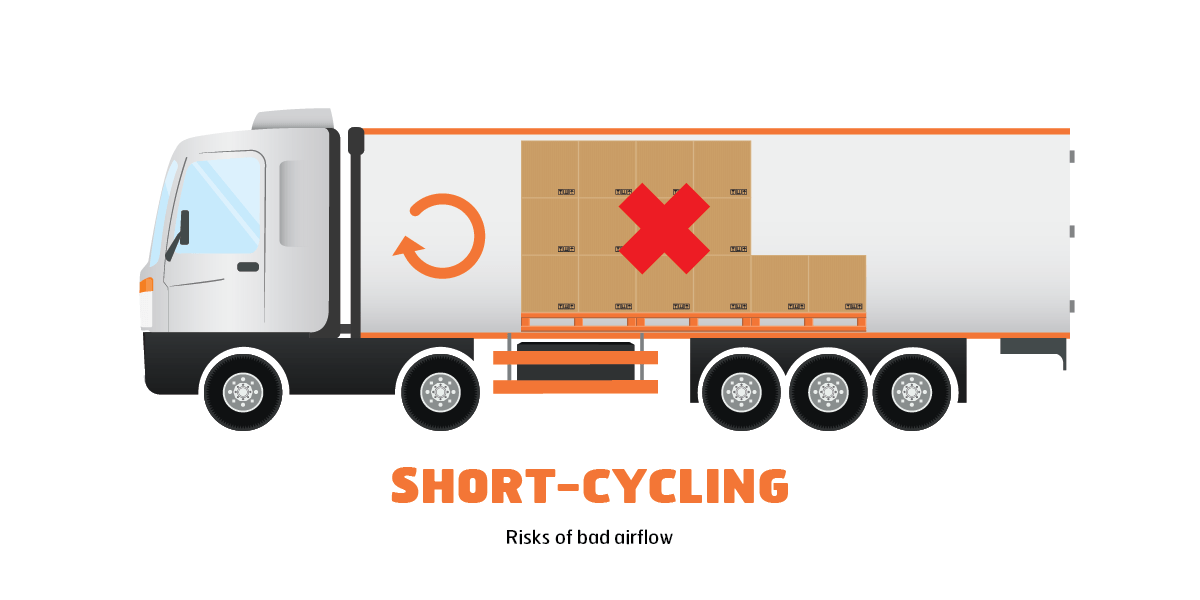
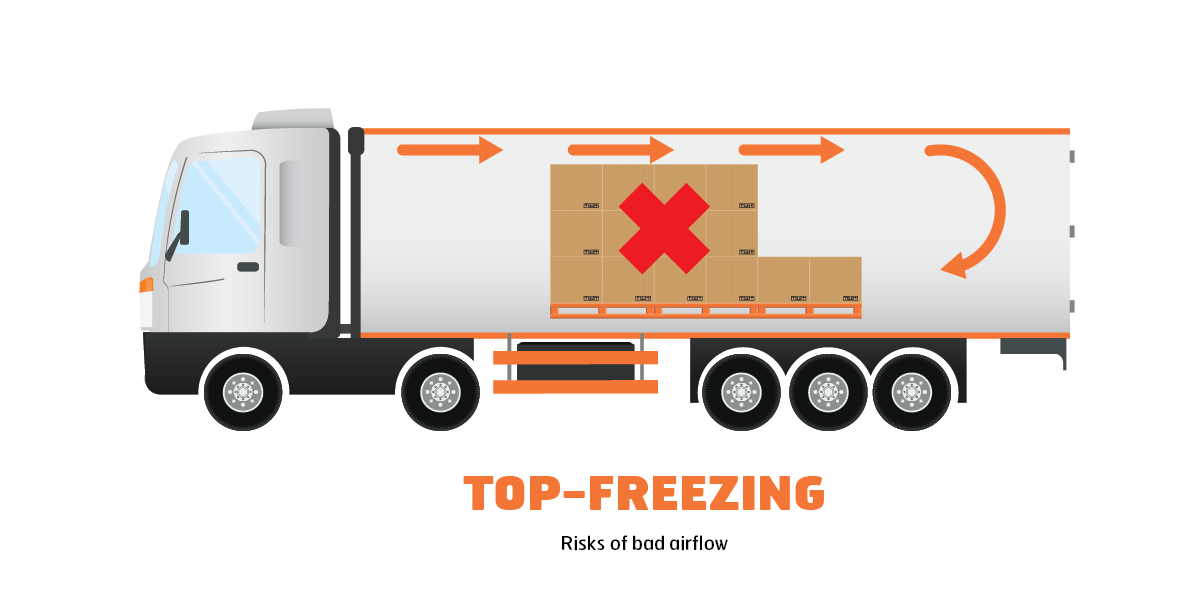
Bad airflow
While good airflow maintains a uniform temperature in your freezers, trucks, and trailers, and distributes air evenly within the area, bad airflow, however, can cause issues like short-cycling, promote humidity, and might have different temperatures throughout the storage and more.

(mock images)

Hot spots
Appear when a shipment is not cooled throughout at a uniform temperature, and certain parts of the shipment are at different degrees.

Hot spots

Top-freezing
Is when your shipment is placed too close to refrigerated air in a storage or transportation unit. It can cause frost damage to your products.

Top-freezing

Why is cold chain logistics important?

This allows customers to experience and purchase different goods that come from all over the world. The more customers demand to experience otherworldly products, the more the cold chain logistics companies grow.

While some products can withstand environmental shifts, others can’t. While transporting, quality, flavour, consistency, and safety are all on the line.

The end customer might not notice the prime wagyu beef they bought spent two hours in the wrong temperature range, but they may be at risk of food poisoning or associated illnesses if products are not treated accordingly by the cold chain.

With goods coming from all over the globe, cold chain management simply minimises the risk of temperatures exceeding safe levels during storage or transportation and provides manufacturers and suppliers with better control over their products.

Starting different cold chain jobs in the industry

Want to know how you can start a cold chain logistics business? Or want to join a cold chain logistics startup? If this topic has piqued your interest and you’re looking into different careers within this industry, here are some career paths in cold chain logistics you could partake in:

  • Rent out cold storage to companies selling perishable products
  • Cold chain consulting
  • Provide cold/refrigerated transport services for road, rail, air, and water
  • Manufacturing refrigerated trucks and vans
  • Construction of cold storage
  • Equipment manufacturing or supplying to cold store owners
  • Technology suppliers to temperature-controlled logistics services
Starting different cold chain jobs in the industry

Smart cold chain management

Leave your on-the-ground cold chain operations to Cartrack.

Get 24/7 protection with temperature sensors that remotely monitor temperature, automated alerts on temperature variations sent via email/SMS and our AI-camera system will help with real-time visibility of your cargo and drivers while on the road.

For optimum control over your fleet and the goods you transport, get Cartrack.

Let’s get in touch today.

Empower and improve your construction business with smart fleet management software

The buildings, homes, bridges, iconic structures and the very cities we live in today, are all made possible thanks to construction companies. 

To bring these masterpieces to life and ensure operational success, effective fleet management features are a must-have. 

If you are in the construction industry, you’ve come to the right place. 

We will inform you about ways you can empower and improve your construction business, and how smart fleet management software will help you do this.  

We will inform you about ways you can empower and improve your construction business, and how smart fleet management software will help you do this.  

What does a fleet management software platform do?

This can be referred to as a fleet software platform. 

All kinds of businesses or industries can use the tool to manage all aspects of their operations, from the powerful data insights it provides. For example, gain insights about maintenance, driver behaviour, fuel expenditure, fuel consumption and so much more.  

For a fleet manager, time is money.  

A lot of tasks can be automated to cut time spent on admin and create more time for growing the business.

Certain managerial qualities are also needed, to add the cherry on top of a good fleet management process.

What skills do you need to be a fleet manager?

  1. Create quality supervision

Construction fleet managers need to make sure they have an overview of their operations, drivers, and vehicles all day. No matter the time of day, if their vehicles are not working, they need to give reasons why they are not working, react fast, and find immediate solutions. Or perhaps there could be an issue on-site, they need to identify who is in charge of what construction project or which driver is responsible for using certain vehicles or equipment. 

  1. Make safety a priority

Necessary measures should be taken to secure his/her fleet. They need to know the location of their vehicles in real-time to prevent or identify any theft, and to protect their assets during a construction project. Fleet managers also need to make sure their vehicles are driven well and set performance standards for drivers to meet. This will ensure the  drivers, vehicles, and assets are all safe, while at the same time, unnecessary fleet costs won’t be incurred. Another safety measure is to ensure rules and regulations are being followed, where drivers should be encouraged to avoid distractions and safety hazards. In this case, managers should be aware of no-go zones for their fleet, and create geofences or barriers stopping drivers from entering any unsafe or unauthorised areas.  

  1. Make sense of data

Fleet managers need to analyse, interpret and react fast to software data, to make instant decisions that will safeguard operations. If they receive data alerts such as a vehicle has broken down, there’s bad driving or a vehicle is not where it should be, they will need to respond. For instance, there could be a non-functioning vehicle, and then maintenance will need to be carried out to prevent costly repairs on construction vehicles.

  1. Manage vehicle maintenance and make better decisions 

A manager needs to be more strategic about the data received from the software platform, and use it to plan and be more organised in the future. They can make predictions or forecasts for newly purchased or old vehicles and maintenance plans. Questions like are more vehicles needed? Or which vehicles are being used the most and which are the most efficient? Can be answered by the software platform service  to plan ahead. Ultimately, to reduce fleet costs and do operations more efficiently. 

What are the types of fleet management industries out there?

  • Vehicle rental & leasing
  • Cold chain logistics
  • Construction
  • Taxi
  • Transportation & logistics

In this article specifically, we will dive into what fleet management involves for construction businesses, and give you construction fleet tracking and telematics solutions. 

In this article specifically, we will dive into what fleet management involves for construction businesses, and give you construction fleet tracking and telematics solutions. 

What is construction fleet management?

It involves the planning and oversight of all vehicles, drivers, and assets to ensure productivity and effective workflow in the business.  

It is a process where fleet managers gain full visibility and control of their operations using route planning, vehicle fleet monitoring, data collection, and reporting. 

Managers of construction fleets need to see what’s working and what isn’t, so there are fewer project delays and cost impacts on the entire business. 

A smart fleet management platform is the answer to effective construction fleet management– here’s how. 

Why you need Cartrack’s fleet management solution to improve your construction fleet business

  • GPS vehicle and equipment tracking: Easily locate your vehicles and assets to keep them safe, and acquire information about their condition. And monitor if they are being utilised efficiently. 
  • Maintain your construction assets: Get maintenance alerts when your vehicles and machinery need a service to reduce costs and increase the lifespan of your vehicles. Also, reduce downtime and improve productivity.
  • Construction fleet safety: AI-powered tech cameras give insight into driver behaviour, making sure they are not easily distracted and are driving correctly. 
  • Driver management and training: Promoting safe driving habits and training will help save you time and money. This will improve road behaviour and reduce wear and tear on vehicles. 
  • Keep your assets and cargo protected: Ensure they are where they should be, and receive alerts when they enter or exit unauthorised zones.
  • Timestamps: Know when teams arrive and leave job sites to ensure working hours align so can pay your team’s wages accordingly. 
  • Less admin: Less paperwork, as all fleet processes are automated and documented electronically. 
  • Manage costs: Understand your project costs and ensure your pricing keeps you profitable and competitive. Our actionable insights help you spot cost inefficiencies, empowering you to focus on growing your business.

Equipment fleet management in a construction fleet 

Not only is vehicle management important for your construction fleet vehicle or vehicles, but heavy equipment fleet management plays an equal role.

The breakdown of this equipment could be severely costly to the business, limit projects getting done on time, and cause a lack of delivery to clients. 

Let’s look at a concrete mixer, as an example.

They allow you to produce your own batches of mixed concrete that can be transported directly to where it’s needed on the construction site. It’s also a money and time saver as you won’t have to rely on a concrete batch plant to deliver and you can control the quantity of what is used. 

Let’s say you have ten cement mixers on site, do you know if they are being utilised effectively and if they are protected? Monitor them with GPS tracking technology, and get data insights on the platform.

They could be left on without supervision, and are turning unnecessarily without cement in them– thus are not being used efficiently. You could have some that are underutilised, so then you’ll save by not buying more where there’s no need.  

Also get live alerts if they are stolen, or are being used without consent and if they are due for maintenance. 

Equipment fleet management in a construction fleet

4 major benefits of fleet management software for construction fleets 

  1. Optimise fleet and operator performance 

Successful fleet management systems involve analysing vehicle and operator data to the max. 

Data insights such as fuel consumption, mileage, mechanical diagnostics, maintenance and driver performance– all allow managers to understand fleet operator history and performance thoroughly. 

Fleet managers can then refine daily operations, save on costs and make informed business decisions. 

For example, truck breakdowns and service maintenance can also be extremely costly. Managers can use the data to develop and manage a vehicle maintenance schedule, resulting in a drop in repairs and extending the lifespan of vehicles. They will also operate at full capacity, which means a reduction in fuel running costs. 

In addition, data about the best routes to take and safe driving methods to use can be implemented to improve driver safety and fuel economy.

  1. Increase productivity and workflow

When fleet management software is in place, there’s less room for errors, issues, delays, or anything that could disrupt workflow, resulting in more efficiency overall. 

Fleet managers must coordinate vehicle and equipment dispatch efficiently to keep construction projects on schedule. They can plan efficient routes, find the best routes and send the nearest available drivers to fulfil site requirements. The right people are assigned to the right jobs, and get tasks done better and on time. Projects are planned accurately and the team is accountable and on top of task deliverables needed to keep projects moving forward.

As a result, the company will have more time to respond to urgent requests and adapt quickly without delays.

  1. Improve invoicing

Automated reports tell you exactly when your construction teams arrive or leave their assigned project sites. 

This lets you see their actual working hours so you can bill your clients and pay your team’s wages accurately, helping you avoid cost wastages.  

Managers should consider their invoicing and transactions to be done digitally, which will also improve data security and safety. 

Also to implement financial record-keeping on a digital platform to improve accuracy and minimise payment errors and/or misses. 

This will allow construction companies to look back at payment history and send accurate invoices to clients.  

  1. Better budgeting & forecasting 

The whole objective of running a successful construction operation is to see if there are capital gains. Companies can thus leverage valuable fleet data to get an overview of expenses and an understanding of what projects are making or losing money. 

Get reports to predict expenses and revenue, and generate more accurate budgeting and projections for the future. For example, they can assess how much money has been spent on fuel within a certain period and budget accordingly. 

Overall, the business should understand where they stand financially, to take the right measures to keep their doors open and finances healthy.

How to grow an efficient construction business

We know a fleet management platform will give you more control of your business, but as with any business, other elements are important to your success.

We’ve got some additional tips for your toolbox. 

  1. Create a great team: You need the right people in your corner to ensure the work gets done right. And you should also be rewarding them for great work and empowering them to do better. 
  2. Build a strong network: Attend events and network to build your customer base. Build a report with existing clients, and create a space for positive referrals.
  3. Launch a website: Your website should include valuable information about your company and services, and answer questions your customers often ask. You should list how your services will solve their problems.
  4. Build effective sales and marketing channels: Having an engaging website and social media accounts is a good starting point for an online presence. But to take it a step further, you should consider using effective digital strategies like SEO, analytics, content marketing, and advertising as part of your overall growth strategy.
  5. Invest in the right construction fleet management software: As mentioned, a saas platform will assist with much smoother operations, and give fleet manager’s more control of their fleet through accurate reporting and data insights. 

The best fleet management for construction businesses is out there. Get started with fleet management software from Cartrack. Grow and improve your business with a tech-powered platform today. 

How a dispatch controller can benefit from task management in trucking companies

Due to the behind the scene nature of their role, the job of a dispatch controller may be undermined. However, dispatch controllers are the bedrock of trucking companies. This means they need to be efficient and effective task managers. In this article, we discuss the role of dispatch controllers, task management and how dispatch controllers benefit from the software.

You are probably reading this for one of three reasons. One, you are a dispatch controller looking to improve task management. Two, you would like to become a dispatch controller or learn more about task management. Or three, you are simply looking for all the information on dispatch controllers or task management.

Whatever the reason, you are reading the right blog! After this, you will know what exactly the job of a dispatch controller entails, the challenges faced, and the task management tools and benefits that come to save the day from all the dispatch controller challenges.

Firstly, what is a dispatch controller and what is their task? 

As a dispatch controller, there may be an assumption that your job entails sending drivers around while you sit back, relax and let time pass by. That’s a high underestimation of what a dispatch controller does.

 A dispatch controller is an individual who oversees and supervises the business operations from dispatch to delivery. This entails assigning drivers to tasks, optimising drivers’ routes, tracking the location of vehicles, collaborating with drivers and communicating with customers. 

So, although truck dispatch controllers are not on the frontline on the road all day in a big rig, they work hard behind the scenes coordinating and managing the schedules and routes of truck drivers to ensure cargo is dispatchedand delivered in a safe and timely manner.Basically, dispatchers are the bedrock of the trucking industry. 

Let’s see what being a truck dispatch controller really underpins. 

There’s no such thing as a “typical” day in the life of a dispatch controller but here are eight things that truck dispatch controllers do every single day:

  1. Manage operational costs: Daily, dispatch controllers are responsible for coordinating and managing the fleet operation to achieve set goalsat the highest productivity while at the lowest operationalcosts. A dispatch controller needs to quickly find creative ways to solve problems and optimise routes to save time, resources, and money.
  2. Proactively solve ‘the challenge of the day’: As mentioned, no two days are the same in the trucking industry, and neither are any of a dispatch controller’s deliveries. Each delivery has a unique need, for example: shipping food and beverages is much different than shipping car parts or chemicals. Dispatch controllers need to identify any special considerations, proactively solve challenges, and foresee and resolve future challenges.
  3.  Stay organised and focused: A typical day in the life of a dispatch controller is busy. Coordinating deliveries, taking calls, and managing drivers, vehicles, and routes all day makes time fly. In between all the busyness, dispatch controllers need to be highly focused, stay organised with a task list, and be able to manage the high customer expectations and high-stress levels of drivers.
  4.  Optimising technology: Technology is a tool used by dispatch controllers on a daily basis, from GPS tracking devices to smartphones to fleet management systems. Dispatch controllers in the trucking industry use technology daily to keep operations running smoothly, safely, and timely.
  5. Collaborate with drivers: As a dispatch controller, communication and collaboration are essential. Each day as a dispatch controller includes constant communication and frequent check-ins with drivers.
  6.  Ensure fleet compliance: It is the responsibility of the dispatch controller to ensure that operations are fleet compliant. Daily, dispatch controllers ensure that drivers are well-trained and well-rested, and vehicles are safe and roadworthy.
  7. Oversee the entire operation: It is the daily job of an effective dispatch controller to have a bird’s eye view of the entire fleet operation, from the location of each truck to the driving performance of each driver.
  8. Keep clients happy: Unhappy clients could result in dispatch controllers losing out on work and damaging the company’s reputation. Ensuring customer satisfaction is a huge part of a dispatcher’s job. The good news is that fleet management systems help dispatch controllers reach customer expectations. 

Yep, it’s a handful! With so much to do, it is obvious that dispatch controllers face challenges daily. Let’s take a look at the challenges faced by dispatched controllers. 

 Firstly, what is a dispatch controller and what is their task? 

What is task management? 

Task management refers to the process of scheduling tasks and managing them with milestones and deadlines to ensure tasksarecompleted on time. A dispatch controller needs to be responsible for ensuring that the fleet operation is as productive as possible by planning out how and when tasks are executed, from beginning to end. Task management is a leading challenge for dispatch controllers. 

Task management involves creating, prioritising, delegating, and monitoring tasks to ensure they are completed within set deadlines. For this, dispatch controllers need to organise the fleet operation workflow to ensure efficient task completion. 

Project management features task management but they play two different roles. While task management mainly focuses on getting tasks off the ground, executed and completed on time, project management software focuses on reaching overall project milestones and deadlines. Therefore, project management is a core component of task management. 

But why must dispatch controllers go through all this hassle?

Why is the management of a task even important?

Dispatch controllers have to know what, how and when tasks need to be completed. This is called task tracking, it is the main reason why project management plans are important. 

Let’s break it down.

Task management is pivotal for a fleet operation’s success as it helps dispatch controllerskeep everything in flow. All fleet operations from planning to reporting, analysing, evaluating, creating, and executing require task tracking so that dispatch controllers can efficiently control fleet operation, access real-time reports, and make strategic decisions. 

Task management is what allows dispatch controllers to track tasks closely and know everything they need to about each and every task to ensure they can manage customer and business expectations perfectly. 

Why is the management of a task even important?

3 ways to manage a task with project management software

Now that it is obvious that project management is crucial for a smooth running fleet operation, let’s find out how a project manager can effectively manage tasks. Below are three key categories, features and ways to manage tasks ensure teamwork: 

  1. Manually using to-do lists: This is a basic form of task management and is made up of  physical components such as manually writing tasks down on a planner, whiteboard or chalkboard in order to track tasks and scratch-off once completed. This way of managing tasks is best for people or teams who are dealing with a small number of tasks on a task list that rarely changes.
  2.  Electronically using apps or spreadsheets: With the rise of technology, computing has allowed for a shift from manual task management to electronic via software. Electronic task management can be done in various ways from the basic use of spreadsheets to using task management apps. Unlike manual forms of task management such as to-do lists, this form of project management is not confined and can therefore be taken with dispatch controllers anywhere they go with their computer, laptop, or even smartphone. 
  3.  Online or cloud-based tools: This is an extension of electronic task management which is inclusive of the unlimited expandability of the internet, so dispatch controllers can create and manage tasks online. This form of task management comes in the form of software tools or online applications allowing dispatch controllers to organise and monitor tasks from any location. With the use of the internet, online or cloud-based tools allow information, metrics, reporting, analytics, or any other files to be easily stored and shared. These tools work on the Cloud, this way dispatch controllers can assign storage space and even backup any critical information source.

Planning is a project management task, we already know that failing to plan is planning to fail. If tasks are not well planned and managed the business will be set for failure.Trucking companies need to use the most efficient task management method to ensure success and the best performance. Let’s find out moreabout task management tools. 

What is a task management tool?

Task management does not have to be as complicated as it sounds, especially with selected work management tools. These task management tools are basically the answer to the challenges faced by dispatch controllers, the dream and basic need of every dispatch controller! 

A task management tool is software used by an individual, team, or organisation to complete projects efficiently by organising and prioritising tasks. This software is used to streamline all the processes involved in creating, delegating, and completing task lists. 

Task management tools are built to help task managers and even dispatch controllers get the best out of their teams by empowering each employee to work faster and collaborate better. Task or project management tools combine every necessary feature a dispatch controller needs to create and manage tasks. These features include the next: 

  • Creating, sharing and assigning tasks
  • Identifying and labelling dependent tasks
  • Creating subtasks from larger deliverables
  • Tracking task progression and completion
  • File storing and sharing
  • Collaboration, teamwork and communication tools 

With project management software, dispatch controllers can create a suitable workflow for the team. Whether dispatch controllers need to create simple to-do lists, assign tasks to each team member or create a complex schedule to complete large deliveries, task management tools make the process effortless.

What is a task management tool?

8 benefits of using task management tools for trucking companies

Whether it is a business in the trucking industry or not, every kind of business can benefit from using task management tools to manage employees, teams, assets, tasks and other resources such as time and budget. Task management tools allow you to bring life to new and successful processes by:

  1. Organising all tasks on a single platform: With the right task management tool, dispatch controllers can have the entire workspace on one platform. Dispatch controllers can delegate tasks with ease, monitor them at a single glance, and immediately address any delays or issues.
  2.  Prioritising tasks based on importance: Yes, all tasks are important but not all tasks take priority. With a task management tool, dispatch controllers and teams can focus on the most critical tasks first and then turn their attention toward less urgent ones.
  3. Boosting team collaboration: ‘Teamwork makes the dream work’ might be a cliche, but it holds true for the trucking industry. Task management tools consist of features to boost collaboration such as user mentions and in-task comments and help teams communicate efficiently.
  4. Breaking down complex tasks and managing multiple tasks: Managing multiple tasks at the same time can be back-breaking. Task management requires a lot of planning and seamless execution or else minor delays or mistakes can lead to major issues. Task management tools make the process of creating and completing multiple tasks easier and effortless to manage.
  5. Automating tasks: Some tasks such as monthly reports or weekly meetings happen on specific dates throughout the year. Rather than manually setting up repetitive tasks, task management tools use automation to create tasks every month or week, based on the dispatch controller’s needs.
  6. Access to task progression in real time: Dispatch controllers have multiple drivers, vehicles, clients and deliveries on their plates, at the same time. Manually trying to keep up with the progression and completion rate of tasks is time-consuming and daunting. With a task management tool, dispatch controllers can oversee all their tasks on one platform.
  7. Clear task delegation: When the entire team can look at an up-to-date project board with all their tasks on it, they don’t have to go looking for crucial information or bug their manager or team members for it. This is especially crucial for remote or hybrid teams where team members have different time zones and work schedules.
  8. Making more profits: Profits are a benefit embraced by any business in any industry. Customer satisfaction and business profitability will be positively affected by task management software like Cartrack which offers the above benefits. 

With the right task management tool in place, businesses can reap each of the benefits. A good task management tool encompasses features that set the business up for ongoing success.   

There are a few task management tools on the market, but trucking companies need to make sure they choose the best.

8 benefits of using task management tools for trucking companies

The best-of-the-best task management tool 

Cartrack has industry-leading fleet and task management software that empowers fleet managers or dispatch controllers to seamlessly assign jobs to their entire fleet and empower teams to successfully, efficiently and productively complete and deliver tasks.

Let’s take a look at Cartrack solutions and features that dispatch controllers can use to exceed customer expectations, grow the fleet operation and boost efficiency and profits: 

  • Easy-to-use, all-in-one platform: Cartrack is a complete fleet management platform, not only for transportation and logistics businesses but all businesses that require fleet or task management. Cartrack’s easy-to-use platform empowers trucking companies (amongst others) to streamline the entire operation from task management to operational costs, all in one platform. 
  • GPS tracking: GPS tracking is essential for effective task management. With Cartrack’s telematics technology devices, dispatch controllers can stay in the know of the real-time GPS location and movement of any of the company’s trucks. This feature will help dispatch controllers monitor vehicles, know driver and vehicle schedules, reduce unexpected downtime and time taken between jobs. 

That is not all. GPS tracking does not only allow dispatch controllers to track trucks and assets but also time and tasks. With GPS tracking, dispatch controllers can optimise routes and ensure that tasks will be completed in time. Time tracking helps dispatch controllers meet deadlines and anticipate any delays. Additionally, with GPS tracking, dispatch controllers can also track tasks allowing them to oversee accountability, the team members’ dedication, and the task completion progress. 

Now, customers can enjoy the experience of better service and faster deliveries. 

  • AI-powered Cameras: Cartrack’s AI-powered and live-stream camera technology has up to eight internal or external cameras to help dispatch controllers monitor driver behaviour and keep drivers, fleet and cargo safe. With this feature dispatch controllers can gain insight into which drivers speed, get distracted, drive harshly or become fatigued. This can help dispatch controllers  improve drivers’ road behaviour with safe-driver training and reduce accidents and cargo damage, as well as unnecessary maintenance and penalty costs.
  • Actionable insights: With Cartrack, dispatch controllers can instantly pinpoint challenges, know how to tackle them and increase the fleet’s operational efficiency with actionable insights that help them keep the business growing. This includes seamless automated reporting and insights on:
  • Fleet size optimisation
  • Fleet costs
  • Driver scorecards
  • Driver productivity
  • Fuel consumption
  • Cost per job and km 

Reports can be sent straight to dispatch controllers’ inboxes, ensuring that they have all the information that they need, when they need it.

Choose the best, choose Cartrack

With Cartrack, you can manage tasks, track progress and collaborate seamlessly, all from one platform.  

Contact Cartrack Malawi today, and have the best task management tools right at your fingertips!

Fleet compliance and safety management made easy for fleet controllers

Regardless of the number of vehicles in a fleet operation, fleet compliance is pivotal to the smooth running of a business and ensuring the safety of drivers and vehicles. This article covers fleet compliance best practices, advantages and how Cartrack’s smart technology makes daily fleet operations a whole lot easier

From an outward perspective, fleet management appears to be an uncomplicated and rosey walk in the park. Unfortunately that is not the case, fleet management is a complex process that entails a number of intricate inner workings ensuring that the fleet runs like clockwork.

Employees and assets are managed by fleet controllers. This includes ensuring that drivers are well-trained and rested to efficiently complete tasks and that vehicles are roadworthy- this is where fleet compliance comes in.

Fleet compliance is one of the general struggles amongst fleet managers. Fortunately, fleet management systems provide information and data for an entire fleet operation on one platform. In this article, we discuss fleet compliance, its best practices, advantages and how it is made easy with Cartrack.  

What is fleet compliance and who are fleet controllers?

Before diving into fleet compliance, let’s really get our heads around compliance. Compliance refers to actions or protocols that meet a set of legal rules and standards. That being said, fleet compliance means meeting the set rules and standards that apply to a fleet- from just about anything with wheels right up to the people who operate them.

Fleet controllers are in charge of managing the day-to-day operations of the fleet and ensuring that the operation remains compliant. 

Fleet compliance and safety management

A fundamental portionof fleet compliance management  is safety management. Safety management refers to applying a set of principles, frameworks, processes and measures to help prevent accidents, injuries and other catastrophic consequences through the use of a service or product. Effective safety management ensures fleet compliance and vice versa. 

Safety management and fleet compliance are both dependent on software that has the ability to store detailed information and data on vehicle maintenance, driver performance and road behaviour. 

This systematic approach will allow fleet operations to achieve fleet compliance and safety management through effective use of fleet management solutions . By using fleet management software the fleet operation can continually renew and review its fleet safety strategy, transport operations, policies and procedures to reach set standards, laws, and rules. 

Fleet compliance and safety management

5 ways to implement compliance best practices 

As a fleet controller, fleet compliance is vital! Fleet compliance not only ensures the safety and productivity of a business. It also makes the business reputable for abiding by the set standards, rules and laws. These are five ways to implement compliance best practices: 

  1. Monitor drivers’ hours of service (HOS)

One of the leading causes of accidents, particularly in long-distance, bus, taxi and fleet operations is driver fatigue. Driver fatigue can happen anywhere, at any time, under any circumstances. Fortunately, HOS restricts the number of hours a single driver can operate a vehicle without taking a break. HOS refers to the maximum number of hours that a commercial driver can spend driving and working each day.  To achieve fleet compliance, fleet controllers need toprioritise HOS. The standard hours-of-service for fleet commercial drivers are:

  • 11 hours driving limit and 10 consecutive hours off duty for property-carrying drivers
  • 10 hours driving limit and 8 consecutive hours off duty for passenger-carrying drivers
  • Other restrictions include: a 14-hour limit, 30-minute driving break, and sleeper berth provision

Compliance with the set HOS restrictions will reduce the occurrences of accidents, injuries, and fatalities related to operating commercial motor vehicles. Efficient management of HOS will also improve driver safety by keeping fatigued drivers off the road.

The goal is to keep drivers alert, awake and attentive!
  1. Fleet maintenance

Regardless of the industry, companies are responsible for providing a safe working environment (this includes the safety of vehicles). Fleet controllers need to ensure fleet operations adhere to standards of safety while work is completed. 

Ensuring that your fleet compliance efforts include maintaining safe and roadworthy vehicles is almost equally as important as monitoring drivers’ hours of service. Fleet maintenance refers to the process of ensuring that fleet vehicles are serviced, repaired, safe and roadworthy. Fleet vehicles are on the road everyday which may lead to damage, this means vehicles need to be repaired regularly. If not, the daily or regular use of vehicles without maintenance will lead to vehicle breakdown or downtime, bringing the business operations and drivers’ productivity to a halt. 

To help avoid malfunctions, the US Federal Motor Carrier Safety Administration (FMCS) requires all drivers to fill out a Driver-Vehicle Inspection Report (DVIR) which serves as a pre-trip and post-trip inspection. These vehicle inspections are preventative road safety measures that ensure vehicles are safe and roadworthy. DVIRs include essential checks that ensure fleet compliance:

  • Lights and reflectors
  • Tires, rims and wheels
  • Horn
  • Rear-view and side-view mirrors
  • Windshield wipers
  • Steering mechanisms
  • Brake systems
  • Fifth wheel and connection points
  • Safety and emergency equipment
  • Record of wear-and-tear and repairs

You can already imagine how time-consuming and frustrating manually filling out DVIRs can be. As a solution to this, fleet management and software and telematics companies allow electronic Driver-Vehicle Inspection Reports (eDVIR). This drastically cuts down paperwork and admin, allowing for accurate DVIRs. 

  1. Keep compliance, safety, and accountability scores up to date

In addition to monitoring driver hours and fleet maintenance, fleet compliance also includes 

compliance, safety, and accountability (CSA) scores. CSA scores range from 0 (best) to 100 (worst) and are calculated based onseven Behaviour Analysis and Safety Improvement Categories (BASICs):

  • Driver fitness
  • Unsafe driving
  • Vehicle maintenance
  • Crash indicator- the frequency or intensity of collisions
  • Compliance with hours-of-service requirements
  • Controlled substance or alcohol
  • Hazardous material compliance

The CSA is run by the FMCSA to enforce safety measures for both fleet controllers and drivers. The categories listed above are assessed at roadside inspection points along various major highways across the United States and drivers with CSA scores closer to 100 will be

taken out of service and the fleet business could be penalised. Although this law is of the United States, it can apply to the fleet compliance of businesses around the world. 

  1. Driver qualifications

It is the responsibility of fleet controllers to ensure that all drivers who operate vehicles are licensed, and have the relevant training and specialities that meet legal requirements. Likewise, drivers need to ensure that fleet controllers are informed if there are any variations with their licence, in order for fleet controllers to ensure that licences are renewed smoothly. 

Fleet controllers can ensure compliance by conducting pre-employment screenings. This gives the fleet controller an idea of a potential driver’s history on the road. Pre-employment screenings include drug and alcohol testing, even though fleet controllers should have random checks to ensure that drivers remain compliant. 

  1. Comply with fuel tax

Fuel tax refers to the excise tax imposed on the sale of fuel. Fleet controllers are responsible for tracking where commercial vehicle fuel taxes go. Fuel monitoring is considered an important aspect of fleet management as it assists fleet controllers in determining the consumption of fuel whether for personal or commercial use. 

The International Fuel Tax Agreement (IFTA) is an agreement between forty-eight U.S. states (excluding Alaska and Hawaii) and ten Canadian provinces which keep a record of:

  • Miles driven
  • Fuel purchased
  • Purchase locations
  • Vehicle operators or fleet compliance managers submit these records to their local IFTA office every quarter. Then, based on the number and location of miles driven, the IFTA office distributes fuel taxes to each state and province.

Most fleet companies rely on telematics to help with fuel tax compliance. With telematics, fleet management software can provide fleet controllers with fuel consumption insights. 

5 ways to implement compliance best practices 

5 advantages of fleet compliance

Having fleet compliance become a core component of fleet operations and carrying these out correctly and accurately can result in the following advantages:  

  1. Organised paperwork and reduced admin: With help of fleet management software, fleet controllers can efficiently ensure compliance by electronically keeping insurance, permits and any other regulatory contracts up to date. This way, all fleet documents stay organised and updated, documents are not misplaced and time is not wasted searching through piles of paperwork.
  2. Minimised traffic violations: Compliance with drivers’ licences and qualifications as well as fleet maintenance ensures that drivers are well trained and vehicles are roadworthy, therefore preventing traffic violations. Additionally, drivers’ compliance with agreed company route plans and work schedules helps greatly minimise risk and lower fuel costs.
  3. Improve driver safety and efficiency: Fleet compliance empowers drivers to complete tasks within the set safety standards. Fleet controllers can be clear on safety and productivity standards- how drivers should load vehicles, operate vehicles, optimise routes and the hours they should spend on the road. Drivers who comply with the set standards will be properly trained, well-rested, fully engaged, and abiding by both the rules of the road and company safety standards, thus reducing the safety risk.
  4. Reduces legal costs: Fleet-related lawsuits and settlements can cost a large amount of money or result in damaged company reputation and a decrease in sales. Whatever the case may be, the business loses money. Following fleet compliance best practices helps your business avoid legal risks.

Builds customer trust: Complying with set standards, rules and laws will demonstrate to your customers that your business cares about keeping your drivers and their assets safe. While lawsuits or traffic violations damage company reputation, a record of compliance will demonstrate that your business is a trustworthy operation.

Fleet compliance and safety control made easy with Cartrack

As much as fleet controllers and fleet owners desire to be everywhere at the same time, it is impossible for them to ensure fleet compliance at all times. Not unless they use fleet management software that makes fleet compliance easy, uncomplicated and undemanding. 

Cartrack provides fleet management software solutions that empower fleet controllers to streamline the entire fleet operation, all from one platform.

Fleet controllers can ensure fleet compliance with Cartrack’s fleet tracking software features:

  • Reporting: With Cartrack youcan choose from a range of over 40 standard reports including mileage, driver scorecard, speeding and productivity reports. Cartrack’s GPS tracking device monitors driver behaviour and tracks vehicles. This data is obtained by the fleet management system and can be accessed by the fleet controller via the internet, at any time.

Some reports accessible to fleet controllers include: 

  • Driver reports: Fleet controllers can use these reports to inform drivers where they can improve on their drivers. This report focuses on drivers’ road performance and obtains records through gps vehicle tracking which includes events such as harsh acceleration, braking, cornering or speeding.
  • Drive scorecards: This monthly report shows how safe drivers are on the road by monitoring high-risk behaviour. With this, fleet controllers can improve driver behaviour by training drivers where needed.
  • Logbook: Historically, drivers had to manually record trip details to distinguish between business and private journeys in order to claim tax deductions. Cartrack’s logbook feature simplifies this process. This feature automatically logs all vehicle trips and categorises them as personal or business trips. This ensures a tax-compliant logbook by distinguishing between business and private journeys for SARS submissions.
  • Vision: Cartrack’s AI-powered and live-stream camera technology ensures driver safety with the use of the following features:
  • Forward collision warning
  • Distracted or fatigued driving detection
  • Yawning and cell phone use detection
  • Up to 8 cameras: any combination of internal or external AI-cameras
  • MiFleet: Easy to use administrative and vehicle cost software that fleet controllers can use to efficiently manage drivers, fleet and related operating costs. The main benefits include managing:
     
  • Vehicle services
  • All-inclusive vehicle maintenance
  • Vehicle mileage
  • Driver licence validity
  • Asset depreciation
  • Fines and notices issued
  • Breakdowns per vehicle
  • Driver permits 
  • Fuel card fraud
    ‍
  • Fuel fraud detection

Effortlessly achieve fleet compliance with Cartrack fleet management solutions 

Fleet compliance has never been easier! With Cartrack, you can remain compliant by easily managing and automating your fleet compliance throughout your operations. 

Take full control of your fleet, contact Cartrack Malawi today.