How Fleet Managers can Implement Effective Task and Team Management Tools to Boost Profits

Every fleet business needs task management in place, to make sure on-the-ground operations and tasks are up to speed. 

But often, fleet managers don’t know where to start.

Systems and processes make work easier, and with a fleet management platform, it’s even simpler – you have everything you need to manage tasks all in one place, and you can do it from anywhere. 

Imagine that. 

If you are looking for ways to manage tasks in your team or personal workload with one simple fleet solution, then you’re in the right place. 

What is task management and why is it important?

Task management involves monitoring all stages of a project and making continuous decisions until each stage is finished. 

Tasks will go through a life cycle of planning, testing, tracking, and reporting until completion. 

Effective task management is used by individuals, teams, organisations, and project managers who prefer to have a system in place to manage projects. It is a useful tool to ensure you meet deadlines, improve the quality of work, manage workloads, drive collaboration, and increase production.

The type of task management tools you choose will serve as a visual representation for the entire team and set the standard for organising tasks well. 

It will help you answer questions such as what tasks are being worked on? How many tasks have been completed? Are you on schedule with tasks or do you need some backup? And  when exactly you can close a project and start a new one with your team. 

Fleet software platforms offer task management features that can help you answer these questions, and manage tasks better in your fleet. 

What is an example of task management and where is it used?

The fleet management industry is an example of where task management tools and processes are needed, to run a fleet successfully. 

Often, managers have multiple drivers on the road at once performing various tasks like making deliveries. In this case, managers will need to make sure their drivers make deliveries on time, and keep customers updated throughout the process. They also need to meet deadlines for daily tasks and offer adequate reporting on each delivery task, its progress and achievements. 

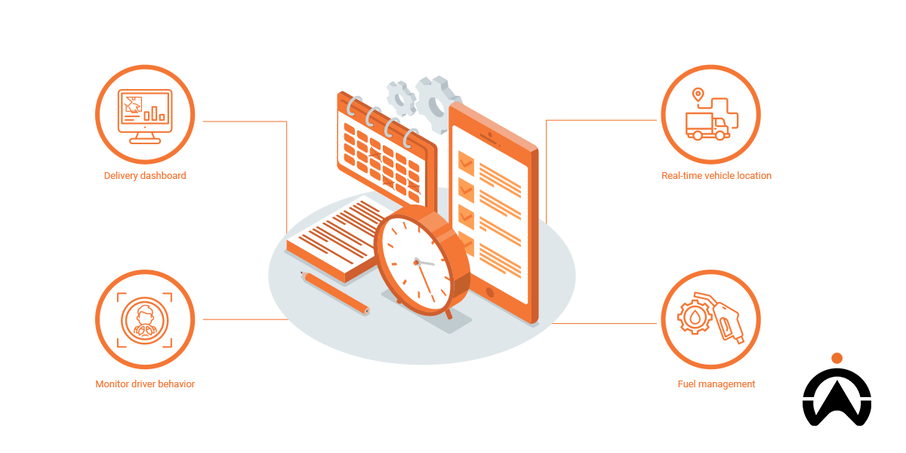
Instead of manually calling drivers, sending messages, and monitoring deliveries using a spreadsheet, they can streamline their workflow and plan tasks on a platform like the Cartrack Delivery app. 

They can manage and assign jobs, plan routes for the day, track progress throughout deliveries, and drivers can also send updates on their progress, and accept or decline jobs. 

They can keep a record to indicate if they are reaching certain goals in their fleet, through daily customised reports. Perhaps, their goal is to do a certain amount of trips in a day to meet delivery targets and increase customer satisfaction, then they can access vehicle trip history reports.

On the fleet software platform, you can cut your admin in half because all the information about your fleet tasks is in one place, so for instance, you don’t need numerous spreadsheets relating to vehicle trip history for the month. 

Below are more insights about a fleet platform and some tips on task management that will help you move those tasks onto the done list.
5 ways to boost your business with task management, team management and work optimisation features 

  1. Track tasks more accurately‍
    ‍
    Use data to know if you are on track with your task goals and to make business decisions. A platform will give you all kinds of data reports you need. For example, perhaps one of your goals is to save on fuel, and you need to get your team together to solve this problem. You can pull up fuel reports and assess the data to see if fuel is dropping. You can use this tool to put a plan of action together to help save on fuel and find ways to cut costs.
  2. Manage your fleet remotely ‍
    ‍
    The more flexibility you have, the more tasks you can get done because you can monitor tasks no matter where you are. And with a cloud platform, you can access some sections of the platform from your phone and receive alerts for various triggers you’ve set up, to manage your fleet. For example, you can receive an alert to inform you when your vehicles are due for service.  
  3. Communication with your drivers‍
    ‍
    Assign drivers, vehicles, and jobs to complete and share relevant information or let them chat with you directly in real time, using the communication features on the fleet management app. This will help you optimise your operations, as you won’t have to try get hold of your drivers telephonically to assign jobs or communicate with them. For instance, a business selling fresh produce will get the orders in from customers, then can open the app, and calculate the best routes for drivers to take, and assign deliveries to the drivers strategically, ensuring on-time deliveries. Drivers can update their managers on where they are with orders from the app. Managers can then assign new tasks to available drivers and keep their customers updated.  
  4. Automated reports ‍
    ‍
    To make your fleet tasks increasingly efficient, a fleet platform can help you eliminate the amount of time you spend on admin. Cartrack’s fleet platform ensures your admin, operations, and finance teams have everything they need when they need it. There are various types of reports and insights a manager can download, automatically receive or have sent straight to his team to help make admin and communication easier. For example, if the finance team needs to calculate the fuel expenditure for the month, managers  can retrieve a fuel report on their fleet’s monthly fuel consumption levels and share these insights with the finance team.  
  5. Optimise your workforce ‍
    ‍
    Streamline processes in all areas of your fleet business, and remove unnecessary parts which will help improve your existing staff’s productivity and finetune certain fleet tasks. For example, with a fleet platform, you could make improvements to your maintenance procedures. You can retrieve timely maintenance reports and alerts to help you manage your maintenance schedules and keep your vehicles well-maintained. As a result, your staff won’t need to take the vehicles to the mechanics to be manually checked, and you will only need to service them when you get alerts from the platform, and with the knowledge from the maintenance reports – making this part of your business more optimised. 

What is the best way to manage tasks? 

Together with a fleet software platform, here are some other helpful tips a fleet manager can use to manage tasks even more effectively.  

  1. Focus on one task at a time ‍
    ‍
    Prioritising tasks is important to ensure the team isn’t doing more than they can handle, which could result in errors on projects. Bookmark important tasks for yourself so you know your priorities, and break big tasks into smaller subtasks, so the tasks can  get completed one at a time, and you can feel like progress is being made. This will also allow you to know who to follow up with, and you can tag individuals on tasks so they remain informed on updates as they happen. 
  2. Collaborate frequently ‍
    ‍
    Working in a team means more work will get done, but at the same time, everyone needs to be on the same page and in sync. You need to continuously communicate with your team about project successes and failures, and get feedback from them. You should create an open space for them to discuss their thoughts. Communication tools such as virtual workspaces or video conferencing programmes will assist with this so there is a constant flow of communication. 
  3. Realistic time frames ‍
    ‍
    Each task should have a realistic timeframe, and deadlines according to the relevant importance of the associated task or activity. Every timeframe you set should be achievable to help avoid unnecessary stress within your team. Keep your task list organised and ensure that your team is given enough time to complete tasks. 
  4. Define roles and allocate resources‍
    ‍
    Assign the appropriate people with the right amount of experience and resources to get the job done. Every one of your team members should know exactly what they are supposed to do, this will also help build accountability within your team and keep everyone focused on the task at hand, which will improve productivity levels. 
  5. Goal tracking ‍
    ‍
    Defining milestones helps motivate teams to execute tasks successfully. You can keep track of tasks using a reporting tool. Modern-day reporting tools come with features like project reports, resource reports, and time reports. This will give you a clear idea of everyone’s efforts, how things are moving forward, and how team members are utilising their time. 

Let’s unpack why task management software platforms are so important for you and your business. 

Five key benefits of using task management software 

  1. All tasks are in one place ‍
    ‍
    If you find yourself scrambling to find tasks and you have multiple spreadsheets, a software platform will help you organise and keep all your tasks in one place. For example, a fleet software platform has a customisable dashboard with multiple tabs which ensures that all your fleet information and task progress is in one place. This helps you save time from having to search for information and keeps your team on schedule because you can quickly delegate and track tasks, from anywhere. 
  2. More control for managers ‍
    ‍
    An organised platform eliminates some stress and pressure for fleet managers, project managers, and business owners because they have an overview of all tasks and can attend to other tasks – essentially multitasking. This is particularly useful when they have meetings, report backs, and are solving daily problems, they won’t need to worry about finding the data they need or waste time on unnecessary admin. 

    For example, say there is fuel syphoning happening in real-time, and fuel consumption levels are abnormally high, a manager can immediately intervene. They will be able to see from the fleet platform, which vehicles are consuming more fuel than others, flag areas of concern and investigate these.  

  3. Room for business growth‍
    ‍
    A fleet platform can help you make the customer interaction with your business more seamless and efficient, as you are able to communicate with your customers about their deliveries. The efficiency factor also allows you more time for your customers, this could include answering queries more, regular check-ins, email updates, and going the extra mile for them.   

    You can also focus more on sales and marketing opportunities to grow the company or offer lower prices, more products and services because efficiency opens up more cash flow.

  4. Important for remote work trends ‍
    ‍
    Businesses that fail to keep up with technologies and software systems, can fall behind their competitors, and disconnect from their customers.

    An example of this innovation is an increase in remote work globally. Companies are needing to adjust accordingly with better communication systems or run the risk of poor work ethics which can lead to frustrated employees and customers.

    A remote work statistic of 2022 is that 56% of companies around the world offer remote work opportunities. However, 88% of remote workers face inconsistent leadership and miscommunications with other team members, says Saaslist. Task management software can help bridge this gap. 

  5. Increased team productivity ‍
    ‍
    According to Saaslist, project management and online task management software saves the average employee 498 hours per year. There is more streamlined communication to prevent less back and forth between managers and staff. Companies could also save on business costs, as they might need fewer employees, as a result of an improved and streamlined workflow.

7 additional task management tips every manager can use

If we look at managing tasks holistically across the board, the principles of organising are the same. 

Here are some methods you can look into to help you make your fleet successful. 

  • Do the challenging tasks first‍
    ‍
    This involves starting with the harder tasks at the start of the day when you are more energised, before moving to the easier tasks. This will give you more time to make changes, research, and ask questions for challenging tasks, and you’ll feel more relaxed for other tasks.
  • Task boards‍
    ‍
    Create your board or use a task management software platform to organise project management tasks into three categories: to-do, doing, and done. You can then sort your tasks into their respective categories so you can track your progress. After you finish a task, you can move it over to the “done” column to identify the tasks you’ve accomplished. When you see tasks completed successfully, it will motivate you to complete more. You can further categorise and organise tasks by using colour coding.
  • Simple lists ‍
    ‍
    This is a more straightforward way of organising tasks, by simply writing tasks on a list, putting their due dates next to them, and then ticking them off the list once you complete the task. Just make sure you write your list on something that won’t easily be misplaced or thrown away. 
  • Rows and columns ‍
    ‍
    Organise projects using a spreadsheet and place specific projects in their respective columns, then list the action items required to complete each task. This helps you better visualise how much work and time you need to put into finishing certain projects. Listing the individual tasks underneath each project can also make it feel more doable and approachable.
  • Task timer‍
    ‍
    To assess if you are spending the right amount of time on tasks, you can split your tasks into sections of around 25 minutes of uninterrupted time. Stop once the timer alerts you, take a break, and then return to the next task. Some tasks might take up the full allocated time or less, and you can adjust accordingly. This technique allows you to do many tasks and keep productive while giving your brain a chance to relax. It will also allow you to assess what tasks take longer than others, so when you are planning tasks, you can create an appropriate working schedule for ultimate productivity. 
  • Be open to feedback‍
    ‍
    This is one of the most important project management tools and strategies as there is always room for improvement. You need to keep informed about what’s working and what isn’t. Feedback is a two-way street. As a manager, you need to give feedback but also get it back. This will ensure project objectives are met timeously. It will also create a space for a good flow of communication, giving team members clarity on what needs to be done at all times.

Manage your tasks easily and efficiently with one platform 

Overwhelmed with tasks, deadlines, workflows, admin, paperwork, and have a team to manage? Whether your business is big or small, our system will help make your daily operations a whole lot easier.

Easily manage tasks, track progress, collaborate seamlessly, and have everything you need to successfully manage your fleet, all from the Cartrack Malawi platform. 

How a dispatch controller can benefit from task management in trucking companies

Due to the behind the scene nature of their role, the job of a dispatch controller may be undermined. However, dispatch controllers are the bedrock of trucking companies. This means they need to be efficient and effective task managers. In this article, we discuss the role of dispatch controllers, task management and how dispatch controllers benefit from the software.

You are probably reading this for one of three reasons. One, you are a dispatch controller looking to improve task management. Two, you would like to become a dispatch controller or learn more about task management. Or three, you are simply looking for all the information on dispatch controllers or task management.

Whatever the reason, you are reading the right blog! After this, you will know what exactly the job of a dispatch controller entails, the challenges faced, and the task management tools and benefits that come to save the day from all the dispatch controller challenges.

Firstly, what is a dispatch controller and what is their task? 

As a dispatch controller, there may be an assumption that your job entails sending drivers around while you sit back, relax and let time pass by. That’s a high underestimation of what a dispatch controller does.

 A dispatch controller is an individual who oversees and supervises the business operations from dispatch to delivery. This entails assigning drivers to tasks, optimising drivers’ routes, tracking the location of vehicles, collaborating with drivers and communicating with customers. 

So, although truck dispatch controllers are not on the frontline on the road all day in a big rig, they work hard behind the scenes coordinating and managing the schedules and routes of truck drivers to ensure cargo is dispatchedand delivered in a safe and timely manner.Basically, dispatchers are the bedrock of the trucking industry. 

Let’s see what being a truck dispatch controller really underpins. 

There’s no such thing as a “typical” day in the life of a dispatch controller but here are eight things that truck dispatch controllers do every single day:

  1. Manage operational costs: Daily, dispatch controllers are responsible for coordinating and managing the fleet operation to achieve set goalsat the highest productivity while at the lowest operationalcosts. A dispatch controller needs to quickly find creative ways to solve problems and optimise routes to save time, resources, and money.
  2. Proactively solve ‘the challenge of the day’: As mentioned, no two days are the same in the trucking industry, and neither are any of a dispatch controller’s deliveries. Each delivery has a unique need, for example: shipping food and beverages is much different than shipping car parts or chemicals. Dispatch controllers need to identify any special considerations, proactively solve challenges, and foresee and resolve future challenges.
  3.  Stay organised and focused: A typical day in the life of a dispatch controller is busy. Coordinating deliveries, taking calls, and managing drivers, vehicles, and routes all day makes time fly. In between all the busyness, dispatch controllers need to be highly focused, stay organised with a task list, and be able to manage the high customer expectations and high-stress levels of drivers.
  4.  Optimising technology: Technology is a tool used by dispatch controllers on a daily basis, from GPS tracking devices to smartphones to fleet management systems. Dispatch controllers in the trucking industry use technology daily to keep operations running smoothly, safely, and timely.
  5. Collaborate with drivers: As a dispatch controller, communication and collaboration are essential. Each day as a dispatch controller includes constant communication and frequent check-ins with drivers.
  6.  Ensure fleet compliance: It is the responsibility of the dispatch controller to ensure that operations are fleet compliant. Daily, dispatch controllers ensure that drivers are well-trained and well-rested, and vehicles are safe and roadworthy.
  7. Oversee the entire operation: It is the daily job of an effective dispatch controller to have a bird’s eye view of the entire fleet operation, from the location of each truck to the driving performance of each driver.
  8. Keep clients happy: Unhappy clients could result in dispatch controllers losing out on work and damaging the company’s reputation. Ensuring customer satisfaction is a huge part of a dispatcher’s job. The good news is that fleet management systems help dispatch controllers reach customer expectations. 

Yep, it’s a handful! With so much to do, it is obvious that dispatch controllers face challenges daily. Let’s take a look at the challenges faced by dispatched controllers. 

 Firstly, what is a dispatch controller and what is their task? 

What is task management? 

Task management refers to the process of scheduling tasks and managing them with milestones and deadlines to ensure tasksarecompleted on time. A dispatch controller needs to be responsible for ensuring that the fleet operation is as productive as possible by planning out how and when tasks are executed, from beginning to end. Task management is a leading challenge for dispatch controllers. 

Task management involves creating, prioritising, delegating, and monitoring tasks to ensure they are completed within set deadlines. For this, dispatch controllers need to organise the fleet operation workflow to ensure efficient task completion. 

Project management features task management but they play two different roles. While task management mainly focuses on getting tasks off the ground, executed and completed on time, project management software focuses on reaching overall project milestones and deadlines. Therefore, project management is a core component of task management. 

But why must dispatch controllers go through all this hassle?

Why is the management of a task even important?

Dispatch controllers have to know what, how and when tasks need to be completed. This is called task tracking, it is the main reason why project management plans are important. 

Let’s break it down.

Task management is pivotal for a fleet operation’s success as it helps dispatch controllerskeep everything in flow. All fleet operations from planning to reporting, analysing, evaluating, creating, and executing require task tracking so that dispatch controllers can efficiently control fleet operation, access real-time reports, and make strategic decisions. 

Task management is what allows dispatch controllers to track tasks closely and know everything they need to about each and every task to ensure they can manage customer and business expectations perfectly. 

Why is the management of a task even important?

3 ways to manage a task with project management software

Now that it is obvious that project management is crucial for a smooth running fleet operation, let’s find out how a project manager can effectively manage tasks. Below are three key categories, features and ways to manage tasks ensure teamwork: 

  1. Manually using to-do lists: This is a basic form of task management and is made up of  physical components such as manually writing tasks down on a planner, whiteboard or chalkboard in order to track tasks and scratch-off once completed. This way of managing tasks is best for people or teams who are dealing with a small number of tasks on a task list that rarely changes.
  2.  Electronically using apps or spreadsheets: With the rise of technology, computing has allowed for a shift from manual task management to electronic via software. Electronic task management can be done in various ways from the basic use of spreadsheets to using task management apps. Unlike manual forms of task management such as to-do lists, this form of project management is not confined and can therefore be taken with dispatch controllers anywhere they go with their computer, laptop, or even smartphone. 
  3.  Online or cloud-based tools: This is an extension of electronic task management which is inclusive of the unlimited expandability of the internet, so dispatch controllers can create and manage tasks online. This form of task management comes in the form of software tools or online applications allowing dispatch controllers to organise and monitor tasks from any location. With the use of the internet, online or cloud-based tools allow information, metrics, reporting, analytics, or any other files to be easily stored and shared. These tools work on the Cloud, this way dispatch controllers can assign storage space and even backup any critical information source.

Planning is a project management task, we already know that failing to plan is planning to fail. If tasks are not well planned and managed the business will be set for failure.Trucking companies need to use the most efficient task management method to ensure success and the best performance. Let’s find out moreabout task management tools. 

What is a task management tool?

Task management does not have to be as complicated as it sounds, especially with selected work management tools. These task management tools are basically the answer to the challenges faced by dispatch controllers, the dream and basic need of every dispatch controller! 

A task management tool is software used by an individual, team, or organisation to complete projects efficiently by organising and prioritising tasks. This software is used to streamline all the processes involved in creating, delegating, and completing task lists. 

Task management tools are built to help task managers and even dispatch controllers get the best out of their teams by empowering each employee to work faster and collaborate better. Task or project management tools combine every necessary feature a dispatch controller needs to create and manage tasks. These features include the next: 

  • Creating, sharing and assigning tasks
  • Identifying and labelling dependent tasks
  • Creating subtasks from larger deliverables
  • Tracking task progression and completion
  • File storing and sharing
  • Collaboration, teamwork and communication tools 

With project management software, dispatch controllers can create a suitable workflow for the team. Whether dispatch controllers need to create simple to-do lists, assign tasks to each team member or create a complex schedule to complete large deliveries, task management tools make the process effortless.

What is a task management tool?

8 benefits of using task management tools for trucking companies

Whether it is a business in the trucking industry or not, every kind of business can benefit from using task management tools to manage employees, teams, assets, tasks and other resources such as time and budget. Task management tools allow you to bring life to new and successful processes by:

  1. Organising all tasks on a single platform: With the right task management tool, dispatch controllers can have the entire workspace on one platform. Dispatch controllers can delegate tasks with ease, monitor them at a single glance, and immediately address any delays or issues.
  2.  Prioritising tasks based on importance: Yes, all tasks are important but not all tasks take priority. With a task management tool, dispatch controllers and teams can focus on the most critical tasks first and then turn their attention toward less urgent ones.
  3. Boosting team collaboration: ‘Teamwork makes the dream work’ might be a cliche, but it holds true for the trucking industry. Task management tools consist of features to boost collaboration such as user mentions and in-task comments and help teams communicate efficiently.
  4. Breaking down complex tasks and managing multiple tasks: Managing multiple tasks at the same time can be back-breaking. Task management requires a lot of planning and seamless execution or else minor delays or mistakes can lead to major issues. Task management tools make the process of creating and completing multiple tasks easier and effortless to manage.
  5. Automating tasks: Some tasks such as monthly reports or weekly meetings happen on specific dates throughout the year. Rather than manually setting up repetitive tasks, task management tools use automation to create tasks every month or week, based on the dispatch controller’s needs.
  6. Access to task progression in real time: Dispatch controllers have multiple drivers, vehicles, clients and deliveries on their plates, at the same time. Manually trying to keep up with the progression and completion rate of tasks is time-consuming and daunting. With a task management tool, dispatch controllers can oversee all their tasks on one platform.
  7. Clear task delegation: When the entire team can look at an up-to-date project board with all their tasks on it, they don’t have to go looking for crucial information or bug their manager or team members for it. This is especially crucial for remote or hybrid teams where team members have different time zones and work schedules.
  8. Making more profits: Profits are a benefit embraced by any business in any industry. Customer satisfaction and business profitability will be positively affected by task management software like Cartrack which offers the above benefits. 

With the right task management tool in place, businesses can reap each of the benefits. A good task management tool encompasses features that set the business up for ongoing success.   

There are a few task management tools on the market, but trucking companies need to make sure they choose the best.

8 benefits of using task management tools for trucking companies

The best-of-the-best task management tool 

Cartrack has industry-leading fleet and task management software that empowers fleet managers or dispatch controllers to seamlessly assign jobs to their entire fleet and empower teams to successfully, efficiently and productively complete and deliver tasks.

Let’s take a look at Cartrack solutions and features that dispatch controllers can use to exceed customer expectations, grow the fleet operation and boost efficiency and profits: 

  • Easy-to-use, all-in-one platform: Cartrack is a complete fleet management platform, not only for transportation and logistics businesses but all businesses that require fleet or task management. Cartrack’s easy-to-use platform empowers trucking companies (amongst others) to streamline the entire operation from task management to operational costs, all in one platform. 
  • GPS tracking: GPS tracking is essential for effective task management. With Cartrack’s telematics technology devices, dispatch controllers can stay in the know of the real-time GPS location and movement of any of the company’s trucks. This feature will help dispatch controllers monitor vehicles, know driver and vehicle schedules, reduce unexpected downtime and time taken between jobs. 

That is not all. GPS tracking does not only allow dispatch controllers to track trucks and assets but also time and tasks. With GPS tracking, dispatch controllers can optimise routes and ensure that tasks will be completed in time. Time tracking helps dispatch controllers meet deadlines and anticipate any delays. Additionally, with GPS tracking, dispatch controllers can also track tasks allowing them to oversee accountability, the team members’ dedication, and the task completion progress. 

Now, customers can enjoy the experience of better service and faster deliveries. 

  • AI-powered Cameras: Cartrack’s AI-powered and live-stream camera technology has up to eight internal or external cameras to help dispatch controllers monitor driver behaviour and keep drivers, fleet and cargo safe. With this feature dispatch controllers can gain insight into which drivers speed, get distracted, drive harshly or become fatigued. This can help dispatch controllers  improve drivers’ road behaviour with safe-driver training and reduce accidents and cargo damage, as well as unnecessary maintenance and penalty costs.
  • Actionable insights: With Cartrack, dispatch controllers can instantly pinpoint challenges, know how to tackle them and increase the fleet’s operational efficiency with actionable insights that help them keep the business growing. This includes seamless automated reporting and insights on:
  • Fleet size optimisation
  • Fleet costs
  • Driver scorecards
  • Driver productivity
  • Fuel consumption
  • Cost per job and km 

Reports can be sent straight to dispatch controllers’ inboxes, ensuring that they have all the information that they need, when they need it.

Choose the best, choose Cartrack

With Cartrack, you can manage tasks, track progress and collaborate seamlessly, all from one platform.  

Contact Cartrack Malawi today, and have the best task management tools right at your fingertips!