What Are the True Costs of Fleet Vehicle Breakdowns?

Vehicle breakdowns are inevitable in fleet operations. These breakdowns often come with heavy expenses, and on many occasions, fleet managers find it challenging to control and minimise costs effectively.  Some of these breakdowns result from issues that can easily be avoided through careful monitoring and maintenance scheduling.

Let’s take a closer look at the true costs of vehicle breakdowns and how Cartrack solutions can help mitigate these expenses.

In this article, you will:

  • Find out the true costs of vehicle breakdowns
  • Learn how to prevent breakdowns
  • Discover the role of IoT technology in preventative maintenance
  • See how Cartrack solutions can reduce vehicle maintenance issues

Breakdowns: Impacting more than you think

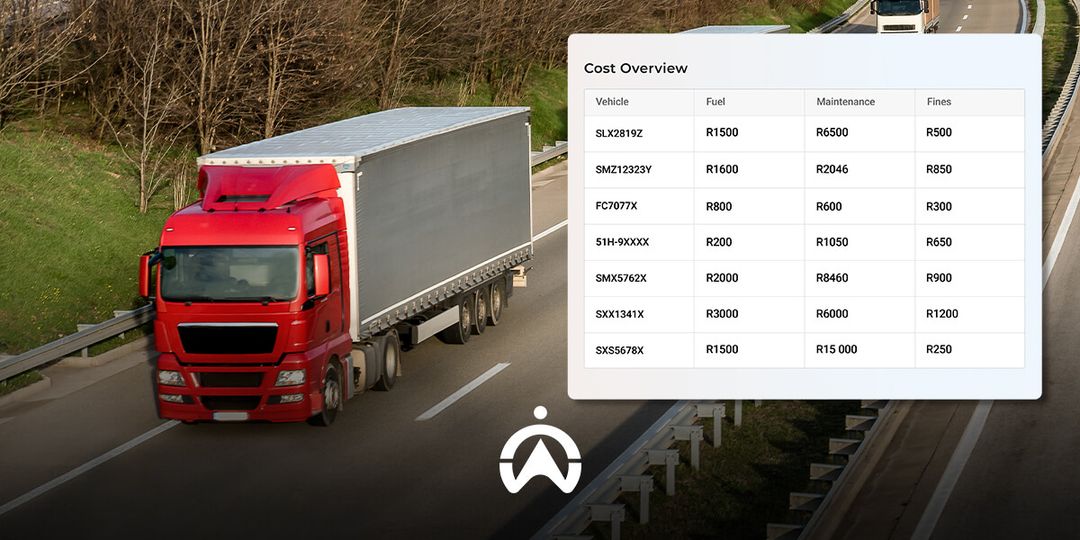
Maintenance costs form a significant portion of overall fleet expenses. Every breakdown leads to costly repairs, operational disruptions, and revenue loss.

The direct vs. hidden costs of fleet breakdowns

Vehicle breakdown expenses go beyond repairs; there are other financial and operational repercussions. Take a look at this breakdown of the direct and hidden costs:

1. Direct costs of fleet vehicle breakdowns

Repair and maintenance costs

  • Unexpected repair expenses vs. scheduled maintenance
    Unplanned repairs due to the failure of vehicle parts typically cost more than planned maintenance. Suppliers often order vehicle parts in bulk, which can lead to longer waiting times in the case of emergency repairs. Depending on where the components are outsourced, some orders may be quick, while others could take longer to arrive.

    When there are emergency repairs, the vehicle parts that need replacing might not be available. This leads to a rush in individual orders, which come at an extra expense. The mechanics will also need to work overtime to ensure the repairs are done as soon as possible, further straining the budget. However, with a planned repair service, you are certain to find the replacements there, and the mechanic ready for you.

Towing and roadside assistance

  • Expenses for emergency roadside services
    A vehicle that breaks down en route requires roadside assistance, such as emergency towing. Depending on the provider, this service may be covered by a monthly subscription to ensure fleet businesses do not have to worry about paying when it is time for assistance, or charged per incident. However, both options typically include a call-out fee which is separate from the labour costs. If the breakdown occurs after hours, charges may escalate. These charges also vary depending on location.

2. Indirect costs of fleet vehicle breakdowns

Lost productivity and downtime

  • Delays in deliveries and missed service appointments
    Sudden breakdowns reduce productivity levels and delay fleet operations. This results in late deliveries or missed service appointments. These unforeseen mechanical failures also pose security risks to fleet vehicles and cargo, as it might not be safe for trucks to be stranded for hours. Furthermore, if the driver is transporting temperature-sensitive goods, a breakdown could compromise product quality, leading to financial losses and customer dissatisfaction.
  • Idle driver wages and operational inefficiencies
    Certain vehicles not working means some drivers might be inactive for some time. Depending on company policy, the drivers still need to be compensated a fraction of their wages while on standby, creating unproductive labour costs.

Customer impact and reputation damage

  • Late deliveries lead to a dissatisfied client
    If we use the above-mentioned example of transporting temperature-sensitive goods, late deliveries can shorten the product’s shelf life, causing financial losses for retailers and damaging supplier relationships. This creates a dent in your company’s reputation and may lead to the loss of contracts or penalties for service days.

Administrative burden

  • Extra time spent coordinating repairs
    An often overlooked aspect of vehicle breakdowns is the administration of it all. Fleet managers need to coordinate repairs and reschedule operations, which takes away from other daily tasks. It also increases the fleet manager’s workload and responsibilities.
  • Legal implications
    It is required by law that all vehicles must be roadworthy to ensure safety for all road users. For this reason, vehicles that fail to meet these standards may face legal consequences, such as fines or a potential lawsuit. This sometimes means regular court appearances, which take time away from other work but also add to the time spent on administration. The outcome could also result in heavy fines or the business being forced to close down.

A mechanic sits on the edge of an open truck hood, holding a wrench, with various vehicle parts visible in the background.

3. Hidden costs that add up over time

  • Higher insurance premiums
    Increased claims can lead to higher premiums. Poorly maintained vehicles are more likely to experience mechanical failures. This results in more claims for services such as towing and start assistance. An increase in such claims leads to high premiums as vehicles are now flagged as more of a risk. Furthermore, if worn-out vehicles cause accidents, the victims of those accidents can claim from your company’s insurance.
  • Fuel inefficiency
    Poorly serviced vehicles consume more fuel due to components such as air filters, fuel injectors, and spark plugs being worn out. Our article on how to reduce fuel consumption highlights vehicle maintenance as one of the contributing factors to fuel inefficiency. Regular maintenance of these vital components ensures optimal combustion and engine performance.

    The article also points out the importance of tyre pressure and wheel alignment, stating that a 1% decrease in tyre pressure results in a 0.3 % reduction in fuel economy.

    As fuel expenses take up most of a fleet business’s budget, this further proves how skipping maintenance schedules will lead to greater costs.

  • Unplanned detours and idling during breakdowns
    When vehicles experience mechanical failure, drivers might need to take detours to find a safe spot for repairs or towing. This increases the amount of fuel being used. While waiting for roadside assistance, vehicles sometimes idle for prolonged periods, which further adds to fuel usage.
  • Impact on driver satisfaction and retention
    The frequent breakdowns often leave drivers in a state of frustration as they also want to accomplish tasks with minimal disruptions, as this has a good reflection on overall performance. This affects employee morale and could result in lower driver retention and increased hiring costs.

How to prevent costly fleet vehicle breakdowns

The true costs of vehicle breakdowns have proven to be more expensive than scheduled repairs. However, due to the workload and nature of the fleet management environment, it is easy to overlook things such as maintenance schedules to prioritise meeting client expectations. This common challenge can be resolved using technologically driven solutions.

Preventative maintenance involves practices that fleet managers can do to address maintenance concerns before they become bigger issues. It can be done in two ways:

The role of IoT technology in predictive maintenance

IoT-based predictive maintenance is an approach that involves using the Internet of Things (IoT) to gather and analyse data about vehicles, assets, and machinery. This technology consists of sensors or devices that are installed in the vehicles to collect and convert the data into valuable information. Through this, fleet managers are able to receive the information in its simplest form and make informed decisions.

Cartrack’s preventative maintenance solutions in action

Cartrack caters for fleets of any kind. Let’s have a look at how our preventative maintenance solutions helped a construction fleet reduce downtime.

Case Study: Concord Cranes

Concord Cranes specialises in crane hire solutions. They have over 180 cranes and provide mobile cranes for hire, professional rigging, transport, and specialised lifting projects. Their main challenge was that they found it difficult to accurately record the hours each crane worked, making it difficult to maintain and deliver them to their clients on time.

How we helped them:

  • Our IoT device and specialised power take-off sensors make it possible for Concord Cranes to accurately monitor their cranes’ on-site working hours and the mileage travelled. The information they receive from this allows them to monitor the conditions and usage of their cranes so they can form preventative maintenance measures for their clients and increase their fleet lifespan.
  • Using insights from our fleet management platform, Concord Cranes now reduces maintenance costs by minimising the number of cranes sent for avoidable and expensive fault-related repairs. This also helps them minimise unplanned downtime.
  • Our fleet management and maintenance system has improved their overall brand reliability with their customers, ensuring their cranes are always safe and in working order. Additionally, detailed maintenance schedules have reduced the number of unexpected breakdowns and allowed them to plan ahead to ensure vehicle availability and minimal disruption during the delivery of cranes to customers.

“Using Cartrack’s advanced fleet management, we have been able to increase our operational efficiency to deliver a better service to our customers, as well as effortlessly establish a maintenance cycle that reduces our costs and increases our fleet longevity.” | Gareth Langley, Concord Cranes operations manager
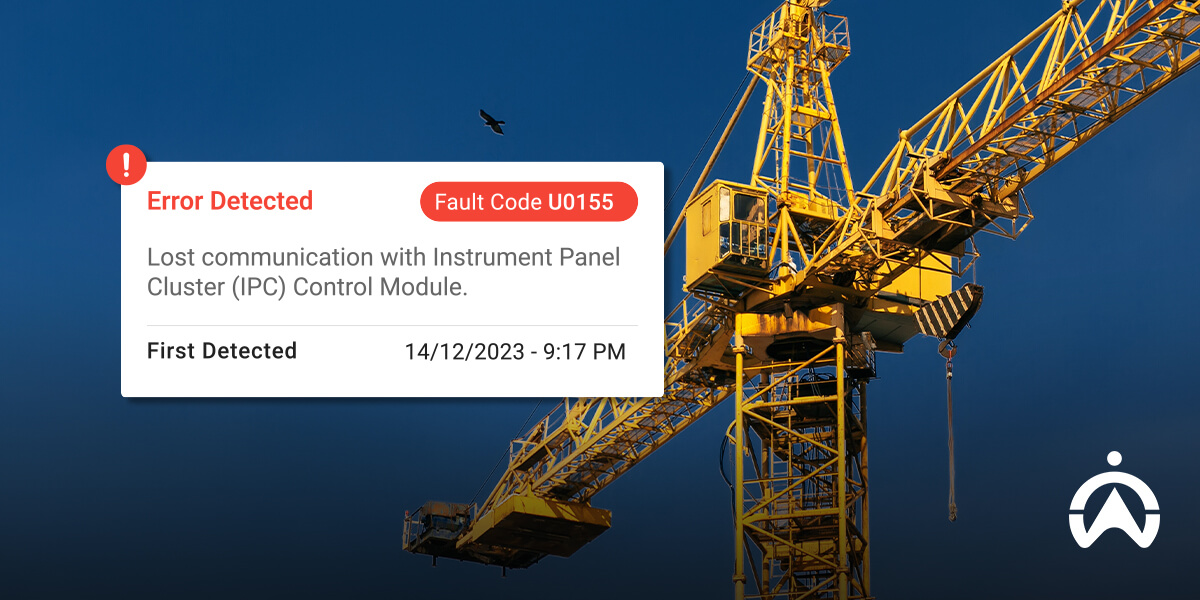
A yellow construction crane against a blue sky, displaying an alert about a maintenance error with the Instrument Panel Cluster.

Reduce the costs of fleet vehicle breakdowns with Cartrack

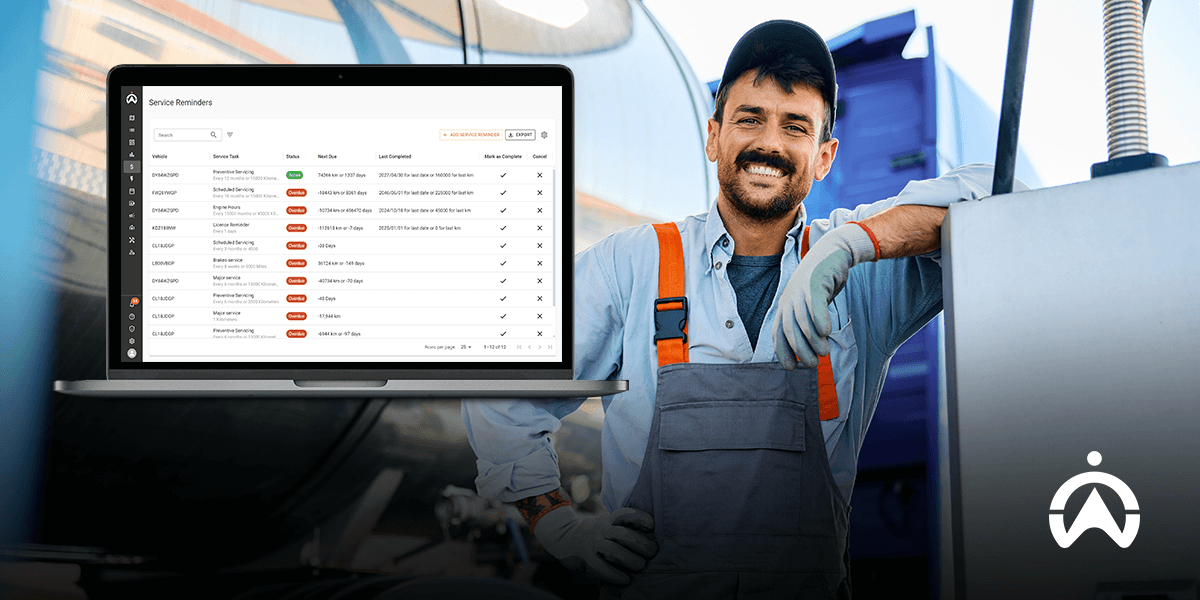
The Cartrack telematics technology provides vehicle diagnostics so you receive real-time alerts of vehicle maintenance issues such as engine faults, water fluctuations, and oil level levels. This information helps you make necessary arrangements on time so you can avoid unplanned fleet inactivity. Our platform also gives you reminders of maintenance schedules so you can warn drivers in advance and keep workflows undisrupted.

Here are other Cartrack solutions that you can add to your preventative maintenance strategy:

  • Route optimisation
    Know where your vehicles are at all times using our GPS tracking technology and ensure drivers follow efficient routes using our route optimisation tool. The more kilometres a vehicle travels, the more it is likely to have worn-out parts that need to be replaced. Through an analysis of traffic conditions and historical travel trends, our route optimisation tool suggests the most cost-effective routes that drivers can use to get to their destinations. By using this feature, you reduce the long routes and detours that increase fuel consumption and vehicle mileage.
  • Driver monitoring
    Harsh events: Aggressive driver behaviours such as excessive idling and harsh braking have proven to be some of the factors contributing towards greater vehicle wear and tear. Our IoT device alerts you of these driving habits and gives you a detailed insight into each event.

    AI Cameras: The Cartrack AI Multivison camera solutions make use of artificial intelligence technology to protect your drivers from accidents that could lead to major repair costs. The cameras monitor distracted driver behaviours such as drowsiness, cellphone use, and smoking. Once detected, drivers will receive real-time audible alerts so they can instantly correct their actions. As an extra layer of protection, these cameras also help drivers detect blind spots and keep a safe following distance.

    Driver Scorecards: Encourage better driving habits using our Driver Scorecards. This feature rates each driver based on their harsh events and adherence to planned routes. You can use this information to reward those with high ratings, boost employee morale, and identify those who need more training on good driving habits.

Stop breakdowns before they start—explore Cartrack’s preventative maintenance services!

Monitoring vehicle performance using telematics helps detect issues early. By investing in our fleet management solutions, you ensure that your vehicles are always fit for the road. Reach out to our fleet consultants to get the most out of your fleet, increase vehicle lifespan, reduce downtime, and, most importantly, save costs!

Frequently asked questions about fleet maintenance

Q. What is the biggest challenge in fleet management? ‍

The biggest challenge in fleet management is managing high operational costs. The day-to-day expenses of running a fleet include fuel, maintenance, repairs, and compliance fees. In the absence of proper management, these daily expenses can significantly impact the business’s total profit.

Q. What are the benefits of total preventive maintenance?‍

Preventative maintenance enhances drive safety, reduces downtime, increases efficiency, improves vehicle performance, boosts customer satisfaction, and helps you save costs.

Q. What are the different types of maintenance strategy‍

There are four main types of maintenance strategies:

  1. Reactive maintenance: Also known as breakdown maintenance, this is when you fix things only when they break. This method only works well on low-cost equipment that is not essential for operations.
    ‍
  2. Preventative maintenance: This approach relies on following predefined schedules in order to detect problems and fix them before they become bigger issues.
    ‍
  3. Predictive maintenance: Uses real-time data from advanced technologies such as IoT sensors, artificial intelligence, and machine learning to analyse potential problems such as engine temperature, oil conditions, battery conditions, and brake performance.
    ‍
  4. ‍Reliability-centred maintenance (RCM): This is a process of determining the most effective maintenance strategy for each of your assets by combining all the other methods.


Predictive Maintenance: How to Reduce Unplanned Downtime

In this day and age, with rapid business development and steep competition, your fleet or machinery’s working condition is a vital factor to consider. For most companies, unplanned downtimes are costly, with challenges such as lost productivity and repairs.

Predictive maintenance is the most important way to cut unplanned downtime, optimise fleet management, and generally improve operational performance. This innovative approach focuses on advanced technology along with data-based insights to foresee incidents from the beginning and keep the assets performing at their top condition while causing minimal disturbances.

In this blog we learn about how predictive maintenance can help you get real-time vehicle diagnostics and establish effective maintenance plans for your fleet.

In this article, you will:

  • Learn about predictive maintenance
  • Discover the impact predictive maintenance has on fleet operations
  • Find out why Cartrack is the ideal partner for predictive maintenance solutions

What is Predictive Maintenance and How Does It Work?

Predictive maintenance uses data analysis to identify operational issues and potential equipment defects, enabling timely repairs before failures occur. It aims to minimise maintenance frequency, avoiding unplanned breakdowns and unnecessary preventive maintenance costs.

Core Principles of Predictive Maintenance

Predictive maintenance relies on various technologies in order for it to work effectively, these include:

  • The Internet of Things (IoT)
  • Predictive analytics
  • Artificial intelligence (AI)
  • Connected sensors

These components gather data from assets such as machinery and equipment. Here is how the components of predictive maintenance work:

Data Collection:

  • Components gather data from assets (machinery, equipment).
  • Data is collected in the cloud within an AI-enabled EAM or CMMS.

AI Analysis:

  • AI and machine learning analyse data in real-time.
  • This analysis provides an understanding of the equipment’s current condition.

Defect Detection & Alerting:

  • Alerts are triggered for potential defects.
  • Alerts are delivered to the maintenance team.

Predictive Capabilities:

  • Machine learning algorithms predict future equipment conditions.
  • Enables efficient maintenance workflows (scheduling, labour, parts).

Continuous Improvement:

  • Increased data collection leads to more insights and better predictions.
  • Provides confidence in optimal equipment performance.
Mechanic in overalls rolling a large tire with a blue truck in the background.

Data Sources in Fleet Predictive Maintenance

In predictive maintenance, it is only through rich and accurate data that problems can be predicted before they bring about unexpected downtime. With Cartrack’s advanced and effective fleet management solutions, we exploit different sources to give a complete picture of how a vehicle performs. This data is acquired in real-time through telematics devices, sensors, and onboard diagnostics, enabling fleet managers to monitor critical metrics and get alerts for potential problems. Below are some of the critical data sources for effective predictive maintenance:

  1. ‍Engine Health
    The heart of any vehicle is its engine, and one needs to ensure that such components are monitored in order to avoid any chances of failure. Control actions regarding engine temperature, oil pressure, fuel consumption, and engine loading make it possible to flag early evidence of crisis. Take for example increased temperature in the engine or abnormality in oil pressure which can indicate possible failures in the cooling system or oil leak respectively. All these are parameters that are monitored continuously by the telematics systems from Cartrack, thus supplying fleet managers with real-time information regarding the times when engine health begins to decline, making timely action possible before more severe damage occurs.
    ‍
  2. ‍Braking Patterns
    Brakes are the most important safety feature in a vehicle. Worn-out or non-efficient brakes often lead to fatal accidents and very expensive repairs. Monitoring braking behaviour, including braking force, frequency, and response time, will help in identifying potential problems at an early stage. For example, excessive braking, especially sudden or hard braking, can lead to defective brake pads or adversely affect systems linked to brake fluid. With the help of Cartrack’s telematics system, fleet managers can track and analyse braking behaviour, thus providing an analysis that could lead to action being taken.
    ‍
  3. ‍Fuel Efficiency
    A drastic drop in fuel economy could be indicative of problems related to the engine, under-inflated tyres or a dysfunctional fuel system. Constant monitoring of average fuel consumption over time can help identify and address inefficiencies, which can accumulate into significant costs. Cartrack tracks a vehicle’s fuel usage in real-time so that fleet managers can study patterns on fuel consumption. This is then used when planning routing, optimising driving behaviour, and in case of any mechanical problem affecting fuel efficiency.
    ‍
  4. ‍Tyre Wear
    Tyres have a great deal to do with the safety and performance of a vehicle, factors to consider include varying forms of wear such as excessive and uneven tyre wear. These could indicate misalignment, improper inflation, or some other mechanical failure. Monitoring of tyre pressures as well as tread volumes informs when tyres will have reached the replacement service level. Cartrack has sensors that continuously monitor tyre health and notify fleet monitoring personnel when the pressure reaches below optimal levels or physical wear patterns indicate a need for replacement. By having early prevention measures in place, it will minimise blowouts and improve safety.

Why Predictive Maintenance Matters for Fleet Businesses

Predictive maintenance matters most to fleet businesses because of the cost reduction it brings. Another main reason is that efficiency increases since vehicles will rarely have downtime due to repairs. Most importantly it makes driver safety that much more possible as the vehicles will almost always be in top condition.

The Impact of Predictive Maintenance on Fleet Operations

Predictive maintenance has had a massive impact on the fleet management industry. Fleet managers can now foresee many issues that would otherwise affect fleet performance. Many benefits have come from this way of planning maintenance, let’s have a look at some of them.

Key Benefits of Predictive Maintenance

Minimising downtime and repair costs is the biggest benefit of predictive maintenance. The early services of vehicles mean that repairs are reduced and in some cases completely removed.

Another benefit is prolonging vehicle lifespans and improved asset utilisation. When vehicles are repaired early it means that they will have significantly reduced downtime and are not likely to break down randomly, maximising operational time.

Reducing fuel waste is a byproduct of optimally functioning vehicles. An engine that is working well and in good condition is more fuel efficient than one that isn’t. This means that fuel costs can be expected to go down overall. An added benefit is the reduced environmental impact from the reduced fuel use.

Operational Efficiency

Operational efficiency is the biggest advantage of predictive maintenance as it allows better planning for vehicle availability. It becomes very easy to manage vehicles when very few of them are in maintenance or getting a service. Smarter resource allocation with accurate maintenance scheduling will be the norm moving forward.

Cartrack: A Game-Changer in Predictive Maintenance

Cartrack is a provider of advanced telematics solutions for fleet management, the services include GPS tracking, vehicle diagnostics, and vehicle data analytics. This is all provided both in real-time and in scheduled reports. These features all assist in predictive maintenance, here’s how.

How Cartrack Enhances Predictive Maintenance

Cartrack’s telematics technology detects performance anomalies and warns well in advance about potential critical issues. The management software then gives actionable insights to operators on how to resolve each vehicle’s issues, thus reducing unplanned downtime and ensuring that vehicles remain operational.

Fleet managers that use a Cartrack platform, are able to:

  • Monitor the entire fleet’s KPIs.
    ‍
  • Get predictive alerts on components that are nearing failure.
    ‍
  • Evaluate historical data to anticipate future maintenance activities.
    ‍
  • Schedule maintenance activities based on data-driven insights.
    ‍
  • Prevent unnecessary fuel consumption.
    ‍
  • Improve driver behaviour and route optimisation.

Features of Cartrack Solutions

At Cartrack, we pride ourselves on offering a comprehensive suite of features designed to enhance the effectiveness of predictive maintenance, improve fleet management, and ultimately reduce unplanned downtime. Our solutions are built with flexibility, reliability, and real-time data at their core, ensuring that fleet managers have all the tools they need to keep their vehicles operating at their best. Here are some of the standout features that set Cartrack apart:

  1. ‍Customisable Maintenance Schedules and Automated Reminders
    Cartrack understands that each fleet has unique needs, which is why we offer customisable maintenance schedules tailored to your specific fleet profile. Our system takes into account the type of vehicles you operate, their usage patterns, and manufacturer recommendations, ensuring that maintenance is scheduled at the optimal time for each asset. Furthermore, we provide automated reminders for scheduled maintenance tasks, such as oil changes, tyre rotations, or filter replacements. These reminders are delivered via email or the Cartrack mobile app, ensuring that no important maintenance task is overlooked.
    ‍
  2. ‍Proven Results in Reducing Downtime and Saving Costs
    Cartrack’s predictive maintenance technology has consistently delivered tangible results in reducing unplanned downtime and lowering maintenance costs for fleets of all sizes. By providing accurate, real-time data on vehicle health, we enable businesses to shift from reactive maintenance strategies to a more proactive, data-driven approach. Our predictive insights allow fleet managers to address small issues before they escalate, preventing costly breakdowns and repairs.Our customers have reported significant improvements in both vehicle uptime and cost savings through Cartrack’s predictive maintenance solutions. By preventing unexpected repairs and optimising maintenance schedules, businesses can reduce repair costs, extend the lifespan of their assets, and improve fleet performance.
    ‍
  3. ‍Real-Time Alerts and Predictive Insights
    Cartrack’s advanced alert system offers immediate notifications when a vehicle requires attention. This helps ensure that issues are addressed before they result in a breakdown. Whether it’s an engine anomaly, a critical component failure, or unusual driving behaviour, fleet managers receive predictive alerts through the Cartrack app or other communication channels. These insights enable a proactive approach, allowing for quick fixes or the adjustment of maintenance schedules to avoid disruptions.With Cartrack’s real-time alerts and insights, you can stay ahead of potential problems and significantly reduce the risk of unplanned downtime.
    ‍
  4. ‍Data-Driven Performance Optimisation
    Cartrack’s system also provides performance analytics that go beyond predictive maintenance. By monitoring trends in fuel efficiency, driving patterns, and vehicle health, fleet managers can identify inefficiencies and make data-driven decisions to improve overall fleet performance. Optimising routes, adjusting driving behaviour, and managing fuel consumption not only contribute to vehicle longevity but also enhance operational efficiency and reduce costs across the fleet.
    ‍
  5. ‍Comprehensive Reporting and Fleet Insights
    Cartrack’s platform offers comprehensive reporting tools that allow fleet managers to track and analyse data on all aspects of fleet performance, from maintenance schedules to fuel consumption. These reports can be customised to your specific needs, offering detailed insights into the health and status of each vehicle. With Cartrack, you can track the progress of maintenance tasks, compare fleet performance over time, and gain a deeper understanding of which vehicles or components are most likely to require attention.
    ‍
  6. ‍24/7 Vehicle Monitoring
    One of the key advantages of using Cartrack’s telematics system is our round-the-clock vehicle monitoring. Our platform continuously collects and analyses data from all vehicles in the fleet, providing real-time insights into their performance, condition, and location. This 24/7 surveillance ensures that fleet managers are always informed, whether they are on the go or managing their fleet from the office. With Cartrack, fleet operators can detect issues as they emerge, allowing for immediate action to prevent failures and keep operations running smoothly.
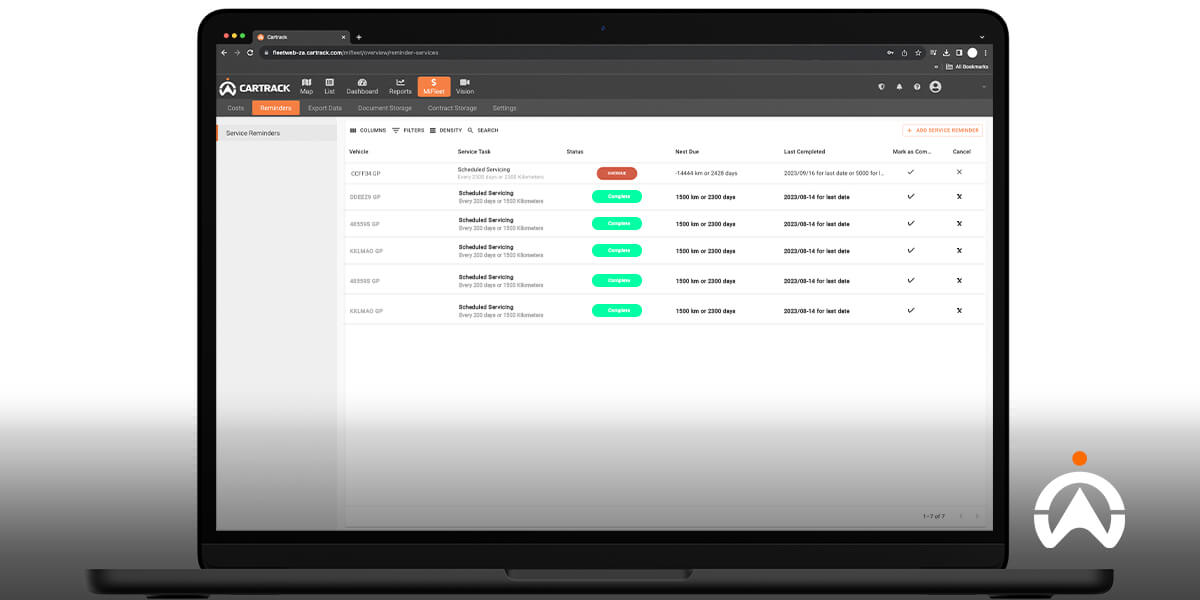
Worker in overalls presenting a laptop screen displaying service reminders.

The Future of Predictive Maintenance

The evolution in technology is going to continue to open the door wider for predictive maintenance. Future breakthroughs promise ever more intelligent machine learning algorithms, tighter integration of Internet of Things (IoT) devices, and more in-the-moment monitoring capabilities. Thus enabling companies to achieve more precise predictions on failures and the improvement of operational efficiencies.

Predictive maintenance, in short, is a drastic shift in strategy for an organisation with a fleet of vehicles or heavy equipment. For organisations trying to remain competitive, predictive maintenance is no longer optional but rather a strategic need. To optimise fleets, reduce unplanned downtime, and boost productivity Cartrack’s advanced telematics solutions are the best way to go.

Cartrack is at the forefront of this technological evolution to make businesses shine with smarter, safer, and cost-effective fleet management practices.

Contact us today to learn more about how Cartrack can help you and your fleet stay ahead of the curve.

FAQs

What is the ROI of predictive maintenance?

The ROI depends on factors like the industry, equipment complexity, and implementation scale. However, businesses typically see significant savings through reduced downtime, lower repair costs, and enhanced operational efficiency.

Can small businesses implement predictive maintenance?

Yes, with the increasing affordability of IoT devices and scalable cloud-based platforms, even small businesses can leverage predictive maintenance to improve efficiency and reduce costs.

How does predictive maintenance differ from preventive maintenance?

Predictive maintenance relies on real-time data to predict failures and act just in time, whereas preventive maintenance follows a fixed schedule based on time or usage, regardless of equipment condition.

What industries benefit most from predictive maintenance?

Predictive maintenance is widely used in industries like manufacturing, transportation, energy, healthcare, and utilities—where equipment reliability and uptime are critical.

How To Reduce Fleet Vehicle Downtime And Keep Your Business Running

The d-word – downtime, every fleet manager’s nightmare. It affects about 82% of businesses and is a constant concern in the world of fleet management. What are you doing to keep your fleet up and running?

While some vehicle downtime can’t always be controlled, fleet managers need to have solutions in place to ensure unnecessary downtime doesn’t occur so productivity and profits are not impacted.

Here’s how you can keep your fleet downtime-free.

In this article, you will:

  • Learn what vehicle downtime is
  • Discover the factors that cause vehicle downtime
  • Find out how vehicle downtime impacts fleet efficiency
  • Uncover the secret to preventing unplanned vehicle downtime

What is vehicle downtime?

Vehicle downtime is one of the most costly and disruptive issues for fleet managers. It refers to the period when a business vehicle is not available for use for various reasons. While planned downtime is when a vehicle’s unavailability is scheduled at a company’s convenience, unplanned downtime is a lapse in operations that happens outside of a fleet manager’s control. During this period of inactivity, fleet vehicles are unable to fulfil their duties.

What causes vehicle downtime?

Vehicle downtime can be triggered for several reasons, here are a few:

Accidents or collisions: Vehicles involved in accidents may require significant repairs, which ultimately leads to unplanned downtime.

Fuel-related problems: Unexpectedly running out of fuel or encountering issues with a vehicle’s fuel system can cause delays, which can be costly, especially in the delivery service industry.

Lack of maintenance: Vehicle parts wear out and get damaged, causing vehicles to break down. Not adhering to regular maintenance schedules can lead to unexpected breakdowns or failures that could have been prevented with proper upkeep.

Driver-related incidents: Issues caused by driver errors, such as distracted driving, incorrect operation of equipment, negligence, and incorrect handling, can lead to unforeseen vehicle problems and subsequent downtime.

Road conditions: Potholes, rough roads, and debris can cause damage to the vehicle’s undercarriage, suspension, and tyres, leading to unplanned vehicle downtime.

Impact of downtime in fleet management

Downtime affects a fleet in numerous ways, including:

  1. Decreased productivity: Since vehicles are not operational, downtime leads to reduced fleet productivity. This means you are missing deliveries or service appointments, making your entire business fall behind schedule. This delay in operations leaks into customer satisfaction, negatively impacting it and your business’ reputation. While it may seem like rushing to make up for lost time and productivity is the solution, this can lead to compromised safety protocols, increasing the risk of accidents or equipment failure.
    ‍
  2. Overutilisation of other vehicles: When a vehicle is not operational, fleets may opt to use their other vehicles more to make up for time lost. While this may seem like the ideal quick fix, it can end up causing more damage, as using assets beyond the scheduled times can put a strain on their health and longevity.
    ‍
  3. Loss of revenue: Vehicle downtime significantly affects a business’s bottom line. The failure to deliver goods or services on time can lead to a loss of revenue and missed opportunities. This doesn’t just lead to missed deadlines; it also leads to dissatisfied customers who end up taking their business elsewhere. Losing revenue also means you aren’t able to pay your drivers well, which negatively impacts driver morale and retention.
    ‍
  4. Increased costs: Repairing vehicles and managing unexpected downtime can significantly increase a fleet’s operational costs. Unexpected breakdowns aren’t usually budgeted for, so fleet managers may have to dip into other parts of business finances to ensure that the repairs are swiftly attended to.

What are the benefits of reducing vehicle downtime?

Reducing vehicle downtime is beneficial for a range of reasons, including:

  1. Increasing productivity: Reduced vehicle downtime allows for more efficient use of time, enabling vehicles to remain operational and contributing to higher productivity levels.
    ‍
  2. Improving customer satisfaction: Reduced vehicle downtime leads to more reliable service and timely deliveries, which enhance customer satisfaction and loyalty.
    ‍
  3. Promoting cost savings: Reduced vehicle downtime means fewer maintenance-related expenses, lower repair costs, and decreased spending on emergency repairs. This ultimately saves your fleet money.
    ‍
  4. Enhancing safety: Reduced vehicle downtime contributes to safer vehicles, decreasing the likelihood of accidents due to faulty equipment and mechanical issues.
    ‍
  5. Aiding better planning and scheduling: Reduced vehicle downtime allows for more accurate scheduling and planning of routes and services since there are no unforeseen delays. This leads to smoother operations and improved efficiency.
    ‍
  6. Optimising asset utilisation: Vehicles that spend less time out of commission are utilised more effectively, increasing the overall efficiency and profitability of the fleet.
    ‍
  7. Boost driver satisfaction: Vehicles that constantly break down and cause delays negatively impact your driver’s performance and general morale. Reduced vehicle downtime improves their morale and performance since they can complete their tasks with minimal delay.

How can you reduce vehicle downtime in your fleet?

There are a range of solutions that fleet managers can implement to ensure that unplanned vehicle downtime is significantly reduced. These include:

  1. Monitoring driver behaviour: Vehicle downtime can occur due to distracted or dangerous driver behaviour. Safe driver practices, such as gentle acceleration and braking and avoiding harsh turns, reduce wear and tear on vehicle performance. When drivers adhere to these practices, it can lead to decreased stress on critical parts such as brakes, tyres, and the engine.Driver behaviour monitoring ensures that you are aware of all these behaviours, and can implement training to ensure drivers adhere to best driver practices at all times. The result is an extended vehicle lifespan due to optimised vehicle utilisation, improved fuel efficiency, and decreased accident rates.
    ‍
  2. Monitoring fuel consumption: Keeping an eye on your fleet’s fuel consumption helps you identify irregularities or sudden increases in fuel usage. An unexpected spike in fuel consumption could indicate an underlying issue with the vehicle, such as a malfunctioning engine, an issue with tyre pressure, a problem with the fuel system, or fuel theft. Addressing these issues promptly is paramount, as it helps prevent potential breakdowns and vehicle failures that could result in vehicle downtime. Proactive fuel consumption monitoring not only mitigates the risk of serious mechanical issues but also contributes significantly to keeping the fleet operational and minimising service disruptions.
    ‍
  3. Prioritising fleet maintenance scheduling: Being one of the main causes of vehicle downtime, vehicle maintenance is crucial. Preventative fleet management refers to a proactive approach adopted by fleets to maintain and optimise the safety and longevity of their vehicles. Regular and proactive maintenance is key to preventing unexpected breakdowns and reducing downtime. An example of this is oil changes, a seemingly routine procedure that is important for engine health and functionality. Regularly scheduled oil changes prevent engine wear and potential breakdowns, ensuring smooth operations. By making use of a series of planned actions, inspections, and maintenance procedures, regular fleet maintenance significantly lowers the chances of vehicle downtime.

Of all these factors, maintenance is probably the most paramount, as it is one of the leading causes of vehicle downtime. With this knowledge, many fleets choose to incorporate a fleet maintenance plan into their operations to help mitigate the risks that come with vehicles not being maintained.

What is a fleet maintenance plan?

A fleet maintenance plan is a comprehensive, structured strategy for managing the maintenance and repair of a fleet of vehicles, designed to keep all vehicles and related equipment in safe, reliable, and operational condition. This plan encompasses a range of scheduled tasks that are designed to ensure the optimal operational condition, safety, and longevity of the entire fleet. The plan typically involves the use of fleet management software to help manage vehicle service reminders, create custom schedules (based on the individual fleet), and track vehicle performance.

What_is_a_fleet_maintenance_plan

What is the risk of not having a fleet maintenance plan?

Not having a fleet maintenance plan can result in several risks and implications for businesses that rely on vehicles. These include:

  1. High repair costs: Neglecting regular vehicle maintenance often leads to neglecting smaller issues that can escalate into more significant and costly problems over time. An example of this is a fleet conducting routine checks on its vehicle’s cooling systems. Initially, this oversight might seem inconsequential, but over time, it could lead to overheating, causing damage to the engine components. This leads to higher repair expenses due to neglected maintenance, as minor issues left unaddressed tend to compound and become more severe, requiring extensive repairs. What’s worse, if these issues aren’t quickly repaired, prolonged vehicle downtime becomes a reality.
    ‍
  2. Reduced vehicle lifespan: The consequence of not scheduling regular vehicle maintenance is accelerated wear and tear on critical components. The neglect of routine inspections and timely replacement of worn-out parts such as belts and hoses may lead to premature failure, putting additional strain on the vehicle’s engine and transmission. This strain reduces the overall longevity of the vehicles, leading to premature replacements being required, an unnecessary expense that could have been avoided if a fleet maintenance plan had been implemented in time.
    ‍
  3. Safety risks: Insufficient maintenance can compromise vehicle and driver safety. Neglected issues such as brake problems (which affect stopping power during critical moments), tyre wear (which increases the risk of punctures and tyre blowouts), or engine malfunctions (which compromise vehicle control) can pose significant safety hazards for drivers. This can potentially lead to costly and potentially deadly accidents that could have been prevented with proper maintenance. A proactive approach not only safeguards the well-being of your drivers but also the safety of all road users.
    ‍
  4. Decreased operational efficiency: Unplanned breakdowns disrupt workflow and decrease operational efficiency. It leads to inefficient resource allocation, as fleets need to take time and resources from regular operations to address unexpected maintenance issues, impacting overall productivity and profitability. An example of this is a delivery fleet facing sudden engine failures due to irregular maintenance checks. The subsequent need for immediate repairs halts the regular delivery schedule, which causes delays in customer service and potentially impacts contractual obligations. This interruption in operations demands the reallocation of resources, diverting both time and manpower from routine tasks to address these unexpected maintenance issues. These diversions disrupt the optimal allocation of resources, leading to inefficiencies in the overall workflow.
    ‍
  5. Lack of data-driven insights: Without a maintenance plan, fleets miss out on valuable data and insights regarding their vehicles’ performance metrics, usage patterns, and potential issues. This data provides a comprehensive view of the fleet’s health, helping fleet managers make informed decisions on predictive maintenance, cost analysis, and strategic decision-making to optimise fleet operations. Detailed records of maintenance costs per vehicle can also help fleet managers assess the financial implications of different maintenance strategies, aiding in the development of cost-effective plans.

Make unplanned vehicle downtime a thing of the past with Cartrack Malawi

Telematics can help you reduce vehicle downtime by providing real-time data on the location, speed, mileage, fuel level, engine performance, and driver behaviour of the vehicle. Cartrack Malawi brings telematics technology to you through a wide range of solutions. These include:

Cartrack’s fleet maintenance software:

Keep your vehicles healthy and well-maintained with our fleet maintenance software. By sending real-time alerts to fleet managers whenever vehicle mechanical issues occur, our software quickly informs them about the specific vehicle part that requires immediate repair or replacement. Enable maintenance scheduling that istailored to your fleet’s schedule with our preventative maintenance software, and ensure uninterrupted workflow. If an unforeseen fault is detected, you can immediately notify your drivers and inform them where to take the vehicle in real-time, minimising downtime.

Driver behaviour monitoring:

Manage and improve driver behaviour with Cartrack’s driver behaviour monitoring system. Use our driver scorecards to gain detailed insights into which areas individual driver’s behaviour requires improvement and put an end to vehicle-damaging driving habits (including excessive speeding, harsh acceleration, and idling). Use our Advanced Driver Assistance System to heighten your drivers’ awareness of their surroundings. With real-time audible alerts for potential road hazards and dangerous following distances, drivers can quickly correct their behaviour and prevent collisions. Lastly, gain 24-hour visual access to your vehicles with our Live Vision AI cameras. When in-cabin cameras detect forms of distracted driving (e.g., yawning, smoking, and cell phone use), drivers are alerted in real-time through in-cabin audible alerts, helping them correct their actions in real-time and prevent accidents that could cause vehicle downtime.

Route planning and optimisation

Available on our Delivery app, route optimisation helps you easily determine the safest and fastest routes for your drivers. By making use of GPS tracking and real-time position, the app alerts you of delays and route deviations in real-time, helping you quickly make informed rerouting decisions. By doing so, your drivers can avoid the idling that occurs when they are stuck in traffic. Idling is known to decrease fuel economy and overwork the engine components, leading to premature wear and tear. By making use of route optimisation, you can avoid these effects, further lowering the chances of vehicle downtime occurring.

Fuel monitoring

By making use of Cartrack’s fleet cost management system, you gain access to our fuel monitoring system. This system provides you with automated, real-time tracking and collection of data on fuel consumption, mileage, and engine operating hours. A sudden surge in your fleet’s fuel consumption could be indicative of a mechanical issue with your vehicles, such as malfunctioning fuel injectors, engine misfires, and clogged air filters. This helps you know if your vehicle needs to go in for a maintenance check, taking early preventative measures helps lower the chances of vehicle downtime occurring.

Make_unplanned_vehicle_downtime_a_thing_of_the_past_with_Cartrack

Leave unplanned vehicle downtime in your rear view with Cartrack Malawi

If you’re looking to improve your fleet maintenance and significantly lower your risk of unplanned vehicle downtime, Cartrack Malawi has all the solutions you need, available at the tap of a button.

‍Contact Cartrack Malawi today and overcome unplanned vehicle downtime.