Fleet Management System for Sale: What to Look for Before Buying

You are reviewing your business’s expenses and notice, once again, that your fleet-related costs have gone up and are not consistent with others. This frustrates you and has you wondering what more you can do to have this one cost finally sorted and under control.

If this is your experience, and you are looking to save on fleet-related costs, then you need the right fleet management system on your side.

It is important to know what to look for when choosing and buying a fleet management system for your business, luckily, we are here to help. Let us discuss what there is to know about this service and how investing in it sets your business up for long-term wins.

This blog will:

  • Explore how the best fleet management system brings long-term business success
  • Share the ways in which it can help your business save money
  • Discuss why Cartrack is the right choice

Investing in the Right Fleet Management System for Long-Term Success

To effectively manage expenses and reduce fleet costs, you need a reliable fleet management solution. Making this decision may be difficult for some, as they may not be sure what to look for since most providers appear to offer the same or similar services.

The first step to take is to look internally at the business itself. You will need to evaluate where the fleet is lacking and where it can improve. This will assist in finding the best system for the business.

Here are some steps to follow before looking for a provider.

Check Compatibility with Business Structure

When choosing a fleet system, it is important to ensure that it is scalable and adjustable to the growth of the business and the plans that it has.

The system you choose for your business must also be compatible with the existing software currently being used. This could be payroll, enterprise resource planning (ERP), and other product and customer management systems. It should be able to integrate with all these different types of software and easily pull through insights and instructions from each.

It is also essential to determine whether the solution will be cloud-based or on-premise, as businesses may require a hybrid approach or transition over time.

Evaluate User-Friendliness and Support

When it comes to any form of tech or software, user-friendliness is paramount. Technological innovations are meant to make our lives easier and simplify processes. The system that you choose should have this element built into it.

It is important to have an intuitive interface if the goal is to have the system adopted easily, this applies to both PC and mobile options. The system should be able to be used by any of the business’s employees who work with the fleet. Navigating the options and features should be a clear and straightforward process.

Customer support should be readily available should there be any confusion about how the system works or if there are any technical issues. This is a crucial factor to consider, as there may be instances where technical issues arise, and no one within the business can fix them.

Compare Reviews and Reputation

Like every product out on the market, fleet systems are also subject to customer reviews. When looking to see which is best for you, checking customer reviews and testimonials is a good way to go.

This could be looking up the provider on public forums and company rating sites like Hello Peter or seeing what the public sentiment is on social media. Doing this will help in assessing the provider’s industry experience and reliability.

Do Cost vs. Value Analysis

Understanding pricing models is important as this is usually one of the leading determinants for which system a business may choose. Knowing the difference between a contract and a rental will inform which one aligns closer to the budget and goals of the fleet.

You will need to weigh upfront costs against long-term ROI to see which option will have the most value in relation to the amount being paid.

Another factor to consider is its potential hidden costs. These could include additional fees for installation, training, and upgrades. If unchecked, a business can find itself paying for services that another provider would have bundled into one cost.
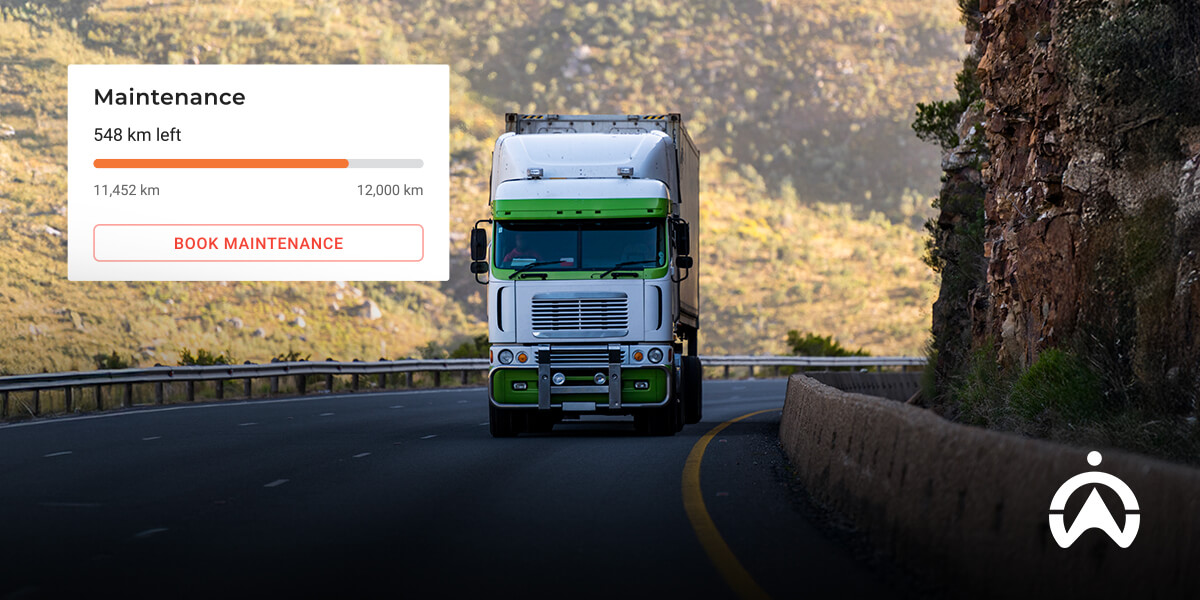
Truck on mountain highway with Cartrack Fleet Maintenance System alert showing 548 km left before service, enhancing predictive maintenance for commercial vehicles.

How A Fleet System Helps You Save Money

Having effective fleet management is important and can significantly improve fleet operations. It could lead to significant savings and cost reductions in areas the business previously thought not possible.

Here are some of the tools you must ensure your system has when evaluating if it is the one for your business.

Driver Behaviour Monitoring

Driver behaviour monitoring is one of the most effective ways of saving fleet-related costs. With this feature, a business can promote safer and more efficient driving habits throughout the fleet.

When drivers follow rules and treat vehicles with respect, they reduce the chances of fuel waste and wear and tear. These factors can become significant expenses in the long run, especially if the business has a large fleet of vehicles travelling long distances.

Fuel Management Tools

Managing fuel costs is a standard expectation for any fleet manager. This is an expense that might feel definite and only subject to change when fuel prices fluctuate. However, that is not the case, there are many strategies that can be taken to reduce fuel consumption and save money.

A fuel management tool can identify inefficiencies in fuel consumption and detect instances of unnecessary fuel waste. This could be due to fuel theft, driver behaviour, engine health and bad route planning, all issues that can be managed and resolved.

Automated Maintenance Alerts

Breakdowns can be quite costly, especially for larger, more specialised vehicles. These usually happen due to the vehicle’s age and the gradual accumulation of wear and tear. Servicing done in time can significantly reduce the risk of breakdowns. This is why getting notified when a vehicle is due for maintenance is essential. It prevents breakdowns with proactive servicing and keeps the fleet in good condition.

Route Optimisation and Efficiency

The routes a fleet takes can have a huge impact on the business. Long routes on bad roads at busy times of the day can all contribute to late deliveries and bad driving behaviour such as idling. A system needs to be in place to mitigate these problems, which is where fleet management comes in. Having it in your business can lead to optimised routes, enhanced delivery efficiency and reduced fuel wastage.
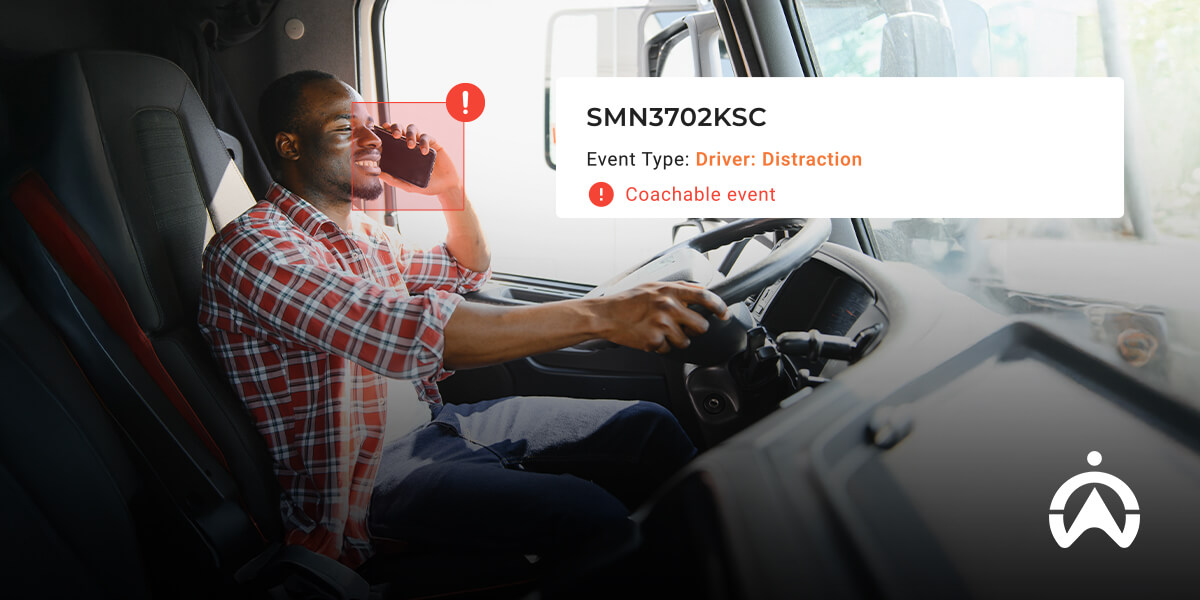
Truck driver identified using mobile phone while driving, flagged as a distraction event by Cartrack's AI-powered driver monitoring system for real-time coaching and safety improvement.

Why Cartrack is the Smart Decision for Your Fleet

Cartrack offers a comprehensive solution designed to reduce costs and maximise profitability. Here are some reasons we shine above the rest:

Flexible Costs and Packages

Here are some of our products and services that are guaranteed to reduce inefficiencies and streamline operations.

  • Bureau services: A service where we can remotely run your fleet on your behalf. Everything from route planning, driver management, fuel costs to everyday operations.
    ‍
  • Delivery: This package allows you to manage drivers while they make deliveries, you can get proof of receipt, manage job schedules and have a full overview of all the trips taken.
    ‍
  • Carpool: With this feature, you can control the allocation of vehicles to drivers, which helps in ensuring that all vehicles are used equally.

We offer a diverse product line that can be tailored to your business’s specific needs at a reasonable cost. These contracts come in 12, 24, and 36-month packages, with payments being made in cash or monthly instalments.

Advanced Telematics

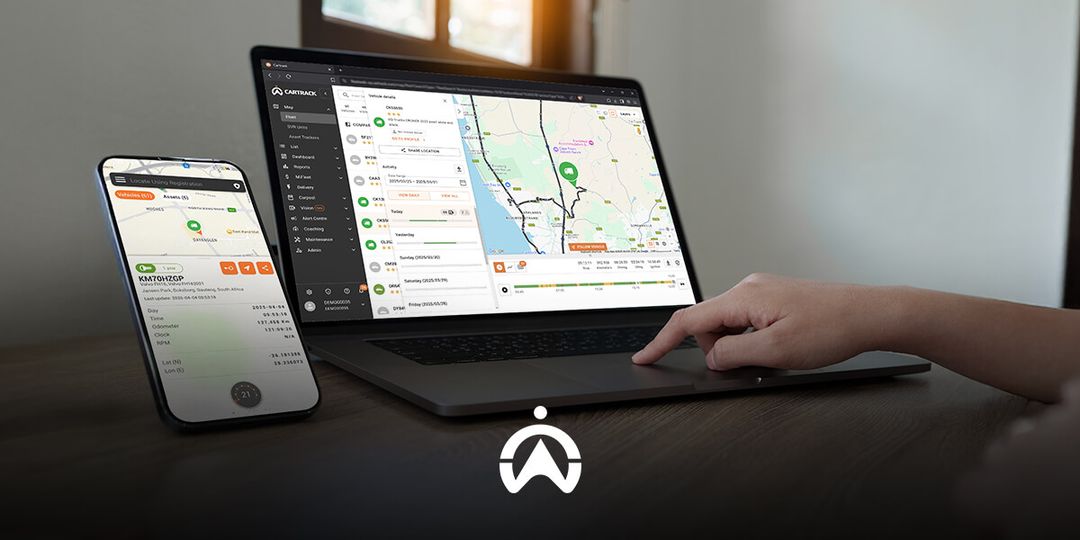
Our telematics offering comes with precise GPS tracking and real-time location to help optimise a business fleet’s operation. The comprehensive solutions package includes asset management, vehicle diagnostics, and proactive maintenance alerts, helping your business reduce downtime and extend vehicle lifespan.

Precise GPS Tracking

Our tracking solutions are GPS and GSM enabled and come with unparalleled real-time location accuracy, which allows businesses to monitor their fleets with ease and precision. With tools such as live tracking, route history, and geofencing capabilities, a fleet manager can enhance productivity and performance. This is because routes will be optimised and deliveries done on time as the ETA will be more accurate. Additionally, our system provides alerts for unauthorised vehicle movements, which will make it easier to prevent theft and vehicle misuse.

Successful Stolen Vehicle Recovery

Protect your fleet with Cartrack’s industry-leading stolen vehicle recovery service, which boasts an average stolen vehicle recovery rate of over 90%. Dedicated recovery teams work around the clock all year round to swiftly locate and retrieve stolen vehicles.

Additionally, we offer remote vehicle immobilisation, emergency support, and a panic button as value-added services. We even offer a warranty in the unlikely situation that we are unable to recover stolen vehicles.

Reduced Fuel Consumption

Fuel costs are usually one of the biggest expenses for a fleet, fortunately, Cartrack’s fuel management system can help your business keep them under control. Our system has real-time fuel usage monitoring, detects inefficiencies, identifies fuel theft, and optimises overall fuel consumption. A business owner can also get detailed reports on refuelling patterns and consumption trends, empowering them to make informed decisions that can lead to significant cost savings.

Safer Driving Habits

Safe and responsible driving is non-negotiable and vital for both cost efficiency and fleet longevity. Our driver monitoring system tracks bad driving behaviours such as harsh braking, rapid acceleration, excessive idling, and speeding. A business owner can use these insights to implement training programmes which will promote safer driving habits, reduce wear and tear, and lower the risk of accidents. By improving driver behaviour, you not only enhance fleet safety but also boost fuel efficiency and reduce operational costs.

Get Cartrack For Your Fleet Today

Cartrack’s offering is customisable for every business model and is scalable to meet the needs of the business as it grows. We also work in a variety of industries in 24 countries across the globe, with a customer base of more than 115,000 businesses.

When considering which management system provider to get for your business, know that Cartrack rises above the rest and will get your fleet functioning at optimal performance.

Contact us to start saving on your fleet’s costs.

FAQs

Q: What are the challenges in fleet management?

A: Many businesses face the same challenges when dealing with a fleet of vehicles. These can be:

  • Supply Chain Disruptions
  • Fuel Wastage
  • Vehicle Acquisition
  • Vehicle Maintenance
  • Health & Safety
  • Regulatory Compliance
  • Administration & Data Handling

For some businesses, these may be more prevalent than others.

Q: What is the difference between fleet management and telematics?

A: Fleet management software works as a cloud-based digital platforms which analyse data and help manage various aspects of fleet operations. Telematics systems gather integral data points, such as fuel consumption, vehicle diagnostics, and real-time GPS location.

Q: What is included in fleet management?

A: Most systems offer vehicle tracking, telematics, route optimisation and fuel consumption management. The goal is to maintain and enhance operational cost-effectiveness, vehicle maintenance, driver and asset management, vehicle safety and compliance, and operational efficiency.

Q: What are the benefits of a fleet management system?

A: Having this system will greatly benefit your business in several ways. Some of these include:

  • Reduced costs
  • Improved driver performance
  • Comprehensive and organised reporting and analytics
  • Optimised workflows and processes
  • Fraud and theft prevention
  • Increased vehicle lifespan
  • Better work experience
  • Improved customer satisfaction

All these will have a long-term impact on the business’s growth and development.
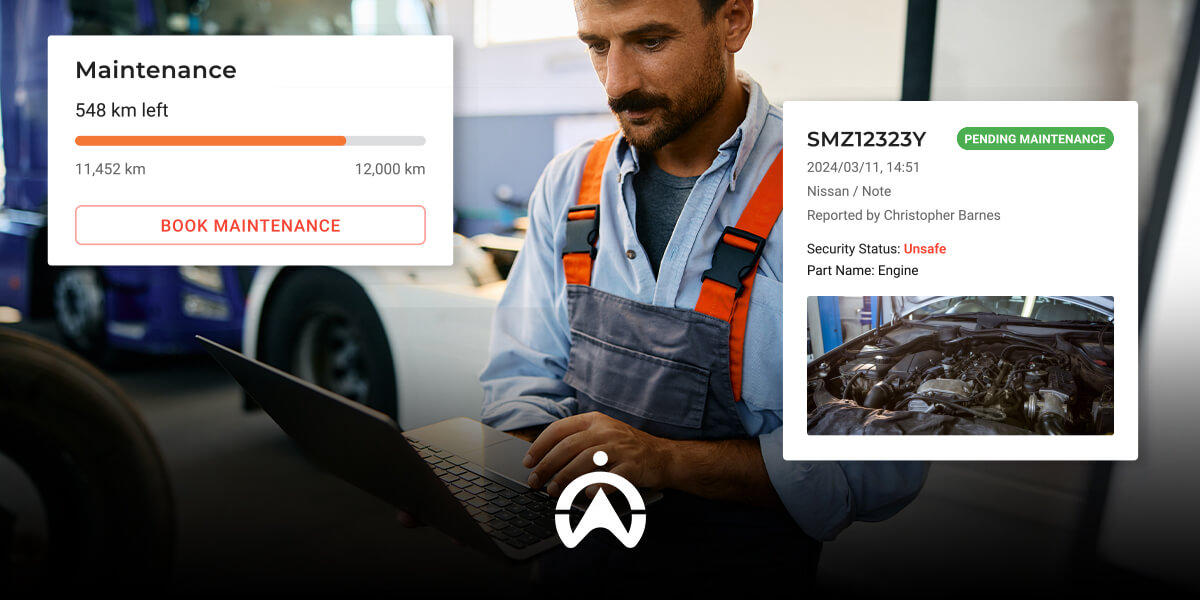
The Benefits of Remote Vehicle Diagnostics for Fleet Operators

Gone are the days of waiting for your truck to act up to know there’s a problem. Remote Vehicle Diagnostics can be a game-changer, helping you save both time and money. Early diagnosis means timely repairs, helping you avoid costly downtime.

Imagine your driver is delivering goods when suddenly the brakes fail. This could lead to serious injuries or even the loss of your vehicle. Fortunately, this won’t happen to you because, with Cartrack’s solutions, potential issues like this can be detected early, preventing accidents before they happen.

Remote vehicle diagnostics has many other benefits, which we will explore further in this blog.

In this article, you will:

  • Know what Remote Vehicle Diagnostics is
  • Understand how Remote Vehicle Diagnostics work
  • Learn the benefits of Remote Vehicle Diagnostics
  • Understand how Cartrack manages fleets
  • Find out how Cartrack has helped a business with Remote Vehicle Diagnostics needs

What is Remote Vehicle Diagnostics

Remote vehicle diagnostics is a system embedded in a vehicle’s engine. It monitors the vehicle’s health and performance from a distance and identifies and controls any vehicle problems. This system uses telematics and data communication technologies, to provide insights into the vehicle’s condition without needing physical access.

How does Remote Vehicle Diagnostics work for fleets? 

Remote diagnostics is important for commercial fleets to maintain vehicle health and optimise operations. It allows fleet managers to track the performance metrics across their entire fleet and respond quickly to maintenance alerts.

Here’s how remote diagnostics work:

  • Data Collection: Modern vehicles have numerous sensors and onboard computers that continuously collect data from various systems, including the engine, transmission, brakes, and advanced driver-assistance systems (ADAS). This data, including fault codes, performance metrics, and operational alerts, is stored in the vehicle’s onboard computer systems.
    ‍
  • Remote Access: Technicians can access this data through specialised diagnostics tools or applications. A technician can send a request to the vehicle for specific logs or fault codes. The vehicle responds by transmitting the requested data to the technician, allowing for real-time diagnosis.
    ‍
  • Analysis and Reporting: Once received, this data is analysed using telematics to identify potential issues, generate diagnostic reports, and recommend necessary actions. This significantly reduces vehicle downtime.
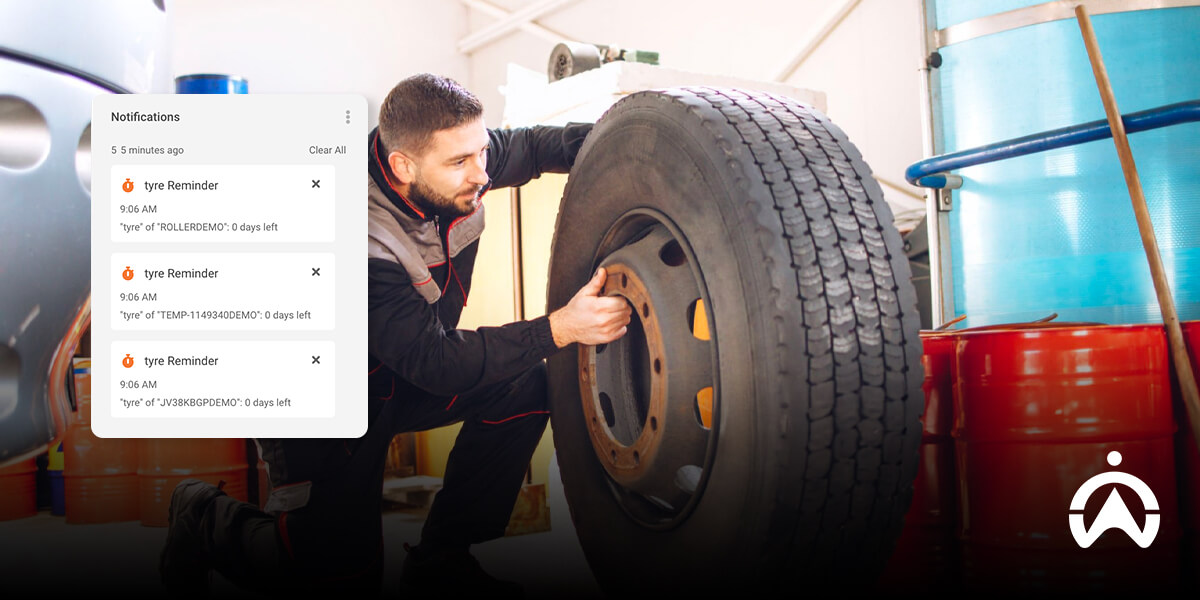
Mechanic adjusting a large vehicle tire, with notification pop-ups on the left.

7 Benefits of Remote Vehicle Diagnostics for Fleet Operators

Now that you understand how remote vehicle diagnostics work, let’s explore its benefits for fleet operators in enhancing efficiency, safety and cost-effectiveness.

With real-time insights, operators can optimise vehicle performance, reduce downtime, and make informed maintenance decisions, all while ensuring safer driving conditions and lowering overall costs.
‍

Here are 7 benefits of Remote Vehicle Diagnostics for fleet operators:

  1. Real-time Monitoring:
    In the olden days, fleet operators had to wait for the vehicle to break down before discovering the issue, often leading to costly towing and repairs. With real-time monitoring, operators can identify problems before a breakdown occurs, allowing for proactive maintenance.
    This approach not only saves money but also enhances overall fleet efficiency. By addressing issues early, operators can schedule repairs during off-peak times, minimising disruptions to operations. Access to real-time data improves decision-making regarding vehicle usage and resource allocation. This ultimately leads to a more reliable fleet and improved customer service delivery.
    ‍
  1. Reduce Downtime: 
    Taking the vehicle in for repairs means it will be off the road for some time, this is called unplanned downtime.
    Downtime affects a fleet in several ways, including:

    • ‍Decreased productivity: Your business will inevitably fall behind schedule if some of your vehicles are not operational. For example, if your business is a freight delivery service, if one of your delivery trucks is not operational, it will inconvenience not only you and your business but also your customers (other businesses) and their clients.
      ‍
    • ‍Overuse of other vehicles: When a car is not in use, other vehicles will be overused to play catch up. While this seems like a solution, overusing vehicles beyond their scheduled times can lead to wear and tear, compromising the fleet’s condition and lifespan.
      ‍
    • ‍Loss of revenue: Failure to deliver goods and services results in a loss of revenue to the business. Because of the inconvenience caused, customers may take their business elsewhere, or worse, they may leave bad reviews about your company, influencing other people to not work with you.
      ‍
    • ‍Increased costs: An unexpected vehicle breakdown will require funds to cover repair costs. Since these expenses aren’t typically planned for, fleet managers may need to pull from other parts of the business finances to ensure that the repairs are swiftly attended to.

      Find out how to reduce vehicle downtime on your fleet and keep your business running.
      ‍

  1. Proactive Maintenance:
    Proactive maintenance, also called preventative maintenance, aims to recognise the cause of vehicle breakdowns and rectify them before the vehicle breaks down.
    The benefits of proactive maintenance are:

    • Cost saving
    • Fewer repairs
    • Increased safety and reliability
    • Longer vehicle life span

      Unlike reactive maintenance where repairs are done after the vehicle has broken down. Proactive maintenance is scheduled after Remote Vehicle Diagnostics detects the issue earlier.
      ‍

  1. Fuel Efficiency:
    Monitoring vehicle performance is important in identifying inefficiencies contributing to excessive fuel consumption. By prioritising fuel efficiency through remote diagnostics, fleet operators can enhance overall performance, reduce environmental impact, and save costs.
    ‍
  1. Data-Driven Decision Making:
    The insights gained from remote diagnostics allow fleet operators to make informed decisions based on historical data and predictive analytics. This capability helps identify trends and recurring issues, enabling more strategic planning for fleet operations.
    ‍
  1. Improved Safety and Compliance:
    Ensuring that vehicles are in optimal condition helps enhance driver and public safety, reducing the likelihood of accidents due to mechanical failures. Regular monitoring through remote vehicle diagnostics, allows fleet operators to identify potential mechanical faults like brake failure to reduce the likelihood of accidents caused by unexpected breakdowns or equipment malfunctions.
    ‍
    Regular checks for faults can help identify and fix issues that could lead to violations of road laws, such as safety equipment failures like lights, brakes, or emissions problems. By ensuring that the vehicle is in good working condition, fleet operators can maintain compliance with regulations, reduce the risk of fines, and enhance overall safety on the road.
    ‍
  1. Improved Communication with Service Providers: 
    Remote vehicle diagnostics allows better communication between fleet operators, drivers, service providers, and customers.
    With real-time insights into vehicle status, operators can easily schedule maintenance and repairs, keeping everyone informed. This approach allows for quick updates on the timeline and any potential delays, making sure that customers are notified in advance and minimising inconvenience.

Overall, Remote Vehicle Diagnostics helps fleet operators run a successful business. With a healthy fleet, operations run smoothly, services are rendered on time, there’s improved communication in the business and customers are left satisfied.

How Does Cartrack’s Fleet Management Solution Work with Remote Vehicle Diagnostics?

Cartrack offers a fleet management service that helps you manage and run a successful fleet. We also connect with a vehicle’s existing CANbus. Short for Controller Area Network Bus.  It is a communication platform for different parts of a vehicle.

This communication allows your vehicle components, such as engines, transmissions, and sensors, to share information in real-time.

So what do we do with CANbus? Cartrack taps into the CANbus in the vehicle which allows clients to see their vehicle information such as mileage, fuel-related information and RPMs on the fleet website.

The type of data that CANbus collects is dependent on the make, model and year of each vehicle.
‍

Benefits of CANbus:

  • ‍Vehicle diagnostics: CANbus allows remote diagnostics resulting in lowered maintenance time and costs.
    ‍
  • ‍Transferring data quickly: Data can be transferred at speeds of up to 1 Mbps (megabit per second).
    ‍
  • ‍Communication between different devices: CANbus allows different devices to communicate with each other.
    ‍
  • ‍Vehicle Network: It is the backbone of modern vehicle networks which can connect up to 70 devices.
    ‍
  • ‍Provides real-time data: CANBus provides real-time monitoring and analysis of data.
    ‍
  • ‍Fuel efficiency: The data can help optimise fuel efficiency, reducing emissions and fuel-related costs.
    ‍
  • ‍Driver behaviour analysis: CANbus data can be used to analyse and coach driver behaviour.
    ‍
  • ‍Industry-standard: CANbus is an industry-standard, that ensures compatibility across various vehicle manufacturers and models.

You need a reliable way to manage your fleet efficiently, and Cartrack’s use of the CANbus system delivers just that. With real-time access to key vehicle data, you can enhance maintenance, optimise fuel use, and analyse driver behaviour, ensuring your fleet operates smoothly and effectively.

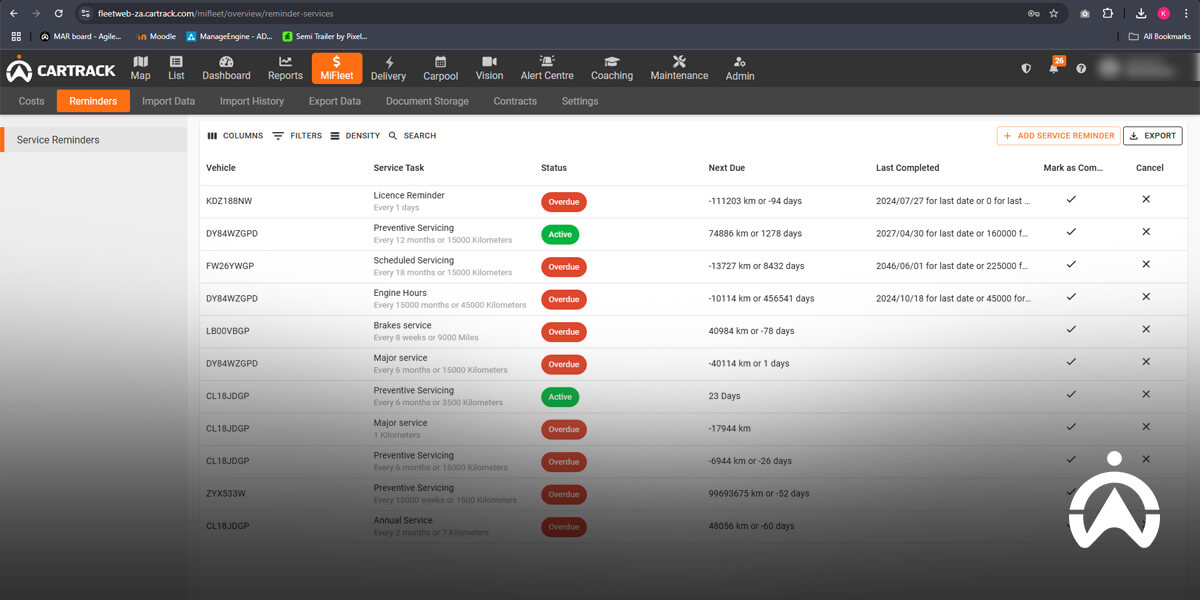
Screenshot of MiFleet vehicle service reminder with overdue and active tasks.

Case Study: Success Story in Remote Diagnostics

Cartrack has helped many clients with their fleet management, particularly in remote diagnostics. We have managed to reduce fuel costs, downtime, delays etc. We have ensured that their services run smoothly so their customers are satisfied.

One business we helped was a Burial Society based in Limpopo. They approached Cartrack with the challenges of sudden breakdowns, hot weather conditions and traffic delays. Given the sensitive nature of the items they transport, there must be no delays.
‍

Here’s how Cartrack helped them:

  • With Cartrack’s real-time vehicle diagnostics and scheduled maintenance, their routine and emergency maintenance can be handled more efficiently. By knowing which vehicles need maintenance and when the business can optimise vehicle usage and reduce unnecessary downtime and breakdowns.
    ‍
  • The Burial Society has area managers across different locations, who use the Cartrack Mobile App from anywhere at any time to see exactly where drivers in that area are and determine whether drivers have arrived at a funeral or are delayed. With this information, area managers can then call and seamlessly communicate with drivers and customers on job changes or delays.
    ‍
  • At peak times, the Burial Society can monitor the movement of over 300 vehicles simultaneously from their control room using Cartrack’s web platform. This provides them with total visibility of their fleet so the controllers know the exact whereabouts of each vehicle at all times to track productivity, job completion, and can instantly dispatch assistance in case of a breakdown to avoid delays.
    ‍
  • Furthermore, Burial societies often transport temperature-sensitive items, such as flowers, embalming fluids or other perishables. By installing up to four temperature sensors in their transport vehicle, they can remotely monitor the temperature of their cargo. This system allows for real-time tracking of temperature variations, enabling burial societies to set up alerts that notify them of any fluctuations. By ensuring that these sensitive items maintain the appropriate conditions throughout transit, the burial society can arrive in the condition expected by the families they serve.

Our solutions have enhanced the quality of service the Burial Society offers. We have also helped the business build trust with their clients, assuring that their loved ones and associated items will be treated with the utmost care and respect.

Transform Your Fleet Operations With Cartrack

Transform your fleet operations with Cartrack’s advanced remote vehicle diagnostics using CANbus technology. Monitor vehicle performance in real-time, identify issues early, and keep your fleet running smoothly—all from your device.

Don’t let breakdowns and rising costs hold you back. Partner with Cartrack to enhance efficiency and safety.

Contact us today to optimise your fleet!

Frequently Asked Questions

Q: How long does vehicle diagnostics take?

A: The duration of a remote vehicle diagnostic varies based on the vehicle’s complexity and the tools used. Initial results can often be available in minutes, while a thorough analysis may take a few hours to a day.

Q: What should I do if an alert is triggered?

A: Have the vehicle inspected by a qualified technician as soon as possible to prevent further complications.

Q: Is remote diagnostics only for large fleets?

A: No, remote diagnostics can benefit fleets of all sizes, as well as individual vehicle owners seeking to monitor their vehicle health proactively.

Enterprise Fleet Management: How to Manage Large Fleets Successfully

Large fleets can bring big returns, but also big headaches. From fuel costs to driver safety, keeping everything running smoothly can feel like an impossible feat.

The secret is enterprise fleet management—your large fleet’s solution to efficiency, safety, and ultimate control.

Let’s find out what makes fleet management the key to a successful large fleet.

In this article, you will:

  • Learn what the keys to running a successful fleet are
  • Find out what challenges are faced by large fleets
  • Delve into enterprise fleet management
  • Explore how a fleet management system is the solution to a successful large fleet
  • Discover how Cartrack’s solutions turn running a large fleet into a breeze

What is an enterprise fleet?

A fleet is a group of vehicles typically owned by one business. These vehicles, which can be anything from trucks and taxis to bakkies, are used for transportation, logistics, or commercial operations. Fleets come in all industries, shapes, and sizes, but what makes an enterprise fleet stand out is its size. While the size of an enterprise fleet can vary, it is typically defined as having at least 15 vehicles. But what are the key differences between a small fleet and an enterprise fleet? Let’s explore these.

Small fleet Enterprise fleet
Size Limited number of vehicles (typically less than 15) Larger number of vehicles (typically 15 or more)
Management style While there are fleet management options available for small fleets, they are often managed manually Requires dedicated fleet management software due to size
Purpose Typically used for local operations May be used for both local and regional operations
Focus Prioritise keeping costs low with economical vehicles and maintenance options Focus on optimising efficiency, driver safety and profits through advanced technologies and training programs

Whether 5 or 500 vehicles, fleets come in all industries, shapes, and sizes. One thing both small and large fleets have in common is the key components needed for successful management.

The keys to successful enterprise fleet management

While no two fleets are exactly alike, there are key tools every fleet should be utilising to ensure their success.

Let’s take a look at them:

1. Proactive management, not reactive:

Proactive management is a crucial part of running a successful fleet, as it allows you to address issues before they snowball into costly problems. You must adopt a proactive management style instead of a reactive one, which can negatively impact fleet efficiency, profitability, and productivity. Let’s look at a quick comparison of the two.

Proactive management Reactive management
Approach Anticipates problems and takes steps to prevent them before they occur Responds to problems once they have occurred
Planning Relies on planning and strategy Relies on improvisation and quick fixes to problems
Decision-making Based on predicted needs due to data and analytics Based on immediate needs and urgency
Outcomes Aims to minimise problems and optimise performance Deals with the consequences of a problem

2. Data-driven decision-making:

Relying on intuition and playing the guessing game when it comes to running your fleet does more harm than good. This is where data-driven decision-making comes in—the process of using information gathered from various sources to make informed choices about your fleet operations.

Data-driven decision-making is built on the following concepts:

  • Data collection: Acting as the foundation for data-driven decision-making, data collection refers to gathering data from various sources, such as vehicle telematics, maintenance records, and dispatch information, with collected data serving as raw material for insights.
    ‍
  • Data analysis: Analysing the data that has been collected to identify trends and patterns in your fleet.
    ‍
  • Actionable insights: Turning the collected data into actions that can be used to improve fleet efficiency through data-driven decision-making.

3. Adaptability:

Adaptability is important for running a successful fleet in the ever-changing world of fleet management. It is being flexible and resourceful in the face of unexpected situations or evolving needs. Customer demands and industry trends can change rapidly, so a fleet must adapt its services or offerings to these trends.

John, for example, has customers who are now demanding estimated times of arrival for deliveries. If John cannot adapt to and meet this demand, he risks losing his customers, negatively impacting his business. This adaptability also applies to technological advancements.

Whether you own a small or large fleet, the above tools are crucial for your fleet’s success. However, it is also important to remember that the size of your fleet determines what solutions you need to prioritise more. Fleet size impacts the challenges faced, so the solutions should be tailored depending on your fleet’s individual needs.

The_keys_to_successful_enterprise_fleet_management

What challenges do large fleets face?

Large fleets differ from smaller ones not only in size but also in terms of the challenges they face. As we unpack these challenges with some contextual statistics and facts below, things are about to get interesting.

Fuel management: Fuel is a major fleet expense, and South Africa’s fluctuating fuel prices can significantly impact large fleets. Research shows that most fleets can spend about 24% of their budget on fuel, so a minor price hike automatically becomes a substantial fuel budget increase. Manually keeping track of how much fuel all your fleet vehicles are consuming can be quite challenging and time-consuming.
‍

  • Vehicle maintenance: Keeping a large number of vehicles operational requires constant attention. This is crucial because one vehicle’s breakdown can impact the efficiency of the entire fleet operation. On top of that, accurately predicting maintenance needs for each vehicle in a large fleet can be tricky. According to findings from the Brake & Tyre Watch project in 2019, out of 764 randomly tested trucks, 69% of those trucks failed due to a range of faults resulting from poor maintenance.
    ‍
  • Driver safety: Managing driver behaviour and safety can also be challenging whether you have five or fifty drivers. Large fleets struggle with ensuring all their drivers are properly trained and driving safely, as this means their behaviour needs to constantly be monitored.While this is important for identifying dangerous behaviours and knowing exactly where drivers need further training, it can be challenging for a large fleet with hundreds of drivers. This is crucial in a country where, in 2022, trucks were involved in 57.3% of all crashes on the N3 toll route, and 85% of them were attributed to human error.
    ‍
  • Cargo safety: In 2022, South Africa recorded a whopping 2,670 cargo theft incidents over 18 months. Securing cargo and preventing damage during transportation is critical for large fleets. Ensuring cargo reaches its destination safely and securely requires specific planning, implementing training programs for drivers, and the real-time monitoring and tracking of vehicles throughout the entire transportation journey.
    ‍
  • Driver retention: Attracting and retaining qualified and skilled drivers is an ongoing battle. In 2022, it was reported that South Africa has a shortage of approximately 3,000 truck drivers, which has been continuously growing, impacting fleet productivity and efficiency.

If not handled, these challenges can stand in the way of your large fleet’s success. This can be a lot of work, but there’s a way to simplify it; it’s implementing enterprise fleet management.

The secret to a successful large fleet: Unpacking enterprise fleet management

Enterprise fleet management oversees the operation of large fleets, typically those with 20 or more vehicles. This process goes beyond simply tracking a vehicle’s location and includes a wide range of strategies that optimise efficiency, safety, and cost-effectiveness. These strategies are known as fleet management strategies.

Empowering fleets, no matter the size, with fleet management strategies

Fleet management strategies are a wide range of practices and tools designed to optimise the operations of a fleet. This process of planning, organising, and directing everything related to the fleet is the roadmap to a successful fleet operation, guiding decision-making and actions to achieve fleet efficiency, safety, cost-effectiveness, and compliance. These strategies can be a lot to handle, and the best way to effectively implement them is through a fleet management system.

What is a fleet management system?

A fleet management system is the backbone of an effective fleet. This solution uses software and technology to help fleet managers oversee and optimise various aspects of their fleet, whether a single truck or a range of delivery vans. It is crucial to help ensure that a fleet remains profitable, efficient, and safe.

Exploring the benefits of a fleet management system for a large fleet

A fleet management system is your fleet’s secret weapon for success and standing out from the crowd. Let’s look at the benefits this system can bring to large fleets:

  • Cost savings: Managing a large fleet comes with many cost drainages. By tracking fuel consumption and scheduling timely maintenance, fleet managers can prevent costly breakdowns, reduce costly fuel consumption by optimising travel routes, and eliminate fuel-consuming driver behaviour.
    ‍
  • Improved efficiency: Managing a large fleet involves complex logistics, which a fleet management system automates. Managers can ensure their operations run smoothly by automating tasks like generating reports, streamlining dispatch processes, and optimising routes based on real-time traffic data.
    ‍
  • Enhanced safety: Safety is paramount for large fleets. A fleet management system helps automate driver behaviour monitoring, helping managers identify risky habits like speeding or harsh braking. This allows driver-specific coaching and training programs to be implemented, promoting safe driving practices across the entire fleet.
    ‍
  • Data-driven decision-making: Large fleets generate a massive amount of data, which a fleet management system can collect and analyse. With data from GPS tracking, engine diagnostics, and driver activity, managers gain insights that help them make informed decisions on everything from maintenance schedules to resource allocation.
    ‍
  • Reduced downtime: Unplanned downtime due to breakdowns can negatively impact a fleet’s operations. A fleet management system can predict maintenance issues by real-time monitoring of a vehicle’s components. By doing so, maintenance issues are dealt with before they become costly.

That sounds fantastic, right? We have the ideal solution to help your fleet experience these benefits firsthand: Cartrack Swaziland.

Exploring_the_benefits_of_a_fleet_management_system

Unlock ultimate fleet management for your large fleet with Cartrack’s solutions

Cartrack Swaziland is an all-in-one solution adding convenience, efficiency, and simplicity to your fleet management. Let’s explore the components that power this solution:

  1. GPS tracking:Always know exactly where your fleet vehicles are with Cartrack’s live GPS tracking. This technology does more than just track your vehicles. By pinpointing inefficiencies to monitor and improve your enterprise’s productivity, our real-time tracking helps you boost your operations, enhance vehicle safety, and enable proactive monitoring and route optimisation for all your vehicles.
    ‍
  2. Preventative maintenanceOvercome the challenge of keeping a large vehicle network functioning at its best with our preventative vehicle maintenance. Powered by AI and analytics, our software helps you spot potential maintenance issues before they develop into serious repair problems. By providing alerts on issues like damaged brake pads, service interval reminders, and low oil levels, you can avoid costly damage to vehicle components that can cause road accidents and breakdowns.
    ‍
  3. Fuel monitoring systemMake every litre of fuel count with our fuel monitoring system. Our fuel cost monitoring software tracks all fuel transactions and matches the receipts with a vehicle’s advanced telemetry. When paired with a fuel sensor installed inside your vehicle’s tank, you can closely monitor fuel consumption in real time, giving you full visibility into your fleet’s overall fuel economy. This system is pivotal in helping you identify fuel theft, lower fuel wastage, and boost fuel efficiency.
    ‍
  4. Driver behaviour monitoringGive driver safety and behaviour a boost with Cartrack’s fleet driver monitoring system. This system offers access to a range of top-tier hardware and software solutions to simplify monitoring driver behaviour.- Cartrack’s Advanced Driver Assistance System (ADAS) enhances fleet safety by providing real-time alerts to drivers regarding potential road hazards. This proactive technology uses front collision warning to alert drivers when their vehicle approaches another vehicle or obstacle too quickly, helping drivers prevent accidents and creating a safer driving environment.
    ‍
    – Cartrack’s AI LiveVision cameras provide drivers with immediate audible alerts for distracted and dangerous behaviours such as smoking, excessive speeding, or yawning, which empowers them to take corrective action promptly. This fosters a culture of safety while also reducing the risk of accidents.
    ‍
    – Driver scorecards provide a detailed record of individual driver behaviour. These detailed reports not only identify instances of harsh driving but also pinpoint the exact time and driver associated with each event. This data empowers fleet managers to implement targeted training programs focused on promoting safe driving practices.
    ‍
  5. Cost management systemTurn estimates into accuracy with Cartrack’s MiFleet software. This cost management solution helps you keep track of all your fleet expenses, ranging from taxes and fuel costs to vehicle permits. These detailed insights help you achieve ultimate fuel savings, which reduces admin time and fees.
    ‍
  6. GeofencingKnow where your vehicles or equipment are being operated with Cartrack’s geofencing feature. Gain real-time insight into fleet activity by setting virtual boundaries around specific areas to monitor the movement of your drivers, vehicles, and equipment. Once a geofence has been set up, you are immediately notified the moment the vehicle enters or exits that specific area, giving you complete visibility into fleet operations.

Cartrack in action: Helping The Courier Guy successfully manage their enterprise

The Courier Guy is a leading courier provider in South Africa that has grown rapidly over the years. What started with one motorbike is now a business with over 2,200 vehicles.

With this growing number of drivers, customers, and vehicles to manage, The Courier Guy needed a solution that would give them full visibility of their entire fleet operation, increase customer satisfaction, and simplify their business operations and task management. This solution was Cartrack.

Here’s what they had to say:

“Cartrack’s technology allows us to focus on our drivers, customers, cargo, and fleet all from one platform. It puts us in control from dispatch to delivery.”  

Jeffrey Wheeler, Assistant Fleet Manager, Courier Guy, South Africa.

Comfortably manage your enterprise fleet with Cartrack’s advanced solutions

Running a large fleet isn’t child’s play, but this taxing process becomes a breeze with an effective enterprise fleet management solution.

‍Contact us today and unlock a new level of convenience and efficiency today.