GPS Logbook: Never Manually Log Book Again – Unlock Business Efficiency

Tired of taking hours to manually log all your business trips in a little book, scribbling side notes and details until the sun sets and the office empties?

Switch to the simpler, time-saving, and more efficient way of tracking your business’s travels — GPS logbooks – where every meter can be accurately recorded automatically.

Your trip-logging life is about to get a whole lot easier.

In this article, you will:

  • Learn about the mechanics behind GPS logbooks
  • Understand the benefits of GPS logbooks over traditional methods
  • Know the functionalities and features of GPS logbooks
  • Explore an easy guide to implementing GPS logbooks into your fleet business
  • Discover Cartrack’s SARS-compliant logbook and its benefits

Introduction to GPS logbooks

Manually filling out logbooks can be a real pain. It’s tedious, time-consuming, and error-prone. Just having to jot down every detail of your vehicle’s movements by hand is enough hassle. That’s where GPS logbooks come in handy. They automate the process, saving you time and ensuring accuracy in tracking your vehicle’s mileage.

GPS logbooks combine GPS technology with detailed recording. They automatically let you know where your vehicle goes, how fast it’s going, and other details to help keep track of mileage accurately where you can mark areas as business or personal travel zones. Unlike the classic logbooks that need writing, GPS logbooks do it automatically, giving precise info every time.

They make tracking easy and exact, showing the route taken, distance, time, and stops. No need to write everything down, so mistakes are fewer and tracking works better.

Whether it’s managing vehicles, watching cargo, or just logging trips, GPS logbooks make trip data more reliable and accurate.

What is GPS technology and how is it used

Before we dive deeper into logbooks and how they’re used, let’s quickly get our heads around GPS technology.

GPS stands for Global Positioning System, it’s a satellite-based navigation tool that helps us locate exactly where we are on Earth. The technology we rely on to navigate from one place to another, whether through Waze or Google Maps on our cars or phones, is known as GPS.

How?

With satellites orbiting around the Earth. These satellites send signals to GPS devices on the ground. The devices figure out how long it takes for each signal to reach them from different satellites. Using this data, your GPS device can figure out exactly where you are.

GPS isn’t just for getting directions. It’s popularly used in tracking just about anything that moves, from cargo to vehicles, and even wildlife. This technology has positioned itself as an integral part of different types of industries and even features, one of them being logbooks.

All the cogs and bolts behind a GPS logbook

The mechanics behind a GPS logbook are quite straightforward. It works by leveraging GPS technology to track and record the movement of your vehicle.

For the logbook to record vehicle movement it uses GPS tracking. The GPS logbook is equipped with a GPS receiver that communicates with satellites through signals. These satellites continuously transmit signals containing precise timing information and their location.

As you drive around, your logbook quietly records all this info: where you’ve been, how fast you’ve been going, and even when you’ve made stops along the way. You can also label trips as either business or personal.

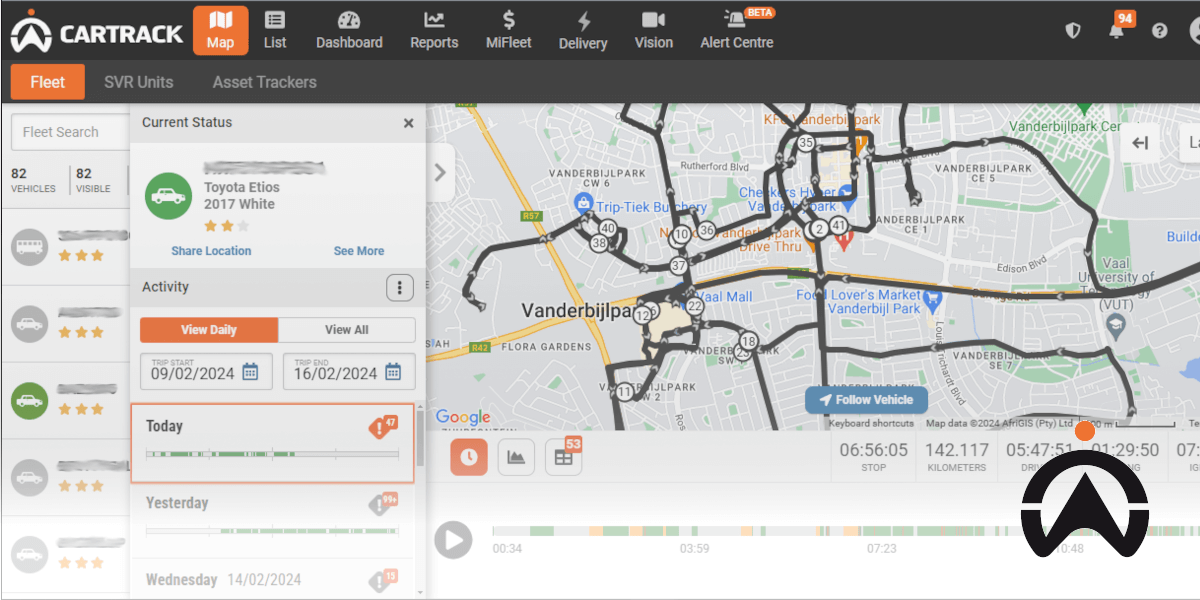
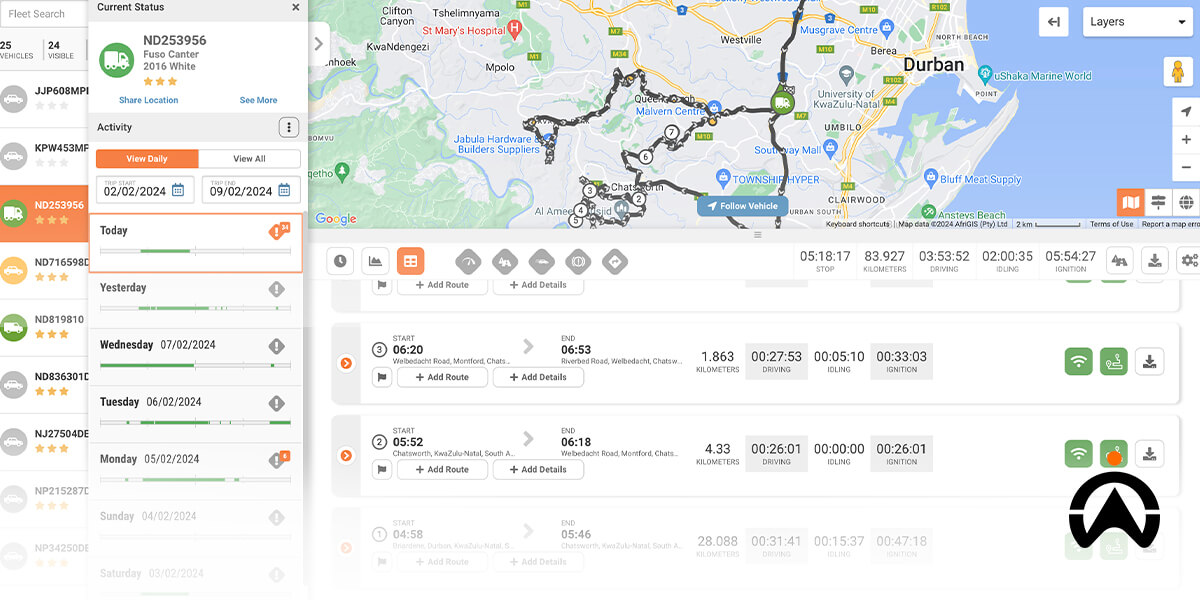
So, when you want to check your travels on a GPS logbook, all you have to do is pull up your logbook’s reports and you’ll see everything in detail, from your routes to your mileage. This information can be downloaded or accessed through software applications.

It is basically like having a digital version of your manual business travel logbook that does everything for you.

Are all vehicles compatible with GPS logbook devices?

If your fleet is vast with different types of vehicles and you’re worried if GPS technology will work on all your vehicles, don’t panic, it will. Vehicle type doesn’t matter when it comes to GPS logbooks.

These devices are designed to be compatible with all kinds of vehicles, whether you’re driving a car, a truck, a van, or even a motorcycle. As long as your vehicle has a power source, like a battery or a connection to the vehicle’s electrical system for the GPS logbook, you’re good to go.

Your vehicle’s OBD-II Port can enhance GPS logbook accuracy

Most modern vehicles come equipped with an On-Board Diagnostics II (OBD-II) port, which is a standardised diagnostic port found in cars and trucks manufactured after 1996. This port allows external devices, such as GPS logbook devices, to connect directly to the vehicle’s onboard computer system.

Using the OBD-II port, GPS logbook devices can access valuable information about the vehicle’s performance, including speed, engine RPM and fuel consumption. This information can then be used to accurately track the vehicle’s movements and more.

With an OBD-II port available, you can simply plug in a compatible GPS logbook device and start tracking your trips with ease. It’s a convenient and hassle-free way to monitor your vehicle’s usage and even expenses.

And before you ask, yes, you can still use a GPS logbook without an OBDII-port.

While many GPS logbook devices are designed to connect to the OBD-II port for vehicle data collection, some GPS logbook devices don’t require it. They rely on GPS satellite signals and built-in accelerometers to record the vehicle’s location and calculate the distance travelled, which is then used to generate an electronic logbook.

But remember that GPS-only logbooks might not be as accurate as those that use OBDII data. Because a GPS signal can be affected by weather, terrain, and tall buildings.

Traditional logbooks vs the revolutionary GPS logbook

While traditional logbooks have served their purpose for decades, they come with inherent limitations:

Prone to human error: Handwritten entries can be inaccurate or incomplete, leading to discrepancies and potential tax headaches.

Time-consuming and laborious: Manually recording trips, calculating distances, and collating data is a tedious and inefficient process.

Susceptible to loss or damage: Physical logbooks can get lost, damaged, or even stolen, jeopardising valuable business records.

Limited insights: Traditional logbooks offer basic data, lacking the depth and analysis needed for optimising fleet performance.

Inconvenient storage: Physical logs require a lot of storage space to be placed. And even if you keep them clean and tidy, they are more vulnerable to damage or loss leading to missing information down the line.

The new and shiny GPS logbook on the other hand can improve the workload of the modern fleet manager.

In their arsenal, they have:

  • Real-time tracking: Shows you the exact location of all your vehicles in real time.
    ‍
  • Automatic data capture: Your GPS logbook records information such as trip duration, distance travelled, and stops you’ve made along the way
    ‍
  • Readily accessible logbook reports: The system creates easy-to-read reports summarising your trips. These reports give you a clear picture of how your vehicle has been used, including trip histories, mileage summaries, and more.

But the differences, or rather benefits, don’t end there:

Beyond basic GPS tracking, GPS logbooks can be used with advanced fleet management solutions like Cartrack’s to offer fleet managers an easier course for monitoring each of their vehicles:

  • Fuel management: Monitor fuel consumption, identify areas for improvement, and reduce fuel costs.
    ‍
  • Harsh driving alerts: Identify and address unsafe driving practices to promote a safer fleet.
    ‍
  • Real-time tracking: Monitor your fleet’s activity in real-time, gain valuable insights, and respond to situations promptly.

From this short explanation, I’d say the GPS logbooks would be preferred by managers. It’s not just an upgrade, it’s a transformation for businesses seeking efficiency, compliance, and cost savings.

But whichever one you choose, remember they both serve the purpose of tracking vehicle mileage and usage.
Traditional_logbooks_vs_the_revolutionary_GPS_logbook

How are GPS logbooks used?

Even though this logbook has automatic features to get the job done, it still needs your help to get the ball rolling, simply owning one isn’t enough. To truly reap the benefits, you need to know how to use its features effectively.

Here are some tips to help you get the most out of your GPS logbook:

  1. Use automation wisely:– Activate automatic trip recording:Make sure your device starts and stops trip recordings automatically to accurately track all mileage.
    – Sync with your vehicle’s odometer: 
    If possible, sync your device with your car’s odometer for even more precise mileage tracking.
    – Consider expense import features: 
    If available, import expenses directly from your bank statements or fuel cards to simplify expense management.
    ‍
  2. Improve data collection:– Classify trips correctly:Label trips as business, personal, or other to make expense reporting and tax deductions easier.
    – Include relevant details: 
    Add notes about the purpose of each trip, any passengers, or toll expenses for better expense tracking and record-keeping.
    – Track additional expenses:
     If needed, use the logbook to monitor other vehicle-related costs such as parking fees, repairs, or maintenance.
    ‍
  3. Use reporting tools:– Create custom reports:Use the reporting features to generate reports tailored to your needs, such as monthly summaries or detailed expense breakdowns.
    – Export data for analysis: 
    Export data in different formats to analyse it further in spreadsheets or accounting software for deeper insights.
    – Share reports digitally:
     Share reports electronically with your accountant, employer, or other parties for efficient collaboration.

Your step-by-step guide to implementing GPS logbooks into your business

Using technology like GPS logbooks can greatly enhance your fleet’s performance, streamline operations, and increase profitability.

To start, you’ll want to determine the best solution for your business needs. Research and compare different GPS logbook providers, considering factors like mileage tracking requirements, reporting needs, and desired features such as route optimisation and fuel tracking.

Next, plan and communicate effectively with your team. Make sure everyone understands the goals of implementing GPS logbooks and the benefits they offer. Provide clear instructions and transparent communication about data privacy measures during training sessions.

Once you’ve selected a solution, proceed with installation by following the manufacturer’s instructions for installing GPS devices in your vehicles. Create individual accounts for drivers on your fleet platform and configure settings according to your preferences.

After installation, make the most of the data collected by regularly analysing reports on mileage, fuel consumption, driver behaviour, and route efficiency. Use these insights to optimise routes, reduce idle time, promote responsible driving, and identify cost-saving opportunities.

Lastly, encourage feedback from your drivers on the system’s usability and effectiveness. Keep your GPS logbook software and devices updated to ensure optimal performance and security.

Cartrack’s SARS-compliant logbook feature

Cartrack integrates GPS logbook technology seamlessly into its services, ensuring compliance with SARS regulations while offering a range of user-friendly features.

Cartrack’s SARS-compliant logbook simplifies mileage tracking for individuals and businesses. By leveraging GPS technology, Cartrack automates the process of recording and categorising trips, ensuring accuracy and efficiency.

With Cartrack’s GPS logbook, users can:

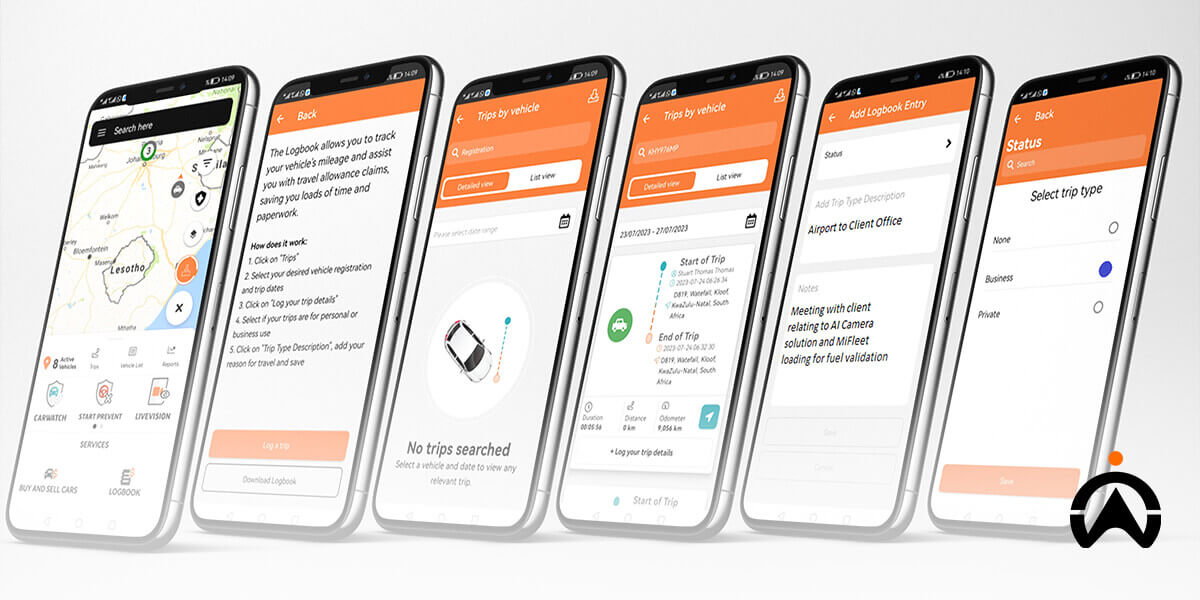
View all their trips: Access a comprehensive record of all trips made, including details such as date, time, distance travelled, and route taken.

Keep detailed trip history: Maintain a complete history of trips with the option to add notes and annotations for each journey.

Categorise trips: Easily classify trips as either business or personal, streamlining expense reporting and tax deductions.

Monitor distance travelled: Track the total distance covered within a selected timeframe, providing valuable insights into vehicle usage.

Export data in SARS-ready format: Generate reports in a format compliant with SARS requirements, simplifying tax filing and reporting processes.Ready to convert trip info into tax-compliant business travel claims? Get ready for simple trip management with our GPS logbooks. All you have to do is become a Cartrack client, download the Cartrack mobile app, and follow the easy instructions left in our GPS logbook video to get started. Click on the link below and watch the video:


From manual trip-logging chaos to complete automated control: Get Cartrack’s advanced logbook app

As a fleet manager, you already have enough responsibilities to handle, let’s ease one of them without GPS logbooks. This paperless, data-accurate, and automatic feature can save you time for you to focus more on your other fleet obligations.

‍Contact Cartrack today for our fleet management solutions.

How to Conquer Route Deviation & the Hidden Costs Draining Your Fleet

Route deviation adds extra time, fuel, and frustration to your operations, making them one of the greatest enemies of efficient fleet management.

So, is it possible to combat the route rebellion and save on fleet costs? You bet.

Discover how smart telematics and tracking technology can efficiently cure route deviation and cost drainage-related headaches.

In this article, you will:

  • Learn the definition of route deviation
  • Differentiate between two types of route deviation
  • Understand route deviation’s effect on efficient fleet management
  • Get answers to burning questions about route deviation and fleet management
  • Discover five ways to combat route deviation
  • Find out how Cartrack’s fleet management solutions optimise fleet operations

Route deviation defined

Imagine mapping out the ideal route for your delivery driver: avoiding traffic jams and unnecessary stops and taking the shortest possible route.

Then, for some reason, your driver veers off course, adding miles, minutes and fuel usage to the trip. Something you didn’t necessarily budget for. That is a classic example of route deviation — a detour that throws a carefully planned schedule and budget out the window.

While there are some legitimate reasons for route deviation, it often happens because drivers are just not sticking to planned routes as instructed.

Types and possible reasons for route deviation

Fleet managers know that even the most meticulously planned routes can hit an unforeseen bump with detours and unplanned stops. These “route deviations” can be caused by a range of factors, sometimes due to driver choices like unplanned breaks or taking shortcuts that are supposed to save time but end up having the opposite effect on fuel costs and efficiency.

However, not all detours are created equal; there are two types of route deviations and what they mean within a fleet-related context:

  • Path deviations are like taking a wrong turn on the highway – the driver goes off the planned route, adding extra miles and minutes. These can happen for various reasons, from missing an exit to following bad GPS advice, and are considered accidental.
    ‍
  • Sequence violations, on the other hand, are more like stopping at your grandma before your aunt, even though you planned it the other way around. The driver might visit stops in a different order than planned and instructed, potentially impacting delivery times, disrupting workflows, and affecting fuel usage.

Understanding the two types of route deviations helps fleet managers pinpoint the root cause of the issue and take appropriate action. Was it a genuine mistake, a navigation error, or something else entirely? By addressing the “why” behind the detour, fleet managers can ensure efficient routes, reducing fleet costs. Advanced route deviation and optimisation technology make it even easier to ensure drivers stick to allocated routes, optimising savings.

Route deviation technology’s relevance in fleet management

Fleet management software offers route deviation systems because they help in:

  • Productivity: While sticking to traditional routes provides an element of predictability that helps manage expectations, using route deviation detection technology can boost productivity without losing the element of predictability. Time is money, they say, and if your fleet can work more efficiently, you can put a stop to unnecessary cost drainages.
    ‍
  • Cost management and drainage: If you expect your fleet to travel on pre-planned routes, you most likely have a good reason for this, and from a fleet management perspective, it’s mostly to increase productivity and reduce fuel costs. Identifying and pinpointing where drivers veer off assigned routes helps you address the issue early on and proactively prevent extensive cost drainage.

Here’s why you want route deviation tech for your fleet

  1. Maximising visibility 

    Route deviation software acts as a watchful eye, constantly monitoring driver behaviour and vehicle location. Any deviation from the planned route is visible to the fleet manager, allowing them to investigate potential issues like unauthorised stops, inefficient detours, or even potential safety concerns.
    ‍

  2. Optimising resource utilisation 

    This technology also plays a crucial role in unlocking the full potential of your fleet by optimising resource utilisation by helping ensure that every vehicle, driver, and drop-off is used with maximum efficiency. Imagine the chaos without it, you’d experience unplanned detours causing delays and waste fuel in avoidable traffic jams.
    ‍

  3. Improving fleet analysis 

    In the world of fleet management, data is king, and route deviation software along with other telematics tools like driver behaviour monitoring can help pick up problem areas like excessive idling and harsh cornering and braking, which can lead to unplanned maintenance and expensive repairs.
    ‍

  4. Happy customers 

    In the cold-chain industry, route deviation can lead to spoilt produce, unhappy customers, and piles of wasted money. Sticking to assigned routes is crucial in these types of industries to ensure the integrity of the products in transit, customer satisfaction, and no money wastage.

The benefits of detecting route deviation within your daily fleet activities span far and wide, but what about the questions you may still have about this unique cost-saving technology?

Here are some of the most popular FAQs around route deviation.

Here’s_why_you_want_route_deviation_tech_for_your_fleet

The most in-demand FAQs about route deviation and fleet management costs addressed

1. What are some costs associated with fleet management?

Running a fleet involves more than just keeping the wheels turning. Fleet managers juggle a variety of expenses, including:

  • Fuel costs: Keeping the tanks filled is a major cost drain, influenced by vehicle choice, driving habits, route efficiency, and fluctuating prices.
    ‍
  • Insurance: Protecting your vehicles and drivers is crucial, but premiums vary depending on factors like coverage, claims history, and vehicle type.
    ‍
  • Depreciation: The value of your vehicles naturally decreases over time, impacting your overall budget.
    ‍
  • Fixed costs: Rent, salaries, utilities, and maintenance form a constant backdrop of expenses.
    ‍
  • Acquisition: Purchasing or leasing new vehicles requires careful budgeting and consideration of long-term costs.
    ‍
  • Licenses and permits: Keeping your vehicles legally compliant involves ongoing fees.
    ‍
  • Administration: Managing paperwork, payroll, and logistics can add another layer of cost if you don’t have the software to automate these processes.

Optimising each of these components is key to controlling costs and ensuring your fleet operates efficiently and profitably.
‍

2. Which part of the fleet management system has high-cost expenses?

When it comes to fleet costs, it’s not a one-size-fits-all answer. However, it all comes down to how problems and obstacles are handled and how swiftly issues like route deviation and bad driver behaviour are addressed. By implementing smart, proactive solutions like driver training and fuel monitoring, you can save significant amounts with early problem detection and smart problem-solving.
‍

3. What fleet cost drainages are caused by route deviation?

While straying from planned routes might seem like a minor inconvenience, the financial impact on fleet operations can be significant. The most immediate cost drain is caused by bloated fuel consumption. Every unnecessary km driven means more fuel eating into your budget.

Route deviation also increases vehicle wear and tear, resulting in more frequent maintenance needs. This adds to your operational costs and increases the risk of unexpected breakdowns and repairs, potentially causing further delays and disruptions.

Ultimately, these added stresses shorten the lifespan of your fleet, forcing you to replace vehicles sooner than anticipated. So, remember, sticking to the route isn’t just about efficiency; it’s about protecting your bottom line.
‍

4. How can fleet costs be reduced?

To keep fleet costs in check, you can use a simple but smart two-pronged approach of proactive planning and real-time monitoring.

Replacing vehicles before frequent repairs and untimely breakdowns turn them into financial liabilities is crucial.

Then, telematics and fuel tracking technology become another powerful tool to monitor your daily expenditure, allowing proactive decision-making that promotes short and long-term savings.

By combining strategic vehicle replacement with insights from telematics data, fleet managers can achieve significant cost reductions, ensuring fleet vehicles operate at peak efficiency and profitability.

Geofencing

5 Foolproof ways to reduce route deviation in your fleet

Route deviation software is a great tool and it works even better combined with other telematics and vehicle tracking solutions. Consider these five tools in combination with route deviation detection to start seeing real results in fleet savings.

1. Route planning

While a route first needs to be planned and established before route deviation can occur, route planning still plays a crucial role in minimising this cost-guzzling hiccup within fleet management, especially for delivery and field service businesses. Fleet managers can optimise routes by meticulously monitoring route deviation patterns and reasons why these deviations occur, leading to increased efficiency and route deviation.
‍

2. Vehicle tracking

Tracking technology acts as a digital guardian in fleet management, not only for drivers but also by ensuring increased route efficiency. By using GPS tracking devices, managers can identify and address route deviations before they become regular costly detours. Additionally, analysing trip history data provides valuable insights into past deviations. By pinpointing recurring issues and understanding the “why” behind them, managers can implement targeted solutions like route adjustments or driver coaching, ultimately minimising future deviations and their associated costs.
‍

3. Geofencing

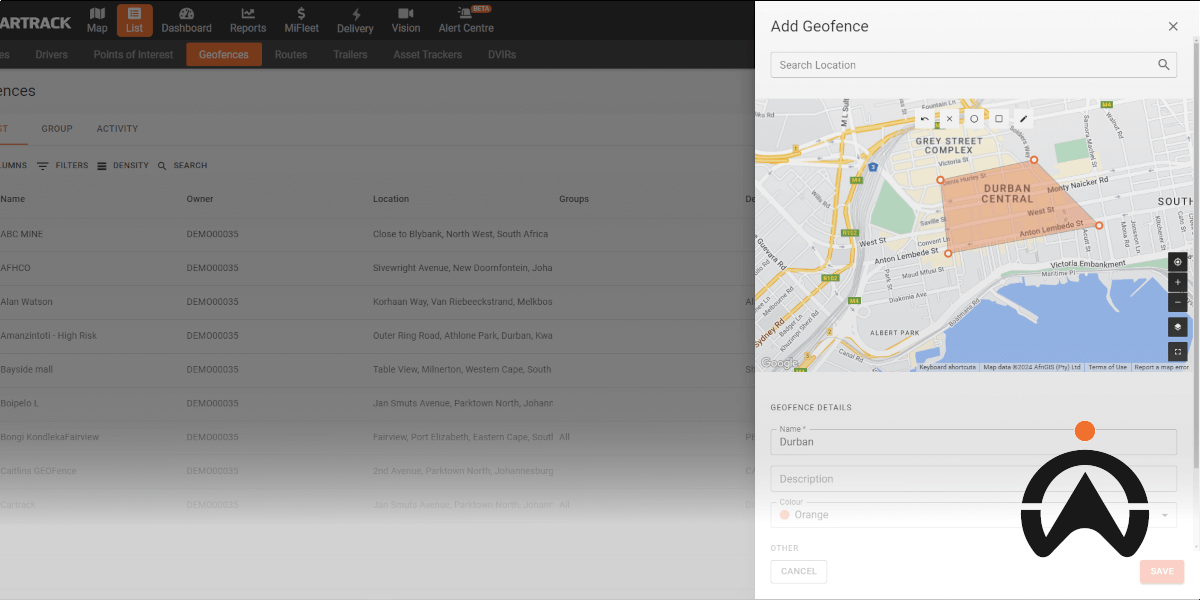
By creating virtual boundaries around designated routes and delivery zones, geofencing acts like a digital guardrail that automatically alerts dispatchers or fleet managers when a driver enters or exits a geofenced area. This allows for timely intervention and helps prevent costly detours and possible safety issues. On top of that, geofencing goes beyond just location tracking. By using it with time-tracking software and driver ID tags, you can gain valuable insights into employee activity within designated or marked zones, ensuring efficient operations and optimised schedules. You’ll always know which driver entered a designated area at what time, how long they were there, and when they left.
‍

4. Regular driver performance assessments

The key to conducting regular driver performance assessments is tracking driver behaviour daily. This enables you to detect possible trends in risky driver behaviours like speeding, harsh cornering and braking, and even excessive idling, helping you conduct assessments and create accurate corrective training programs that will give you the results you need to run a profitable fleet while keeping drivers accountable every time they switch on the ignition.
‍

5. Live driver monitoring

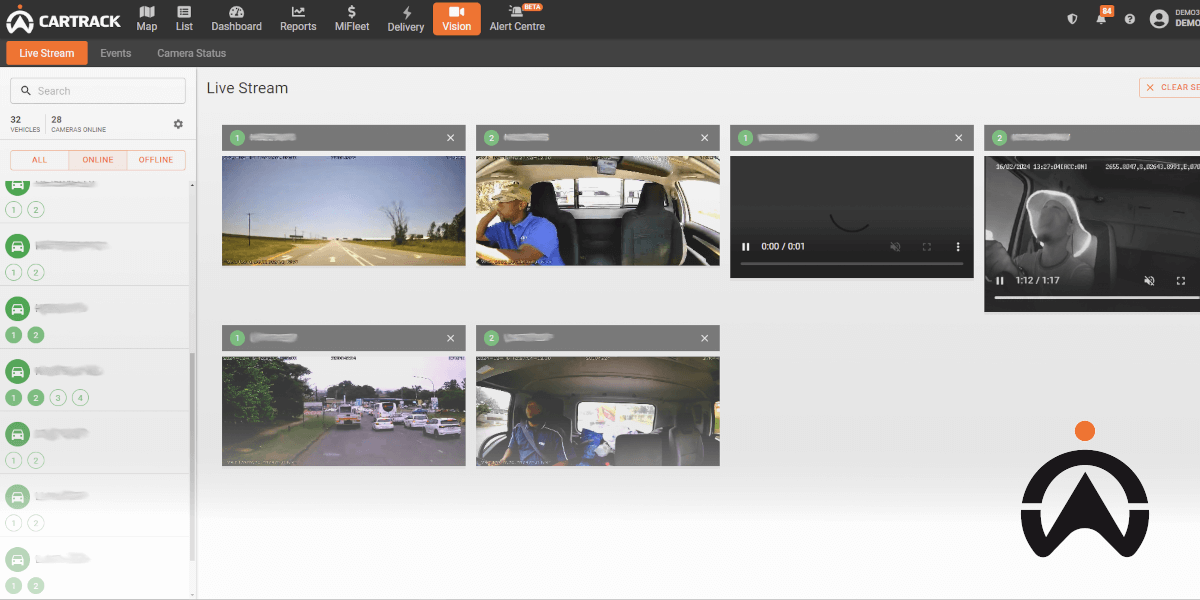
While route deviation software can help you spot these issues and provide a bird’s eye view of what routes drivers are taking (or not taking), live driver monitoring using AI-powered or live stream cameras provides more insight into what’s happening inside the cabin and reveal driver behaviour that may contribute to route deviation that may not be detected otherwise. Additionally, live driver monitoring helps offer insight into accidents and any emergencies drivers may be experiencing, whether they’re sticking to the allocated route or deviating.

Live_driver_monitoring

We’ve got the cost-cutting tools to eliminate route deviation and optimise fleet management

If you’re searching for a product that embodies an all-in-one solution for fleet management, search no more. Cartrack Malawi has an all-in-one platform designed to combat cost-draining fleet management concerns like route deviation.

  • Route planning and optimisation: Shave costly km off your routes and say goodbye to route deviation with advanced route planning software. Choose the most efficient routes by reducing travel times and improving routes based on traffic and historical data.
    ‍
  • Geofencing: Know when your drivers enter or exit designated zones with Cartrack’s geofencing. Create virtual boundaries around important areas, hazardous zones, and work sites to optimise fuel expenditure and reduce route deviation.
    ‍
  • Delivery: Cut costs with faster, more efficient deliveries using the Cartrack Delivery app. With live tracking, driver performance metrics, route optimisation and automated easy task assignment, you can say goodbye to unnecessary detours and straying off-route.
    ‍
  • Driver behaviour monitoring: Increase route compliance and improve fuel efficiency by keeping drivers accountable for harsh braking, speeding, and harsh turning. In turn, you save significantly on fuel and vehicle maintenance in the long run.

Eliminate route deviation by making Cartrack Malawi your partner for cost-effective fleet management

Contact us today and start benefitting from telematics and vehicle tracking technology that helps eliminate route deviation, resulting in significant savings.

Mileage Expense Management – The Amazing Feature in a Fleet System

Do you know how much money vehicle mileage is costing your fleet?

Mileage expense management is a crucial, yet often overlooked aspect of fleet management, and without the right system, this can become a major cost-draining issue. But it doesn’t have to be.

There’s a perfect solution to simplify your mileage expense management — it’s called Cartrack.

Ready to find out why?

In this article, you will:

  • Learn what fleet mileage is
  • Find out what fleet mileage expense tracking is
  • Delve into the benefits of fleet mileage expense tracking
  • Explore how a fleet management system simplifies fleet mileage expense management
  • Discover how Cartrack’s solutions are the secret weapon to achieving accurate fleet mileage expense calculations

What is fleet mileage?

Fleet mileage refers to the total distance travelled by a fleet of vehicles within a specific period. It is a critical metric for assessing vehicle usage, monitoring fuel consumption, determining maintenance needs, and overall operational efficiency, and is usually measured in kilometres.

What is fleet mileage expense tracking?

Fleet mileage expense tracking is the practice of keeping a log of the distance travelled by each vehicle in a fleet for tax deduction purposes and to help fleet managers optimise routes, reduce operational costs, and improve overall fleet management. It involves monitoring the money spent on every business kilometre driven by a group of vehicles in a fleet, including deliveries, maintenance runs, and other work-related activities. It includes the tracking of expenses related to fuel, maintenance, repairs, and other operational costs directly related to the distance travelled by fleet vehicles. Fleet mileage expense tracking can be done manually or through the use of fleet management software that automates the process and provides an array of information to manage a fleet more efficiently.

The benefits of fleet mileage expense tracking

Fleet mileage expense tracking is a beneficial tool for the effective running of your fleet. Here are a few benefits of this next-level innovation:

1. Cost management:

Fleet mileage expense tracking is crucial for helping you accurately budget and forecast fleet expenses, including fuel costs, maintenance, and other vehicle-related expenses. By accurately monitoring mileage expenses, you can ensure that your fleet operates within its budget, while also identifying areas of inefficiency that require cost-saving measures. These measures can range from optimising routes and minimising fuel consumption to scheduling preventative maintenance and reducing vehicle usage.

2. Reduce mileage:

Fleet mileage expense tracking plays a crucial role in reducing vehicle mileage by providing valuable insights into vehicle usage patterns and operational inefficiencies. By analysing detailed mileage data, fleet managers can spot areas for optimising fleet efficiency. An example of this is making use of real-time GPS tracking to implement route optimisation strategies, which helps you avoid traffic congestion, something that can significantly increase fleet mileage and vehicle wear and tear.

3. Track driver performance:

Fleet mileage expense tracking plays a big role in knowing how your drivers are operating behind the wheel. By spotting and addressing the root cause of increased mileage, whether it be inefficient driving behaviour or unauthorised vehicle usage, fleet managers can ensure that their drivers are operating safely and efficiently. To provide more detailed reports, this can be integrated with other systems to provide a comprehensive solution for tracking and managing driver behaviour. This simplifies managers’ calculation of fuel consumption and costs associated with each driver, enabling performance comparisons and creating driver-specific solutions.

4. Optimise operations:

Fleet mileage expense tracking gives fleet managers comprehensive insights into vehicle usage rates and the associated expenses. This makes it easier for them to identify inefficiencies, streamline their processes, and make data-driven decisions that play an important role in maximising fleet productivity and efficiency. For example, Sarah notices that her fleet’s mileage has increased significantly over the last two months. The upside is that Sarah makes use of these insights, which helps her identify the source of the increase, which is an increase in deliveries. With this knowledge, she can decide whether she needs another vehicle, or optimise her delivery routes.

These benefits of keeping track of fleet mileage expenses can leave quite a positive impact on a fleet, and the best way to reap these benefits is to implement a fleet management system.

What is a fleet management system?

A fleet management system is a comprehensive software solution that is designed to streamline and optimise the management of a fleet of vehicles. It allows businesses to track vehicle locations, mileage, and other data, which helps simplify the process of fleet management. Fleet management is the process of overseeing and coordinating a wide range of fleet vehicles. Key aspects of fleet management typically include vehicle tracking, vehicle acquisition, maintenance, tracking and driver monitoring. A fleet management system simplifies all these processes, bringing them all to you through a simple, easy-to-use platform, and helping you increase your fleet efficiency.

What are the elements of effective fleet management?

  1. Real-time tracking: As an essential element of effective fleet management, real-time tracking involves making use of GPS technology to monitor the speed, location, and performance of fleet vehicles in real time. It plays a crucial role in giving fleet managers a comprehensive view of their entire fleet operation, making it easier for them to make informed decisions and optimise fleet performance.
    ‍
  2. Route optimisation: This element is closely linked to real-time GPS tracking. It is focused on finding and choosing the most efficient and cost-effective routes for fleet vehicles to travel on for business purposes. By making use of GPS technology, advanced algorithms and real-time road data, this element not only identifies the shortest, fastest, and most fuel-efficient routes for drivers to reach their destination, but also prevents route deviation, which is a significant cost generator for fleets.
    ‍
  3. Tax compliance: Tax compliance refers to the adherence to tax regulations and requirements set by the South African Revenue Services (SARS). It involves several aspects, including accurate record-keeping and the timely filing of tax returns. Fleet managers need to keep accurate records of their fleet’s expenses, including fuel, maintenance, and repairs. This can seem very time-consuming, but effective fleet management helps simplify the recording and storing of these records.
    ‍
  4. Fuel monitoring: Fuel monitoring is a crucial element of effective fleet management, as it directly impacts operational costs and environmental sustainability. By closely monitoring fuel consumption, fleet managers can identify areas for improvement and implement strategies to reduce fuel usage, which subsequently leads to cost savings. Keeping track of every litre of fuel being consumed can be very difficult, but a fleet management system’s capabilities can give you real-time fuel consumption insights, simplifying the whole process.
    ‍
  5. Driver monitoring: Your drivers are a crucial part of your fleet, with their behaviour having a significant impact on its success and efficiency. Effective fleet management needs to integrate driver monitoring as it helps fleet managers gain real-time insights into driving behaviour, vehicle status, and operational efficiency, which ultimately leads to improved safety, reduced costs, and enhanced fleet productivity.
Fuel_monitoring

What are the top 3 benefits of a fleet management solution?

A fleet management solution is the secret to a highly effective fleet, yielding a wide range of benefits. Here are the top three benefits that can elevate your entire fleet operation:

  1. Improved driver behaviour:
    Fleet management makes use of different mechanisms designed to monitor driver safety and efficiency, including in-cabin cameras and GPS tracking technology. These enable real-time monitoring of driver performance metrics such as speed, acceleration, and braking. By triggering real-time alerts when harsh driving is detected, drivers can quickly correct their behaviour. Along with this, fleet managers can review these events, helping them build specific training for drivers, and helping them improve driver behaviour and overall fleet safety.
    ‍
  2. Improved customer service:
    One of the biggest selling points of fleet management solutions is the full visibility it gives managers. By helping fleet managers know exactly where all their vehicles are at all times, they can give accurate information to their customers in regards to deliveries and estimated times of arrival (ETAs). Along with this, they can optimise their routes based on real-time traffic and weather conditions.Let’s take Michael for instance. He runs a custom-made prescription glasses business. With a full overview of his vehicle and the road conditions, he can ensure his drivers avoid traffic-congested areas, delivering clear vision to his clients as quickly as possible. Talk about 20/20 vision, right?
    ‍
  3. Increased fuel efficiency:
    Manually keeping track of fuel consumption can be quite challenging, leading to costly inaccuracies. However, a fleet management solution provides detailed insights into how much fuel each of your vehicles is consuming. No more running to each of your vehicles at the end of the day to play the guessing game of what level your fuel gauge is on. By helping you assess driver behaviour, you can spot and eliminate fuel-wasting behaviour, such as excessive idling, ensuring that your fleet remains fuel efficient.

How can fleet management help simplify mileage expense management?

  • Automated mileage tracking: Fleet management systems automate mileage tracking by using GPS technology to track the location and distance of each vehicle. This data is automatically recorded and stored on the fleet platform, which eliminates the need for manual mileage logs. Not only is this more convenient, but it also ensures accuracy in your mileage tracking.
    ‍
  • Real-time vehicle monitoring: Powered by GPS tracking technology, fleet management systems give fleet managers access to real-time data on vehicle location, speed and status. This helps fleet managers conveniently verify mileage claims and ensure compliance with the company’s policies.
    ‍
  • Route optimisation: By providing real-time data on a vehicle’s location, fleet management systems can suggest or optimise routes based on factors such as traffic conditions, distance, and fuel efficiency. This plays a crucial role in reducing mileage by finding the most efficient routes for drivers.
    ‍
  • Expense reporting: By automating data collection, fleet management systems can generate detailed mileage reports for each vehicle or driver, simplifying the tracking and recording of mileage expenses and facilitating the reimbursement processes.
    ‍
  • Integration with accounting software: Many fleet management systems integrate with cost management platforms, which helps streamline the reimbursement process by automatically transferring mileage data and expense reports.

Achieve accuracy in your vehicle mileage measurements with Cartrack’s solutions

Say goodbye to the guessing games and human error. With Cartrack Malawi on your side, calculating your vehicle’s mileage will be a breeze. These are a few solutions that’ll give you the edge:

  1. Fuel monitoring system:
    An increase in fuel consumption can be indicative of increased vehicle mileage, so keep track of your fleet’s fuel consumption with Cartrack’s fuel management system. This industry-leading solution makes use of advanced telematics and real-time visibility to provide detailed fuel monitoring. By providing you with metrics on fuel consumption per kilometre travelled, and per job completed, we help you spot any significant increases in fuel consumption, alerting you that your vehicles are experiencing an increase in mileage.
    ‍
  2. Driver behaviour monitoring:
    Keep track of harsh driver behaviour with Cartrack’s driver scorecards. Driver behaviour can significantly impact vehicle mileage, with harsh driving behaviours such as speeding and harsh acceleration decreasing fuel economy by up to 30% at highway speeds, and by up to 40% in stop-and-go traffic. Make use of our driver scorecards to monitor high-risk driving behaviours such as excessive speeding, harsh braking, long idling, and sudden acceleration. By giving you these detailed insights into driver performance, you can identify what behaviours may be causing an increase in vehicle mileage, and create driver-specific solutions to correct these.
    ‍
  3. MiFleet:

    Know exactly how much money your fleet needs to run effectively with Cartrack’s MiFleet. This easy-to-use vehicle cost accounting software makes efficiently managing fleet vehicles, drivers, and operating costs simpler. By integrating, digitising and automating fleet admin and cost analysis, this tool helps you know your fleet’s exact running costs, helping you accurately determine your mileage expenses at the touch of your screen. Unlock full insights into this with a wide range of reports ranging from vehicle performance and fuel usage to on-road hours automatically emailed to you.
    ‍

  4. GPS Tracking:
    Know exactly how your vehicles are operated with our real-time GPS tracking. Our system does more than just let you know where your vehicles are in real time. With access to your vehicles’ full trip history, you can track exactly where your drivers have been, along with gaining insights into the vehicle idling status, fuel levels and engine diagnostics. By knowing exactly how long your driver operated a vehicle, you can get an accurate report on mileage expenses.

Calculate your fleet’s mileage expenses 100% accurately with Cartrack’s solutions

Calculating your entire fleet’s mileage expenses can be daunting and time-consuming. But that was before Cartrack Malawi. Our industry-leading solutions are here to help you streamline the entire process, turning your stress into peace of mind.

‍Contact us today to find out how

The Future of Mobility: 9 Remarkable Ways a Fleet System Helps You Stay Ahead

The fleet industry is constantly evolving, ranging from technological advancements to ever-changing consumer behaviours. Is your business equipped for all this change?

A fleet’s success is dependent on its ability to embrace and adapt to the future of mobility. But what exactly is fleet mobility, why is it so crucial for fleet success, and how can you maintain and achieve it?

Let’s see how a smart system can keep you ahead of the times.

In this article, you will:

  • Learn what fleet mobility is
  • Find out what the future of fleet mobility looks like
  • Delve into the challenges faced with these advancements in fleet mobility
  • Explore how a fleet management system can help boost fleet mobility
  • Discover how Cartrack’s solutions are the key to improving your fleet’s mobility

What is fleet mobility?

Fleet mobility is a new approach to how companies organise the movement of their fleet staff. Unlike traditional fleet management, fleet mobility is focused on flexibility in movement and accessibility, by making use of emerging and innovative transportation technologies to provide flexible, on-demand transportation solutions.

What is the future of fleet mobility?

Fleet mobility is all about technological advancements. So what does the future of fleet mobility look like?

Let’s take a look at the advancements we can expect.

1. Electric vehicles

Electric vehicles are vehicles powered by an electric source as opposed to petrol or diesel. Automotive technology is constantly evolving, which has led to a surge in the production of electric vehicles, and welcomed fleet electrification.

Fleet electrification represents the future of fleet mobility, especially with electrical vehicles (EVs) being seen as the future of fleet mobility due to their potential to reduce fleet costs and a fleet’s environmental impact. EVs offer several benefits for fleet mobility, ranging from lowering fuel and maintenance costs to higher driver satisfaction.

While EV adoption in South Africa is still in its early stages, the growth of charging infrastructure is a clear indicator that we are set to ride the wave of this technological advancement.

Mercedes–Benz South Africa and Chargify are currently building 127 new local EV charging stations across South Africa valued at R40 million. Global companies are also joining in on the movement, with FedEx committing to make their entire global pickup and delivery fleet zero-emission EVs by 2040. In 2021, FedEx conducted EV trials in South Africa to test the technology and assess its operational effectiveness on a standard route, with the vehicle fully loaded with packages.

2. Autonomous Driving

The future of fleet mobility includes the progressive evolution of automotive technology through the use of autonomous vehicles. Autonomous vehicles can operate without human involvement, and with specialised sensors, they can sense their environment and get from point A to point B completely on their own.

While these vehicles are being fully implemented in Singapore and other countries, South Africa may have to wait a bit longer, with them still undergoing extensive AI training.

3. IoT Sensors

Internet of Things (IoT) sensors give fleet managers access to a vast range of real-time data on their fleet by making use of sensors that have been embedded in vehicles and infrastructure. This means fleet managers can make informed business decisions on factors such as vehicle maintenance, driver training and vehicle activity. The insights that are derived from IoT data can help optimise route planning, reduce fuel consumption and enhance fleet efficiency.

4. Mobility-as-a-Service (MaaS)

The future of fleet mobility is embracing shared fleet solutions, through a concept known as mobility-as-a-Service. Mobility-as-a-Service, also known as MaaS is a user-centric approach that integrates various modes of transportation into a unified, on-demand mobility solution.

Simply put, it offers businesses the flexibility to access shared fleets of vehicles on demand. This model eliminates the need for individual ownership and maintenance, reducing fleet costs and providing a more adaptable transportation solution. For fleet operators, MaaS presents an opportunity to optimise vehicle utilisation, reduce fleet costs, and improve overall efficiency by closely managing vehicle usage.

5. Artificial Intelligence

Artificial intelligence (AI) is a simulation of human intelligence processes conducted by a computer system. It makes use of a wide range of technologies that enable machines to perform tasks that typically need human intelligence. In the context of fleet mobility, AI can quickly analyse large amounts of data, with information on vehicle performance, traffic patterns and driver behaviour. This makes it crucial for predictive analysis, allowing fleet managers to identify issues that escalate into unplanned and costly breakdowns. This promotes timely maintenance, improves fuel efficiency, and minimises unplanned downtime delays, boosting productivity.

6. V2V and V2E Communication 

Vehicle-to-vehicle and vehicle-to-everything communication is a wireless technology that enables data exchange between vehicles and their surroundings. V2V enables vehicles to exchange data on speed, location, and direction both wirelessly and in real time. This makes it possible for vehicles to detect potential collisions, coordinate movements, and maintain safe distances from one another, which enhances situational awareness and helps to prevent accidents.

V2E makes use of sensors, cameras, and wireless connectivity to create an end-to-end communication system that allows vehicles to share information about their drivers and their surroundings. This makes this technology useful for improving fleet safety, traffic efficiency, and energy savings.

What_is_the_future_of_fleet_mobility

What challenges are faced with advancements in fleet mobility?

As incredible as fleet mobility is, it does come with a fair share of challenges. These include:

  1. Adequate charging stations:

    The adoption of electric vehicles presents both opportunities and challenges for fleet efficiency. One of the major challenges is the lack of charging stations. While EVs are praised for their ability to reduce emissions and lower operating costs, the limited availability of charging stations can negatively affect fleet mobility and productivity. This leads to downtime and disrupted schedules, as drivers must travel longer distances to find charging stations.
    ‍
  2. Unpredictable technology:
    As incredible as technology is, it can be unpredictable. Autonomous vehicles are still undergoing development, which delays widespread adoption. Ensuring the safety and reliability of autonomous vehicles is a concern. AVs can face unexpected technical glitches, which can disrupt fleet operations and compromise efficiency. Furthermore, transitioning to AVs means drivers need to be retrained and adapt to new operational procedures, which is both costly and time-consuming.
    ‍
  3. Integration of new technologies:
    The rapid evolution of mobility technologies, such as autonomous vehicles and advanced telematics requires fleet managers to adapt and integrate these technologies into their operations effectively in a way that won’t disrupt fleet functioning.
    ‍
  4. Skilled personnel and training:
    The adoption of new technologies means that a fleet’s workforce needs the skills to effectively operate and maintain these systems. Fleet managers need to invest in training and development to ensure that their team can effectively use these advancements and reap their benefits.
    ‍
  5. Data management and decision-making:
    While advanced telematics gives you access to a wide range of data, managing and understanding this data can be a hassle. Fleet managers need software that helps them understand their fleet data, making it easier for them to leverage it for informed decision-making and optimise operations.If not handled, these challenges can turn into significant issues for fleets. Luckily, there’s a secret weapon in your arsenal; fleet management.

What is fleet management?

Fleet management is the process of overseeing a group of vehicles that are either owned or operated by a company. This involves a wide variety of fleet-related tasks that are crucial to streamlining fleet operations, and ensuring that the fleet operates efficiently and effectively. While this can be a lot to do manually, the answer is a fleet management system.

What is a fleet management system?

Fleet management software is the key to bringing the benefits listed above to your fleet. A fleet management system aims to provide fleet managers with real-time data and visibility of their fleet. A fleet management system is a set of tools and processes that have been designed to help fleets effectively measure their fleet. By making use of both software and hardware, a fleet management system can provide fleet managers with an unparalleled view of their vehicle location in real-time, at all times, keep an eye on their fleet’s total fuel consumption, prioritise route optimisation, and ensure their drivers aren’t exhibiting signs of dangerous or distracted driving.

Key components of a fleet management system

An effective fleet management system needs to have the following key components:

  • Fuel management and cost control:
    Fuel monitoring is a key component of a fleet management system as it allows for the accurate tracking of a fleet’s fuel consumption, which is important for cost control and optimising fleet productivity. This component is important as it helps fleet managers quickly identify excessive or unusual fuel consumption, quickly address the causes and take action to minimise theft or waste.
    ‍
  • Driver management and safety:
    Driver management is another key component of a fleet management system, as it includes the different aspects of overseeing and optimising driver behaviour, safety, and performance. Fleets can spot and address dangerous or distracted driving behaviours that negatively impact fleet productivity, which ultimately contributes to a safer and more efficient fleet.
    ‍
  • Maintenance plans and diagnostics:
    Maintenance plans and diagnostics play a crucial role in helping fleet managers keep their vehicles in good condition, which subsequently reduces unplanned vehicle downtime and optimises fleet productivity. Diagnostics involve the use of onboard sensors and telematics to monitor vehicle health and detect potential issues before they become serious. This data can then be used to proactively schedule maintenance and repairs, helping fleet managers keep their vehicles in good condition and maximise their productivity.
    ‍
  • GPS Tracking and telematics:
    GPS tracking makes use of satellite and cellular technology to monitor vehicle location and activity in real time. By providing accurate, real-time data on vehicle movements and usage rates, fleet managers can ensure compliance, and make informed decisions on delivery routes and job dispatching. By making use of GPS tracking, fleet managers can monitor routes, identify possible delays, and make informed decisions for route optimisation.

9 Benefits of a fleet management system for fleet mobility?

Fleet mobility is taking the world by storm, but what are the benefits? Let’s explore 9 of them:

1. Data-driven decision making

A fleet management system can collect and analyse large amounts of data on driver behaviour, vehicle performance, and fuel consumption. This data is crucial for data-driven decision-making, helping you:

  • Optimise routes: By spotting real-time traffic and weather conditions, you can plan more efficient routes, reducing fuel consumption and improving delivery times.
  • Prioritise predictive maintenance: By spotting potential maintenance issues at their earliest stage, you can minimise unplanned downtime and avoid unexpected repair costs.
  • Improve driver behaviour: By monitoring driver behaviour in real-time, you can provide your drivers with specific coaching and training. This encourages safe driving and fuel-efficient practices, which reduces the risk of costly accidents.

2. Embracing sustainable solution

A fleet management system can help you make sustainability your fleet’s standard, by helping you embrace eco-friendly practices. This is done through:

  • Electric vehicle (EV) integration: This system helps you manage charging schedules, monitor battery health, and optimise routes, which ensures that you never run out of battery and that your carbon footprint is reduced.
  • Improving fuel efficiency: By giving you real-time insights into fuel consumption and identifying inefficient driving patterns, you can encourage eco-conscious and fuel-saving driver behaviour.
  • Minimising mileage through route optimisation: Plan out the most fuel-efficient routes to ensure that overall mileage and emissions are reduced, making your fleet greener.

3. Enhanced customer experience

Customer service is crucial for fleets, and a fleet management system is just what you need to ensure you’re giving your customers the best experience. This is done by:

  • Simplifying real-time vehicle tracking: By knowing where your vehicles containing goods to be delivered are at all times, you can give your customers accurate ETAs, which builds trust for your business.
  • Providing proof of delivery (POD): By helping you capture electronic signatures or images once goods have been delivered, you enhance customer satisfaction.
  • Optimising delivery routes: By helping you find the fastest and safest delivery routes, you can deliver goods faster and more efficiently, which exceeds customer expectations.

4. Proactive risk management

A fleet management system allows fleet managers to mitigate risks and ensure compliance with regulations by:

  • Monitoring driver safety: By identifying and addressing dangerous behaviours such as harsh braking, cornering, and speeding, fleet managers can promote a safer working environment.
  • Monitoring vehicle health: By receiving real-time alerts for potential malfunctions, fleet managers can prevent costly breakdowns and guarantee vehicle safety.
  • Simplifying compliance management: By automating documentation and reporting for regulations, you can minimise fleet risks and fines.

5. The ability to adapt to new mobility solutions

A fleet management system helps you stay prepared for the latest advancements in fleet mobility, including shared mobility options and autonomous vehicles. Here’s how:

  • Managing autonomous vehicles: By integrating EVs with this system, you can optimise autonomous fleet operations.
  • Offering shared mobility: By leveraging your fleet for sharing vehicles, you can diversify your offerings and reach new customers.

6. Staying ahead of the competition

A fleet management system helps you not only stay compliant but also optimises operations and helps fleets get a competitive edge. This is done by:

  • Embracing data-driven decisions: By making informed fleet decisions based on data and analytics, you can take your fleet to the next level.

7. Increased fleet longevity

Fleet management helps you keep your fleet healthy for a longer period, by giving you access to:

  • Preventative maintenance: By knowing exactly when a vehicle fault is detected, you’re able to fix the issues before they become more damaging and render the vehicles useless.
  • Driver monitoring: By keeping an eye on driver behaviour, you can spot behaviour that can leave your vehicles damaged and needing repairs sooner than anticipated

8. Improved driver safety

A fleet management system helps you improve your drivers’ safety while they’re behind the wheel, through:

9. Improved fleet mileage

A fleet management system helps you improve the total distance your fleet vehicles travel within a specific period, by giving you access to:

  • GPS tracking: By monitoring and analysing vehicle metrics such as fuel consumption, idle time, and route efficiency, you’re able to receive insights into fuel usage among fleet vehicles and know exactly when and why your vehicle travelled further than usual or necessary.
Benefits_of_a_fleet_management_system_for_fleet_mobility

Boost your fleet mobility with Cartrack’s fleet management solutions

Cartrack Malawi has an advanced fleet management system designed to improve your fleet mobility through various solutions. These include:

  • Real-time GPS tracking:
    Know exactly where your fleet vehicles are at all times with Cartrack’s live GPS tracking. With immediate visibility into the location and movement of fleet vehicles, you can provide accurate delivery ETAs to your customers, which improves customer satisfaction. However, this does more than just track your vehicles. This technology can be used to monitor and improve your fleet’s efficiency by pinpointing inefficiencies. Fleet mobility is thereby improved by boosting operational efficiency, enhancing vehicle safety and allowing for proactive monitoring and route optimisation.
    ‍
  • Route optimisation:
    Ensure your drivers use the fastest, safest, and deviation-free routes with Cartrack’s route optimisation. Available through our Delivery app, this gives you real-time alerts of route delays and deviations, helping you boost customer service and provide faster delivery turnaround times.
    ‍
  •  AI LiveVision cameras:
    Give your drivers access to real-time alerts on dangerous and distracted driving with our AI LiveVision cameras. This cloud-connected video management software integrates AI analysis and in-cabin cameras that work to detect dangerous driving behaviours such as smoking, cell phone use, speeding, and yawning. When these behaviours are detected, audible in-cabin alerts notify your drivers in real-time, allowing them to quickly correct their behaviours and prevent a collision.
    ‍
  • Fuel monitoring:
    Make every litre of fuel count with our fuel monitoring system. Our fuel cost monitoring software reviews every fuel transaction and matches the receipts with a vehicle’s advanced telemetry. This gives you real-time visibility into fuel usage, and when integrated with a fuel sensor installed in your vehicle’s tank, you can closely monitor fuel consumption in real time. This makes it easier for you to identify fuel theft, reduce fuel wastage, and improve your fleet’s fuel efficiency.
  • Preventative maintenance:
    Ensure your fleet vehicles are functioning at their optimum level with our preventative vehicle maintenance. This software, which is powered by AI and advanced analytics, provides you with alerts about maintenance issues such as damaged brake pads, low oil levels, and service interval reminders, making it easier for you to spot potential maintenance issues before they become costly. This can be helpful for EVs too, with our fleet management platform giving you access to predictive analytics. By using historical data and machine learning algorithms, our system can predict when your battery needs to be replaced. Helping you create an effective maintenance plan, helps you avoid costly damage to vehicle components, road accidents, and breakdowns that could hinder productivity.
    ‍
  • MiFleet:
    Know exactly how much it costs for your fleet to run efficiently with Cartrack’s MiFleet software. Fleet mobility needs you to be aware of everything going on in your fleet, and this includes the financial aspect of it. This cost management solution helps you keep track of all your fleet expenses, whether fuel costs, taxes, or vehicle permits. The in-depth insights help you unlock ultimate fuel savings, which ultimately reduces admin time and fees.

Welcome fleet flexibility and sustainability: Stay ahead with Cartrack Malawi today

Fleet success needs a wide range of interventions and strategies, and without an effective fleet management system, you may not be able to accomplish this. If you need a solution, then Cartrack Malawi is the answer and your companion in achieving fleet mobility.

Chat with us here today.

Social Engineering Scams in Car Theft Tactics: How to Prevent It

Imagine a thief stealing your car without ever breaking a window or picking a lock.

While technology has done its part by providing security measures to safeguard your vehicle against theft, criminals have found an alternative way to get their hands on your vehicle without triggering any alarms — social engineering.

In this blog, we’ll unpack what to do and what to avoid when faced with social engineering tricks, and the solutions you can implement to keep your vehicles secure. 

Let’s begin.

In this article, you will:

  • Gain insights into the psychology behind social engineering tactics
  • Learn practical tips to recognise and resist common scams
  • Get real-life social engineering scenarios and tactics used by criminalsr
  • Discover practical solutions and security measures to protect your vehicles
  • Understand Cartrack’s features to help you combat social engineering tactics

Social engineering attacks: A car theft tactic

Nicknamed a sophisticated form of psychological manipulation, social engineering often uses trust, emotions, bias, and other human vulnerabilities to gain access to sensitive information, systems, and resources or to influence someone to perform actions like granting them unauthorised access to a secure location.

In the case of car theft, criminals use social engineering to gain access to vehicles and the valuable contents inside.

The consequences of social engineering in car theft extend beyond stolen vehicles and valuables. Personal information acquired through these tactics can also be used for further identity theft, financial fraud, and so on.

Unlike traditional thieves who use brute force to get a car, thieves who use social engineering don’t rely on lockpicks, weapons or crowbars. Instead, they pose as trustworthy civilians to exploit inherent human traits and deceive their victims.What makes drivers so susceptible to these tactics?

  • An inner desire to help others: Our inherent willingness to assist people in need can be manipulated to gain trust and extract information.
    ‍
  • A fear of authority: Sometimes thieves will pose as law enforcement and stop your vehicle. The perceived power dynamics with figures of authority can lead to compliance, even if the request seems suspicious, like “Get out of the car and leave the keys in”.
    ‍
  • A sense of curiosity and urgency: Intriguing information or a sense of urgency can cloud judgment and lead to hasty decisions without proper scrutiny. This is where criminals would use distraction tactics to get your attention and lower your guard.

Examples of real-life scenarios:

The ‘lost’ scam: A thief pretends to be lost in a specific area, seeking help, be it looking for a family member or directions, to potentially lure the victim out of their vehicles.

The ‘vehicle breakdown’ scam: A thief poses as a motorist who needs help with their vehicle, like replacing a flat tyre, distracting the victim while an accomplice steals valuables from the car.

‍The “car damage” scam: A thief can create a minor incident by tapping the back of your car or approaching the victim under the pretence that there is something wrong with their car. While you step out to assess the damage, someone hops in and takes off with your vehicle.

How motorists can prevent social engineering attempts on their vehicles

From a ‘friendly’ stranger distracting you at a parking lot while another steals your car keys to a person ‘stuck’ on the side of the road asking for help: criminals are advancing their car-stealing tactics by manipulating and exploiting the genuine curiosity and kindness of motorists.

Remember, vigilance is key. While social engineering tactics can be tricky to identify, there are ways to lower your risk of becoming a victim:

  • Be cautious of unexpected requests: Always double-check the identity and assess the legitimacy of anyone asking for help or claiming authority.
    ‍
  • Don’t give out personal details and belongings: Never give your car keys, PIN codes, or personal information to strangers, regardless of their story.
    ‍
  • Stay informed: Learn about hijacking and car theft trends and share your tips and knowledge with others to help create greater awareness and safety.
    ‍
  • Trust your instincts: If something seems fishy, it probably is. Don’t be afraid to say no or walk away from a situation that doesn’t feel right.
    ‍
  • Park smart: Choose well-lit secure areas to park in, and try to park near security cameras whenever possible.
    ‍
  • Report anything suspicious: Don’t hesitate to contact the authorities if you think someone is using social engineering tactics.
    ‍
  • Secure your vehicle: Use physical locks like steering wheel locks and invest in security systems or vehicle tracking technology that allows you to track your vehicle if it’s ever stolen.
How_motorists_can_prevent_social_engineering_attempts_on_their_vehicles

Impact of social engineering scams on fleet vehicles

While the previous section highlighted how social engineering exploits individual vulnerabilities for vehicle theft, the stakes escalate dramatically when businesses and fleets become the target.

Social engineering relies on exploiting human vulnerabilities. In businesses, criminals can use this technique solely to gain unauthorised vehicle access without triggering any alarms.

This means that, even with the most robust security measures designed to protect their vehicles, fleet businesses are not 100% bulletproof against social engineering tactics.

Common social engineering tactics for vehicle theft in fleets

Fleet management companies face a vastly different, yet equally concerning, landscape of social engineering attacks. Just as individual drivers can be manipulated, so too can employees, with potentially devastating consequences for entire fleets and the business.

To effectively shield your organisations, it’s crucial to understand the popular methods used by criminals.

  1. Impersonation 

    By posing as legitimate figures like law enforcement, mechanics, insurance agents, or even roadside assistance personnel, criminals can gain access to vehicles or personal information under false pretences.
    ‍

  2. Phishing for information

    Deceptive emails or text messages containing malicious links or requests for personal information can trick victims into providing vehicle access or revealing access codes or financial details. Or, if in person, they might engage in friendly conversation, asking seemingly harmless questions about your car, security systems, or daily routines. This information can be used to plan to steal a vehicle.
    ‍
  3. Distraction and misdirection

    Distractions can occur when drivers stop their vehicles at a petrol station to fill up or while taking a break. One person can distract them by taking away their attention from their vehicles while their accomplice attempts to steal the keys, access the vehicle, and drive off. Criminals can even use this method to plant tracking devices unnoticed, with you, unknowingly, leading them to the rest of the fleet for a bigger vehicle theft operation.

Challenges to business security caused by social engineering

On the surface, it might seem harmless — maybe you share some well-meaning information, bend the rules a little, or trust someone who seems genuine. But when it comes to social engineering, that seemingly harmless interaction can have dire consequences for fleet owners.

  1. Unauthorised vehicle access: 

    Social engineering can lead to criminals getting unauthorised access to fleet vehicles. This can happen when criminals manipulate individuals within the organisation to gain keys, access codes, or other critical information necessary to steal or misuse vehicles.
    ‍

  2. Cargo theft and loss: 

    Deceptive tactics can manipulate workers to load the wrong cargo, change plans, or divert shipments, resulting in stolen goods and disrupted supply chains.
    ‍

  3. Data breach: 

    Criminals using social engineering can steal sensitive information about the fleet, its routes, schedules, or maintenance protocols, causing huge potential issues when it comes to keeping information secret and safe.
    ‍

  4. Financial Impact: 

    All these problems can cost fleet owners a lot of money. Stolen vehicles, operational disruptions, and potential legal issues can cause significant financial losses, affecting the overall profitability of the business.

Practical solutions to fight against social engineering for businesses

Social engineering poses a significant challenge for fleet management, as it’s sometimes difficult to prevent by just using conventional security measures alone.

Social engineering is a persistent threat, but with awareness, training, and the right tools, you can outsmart criminals.

  1. The human firewall: 

    Train your workers on social engineering tactics and create an open environment for your drivers to report dodgy events or conversations that have happened. Regular refreshers promote constant vigilance.
    ‍

  2. A culture of scepticism: 

    Promote a culture where questioning suspicious requests, verifying information through established channels, and reporting concerns, even small ones, are encouraged, valued, and celebrated through incentives.
    ‍

  3. Limit privileged access: 

    Grant employees access and permissions fit for their specific roles. This makes it harder for them to provide access to confidential areas or share important information that could have potentially damaging consequences for the company if received by criminals.
    ‍

  4. Use technological solutions: 

    Get security software to stop phishing attempts, keep an eye on systems, and see if someone is trying to get in. Consider a trusted fleet management system to improve fleet visibility, and monitor all vehicle locations and status through one platform.Addressing these risks requires both technological solutions and employee training to create a stronger defence against social engineering threats.

How Cartrack’s solutions give you an added layer of protection in your fight against vehicle theft

While steering wheel locks and other conventional safety features can help, they can’t protect vehicles when criminals directly manipulate drivers to strip off the safety measures and trust them with your business’s vehicle.

While we can’t protect motorists against the feeling of violation, anger and worry that social engineering causes, Cartrack’s solutions can assist in giving your vehicle an added layer of protection and recovering your stolen vehicle.

  1. GPS tracking device 

    Our units give you full visibility of your vehicle’s location in real time, allowing you to see exactly where your vehicles are 24/7. This with a dedicated air and ground recovery team, gives you extra protection and peace of mind should your drivers ever be victims of social engineering vehicle theft.
    ‍

  2. Driver ID tags 

    Add an extra layer of vehicle security by assigning driver ID tags to each of your drivers. If a vehicle is used without the tag, it can be flagged as potential vehicle theft, helping you to act swiftly. Our ID tags can also be used as ‘access cards’ for your facilities, which can let you know what drivers were on duty on the day an incident occurred.
    ‍

  3. Driver ID tags and Start Prevent 

    Combining Start Prevent technology with driver ID tags can give you more vehicle protection. This now means a driver needs to use the ID tag to start a vehicle and the Start Prevent feature when activated, can prevent a driver from starting a vehicle without your authorisation. Together, these features can help create extra layers for thieves to bypass in your combat against vehicle engineering theft.
    ‍

  4. Geofencing 

    Set up virtual boundaries around authorised areas and receive alerts for unauthorised movement or attempts to leave designated zones. Managers can use Cartrack’s geofence feature with our GPS tracking technology to live-locate vehicles the moment they’ve exited an authorised zone, which can allow you to react quickly should you suspect foul play.

How_Cartrack’s_solutions_give_you_an_added_layer_of_protection_in_your_fight_against_vehicle_theft

‍Build your defence against vehicle theft with Cartrack Malawi

Whether for personal or business use, Cartrack’s advanced safety solutions can help you protect your vehicles against social engineering threats.

Contact Cartrack Malawi today to get a free quote.

What Are a Fleet Manager’s Duties – How to Master Your Responsibilities

Those who really know it will tell you, that fleet management isn’t child’s play.

Fleet managers are crucial to a successful fleet, playing a vital role in its running, safety and profitability. If you’re trying to do this all by yourself, it could be quite the challenge. But with a fleet management system, your stormy day-to-day can turn into a smooth-sailing current.

Sound like music to fleet management ears? Well, let’s get you informed and equipped.

In this article, you will:

  • Learn what a fleet manager is
  • Find out what a fleet manager’s responsibilities are
  • Delve into what makes an effective fleet manager
  • Explore the benefits of investing in your fleet
  • Discover what key challenges fleet managers face
  • Gain insights into how Cartrack’s solutions will improve your fleet management

What is a fleet manager?

Each fleet has its own unique set of tasks and challenges, which is where fleet managers come in. A fleet manager is an individual who is responsible for managing a company’s fleet, along with all its aspects. Their main purpose is to ensure that the fleet remains safe, reliable, and efficient, and this is done through a range of responsibilities.

What are a fleet manager’s responsibilities?

Fleet managers are responsible for the overall running of the fleet. This may not sound like much but when you dive deeper into those responsibilities, you start to see, that it’s quite a handful of tasks:

1. Vehicle Acquisition:

Vehicle acquisition is a crucial responsibility of a fleet manager. It involves the process of obtaining, managing and maintaining a fleet of vehicles. This responsibility includes multiple stages, including vehicle selection, procurement, and the overseeing of vehicles that are essential for the company’s operations. Fleet managers must create a clear, well-thought-out acquisition plan to ensure the fleet saves time, money, and possible frustration. This crucial process also involves considering factors such as financing options and total cost of ownership.

The benefits of fleet vehicle acquisition include:

  • Cost savings
  • Environmental sustainability
  • Improved brand reputation
  • Enhanced productivity

2. Supervising fuel consumption and expenses:

Fuel is one of the most essential expenses in fleet management, with most fleets spending around 24% of their budget on fuel. Fleet managers need to effectively manage and identify effective ways to reduce fuel expenses. They should always be monitoring fuel consumption and looking for ways to decrease fuel expenses. This means they need to keep a close eye on each of their vehicle’s fuel consumption.

The benefits of supervising fuel consumption and expenses include:

  • Lowered fuel consumption
  • Improved fleet efficiency
  • Increased profitability

3. Managing fleet maintenance schedules:

The managing of fleet management schedules involves developing a maintenance plan that outlines when each vehicle requires maintenance. This is based on multiple factors, including vehicle age, mileage and usage patterns. This means that fleet managers need to closely and frequently evaluate fleet vehicles to determine their individual maintenance needs, identify the maintenance tasks that each vehicle requires, and develop a maintenance schedule that clearly outlines when each of these maintenance activities needs to take place.

The benefits of managing fleet maintenance schedules include:

  • Fleet and vehicle longevity
  • Improved vehicle safety
  • Improved driver retention
  • Minimised downtime
  • Reduced operating expenses
  • Increased productivity

4. Tracking the fleet:

Tracking an entire fleet of vehicles is no easy feat. Vehicle tracking, which is crucial for fleet visibility, makes use of advanced technologies such as telematics and GPS to provide real-time monitoring and data-gathering about a vehicle’s location and performance.

The benefits of tracking your fleet include:

  • Full and accurate fleet visibility
  • Improved route planning
  • Improved vehicle utilisation
  • Improved driver safety
  • Boost operational efficiency

The benefits of tracking your fleet include:

  • Full and accurate fleet visibility
  • Improved route planning
  • Improved vehicle utilisation
  • Improved driver safety
  • Boost operational efficiency

5. Benchmarking fleet performance:

Fleet managers must regularly compare their fleet’s performance with industry benchmarks to help identify areas for improvement, ranging from fuel efficiency, maintenance costs and safety records, to driver productivity and uptime.

The benefits of benchmarking your fleet’s performance include:

  • Identifying areas for improvement
  • Improved goal setting
  • Simplifying progress tracking
  • Staying competitive

6. Networking with other fleet managers:

Fleet managers must be able to share best practices, learn from others’ experiences, and stay up-to-date on industry trends by networking with other fleet professionals. This can be done through industry associations, online forums, trade shows, and networking events.

The benefits of networking with other fleet managers:

  • Learn from others’ successes and failures
  • Stay up-to-date on industry trends
  • Find new solutions to existing problems
  • Build relationships with potential partners

7. Partnering with industry experts:

As a fleet manager, partnering with consultants and technology providers who can offer specialised expertise and support can be very helpful for implementing new technologies, improving efficiency, reducing costs, and complying with road and safety regulations.

The benefits of partnering with industry experts:

  • Gaining access to specialised forms
  • Reduced fleet cost
  • Improved fleet efficiency
What_are_a_fleet_manager’s_responsibilities

What makes a highly effective fleet manager?

Now that we’ve covered the responsibilities, what truly sets a fleet manager apart from the crowd? The answer is their effectiveness, and this is achieved by doing the following:

1. They embrace technological advancements:

As a fleet manager, it is important to understand that the purpose of technological advancements is to simplify and streamline your processes. Embracing technological advancements enhances the effectiveness of fleet managers. It provides them with the tools and capabilities to reduce costs and adapt to evolving industry trends. By leveraging advanced technology such as telematics, GPS technology, and fleet management software, fleet managers can gain real-time insights into the functioning of their fleet, grab a competitive edge, improve overall fleet performance, and drive business success.

2. They focus on fleet safety:

Prioritising safety ensures the well-being of your drivers, passengers, and other road users, fostering a culture of safety and responsibility within the organisation. This can be done by implementing a comprehensive fleet safety program, which encompasses various elements, including vehicle maintenance, fleet monitoring systems, and driver training programs designed to enhance the safety and efficiency of your drivers. When these measures are integrated with technology, fleet managers can obtain data-driven insights, helping them integrate safety into every facet of their fleet operations. By placing a strong emphasis on fleet safety, fleet managers can minimise accidents and protect drivers. According to the National Safety Council, drivers who have undergone training can reduce crashes by a staggering 50%.

3. They simplify vehicle maintenance

Simplifying vehicle maintenance is a hallmark of effective fleet management, as it leads to improved operational efficiency, cost savings, and enhanced safety. This process encompasses a range of crucial aspects that help fleet managers ensure that their fleet operates as smoothly as possible. By leveraging technological solutions such as cloud-based fleet management software, fleet managers can streamline the entire vehicle maintenance process, making it more efficient. This subsequently boosts a fleet’s fuel economy, reduces downtime, and extends vehicle lifespan. This means fleet managers can now focus on strategic planning and vehicle optimisation instead of dealing with constant vehicle issues.

4. They work to improve and simplify communication

We’ve all heard that “communication is key”, and this statement applies to fleet industries too. Clear communication not only ensures that team members understand their roles, responsibilities, and objectives, but it also helps in addressing issues promptly, whether it’s scheduling maintenance, or dispatching a second vehicle to ensure deliveries aren’t delayed. By maintaining convenient open lines of communication, fleet managers can quickly address challenges, provide support, and gather valuable feedback to make informed decisions and drive continuous improvement. Not only that, but effective communication within a fleet ensures that the fleet can easily adapt to new technologies. The byproduct of effective communication is streamlined operations, reduced costs, and fleet sustainability.

5. They are focused on data and insights

Focusing on data and insights empowers fleet managers to make informed decisions regarding vehicle usage, maintenance, and optimisation, enhance operational efficiency, and prioritise safety. By analysing data on various fleet metrics, including fuel consumption, mileage, and driver behaviours, fleet managers can quickly identify inefficiencies and implement strategies to improve overall fleet performance. Insights derived from this data enable proactive decision-making, such as implementing predictive maintenance strategies which can help reduce unplanned downtime and prevent costly breakdowns.

What are the benefits of investing in your fleet?

These responsibilities may seem like a lot for a fleet manager to have on their plate but when taken seriously, they can have a massive and direct impact on your fleet’s success, here are some rewards you can reap:

1. Reduced fleet costs

Reduce fuel consumption and maintenance expenses by investing in technologies that optimise vehicle utilisation (such as telematics and route optimisation software) and lower overall fleet costs. By coaching and training drivers on safe driving techniques, you can reduce the risk of car accidents. This also means you can eliminate fuel-wasting driving behaviour, lowering the amount of money your fleet has to spend on fuel. It has been found that drivers who are trained in fuel-efficient driving techniques can save their company up to 20% on fuel costs.

2. Increased productivity

Increase fleet productivity by investing in technologies that help reduce idle time, improve dispatching, optimise routes, and improve dispatching. This enhanced productivity leads to improved response times, better customer service, and an increase in profits. By leveraging data from this tech, informed decision-making is enabled, positively impacting fleet productivity.

3. Reduced turnover

Investing in your fleet through the implementation of fleet management solutions can significantly reduce drivers’ stress levels and improve job satisfaction. When employees see that their managers are investing in their safety, productivity, and mental well-being, loyalty to the company is fostered, resulting in driver retention.

Cartrack Malawi: The ideal no-brainer investment for your fleet

Cartrack Malawi brings you a wide range of solutions that are designed to simplify fleet management. Let’s explore these solutions, and how they can help make you a better fleet manager:

1. Cost management system (MiFleet)

No more guessing games when it comes to fleet costs. Know exactly how much money your fleet needs to run with Cartrack’s MiFleet software. This vehicle cost management software helps fleet managers keep track of all fleet expenses, including finance, fuel costs, and taxes. This means you can eliminate manual admin, spot cost leakages and stop human error.

2. Fuel monitoring:

Accurately track exactly how much fuel your fleet vehicles are consuming with Cartrack’s fuel monitoring system. By making use of a fuel sensor that is installed in your vehicle’s tank, you can keep a close eye on your vehicle’s fuel consumption. However, our fuel monitoring system goes beyond real-time visibility into fuel usage, it also matches fuel transactions, which is crucial in helping you spot potential fuel theft.

3. AI cameras:

Always keep a close eye on driver behaviour with Cartrack’s Live Vision AI cameras. We offer you cloud-connected video management software that gives you access to real-time driver behaviour alerts by making use of in-cabin cameras and AI analysis. This next-level technology can identify dangerous driving behaviours such as cell phone use, yawning, speeding, and smoking. When these behaviours are detected, in-cabin audible alerts immediately notify your drivers, allowing them to correct their behaviour in real time.

4. GPS Tracking:

Know exactly where your entire fleet is at all times with Cartrack’s live GPS tracking. By giving you real-time location updates, our solution gives you total fleet control, letting you know exactly when, where, and how your vehicles were used. It also provides you with key performance metrics such as total idle time and the distance travelled, giving you full insight into your fleet’s trips. This helps you improve fleet efficiency, promote driver safety, and optimise vehicle performance.

5. Preventative vehicle maintenance:

Say goodbye to unplanned downtime and costly breakdowns with Cartrack’s preventative vehicle maintenance. Our preventative maintenance software makes use of a combination of artificial intelligence and advanced analytics to spot potential vehicle maintenance issues before they become costly and dangerous. By analysing vehicle performance, our software can send you alerts about maintenance-related issues, such as low water and oil levels, engine faults, and worn-out brake pads. This helps you avoid costly future repairs, keep your vehicles healthy for longer, and save money.

6. Delivery app

Improve your fleet’s delivery task efficiency with Cartrack Delivery. This feature-rich solution is designed to optimise and streamline delivery operations for both managers and drivers. This app gives you access to a wide range of fleet benefits, including delivery route optimisation, real-time view of all deliveries, and eliminating excess paperwork. This leads to faster task and delivery completion, improved productivity, and happier customers.

Space for fleet manager tips

The_ideal_no_brainer_investment_for_your_fleet

Top 8 tips to help you be the best fleet manager

Here are our top 8 tips you can implement to elevate your fleet management:

  1. Use a telematics system: Streamline the monitoring of your vehicle’s location, performance, and driver behaviour in real-time, and provide real-time alerts for vehicle diagnostics.
    ‍
  2. Prioritise driver safety: Promote fleet safety by tracking driver behaviour such as speeding, harsh braking, and distracted driving, and use this data to provide comprehensive driver training.
    ‍
  3. Optimise your routes: Keep your routes as short and deviation-free as possible, which minimises fuel consumption and ensures on-time deliveries. Use a system that considers factors such as real-time traffic and weather conditions.
    ‍
  4. Keep your vehicles well-maintained: Implement an effective maintenance plan that helps you pre-empt repairs and gives you real-time alerts of any vehicle faults.
    ‍
  5. Leverage data analytics: Make use of data analytics on fuel consumption, maintenance costs, and driver performance to identify fleet trends, optimise your operations, and most importantly, make data-driven decisions.
    ‍
  6. Keep team morale and stability high: Retaining a stable team is important for effective fleet management, as it improves job satisfaction, overall productivity and efficiency. Putting your driver’s safety and well-being first will improve your fleet’s driver retention.
    ‍
  7. Think of your entire business when making decisions: The decisions you make can impact your drivers, customers, and those outside your business. For example, choosing to keep your vehicles maintained, safe and roadworthy can protect your drivers, other motorists and your business’s brand image.
    ‍
  8. Always communicate with your team: Good communication puts all team members on the same page. Keeping your team in the loop with new schedules, route updates and job changes, all in real time, can help you drastically improve productivity and avoid delays.

Who better to help you implement these tips than Cartrack?

Master your fleet management duties and responsibilities with Cartrack’s solutions

While being a fleet manager is no child’s play, it doesn’t have to be a struggle. As seen above, our solutions are just the trick you need up your sleeve to turn your fleet management expectations into expertise.

Contact Cartrack Malawi today to get a free quote.

How to Track Engine Hours and Why They’re Crucial for Your Fleet

Every minute counts when it comes to fleet operations. Keeping track of time-based fleet metrics is crucial for success. One of these metrics is engine hours.

Your engine hours can tell a dozen stories; when vehicle maintenance is needed, when it’s the perfect time for fleet upgrades, and when your drivers aren’t being as efficient as they should.

How can you calculate this, and how can these insights improve your fleet?

Let’s find out.

In this article, you will:

  • Learn what engine hours are
  • Find out how engine hours are calculated
  • Discover how engine hours can impact your fleet’s efficiency
  • Explore how a fleet management system can simplify measuring engine hours
  • Delve into Cartrack’s advanced solutions for measuring engine hours

What are engine hours?

Engine hours refer to how long an engine has been running throughout its lifespan or during a specific operation. It is a crucial metric used in various industries relying on machinery and heavy equipment. This metric is important to help you accurately determine your vehicle or equipment usage.

How are engine hours calculated?

Engine hours are calculated based on the number of hours an engine has been running, whether the vehicle is in motion or not. This usage time is typically measured using an engine hour metre. This metre connects to the engine’s ignition system and begins counting hours as soon as the driver turns on the engine.

However, it is important to know that when it comes to engine hours, an hour doesn’t necessarily equate to 60 minutes. An engine hour is determined by a count of the engine crankshaft rotations, which is known as tach time. This means that depending on the engine’s RPM (revolutions per minute), one engine hour can last longer or shorter than a clock hour.

Let’s look at how total engine hours are calculated with an hour metre:

1. Record the starting reading:

Record the hour metre reading at the beginning of your vehicle’s most recent operating period. For example, if the starting reading is 3,421 hours, this is the number used as the initial number of engine hours at the start of the monitoring period.

2. Record the ending reading:

Record the hour metre reading at the end of your vehicle’s operating period. For example, if the reading at the end of your trip is 3,524 hours, this is the number used as the final number of engine hours at the end of the monitoring period.

3. Calculate engine hours for the last drive:

Use the data recorded from the start and end readings to calculate the total engine hours for that specific trip or period. With the above examples, the calculation would be 3,524 hours – 3,421 hours = 103 hours for that specific period.

Are engine hours similar or related to idle hours?

Both engine and idle hours can seem a bit similar, and while these two metrics are very important for understanding a vehicle’s usage, they do have key differences.

Engine hours are used to indicate how long a vehicle’s engine has been running, and whether the vehicle itself is moving or not. This means that engine hours are a measure of the overall running time of the engine, while idle hours only account for the number of hours a vehicle’s engine has been running while the vehicle itself is not moving.

It’s important to note that depending on how drivers operate, along with road conditions, a vehicle’s idle hours will typically be higher than its engine hours.

Are_engine_hours_similar_or_related_to_idle_hours

Why is measuring engine hours so important?

Monitoring engine hours isn’t just another admin task to add to your fleet management list of responsibilities. These measurements play a significant role in the following:

  • Maintenance planning: 

    Vehicles with higher engine usage hours are more prone to unexpected failures due to reduced efficiency. This makes measuring engine hours crucial for vehicle maintenance planning as it provides valuable insights into the actual usage and condition of the engine. Unlike traditional time-based maintenance schedules, which may not account for varying stress levels on the engine, tracking engine hours allows for a more accurate assessment of vehicle wear and tear. By measuring engine hours, you can be more proactive in planning vehicle maintenance, which extends your vehicle’s lifespan. This impacts the next benefit of measuring engine hours; cost savings.
    ‍

  • Cost savings: 

    Vehicle maintenance is a huge fleet expense, so when vehicle maintenance is prioritised, costly breakdowns are prevented and unplanned downtime is eliminated. This means that fleet vehicles can function at their optimum level for longer periods, directly translating to cost savings. Along with this, monitoring engine hours helps in assessing fuel consumption patterns. The more an engine is used, the more fuel it consumes, which leads to lower fuel efficiency. Fuel has been determined to be a fleet’s largest expense, accounting for about 60% of a fleet’s total operating budget, so they must be able to quickly identify the source of any fuel wastage which in this case, would be an over-utilised engine. By helping fleets not spend too much money on fuel, monitoring engine hours plays a major role in cost savings, leading to improved efficiency and profitability in operations.
    ‍

  • Optimising vehicle usage: 

    Measuring engine hours gives you accurate insights into how long your vehicle was used. This helps determine which of your vehicles are being used more than others. The over-utilisation of fleet vehicles can lead to accelerated wear and tear, which decreases efficiency, safety and reliability. This means you run the risk of missing customer appointments, making late deliveries, and experiencing unplanned vehicle downtime. By keeping track of which vehicles are being used the most, fleet managers can optimise vehicle dispatching, ensuring that none of their vehicles are at risk of over-utilisation.
    ‍

  • Making informed fleet upgrade decisions: 

    When you keep an eye on how your engine is being used, you no longer have to play the guessing game when it comes to vehicle upgrades. Engine hour monitoring helps you know exactly when your vehicles need to be upgraded as opposed to just undergoing maintenance. By knowing a vehicle’s exact engine hours, fleet managers can have a better grasp of its actual condition, making spotting potential issues easier. This helps you make quicker data-driven decisions about replacing an ageing fleet vehicle, which leads to an improvement in safety, reliability, and profitability.
    ‍

  • Providing accurate engine logs: 

    Engine logs are important for measuring engine hours because they provide an accurate record of the engine’s operating time. Inaccurate engine logs can lead to incorrect maintenance schedules, which leads to incorrect maintenance schedules. This can result in increased maintenance costs and reduced vehicle lifespan. For example, if a vehicle’s engine hours are not accurately recorded, the vehicle may not undergo maintenance at the right time, leading to increased wear and tear, and unexpected breakdowns. By keeping accurate engine logs, fleet managers can provide accurate records of fleet vehicle use, which is important for warranty claims and resale value.
    ‍

  • Resale value: 

    Keeping track of engine hours can help improve fleet resale value by indicating the actual condition of a vehicle and its wear and tear. By tracking engine hours, fleet managers can set up preventative maintenance, optimise vehicle dispatching, and track idling time, which all play a crucial role in maintaining the vehicle’s condition. This means that when it’s time to sell a fleet’s vehicle, fleet managers do not need to underprice them as they are still running at their optimum level.

Four different types of engine hour metres

There isn’t one single way to calculate engine hours. Here are four of the most common engine hour metres used for this:

  1. GPS Management: 

    GPS management can be used as a type of engine hour metre by integrating GPS tracking systems with the vehicle’s engine to provide precise engine hour information and location data. This integration gives fleet managers access to the automated tracking of run time and operating modes, providing an accurate measurement of vehicle usage.
    ‍

  2. Hour metre: 

    The hour metre displays the number of hours the engine has been operating and needs you to record the hours both before and at the end of your trip, as this data is essential to calculating your engine hours.
    ‍

  3. Electronic logging devices: 

    Electronic logging devices, also known as ELDs, are primarily used to record a driver’s hours of service and duty status. These can also be used to record a vehicle’s engine hours, along with its movements.
    ‍

  4. Odometers: 

    As the least common method due to their inaccuracy, odometers are used to measure the distance a vehicle has travelled, only providing a rough estimate of engine use to determine the equivalent distance that the vehicle covered.

What affects engine hours?

There’s a range of factors that can have an impact on your vehicle’s engine hours. These include:

  • Engine usage: 

    The more an engine is used, the more engine hours it accumulates. It is important to remember that both driving and idling times can generate RPMs, which contribute towards engine run time. The higher the number of a vehicle’s revs per minute and engine hours, the more wear and tear it may experience.
    ‍

  • Cargo load: 

    The weight of the cargo being carried can affect how an engine works. The weight of the cargo inside a vehicle affects how hard an engine works, how fast the crankshaft is rotating, and how quickly engine hours can accumulate. Heavier loads require more power from the engine, which contributes to an increase in engine hours. On top of this, fuel efficiency is affected, which can also impact engine hours.
    ‍

  • Maintenance: 

    Regular maintenance and inspections are one of the best ways to keep engines running at their optimum levels and keep RPMs and engine hours aligned. Not taking your vehicles for maintenance at a predetermined time can lead to increased wear and tear, which contributes to.
    ‍

  • Engine age: 

    Like anything else, engines begin to wear out and become less efficient over time. As engines age, they need to work harder to perform the same task, leading to an increase in engine hours. These older engines are also more prone to breakdowns, leading to more frequent maintenance.
    ‍

  • Environment: 

    Extreme temperatures, dust, and other factors can affect how hard an engine works and how quickly it accumulates hours. For example, engines may accumulate more engine hours in extreme, dusty areas due to the increased workload required to operate in these conditions.
    ‍

  • Vehicle type:

    It is important to note that the type of vehicle being used can have a significant impact on the lifespan of its engine. For example, a heavy-duty truck engine may not last as long as smaller cars due to the increased stress and workload they experience.

How long should an engine typically last?

The average lifespan of a vehicle’s engine has increased in recent years due to improved technology, improved designs, and enhanced maintenance practices. However, the following insights provide an overview of the typical longevity of vehicle engines:

In the past, the average lifespan of a car’s engine was around eight years or about 241,401 km. However, with advancements in maintenance standards, the average lifespan increased to around 10 years or 321,868 km. On average, a well-maintained petrol-powered truck engine can last about 10-15 years, travelling between 321,868.8 km and 482,803.2 km.

Things to take into consideration with engine hours

When you’re trying to calculate your vehicle’s engine hours, it is important to take the following two factors into consideration:

  1. Mileage: 

    Engine hours and mileage are interconnected, and each of these metrics provides valuable insights into a vehicle’s wear and tear, maintenance needs, and overall efficiency. Vehicle mileage refers to the distance a vehicle has travelled and is typically measured in kilometres. By giving us insight into how the vehicle was used in terms of distance, mileage measurements are crucial for assessing vehicle efficiency, which helps fleet managers prioritise maintenance and achieve cost savings.
    ‍

  2. Idling time: 

    Considering idling time when looking at engine hours is important for several reasons. Firstly, idling consumes fuel without contributing to mileage, leading to an increase in fuel costs. Secondly, excessive idling can contribute to increased engine wear and maintenance costs. Engines accumulate hours and wear during idling, which can lead to more frequent maintenance and repairs.

All of this can sound like a lot of work to do, but it doesn’t have to be. The solution to obtaining accurate engine hour recordings for your fleet is a fleet management system.

What is a fleet management system?

Fleet management is a general term for all the tasks that are crucial to the seamless running of a fleet. These activities include keeping vehicles well maintained, keeping an eye on drivers and vehicles at all times, and keeping track of fleet costs. This can sound like a lot of admin, but that’s where a fleet management system comes in. This system is designed to streamline all these processes, making managing a fleet as simple as tapping your laptop keypad.

What_is_a_fleet_management_system

Benefits of a fleet management system

A few of the benefits of a fleet management system include:

  • Extending vehicle health: Vehicle health is important for fleet success and longevity, whether you have 1 or 100 vehicles. A fleet management system helps you keep an eye on all your vehicle’s health, helping you spot when they need to undergo maintenance before unplanned breakdowns occur.
    ‍
  • Reduced operational costs: By providing real-time data and analytics, a fleet management system enables efficient cost analysis, which enables data-driven decision-making
    ‍
  • Increased profitability: Fleet management systems help ensure that your fleet is running like a well-oiled machine. This directly translates to an improved bottom line.
    ‍
  • Improved service delivery: A fleet management system ensures that your fleet delivers orders and services on time, giving your customers a positive experience that leaves a lasting impact on your business.
    ‍
  • Improved driver safety: A fleet management system allows you to keep an eye on driver behaviour. By alerting you and them of any dangerous or distracted driving, the likelihood of accidents is reduced, and driver behaviour is significantly improved.
    ‍
  • Fuel consumption monitoring: A fleet management system allows you to closely monitor how much fuel your vehicles are consuming, which helps you spot potential fuel theft and fuel wastage in real time.

Gain accurate insight into your fleet’s engine hours with Cartrack’s solutions

Cartrack Malawi is an industry leader when it comes to fleet management, and our solutions are the key you need to unlock full insight into engine hours. Equip you and your business with:

  • GPS Tracking: Know exactly how your vehicles have been utilised with Cartrack’s GPS tracking. Real-time GPS tracking can help you monitor vehicle usage by providing up-to-the-minute location updates. Our solution provides you with real-time visibility and total control of your fleet, allowing you to know exactly how long your vehicle was used for, and how effectively it was used. Our GPS tracking also provides you with key performance metrics such as kilometres travelled and idle time. By knowing how much time your vehicles spend idling, you can accurately determine engine hours.
    ‍
  • Preventative maintenance: Keep track of your vehicle’s engine hours with Cartrack’s preventative maintenance. Our platform automates maintenance schedules for vehicles by making use of utilisation hours, engine hours, and the time of the last service. Receive real-time alerts of all engine faults, which helps you pre-empt when your vehicle will need servicing. This means you can keep track of engine hours and use these accurate measurements to set up preventative maintenance schedules, helping you prolong your fleet’s lifespan and keep it functioning at its optimum.
    ‍
  • Fuel monitoring: Monitor how much fuel your fleet vehicles are consuming with Cartrack’s fuel monitoring software. An overworked engine has been shown to use more fuel. A fuel monitoring system can help you identify any sudden spikes in fuel consumption. The overworking of an engine can have several impacts on fuel efficiency, including increased fuel consumption, decreased mileage, and unnecessary fuel wastage. Our system provides real-time data on fuel consumption, which allows you to closely monitor fuel usage and identify inefficiencies. It also provides contextualised metrics on fuel consumption per kilometre travelled and per job completed, which helps you correct any inefficiencies.
    ‍
  • Driver scorecards: Ensure your drivers are operating as safely as possible with Cartrack’s driver scorecards. Studies have shown that harsh driving behaviour not only wastes fuel but also increases wear and tear on engine components. Some examples of driver behaviours that negatively impact engine usage include harsh acceleration and cornering, sudden braking, speeding and prolonged idling. These behaviours lead to premature strain being placed on your engine, making it wear out sooner than expected. With our driver scorecards, you can determine how safely your drivers drive while they’re behind the wheel. This is done by keeping track of any high-risk behaviours such as excessive idling and speeding, and harsh braking and acceleration.

Solutions that are backed up by evidence

Cartrack’s solutions go beyond vehicle tracking, and a prime example of this is how we helped Concord Cranes, a company that specialises in crane hire solutions.

With over 180 cranes across their 15 branches, Concord Cranes found it difficult to accurately record the usage hours of each crane, which made maintaining and delivering them to clients on time a challenge. But with our IoT tracking device, preventative maintenance, and fleet management system, we were able to help them achieve full visibility of their equipment usage.

Concord Cranes operations manager, Gareth Langley, had this to say:

“Using Cartrack’s advanced fleet management, we have been able to increase our operational efficiency to deliver a better service to our customers, as well as effortlessly establish a maintenance cycle that reduces our costs and increases our fleet longevity.”

Unlock accurate engine hour recordings with Cartrack Malawi

Knowing exactly how long your engines are operating is crucial to the longevity and success of your entire fleet. Get the most accurate readings with Cartrack, and unlock a new level of engine visibility.

The Best Field Service Fleet Management: All in One Software

If you’re a field service manager, you probably have a difficult task mastering more than one trade.

You have to schedule and coordinate employees’ work activities, as well as the company’s vehicles and equipment like fleet managers, while simultaneously ensuring excellent customer service and satisfaction.

Dropping the ball on any of these tasks can directly impact the company’s revenue. That is a lot of pressure.

Well, thank goodness for fleet management solutions that have everything you need all in one place.

Let’s delve more into this and how it will help you up your field service game.

In this article, you will:

  • Understand what field service management involves
  • Know how field service management works and the challenges in the industry
  • Discover solutions that can help make field service field management easier
  • Uncover Cartrack Malawi field service software – one of the best on the market

What does field service management involve?

Field service management (FSM) is about the complete management of your company’s resources to ensure the fulfilment of excellent customer service. It involves the coordination of the work activities of employees, as well as the company equipment and fleet/vehicles and proper communication with customers.

For example, a field service manager at an internet service provider company will need to dispatch skilled technicians to install or repair the internet fibre cable or other types of internet connection. In addition to this, they have to ensure that the right technician is assigned to the task and that they are equipped with everything they need.

For businesses with company fleets, field service managers also have to make sure that a vehicle is available for the mobile worker. Take into account that these technicians have to perform different tasks, at different times and in different locations. FSM is about seamlessly coordinating every part of this process for efficiency and success.

Let’s break down field service management a bit more:

  • Field service scheduling – which is arranging employee schedules, matching service appointments with available technicians and creating realistic work order completion timelines
    ‍
  • Field service dispatch management – this concerns coordinating and monitoring the field service specialists when dispatched on their work assignment
    ‍
  • Work-order management – this refers to the process of tracking service work orders from creation to completion and customer invoicing
    ‍
  • Inventory and equipment management – this involves keeping track of any supplies, parts, products etc. for all the service tasks to be completed
What_does_field_service_management_involve

‍4 main challenges for field service management

Companies involved in the field-service business like professional plumbing, courier services, repairs and maintenance services, telecoms services and professional electrical services amongst other service businesses, face specific challenges relevant to their industry. To be successful these businesses have to combat the following four main challenges:

1. Poor customer service

Customer service is the lifeline of any service business, so ensuring higher customer satisfaction rates is the smartest way for businesses to stay ahead of their industry competitors. Any mishaps in field service management can instantly affect the customer service experience and can make a difference between a five-star review and a one-star review online.

2. Tedious paper-based process

If your business has not gone digital already, it is a few steps behind its industry competitors. It’s time to digitise your processes, but many businesses find this to be challenging. This is because some FSM tools do not seamlessly integrate with the business’s other processes.

Going digital and reducing the paperwork, is one of the smartest ways for businesses to keep up with their work from job creation to completion while keeping the customer informed at all times.

3. Inefficient routing

Poor scheduling and routing can crumble an entire business, and directly impact sales, profitability and customer retention. Most service businesses are challenged by employee, inventory and fleet management as this is a complex process.

When workers call in sick or require leave, the process of rescheduling can result in stress. So can the problem of products being unavailable or vehicles being serviced or under repair. Each of these problems can disturb a manager as they attempt to keep tabs on all these elements.

 4. Poor driver and fleet management

Field service managers can often struggle with the continuous fleet analysis necessary to ensure the fulfilment of any work order. Getting fleet management software allows FSM to track the relevant data concerning certain fleet vehicles, and makes it easy for those on the road and those in the office to secure constant communication.

These challenges may seem daunting for any field-service business or management team, but did you know that fleet management solutions can help businesses streamline this process and easily combat each of these challenges?

We unpack this in more detail below:

‍Fleet management solutions help businesses combat field service management challenges

Fleet management solutions can easily be integrated with FSM systems, for deliveries, service dispatching, asset management and healthcare/medical service providers and other services to ensure the fulfilment of excellent customer services.

For example, if a business requires a task to be completed at point A only. Well, this can be effectively completed with advanced fleet management software platforms.

Here’s how:

‍Scheduling work

The right integrated technology can help a business schedule their technicians, couriers and other service providers’ daily work tasks. It can help with effective task management, to ensure drivers complete work within their shift times, and start and end their route in the designated place. Regarding equipment, managers can dispatch equipment to ensure it gets to the designated location for a specific period.

Live tracking

Fleet management can be used to optimise routing and dispatching, making it possible for managers to monitor the planned and actual routes with live tracking. This real-time visibility of your service task process ensures the timely completion of tasks. Fleet managers gain full visibility of driver location, and can assign tasks to them while they are en route. Customers can also be updated on the progress of their delivery.

Mobile app for employees

Managers need to be able to communicate with their mobile workers, and a mobile app is the perfect tech for these kinds of businesses. With a mobile app for employees businesses can ensure they have continued communication with their employees on the road, can easily assign tasks while they are en route, and ensure there is no miscommunication. Employees also feel more empowered with an app because they can easily fulfil tasks with less frustration when there are changes to their routes or cancellations.

Customer notifications

Customers can receive information about the date their products will be delivered or when their service person will be coming. Customers can also receive notifications about when the service provider or delivery person is on the way and when the item has been successfully delivered or the service completed. This is a major advantage for businesses as it maintains customer satisfaction and good customer relationships, which will help with overall business growth and sustainability.

Data and software management

There are multiple types of field service management software on the market, but the best fleet management solutions can be customised to suit your business service delivery. The best fleet management software can do all of the above, and manage and store the advanced data for managers to compile reports about successful and unsuccessful delivery, hours worked by employees and other challenges faced when completing a delivery or service.

‍Benefits of using fleet management solutions for your field service business

Fleet management solutions are one of the smartest and most effective ways for businesses to make their employees happier, and ensure satisfied customers and a thriving business.

  1. Increased mobile teams’ productivity and output – Mobile teams can finish more jobs each day, and experience less frustration because of scheduling issues etc. This all ultimately results in more productivity and output.
    ‍
  2. More tasks completed with ease – Managers get to easily eliminate dispatching errors, and ensure the right and equipped technician arrives on time, every time for every task
    ‍
  3. Improved communication across teams – Get rid of the communication woes between the team in the office and the mobile teams. This has been one of the biggest challenges for fleet and field-service managers, this type of integration greatly improves communication between each team.
    ‍
  4. Cut business expense – Managers can keep track of inventory and fleet, and effectively reduce business costs such as fuel, hardware & resources through efficient resource management. Moreover, with efficient communication.
    ‍
  5. Better customer experience – Improved customer satisfaction often leads to more referrals and repeat business. With a fleet management solution, field services businesses can fulfil the promise they made to their customers, and ensure they get more customers.

Ready to unlock the advanced software, with a user-friendly app, and customisable features that are helping businesses get the best field service fleet management solution?

‍Benefits_of_using_fleet_management_solutions_for_your_field_service_business

‍Cartrack Field Service – one of the best field service fleet management solutions

Cartrack Field Service is the solution for field service businesses. This smart software does not depend on a tracking device for its function. This is great news for businesses because this driver-based software means you do not have to worry about tracking device installation or the integration of a unit with your vehicle. This means no downtime, it’s just plug and play — everything seamlessly happens.

This is how it works:

‍Cartrack Field Service web features for easier, faster task management

Dispatch managers or field-service managers use Cartrack’s Field Service solution, which is easily accessible through on web-based platform. This tool helps you manage your tasks, jobs, deliveries and drivers, ensuring everything you need, is all in one place.

Cartrack Field Service users can easily set up new drivers using the “Advanced driver settings” on the app. This is where all the relevant information regarding drivers/mobile workers is uploaded and managed to ensure that the mobile worker is equipped and available for the assignment.

Here are a few of the popular features field service managers enjoy using:

  1. Right person for the Job
    ‍
    A To-do list allows the users to select the type of task the driver/mobile worker must complete. At the same time, the Job selection/validation option ensures that users elect the special equipment or vehicle required for the job. The system automatically notifies users, if the selected driver is not licensed or equipped for the specific job selected. So you’ll never accidentally send your IT person for a plumbing job again.
    ‍
  2. Faster job completion
    ‍
    Users can set priority for each job and set a time window for which workers can complete a service using the priority and time window. With fully customisable options, users can also change the priority order for jobs, and this is instantly communicated with the driver. In addition, users can either schedule new work and plans for drivers or select auto-schedule on repeat deliveries, pick-up or routine service using the pre-planning and auto-planning jobs option.
    ‍
    With Route optimisation – the system can design the best route plan for your drivers so that whenever you assign tasks to them, they get the time and cost-efficient route option.
    ‍

‍How Cartrack’s all-in-one field service app empowers workers and customers

Drivers, service providers and technicians are all empowered thanks to Cartrack’s all-in-one Field Service app. They see what tasks have been assigned to them, and can tick off items from their to-do list. This automates the entire process and gives you full visibility of all your task progress so you can complete jobs faster.

  1. Empowered field-service workers
    ‍
    Drivers/mobile workers can simply sign in using either their username, mobile number or email address and their unique password. This one app is data efficient, and mobile workers can switch to low data mode whenever necessary. In addition to this, in areas where they may have no network, they can switch to offline mode. Whenever they take a break, they can upload the driver mobile mode to break mode, this also helps keep everyone else updated on availability and progress.By getting instant updates on their job scheduling and information users can see all the jobs assigned to them. They get instant messages on job details as soon as the task managers make the updates, such as cancelling, or changing priority. With the to-do list feature on the app, drivers can tick off completed tasks, scan forms, and add an attachment or confirm proof of completion by getting customers to digitally sign through the app. This digitises your entire manual process for more efficiency and ends the headaches from lost paperwork.Workers can also complete vehicle/driver pre-checks before starting a job to confirm what tools are required. This helps to ensure their safety and also makes sure that they don’t waste time by showing up on-site with the incorrect equipment.
    ‍
  2. Enhanced communication with customers
    ‍
    Customers can receive automated emails/SMS notifications about when the scheduled service will take place. They can also confirm the completion of a specific service by digitally signing onto the app and completing a customer feedback form to help improve customer service.Since field-service agents can also (when enabled) instantly communicate with customers, they can also confirm the time, location and availability of any service. They can notify customers when they will be slightly late due to traffic and other delays.With customers/clients, communication is key so giving information about delays, changes etc. is one way to strongly impact them.Well, there you have it, a quick and seamless integration to your field service management via the web and a mobile app for field service workers. This simple but advanced tech is perfect for boosting business productivity and helping businesses achieve customer service excellence.
    ‍

‍Take any field service job from do to done the fastest way with Cartrack Malawi

Cartrack field service has proven to help businesses reduce fuel costs and other stress related to managing a field service team. With an empowered team, it’s your business’s turn to shine with glowing reviews and ratings.

Let’s strategise on how you can master Cartrack Field Service to empower your team and secure customer loyalty with service excellence.

Contact us for a demo today

What Is The Best Fleet Management Software for Small Businesses?

So, you’re a small business owner. Maybe you have an army of drivers on your payroll or just one very respectable company car. Either way, you have a fleet that is a business investment, and you want to ensure it succeeds.

While profit-draining issues like fuel costs and driver safety may top your worry list, fleet management software is sure to make business breezier. But, how do you know which system is best for your small business?

Let’s find out.

In this article, you will:

  • Learn what small businesses are
  • Find out what the current climate of small businesses looks like
  • Delve into the challenges small businesses face
  • Explore how fleet management can be the solution to these challenges
  • Gain insights into why Cartrack is the perfect software for all your small business fleet needs

What is the best fleet management solution for small businesses?

Are you a small business looking for the best way to manage your fleet? Maybe you have everything under control and don’t feel the need for a solution to your fleet management problem yet. But, here’s the thing about small businesses – they think big.

So how can your small business think big? By trusting the industry leaders in fleet management for small businesses. That leader is Cartrack.

But before we unpack all that our fleet management system has to offer you and your small business, let’s first cover the business side of things.
‍

What is a small business?

A small business is typically a privately owned corporation, partnership, or sole proprietorship with a small number of employees and less revenue than a regular-sized business. Small businesses can come in different forms and operate in various industries, whether it be a restaurant, a bakery, a plumbing service, construction, online retail, or boutiques.

South Africa is home to a large number of small businesses in different industries. But how does the climate of these unique businesses look in the country, and what does their future look like?

What is the current climate of small businesses in South Africa?

According to Business Partners Limited’s latest SME Confidence Index, the impact of load shedding, a low growth economic path, and high lending rates on the confidence of small and medium enterprises is clear, causing small and medium enterprises (SME) confidence that their businesses will grow this year to decrease by five percentage points.

There seems to be hope though, with the author of the document David Morobe, sharing that small businesses are “gaining some confidence in initiatives implemented by both the public and private sectors… to create a more enabling business environment.”

Although, with these initiatives not being guaranteed, small businesses are still faced with several challenges that can prevent their fleet from achieving optimum success. Let’s explore these.

What is fleet management?

Fleet management is a general term for all the activities and processes that are essential for the efficient running of a fleet.

A fleet can be made up of buses, trucks, or commercial vehicles that are used for business functions. The main purpose of fleet management is to not only streamline driver’s jobs but also simplify a fleet manager’s responsibilities.

What are the responsibilities of a fleet manager in a small business?

Fleet managers have several fleet responsibilities on their shoulders, including:

  • Driver management: Fleet managers are responsible for overseeing driver behaviour and operations, along with providing the necessary coaching to them.
    ‍
  • Documentation and record keeping: Fleet managers are responsible for maintaining accurate fleet records and documentation, including servicing and inspection documents.
    ‍
  • Fuel management: Fleet managers are responsible for ensuring their fleet remains fuel efficient by monitoring fuel consumption and spotting fuel wastage.
    ‍
  • Maintenance and repairs: Fleet managers are responsible for keeping vehicles well maintained by scheduling regular vehicle management and maintenance checkups.
    ‍
  • Cost management: Fleet managers are responsible for monitoring and optimising all fleet-related expenses, ranging from fuel consumption to vehicle usage, to increase their return on investment.
    ‍

As a fleet manager, this can be a lot of work for you to do, especially when you have to deal with fleet challenges faced by small businesses too. Let’s take a look at these challenges.
‍

What are the fleet challenges typically faced by small businesses?

Due to their size, small businesses deal with a unique set of challenges that can significantly impact their growth and success. The most common ones include:
‍

  • Limited resources: Since small businesses don’t have a large fleet of vehicles, effectively completing all their tasks, especially when there is high demand, can be quite challenging. This increases the chances of consistent wear and tear on equipment due to overutilization, leading to increased maintenance costs.
    ‍
  • Unforeseen repair and maintenance costs: Due to limited financial resources, small businesses aren’t able to attend to unforeseen repairs and maintenance costs, which strains their financial resources. These unexpected costs that aren’t budgeted for can also lead to vehicle downtime.
    ‍
  • Unplanned vehicle downtime: Unplanned vehicle downtime is a problem for every business, but it’s more damaging for small businesses. Small businesses usually don’t have a large fleet of vehicles, so unplanned vehicle downtime can seriously affect the business’s productivity, revenue, and customer reputation.
    ‍
  • Effectively tracking and managing vehicles and drivers: Small businesses may not have access to the time and the same level of expertise and resources as large businesses, making it difficult for fleet managers to continuously know where their drivers and vehicles are and how they are being operated.
    ‍
  • Driver safety concerns: Ensuring drivers are operating safely is a major concern for all businesses, but since small businesses typically lack the resources to invest in a robust driver monitoring system, this can pose an even greater challenge for them and the overall safety of their fleet and drivers. This also increases their risk of negatively impacting their fleet’s fuel efficiency.
    ‍
  • Fuel costs: Fuel costs can be a significant expense for small businesses, especially when they are not closely monitored. Consistently high levels of fuel consumption can negatively impact a small business’s bottom line and profitability.
    ‍
  • High driver turnover rate: Since small businesses don’t have large budgets, they may find it difficult to compete with the competitive packages that large-scale businesses offer. This means that managers need to find ways to keep their drivers happy and loyal to the company, which can be quite a challenging task.
    ‍

These challenges may seem daunting, but there may just be a simple, easily accessible, and affordable solution that can help you tackle all of them. That software is a fleet management system.

What are the benefits of using fleet management software?

At its core, fleet management plays a very important role in the successful, convenient running of a fleet. Fleet management software works to streamline all the tasks encompassed by fleet management by bringing you the following benefits:

  • Improving route planning: Route planning is crucial to the successful operation of a fleet because it has a substantial impact on operational efficiency, cost savings, and customer satisfaction. Fleet management software can help fleet managers create routes that are efficient and economical by taking into account factors such as the shortest possible route, traffic conditions, and vehicle capabilities. Efficient route planning reduces fuel consumption and vehicle wear and tear, leading to decreased operational expenses. A poorly defined route equates to travelling unnecessary kilometres to perform the most simple tasks, which increases fuel consumption and vehicle wear. By optimising routes, reducing mileage, and cutting costs, businesses can save time and money.
    ‍
  • Aiding fleet cost reduction: One of the main benefits of fleet management software is the unparalleled fleet visibility it helps unlock. With greater visibility of drivers, vehicle conditions, fuel consumption, and cargo safety, fleet managers can gain better control of their fleet’s costs. By providing features such as fuel monitoring, route optimisation, and preventative maintenance, fleet management software is important in helping fleets reduce their operational costs.
    ‍
  • Improving customer satisfaction: Customer satisfaction is crucial to success, especially for small businesses. Studies show that 67% of customers have stopped doing business with a company due to poor customer service. On top of that, 39% of customers who experienced poor customer service said that they would never use the company again. By providing real-time tracking and visibility of their entire fleet, fleet managers can keep their customers informed about the progress of their deliveries with accurate estimated time of arrival (ETA) predictions. Drivers are a crucial aspect of fleets, so by improving safety and compliance through driver behaviour monitoring, managers can not only ensure that their drivers aren’t doing anything that could potentially compromise fleet success but also ensure that goods are delivered without any damage. With maintenance schedules, they can ensure that their goods or services are delivered with little to no delays.
    ‍
  • Improve and extend vehicle health: Vehicle health and longevity are crucial to success, especially for small businesses that have a limited number of vehicles and cannot afford to replace them frequently. Fleet management software gives you access to preventative maintenance, which helps you quickly detect vehicle damage before it becomes worse and affects the fleet’s efficiency and driver safety. This helps fleets prevent unplanned vehicle downtime, which can lead to costly delays and lower customer satisfaction. Asset utilisation helps fleet managers know which of their vehicles or equipment is being overutilised, helping them evenly distribute workloads and avoid placing unnecessary strain on specific vehicles/equipment.
    ‍
  • Encouraging data-driven decision-making: Managers need to ensure that all fleet decisions are backed up by data. Fleet management software gives you access to actionable insights through data and analytics, which help you make decisions that are specific to your fleet and can help take its effectiveness to the next level. By providing real-time visibility into the location, status, and performance analytics of each vehicle, fleet management software makes it easier for small businesses to quickly and thoroughly compile data, helping them generate reports and statistics that help streamline operations and make informed decisions.
    ‍
  • Simplifying fleet scalability: Fleet scalability for small businesses refers to the ability of a fleet management system to accommodate and support the growth and increased demands of a fleet operation. It involves the system’s capacity to accommodate the increasing demands of a growing fleet. A fleet management system simplifies the upscaling of your fleet by streamlining these operations. So whether you’re adding more vehicles or employing more drivers, fleet management software is the key to ensuring your business remains efficient with little to no growing pains.
    ‍
  • Simplifying remote management: Small businesses need to make the most of the limited resources they have. By gaining an efficient overview of vehicles and drivers from anywhere and anytime, remote management helps fleet managers stay connected with their drivers and provide support through driver and job analysis 24/7, 365, which enhances overall operational efficiency and safety.
    ‍

How can fleet management software help tackle challenges faced by small businesses?

The purpose of fleet management software is to streamline the various tasks that are crucial to effective fleet management. Here are 4 ways this software can make this possible:
‍

  1. GPS Tracking: Real-time vehicle tracking in fleet management involves using GPS and telematics technology to monitor the location, movement, and behaviour of vehicles in real time. This allows fleet managers to improve operational efficiency, ensure driver safety, optimise vehicle performance, and reduce operational costs. By implementing real-time fleet tracking, fleet managers can make data-driven decisions. This technology offers the following benefits:- Real-time, on-demand visibility of your vehicles: By providing continuous live updates, GPS tracking makes it easier for fleet managers to know exactly where each of their fleet vehicles is at any moment.
    ‍
    – Prevent unauthorised vehicle use: By giving you insights into how your vehicle is being operated, fleet managers can quickly spot if their drivers are using fleet vehicles for personal use instead of the assigned job.
    ‍
  2. Maintenance scheduling and alerts: Maintenance scheduling and alerts in fleets involve the use of technology to track and manage all maintenance-related activities for vehicles and equipment. By making use of real-time alerts and reminders, fleet managers adopt a proactive approach to maintenance scheduling, allowing them to stay on top of their fleet vehicle’s maintenance, which offers the following benefits:- Lower repair costs: By sending alerts the moment an issue is detected, this technology helps you quickly attend to maintenance issues before they worsen and become more costly to repair.
    ‍
    – Extend your fleet vehicles’ life span: By automating the scheduling of routine check-ups and vehicle servicing, this technology helps extend a fleet’s life span by keeping vehicles operating at their best and preventing expensive repairs and replacements.
    ‍
    – Keep fleets compliant: By keeping track of maintenance records and ensuring all issues are quickly addressed, this technology helps you ensure that fleet vehicles always meet legal and regulatory standards and that the fleet operates within compliance parameters.
    ‍
  3. Fuel management: Fuel management in a fleet context refers to the process of monitoring and controlling fleet fuel consumption. A fuel management system makes use of telematics to measure a vehicle’s fleet usage, and by offering automated software for the monitoring, controlling, and optimising of fuel usage, this system automates what was once time-consuming, manual fuel tracking. A fuel management system is important as it helps fleets:- Prevent fuel theft: By equipping fleet managers with real-time fuel capacity monitoring, a fuel management system helps managers quickly spot possible fuel theft, ranging from syphoning and fuel card fraud to fuel card cloning.
    ‍
    – Reduce human error: By automating fuel monitoring, errors caused by human input are eliminated, which guarantees you accurate vehicle and driver data. As a fleet manager, you can now say goodbye to manually recording data, which would typically lead to inaccuracies that harm overall fleet efficiency.
    ‍
    – Improve driver behaviour: By identifying and eliminating fuel-consuming driver behaviour, fleet managers can ensure their fleet remains fuel efficient.
    ‍
  4. Driver monitoring: Driver behaviour monitoring works to continuously assess and analyse driver behaviour and actions while they’re behind the wheel. This is done by making use of a combination of cameras, sensors, and GPS vehicle tracking. The system makes use of a set baseline of normal driver behaviour and can issue real-time warnings when deviations from this behaviour are detected. Whether it be drowsiness, signs of fatigue, or distracted driving, this technology helps drivers correct this behaviour in real-time, which has the following benefits:
    ‍
    – Reduced distracted driving: By detecting signs of distracted driving, such as constantly looking away from the road, this software warns drivers to focus, which ultimately lowers the chances of a road accident caused by distracted driving.
    ‍
    – Reduced fatigue: By detecting signs of fatigued driving, such as constantly yawning, this software alerts your drivers that it might be time for them to take a break, which ultimately lowers the chances of a road accident caused by fatigued driving.
    ‍

So how do you find the perfect fleet management system for your business?

All these benefits tell us just how beneficial fleet management software can be for your small business, but how do you pick the right one for your fleet? Finding a fleet management system isn’t a one-size-fits-all approach because businesses face different challenges depending on the industry they operate in and the product or service they provide. However, there are four key questions you should be asking to find the perfect fit for your business:
‍

  1. Is it compatible with your fleet?

    As a small business, you need fleet management software that can be tailored to the specific needs and challenges you face. The challenges that large businesses face aren’t the same as those that small businesses face, so you need to ensure that the fleet management software you choose supports the size of your fleet and caters to its specific industry and requirements.
    ‍
  2. Does it simplify fleet scalability?
    ‍
    Your business may be small right now, but this may not be the case forever. Let’s say you want to purchase another vehicle or hire more drivers, but you’re not sure if your current system is efficient enough to keep your fleet functioning effectively. Fleet management software should work to simplify this and make any transitions as seamless as possible.
    ‍
  3. Does it help you keep track of your drivers?
    ‍
    Whether you have one driver or a large team, you need software that makes keeping up with their behaviour simple. It’s not enough to give you a monthly report; you need real-time visibility into their behaviour, as this can help you quickly address any behaviour that could compromise your fleet’s success and efficient functioning.
    ‍
  4. Is it affordable?Affordability is a very important part of finding the perfect fleet management software, especially for small businesses. Your business may face financial restrictions that large businesses don’t, so you need fleet management software that understands this and can provide solutions that are tailored to your means and needs.
    ‍

This may seem like a lot to figure out, but you don’t have to worry, because we have the answer to all these questions and are bringing you a fleet management system that is perfectly suited to your fleet. That software is Cartrack.


Elevate efficiency in your small or big business with Cartrack’s advanced fleet management software

Cartrack’s fleet management system gives you access to a wide range of software that caters to your fleet’s every need and helps you navigate the speed bumps you may face along the way. Here are 9 ways we’ll help you boost your small business:

  1. Live Vision AI cameras:Unlock real-time alerts on dangerous or distracted driving behaviour with Cartrack’s Live Vision AI cameras. Our cloud-connected video management software makes use of in-cabin cameras and AI analysis to give you access to real-time driver behaviour alerts. When dangerous driving behaviours such as speeding, yawning, cell phone use, and smoking are detected, in-cabin audible alerts immediately notify your drivers so they can correct their behaviour in real-time. You can also receive real-time alerts and access the footage via a livestream feed, ensuring that preventative maintenance is immediately implemented.
    ‍
  2. GPS Tracking:Accurately track your fleet vehicles’ location in real-time with Cartrack’s live GPS tracking. As a small business, you can use the data gathered from your GPS tracking data to monitor and improve overall fleet performance by pinpointing any inefficiencies. Real-time GPS tracking also gives you access to enhanced security and safety. Stolen vehicle recovery goes hand in hand with real-time GPS tracking, as the data that is recorded and monitored in real-time helps our highly skilled 23-hour recovery team track and recover your vehicle as quickly as possible.
    ‍
  3. Geofencing:Keep an eye on where your vehicles or equipment are being operated with Cartrack’s geofencing feature. This software allows you to set virtual boundaries around specific areas to monitor the movement of your drivers, vehicles, and equipment. Once a geofence has been set up, you can receive alerts the moment the vehicle enters or exits that specific area, which gives you real-time visibility into the activities of your fleet.‍
  4. Cargo Monitoring:Keep your fleet’s cargo safe with Cartrack’s cargo monitoring solutions. Working as a part of our AI-powered SmartCabin system, our cargo cameras help you gain unparalleled visibility of the cargo your vehicles are carrying. This software helps you easily monitor your cargo by live streaming up to four cameras and making it possible to download the recorded footage if potential cargo tampering is detected. Use this in conjunction with our specialised cargo door sensors, which send you real-time alerts the moment your cargo door is opened. If you are handling heavy cargo, you can make use of our tailgate sensors, which work to monitor the safety of heavy cargo by sending live alerts the moment your trailer’s tailgates are activated.
    ‍
  5. Regulatory compliance:Keep your fleet compliant with Cartrack’s SARS-compliant logbook. Easily accessible from our app, this feature helps you log your trips and differentiate between business and personal trips. You can download your SARS-ready reports and send them through to your tax consultant or the SARS eFiling online platform, making your business trip-logging life a whole lot faster. No more lost paper trails or missed tax deadlines.‍
  6. Vehicle maintenance:Keep your fleet vehicles functioning at their optimum with Cartrack’s preventative vehicle maintenance. Powered by artificial intelligence and advanced analytics, our preventative maintenance software analyses vehicle performance and spots potential maintenance issues before they become dangerous and costly. Receive alerts about issues such as damaged brake pads, low water and oil levels, service interval reminders, and more so you can anticipate and avoid costly breakdowns, road accidents, and further damage to your vehicles and create effective maintenance plans.‍
  7. Fuel monitoring:Keep an eye on every litre of fuel with Cartrack’s fuel monitoring system, and make every cent count. Our fuel cost monitoring software works to review your fuel transactions, matches fuel receipts with a vehicle’s advanced telemetry, and provides you with real-time visibility into fuel usage. By making use of a fuel sensor that is installed in your vehicle’s tank, you can closely monitor how much fuel your vehicle is consuming. This makes the system essential to reducing fuel wastage, identifying fuel theft, and improving your fleet’s fuel efficiency.
    ‍
  8. Route optimisation:Determine the quickest and safest routes for your fleet’s drivers with Cartrack’s route optimisation. Accessible via our Delivery app, this feature gives you access to real-time alerts of route deviations and delays, which helps you ensure fast delivery turnaround times and boost customer service. You can also conveniently view driver statuses, which allows you to quickly assign tasks to your nearest available driver.
    ‍
  9. MiFleet:Know the exact running cost of your fleet with Cartrack’s MiFleet software. Whether you have one or one hundred vehicles, you need to effectively manage your fleet-related finances, and our software works as your assistant. MiFleet is a vehicle cost management software that helps fleet managers keep track of their fleet expenses, ranging from taxes and vehicle permits to finance and fuel costs. By giving you in-depth insight into your fleet’s expenses, you can unlock greater fuel and cost savings and reduce admin time and fees.
    ‍

Make big moves in your small business with Cartrack’s solutions

Truth is, small businesses need to think big if they want to remain relevant and succeed. No matter the size of your business, let’s get the best out of your fleet and take your company to the next level.

Chat with us here today.

Fleet Management Best Practices – Unlock The Roadmap To Revenue

Fleet managers have a finger in every pie. That isn’t a bad thing. It’s how they ensure business success. 

They are often responsible for empowering their fleet and figuring out how to implement the best practices for overall fleet efficiency.

From customer and client services to ensuring timeous fleet activity, cutting costs, and improving efficiency, to seeing that drivers and fleet vehicles are in tip-top shape.

Let’s unpack the key to fleet management best practices.

In this article, you will:

  • Understand the different fleet management practices
  • Learn how to increase your revenue with better fleet management practices
  • Discover how to build a fleet management plan to combat your business challenges
  • Know how Cartrack’s fleet management software helps businesses accelerate revenue

What is fleet management?

Fleet management is all about overseeing the operation of various types of vehicles e.g. buses, cars, trucks and even other assets used for business purposes. It’s not just about keeping them fueled and maintained; it’s about building a system that ensures efficiency, safety, and cost-effectiveness.

What are the priorities of fleet management?

Fleet management priorities can vary depending on the specific industry, company size, and individual fleet goals. However, some key priorities are generally applicable across most contexts:

  • Safety and compliance
  • Efficiency and cost management
  • Driver management and engagement
  • Sustainability and environmental awareness
  • Technology integration
    ‍

These are the general properties that fleet managers concern themselves with daily. By developing a comprehensive and effective fleet management strategy, fleet managers can improve vehicle and driver safety, maximise efficiency and increase cost savings.

Let’s take a look at the common fleet management practices involved in a fleet system.

Common fleet management practices

  1. Vehicle acquisition
    Vehicle acquisition is the crucial process of adding new vehicles to the fleet. It’s more than just buying cars; it’s about strategically selecting the right vehicles, at the right time, in a cost-effective way, that will reap the most rewards for your business.
    ‍
  2. Vehicle tracking
    This is the backbone of modern fleet management, providing real-time information on the location, movement, and performance of company vehicles. It’s like having a continuous digital eye on your entire fleet as you get data-driven insights.
    ‍
  3. Route management and dispatch
    Fleet managers are responsible for the planning and coordination of their fleet, which involves assigning tasks, and planning the best routes for drivers based on real-time data, customer needs and driver availability.
    ‍
  4. Fuel management
    Fuel management in fleet management is all about squeezing the most miles from every drop, optimising fuel consumption, and saving costs. It’s not just about filling tanks; it’s a strategic approach to monitoring, analysing, and controlling fuel use across the fleet.
    ‍
  5. Monitoring driver behaviour and safety
    Keeping drivers safe and their behaviour responsible is paramount in fleet management. This involves actively monitoring and improving their actions on the road. Fleet managers prioritise driver safety to reduce accident rates and lower maintenance costs.
    ‍
  6. Scheduling fleet maintenance
    Keeping your fleet in tip-top shape is crucial for reliable operations, driver safety, and cost control. Fleet managers work to schedule maintenance and will accurately and efficiently ensure vehicles are serviced at the right time, preventing breakdowns and maximising their lifespan.
    ‍
  7. Vehicle rotation
    Rotating vehicles involves strategically swapping or reassigning vehicles within a fleet to optimise their use and lifespan. It’s not just about switching keys; it’s about maximising efficiency, minimising wear and tear, and ensuring the right vehicles are in the right hands.
    ‍
  8. Fleet economics
    Fleet economics delves into the financial aspects of managing a fleet of vehicles. It’s about understanding the costs involved, optimising resource allocation, and making informed decisions to maximise profitability and minimise expenses.
    ‍
  9. Safety and compliance management
    Safety and compliance are pillars of successful fleet management. It’s about more than just avoiding accidents and fines; it’s about creating a safety culture and ensuring every element of operations adheres to regulations.
    ‍
Common_fleet_management_practices

The purpose of fleet management

Fleet management is the smartest way that businesses with moving assets can improve their operations, from productivity, security, compliance, safety and reduced costs. Strategic fleet management has plenty of benefits that guarantee a well-oiled fleet operation.

Here are the top benefits of fleet management:

  • Improves driver and road safety
  • Optimises fleet operations (on-time deliveries, optimal routes, fast dispatch, etc.)
  • Helps reduce fleet costs while boosting profits
  • Enhances overall visibility into fleet activities
  • Generates important compliance data
  • Increases vehicle longevity
  • Improves fleet security by discouraging theft, fraud, and vandalism
  • Helps lower fleet emissions and fuel consumption
  • Enhances work experience for the fleet crew
  • Ultimately improves customer satisfaction
    ‍

Guide: how to increase revenue with these five fleet management best practices

With fleet management, it’s not only about acquiring more vehicles or getting more drivers. Every link in the chain is supposed to result in increased revenue for the company. This can only be achieved by implementing best practices for fleet management.

These five best practices for fleet management can help you increase your revenue:

1. Use fleet data management software

Fleet data management refers to the processes of using the powers of GPS, AI and other tech, to gather, organise, consolidate, analyse and report on the fleet operations in a business.

This is a strategic way of creating a system for fleet diagnosis which helps businesses to identify areas for improvement, optimise performance, and prevent problems.

There are a few strategies businesses can use to ensure they are on the right track:

  • Using data on vehicles to make better decisions
  • Leveraging driver logs
  • Upgrading your dispatching system
  • Prioritising maintenance
    ‍

2. Use fuel management solutions

Introducing fuel monitoring strategies and fuel cost management solutions is one of the smartest decisions fleet managers can make. Businesses are challenged by the rising fuel costs, as well as other pain points like fuel theft and fuel waste caused by poor route planning.

These best practices for fuel management will help businesses increase their revenue:

  • Monitoring fleet fuel trends
  • Improving driver behaviour
  • Stop fuel-card fraud and fuel theft using automated systems
  • Detect the impact of fuel increases on fleet fuel management

 3. Improve driver administration

Driver administration in fleet management involves managing your workforce who drive your wheels. It’s about ensuring your drivers are qualified, understand safe driving practices, can be productive and ultimately that they successfully drive your fleet.

These best practices for hiring and managing drivers will help businesses increase their revenue. Here are some best practices:

  • Select qualified and licensed drivers
  • Introduce training on safety and good driving practices
  • Implement performance management
  • Train drivers on fuel-saving driving practices

4. Develop a fleet maintenance strategy

‍The best way to stay on top of your fleet’s performance is to get ahead of your fleet maintenance strategy. Fleet managers can ensure their vehicle stays on the road longer and reduce the cost of upkeep, by using fleet maintenance. Whether the maintenance strategy is preventative or predictive, you get to decide the smartest strategy for your fleet

Here are the best approaches for fleet maintenance for businesses:

  • Avoid reactive fleet maintenance.
  • Opt for either a preventative maintenance strategy or a predictive maintenance plan
  • Use digital systems to streamline your process and keep accurate records of vehicle health
    ‍

5. Become customer-centric

Client satisfaction is the number one priority for your business to ensure and improve the revenue of your business. Focusing on customers leads to increased sales, and higher customer loyalty and will help you gain new customers. By running efficient operations, fleet managers and business owners, gain in every way possible.

Here are some best practices to boost customer satisfaction:

  • Route planning for deliveries to ensure that goods, equipment and services are timeously delivered to customers.
  • Improve communication with customers, if there are delays or changes in delivery dates, it is better to communicate this with customers.
  • Reduce the frequency of breakdowns, through maintenance plans and proper fuel management.
    ‍

Every business is unique and has its fleet challenges. A small business, for example, may have 5-10 vehicles, while a more established fleet company can have over 50, and even 100 fleet vehicles to manage. Businesses in different industries also have unique challenges, relating to their fleet operation.

Let’s have a look at this guide for different businesses.
‍

how_to_increase_revenue_with_these_five_fleet_management_best_practices

Guide:  how to build a fleet management plan to combat your business challenges

A fleet management plan is valuable for companies in different industries, including companies in construction, oil and gas, cold chain supply, engineering, logistics and even finance or security services.

Here’s a quick guide on how to build a fleet management plan in three types of industries to combat various business challenges.

Construction

Construction businesses face unique challenges when it comes to managing their fleets. Beyond the usual concerns of cost, efficiency, and safety, specific factors in the construction environment add an extra layer of complexity. Here are some key challenges that a fleet management plan can help businesses in construction.

Common Fleet Challenges

  • Heavy wear and tear on specialised equipment
  • Project-based operations
  • Locating construction equipment
  • Driver management and safety
    ‍

Transportation

From trucking companies to ride-sharing platforms, all transportation businesses, face a unique set of challenges in managing their fleet. Challenges that are more prevalent in this industry. Here are some of the challenges that a fleet management plan can help a transportation business with.

Common Fleet Challenges

  • Rising fuel and maintenance costs
  • Minimising vehicle downtime
  • Keeping up with new legislation
  • Vehicle utilisation
    ‍

Food industry

Transporting temperature or time-sensitive goods is a challenging task for fleet management, but in the food industry, it’s not something that can be compromised. The biggest challenge for these businesses is that it is highly customer/business partner-centric, and share similar pain points.

Common Fleet Challenges

  • Poor customer service
  • Driver shortage
  • Late/failed deliveries
  • Reducing theft or product damage
    ‍

With each of these challenges affecting different industries, introducing a general fleet management plan will not automatically improve some business operations. Your fleet management plan should be strategic and incorporate best practices for efficiency and to ensure revenue.

4 ways Cartrack paves the way to fleet management best practices

When you are ready to transform your fleet management practices, from common to best practices, then Cartrack’s advanced software offers the smartest solutions.

Here are four ways Cartrack’s Fleet Management Software can help your business establish best practices for increased revenue.

 1. Data accuracy and reliability

As a fleet manager, you may often encounter challenges in maintaining accurate and up-to-date information about the location of fleet vehicles, assets, or cargo.

With telematics installation in your fleet vehicles, trailers and assets,  fleet managers can ensure the reliability of the data and monitor their vehicle and equipment activities. Fleet managers gain a comprehensive view of their fleet performance and operation with Cartrack’s Fleet Pages. Fleet managers can optimise fleet routes, monitor their fleet vehicle usage, and access vehicle and driver reports.  With the addition of sensors, fleet managers can also ensure the safe transportation of their cargo.

Our advanced Internet of Things (IoT) tech goes beyond vehicle tracking and provides accurate data about your fleet that can be used to improve the overall efficiency and performance of your business operations.

2. Fuel monitoring and management

Fuel is one of the largest expenses in a fleet business, and with fuel costs being so volatile, managers need to conserve and monitor every drop in their fleet. The lack of fuel efficiency can impact the productivity and profits of a business.

With Cartrack’s fuel sensors, you can accurately measure the amount of fuel in your vehicle tank. These sensors are installed in a vehicle, such as a truck, bus or private car, as well as ships and also stationary equipment like generators. With these sensors, fleet managers can know about any increases or decreases in fuel levels, and accurately monitor any refills or fuel waste and loss events. With additional software integration like MiFleet, fleet managers can also have the system automatically review all their fuel transactions, match fuel receipts with vehicle telemetry data and receive alerts on any abnormal fuel costs. This helps them detect any fuel theft or fraud. Our fuel monitoring and management software is one of the most advanced ways to monitor your fleet’s overall fuel consumption and compile reports on fuel expenditure, levies and taxes.

3. Fleet maintenance solutions

Often vehicle and equipment breakdowns directly affect business revenues. If your fleet is not operating or your equipment is non-operational, your business loses money on downtime.

One of the most effective ways to avoid vehicle downtime is through fleet maintenance. Businesses can avoid reactive maintenance on their fleet by introducing a predictive or preventative fleet maintenance solution. This helps businesses stay ahead of any vehicle breakdown.

Cartrack’s fleet management system is a quick and accessible way to schedule maintenance for your fleet. On this all-in-one platform fleet managers can receive notifications about their vehicles’ condition. For example, they can receive information about engine faults and various reminders about when to get an oil change or change tyres based on the vehicle mileage. This makes it easy for fleet managers to schedule vehicle maintenance and set up any other reminders/alerts for vehicle services and repairs.

4. Driver performance monitoring

Whether it’s recklessness, negligence or apathy, your drivers’ behaviour on the road could cost your business more than just a few speeding fines.

Cartrack’s driver safety and SmartCabin camera technology help managers monitor driver performance using various in-built software.  SmartCabin uses live streaming, AI cameras and real-time audible alerts to record and discourage dangerous activity while drivers are en route. These cameras can detect events such as distracted/fatigued driving and phone use while driving. It also gives front collision warnings to help drivers quickly change their actions and prevent accidents.

By monitoring driver performance behind the wheel, fleet managers can cut inefficient practices that hurt your business’s revenue. With Cartrack’s IoT, managers can also access driver reports to discourage bad driving habits. Installing telematics solutions and smart AI-powered cameras can help fleet managers identify poor driving practices, high-risk driving behaviour and various safety violations. Fleet managers can use this information to get proactive about driver, cargo and fleet safety, creating a safer driving culture.

Unlock the roadmap to revenue today

Secure your business’s bottom line, quarter after quarter by implementing these essential guides for fleet management best practices.

With Cartrack’s fleet management solutions, you can turn this roadmap into a sure way to unlock sustained financial growth as a fleet manager.

Contact us today and let us help you go from common practices to the best.