How To Reduce Fuel Consumption

Fuel usually accounts for the majority of any fleet’s budget, and if it’s not properly managed, the costs can balloon, potentially ruining your budgeting abilities or even, in a worst-case scenario, running your business down. The question is, how do you keep it on track in a way that doesn’t take too much of your time so you don’t exceed the budget?

Let’s look at what affects fuel consumption, what changes you can implement, and how Cartrack Malawi can help you.

In this article, you will:

  • Learn what fuel consumption is
  • Understand what affects fuel consumption
  • See which driving habits decrease fuel efficiency
  • Find out how Cartrack Malawi simplifies fuel monitoring
  • Get more answers from our FAQ section

A quick background on fuel consumption

Fuel consumption refers to a measurement of how much fuel a vehicle uses over time. It calculates how many kilometres the car can travel for every litre of fuel used. A study done by Energy Education revealed that not all the fuel consumed is being used to power the vehicle directly; about 3-11% of the fuel being consumed is used to overcome rolling resistance. This is why it is important to implement driving techniques to reduce fuel consumption.

What affects fuel consumption?

Looking at vehicle parts first, here are some of the things that will cause more money to be spent on fuel:

  • Engine size
    We all know that the larger the engine, the more fuel it requires; why so? Well, that’s because larger engines burn more fuel and air than smaller ones under the same driving conditions, and for an engine to run smoothly, there needs to be a balance of fuel and air mixing. Carburettors were traditionally responsible for mixing and sending it to the engine cylinders for ignition and powering the vehicle, but nowadays, vehicles have fuel injectors, which serve the same purpose but are more precise and have fewer emissions.
  • Tyre pressure and wheel alignment
    There is always friction between the tyres and the road surface. The bumpier the road, the more friction, and this is called rolling resistance. An underinflated tyre creates more resistance and therefore requires more energy, and means what? More fuel! The National Highway Traffic Safety Administration (NHTSA) in the USA revealed that a 1 per cent decrease in tyre pressure equates to a 0.3 per cent reduction in fuel economy. A tyre that is underinflated by 10 per cent increases fuel consumption by 2 per cent. So make sure you know the rolling resistance grade for your tyres when making a purchase, it’s usually on the label. Additionally, wheel alignment is also important, as the correct alignment reduces tyre drag and rolling resistance, further enhancing fuel efficiency.
  • Vehicle maintenance
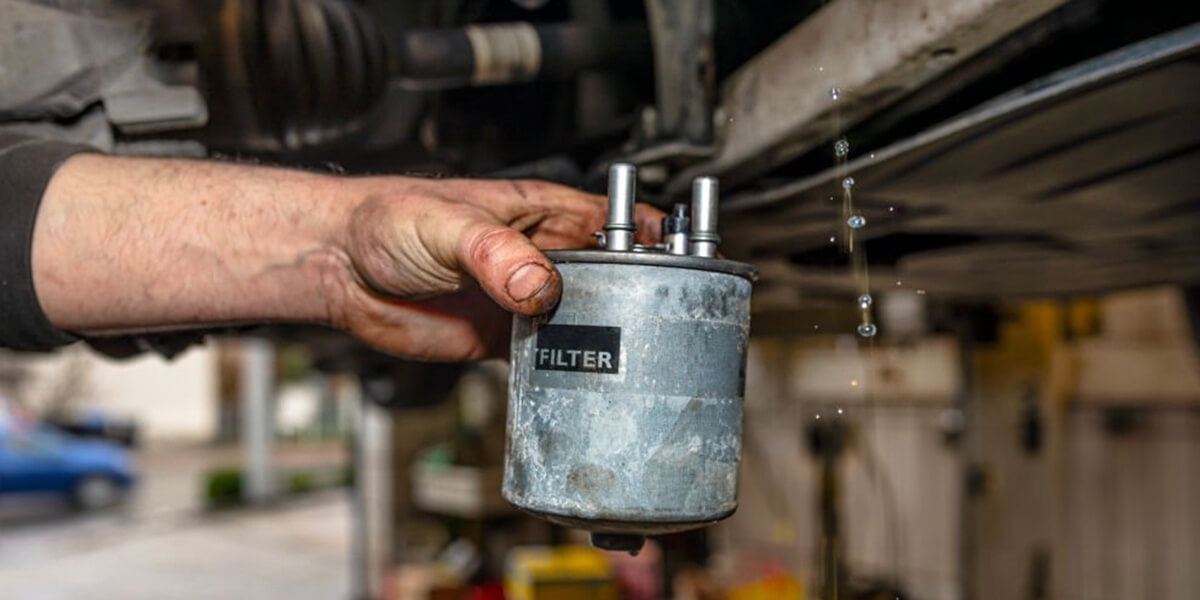
    Are you skipping your service dates? Well, you should know that a vehicle that is serviced regularly helps maintain the engine’s fuel efficiency. When a vehicle gets serviced, the technician checks vital components such as air filters, fuel injectors and spark plugs. Here’s how they work:- Air filters: Air filters prevent small particles like dust or dirt from entering and damaging the engine. If an air filter is clogged, it restricts airflow, which causes the engine to work harder and consume more fuel. During service, the air filter can be checked and replaced if necessary.

    – Faulty spark plugs: Spark plugs provide the spark that ignites the air and fuel mixture, which powers the engine. So when they aren’t “sparking” correctly due to wear and tear, they affect the combustion, which results in increased fuel consumption.

    – Fuel injectors: The fuel system also needs to be regularly maintained so it can efficiently deliver fuel to the engine as fuel injectors often get clogged. Through regular inspection, this can be detected, and the injectors will be cleaned or replaced.

    When properly maintained, these components ensure combustion and smooth engine performance, which in turn results in less fuel consumption.

  • Vehicle body weight
    A light vehicle requires less energy from the engine, and a heavier one requires more. So if the vehicle is heavy, it will need to overcome more resistance which means it must burn more fuel to match the resistance.
  • Engine oil quality
    The engine oil helps minimise friction, remove contaminants, protect engine components, and regulate the temperature. There are different types of engine oils, such as:-Conventional oil: This one works with most vehicles and is less expensive than the other oil options. You can find it in most grocery stores or other convenient shops, such as ones at the filling station. It works best with vehicles that don’t have high mileage, but it has to be changed more frequently. In addition, the oil is very thick, which means it moves slower in colder conditions.
    ‍
    -Synthetic oil
    : These oils are man-made from chemically modified components, such as petroleum, but the base is always distilled crude oil. They are designed to flow quickly in both warm and cold temperatures, and they provide higher levels of protection and engine performance than conventional oils. However, they are also more expensive.

    –Semi-synthetic oil: Sometimes called synthetic blend motor oil, this is a mixture of fully synthetic oil and conventional oil. It is a pocket-friendly option that still offers some of the benefits of fully synthetic oil.

    –High-mileage oil: Vehicles with a high mileage or older engine have specific requirements due to the potential for failing seals or oil leaks. A high-mileage oil helps look after the seals and reduce the leaks.

    Choosing the wrong oil for your vehicle can result in the engine consuming more fuel than necessary.


Is your driving behaviour increasing your fuel consumption? Your go-to checklist

Let’s look at a few driving habits that you should be keeping your eye on:

  • Speeding: The faster you go the more fuel is used per kilometre. Speeding increases the aerodynamic drag which causes the engine to burn fuel quicker than it should leading to more fuel being used.
    ‍
  • ‍Idling: Keeping the engine running while the vehicle is in motion is certainly a waste of fuel. This mostly happens in traffic or when picking up or dropping off deliveries. If most vehicles in your fleet are doing this, then it means there will be a lot of frequent tank refills. Idling also causes vehicle wear and tear and shortens lifespan.
    ‍
  • ‍Revving: The higher the revolutions per minute (RPM), the faster the fuel injectors have to work to inject fuel into the engine, meaning more fuel will be needed. Revving the engine also increases the number of times the gears have to be changed, meaning the engine has to adjust, increasing the amount of fuel needed.
    ‍
  • ‍Rapid Acceleration: The harder you accelerate, the more fuel you will use compared to gradually accelerating to the desired speed. Harsh acceleration burns more fuel because it tells the engine that more speed is required. Remember that more speed means more power and more power means more fuel.
    ‍
  • ‍Driving in the wrong gear: Every gear has a speed limit, and driving at a higher speed in lower gears will increase the RMPs, meaning the engine will consume more fuel. Using high gears while driving uphill or when cornering also wastes fuel. Drivers need to know not to drive at higher gears at low speeds and lower gears at high speeds.
    ‍
  • ‍Deviations and poor route planning: Drivers often take their own routes to get to destinations instead of the one that was set out initially; some even make stops along the way for personal reasons and that just adds on to the pile of things that waste fuel. Additionally, poor route planning such as having a lot of short trips scheduled instead of one big trip can have a major impact on fuel consumption.

How to reduce fuel consumption using Cartrack’s advanced telematics

Telematics provide fleet managers with data that will give them insight into every aspect of the fleet. The technology provides you with real-time data on driver behaviour, vehicle performance, and vehicle location; through this, you can pick up fuel consumption patterns or all things that might empty your pockets by decreasing your fleet’s fuel efficiency.

Cartrack provides fuel monitoring tools to elevate your fleet business and save costs. Depending on what you need, here are a few:

  • MiFleet
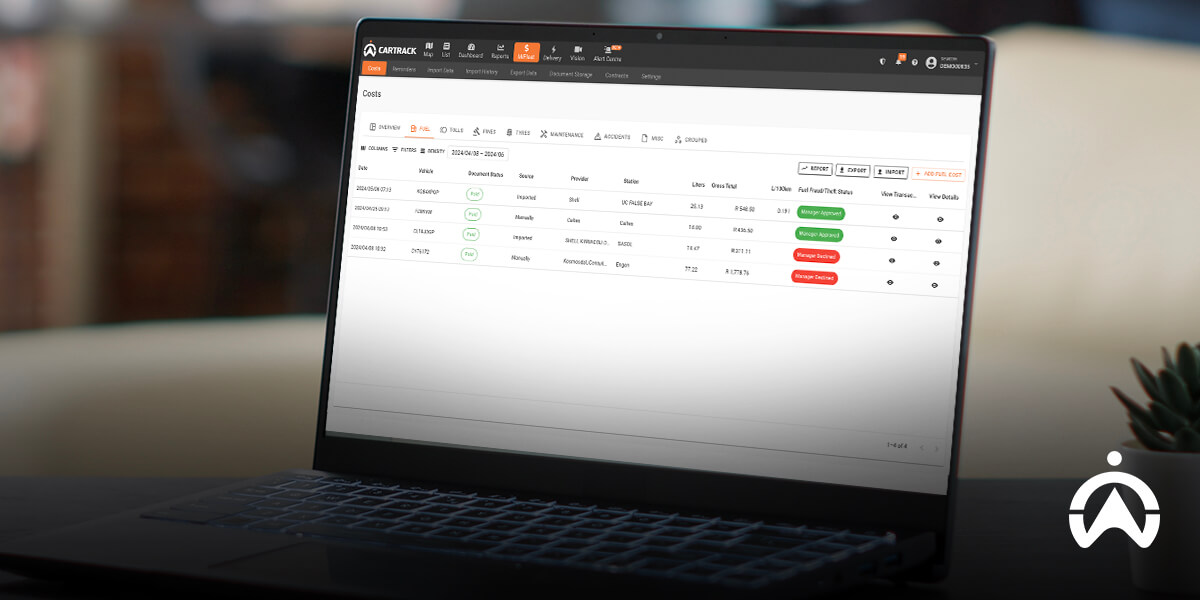
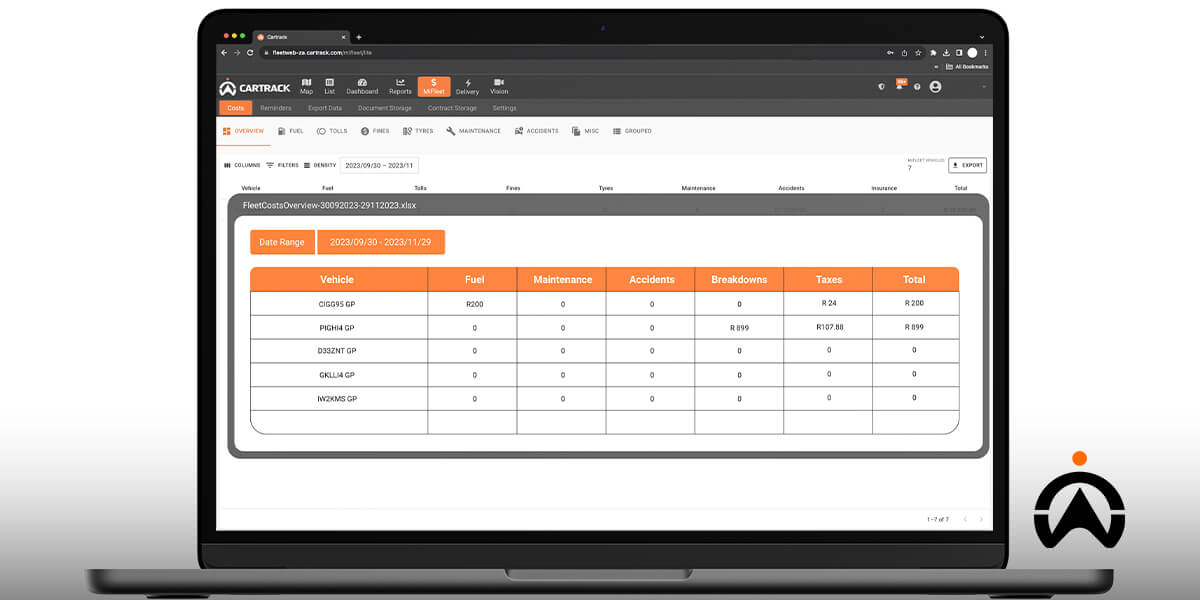
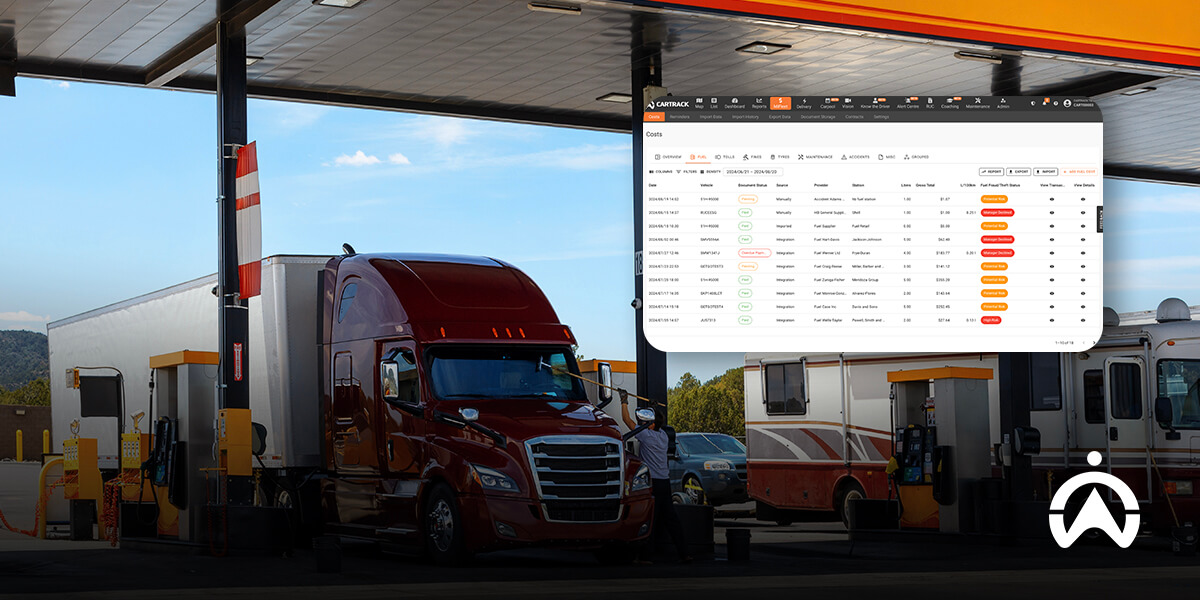
    Get a cost management platform that automatically reviews all your fuel transactions. Mifleet matches fuel receipts with telemetry data and alerts you about potential fuel theft. It also saves you time by eliminating manual admin and reducing human error.
  • Fuel sensors
    This is a technology that monitors the real-time level of fuel inside the tank. A good example of a fuel sensor would be Cartrack’s fuel probe. A fuel probe is an electronic device that can be placed inside the fuel tank to detect changes in fuel levels and give accurate real-time readings. They are not only used in vehicle fuel tanks but can also be used for measuring in-house fuel tanks found in mines.
  • Advanced Driver Assistance Systems (ADAS)
    ADAS is a powerful tool that uses camera-based sensors, intelligent algorithms, artificial intelligence (AI), and machine learning technology to enhance driver awareness by warning them of potential blind spots or forward collisions.
  • AI-powered Multi Vision Cameras
    With our smart camera features, your drivers will receive real-time audible alerts whenever distracted driving is detected, such as cell phone use, yawning, or smoking. This will allow them to quickly correct their behaviour and avoid having to brake harshly or idle for too long in traffic because of distractions. It also helps prevent possible accidents.
  • Preventative Maintenance
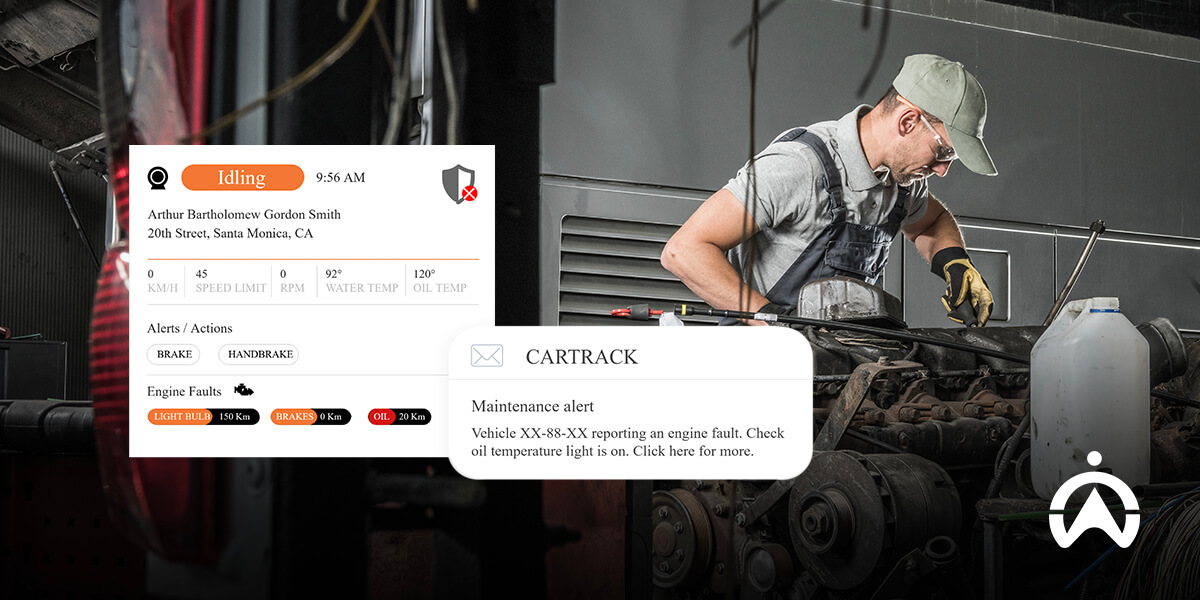
    As mentioned before, the engine plays a vital role in fuel consumption, and a well-maintained vehicle will save you a fortune. Cartrack’s Preventative Maintenance feature gives you real-time alerts of any engine faults and automated maintenance schedules for each vehicle. You know each car is due for servicing, so avoid unexpected breakdowns.
Reduce your fuel consumption and unlock fuel savings with Cartrack Malawi

Cartrack Malawi is an industry leader in fuel management. Our features are easily accessible and all on one platform. With us, you’ll save on fuel and every other aspect of your fleet. Join us today.

Got questions? We’ve got you! Discover the answers to some of the frequently asked questions about fuel consumption.

  • How can I reduce my car’s fuel consumption?
    Follow your car’s servicing recommendations and avoid driving habits such as speeding or harsh acceleration.
  • How do I fix high fuel consumption?
    Check your tyre pressure, don’t speed, avoid idling, watch your RMPs and make sure your engine is in good condition.
  • What can we do to reduce the use of fuel?
    Avoid careless driving habits such as revving your engine to warm it up every morning or idling for too long, and make sure you do not skip vehicle service dates so they can pick up issues on time.
  • Why is my car consuming so much fuel?
    There’s no straight answer to that, as there can be any reason why. In most cases, it’s because of driving habits such as speeding and idling, but it could also be related to vehicle maintenance or the size of your engine.

Let us take care of your fuel concerns. Contact us today.
What Causes High Fuel Consumption in Petrol Engines

Vehicles with petrol engines are well known for their performance and fuel-hungry tendencies if they’re not managed properly. Understanding what causes high fuel consumption is the first step in better fuel management.

In this blog, we will cover everything from what causes high fuel consumption in your fleet to how telematics can assist you in reaching your fuel-saving goals. So, let’s dive right in.

In this article, you will:

  • Get an understanding of what causes high fuel consumption
  • See the difference between petrol and diesel engines and how it impacts your fuel usage
  • See how fuel consumption influences your business operations
  • Get tips on how to reduce your fleet’s fuel consumption
  • Get an understanding of how telematics might influence your fuel consumption

The causes of high fuel consumption in petrol engines

Whether we’re fleet managers or private vehicle owners, we’ve all dreaded driving into the petrol station at some point. Or even on multiple occasions because we know that a cent will leave our pockets for every drop filling our tanks. High fuel consumption in petrol engines is caused by many factors, such as:

  • Driver behaviour:
    Have you ever thought, “I am an excellent driver”, as you skidded and almost bumped the sidewalk while going around a sharp corner? Or, have you ever thought that this must be going through one of your drivers’ minds when you see them coming around that corner? We hope not! 
    Managing your drivers’ bad driving habits can be challenging
    , especially if you don’t know their bad habits, so being able to monitor their driving can help you increase workplace safety and compliance.
    ‍
  • Vehicle maintenance:
    Imagine driving with your windows down, music blasting, and the wind blowing through your hair, and suddenly, all your warning lights go on, and your car sputters to a pathetic halt. Did you forget to service your vehicle? Staying on top of your vehicle maintenance and regular servicing can feel like admin, but it is crucial for avoiding downtime, optimising your vehicle’s fuel efficiency, and ensuring uninterrupted off-key singing as you face the daily traffic.
    ‍
  • Vehicle load management:
    Most of us have seen a truck on the highway that’s so overloaded that it looks like it will topple over as soon as it hits the next pothole. Whether you’re a fleet driver or manager or you’re helping your cousin move to a new town, it’s crucial to understand the risks of overloading and how this can affect your fleet or vehicle’s fuel efficiency. Stick to the vehicle’s limits to allow your engine and fuel budget to thrive.
    ‍
  • Traffic conditions:
    Sitting in traffic sometimes looks like this: Singing a song (off-key again), wondering whether the traffic would have been better if you left just ten minutes earlier. Staring into space—or at fellow motorists—and wishing you could just switch to the lane you’re supposed to be in but are unable to do so because traffic is packed like a buffet lunch plate on a Sunday afternoon. Worst of all, your petrol engine is idling, wasting precious fuel.Did you know that idling a 3-litre vehicle for 10 minutes can waste approximately 300ml of fuel?

    That is more than a cup of fuel wasted every 10 minutes.

Whether you’re driving your private vehicle or managing a fleet, the factors contributing to fuel efficiency remain relatively the same. So, would it make a difference if these vehicles ran on diesel? Let’s compare the two.


The engine showdown: petrol vs diesel

First-time vehicle buyers often don’t think about whether they want a petrol engine or a diesel engine vehicle. Let’s be honest: our first five questions are something along the lines of: what does it look like, what brand is it, what colour is it, what’s the mileage, where is it, and does it have Bluetooth capabilities so that I can play music? Let’s look at some of the major differences between petrol and diesel engines:

Category Petrol engine Diesel engine
Fuel efficiency Less fuel efficient, however, they are generally more responsive and better suited for smaller vehicles. More fuel efficient because of their higher compression ratio which results in better mileage.
Power and Torque Has higher horsepower, making them better suited for speeding. Produces higher torque, which is great for towing.
Maintenance costs Usually cheaper. Generally more expensive because of complex components.
Emissions It produces fewer nitrogen oxides but more carbon dioxide, negatively affecting greenhouse gas emissions. Emits more nitrogen oxides, resulting in higher air pollution. However, DPFs have improved this.
Engine longevity Tend to have shorter lifespans, but the evolution of technology is slowly closing the gap between petrol and diesel engines in this category. Have longer lifespans, and that’s why they are more often used in commercial vehicles.
Noise and vibration They are quieter and offer a better driving experience because of their smoothness. Tend to have noisier engines with more vibrations; however more modern diesel engines have reduced these effects a lot.
Fuel costs Tend to be less expensive however the price between diesel and petrol doesn’t generally differ significantly. More expensive in general; however, the price can fluctuate.

Commercial and personal vehicles have different purposes; even industry-specific commercial vehicles’ purposes can differ vastly. There are benefits to both petrol and diesel engines that make them suitable for specific purposes, making both of them relevant and valid options.

Petrol engines: the fuel-mongers 

There are various reasons why petrol engines use a lot of fuel. Let’s look at some of them:

  1.  Lower thermal efficiency:
    In general, petrol engines have lower thermal efficiency than diesel engines. What does this mean? Engine thermal efficiency is the percentage of the fuel’s energy used to power the engine rather than using it for other components such as the exhaust or coolant. A higher thermal efficiency means that the engine uses fuel more effectively.
    ‍
  1. Stoichiometric ratio:
    A stoichiometric ratio refers to the ideal balance of air and fuel in an engine, which allows an engine to use fuel efficiently without leaving any unburned fuel or extra air behind. Petrol engines can be pretty finicky, and because of their finicky nature, they require precise air-fuel ratios (approximately 14.7:1) for the most desirable combustion conditions. To ensure that combustion is complete, petrol engines tend to use more fuel, specifically when the vehicle is overloaded or accelerates regularly.
    ‍
  1. Three-for-one: Driving conditions, driver behaviour and petrol engines:
    Driving conditions, bad driving habits, and a petrol engine equals high fuel consumption every time. Poor driving conditions include stop-and-go traffic, which consumes more petrol because of frequent idling and acceleration. Bad driving behaviour includes aggressive acceleration and braking, resulting in higher fuel usage.
    ‍
  1. Energy density of fuel:
    Petrol engines tend to have a lower compression ratio than diesel engines, which makes them less fuel efficient and use more fuel.
    ‍
  1. Higher RPM operation:
    Petrol engines operate at higher revolutions per minute (RPM) than diesel engines do. Higher RPMs lead to higher fuel consumption because more fuel is injected into the vehicle’s engine to maintain the speed and power at which the vehicle is operating.

How does high fuel consumption affect the value of your vehicle?

The higher your vehicle’s fuel consumption is, the more it will affect the value of your vehicle. Especially when you want to resell it, here’s how:

  • Lowered resale value: Potential buyers might think twice before buying a petrol-engine vehicle because it is less fuel-efficient. This decrease in demand can negatively affect your resale value. Another contributor to your vehicle’s lowered resale value is the fact that the vehicle will be more expensive to operate.
    ‍
  • Speedy depreciation: Your vehicle’s value can decline faster because of its poor fuel efficiency.
    ‍
  • Environmental impact: With the rise of ecological consciousness, many buyers might consider buying a more fuel-efficient option because vehicles with higher fuel consumption are less environmentally friendly.

How do fuel costs influence your operational dynamics?

Fuel consumption is one of the biggest expenses of any fleet business. Here are four ways that it can impact different parts of your business:

  1. Rising operational costs
    1. Increased fuel prices: Fuel prices regularly yo-yo in South Africa because of factors such as global oil prices and fluctuating currency exchange rates. A rise in fuel prices directly impacts businesses’ operational costs, especially if they rely on vehicles for services such as making deliveries.
      ‍
    2. Managing your budget: Operational budgets must constantly be adjusted because of fuel expenses, which impacts the availability of funds for other operational needs such as maintenance and staffing.
      ‍
  2. Profit margin implications
    1. Profit decline: Organisations with slim margins can have a smaller profit margin caused by their fleet’s high fuel consumption. The more fuel the fleet needs, the bigger the impact on the business’s profits, especially for businesses that operate in transportation or delivery services.
      ‍
    2. Adjusting prices of services and products: To maintain profitability, businesses might have to change the prices of their products and services, which might negatively affect their standing as competitors and their customers’ satisfaction.
      ‍
  3. Supply chain efficiency
    1. A rise in logistics costs: Your supply chain efficiency might be influenced by higher product costs caused by high fuel consumption, primarily if your fleet operates in the manufacturing, retail or distribution industries.
      ‍
    2. A need for route optimisation: Organisations might consider investing in route optimisation tools. Although it might be an additional expense every month, it will reduce fuel costs wasted on unoptimised travelling routes.
      ‍
  4. Fleet management challenges
    1. Maintaining your fleet vehicles: Wear and tear on your vehicle is often a result of higher fuel consumption because it increases the strain on your engine. When a vehicle uses more fuel, it works harder due to aggressive driving, cargo overload, or inefficient operations.
      ‍
    2. A lack of fuel-efficient vehicles: Organisations might have to consider investing in more fuel-efficient cars to combat high fuel consumption and costs.

How Cartrack can help you skyrocket your petrol engine’s fuel efficiency

Managing your fleet while trying to lower your fleet’s fuel consumption, or even just managing it better, can be pretty tricky. At Cartrack, we offer multiple solutions to every fleet management problem you might have, some of which include:

  • At Cartrack, we can help you optimise fleet drivers’ routes.
    ‍
  • We can help you track your drivers’ behaviour and identify any harsh driving habits they might have, all while giving you coaching tools to improve those behaviours.
    ‍
  • You can get a range of different reports to monitor your fleet’s fuel consumption, driver behaviour, and CO2 emissions, among other things.
    ‍
  • Create maintenance reminders and get notified in advance when your vehicles are due for a service.

Fuel-saving hacks to reduce your fleet’s fuel consumption

We all love a good money-saving hack, am I right? Let’s take a look at some tips to reduce your fleet’s fuel consumption costs:

  1. Avoid aggressive driving, such as harsh acceleration and harsh braking. You should instead maintain a steady speed.
    ‍
  2. Don’t idle your vehicle for long periods. Instead, turn your vehicle off, and in the colder weather conditions, don’t idle your vehicle for more than 30 seconds to 1 minute.
    ‍
  3. Plan your and your fleet drivers’ routes to avoid traffic and other congestion issues, such as accidents.
    ‍
  4. Don’t miss a vehicle service. You might want to skip this one, but you shouldn’t. The more you extend your fleet maintenance, the more problems your fleet might experience later.
    ‍
  5. Be mindful of how much cargo you load on your fleet vehicles, and make sure that your load is evenly distributed to prevent unnecessary strain on just one side of your vehicle.
    ‍
  6. Don’t overuse your air conditioning. In the hotter months, when temperatures reach the dreaded 30°Cs, the first thing we want to do when we get in our vehicles is turn on the air conditioning on full blast but we should try to refrain from doing that. You should park your car under the shade or leave your window open just a bit to get ventilation.
    ‍
  7. Use high-quality fuel only. Support your mainstream fueling stations where you know the fuel quality is up to standard. Dirty fuel can cause different problems in your vehicles, such as engine breakdowns.
    ‍
  8. Make the most of the telematics technology that’s available to you. Improve your fleet’s fuel consumption by leveraging the telematics technology that’s available to you. In this next section, we will look a bit more into this.

How telematics can help you manage fuel consumption

Telematics can help manage and improve your fuel consumption; here’s how:

  • Monitoring live driver behaviour: You can keep track of your entire fleet and drivers’ behaviour, such as harsh acceleration and speeding. With the accurate data the telematics device receives, you can improve driver behaviour through coaching.
    ‍
  • Optimising routes: You can optimise the routes that your drivers take in real time, which allows you to save on fuel costs.
    ‍
  • Vehicle maintenance alerts: Regular maintenance can save you money on vehicle breakdowns. You can set up maintenance alerts for each vehicle or your entire fleet.
    ‍
  • Tracking your fleet’s fuel usage: Telematics can give you a detailed overview of your fleet’s fuel usage patterns. By analysing these patterns, you can identify where your fleet tends to waste fuel or use excessive fuel the most, you can then address these areas.
    ‍
  • Reducing vehicle idle duration: When your drivers idle for long periods, they are wasting fuel without being productive. Telematics systems can monitor the duration and how often your fleet drivers idle your vehicles.
    ‍
  • Integrating systems with your current fleet management systems: Combining telematics systems with your current fleet management systems allows you to operate more cohesively. By combining data from different sources, you can make better-informed decisions about how to reduce fuel consumption.

Don’t let fuel costs rule you: rule it with Cartrack Malawi

Contact Cartrack Malawi today and discover a new way to lower fuel consumption in your petrol engine.

Frequently Asked Questions about High Fuel Consumption

  • How do you fix high fuel consumption?
    There are several ways that you can “fix” your fleet’s high fuel consumption, here are a few:

    1. Don’t speed
      ‍
    2. Take your vehicle for regular maintenance checks
      ‍
    3. Make use of fuel additives
      ‍
    4. Keep an eye on your RPMs
      ‍
    5. If you’re driving a modern vehicle – utilise the cruise control function
      ‍
  • Why is my petrol car using so much fuel?
    There isn’t just one answer to this question, as there are several factors that might cause your vehicle to use a lot of fuel; some of these factors are:

    1. Aggressive driving behaviour – harsh acceleration and braking
      ‍
    2. Excessive idling
      ‍
    3. Regularly being stuck in traffic or stop-and-go
      ‍
    4. Not having the correct oil and filters
      ‍
    5. Your clutch might be worn
      ‍
  • What are the possible causes of high fuel consumption?
    High fuel consumption can have different origins, such as:

    1. Aggressive driving
      ‍
    2. Driving in the wrong gear
      ‍
    3. Idling too often and for too long
      ‍
    4. Not changing your oil regularly
      ‍
    5. Using your air conditioning too often
      ‍
  • Can injectors cause high fuel consumption?
    Yes, injectors can cause high fuel consumption. If your injectors are dirty or worn out, they can burn fuel at a faster pace, which increases fuel consumption.

10 Reasons Why You Failing at Fuel Management in Your Fleet

Great fleet owners understand that fuel management goes beyond reducing fuel budgets or leaving fuel expenses to employees. Instead, they embrace advanced fuel management to future-proof their businesses for long-term success.

Controlling your fleet’s fuel costs requires fuel monitoring patterns, the right fuel monitoring system, data-driven decisions, and sustainable practices.

If you think you’ve given fuel management your best shot, here are 10 reasons why you may not have mastered fuel management and efficiency just yet.

In this article, you will:

  • Learn why businesses care about fuel management
  • Discover the 10 reasons why businesses are failing at fuel management
  • Get possible solutions for these fuel management challenges
  • Explore Cartrack’s Fleet Management System and fuel monitoring solutions
  • Get answers to the most frequently asked questions about fuel and fleet management

10 reasons why you failing at fuel management in your fleet

As your business grows, your fleet operating expenses, such as fuel, will most likely increase with it, but this does not automatically result in increasing profits.

If your fleet is still reporting unreasonably high fuel costs that stifle profits, then there may be other factors affecting your fleet fuel management that you need to pay attention to.

Here are 10 reasons why your business may be failing at fuel management and the fuel management solutions you need to know to combat these challenges.

1. Outdated vehicles

It’s not so much old cars versus new cars, but the ongoing vehicle price inflation has made it more difficult for ordinary South Africans and businesses to acquire new vehicles or replace their older and outdated vehicles. Unfortunately, your outdated vehicles may also be the weak point of your fuel management efforts.

  • Lower fuel efficiency: Cars become less fuel efficient as they age, meaning you may not get as much mileage from your refuelling and, therefore, need to pour more.
    ‍
  • Increased maintenance needs: Wear and tear over the years also increases your vehicle’s maintenance needs, sometimes including the frequency of fuel system issues.

Alternative Solutions: Transition your fleet

Older in-built technology can make tracking fuel usage difficult. For example, not all vehicles have CANBus technology, which provides more accurate fuel consumption insights.

However, the solution to this weakness is not as simple as just replacing your fleet with the latest vehicle models.  Fuel prices are still a major concern for businesses, and fleets that are planning for alternative fuel transition in the next 12 months need to be more strategic to future-proof your business. Consider joining the growing number of fleets, accelerating their EV transition and slowly replacing outdated vehicles with more fuel-efficient ones.

2. Lack of driver training on fuel efficiency

Unnecessary speeding, harsh braking, and excessive idling are fuel-inefficient practices you may be overlooking in your fuel management efforts. An untrained driver is less likely to be aware of how these driving behaviours impact fuel efficiency, so while you are trying to lower your fleet’s fuel costs, these bad driving techniques and habits increase your fleet’s fuel use, causing:

  • Increased fuel costs: inefficient driving leads to higher fuel consumption per kilometre, directly increasing a fleet’s fuel expenses and making it harder for you to control your fuel costs.
    ‍
  • Heightened risk of fraud and misuse: your drivers who are not properly trained, poorly disciplined, or uninformed about your fleet’s standard operating procedures (SOPs) may easily misuse your vehicles, causing increased fuel consumption and costs.

Cartrack solution: Fuel efficiency report

Are you aware of how many litres are consumed per kilometre in your vehicle? (This also changes as your vehicle ages). Abnormal fuel efficiency could either indicate fuel theft, high idling, or poor driving habits. Do you know how to calculate the efficiency of each of your vehicles?

Our fuel efficiency report is designed to help you detect fuel inefficiency in your fleet and introduce measures to reduce your fleet’s fuel consumption, especially from untrained fleet drivers, that impact your fleet’s fuel management significantly and reverse all your efforts to reduce your fleet’s fuel consumption and costs.


3. Short trips (stop and start)

The frequent stop-start with short trips causes poor fuel economy in your fleet. When you start your vehicle, it generally requires more fuel than when it runs at a steady speed. According to AA, trips of two kilometres or less use more fuel than longer trips, and based on your vehicle size, short trips could cost you more fuel unnecessarily.

Beyond increasing fuel costs and lowering your fleet’s fuel inefficiency, short trips could be causing your fuel management woes because short trips are:

  • Difficult to monitor: Without telematics, fuel monitoring hardware, or a fuel management system, fleet managers find it challenging to track fuel consumption for past trips and optimise fuel usage for short trips.
    ‍
  • More susceptible to fuel theft and fraud: Because it’s difficult to monitor or get detailed fuel usage data with vehicles frequently used for short trips, fuel fraud and theft increase the risk.

Cartrack solution: Live GPS tracking and fleet visibility

GPS telematics helps increase the accuracy of a fuel management system. By tracking the location and activity of your vehicle’s movement, you can mitigate fuel theft risks with short trips by comparing your fleet’s fuel consumption against vehicle mileage and activity.

Cartrack’s route optimisation generates the best order for completing tasks and deliveries, helping you get from point A to B, and finally point C most efficiently by generating your route sequence. This software feature is a smarter way for you to combine multiple planned short trips into one longer journey and reduce the number of harmful stop-and-start trips.

With route optimisation, you can instantly order deliveries and service tasks instead of manually planning your route and work order, which is often less fuel-efficient.

4. Carrying unnecessary weight

There’s a relationship between weight and fuel economy, and you’ll have to pay attention to this in your fleet management. An extra kg of weight can cause the engine to work harder and use more fuel when accelerating and braking.

In addition to lowering your fleet’s fuel efficiency and increasing your fuel costs, carrying unnecessary weight in your fleet can surprisingly cause:

  • Accelerated wear and tear: Excessive or frequent additional weight strains your vehicle. Over time, this increases the wear on your vehicle and the risk of mechanical problems.
    ‍
  • Safety risks: Added weight makes it difficult for your drivers to handle your vehicle and compromises vehicle safety.

Cartrack can lighten your load

While the solution seems simple, the less your vehicle weighs, the less fuel it will use. Drivers can avoid carrying unneeded items or extra persons during trips. But the truth is, it’s not only your driver’s additional items (or persons) in the truck that could be slowing down your vehicle or causing fuel management problems. Have you assigned the correct vehicle for the task?

Paying attention to your fleet vehicle capacity helps you ensure that your fuel tank isn’t leaking from unnecessary weight. Cartrack delivery ensures you assign the right vehicle to your drivers for their work and tasks, automatically notifying you when the job might require a larger capacity.

5. Weather conditions

It may be hard to believe, but weather conditions impact your fleet fuel. This is mostly because of how the weather conditions affect your vehicle and the driver’s behaviour. For example, drivers may frequently use the air conditioner on warm summer days which reduces fuel economy by 25%! If you think cutting the AC would work, think again! Driving with the windows down has also proven to affect vehicle aerodynamic drag and increase the need for more fuel.

Colder temperatures also cause higher fuel consumption and difficult driving conditions that force your vehicle’s engine to work harder. Weather conditions affect your fleet in two ways:

  • Difficult to mitigate: Weather affects both your drivers’ and vehicles’ performance, and fleet managers can find it challenging to mitigate these effects. How weather conditions affect fuel consumption and activity is often overlooked.
    ‍
  • Not just temperature: Windy conditions and rainy weather can also affect your fleet’s fuel efficiency.

Cartrack Solution: Get strategic about the weather

The weather isn’t something you can dodge or avoid, so it’s up to you to come up with strategies for your fuel management that account for weather conditions. For example, encourage your drivers not to idle to warm up your vehicle and instead drive gently for a few minutes to warm up the engine. Alternatively, as mentioned earlier, you may want to avoid shorter trips on cold days because the vehicle engine may require more time to reach the right temperature.

Track vehicle activity and idling via the Cartrack FleetWeb. Here, you can customise alerts for vehicle idling or download an idling report to get an overview of the frequency of vehicle idling. By knowing which of your vehicles and drivers are idle, you can quickly address this fuel-inefficient behaviour.

6. Bad driving habits

Some driving habits simply waste your fleet’s fuel, so if you want to save on fuel, start by changing and training your drivers to avoid bad driving habits such as speeding, idling, and aggressive driving like harsh braking or accelerating.

Bad driving habits not only reduce your fleet’s fuel efficiency but also put your drivers and vehicles at risk. These common habits cause:

  • Increasing full consumption: The costs of bad driving behaviours are estimated to reduce fuel efficiency by 15-30% on the highway and 10-40% on stop-and-go.
    ‍
  • Higher maintenance and repair costs: Reckless driving accelerates the wear and tear on your vehicles and could also result in accidents and damage that is costly to replace or repair.

Cartrack Solution: Monitoring drivers

You can mitigate bad driving habits by monitoring your drivers, identifying these habits, and training your drivers to help them improve. Cartrack’s driver monitoring solutions give insights into your driver’s performance on every trip, which helps you build driver-specific training and coaching.

With Cartrack’s driver scorecards, you can score the frequency of high-risk driver actions like speeding, harsh braking, and sharp cornering and create custom alerts for fuel-wasting bad habits to get notifications if your drivers violate rules.

7. Fuel fraud/theft

Fuel fraud and theft have been a fast-growing problem in South Africa, and more businesses are investing in identifying fuel fraud. Without the right fuel monitoring tools, your attempts at fuel management may be unnoticeable because of internal fraud involving employees and fleet staff.

There are a few ways that fleet staff may be frauding your fleet, including claiming fuel not poured into your vehicles, syphoning fuel from your vehicle’s tank, or engaging in other fuel card fraud. What methods are you using to identify fuel theft in your fleet? Even with fuel cards to monitor your fleet’s staff refuelling expense, there can still be fuel fraud or theft in your company, causing:

  • Unnecessary cost to company: Not monitoring and controlling fuel expenses results in excessive costs to the company that could otherwise be avoided.
    ‍
  • Operational disruption: Fuel syphoning and misfueling can cause costly vehicle downtime and affect your fleet’s productivity.

Cartrack Solution: Advanced fuel monitoring

Fuel fraud and theft can cost your business substantially, but without the right fuel monitoring system, it’s very easy for you to miss suspicious activity. Cartrack’s FleetWeb with MiFleet makes it easy for you to monitor fuel theft by sending a notification when there is an increase in fuel consumption and fuel payments that do not align with your vehicle’s mileage.

8. Misuse of fleet vehicles and machinery

Driver deviations, unauthorised activity, or misuse of company vehicles and machinery can each significantly impact your fleet fuel management in several ways, causing serious financial losses. For example, if one of your employees moves your construction equipment to complete personal projects at a different location but leaves the fuel costs up to you, the misuse is costly for you.

Alternatively, your drivers and fleet staff can drain your fuel budget by using vehicles for personal purposes, which results in excessive fuel consumption and high costs. These kinds of unnecessary expenses are delaying your fuel management progress.

Cartrack Solution: Geofence and DID

Cartrack Live GPS tracking and driver identification tools improve your fleet’s fuel management by ensuring that your company vehicles and equipment are not used for personal projects at your expense. Now, you can verify claims for fuel, machinery and vehicle working hours, and other factors by validating where transactions or activities took place and which of your fleet staff were responsible.

9. Poor vehicle/machinery maintenance

Each vehicle and machinery requires specific attention to prolong your fleet’s fuel economy and efficiency. Neglecting maintenance and service tasks like oil changes, air filter replacements, and other engine and tyre checks decreases your fleet’s fuel efficiency.

When you’re managing multiple vehicles and machinery with different ages, performance capacities, and locations, it’s difficult to keep up and arrange maintenance and service tasks for each of your fleets. Overlooking some key maintenance needs in your fleet sets your fuel management efforts back over time by causing:

  • Increased fuel consumption: Whether engine problems or issues with the fuel system generally, faulty vehicles in your fleet lead to higher fuel usage.
    ‍
  • Less fuel efficiency: Neglecting maintenance tasks will affect your fleet’s fuel efficiency, making it difficult for your vehicles to perform overtime.

Cartrack Solution: Service Reminders and Preventative Maintenance

Cartrack makes it easy for you to set customisable reminders to help you keep up with your vehicle’s maintenance and service needs. This is one of many handy tools to improve your fleet’s fuel management. In addition to reminders, Cartrack’s FleetWeb platform helps you get proactive about maintenance. Use historical vehicle maintenance and service information on Cartrack’s FleetWeb to predict and plan the maintenance activities your vehicle needs over time.

10. Lack of modern fleet management system or fuel monitoring system

Your fleet and fuel management systems should be equipped with more modern technologies like GPS and telematics for real-time tracking and communication capability. While you think your fuel management strategy is the best, any lack of real-time tracking capabilities makes it more difficult for you to identify the problems affecting your fleet’s fuel.

Using the correct fuel monitoring tools and hardware for the problem you want to address is also important. If you’ve invested in fuel sensors yet continue to struggle with your fleet’s fuel consumption or insights on fleet fuel use, then it is possible that your fleet fuel problems are due to something else. Without the right fuel monitoring system in place, it is difficult to:

  • Gain visibility over fuel use: Without the right system, managing and controlling your entire fleet’s fuel consumption becomes more difficult, making it easier for fuel theft or misuse to happen right under your nose.
    ‍
  • Optimise your fleet’s fuel use: Fuel monitoring helps you identify your fleet’s fuel use and gives you insights on adjusting to delivery schedules and minimising fuel inefficiencies.

Cartrack Solution: Advanced fuel management 

Upgrading your fleet’s fuel management system is the most effective way to monitor its fuel consumption and expenses closely. Our fuel management system helps you identify and address all fleet behaviours affecting its fuel usage and gives you data-driven insights so you can make decisions quickly.


Why care about your business’s fuel management? 

Whether you have a small-scale fleet of 5 vehicles or a larger fleet with over 500 vehicles and specialised machinery, overlooking your business’s fuel management can be costly to your business and its future.

If you haven’t introduced controls for better fuel management yet, here are five reasons why you should care about your business’s fuel management.

1. High fuel prices and fleet budgets

Fuel prices in Malawi are frequently adjusted and impacted by several factors. Not paying attention to your fleet’s fuel consumption also means inaccurate budgeting. Without a well-structured budget and accurate fuel management, it’s difficult for you to properly allocate costs and account for other expenses for your vehicles. A fuel tracking system is one of the most effective ways to track and manage your fuel costs.

2. Manual fuel cost accounting

When you’re looking over and managing diverse fleets of vehicles, including low-powered engine-run machinery, that are perhaps located all over the country and even cross-border, then using manual methods for fuel cost accounting is impractical. Plus, there are plenty of automation tools like fuel cards and fuel monitoring systems that provide more accurate fuel cost accounting.

3. Missing fuel fraud, theft, and other risks

Without proper fuel management, you may be missing or overlooking fraudulent fuel activities that drain your fleet. Fraud risks such as fuel theft, misuse, and fuel card fraud can be prevented with the right fuel monitoring measures.

4. Lack of visibility over vehicle use

Due to a lack of fleet visibility, vehicle misuse and abuse by drivers and other employees can easily go unnoticed. Fuel management helps you detect this misuse and ensures that you avoid the costs of this kind of activity falling on you.

5. Environmental impact of running your fleet

Customers are growing to prefer more sustainable initiatives from businesses. Sustainable fleet transformation often requires businesses to purchase new low-emission vehicles or electric vehicles, but getting ahead of your fuel management is one of the most effective ways to improve the environmental impact of your fleet.

Master Fuel Management with Cartrack Malawi

Cartrack’s Fleet Management System is equipped with everything you need for effective fuel management for your fleet’s success. You’ve got the full guide to fleet management systems. Are you ready to get started with Cartrack Malawi?

Contact us for a demo.

Useful FAQs about fuel management

  1. What are the difficulties in fleet management?
    Fuel management is often cited as one of the most difficult challenges for fleets. This is because fuel prices fluctuate constantly, and with every fuel price increase, bad driving habits, and other fleet inefficiency, there is a direct cost to the company.
    ‍
  1. What is the major problem facing a fleet company?
    Managing high costs is a major challenge for fleet management, as it impacts your business’s ability to compete in the market. For example, if your courier business is forced to increase the cost of service to customers, this may force them to find a cheaper courier company.
    ‍
  1. How can I improve my fleet management?
    An advanced fleet management system with other integrated technologies like GPS tracking, cost management software, fuel management software, fleet reporting tools, and delivery and task management tools can all help you improve your fleet management.
    ‍
  1. How do you manage fuel for the fleet?
    This quick step-by-step guide is a starting point for fuel management, but here is a more detailed guide:
    ‍
    Step 1: 
    Gain complete fleet visibility with GPS tracking.
    ‍
    Step 2:
     Use fuel monitoring systems to monitor and analyse fuel usage.
    ‍
    Step 3: 
    Use route planning and optimisation.
    ‍
    Step 4:
     Utilise fleet cards to manage refueling.
    ‍
    Step 5:
     Regularly maintain your fleet.

Get a quick demo of our fuel management system here.

Fuel Economy vs Fuel Efficiency: How to Really Improve It in Your Fleet

Every fleet business is looking for ways to improve fuel efficiency, increase fuel-related cost savings, and ultimately get their fleet to go further for less.

But if you’re encouraging your drivers to shift to neutral at stops, only refuel on cooler days, or warm up your vehicles for better fuel economy and efficiency, then it’s time to introduce Cartrack’s fuel monitoring system for data-driven fuel management solutions.

Let’s show you how to really improve your fleet’s fuel management.

In this article, you will:

  • Understand the difference between fuel economy and fuel efficiency
  • Explore different ways to improve your fleet’s fuel efficiency and economy
  • Discover more about Cartrack’s fuel monitoring systems
  • Use our step-by-step guide to achieve a more economical and efficient fleet
  • Get answers to the most frequently asked questions about fuel economy and efficiency

Fuel economy and fuel efficiency explained

Fuel economy and fuel efficiency are both concerned with how well your vehicle uses fuel, but the difference between them lies in the definition.

Fuel economy measures the efficiency of your vehicle’s engine and fuel directly using the litre per 100 kilometres (L/100KM) or miles per gallon (MPG).

On the other hand, fuel efficiency is about how well a vehicle uses energy and consumes fuel based on the engine, and other monitored factors such as driving style, idling and speeding habits, vehicle type, and other added vehicle technology.
‍

At a practical level, focusing on improving fuel economy and efficiency matters in fleet management because simple changes to your fuel management can help your businesses:

Increase cost savings

Every fuel price hike hits hard for South African motorists and fleet companies because the prices are adjusted almost monthly based on local and international factors. So, you have to think carefully about your fleet’s fuel economy to keep up with the monthly fuel price adjustments and avoid exceeding their budget.
‍

By implementing strategies to reduce fuel consumption, you can literally save money on fuel expenses and ensure a return on investment from your motorbikes, cars, trucks or machinery.

An improved environmental impact

Fuel efficiency is closely linked to the environmental impact of your fleet. When it comes to fleet companies, such as businesses in the transportation and logistics industry, greenhouse gas emissions and pollution are a major concern.
‍

By implementing more fuel-efficient measures to reduce fuel consumption or choosing to upgrade their fleet vehicles to more economical vehicles, businesses can also contribute to a more sustainable future.

Maximise driver productivity

Several driver habits may result in unnecessary fuel consumption and decreased productivity. A 2021 research study on drivers’ awareness of fuel-saving factors showed that drivers underestimated how indicators like engine speed, idling, and vehicle rolling without a load can affect vehicle fuel use. By prioritising fuel efficiency in your fleet, you can make a big difference to your overall productivity.
‍

By monitoring and improving your fleet’s fuel economy through fleet management, you can encourage drivers to adopt more fuel-efficient habits such as reduced idling and speeding.

Enhance fleet visibility and management

The right fleet management system makes it easier for your business to track your vehicle’s litre-by-litre fuel use and improve fuel consumption and overall fuel efficiency. This allows you to see where changes can be made to improve your fleet’s fuel economy and run a fuel-efficient fleet.
‍

By introducing a fleet management system, your business gains control over every moving part (and stationary assets like machinery) in your fleet.
‍

Ready to address your fleet’s fuel economy and achieve ultimate fuel efficiency? Check out these five Cartrack strategies for increasing your fleet fuel efficiency.


How to increase fuel efficiency: 5 new strategies

There are several benefits from taking on the challenge of building a more economical and fuel-efficient fleet, our strategies help you make the process easier:

Method #1 Implementing fleet telematics and management software

Telematics technology and fleet management software are two essential elements to increasing fuel efficiency. These two smart technologies make the best starting point for any business focusing on improving its fleet. With telematics technology, you can track your vehicles and drivers in real time and receive notifications on engine faults or harsh driving events like speeding and excessive idling.

This data is instantly captured and made available via a fleet management system such as Cartrack, which helps you manage all your vehicles on one platform and analyse either individual vehicles’ telematics data over a period or your overall fleet performance to identify areas for improvement. Getting this technology can help you identify and address fuel challenges in your fleet.

Cartrack’s telematics and management software

GPS telematics helps you view fleet-wide inefficiencies like vehicle issues, idling, and poor routing that affect your fleet’s fuel consumption.

  • Telematics GPS tracking: Your fleet managers know exactly where their vehicles and machinery are located and gain full visibility of vehicle and driver activity.
    ‍
  • Cloud-based software:  Our easy-to-use FleetWeb platform and Cartrack App are cloud-based, meaning your fleet managers can live track drivers, make updates, access various reports, get notified about their fleet, and ultimately streamline their workflow from anywhere.

Method #2 Use a fuel management system

Instead of manually calculating your fleet’s fuel consumption or guessing how economical your vehicles are, getting a fuel management system is a smarter, more accurate way of measuring your fleet’s fuel economy and efficiency.
‍

A fuel management system refers to the process of monitoring, managing and improving your fleet’s fuel usage and costs. It uses fuel sensor hardware, software products such as telematics and fleet systems, or cost and accounting software to track fuel usage in real time and calculate fuel efficiency using data-driven reports.

The power of Cartrack’s fuel management solutions

Cartrack’s advanced technology helps you identify your vehicle’s needs and areas for improvement in your fleet. When it comes to fuel management, our telematics technology and fleet management platform, FleetWeb and Cartrack App, make it easy for you to start digging into your fuel problems

  • Fuel sensors and hardware: With up to three different types of sensors available from Cartrack, you can monitor your fleet’s fuel levels to get a more accurate understanding of your fleet’s fuel consumption and efficiency.
    ‍
  • Fuel-specific reports and analytics: Customise, download, and automate fuel-specific reports for different vehicles or groups of vehicles over a specific time period to make data-driven decisions about your fleet’s fuel. Your fleet managers can receive notifications from drivers about activity affecting your fuel such as idling and speeding.

Method #3 Purchase and use fuel-efficient vehicles

A survey by Fleet Advantage revealed that 40.7% of businesses listed improved fuel economy as the big motivating factor for purchasing new trucks. The advancing of new vehicle technology has resulted in an increasing number of businesses operating mixed energy fleets, with EV trucks and hybrid vehicles becoming more popular. Selecting more advanced vehicle engine technology can have a big impact on fleet efficiency as a whole.
‍

Fuel-efficient cars run longer on less fuel, so introducing fuel-efficient bicycles, cars, trucks, machinery, or fuel-powered equipment is worth the investment. The South African Automotive Master Plan (SAAM) outlines several incentives to encourage EV manufacturing and make it possible for the automotive industry to sell more affordable EV vehicles.
‍

Fuel-efficient vehicles in your business would help you reduce fuel consumption and costs, improve your fleet sustainability, and reduce vehicle downtime. But did you know that this can also give your business a competitive advantage?
‍

Customers and clients love using and working with businesses that care about their environmental impact. Your businesses will experience the benefits of fuel-efficient vehicles immediately and in the long run.

Cartrack’s fleet management for sustainability

Our fleet management software helps you manage your mixed energy fleet and track your fleet’s Co2 emissions so you can achieve your fleet’s sustainability target.

  • Eco-driving report: This unique report highlights your fleet’s effort to reduce its carbon footprint by measuring your drivers’ eco-driving techniques. The eco-driving report is based on your drivers’ vehicle use and calculates the kilometres travelled, excessive idling, speeding, vehicle fuel economy and harsh driving to report on the fleet’s efficiency and environmental impact.
    ‍
  • Vehicle maintenance history reports: This report gives information on service history and repairs for specific vehicles. Fleet managers can use this as a data-driven approach to your vehicle replacement when considering purchasing more fuel-efficient vehicles.

Method #4 Monitor and improve driver behaviour

Investing in your drivers is equally as important as investing in new or used vehicles and trucks. Skilled and motivated drivers are proven to help improve productivity, efficiency, and safety for businesses. However, when it comes to fuel efficiency, many businesses miss the chance to get their drivers on board. Inform drivers about the importance of being mindful about how their driving and decisions impact fuel consumption.
‍

Monitoring drivers can help you improve your drivers’ bad habits and equip them with skills to drive your vehicles better. However, other driver activity may be affecting your fleet’s fuel efficiency. For example, fuel-related crimes such as misusing your machinery, fuel theft, or fuel syphoning may be behind your fleet’s fuel inefficiency problems. Alternatively, your drivers may frequently deviate from your route and make stops along the way for personal activity.
‍

If you suspect that other factors may be affecting your fleet’s efficiency, here are some effective Cartrack solutions.

Driver monitoring for fuel efficiency with Cartrack Malawi

Quickly turn and take action against careless driving that is wearing out your vehicles, using up your fuel, and reducing your fleet’s fuel efficiency.

  • Driver ID tags: Help you monitor drivers while using company vehicles, you’ll know who did what with your vehicles at all times, ensuring accountability in your fleet. Know where your driver starts and ends his trip, and pick up driver deviations. Alternatively, a Cartrack trip summary report can show you all the stops, deviations, and other unusual activities.
    ‍
  • Cartrack Driver Scorecards: This is a gamified method for monitoring your driver’s activity on the road. The scorecard rates your driver’s performance and deducts points for harsh driving, such as excessive acceleration, harsh braking, and long idling. These scorecards are useful for coaching drivers, helping them understand their own bad driving habits, and working on improving them.
    ‍
  • Driver behaviour reports: A behaviour report gives you driver-specific details on harsh braking, speeding, excessive acceleration and idling. With driver behaviour reports, you can pinpoint fuel-inefficient driving habits and train drivers to improve their technique.

Method #5 Improve fleet vehicle maintenance

Proper maintenance on vehicles and other engine-powered machinery helps avoid unplanned downtime and improve your fleet’s fuel efficiency. Regular maintenance can also help maintain an optimised fuel economy, ensuring even your oldest vehicle operates like brand new.
‍

Since fuel efficiency is related to your vehicle’s health, keeping up with your services and maintenance helps improve your fleet’s fuel-efficient performance. Get ahead of your vehicle maintenance by educating your drivers and fleet staff on regular oil changes and tyre pressure checks, for example. Alternatively, pay attention to your real-time telematics data on vehicle health, which reports on potential engine issues which may result in costly repairs and downtime down the line.

Preventative maintenance for fleet fuel efficiency

Our fleet management software helps you keep track of your vehicle and machinery’s maintenance history, upcoming service, and relevant cost with the following tools:

  • Maintenance reminders: Schedule your vehicle’s maintenance and detail the type of service. Alternatively, based on usage hours and information on the previous service our software notifies you of your next service for each of your vehicles and saves you the headache.
    ‍
  • Cartrack’s MiFleet: Cost and accounting management software helps you keep up with your vehicle’s maintenance schedule and manage the costs for repairs, towing, services, tyre changes, and more. This way, you don’t fall behind your fleet’s maintenance or lose track of the cost of your vehicle’s maintenance.

Improve your fleet fuel economy and efficiency with Cartrack Malawi

Telematics-based fuel solutions can really help you improve your fleet fuel economy. They are designed to make achieving fuel efficiency easy, regardless of your vehicle or engine type.
‍

Contact us for a demo of our fuel monitoring system.

Fuel economy and efficiency big FAQs

We like it short and sweet! If you have any further questions, here are some frequently asked questions on fuel economy and efficiency we’ve expertly laid out just for you.

  1. How do you increase fleet efficiency?

Here are nine tried-and-tested solutions from Cartrack that help businesses improve their fleets’ efficiency:

  • Real-time fleet monitoring
    ‍
  • Implementing fleet management software
    ‍
  • Monitoring driver performance and improving productivity
    ‍
  • Improving communication within your team
    ‍
  • Utilising route optimisation
    ‍
  • Regular asset maintenance
    ‍
  • Eliminating empty miles
    ‍
  • Data-driven insights for fleet reports
  1. How can we improve fuel economy?

Businesses can improve fuel economy by:

  • Using fuel monitoring systems
    ‍
  • Keeping up with their vehicle’s maintenance and service
    ‍
  • Using more efficient vehicles
    ‍
  • Monitoring driver behaviour
  1. How can we improve the efficiency of fuel?

For individuals, there are a few methods to improve fuel efficiency:

  • Avoid constant and excessive speeding
    ‍
  • Regular vehicle maintenance
    ‍
  • Be mindful of unnecessary idling
  1. What is the key to achieving better fuel economy?

Telematics-based fuel monitoring solutions are the key to achieving better fuel economy. They make it easier to change, monitor, and ultimately improve your fleet’s fuel practices.

Want to know more about fuel monitoring for your business? Contact us for a demo.

Cartrack over Fuel Matter

Easily improve your fleet’s fuel economy & efficiency with our fuel management solutions.

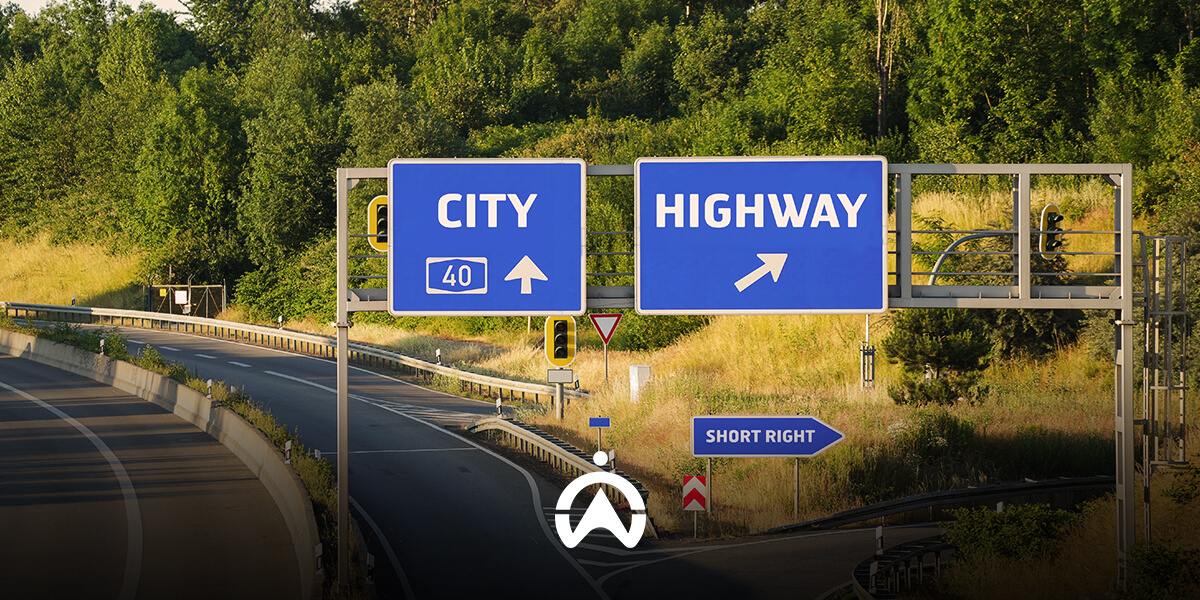
City Driving vs Highway: How Can You Really Save on Petrol Either Way

Whether your daily trips involve driving through busy streets or scenic highways, both present unique challenges and affect your vehicle’s fuel consumption.

With a basic understanding of fuel consumption in both city and highway driving, useful tips for maximising your fuel efficiency and the help of Cartrack, you can significantly reduce your fleet’s fuel and maintenance costs.

Let’s start saving.

In this article, you will:

  • Learn about the factors affecting fuel consumption in city and highway driving
  • Discover the differences in fuel efficiency between urban streets and open highways
  • Get practical tips to achieve fuel efficiency for both city and highway driving
  • Understand how Cartrack solutions can improve fuel management and reduce costs
  • Read a case study on how Cartrack helped Calgan Recliners save fuel

Saving fuel in South Africa

Fuel is a highly demanded, natural material that sometimes feels like it costs an arm and a leg. Depending on the vehicle type and the fuel used (petrol or diesel), the average South African motorist can expect to spend anywhere between R800 and R1200 for one full tank.

Of course, the price of fuel fluctuates, sometimes costing more than expected when it rises and sometimes giving vehicle owners a break when it dips. This is currently the state of fuel updates in South Africa.

According to recent reports, petrol prices have dipped by R1.25, while diesel follows behind with a cut of around R1.19 per litre.

With this in mind, many drivers and fleet owners alike have put their efforts into managing their fuel consumption rate and allocating suitable vehicles based on delivery locations, all in an attempt to take advantage of the decreased fuel prices and save every drop.

City driving vs highway: Which is more fuel efficient?

Not all roads treat your fuel tank the same.

After dispatching your fleet to deliver materials and packages via different roads, have you ever compared the fuel consumption of vehicles that drive through the city to deliver in suburban areas to those that use highways to deliver to factories and warehouses?

If you have, you’ll find that driving through urban streets causes your vehicle more strain, not just with fuel usage but wear and tear as well. Your engine works harder when navigating the streets, changing driving speeds, halting or coming to a complete stop at intersections, and so much more.

Let’s see what makes these two have such an effect on your fuel efficiency:

Driving on urban streets

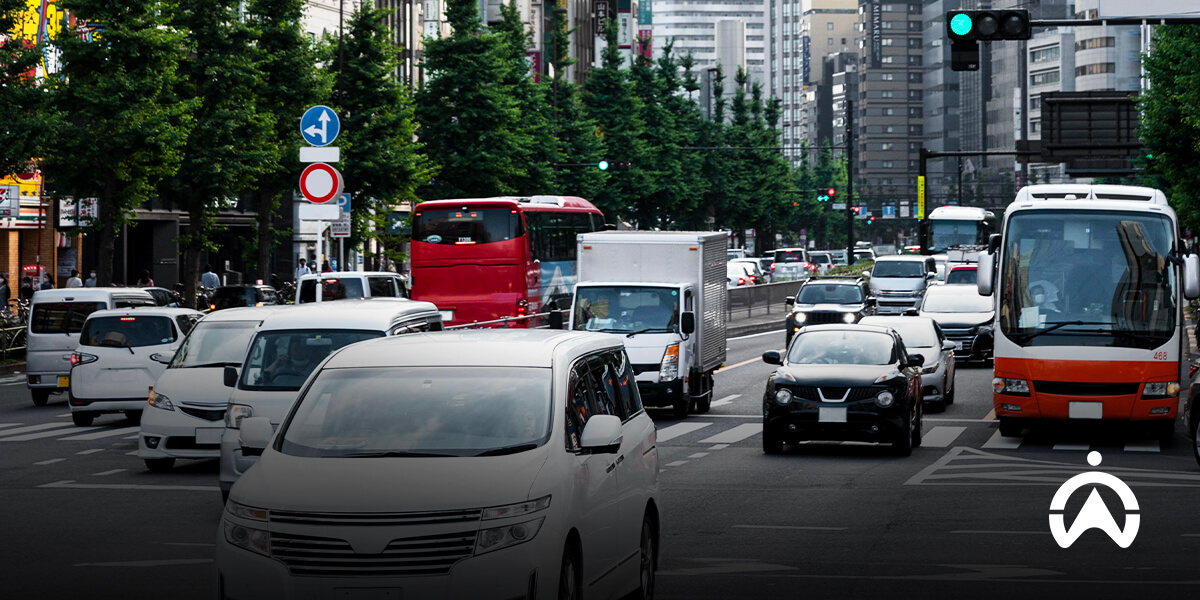
City driving is full of short streets split by intersections, zebra crossings, traffic lights, and more. Here are the factors that influence your fuel consumption rate.

  • Stop-and-go driving: Every time you yield at a zebra crossing or slow down to drive over a speed bump, your engine exerts effort to decrease or accelerate speed, putting strain on your engine. Issues like load shedding that cause traffic lights not to work can increase the number of times you need to slow down or stop due to the traffic that can form, leading to higher fuel usage.
    ‍
  • Traffic lights and stop signs: When coming to a complete stop, abrupt acceleration can greatly affect your fuel consumption, as can frequently stopping at traffic lights, which causes unnecessary idling. Idling for 2 minutes can burn the same amount of fuel as driving for 1 km.

Driving on open highways

Open highways are easier on your tank, but there are still some downsides that affect your fuel efficiency.

  • Consistent speeding over long distances: Driving at a steady pace at a moderate speed within a set highway speed limit is more fuel-efficient than constantly changing gears to speed up or slow down. Using cruise control is recommended when driving over long distances on highways to further improve fuel use.
  • Vehicle weight: The weight of your vehicle plus the weight of materials of cargo you load onto your vehicle plays a role in its fuel consumption. The heavier your vehicle, the more fuel it takes to maintain highway speed. Reducing weight or using more appropriate vehicles that can withstand the extra weight can improve fuel efficiency.
  • Traffic congestion during peak hours: Unfortunately, traffic congestion on highways, especially if you’re driving during peak hours, can result in spending a considerable amount of time on the highway, which leads to idling and stop-and-go driving.

The simple solution to this is to plan your trips around these busy hours:
‍
Cape Town
Peak morning traffic: 05:30 to 10:00
Peak evening traffic: 15:00 to 18:30

Johannesburg
Peak morning traffic: 06:00 to 10:00
Peak evening traffic: 15:00 to 18:00


Impact on engine health: Which scenery is better for your engine?

Similar to how these two types of roads affect your fuel consumption, they also affect your car’s engine health. Every day, when you are faced with driving through the city or on open highways when planning a trip or route for your fleet, consider these insights for your engine.

Open roads: Driving through open roads with no traffic or heavy loads to weigh you down can positively influence your engine health. A steady speed with minimal gear adjustments or acceleration can reduce wear and tear of the engine and reduce strain on it to produce power over long highway distances.
‍

City driving: This is where your engine works the most. City driving requires frequent acceleration and braking. This constant speeding up and slowing down can increase strain on the engine and cause significant wear and tear, especially around spark plugs and timing belts. If your vehicle frequently drives around the city, it might require a bit more TLC to continue running smoothly.
‍

Mountain roads: These roads wind around mountains and can sometimes go off-road, which can greatly affect your engine. Climbing steep hills requires a lot of power from your engine. This terrain is usually reserved for bigger vehicles like trucks with more powerful engines, sturdy tyres, higher torque, and stronger brakes, but proper and consistent engine tuning and maintenance are still needed to help mitigate the effects of these roads.

Practicing preventative maintenance management might be your perfect solution to ensure your maintenance bills don’t stack up over time due to city or hilly terrain.
Focus especially on oil changes, filter replacements, and keeping your engine clean from grime or dirt that can accumulate there.

Types of cars suitable for city vs highway driving

How can you determine which driving environment works best for your fleet? Whether your fleet consists of motorcycles or trucks, dispatching the right vehicle to a certain environment doesn’t just impact fleet efficiency and operations but fuel as well.

  • City driving: Compact cars, hatchbacks, SUVs, vans, and delivery motorbikes are all suitable for manoeuvring the narrow streets, frequent stopping structures and sharp corners of city driving. These vehicles are smaller in size, agile, and have smaller engines.
  • Highway driving: Trucks, sedans, minivans, and bigger SUVs are vehicle types that are more suitable for highway speeds and can travel longer distances. These often have larger engines, aerodynamic designs, and comfortable cruising capabilities.
  • Electric vehicles: These vehicle types can thrive in both environments. They come in different vehicle body types, have lower operational costs and produce decreased emissions.
    Because of range anxiety, drivers are more comfortable using these vehicles for driving through the city as there are charging stations available or shorter highway trips due to limited charging infrastructure.
    ‍
    ‍

Did you know that you could save around R10,00 per year in fuel costs travelling 20,000 km by choosing a hybrid vehicle instead of driving a vehicle using 95 unleaded petrol?

Whether urban or highway, these tips will help take you further for less

Driving the ideal vehicle types through specific areas will only get you so far in saving fuel attempts. Although this will help slow down fuel consumption, there are still extra fuel-efficient tips and tricks to reach their goals.
‍

1. Maintain steady speed when driving and gently accelerate when needed

It’s easy to maintain speed on the highway, but city streets may require you to speed up and slow down constantly. Remember, your vehicle burns more fuel when it slows down and bursts or accelerates when you hit the gas paddle from a stop.

Consider taking about 5 seconds to accelerate to 20 km per hour from a stop and then maintaining your speed from there.

2. The faster you go, the more fuel you burn

Use cruise control at a steady pace for longer on flat surface roads at the highest gear to decrease your vehicle’s fuel consumption rate.

The optimal speed for fuel efficiency in various vehicles (passenger cars, vans, pickup trucks and SUVs) is between 50 km/h and 80 km/h; any more, your vehicle’s fuel consumption rate increases.

3. Reduce idling 

This is a tall order, especially when city streets and highways are jammed during peak hours. If your vehicle has not moved for more than 60 seconds while delivering packages or loading parcels onto it, it is better to switch the engine off than to stay idle.

In just 10 minutes, a 3-litre vehicle can waste up to 300 ml (more than 1 cup) of fuel while idling.

4. Use safe driving techniques when operating vehicles

How you drive a vehicle can influence how much fuel the vehicle uses. Unsafe driving habits such as speeding, harsh acceleration, and abrupt braking or cornering not only influence fuel economy but also contribute to wear and tear issues that might affect maintenance costs.

5. Don’t fall behind on your vehicle maintenance 

The healthier the vehicle, the better its fuel efficiency. Following your vehicle’s maintenance schedule and regularly servicing, it ensures its performance as intended.
‍
Believe it or not, tyre pressure also influences fuel usage. Make sure your tyres are inflated to the recommended amount by your vehicle’s manufacturer, which can be found on the edge of the driver’s seat’s doorpost.

Separate fuel-saving myths from truth, and click here for fuel-saving tips that actually work.

By practising these tips, you’ll not only achieve fuel efficiency for your vehicle(s) but enjoy these benefits as well:

  • Save on fuel costs
    ‍
  • Prevent wear and tear
    ‍
  • Lower carbon dioxide emissions
    ‍
  • Improve road safety
    ‍
  • Extend engine life
    ‍
  • Enhance vehicle performance

How Cartrack solutions improve fuel management for both environments

Cartrack is acclaimed as the best vehicle tracking system by The Star readers and other South African motorists who trust its vehicle tracking and fleet management solutions.

They have an extensive line of features all ready to turn your vehicle(s) into well-oiled, optimised machines.
‍

Here’s how Cartrack’s features can help you achieve your fuel efficiency goals no matter which roads you use.

  • Fuel monitoring
    With Cartrack’s CANBus and fuel sensors, managers can accurately track their fleet’s fuel consumption rate by using real-time fuel data and accurate fuel level information.
    ‍
  • Route optimisation through city infrastructure
    Use Cartrack Delivery to navigate the city’s urban streets. Delivery can optimise your task management by providing routes that are shorter in duration, consume less fuel and avoid traffic or other obstructions to efficiently complete tasks.
    ‍
  • Driver training with driver scorecards
    Encourage fuel-efficient driving by proactively monitoring driving behaviour through Driver Scorecards and Reports. With these, you can track risky driving behaviours such as speeding, abrupt braking, harsh cornering, and even idling and use the information for training purposes.

Do you know you can potentially save between 5-15% on fuel just by using a telematics system like Cartrack to help you in your fuel-saving journey?

To prove this, Cartrack tested its MiFleet cost management tool with its utility fleet of over 700 vehicles. With MiFleet, we reduced total km travelled by more than 5% and fuel consumption per job by over 22%!
‍
Similar positive findings were the case for our client, Calgan Recliners.

Cartrack Delivery case use for fuel-efficiency  

Calgan Recliners is a furniture company specialising in recliner chairs and lounge suites. They use their large fleet to deliver their furniture all over South Africa and like many fleets they started facing the challenge of high fuel consumption rates.

With Cartracks’ smart fuel management solutions, Calgan Recliners improved their fleet’s fuel consumption rate and made it more fuel efficient.

Following the results, Cartrack thought of testing their solutions and conducting a test to prove fuel savings using our Delivery tool.

A Cartrack delivery solutions specialist took one of Calgan Recline’s frequently taken routes and their 15 different drop-off points and used Cartrack delivery to provide a more efficient route to take to complete the 15 deliveries.

These were the results: We only drove 167 km, while the Calgan driver usually drove 195 km on the same route, showing a massive 28 km difference. This equated to 7 litres of diesel saved in a single day.

If used for a whole month, Cartrack Delivery could help Calgan Recliners save around R3000 in fuel costs per vehicle.
‍

You can also achieve this level of fuel savings with Cartrack. There is no need to imagine what we can do for your fleet; see it. Partner with Cartrack today and start seeing the difference in your fleet’s fuel consumption and overall fuel costs.

Contact Cartrack Malawi today to get your free quote.

How To Easily Calculate Fuel Consumption In Your Fleet

When it comes to fuel, every cent counts. With so many factors that guzzle your vehicle’s fuel, are you able to accurately keep track of your fleet’s fuel consumption?

Calculating fuel and successfully managing fuel consumption is vital for any business that relies on their vehicles to perform tasks, and when done correctly, results in massive cost savings.

So, how do you do it – let’s find out.

In this article, you will:

  • Learn what fleet fuel consumption is
  • Find out what factors influence fuel consumption
  • Understand how to conveniently calculate your fleet’s fuel consumption
  • Discover the perfect solution to improve your fleet’s fuel consumption

What is fleet fuel consumption?

Fleet fuel consumption refers to the total amount of fuel used by a vehicle over a specific period. It is a measurement of a fleet’s fuel efficiency, which is typically expressed as the amount of fuel used per distance travelled. This is an important fleet metric for fleet managers because it directly impacts operating costs and fuel efficiency.

What factors influence fleet fuel consumption?

Fuel consumption isn’t just influenced by the distance you drive. There is a list of contributing factors that we fall victim to daily without even realising. Some of these factors include:

Vehicle Condition:

A well-maintained vehicle not only functions at its peak but also consumes less fuel. Vehicle condition factors that impact fuel consumption include:

  • Underinflated tyres: This causes an increase in rolling resistance, which means more fuel is required to maintain speed increasing consumption.
  • Inadequate fluid levels: Inadequate engine oil, transmission fluid, and coolant fluids place a strain on the engine and reduce fuel efficiency.
    ‍
  • Faulty fuel system: Issues with fuel injectors, filters, or pumps lead to inefficient combustion, which also increases fuel usage.

Driver Behaviour:

Driver behaviour doesn’t just impact driver safety, it can also increase the amount of fuel your vehicle is consuming. Some driver behaviour factors that impact fuel consumption include:

  • Aggressive driving: Behaviours such as rapid acceleration or harsh breaking lead to an increase in fuel economy.
  • Excessive idling: When a vehicle remains stationary with the engine running, fuel continues to be consumed. This means more fuel is consumed, even when tasks aren’t being completed.
    ‍
  • Incorrect gear changing: Constantly shifting between gears and selecting the incorrect ones puts a strain on the vehicle’s engine. This strain demands more power, which consequently leads to an increase in fuel consumption.

Road Conditions:

The condition of roads affects the energy that is required to move a vehicle, playing an important role in fuel efficiency. Road conditions that impact fuel consumption include:

  • Road surface conditions: While smoother road surfaces lead to a decrease in rolling resistance, rough and uneven roads increase rolling resistance. This means more fuel is required to keep the vehicle moving, which increases fuel consumption.
    ‍
  • Elevation changes: Ascending inclines require more power which means more fuel will be used.
    ‍
  • Poorly maintained roads: Unsurfaced roads and roads with potholes can decrease fuel efficiency due to increased vehicle vibrations and the energy needed to travel these roads.

Weather:

Adverse weather conditions such as rain, snow, or strong winds lead to increased resistance. More fuel is required to maintain speed and control, leading to an increase in your fleet’s fuel economy.

How to accurately calculate your fuel consumption?

This formula is widely recognised as the standard formula to calculate  fuel consumption. It enables you to assess how efficiently your vehicle uses fuel.

Fuel Consumption (Litres/100 km) = (Litres Used X 100) ÷ Kilometers Traveled

Example:
A vehicle consumes 32 litres of fuel to travel a distance of 250 kilometres. To calculate its fuel consumption in L/100 km:

(32 X 100) ÷ 250 = 12.8 Litres/100 km

This means that the vehicle’s fuel consumption rate is 12.8 Litres/100 km, indicating that it consumes 12.8 litres of fuel to cover a distance of 100km.

While you can manually calculate your fuel consumption costs with the above formula, Cartrack Malawi makes this process even simpler for you with an easy-to-use calculator that helps you estimate the amount of fuel a vehicle consumes at specified distances.

Try it out below and see just how simple it is:

Fuel Consumption Calculator

This calculator helps you do estimated calculations with ease, but to accurately monitor your fleet fuel consumption down to the cent, you need to make use of a fuel management system. A fuel management system measures the fuel usage of a vehicle. In the context of a fleet, it helps you obtain detailed insights into your entire fleet’s fuel consumption and automates the entire process through real-time tracking.

calculate_your_fuel_consumption

The importance of a fuel management system

The data obtained from a fuel management system plays an important role in your fleet’s operation, helping you:

  • Prevent fuel theft: By helping you identify possible fuel theft (from syphoning and fuel card theft to false transactions and fuel card cloning), a fuel management system can immediately and automatically detect unauthorised fuel consumption within your fleet.
    ‍
  • Put a stop to cost-draining driver behaviour: A fuel management system can quickly detect fuel-wasting driver behaviour, such as speeding and harsh braking.
    ‍
  • Optimise your fleet efficiency: By helping you identify fuel-wasting behaviours and improve planning and optimisation, a fuel management system helps you implement strategies that enhance overall fleet efficiency.
    ‍
  • Gain maintenance insights: A fuel monitoring system provides insight into the health of your vehicles. Increased fuel consumption levels can indicate potential maintenance issues, and identifying these issues early helps prevent costly breakdowns and reduce unnecessary downtime.
  • Calculate fuel consumption: A fuel monitoring system can measure your fuel usage by making use of GPS technology and telematics systems.
    ‍
  • Track your fleet’s carbon emission: By accurately measuring the amount of fuel your vehicles burn, a fuel management system simplifies calculating your fleet’s CO2 emissions. This is important knowledge, especially in an industry that accounts for 37% of all CO2 emissions globally.

Why it’s important to calculate fuel consumption

  • Control costs and efficiency: Calculating fuel usage helps you accurately estimate fuel costs. By understanding exactly how much fuel your vehicle consumes, you can budget effectively and identify cost-saving opportunities. Also, the improvement in fuel efficiency translates to lower operational expenses, which contributes to overall fleet success.
  • Performance and driver monitoring: By consistently tracking fuel consumption, you can immediately spot sudden changes. Sudden fluctuations in fuel consumption rates can indicate potential issues, whether it be poor driver behaviour, declining engine health, or tyre pressure issues.
    ‍
  • Data-driven decision-making: Knowing exactly how much fuel your fleet vehicles are consuming is a valuable insight for informed decision-making. This information can help identify the most fuel-efficient vehicles, routes, and driver practices.

Monitor and Improve Your Fleet’s Fuel Consumption With Cartrack Malawi

Harness the power of our industry-leading solutions to simplify monitoring your fleet’s fuel consumption and keep fuel consumption at a minimum. Cartrack’s world-class solutions help you:

  • Improve driver behaviour: Make use of our driver scorecards to monitor high-risk, fuel-wasting behaviour, such as harsh acceleration, braking, and speeding. By pinpointing these behaviours, you gain insights into exactly what areas require improvement to significantly lower your fleet’s fuel consumption.
    ‍
  • Improve fuel efficiency with preventative maintenance: Cartrack proactively monitors vehicle health, helping you schedule maintenance tailored to your fleet’s schedule. This strategy minimises downtime and maximises vehicle performance. With this proactive approach, you can avoid unnecessary fuel consumption surges due to neglected maintenance issues.
    ‍
  • Prevent fuel card fraud and theft: Cartrack’s AI algorithm automatically cross-references your fuel receipts with your vehicle’s location and fuel status. The system automatically flags suspicious fuel cost activity which could be caused by factors like fuel theft, helping you identify any possible fuel cost drainages. By being equipped to spot these drainages early on, you can investigate, resolve and reduce fuel cost wastage.
    ‍
  • Automate carbon emission tracking: Cartrack’s detailed reports give you insights on how much fuel was used during a trip, along with the estimated CO2 emissions, all easily accessible via our fleet platform. This information helps fleet managers pinpoint vehicles with the highest CO2 emissions, facilitate decisions on eco-friendly replacements, and determine appropriate vehicle usage, especially for longer journeys. Tracking carbon emissions over time, understanding how to improve them and understanding the number of trees required to offset emissions are all critical to ensuring a company can make real changes towards net zero.
Monitor_and_Improve_Your_Fleet’s_Fuel_Consumption_With_Cartrack

Fuel Your Fleet’s Efficiency with Cartrack World-class Software

Accurately calculating fuel consumption isn’t just about cost control; it’s a strategic move towards informed decision-making, improved performance monitoring, and data-driven improvements.

Contact Cartrack Malawi today and gain access to unparalleled fuel monitoring and fuel cost savings.

Fuel Management Systems – The Ultimate Guide For Any Business

Fuel — one of the most important variable fleet costs. 

Research shows that most businesses spend about 24% of their fleet budget just on fuel. While you can’t control the price of fuel, you can have systems in place that help you optimise your fleet’s fuel efficiency. 

Let’s jump right in and find out just how you can start slashing those fuel costs.

In this article, you will:

  • Learn what a fuel management system is
  • Find out how a fuel management system works
  • Discover the benefits of a fuel management system for your fleet
  • See how Cartrack’s fuel management solutions help boost fleet efficiency and profits

What is a fuel management system?

A fuel management system is a system that measures the fuel usage in vehicles. As part of a fleet management system, this system makes use of hardware and software components, known as telematics, to offer automated solutions for the monitoring, controlling, and optimising of fuel usage. 

By giving you precise insights into your fleet’s fuel economy, this system helps fleet managers take the guesswork out of manually tracking fuel consumption data by providing an automated, real-time tracking system that helps them effectively manage all fuel-related activities.

How does a fuel management system work?

Fuel management systems are designed to provide operational insights to fleet managers.

The system automatically tracks fuel consumption levels and also notes the speed at which the fuel is burned.

The system makes use of telematics to gather vehicle data and translates it into simple information, compiled on a fleet platform. This is done by making use of:

The information typically gathered for optimum fuel efficiency includes:

  • Vehicle speed
  • Full trip history of vehicle usage
  • Vehicle routes travelled
  • Idle time
  • Driving behaviour
  • Fuel level data

The Risks of Not Having An Effective Fuel Management System

The repercussions of not having a fuel management system can be detrimental to a fleet’s success, including:

  • Increased fuel costs
  • Fuel theft
  • Inefficient travelling and delivery routes
  • Fuel-wasting driving behaviour 
  • High maintenance costs
  • Decreased productivity

All these fuel-wasting costs add up, but with a good fuel management system, you can easily identify them and start saving.

The-Risks_of_Not_Having_An_Effective_Fuel_Management_System

The importance of fuel monitoring systems

Fuel monitoring systems are important for fleets because they allow fleet managers to collect and analyse fuel consumption data in their fleet. This data is a crucial part of fleet success, as it yields a wide range of benefits, including:

  1. Improved driver behaviour:

    Identifying and addressing driver behaviours that lead to unnecessary fuel usage is crucial to fleet success. Fuel management systems can help reduce fuel costs by identifying driver behaviour that is causing unnecessary fuel usage. These behaviours which include excessive idling, speeding, harsh braking, and cornering, all significantly contribute to increased fuel consumption.
    ‍

  2. Improved fleet efficiency:

    Fuel management systems can use information on their fleet’s fuel consumption to better plan for future trips. For example, by knowing how much fuel a typical delivery will take, unexpected delays can be avoided, which positively impacts workflow.
    ‍

  3. Improved planning and optimisation:

    Fuel management systems help provide real-time data and insights. By analysing fuel consumption data, fleet managers can identify the most fuel-efficient routes and make adjustments to less efficient routes.
    ‍

  4. Fuel theft prevention:

    Fuel management systems help fleet managers identify possible fuel theft with real-time fuel capacity, ensuring that unauthorised fuel consumption is immediately detected. Common methods of fuel theft include syphoning, fuel card fraud, fuel card cloning, and false transactions.
    ‍

  5. Accurate vehicle running costs insights:
    ‍
    Fuel management systems help monitor and record the amount of fuel each of your fleet vehicles is consuming. This data is crucial in helping you know when you need to change your fleet vehicles. It also gives you insights on which vehicles are more efficient so you can use the most fuel-efficient vehicles for more fuel-demanding trips.
    ‍
  6. Reduction of human error:

    Fuel management systems automate the collection of vehicle and driver data, eliminating errors caused by human input. Before these advancements, fleet managers and drivers would have to manually record vehicle and driver data, which would result in inaccuracies that would negatively affect fleet efficiency.

Without an effective fuel monitoring system, fleets can experience an increase in expenses and cost wastages, which can be detrimental to any business’s general operations and bottom line. 

However, with software that enhances operational efficiency, reduces costs, and ensures proper and secure usage of fuel within a fleet or organisation, these problems can turn into money-saving solutions.

How Can We Help Improve Your Fuel Management? 

If you’re looking to reap the benefits of a fuel management system, then look no further than Cartrack Malawi. Its industry-leading solutions simplify fuel cost data capturing and its valuable tools help you gain a comprehensive understanding of fuel consumption and leakages, providing you with actionable insights that can be used to improve your fleet’s fuel consumption.

Here are some key ways our solutions help save fuel costs:

  • Monitoring and Improving Driver Behaviour:

    Cartrack’s fuel monitoring software helps you see how much fuel has been put into your vehicles and helps you identify the driver behaviours that negatively impact fuel consumption. Research shows that idling consumes between 0.76 to 2.65 litres of fuel an hour, while harsh braking has been shown to increase fuel consumption by approximately 40%. Our driver scorecards monitor high-risk behaviour such as speeding, harsh accelerating, cornering or braking, which helps you know exactly what areas require improvement so you can drastically lower your fuel consumption.
    ‍

  • Promoting Preventative Maintenance:

    A critical aspect of fuel efficiency lies in vehicle maintenance. Neglected issues such as worn-out tires, engine damage, or low coolant levels can lead to increased fuel consumption. Cartrack Malawi takes a proactive stance with preventative maintenance. We monitor your vehicle’s health. This allows you to schedule maintenance that suits your fleet’s schedule, minimising downtime and optimising vehicle performance. Now you can ensure your fleet operates at peak efficiency while minimising unexpected fuel consumption spikes associated with maintenance neglect.
    ‍

  • Simplifying Admin with Automated Reports:

    Monitor fuel usage and expenses with Cartrack’s automated reports. When integrated with fuel level sensors, these reports give you access to critical data points, including total fuel consumption, initial and final fuel levels for trips, average fuel consumption, unauthorised vehicle usage, and fuel-draining incidents such as excessive engine idling. These reports are promptly delivered to your inbox, ensuring you have the information where and when you need it.
    ‍

  • Mitigating Fuel Card Fraud and Theft:
    ‍
    Cartrack’s intelligent algorithm goes beyond traditional measures to address fuel card fraud and theft, with examples including syphoning and fuel card cloning. By automatically cross-referencing fuel receipts with your vehicle’s location and fuel status, it instantly flags any suspicious activities. This proactive approach empowers you to identify abnormal spikes in fuel consumption promptly. Moreover, trip reports with fuel sensor data provide an additional layer of security, helping you take immediate action against any discrepancies.
The_Solution_for_World-Class_Fuel_Management

Is It Beneficial to have a Fuel Management Software for Businesses of All Sizes?

You would think software solutions like this would only be suited for larger businesses, but they’re actually super beneficial for businesses of all sizes and in all industries.

Small businesses: Small businesses typically have limited resources, making it important for them to find ways to save money and improve their efficiency. A fuel management system can help small businesses do both by tracking fuel usage and identifying areas where fuel can be saved. Since small businesses will typically have one vehicle for deliveries, this enables them to optimise routes and helps ensure that there are no delivery delays.

Medium-sized businesses: Medium-sized businesses have more complex fleets than small businesses, making them require more stringent compliance requirements, which fuel management systems can help them achieve.

Large businesses: Large businesses often have massive fleets with hundreds or even thousands of vehicles. Fuel management systems can help them manage their entire fleet efficiently and comply with all applicable regulations in all provinces and countries where they operate.

What’s more? Implementing these solutions results in the automation of manual business processes, helping you free up resources, minimise paperwork, and speed up productivity.

The Solution for World-Class Fuel Management

Effectively improving your fleet’s fuel management needs a system that closely monitors fuel consumption, aids driver training programs,  and adopts fuel-efficient technologies. The answer? Cartrack’s world-class solutions give you all the tools you need to say farewell to fuel stress and welcome enhanced productivity and efficiency. 

Contact Cartrack Malawi and unlock the endless benefits of fuel management.