Top 7 Ways to Boost Construction Fleet Efficiency

The seven top ways to boost your construction fleet’s efficiency include:

  1. Using telematics and GPS tracking to keep things in check.
  2. Keeping your vehicle maintenance up to date.
  3. Getting a fuel monitoring solution to manage your fuel better.
  4. Offering continuous training for your drivers.
  5. Planning better routes between sites.
  6. Right-sizing your fleet to match your needs.
  7. Regularly checking your key performance indicators.

Fleet efficiency is important to construction fleets, as it directly impacts project timelines, safety, and costs. Without a good strategy and the right technology, your business faces challenges like high fuel costs, downtime, and bad driving habits, which affect vehicle and equipment health.

According to Future Market Insights, companies are increasingly investing in AI-powered predictive analytics, IoT sensors, and mobile platforms to enhance fleet monitoring efficiency. To stay ahead of your competitors, you need an effective approach, and that’s why we’re here to give you the seven ways to improve your construction fleet operations. 

7 Key strategies to improve construction fleet efficiency

The 7 key strategies to improving your construction fleet’s efficiency are:

  1. Investing in telematics and GPS tracking
  2. Regular maintenance
  3. Getting a fuel management system
  4. Driver training
  5. Route planning
  6. Fleet size optimisation
  7. Analysing KPIs

Together, these strategies help reduce costs, minimise downtime, and ensure your construction fleet is running at its best level.

Here’s a breakdown of each point:

1. Implement telematics and GPS tracking

Telematics resources have become essential in construction fleet management, as most companies now turn to making decisions based on data to increase operational efficiency. To stay on the same level or even ahead of your competitors, you also need to invest in telematics technology. 

With telematics, you can monitor the location of your vehicles, equipment, machinery, and other tools. This helps prevent theft and makes it easier to locate your resources. You’ll also be able to see how productive your employees are, like whether the equipment is actually working or just idling most of the time.

2. Schedule regular maintenance

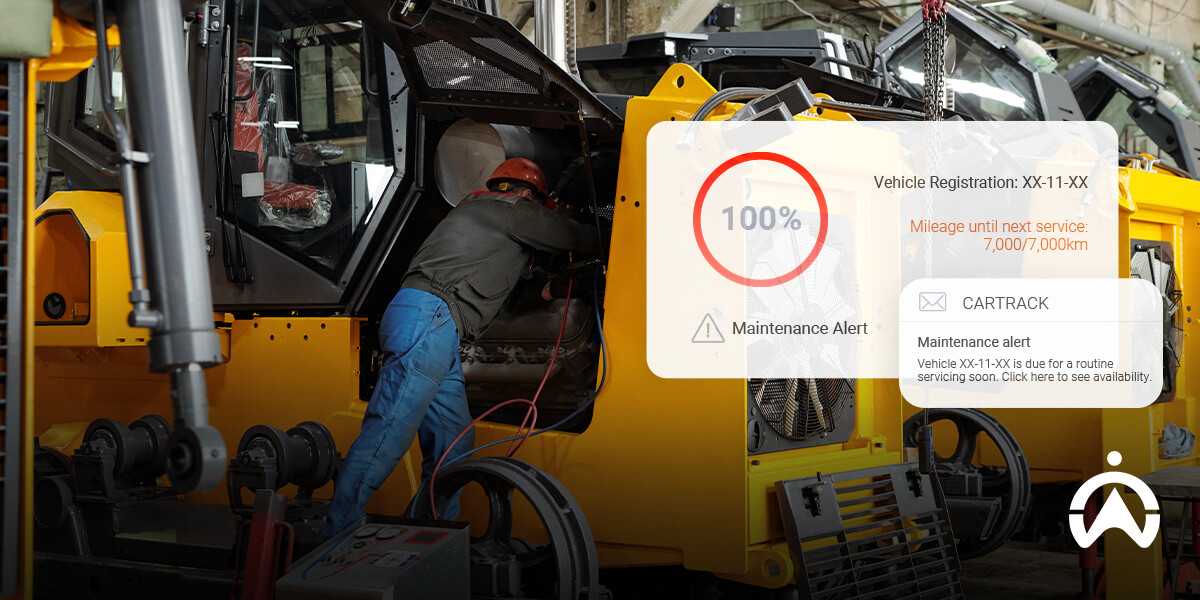
Your fleet is only as good as how well it’s maintained, and with telematics technology, you’ll be able to digitise maintenance-related tasks. To reduce unexpected downtime and enhance efficiency, make sure you utilise your fleet system’s maintenance features. Set reminders on your fleet platform of the manufacturer’s recommended service intervals. This way, you’ll know you’ll be able to schedule them for servicing well in advance and plan ahead for those days.

Through telematics, you’ll also receive early warnings of maintenance needs and identify potential mechanical failures before they occur. You must make use of this and sort out the issues before they cause breakdowns. This further reduces downtime, is safer, and increases vehicle lifespan.

3. Get a fuel management system

Make sure you add a fuel management system to your fleet software package so you can monitor usage per vehicle and equipment. A fuel management system consists of hardware and software tools that help you use fuel more efficiently and cut down costs. A fuel management system makes it easier for you to monitor fuel cards and can flag fraud. With tools like fuel level sensors, you can also quickly spot sudden drops in fuel tanks, which is a sign of theft or a leak.

4. Train drivers for efficiency

Drivers perform better when regularly trained. You must conduct regular training sessions to educate drivers on actions that affect things like fuel costs and vehicle health. Fleet operators must be trained on defensive driving, vehicle safety checks, equipment handling, road rules, and how to use fleet software. Better driver behaviour will help you improve on safety and compliance, reduce fleet running costs, and have fewer accidents.
Construction fleet productivity improvements using smarter vehicle and equipment management

5. Improve job and route planning between sites

Poor planning between depots, suppliers, and construction sites can lead to wasted time and fuel. You must get route optimisation software to help you plan stops better, so your vehicles can get there on time and get the job done as quickly as possible without compromising on service quality.  By planning better routes, you also cut down on last-minute changes, which can throw off other jobs, lead to extra fuel use and add stress for drivers.

6. Optimise fleet size and equipment allocation

Right-sizing your fleet means ensuring that the number of vehicles and equipment you have matches your operational needs. It’s important that you evaluate the size of your fleet. You might find that your vehicles/equipment are overused and worn out because there aren’t enough. Or you might have more than what you need and just need to downsize and reallocate assets in order to save costs.

7. Monitor and analyse key performance metrics

Measuring your fleet’s performance requires you to regularly check important metrics like:

  • Total Cost of Ownership (TCO)
  • Fuel cost per route
  • Vehicle utilisation rate
  • Maintenance costs
  • Downtime rate
  • Driver behaviour

Regular analysis helps you identify inefficiencies, and it’s easy when you have fleet management software because it gives you a detailed analysis of various aspects of running a fleet.

Explore our fleet management solutions to take your construction fleet to the next level

Our fleet management solutions take your construction fleet to the next level by giving you detailed insight into your operations and protecting your assets. We give you solutions like GPS trackers, preventative maintenance alerts, and a fuel monitoring system. These solutions help you reduce expenses, improve productivity, and therefore be more efficient.

Live vehicle GPS tracking

Always see where your vehicles and machinery are through our vehicle GPS trackers. This makes it difficult for your assets to go missing, and it ensures that you can see what drivers get up to and if they arrive on time.

Our GPS trackers have telematics capabilities, meaning you can also see when drivers are idling for too long or practising unsafe habits. You’ll get reports of these behaviours so you can quickly address your concerns.

Non-powered asset tracking

Some of your assets don’t have a power source and are therefore not compatible with the regular vehicle GPS tracking devices. For that, we’ve got non-powered asset trackers. These can be used to keep tabs on things like trailers, storage containers, and mobile toilets. Non-powered asset trackers help you safeguard your assets from possible theft. They also help you reduce the amount of time your staff will spend trying to locate on-site equipment.

We have three main kinds of non-powered asset trackers:

  1. Asset Tracker
  2. Track & Go
  3. TAG

Here’s how they work: 

The Asset Tracker can be installed in non-powered assets like trailers solely for the purpose of locating them. They last up to four years and don’t need to be recharged. You’ll get up to two updates per day, perfect for assets that you don’t need constant checking.

The Track & Go is literally as the name suggests! It’s a portable magnetic tracking device that you can easily shift from one asset to another. It not only gives you location data, but also detailed telematics data to show you how the operators are handling it. It gives real-time updates and also requires some recharging every now and then. Perfect for tracking assets that you’ve rented, so you can remove them after finishing a project and take the assets back.

The TAG is another permanently installed device that gives you radius-based location data. This means you can draw a circle (called a radius) around any spot on a map and see where your asset is located within that area, perfect for tracking industrial equipment on a large site. It’s portable, doesn’t need any recharging, and it gives you frequent location updates, mostly in urban areas.

Geofencing

Our geofencing feature allows you to create virtual boundaries and get alerts when drivers enter or leave those areas. You can use this to ensure your vehicles or equipment don’t leave the construction site unless given permission. This feature can also be used to check whether the vehicles arrive on time at the various construction sites, and how long they take to get there.

Power Take-Off sensors

The Cartrack Power Take-Off sensors are IoT devices that monitor engine activity to help you see when your machinery is being used efficiently. Through this, you’ll be able to differentiate between productive and unproductive idling, helping you save fuel costs and improve operations.
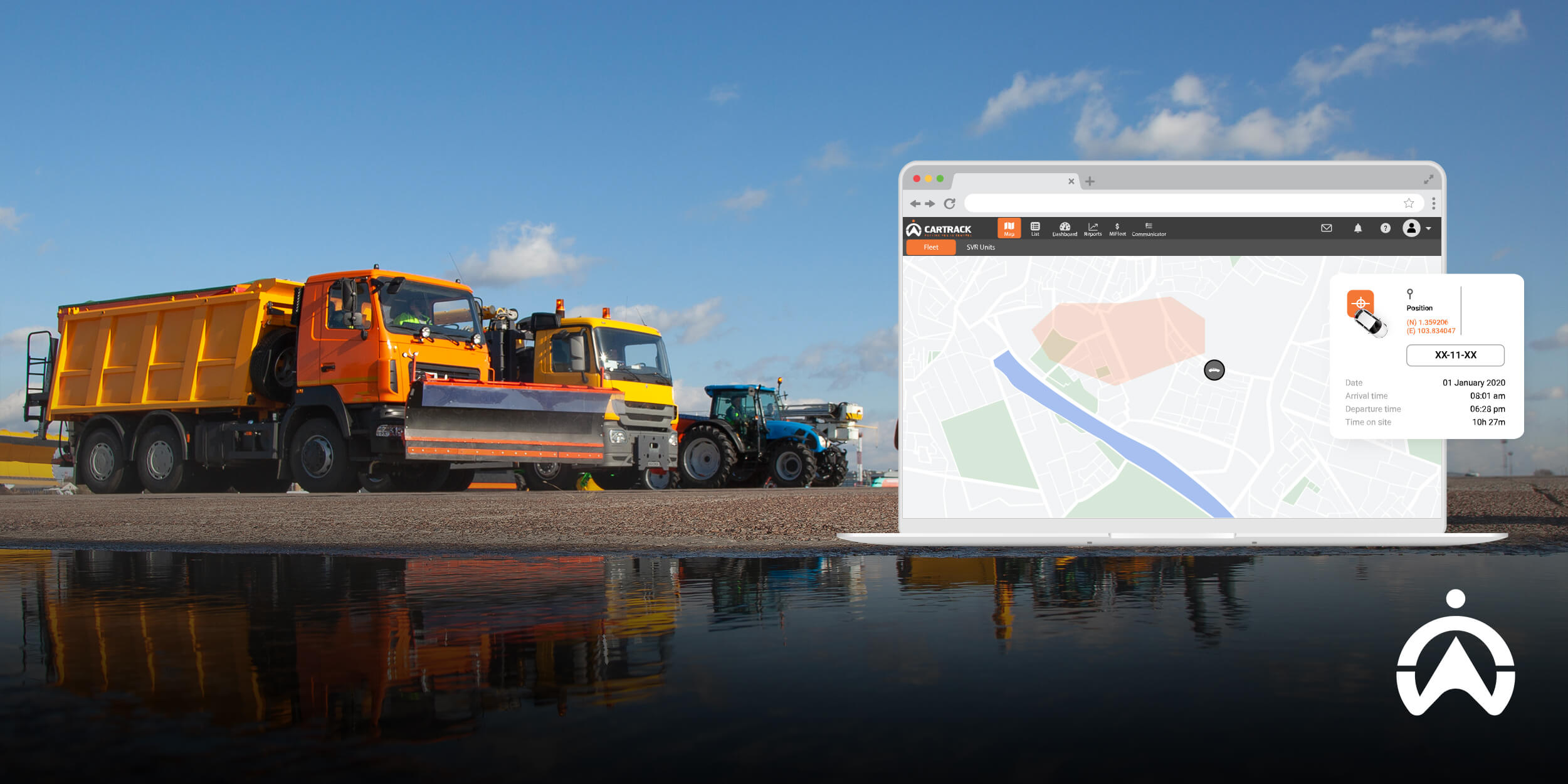
Optimized construction equipment fleet supporting faster project delivery and reduced downtime

Preventative maintenance

Our preventative maintenance solution gives you features that help you better maintain your vehicles and machinery. You can add the recommended service dates to our platform and get reminders when the time is near. This way, you won’t skip maintenance, which improves vehicle lifespan, and you can plan operations better with less unexpected disruptions.

Through our maintenance platform, you can also create digital vehicle inspection checklists for drivers to use before and after trips. The feedback from these checklists will help you see which vehicles have parts that are worn out and need to be repaired or replaced. This reduces the chances of disruptions due to unexpected breakdowns, ensuring smoother operations.

Another great benefit of our preventative maintenance software is that it can also give you early warnings of things like engine faults, worn-out brakes, and much-needed oil changes. The system analyses certain components, allowing it to detect mechanical faults.

Fuel management

Fuel is a major contributor to high running costs, and with our fuel management system, you’ll make big savings. We have various solutions that ensure that you closely monitor fuel consumption, like MiFleet and Fuel Probes.

MiFleet is a cost management platform that helps you manage the expenses of various aspects of your fleet, including fuel. This feature monitors things like distance travelled, fuel receipts, litres, and location, then flags suspicious activities which could mean theft or fraud.

Fuel probes are sensors that are installed inside vehicle fuel tanks or the tanks on sites to measure fuel levels in real time. You’ll get alerts of sudden drops, which could mean fuel syphoning or a leak. These tools help you closely monitor how fuel is used and spot theft quickly.

Driver management

How your drivers treat your vehicles and equipment directly impacts your fleet’s health and efficiency. For that, we have driver management solutions like DID tags and fleet cameras.

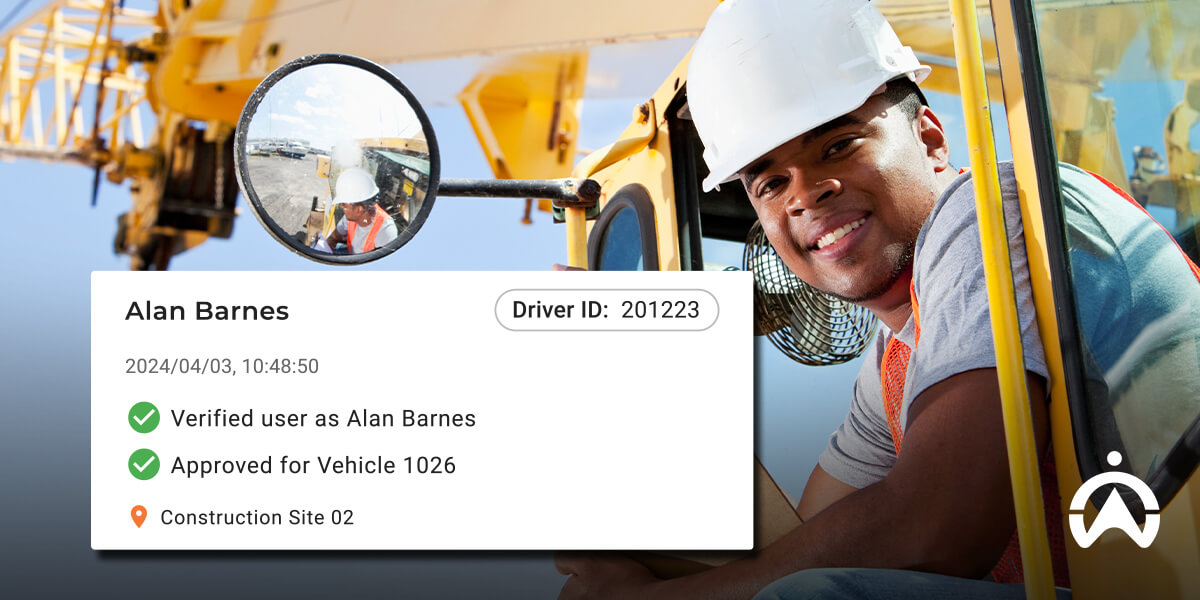
Our Driver Identification (DID) tags help you maintain compliance and see who’s driving. You can assign each tag to a specific vehicle or machine that a driver is qualified to use. If someone tries to operate a vehicle or machine for which they don’t qualify, it won’t go on.

Our AI Multi Vision camera solution ensures that you see everything happening with your fleet in real-time. You can install up to eight cameras in and around your vehicles to monitor operations. You can live-stream the footage from anywhere at any time. Our in-vehicle (dashcam) cameras also identify distracted driving like drowsiness, cell phone use, and smoking. They then give audible alerts to warn drivers so they can quickly make corrections and focus.

Your trusted solution for construction fleet efficiency | Cartrack

At Cartrack, we offer our services to fleets of different kinds, including those in the construction industry. Over the years, we’ve helped many companies transform their fleet businesses for the better through our industry-specific features. With us, you’re assured smooth operations and optimal efficiency. Reach out to us and start seeing the difference!

Frequently Asked Questions

What factors contribute to successful fleet operations?

The factors that contribute to successful fleet operations are safety and compliance, driver management, and proper cost analysis. This is done effectively through fleet management software, which gives you smart solutions to better manage various aspects of running your fleet.

What skills do you need to be a fleet manager?

To become a fleet manager, you need a combination of leadership skills, financial skills, strong communication, technical knowledge, and problem solving abilities. You need to lead, be able to effectively communicate with your drivers, and motivate them towards a common vision. All while managing costs and identifying inefficiencies.

What is the biggest challenge in fleet management?

The biggest challenge in fleet management is managing the rising operational costs caused by things like fuel and maintenance. You can overcome this major challenge by investing in a fleet management system like Cartrack’s, which gives you more insight on your fleet operations. Our system helps you see what needs to be improved in order to cut down costs.
How to Prevent Construction Equipment Theft With GPS Tracking

Equipment, such as excavators, forklifts, concrete mixers and bulldozers, is the backbone of the construction industry, without it, development would grind to a halt. This is why it is important to address equipment theft as soon as it arises in a business.

GPS tracking provides a solution to this problem, as it keeps all assets accounted for even across work sites. Additionally, some providers offer services and features to enhance this product and overall security.

Let us discuss how GPS tracking can prevent construction equipment theft and how Cartrack is the ideal partner to help a business accomplish this task.

Get insights on:

  • Why equipment theft is a big problem
  • How theft costs the construction industry
  • How GPS tracking is used in theft prevention
  • The additional benefits of GPS tracking
  • How Cartrack’s solutions help prevent construction equipment theft

Why Equipment Theft Is a Major Concern

Malawi  has a good construction industry that is projected to grow in the coming years. The market revenue in the Hardware & Building Materials Market is projected to reach US$164.63k in 2025 according to Statista.

This insight shows how much value the industry brings to the country and economy. Equipment theft causes severe operational disruptions, threatening industry growth and financial stability.

There is significant difficulty in recovering stolen equipment as it is usually not tracked, this is because these assets lack permanent registration like passenger vehicles. This makes it hard to identify when it has been stolen or resold to another business.

This all leads to downtime and project delays, which ultimately have a negative effect on a business financially.

The Cost of Construction Equipment Theft

Construction equipment is very expensive and is usually hard to replace. This is because some types of equipment need to be custom-made, such as cranes or heavy-duty excavators. This leads to a significant waiting period between ordering and delivery.

The theft of equipment also disrupts project timelines.

Here are some of the costs that are incurred:

The Financial Losses From Stolen Machinery

The financial losses due to theft can be very large, especially if the equipment stolen is a specialised machine. That can cause a significant amount to lose, especially when most construction companies are not major corporations but small businesses and subcontractors.

Many construction companies do not budget for equipment replacement costs, making theft a significant financial setback. Theft impacts the business’s balance sheets as there is often little room for additional costs. This is because the industry operates on a project-based model, often with periods of inactivity.

As with all thefts, insurance costs are affected. Some insurers might increase premiums and, depending on the circumstance, may refuse to pay out altogether.

The Impact on Productivity

Delays are a major cause of reduced productivity, particularly in construction as most projects are deadline-based. When critical equipment is stolen, construction is hindered and in some cases halted, this means that labourers will sit idle with no work to do and time-sensitive processes will be disrupted.

A construction business with productivity problems and issues with meeting deadlines is at risk of reputational damage. If these issues persist, it will impact the business’s public image and dissuade potential clients from considering them for projects or bids for contracts.

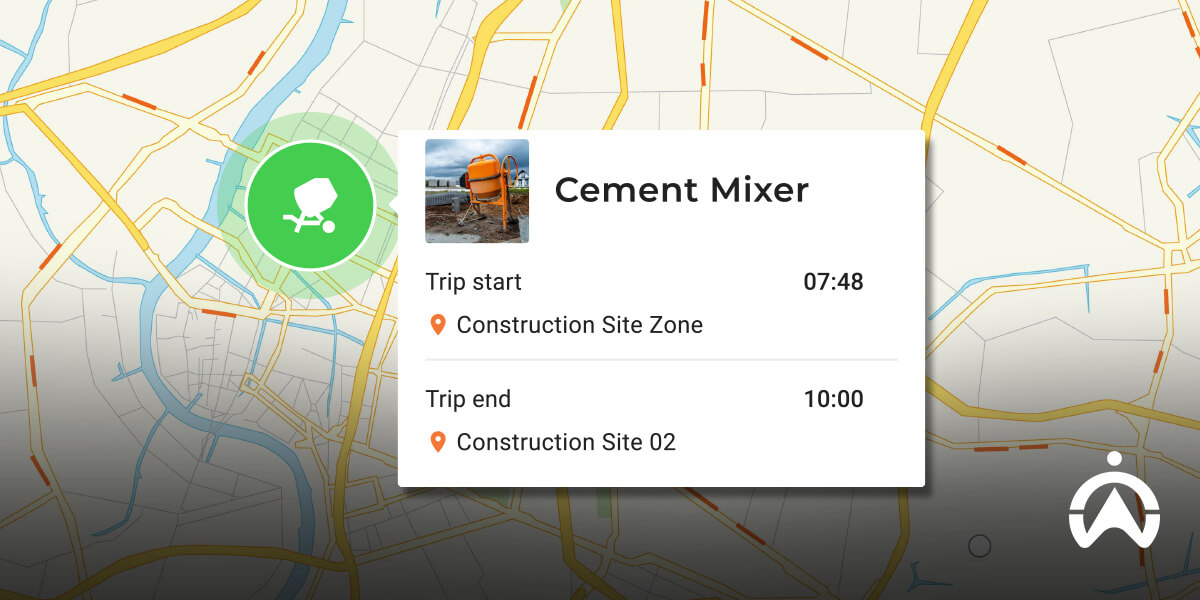
Cartrack_cement_mixer_sensors_displaying_construction_site_zone

How GPS Tracking Can Prevent Equipment Theft

GPS tracking extends beyond vehicles and can be installed on equipment and machinery. Here are the ways in which GPS tracking can work for the construction industry and prevent equipment theft.

Real-Time Location Tracking

Monitor equipment locations at all times, reducing the risk of theft. This feature ensures that construction managers and security teams can keep a constant eye on valuable assets, enabling quick responses if an asset is moved without approval.

Geofencing Alerts

Set up virtual boundaries and receive notifications if equipment moves outside designated zones. Geofencing is particularly useful for ensuring that equipment remains within designated work areas, preventing unauthorised use and potential theft.

Tamper Alerts

Receive instant alerts if tracking devices are removed or tampered with. Cartrack’s GPS tracking systems are equipped with tamper detection technology, which immediately alerts fleet managers if someone attempts to disable or remove a tracking unit.

Remote Immobilisation

Shut down stolen equipment remotely to prevent further movement. This feature is invaluable in theft situations, as it allows owners to render stolen equipment inoperable, increasing the likelihood of recovery.

Historical Tracking Reports

Review past movement logs to track unusual patterns or unauthorised usage. These reports provide insights into usage trends, helping businesses identify security vulnerabilities and potential internal theft.

Battery and Power Loss Alerts

Get instant notifications if a tracking device experiences power loss or is disconnected. This helps in detecting potential tampering attempts or power failures that could compromise tracking.

Multiple Device Integration

Monitor multiple pieces of equipment from a single platform, ensuring seamless tracking across different sites. Whether managing a large fleet or a small number of assets, businesses can have complete oversight from a unified dashboard.

Automated Maintenance Scheduling

Keep track of equipment maintenance schedules to reduce downtime and improve security. Well-maintained equipment is less likely to be left vulnerable to theft due to breakdowns in unsecured locations.

Additional Benefits of GPS Tracking

GPS tracking comes with some additional benefits that are secondary to our direct offering. The most evident one is that the business gets to improve operational efficiency by monitoring equipment usage. Efficiency is capital in the construction industry as it has a direct correlation with the amount of income the business gets.

Another benefit is that the business can reduce fuel costs, it can do this by tracking unnecessary idling. This could be the idling of any equipment or machinery that uses fuel to function, from vehicles to generators. You can ensure proper maintenance with automated service reminders that will inform you whenever equipment is due.

Additionally, with this system in place, you increase the worksite security due to the enhanced visibility of all the assets. When employees know that equipment is being tracked, it will deter them from attempting any theft.

Cartrack_ID_Tag_verifies_an_approved_operator_for_construction_equipment

How Cartrack’s Solutions Help Prevent Theft

With Cartrack as your partner, you can rest assured that your business equipment will be protected from theft. Our theft prevention technologies cater to all types of equipment and can be used by both large and small businesses.

Here is what you get from our solutions:

Advanced GPS tracking technology with real-time monitoring.

We offer GPS tracking of assets, where a ping is sent daily indicating the real-time location of the specific equipment or machinery in your business. This can also be applied to any construction vehicles that need to be tracked.

  • ‍Full asset visibility
    The GPS tracking can be done on equipment and machinery spread across work sites. This will give the business owner an overview of where their resources are located and how many are currently in use versus those in storage at the business premises.
    ‍
  • ‍Asset utilisation rate
    Know how often your construction assets are being utilised by working hours or mileage to help you gauge where to strategically up or downsize your fleet to increase productivity and reduce unnecessary running costs.
    ‍
  • ‍Mobile app and web interface
    This information can all be seen on our online platform or mobile app. This makes it easier for managers to coordinate assets from any location, without needing to be at the specific construction sites.

Comprehensive fleet management solutions

In addition to GPS tracking, we offer comprehensive fleet management solutions. These can be useful for equipment management, as they come with telematics, which tracks the utilisation rate and wear and tear through the use of predictive maintenance.

  • ‍Sensors
    Cartrack has a cement mixer sensor, specifically designed for the construction industry. This is done when the raw materials are loaded into the mixer, the sensor can record the moisture variation between the wet parts and the dry cement materials. With this, you can monitor the speed and direction of your cement truck’s drum rotation to ensure you always deliver a high standard of cement.
    ‍
  • ‍Preventative maintenance
    Set preventative maintenance schedules and get automated reminders using real-time data to ensure all construction equipment is regularly maintained based on hours of service, mileage and date of last service to avoid costly breakdowns and downtime.
    ‍
  • ‍Employee work-hour reports
    Automated reports tell you exactly when your construction teams arrive or leave their assigned project sites to give you actual working hours, so you can bill your clients and pay your team’s wages accurately and hassle-free.
    ‍
  • ‍Surveillance cameras
    Equip your construction vehicles with exterior cameras and in-cab monitors that livestream footage, providing operators with 360-degree views of their surroundings to help them prevent incidents, especially when reversing or carrying oversized loads.
    ‍
  • ‍Security measures
    Geofencing, tamper alerts, and start prevention are all included in this offering, along with driver ID tags and work logs. All these features will make reporting and billing easier to document.

24/7 customer support and theft recovery assistance

At Cartrack, we have a dedicated customer support team that is available 24/7 in case of any emergency or for general queries. This comes as a standard service for all our clients, with someone available to speak with you in one of our official languages, should you wish.

In the event of theft, our specialised recovery team works swiftly to locate and retrieve stolen equipment. This team is made up of trained and skilled individuals with experience in asset recovery.

Proven track record in vehicle and asset recovery

With over two decades in the industry, Cartrack has developed a great reputation when it comes to stolen vehicle recovery.

Over 115000 businesses trust us across 23 countries, proving how well-regarded and reliable our business offering is.

Prevent Theft, Reduce Risk, and Protect Your Assets with Cartrack

A business in construction needs to have its assets protected and accounted for if it wants to maintain optimal performance. Cartrack’s solutions ensure continuous equipment tracking, reducing operational inefficiencies caused by theft.

Contact us to find out how else we can support your construction business.

FAQ

Can criminals detect GPS tracking devices?

Yes, some criminals have developed methods to detect GPS trackers. However, Cartrack’s tamper-proof installation on equipment and tools makes removal and detection significantly more difficult.

Do GPS tracking units need an internet connection?

No, they do not, they use satellite signals to communicate their location. This is not affected by connectivity in any way.

Does a GPS tracker need a battery to be charged?

Some may be connected to an internal power source while others can run on an independent battery. Some of Cartrack’s independent GPS trackers can run for 3 days to two weeks without needing to be recharged, this will depend on the product chosen.

The Best Fleet Management Software For Your Construction Business

Ever wished for the perfect assistant to effortlessly handle the ins and outs of your construction fleet? Well, meet the ultimate candidate for the job – Cartrack.

Stay tuned as we delve into the features and benefits of fleet management software and find out what makes Cartrack Malawi the ideal co-pilot for managing your construction fleet.

In this article, you will:

  • Uncover the construction fleet management essentials
  • Distinguish between construction fleet managers and project managers
  • Understand the challenges of not having a fleet management tool
  • Learn why fleet management software is a must-have for construction companies
  • See what makes Cartrack Malawi your ideal fleet management solution

What is construction fleet management?

The construction fleet management process involves managing a fleet of vehicles and equipment used for various tasks in the construction industry.

For example, heavy-duty equipment such as excavators and bulldozers are designed to tackle big excavation and earthmoving projects, and smaller vehicles like dump trucks ensure that materials are transported to and from the site efficiently. These are all extremely valuable assets and poor management of them could cause project delays, safety risks or even increased downtime, impacting your construction business’s bottom line.

This is why construction fleet managers play a vital role. They help ensure the safety and efficiency of drivers, vehicles and the construction site itself. To effectively do this, fleet managers need to track their fleet performance on a day-to-day basis so they can identify areas where improvement is needed or where risk concerns should be addressed, and put systems in place to correct these.

Construction fleet manager vs construction project manager

Much like any fleet manager, a construction fleet manager is responsible for coordinating all aspects of the fleet, from route planning and fuel management to vehicle maintenance and repair. They manage the use, maintenance, and operation of construction vehicles and equipment, ensuring that each vehicle receives necessary maintenance to prevent issues or major repairs that could be costly or add to safety risks.

Apart from their vehicles and equipment, they also oversee;

  • Driver training
    ‍
  • Safety protocols on site
    ‍
  • Compliance with industry standards and regulations
    ‍
  • Managing fleet costs

Additionally, construction managers are in charge of coordinating vehicles around the site, deciding on vehicle placement based on the type of project for better efficiency, managing fuel logistics and ensuring operations are streamlined.

Construction project manager

Construction project managers, on the other hand, seem to handle aspects of construction from behind the scenes.

A construction project manager is tasked with organising and supervising all stages of a construction project, ensuring it runs smoothly from start to finish. Their responsibilities include creating project plans, managing budgets and resources, collaborating with contractors, obtaining required permits, and ensuring compliance with regulations. Ultimately, their role is crucial in guaranteeing that projects are completed on schedule, within budget, and meeting specified quality and safety standards.The responsibilities of a project manager overseeing the construction of a new office building for example would include:

  • Creating a detailed project plan and executing it
    ‍
  • Obtaining required permits and approvals from local authorities
    ‍
  • Recruiting and supervising a team of contractors and subcontractors
    ‍
  • Asset usage monitoring
    ‍
  • Tracking project progress and making adjustments as necessary
    ‍
  • Ensuring timely, budget-friendly, and satisfactory project completion

In summary, a construction project manager is the driving force behind the successful execution of complex construction tasks and projects.

Roles and responsibilities for a fleet manager in construction

Fleet managers in construction are responsible for overseeing and managing the company’s entire fleet, including vehicles, equipment, drivers, and cargo. This involves ensuring the efficient operation of the fleet and implementing essential practices for improvement.

  1. Acquiring and liquidating vehicles

    Fleet managers must meticulously assess the company’s requirements when buying new vehicles. Factors such as the nature of construction projects, fuel efficiency, operational conditions like weather and terrain, and budget constraints are all taken into account. When it comes to older assets that are continuously being serviced and are costly to repair, fleet managers are tasked with disposing and upgrading vehicles in a cost-effective and environmentally conscious manner. Options may include auctioning, trading for newer models, or charitable donations.
    ‍

  2. Vehicle maintenance and servicing

    Ensuring the proper upkeep of all vehicles is crucial for fleet managers to sustain optimal conditions and prolong their lifespan. This involves creating and adhering to maintenance schedules, monitoring mileage and usage, and promptly addressing potential issues.
    ‍

  3. Safety

    Prioritising driver and vehicle safety is a paramount responsibility for fleet managers. They institute and execute safety programs, monitor and manage driver behaviour, and ensure vehicles are well-maintained with requisite safety features. Conducting safety audits and inspections to identify and rectify potential hazards is also part of their duties.
    ‍

  4. Monitoring fleet performance

    Fleet managers routinely monitor fleet performance to pinpoint areas for enhancement. This involves tracking fuel and maintenance costs, asset usage, activity and vehicle downtime. Implementation of software for data collection and analysis aids in identifying trends and patterns.

    Beyond these responsibilities, fleet managers also conduct tasks like inventory tracking, material procurement, and coordinating deliveries. They may also supervise the loading and unloading of vehicles and equipment, ensuring proper storage and security for all materials and equipment.

Roles_and_responsibilities_for_a_fleet_manager_in_construction

Why choose fleet management software

Construction fleet management involves managing all equipment and vehicle assets for construction and building projects, including trucks, vans, and specialised construction machinery such as excavators, loaders, and cranes, and being in charge of all this can sometimes be overwhelming. A small oversight might jeopardise either the safety of your drivers or other civilians on sight. This is where fleet management software comes in, it assists construction fleet managers in ensuring there is no stone left unturned.

Which management technologies are needed in a construction company?

There are several fleet technologies out there that can provide a special set of benefits depending on your business model and industry. The needs of the business often determine the specific features that your construction fleet requires. For example, a business that is concerned about safety may want to choose a system that includes camera software like dashcams, while a business that is concerned about fuel efficiency may want to choose a system that includes fuel monitoring software.

Here are a few fleet management technologies that would benefit a construction business:

Telematics: Telematics systems offer detailed insights into vehicle performance and driver behaviour. They can monitor fuel consumption, engine diagnostics, harsh braking events, and other crucial metrics. This information helps pinpoint areas for improvement, provides coaching on safer driver practices, and reduces the risk of accidents or breakdowns.

Geofencing: Construction managers can use geofencing to create virtual boundaries around specific areas like job sites or restricted zones. When a vehicle enters or exits these zones, fleet managers receive alerts. This feature prevents unauthorised vehicle use, ensures compliance with safety protocols, and tracks vehicle movements for payroll or billing purposes.

Dashcams: Mounted on the dashboard or windshield, dashcams record the view in front of the vehicle. This footage serves various purposes, from exonerating drivers in accidents to providing evidence of unsafe driving practices and supporting insurance claims.

Fleet management apps or platforms: These apps empower construction managers to remotely access fleet data from their smartphones or tablets. They can track vehicle locations, monitor driver performance, send dispatch notifications, and receive real-time alerts, enhancing overall fleet management efficiency.

Challenges faced without a construction fleet management tool

Fleet managers in construction face a multitude of challenges in planning, organising, and executing construction projects. Without the use of construction fleet management software, these challenges become even more daunting, potentially hindering productivity, increasing costs, and impeding the overall success of projects. 

Here’s a quick breakdown of the major challenges that construction managers encounter without proper fleet management software:

  • Inefficient vehicle and equipment tracking

    Manual tracking of vehicle and equipment locations can be time-consuming and prone to errors, resulting in poor utilisation of resources and increased downtime. Without real-time visibility into the whereabouts of vehicles and equipment, construction managers struggle to optimise scheduling and dispatching, leading to delays and cost overruns.
    ‍

  • Reactive maintenance practices

    Without predictive maintenance capabilities, construction managers often rely on reactive maintenance, responding to breakdowns and repairs only after they occur. This reactive approach can lead to frequent equipment downtime, unplanned shutdowns, and increased maintenance costs.
    ‍

  • Poor operator management
    ‍
    Manual tracking of operator schedules, timesheets, and performance metrics can be inefficient and error-prone, making it difficult to ensure operators are properly trained, compliant with regulations, and working productively. Inadequate operator management can lead to safety hazards, productivity loss, and increased labour costs.
    ‍
  • Lack of data-driven insights
    ‍
    Without access to real-time data and analytics, construction managers lack the insights needed to make informed decisions about fleet utilisation, maintenance schedules, operator performance, and cost optimisation. This lack of data-driven decision-making can lead to inefficiencies, resource misallocation, and increased project costs.
    ‍
  • Increased safety risks

    Manual tracking of safety incidents and near misses can be ineffective in identifying and addressing safety hazards. Without a safety system in place, construction managers struggle to prevent accidents, reduce injuries, and maintain a safe work environment.
    ‍

  • Limited communication and collaboration

    Manual communication methods, such as phone calls and emails, can be slow and inefficient, hindering communication and collaboration between construction managers, operators, and other stakeholders. This lack of real-time communication can lead to delays, misunderstandings, and missed opportunities for improvement.

For example, a construction manager may not be aware of a change in the project plan, leading to delays and rework if the operators are not informed promptly.

Reactive_maintenance_practices

The best fleet management tool for any construction business

If you’re looking for a fleet management solution for your construction business and prefer a tool that can provide you with real-time GPS tracking, mileage tracking and reports, asset management, and more, all on one platform — then Cartrack Malawi is the solution you’ve been searching for.

Whether your business falls under construction field services, oil and gas mining or the transportation and logistics industry, Cartrack Malawi provides various features, services and packages to perfectly suit your business model.

How Cartrack’s solutions can assist in efficiently managing your fleet

Cartrack Malawi has all the features a construction fleet manager would need to properly run their fleet, no matter the job.

  1. AI cameras

    Enhance your fleet’s safety with AI-powered cameras, featuring up to eight internal and external cameras with in-cabin audio. These help boost the safety of your drivers, vehicles, and cargo, as drivers can receive real-time audible alerts of potential issues, allowing them to quickly rectify risky driving behaviour and prevent collisions. Our cameras also provide video footage for driver accountability during events or accidents, this can also be used to further train and educate drivers.
    ‍

  2. Monitoring sensors

    Cargo door sensors: Monitor the drop point of the delivery and stay informed about cargo security by receiving instant notifications the moment cargo doors open or close. This feature ensures that only authorised persons can access your cargo area, helping to keep your valuable cargo safe.

    Drum rotation sensor: Tailored for cement trucks, our sensors monitor the speed and direction of your truck’s drum rotation. This functionality guarantees that your cement remains well-mixed, meeting the expected quality standard.
    ‍

  3. Asset management

    Cartrack’s asset management allows you to keep track of your asset’s utilisation in real time. Effectively schedule your equipment remotely across various project sites, preventing over or underuse of your assets for optimised fleet performance.
    ‍

  4. ID Tags

    Be informed of who is behind the wheel with our ID tags. A tag is assigned to each driver in your fleet to easily identify which drivers are operating your vehicles. These tags along with our Start Prevent feature ensure that only authorised personnel operate your assets.

    “Using Cartrack’s advanced fleet management we have been able to increase our operational efficiency to deliver a better service to our customers, as well as effortlessly establish a maintenance cycle that reduces our costs and increases our fleet longevity.”
    Gareth Langley, Operations Manager at Concord Cranes

    Concord Cranes faced challenges in precisely logging the operational hours of their cranes, impacting their ability to meet client delivery schedules. This obstacle prompted the search for a more efficient solution.

    We’ve helped Concord Cranes along with +110,000 other businesses in streamlining their construction fleet and optimising productivity, let us help your business.

Trust Cartrack Malawi with your construction fleet management needs

Construction operations are fast-paced, involving various job sites, a range of assets, and mobile crews. Count on Cartrack Malawi to monitor all your heavy equipment from vehicles to powered trailers, and other assets in your arsenal.

Get in touch with the industry experts.