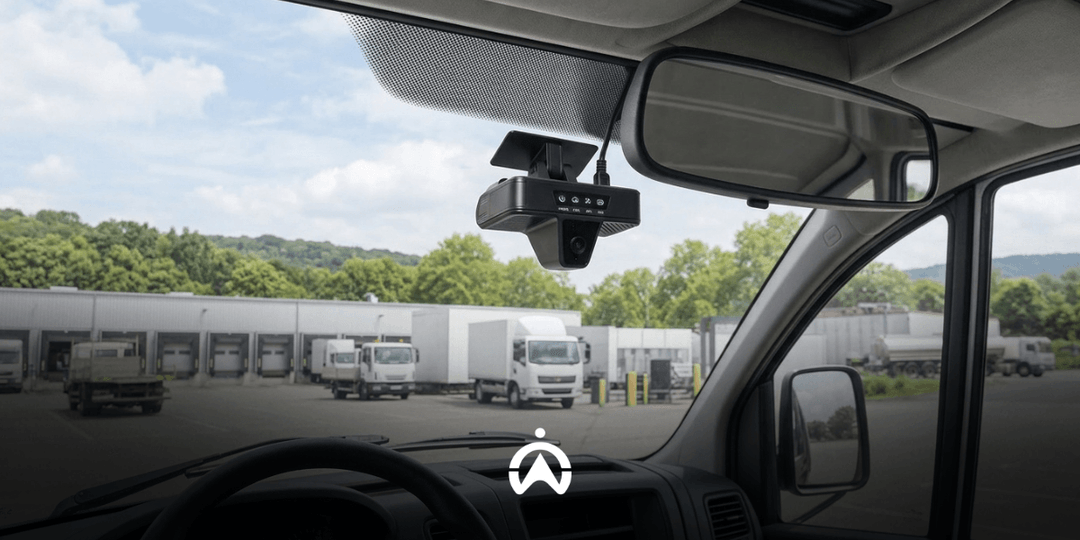
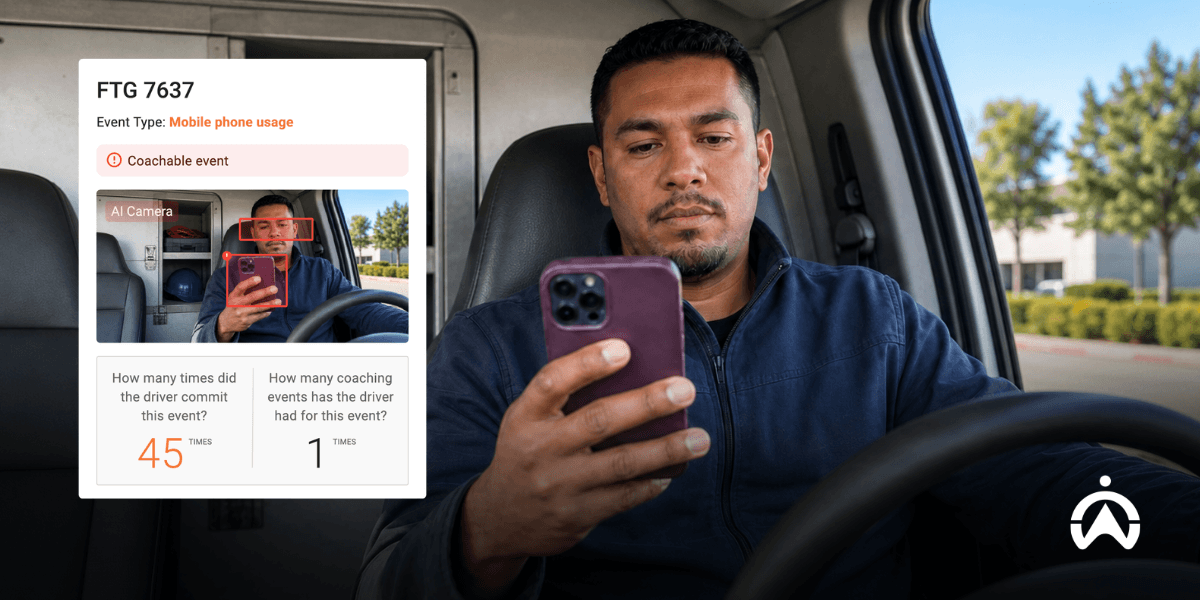
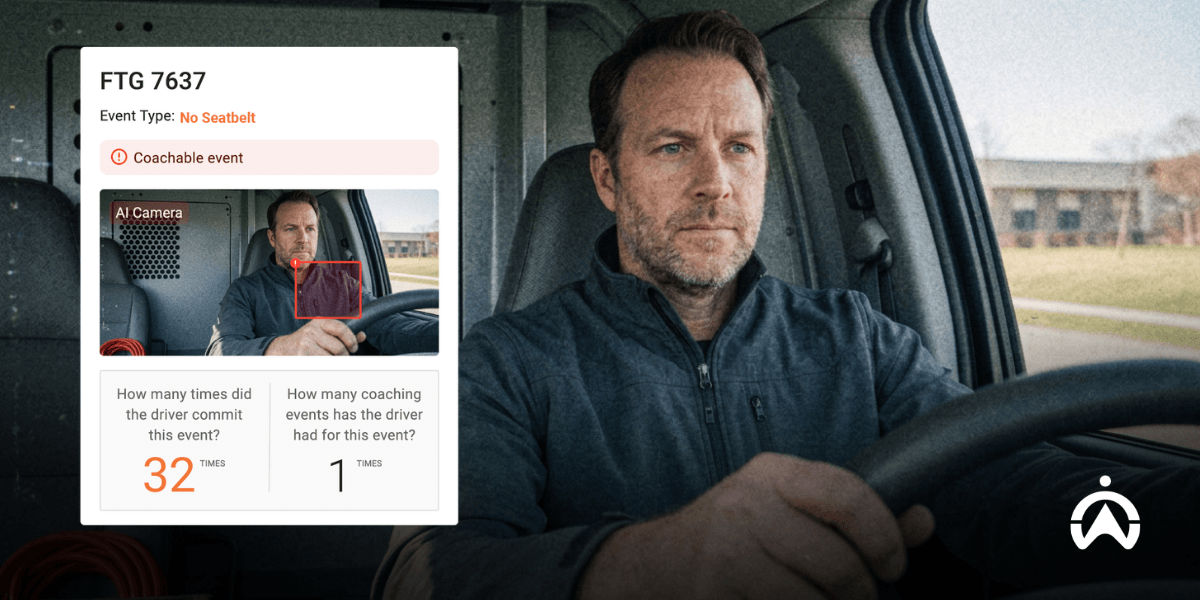
Getting AI cameras for seatbelt and phone detection for drivers is the perfect way to transform safety protocols in your fleet. AI detection can monitor poor driving habits, alert drivers so they can quickly correct their actions, and keep records of offences so you can coach your drivers if they repeatedly commit them.
According to reports from the Malawi Police Service, road accidents remain a significant challenge, with nearly 1,900 crashes recorded in the first half of 2025 alone. While road conditions and vehicle issues play a role, human factors such as distracted driving, mobile phone use, speeding, and failure to follow traffic rules continue to contribute to many preventable incidents. For businesses operating fleets, implementing smart fleet technologies and vehicle cameras can help reduce risky driver behaviour, improve safety, and prevent avoidable accidents from turning into costly financial losses.
Don’t get caught without the right safety measures in place. Learn more about seatbelt cameras, the importance of AI in detecting distractions, and how Cartrack can give you the ultimate safety boost.
How do AI cameras work to detect seatbelt and phone use?
AI cameras work to detect seatbelt and phone use by tracking and tracing the actions of the driver and, in some cases, the passenger. The AI component of camera technology is responsible for flagging violative actions, analysing the flagged images and videos, recording them as an offence, and notifying the driver & fleet manager.
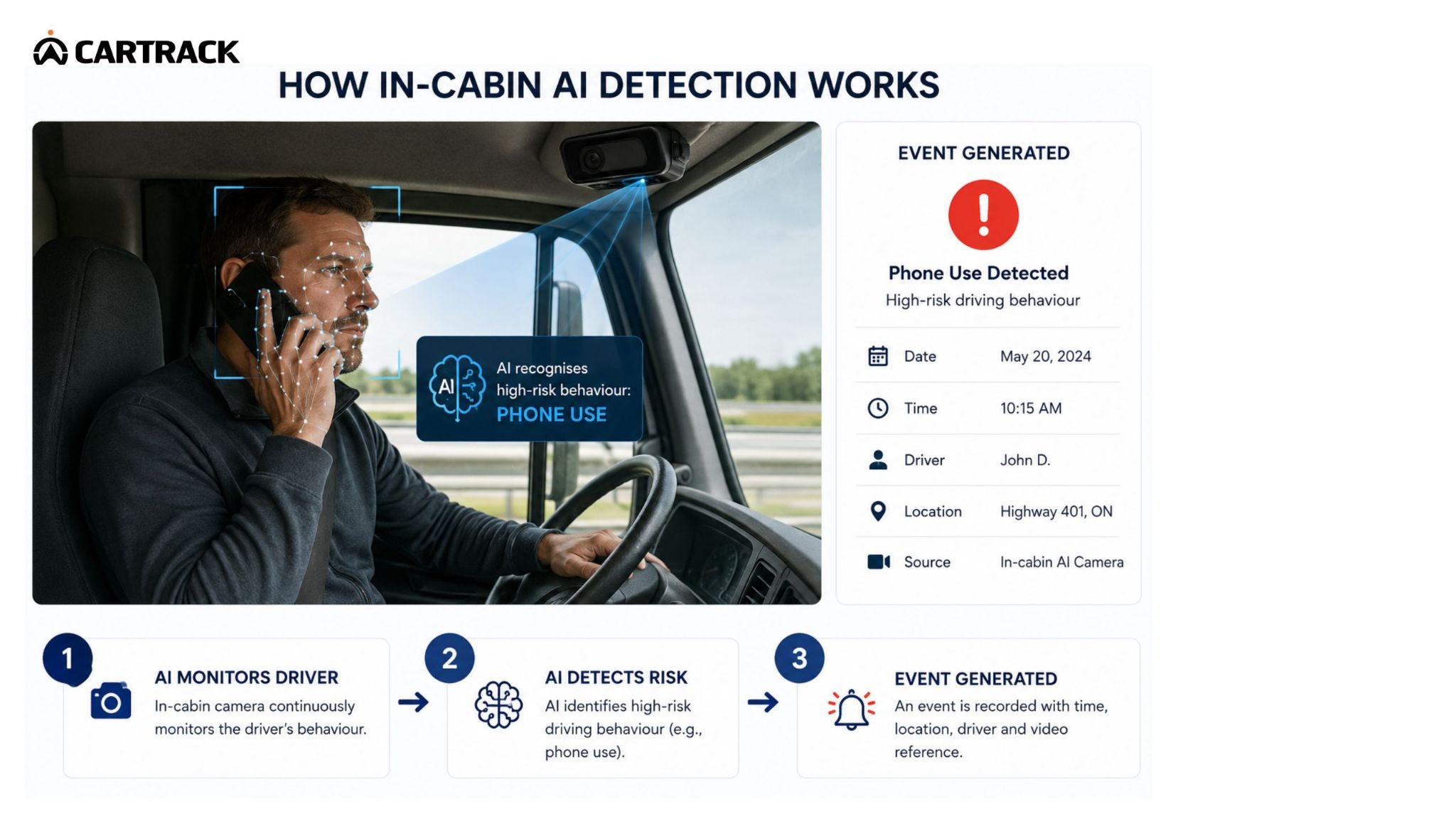
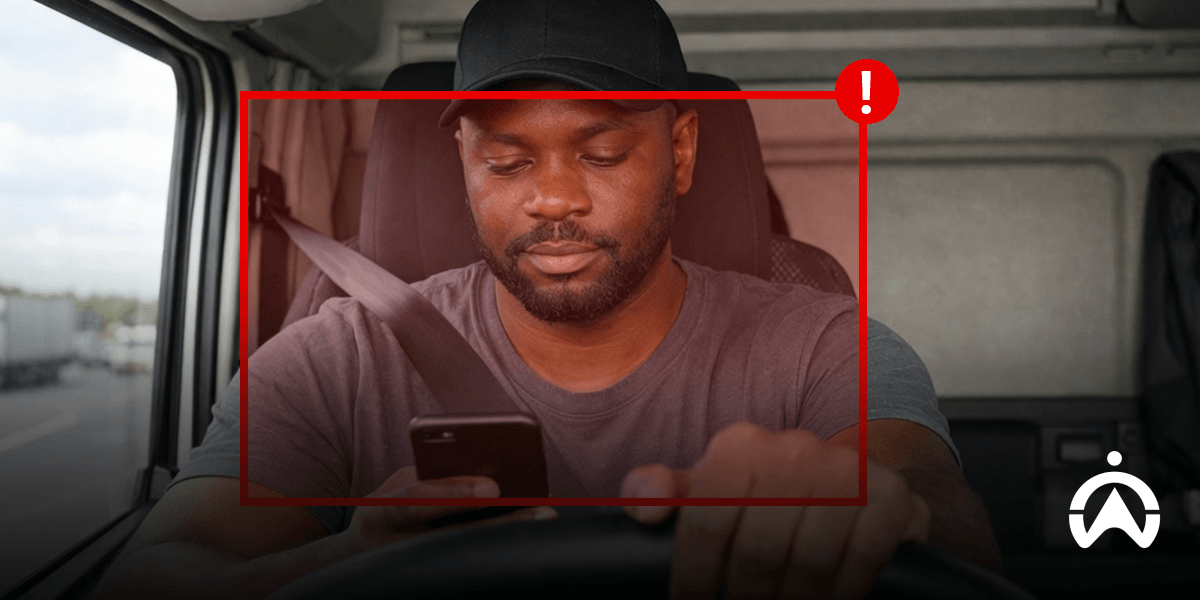
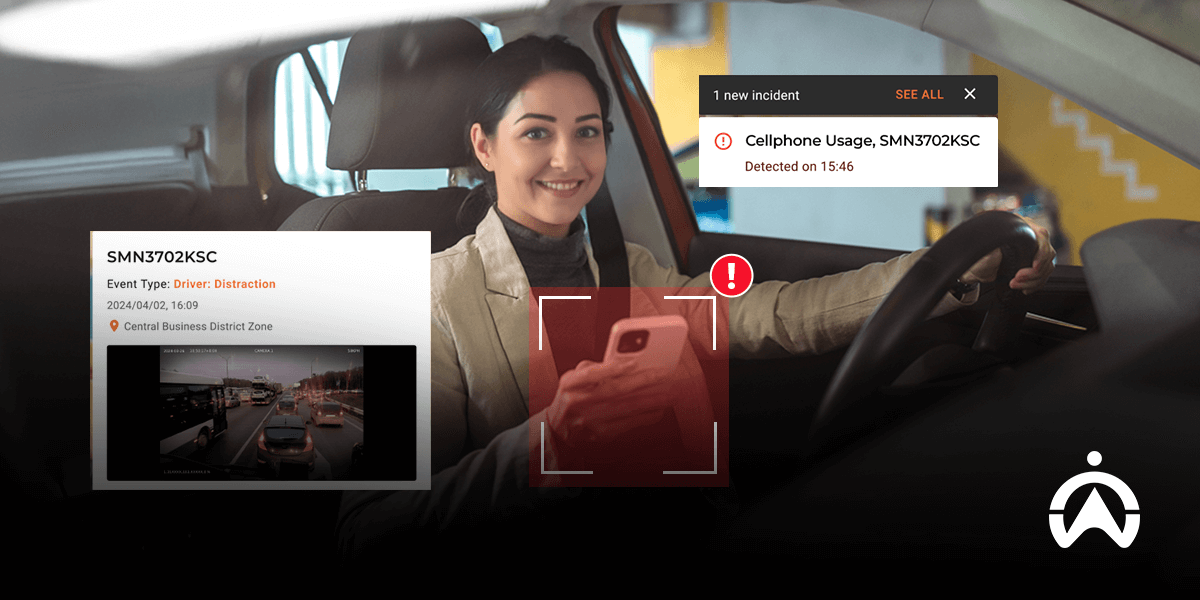
A typical in-cabin AI detection system works by identifying high-risk driving behaviours and generating an event. For example, if your driver is on the road and they bring their phone up to their ear for a call, AI will recognise that as phone use and record it as an event.
Here’s an illustration to give you an idea:
It’s understood that AI doesn’t always get it right. AI is still a computer, and computers recognise patterns rather than specific situations in context. The wrong lighting or an everyday object could mess with the AI’s ability to process an image or just confuse it for something else.
While this may be the case, this technology continues to develop and progress every day.
Rather err on the side of caution and make sure your safety measures are up-to-date than risk a vulnerable fleet.
Why are fleets using AI technologies for distraction detection?
Fleets are using AI technologies for distraction detection because they want to move from reactive to proactive safety management. This move also allows you to empower yourself and your team, confident that innovative tech is keeping you ahead and compliant.
Here are some significant reasons fleets adopt AI technologies:
Proactive safety management
While standard dashcams are perfect for capturing what happens on the road and inside the cabin, they don’t take the extra necessary safety step that AI cameras do. AI cameras take away the need for you to carefully watch hours of footage just to see how your drivers behave on the road.
With AI cameras triggering event alerts as they happen, this means drivers can correct their actions in real time. This minimises the chances of incidents and accidents, positively snowballing into better insurance rates and fewer legal issues.
Driver retention
When you’re taking every measure possible to ensure your drivers are safe and looked after, they understand that they’re valued as employees. You’re showing them that you’re interested in their safety, well-being, and growth. This kind of careful investment can increase driver retention, keeping drivers loyal to your business.
Are seatbelt cameras on the cards for Malawi?
Yes, seatbelt cameras are on the cards for Malawi. Seatbelt cameras are different from in-cabin, fleet AI cameras in that they’re government-owned roadside cameras with AI capabilities. The cameras are high-resolution and elevation-angled, taking pictures through the windscreen, and the AI technology is meant to analyse the images for an offence.
The cameras consistently scan every car driving by. If there’s no offence, the systems will dismiss the scanned image. If there’s a potential offence, independent human reviewers will look over the image and confirm it.
This system has been piloted, although the government is still seeking legal approval for a full rollout. During the trial period, the system was able to issue fines to motorists, but those were subsequently thrown out once challenged by motorists.
While the country waits for the seatbelt camera to be greenlit, your fleet can’t afford to wait. You can take matters into your own hands and make things safer for your drivers, your business, and other motorists.
Protect your fleet: Does Cartrack offer AI cameras for seatbelt and phone detection?
Yes,Cartrack does offer AI cameras for seatbelt and phone detection. In fact, our AI technology extends beyond that, monitoring and keeping a record of:
🥱 Fatigue (yawning, eyes looking away or closed for too long)
✋ Covering the cabin camera
🚛 Speeding
🚚 Front collision (measuring the distance between your driver’s vehicle and the vehicle ahead of your driver, because if the vehicles are too close, an alert will be sent to help avoid a potential crash)
🚭 Smoking
Drivers are audibly alerted in real time so that they can quickly correct their transgression. They can also get a gentle jolt from our Seat Vibrator, which acts as an additional warning for drivers who may’ve missed the audible alert.
The physically disruptive technique of the Seat Vibrator is an especially powerful feature for your long-haul drivers who are likely to face extreme exhaustion. It gives them time to react accordingly, either coming back to their senses and regaining focus or pulling over to the nearest and safest stop.
What’s more…
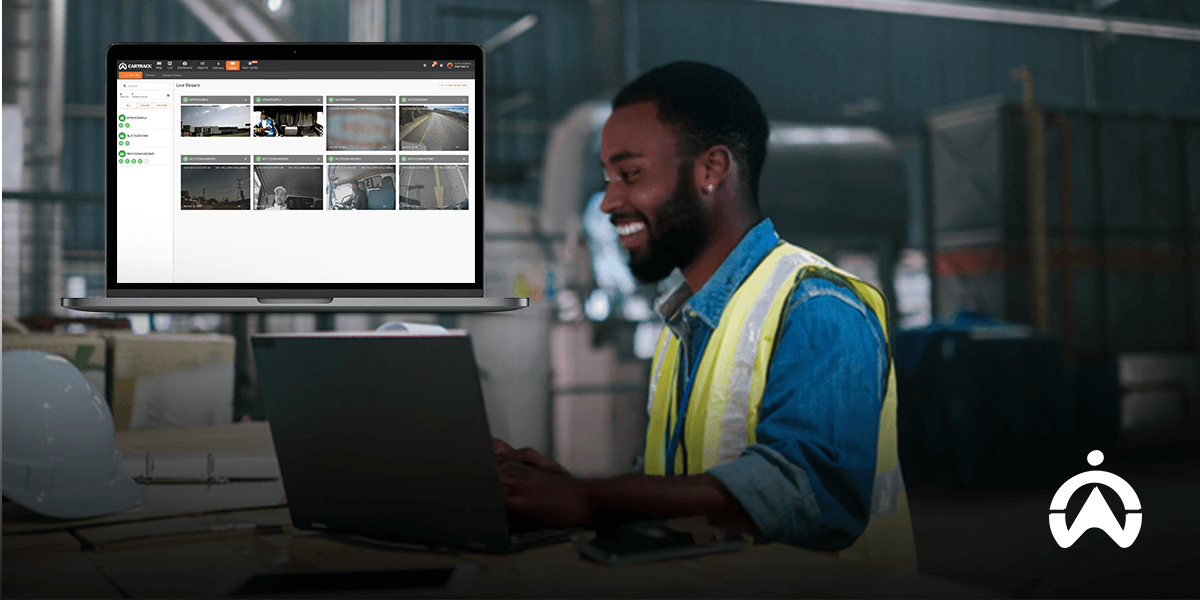
As part of our AI camera offerings, you can get up to 8 external cameras to monitor spots around your fleet vehicle and cargo doors. You’ll also be able to livestream footage so you can check in on your drivers and also view or request footage.
Cartrack’s in-cabin system ALREADY consistently reminds your drivers to buckle up and stay off their phones. So, when it’s time for the government-implemented seatbelt cameras to roll out, your fleet will be fully compliant and steering clear of any fines.
Final takeaway: The ultimate safety net
Malawi is taking a huge leap forward in road safety. With the number of fatalities that occur on our roads each year, it’s no wonder the country is looking towards intelligent technologies to promote preventative actions and accountability for drivers. But while the country waits for the legal go-ahead, you can take safety matters into your own hands.
Cartrack gives you the power to implement seatbelt, phone, and other distracting-habit detections through our AI-powered camera solutions. You can stay ahead in protecting your team, your assets, and your company’s reputation—all from one platform.
Don’t allow blind spots in your fleet. Speak to a Cartrack consultant today to see how we can protect your fleet and its most precious assets, one kilometre at a time!
Frequently asked questions about seatbelt and phone detection
Do seatbelt cameras use AI?
Yes, seatbelt cameras do use AI. The AI component of these cameras is used to scan motorists and check whether they (and their passengers) are using their seatbelts correctly. The cameras are high quality, and AI is used to analyse the imagery and verify that the seatbelt is draped across the chest of the driver and passenger.
Can mobile phone and seatbelt detection cameras detect if I am adjusting the volume of my music?
No, mobile phone and seatbelt detection cameras can’t detect if you’re adjusting the volume of your music. They’re meant to detect cell phones in your hand or in obvious areas, like resting in your lap. It’s important to mention that AI detection technologies can make mistakes, and if it flags, a reviewer can dispute that detection.
How can I prove drowsy driving?
To prove drowsy driving, you must:
Collect all circumstantial evidence (photos, dashcam footage, and witness statements), because proving exhaustion can be tough
Use the police report, which will hopefully include the investigating officer’s examination
Combining Cartrack’s camera solutions with our telematics bureau services is a massive operational boost for your fleet. While the bureau services manage your fleet on your behalf, adding cameras to the mix gives you operational visibility, allowing you and our bureau to see events in real-time or after the fact.
According to Inc.com, around 51% of companies already outsource their fleet management services to companies like Cartrack Malawi. The benefits of doing this are vast, and we’ve covered this topic before in our article about fleet management bureau outsourcing.
But today we’re going to show you why adding cameras to your telematics outsourcing puts you way ahead as an organisation.
How is outsourcing fleet management better than in-house fleet management?
Outsourcing your fleet management to a bureau service can be better than doing it in-house because you’ll have someone monitoring your fleet 24/7. While this service also does everything else an in-house fleet manager can do, you bypass having to pay a salary and hold a person or team accountable yourself.
So what does a telematics bureau actually do for your company?
Professional risk management
The experts at Cartrack Malawi are carefully trained to see and address risks in real time. The purpose of this is to take every step possible to prevent a crisis, meaning you can rest easy while our team does the risk-prevention for you.
Route planning and route optimisation are daily necessities that save your company on fuel costs and vehicle wear & tear. Again, it’s a full time job. Paying someone a salary to do this job is an option, but for many companies it’s much cheaper to leave it to our professionals at Cartrack Malawi.
If you’re more of a hands-off kind of manager, we’ll send you tailored notifications as often as you want—about what you want. This could be every hour, every two hours, per day, or weekly. It’s all up to you. We can also collect these into monthly or bi-weekly reports, giving you a full picture of how your fleet is performing.
How does adding cameras to telematics enhance your fleet?
Adding cameras to your existing telematics enhances your fleet by adding much-needed operational visibility to events that would otherwise be words or numbers on a screen. Events like accidents or poor driving behaviour are often subjective, so having video footage is a total game changer for telematics.
We will provide evidence if someone attempts a crash-for-cash scam against your driver.
We’ll even detect fatigue in your driver and alert them to the danger.
What makes Cartrack’s camera and telematics bureau services so advanced?
Cartrack’s camera & telematics bureau services are advanced as a combination because they provide statistical reports as well as visual representations of what happened. Cartrack’s technology is the gold-standard for both fleet management and video telematics, so choosing us is a sure win for your fleet.
What do you get when you choose Cartrack Malawi?
Choosing Cartrack Malawi gives you the option of both basic telematics and camera telematics from one service provider. Installation of our devices is always free, and you only pay for the services we offer.
Simply put, each of your vehicles will receive a tracking device, a vehicle camera setup, and possibly a CANbus clamp (which helps us diagnose your vehicle health and other useful metrics). With all these IoT (Internet of Things) installed, here are some of the Cartrack Malawi service options you can choose from:
Basic bureau services (we manage your fleet on your behalf and send you regular reports of its performance).
Camera telematics monitoring (we check on your drivers and let you know how many times each of them have exhibited fatigue, phone use, non seatbelt use, or eating & drinking while driving).
Vehicle diagnostics (we let you know when your vehicles need maintenance based on their real-time health).
Route optimisation (we give your drivers the best possible routes so they use less fuel and get to their destinations faster).
Vehicle recovery (if your vehicles get stolen or hijacked, we’ll have a team ready to start the recovery process).
What is Cartrack Malawi’s reputation?
Another reason to choose Cartrack Malawi for this all-important service is because of our reputation. See for yourself what other companies have said about our fleet management services. With a trust index as high as ours, you’ll be hard-pressed to find a more reliable fleet service company.
Why trust Cartrack Malawi with your assets?
But there’s one more reason to choose Cartrack Malawi, and this has been one of the main reasons so many fleets trust us with their vehicles. Our recovery rate of stolen vehicles is super high. Our team isn’t just standing by to recover stolen vehicles, they’re completely dedicated to succeeding too!
Is outsourcing your camera and telematics needs right for you?
To know if outsourcing your camera and telematics needs is right for your business, ask these questions:
Can I afford to hire a fleet manager?
Do I need a team to manage my fleet?
Do I need eyes on my fleet 24/7?
Do I have an appropriate risk management strategy?
Can I accurately report to stakeholders?
Depending on your fleet’s setup, it’s usually much cheaper to outsource your fleet management than to hire an in-house person. For the price you pay, you also get a team of experienced technicians rather than just one person.
And the best part? If you pay a small extra fee, you get the camera benefits too!
Just call us and we’ll give you more info about how this all works.
Frequently asked questions about Cartrack’s camera and telematics bureau services
How does telematics know when a car is being driven?
Telematics software can pick up when your car is driving because devices have been connected to the vehicle. A GPS tracking device is one way to tell your car is being driven, another is through a CANbus clamp which reads the computer of a car and provides detailed vehicle activity.
Are there any disadvantages to having telematics in my fleet?
There are never disadvantages to having telematics in your fleet because it makes managing your vehicles and drivers so much easier and less time consuming. Challenges that might arise include driver buy-in and staff push-back, but these can easily be overcome and don’t outweigh the benefits of having telematics.
Telematics and a black box | Are they the same?
No, telematics and black box are not strictly the same, but they are related. “Black box” is a term used for the hardware used to read your car data. The data itself is the telematics, which is the interpretation of that data that enables you to accurately report on important performance metrics and make decisions accordingly.
Can telematics accurately track driver behavior?
Yes, if you combine camera technology, vehicle diagnostics and GPS tracking, they provide a powerful picture of what your driver is doing and how they’re driving. These three things work together to piece the following together:
The past few years have seen the introduction of Artificial Intelligence (AI) to the masses, becoming one of the most talked about innovative technological products. Many industries have adopted this new technology as a step toward digitising all their processes.
Camera systems are no different; they too have been integrated with AI features and capabilities. This means cameras can now do more than just record and store footage.
Let us learn what the best practices are when implementing AI camera systems and how Cartrack is one of the leaders in this transformation, with their advanced AI-driven video telematics solutions.
In this article, you will:
Learn about AI cameras in fleet management
Find out the needs to consider before implementing them
Discover how to choose the right AI camera
Find out the best practices for implementing AI cameras
Best Practices for Successful Implementation of AI Camera Systems
Successfully integrating AI cameras into your fleet requires a strategic and structured approach. Start by defining your safety and operational goals first and use that framework to find a compatible system. Installation, training for all of your drivers, and ongoing technical support are crucial for maximising the technology’s impact. By following best practices, businesses can enhance safety, efficiency, and compliance while minimising resistance and disruption.
Assessing Fleet Needs Before Implementing AI Camera Systems
Before incorporating AI cameras into a fleet, a business must first figure out what challenges it wishes to address and what the ultimate objective will be. In the Malawi transport sector, obstacles include a high incidence of accidents, instances of fuel theft, and inconsistency in road infrastructure.
Four questions to consider before implementing an AI camera system:
What risks facing your fleet will AI cameras help with?
How can real-time driver coaching and monitoring help with safety?
Will the camera systems help the business with compliance and reporting?
By addressing these questions, fleet managers can tailor their AI camera strategy to align with their operational goals.
AI Camera System Installation Best Practices
Adding AI camera systems to your fleet requires some considerations to be made. These considerations should align with the best practices in the industry and should also serve to achieve the business’ strategic goals. This is why implementing a camera system that can integrate with a fleet management program is vital. Integration with fleet management software ensures data flows seamlessly into operational dashboards, making it easier to navigate the system and see what is happening.
Let’s look at some of the other best practices when implementing an AI camera system.
Compliance measures that you can consider include:
Access control
Managing who has access to the footage is important if you want to maintain privacy. Fleet managers and compliance personnel should be the only people authorised to retrieve and review the videos. Basing access on role, as well as using secure login credentials will keep sensitive information from leaking or being seen by unauthorised people.
Clear policies
Malawi Data Protection Act compliance requires clear policies to be in place, this should cover video footage, personnel access, and the conditions under which the video should be retrieved and reviewed. Trust will be built with drivers when these policies are shared and explained to them.
Data encryption
Video footage should be encrypted to prevent breaches or unauthorised viewing. Having this technology ensures that sensitive information remains secure and is not used maliciously. Unfortunately, not all AI camera systems provide this capability and will depend on the specific company’s product offering.
Training Drivers and Fleet Managers
Understanding how these cameras work may require some members of the staff to get training, which is why proper training is essential for the successful adoption of AI camera systems. Providing adequate training for system operators and users will become necessary, especially for those who will be using it regularly. Raising awareness about ethical AI usage should also be considered as there will be some legal guidelines to follow.
Conduct Pilot Testing
Before the AI camera system is installed across the board, a test will need to be done to see how the system functions. This will mean testing systems in controlled environments to identify potential issues and functionality problems. This testing can be done by both managers and, in the case of fleet management, drivers as well. You will need to gather feedback from the pilot testing phase and then refine deployment strategies accordingly.
Leveraging AI for Driver Safety
AI cameras are revolutionising road safety by proactively identifying and alerting drivers about risky behaviours. By using advanced algorithms and real-time monitoring, these systems detect potential hazards before they escalate into accidents. This not only protects drivers but also reduces operational costs associated with collisions and liability claims. Here’s how AI cameras significantly enhance driver safety:
Fatigue Driver fatigue is a leading cause of road accidents, often resulting from long hours behind the wheel or inadequate rest. AI cameras can detect tiredness through indicators such as excessive blinking, yawning, or head nodding. Once these behaviours have been identified, the system generates an instantaneous alert for the driver, informing him that he needs to stop. This ensures that accidents due to fatigue are prevented, while also allowing fleet managers to enforce safe driving schedules.
Distraction
Distraction is another metric that AI cameras measure, this is usually smoking or cell phone use while driving. It is these distractions that often lead to bad judgement on the road, resulting in accidents or bad decision-making. AI Cameras assist by flagging these behaviours as they happen and notifying the driver so that can self-correct.
AI-powered cameras greatly assist with incident investigations by providing evidence in the event of any accidents, thefts, or insurance disputes. AI camera systems tag notable incidents automatically, allowing for safe storage and easy retrieval of vital footage. In doing so, the risk of important details going missing is reduced and the investigation process speeds up.
Here are some more applications for AI cameras beneficial for fleet operators:
Accident analysis: High-resolution footage accurately reconstructs events for determining the fault.
Insurance claims: Claims can be backed with video evidence, speeding up processing while preventing disputes.
Fraud prevention: Good-quality incident footage can deter false claims and fraudulent conduct.
Integrating AI Cameras with Fleet Management Software
Fleet managers can now integrate telematics from an AI camera into their fleet management software, which will reflect an integrated real-time perspective into fleet operations. This will allow companies to access a single platform for the analysis of driver behaviour and vehicle performance. This integration includes:
Live-streaming capabilities: Fleet managers can view live footage, enhancing situational awareness and enabling rapid response to emergencies.
Comprehensive reporting: Detailed dashboards provide insights into driving patterns, vehicle utilisation, and safety trends, supporting data-driven decision-making.
Automated alerts: Real-time notifications for risky behaviours, such as speeding or harsh braking, allow proactive intervention to prevent accidents.
This integration not only improves safety and general operations but also enhances compliance and reporting.
Continuous Monitoring and Improvement
Regularly evaluating system performance and making necessary adjustments is necessary and will need to become a standard practice. This will aid in keeping the system in check and functioning in top condition. Staying updated with technological advancements and regulatory changes also assists in making sure that your camera system is still aligned with all the legal requirements as and when they are changed or updated.
Choosing the Right AI Camera System
Not all AI cameras are equal. Fleet management teams looking to adopt them need a solution to ensure safety and compliance while maximising operational efficiency. The most ideal AI camera will deliver quality video data, intelligent analytics, and seamless integration into cloud applications while also being flexible enough to scale as the size of your fleet increases. Here are the factors that need to be considered when choosing the best AI camera system:
Video Quality
Clarity is everything in incident review and driver oversight. High-resolution AI cameras deliver crystal clear images that allow fleet managers to assess road conditions, and external hazards with an unerring eye for detail. Clear video also strengthens liability protection, helping businesses dispute false claims and reduce insurance costs.
AI Analytics
AI camera systems do more than just record footage. They analyse driver conduct in real-time. These smart-systems detect dangerous behaviours, including smoking, harsh braking, fatigue, and the use of mobile phones. These events trigger alerts that notify the fleet manager in real-time. Fleet managers use these insights to identify risks early and take proactive measures to prevent accidents and improve driver performance.
Cloud Integration
Traditional in-vehicle cameras rely on manual data retrieval, which is inefficient and time-consuming. AI cameras integrated with cloud storage capabilities allow fleet operators to retrieve video files remotely. This allows for incident resolution, insurance claims, and compliance audits to all be handled quickly.
Scalability
As your business grows, so should your AI camera system. It should easily connect to new vehicles, additional drivers, and changing fleet demands in the future. It could be a few vehicles or an entire fleet across the country, your AI camera system should be able to grow with you.
Key Features of AI Camera Systems
AI-powered fleet cameras offer a range of advanced features, including:
Feature
Benefit
Real-time monitoring
Provides instant visibility into driver behaviour
AI-driven alerts
Notifies fleet managers of risky driving practices
Cloud storage
Ensures secure storage and quick retrieval of footage
GPS integration
Syncs with location tracking for better oversight
By adopting these AI-driven capabilities, fleet operators gain access to actionable insights that improve decision-making and reduce operational risks.
Benefits of AI Camera Systems
Implementing artificial intelligence cameras comes with many benefits, both for the business and the drivers. These benefits are applicable to businesses and fleets of all sizes. Let’s have a look at what some of them are:
Enhanced Safety
Security is an important part of running a business where you have employees on the road. This security can relate to the vehicle, the driver, and the cargo that is on delivery. AI camera systems promote safer driving by detecting risky behaviour and instantly alerting fleet managers to potential safety violations. This leads to a safer journey overall.
Improved Incident Investigation
In the event of a collision between vehicles, there is often a back-and-forth on who is to blame for the accident. Most of this uncertainty is based on the opposing testimonies of the drivers in question. AI cameras provide indisputable video evidence, reducing disputes and expediting insurance claims.
Operational Efficiency
AI camera systems that come with driver behaviour monitoring can track and measure how often the driver engages in bad driving habits. These habits, such as idling and harsh acceleration, can lead to high fuel costs which could increase the business’s operational expenses. Identifying these issues helps reduce the financial toll they incur on the business in the long run.
Data-Driven Decision Making
The information and analytics gathered from these AI camera systems can be compiled and put together as a report to reflect the fleet and driver’s performance. These reports can then be used to inform future business decisions regarding deliveries, driver safety, and cargo control measures.
Cost Reduction
Artificial intelligence cameras have an indirect impact on business costs, reducing them when used correctly and wisely. The management of fuel costs, the reduction of insurance premiums, and the mitigated legal disputes all add up to significant savings on the business front. These expenses would have otherwise been slowly racking up over time, compounding as the business grows and fleet size increases. Having this additional cash redirected to more meaningful expenses can be a reality when these camera solutions are used well.
Addressing Challenges and Resistance to AI Cameras
While AI cameras may provide safety and efficiency in fleets, some companies and even drivers may be reluctant to adopt them. Privacy concerns, cost factors, and inherent resistance to change stand as common queries. These concerns are valid but do come with solutions, let us see them below:
Feature
Benefit
Real-time monitoring
Provides instant visibility into driver behaviour
AI-driven alerts
Notifies fleet managers of risky driving practices
Cloud storage
Ensures secure storage and quick retrieval of footage
GPS integration
Syncs with location tracking for better oversight
Addressing these concerns proactively ensures smooth adoption and long-term success.
Measuring ROI and Performance Improvements
If ever a new piece of technology is being implemented the cost should be greatly considered, especially seeing how it will bring its return on investment. The initial investment in this technology should match the long-term benefits, in this case, AI cameras are very much worth it. The initial cost is marginal compared to how much potential income it will recoup from mitigating expenses associated with bad driving.
An added benefit is that these camera systems last for very long times and only occasionally need maintenance and repairs. Meaning that the rewards can be reaped for many years to come for only an initial installation fee and affordable monthly subscription.
Future Trends in AI Camera Technology
AI-driven fleet monitoring is developing fast with new technologies emerging yearly. One of these is edge AI, an artificial intelligence and edge computing that enables an autonomous device to process data locally, rather than on a cloud server. If businesses want to thrive in the future, then they need to find ways of bringing this advancement into their fleet management, especially when using AI camera systems.
Another development in this space has been the integration of 5G with AI. AI algorithms can use 5G information to suggest the best networks to connect to; this means that bandwidth can be allocated accordingly to address bottlenecks in internet usage. Having this innovation will greatly assist a business that has implemented this technology.
Why Cartrack is the Ideal Partner for AI-Powered Fleet Monitoring
Cartrack offers AI-powered cameras and live stream camera technology. You get to monitor your fleet with road and cabin-facing AI dashcams, getting up to 8 internal and external cameras to help keep your drivers, fleet, and cargo safe. Additionally, you can detect high-risk driving behaviour in real-time using artificial intelligence, as well as G-force and GPS data.
Cartracks Vision dashcams come in a variety of solutions, from single-cam, dual-cam to multi-cam options. These camera’s are AI-powered and use telematics to track events such as distraction, smoking and yawning to name a few. When the ignition is off, the camera will continue recording for 5 minutes before going into Standby Mode. Once in deep sleep, the camera will no longer record and any footage and retrieval be unavailable.
With Cartrack’s camera solutions, you can also keep your drivers safe with preventative in-cabin voice alerts that let them know about potential safety violations so they can correct them immediately. You can also use recorded footage of your drivers to coach and train them on how they can improve their driving behaviour and increase their safety on the road.
All these features will make it easier to keep the drivers compliant with the company driver policies and national road rules and regulations. Implementing these cameras will need to be in accordance with the POPI Act and other privacy regulations.
Take Control of Your Fleet Today
The world is changing and so is the technology in it. It is no longer enough to just work with the bare minimum and expect stellar results. If you want to take your business to the next level and have peace of mind about your fleet and drivers then getting AI powered cameras is the way to go.
If you are looking to improve the safety and operations of your fleet, then you should consider Cartrack. Contact us today to get a quote or to hear more about our full AI camera offering.
FAQs
Do AI cameras work in all weather and lighting conditions?
Yes, most advanced AI camera systems, including Cartrack’s, are designed to function in various weather conditions and low-light environments. You can expect clear resolution in all circumstances.
What industries can benefit from AI camera systems?
AI cameras can work for industries such as logistics, construction, public transport, and last-mile delivery. Any business that has a fleet of vehicles can benefit from using this technology.
How much storage is typically needed for an AI camera system?
The AI cameras at Cartrack have up to 1 terabyte of storage which amounts to 164hrs capacity.
What should I do if my AI camera system shows faults?
If ever you detect any faults in the footage or recording system itself, you will need to contact the service provider. They will either get it repaired or replaced subject to the terms and conditions of the device warranty terms and conditions. Doing this will ensure that the AI camera system is accurate.
 South Africa
 Botswana
 Kenya
 Namibia
 Mozambique
 Nigeria
 Swaziland
 Tanzania
 Zimbabwe
 Hong Kong
 Indonesia
 Singapore
 Malaysia
 Philippines
 Thailand
 New Zealand
 Vietnam
 Poland
 Portugal
 Spain
 United Arab Emirates