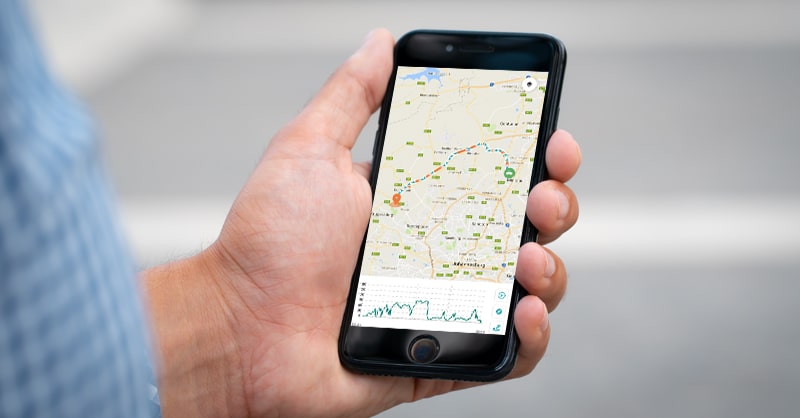
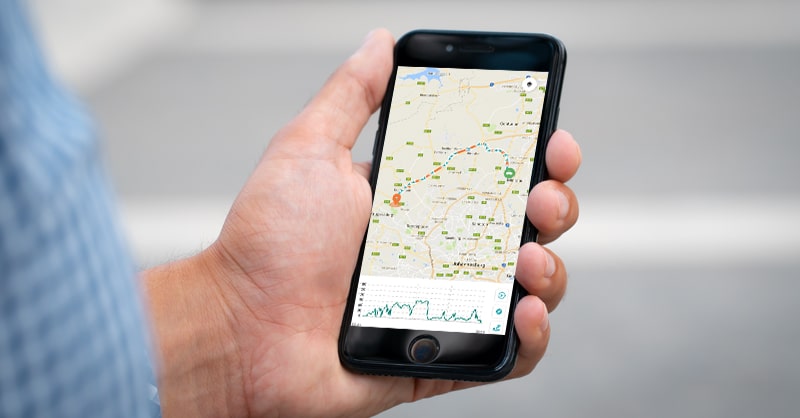
Types of Vehicle Tracking System

Whether you drive a private vehicle or manage an entire fleet, investing in a reliable tracking system is crucial for safety, efficiency, and overall peace of mind.

There are many ways to track vehicles, and not all tracking systems are equal. Some are better suited for urban fleets, while others excel in remote logistics.

It is important to pick the system that best suits your needs. Today, we look at the different types of vehicle tracking systems and why our solutions should be your top pick.

In this article, you will:

  • Understand the true meaning of a vehicle tracking system
  • Learn about the various types of vehicle tracking systems available
  • Find out how to choose the best one for you
  • Discover the various vehicle tracking solutions that Cartrack has to offer

What is a vehicle tracking system?

A vehicle tracking system (VTS) is an electronic solution designed to enhance vehicle safety and help fleet businesses improve productivity levels by monitoring vehicle locations and other data. The system connects fleet management software with vehicle tracking devices, which allows it to gather information about the vehicle and its driver.

Vehicle tracking systems have become popular over the years as the technology continues to reach new levels. This must-have solution comes in various forms, configurations, and sizes. Let’s explore and understand each of them.

Common types of vehicle tracking systems

Choosing a tracking device that best suits your needs can be difficult if you don’t know the options available and how they work. Let’s explore the different types of vehicle tracking systems:

1. Active tracking systems

These vehicle tracking systems are usually installed inside the vehicle, connecting to a power source that enables the collection and transmission of data in real time. The data is then stored and can be easily accessed in real-time via software.

Here are a few examples of active vehicle tracking systems and how they work:

  • Cellular network tracking systems
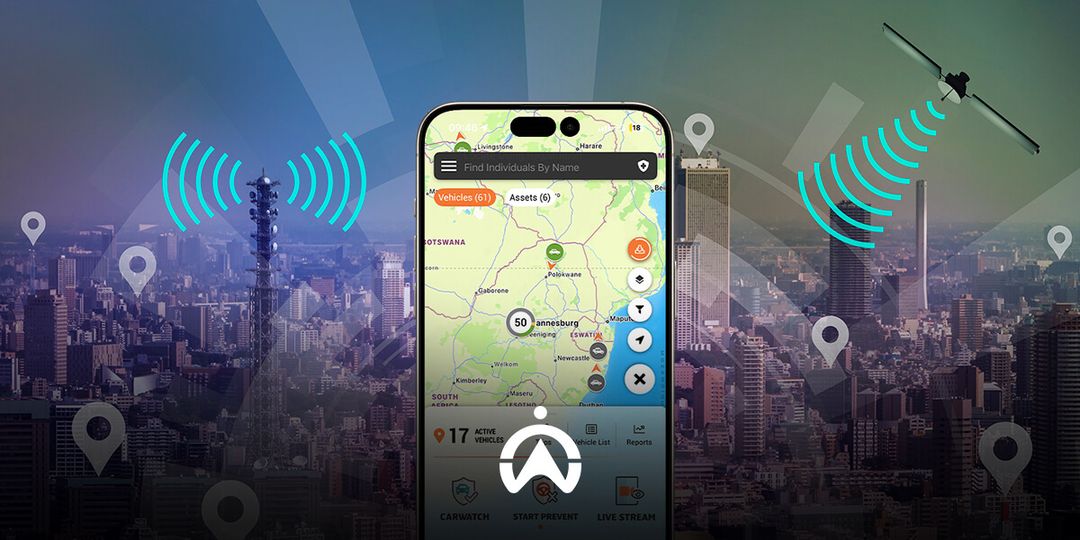
    This is a method where mobile networks are used to transmit the tracked data in real time; the data from the device is sent to a cellular tower, which then conveys it to a service provider over an internet connection. Cellular network tracking systems work best in areas with good mobile network coverage. The range for this form of vehicle tracking system can extend across cities and countries, depending on the coverage by the network provider. Cellular network tracking systems are ideal for people living and travelling in urban areas with good signal coverage.
    ‍
  • ‍Satellite tracking systems
    In order to understand satellite-based tracking, you first need a brief understanding of the Global Navigation Satellite System.The Global Navigation Satellite System (GNSS) is a satellite-based tracking system that uses satellite networks such as the Global Positioning System (GPS) to collect and transmit data from a tracking device. This fascinating technology uses time signals broadcast along a line of sight to let electronic receivers calculate their location with great precision. This method of vehicle tracking is therefore more reliable, making it an ideal solution for fleets and individuals operating in remote areas with limited mobile network access, as the coverage is more reliable and offers exceptional accuracy.
    ‍
  • ‍GPS-based tracking systems
    GPS-based vehicle tracking systems and satellite-based systems are interrelated but are not exactly the same thing.The key difference is that a GPS tracking system is satellite-based, but not all satellite-based tracking relies solely on GPS. An article by Online Science explains how there are other satellite navigation technologies, each managed by a different country, such as GLONASS (operated by the Russian Federation), BeiDou (operated in China), and Galileo (operated by the European Union). GPS was developed and is operated by the United States of America, and is the most commonly used.
    GPS trackers are ideal for individuals for personal safety and for fleet businesses for vehicle monitoring.
    ‍
  • ‍OBD-based tracking systems
    Another form of active tracking is OBD-based technology. This approach involves plugging a device into the vehicle’s On-Board Diagnostics (OBD-II) port. The device is easy to install and allows fleet managers to have access to crucial information such as vehicle health, mileage, and fuel levels, helping enhance fleet efficiency. OBD trackers allow both fleet managers and private car owners to monitor risky driving behaviours such as speeding and harsh braking, making them the perfect solution for both personal and business purposes.
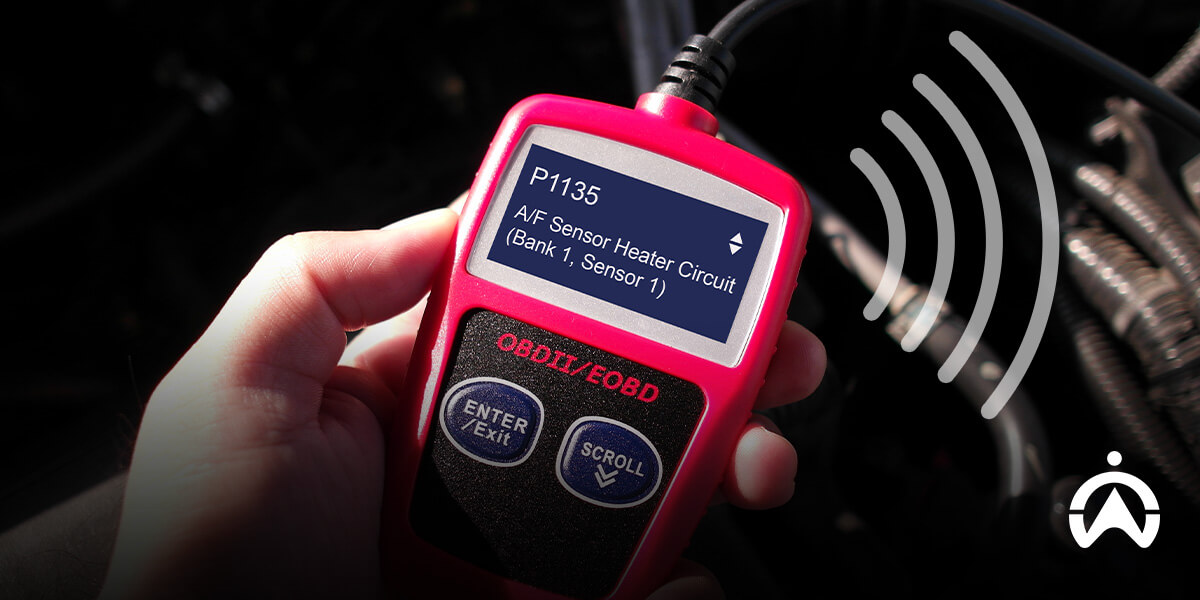
‍OBD-based tracking systems

2. Passive tracking systems

Passive vehicle tracking systems also make use of GPS to track vehicle location. The only difference is that you can’t get real-time updates in a passive system. They record the data and store it in a memory card or hard drive for later access. Once connected to a computer, the data will be available for users to view. This type of tracking is ideal for users who need access to historical trip data rather than real-time updates.

3. RFID-Based Tracking Systems

An RFID tracking system is one that is based on radio frequency identification technology. It can track and identify vehicle locations in real-time as well as record entry and exit information. The system is composed of three components: a tag, a reader, and vehicle tracking software. The tag is attached to the vehicle, and the reader emits a radio signal that activates the RFID tag; the software is then responsible for data storage and analysis. This type of technology has a short range and is an ideal solution for driver identification or tracking in indoor environments such as warehouses.

4. Internet-based (IoT-enabled) tracking systems

IoT, or the Internet of Things, integrates sensors and connectivity technologies such as Wi-Fi, cellular networks, and satellite communications to enable advanced vehicle tracking and remote diagnostics. The sensors and GPS devices collect information from the vehicles, and the data is then transmitted via the internet to a central platform. From there, the data is processed and turned into easily understandable information for fleet managers. This technology helps with predictive maintenance, finding optimal routes for deliveries, real-time monitoring and alerts, driver behaviour analysis, and much more.

A table comparison of the different tracking systems

An easy way to understand the key differences between the various types of vehicle tracking systems is through a table. Here’s a quick breakdown:

Type Technology Used Range Real-time? Use in Case
Cellular Mobile networks Wide Yes Real-time tracking in urban areas
Satellite GNSS (mostly GPS) Global Yes/No (can do both) Theft recovery, fleet management
RFID Radio Frequency Short (meters) Yes Warehouses, driver tags
OBD-II OBD port, GPS, Cellular Wide Yes Vehicle diagnostics, driver behaviour, fleet management
IoT-based Sensors, GPS, Cellular, IoT Global Yes Advanced fleet analytics, automation

How to choose the right vehicle tracking system

The best vehicle tracking system for you depends on your specific needs. Here are some factors to consider:

  • Budget and ROI: Most individuals require basic tracking services, such as Stolen Vehicle Recovery and the ability to view vehicle locations at any time. Additional features, such as driver behaviour monitoring or advanced analytics, are considered an extra layer of protection and will depend on how much you are willing to spend. On the other hand, businesses look for vehicle tracking services from an investment point of view. The price is not a huge concern, but the savings and profit as a result of improved productivity are what matter the most. Fleet managers should look into the type of data they require the most to boost profits.
    ‍
  • Intended use: The solutions you choose will also depend on the intention. For example, delivery fleets require advanced solutions such as route optimisation capabilities, driver alerts, driver identification, and preventative maintenance. Personal vehicles are typically tracked for theft prevention and to ensure the safety of family members.
    ‍
  • Area of operation: If your vehicle is constantly in remote areas, then you need a solution that can give you accurate location updates and data regardless of the low network coverage.

Cartrack case study: Mr Build

Mr Build is a well-known hardware store that specialises in woodworking, timber, plumbing, cement, and a wide range of home decor. They have a workforce of 200 across seven branches and a fleet of about 40 vehicles that deliver their products to customers.

Their main challenge was keeping track of where drivers and vehicles were during deliveries. They could not pick up any signs of drivers experiencing delays, which meant customers could not be updated on deliveries.

How Cartrack vehicle tracking solutions transformed operations:

  1. Our vehicle tracking system allows Mr Build to see exactly where their vehicles are at any given time. They also get detailed history reports of all completed trips. This also means they no longer waste time and resources trying to call and locate drivers.
  2. The live-location tracking feature allows Mr Build to manage delivery updates and inform customers. There are now a limited number of unnecessary route deviations, boosting productivity and promoting driver accountability.
  3. As an extra layer of security, Mr Build has added our CarWatch feature to their package. When activated, this feature acts as a virtual car guard and alerts Mr Build and our 24-hour control room service the moment any unauthorised vehicle movements occur on parked vehicles.

“Cartrack helps us monitor the fleet much better, I always know where all the vehicles are. There’s no part of the day when I have to look for a vehicle or driver. If I can’t get a hold of the driver, I know where the truck is.” | Mohammed Haider Yacoob, Manager – Mr Build, Tzaneen

Satellite based vehicle tracking system

Explore our vehicle tracking solutions to find the right fit

Cartrack makes use of most of the above-mentioned tracking technologies to give you solutions that you can access all on one platform. Here’s what we offer:

  • ‍GPS live-tracking
    Always know where your vehicles are at all times. Cartrack devices use both satellite and cellular technology to ensure that you get accurate location updates, monitor driver routes, view location history, and ensure safety and efficiency.
    ‍
  • ‍Stolen Vehicle Recovery
    Vehicle theft remains a concern in Malawi. In the unfortunate case of vehicle theft, Cartrack offers a stolen vehicle recovery service available 24/7 to ensure a swift response. We have skilled air and ground recovery teams available nationwide that are always on standby, plus we boast an average recovery rate of 90%.
    ‍
  • ‍Driver monitoring
    Our IoT-powered tracking devices give fleet managers the ability to keep an eye on driving behaviours such as speeding, harsh braking, excessive idling, rapid acceleration, and harsh cornering. Fleet managers will get alerts on these behaviours as well as detailed reports. Through this, managers can identify drivers who need training, which in turn promotes safer driving, reduces the chances of accidents, and helps the business avoid lawsuits and bad driving reviews.In addition, we have Driver Identification tags (DID), which help fleet managers instantly identify who is driving which vehicle. Preventing unauthorised drivers from using the wrong vehicles and also promoting driver accountability.
    ‍
  • ‍Crash detection
    Having instant access to your vehicle location also helps in situations where you need emergency services, such as an ambulance. As an extra layer of protection and through the power of our IoT-powered device, we have a crash detection service that allows us to detect collisions as they happen. From there, we will contact you or your loved ones and then send help.
    ‍
  • ‍Preventative maintenance
    Our advanced solutions help fleet managers keep a careful eye on vehicle maintenance; through this, they can get alerts on things such as worn-out brake pads, oil and water fluctuations, and engine health. This allows for a swift response before the issues get worse, reducing the chances of unexpected breakdowns, unplanned downtime, and costly repairs. It also helps the fleet remain compliant.

Invest in Cartrack vehicle tracking solutions today!

Cartrack is one of the leading companies in the vehicle tracking industry. We offer advanced features that cater to vehicle owners of all kinds. Whether business or personal, you will most certainly find what you need in our solutions. Reach out to us, and we’ll help you choose the best vehicle tracking system for you.
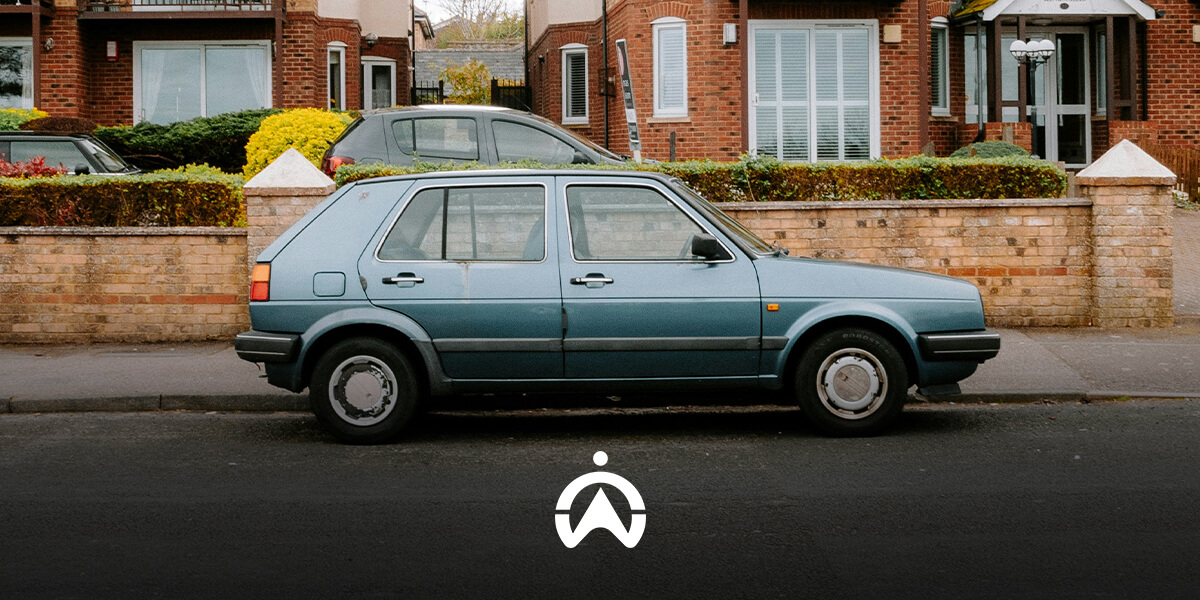
Are Old Cars Less Likely to Be Stolen?

Are older cars less likely to be stolen? It depends. Some people may think that older cars are more likely to be targeted because of their age. The truth is, it doesn’t matter whether a vehicle is old or new, there are various reasons why vehicles may be at risk of being stolen.

In this blog, we discuss whether old cars are more or less likely to be stolen, share useful safety tips, and explain how Cartrack’s vehicle tracking systems can help you keep your vehicle safe and sound.

In this article, you will:

  • Find out if old cars are less likely to be stolen
  • Learn effective ways to secure your car from theft
  • Explore the different ways Cartrack can help you protect your car

Are Old Cars Less Likely to Be Stolen?

Car theft is a major concern for car owners, regardless of their make and model, and you might be wondering whether older cars are less likely to be stolen compared to newer models. There are many factors that put a car at risk of theft, and the age of a vehicle is just one of them. Here are a few reasons an older car may be the likely pick in some cases:

Demand for second-hand parts in the black market

Older cars have a timeless appeal that many still enjoy, especially popular ones. Criminals steal these vehicles, strip them, and sell their parts, which include the engine and the interior. These are then sold on the black market for a profit.

High Resale Value

Many car enthusiasts love the nostalgia that comes with vintage or limited-edition cars. These cars are very popular and in high demand because they are unique collector’s items. As a result, they may be targeted by criminals because they are easy to sell.

Lack of security features

Old vehicles lack the advanced security features that are present in newer cars. These are features such as immobiliser remotes and motion sensors, and the lack of these features can make them an easy target for theft compared to newer models.

Cloning

Criminal enterprises target vehicles to sell their parts and are used for other illicit activities. Criminals alter the identity of stolen vehicles by creating fake documents, putting up fake number plates, and changing the VIN. In some cases, they may spray the car a different colour, making it harder to trace and allowing them to commit other crimes without detection.

Vulnerability due to lack of security systems

Many old classics from the 80s and 90s still roam the streets today, but let’s face it, they don’t have the advanced security features that modern cars have. This makes them more vulnerable to theft, which is why security systems such as alarms and vehicle tracking devices are a good investment to protect them against criminal elements.

Cross-border smuggling

Cross-border smuggling is a frequent occurrence in Malawi; reports in recent years indicate that criminal syndicates target older cars and ship them into neighbouring countries such as Zimbabwe and Mozambique. These syndicates use false documents to get the cars into neighbouring countries where they are reregistered and sold, stripped for parts, and in some instances, used to commit other crimes.

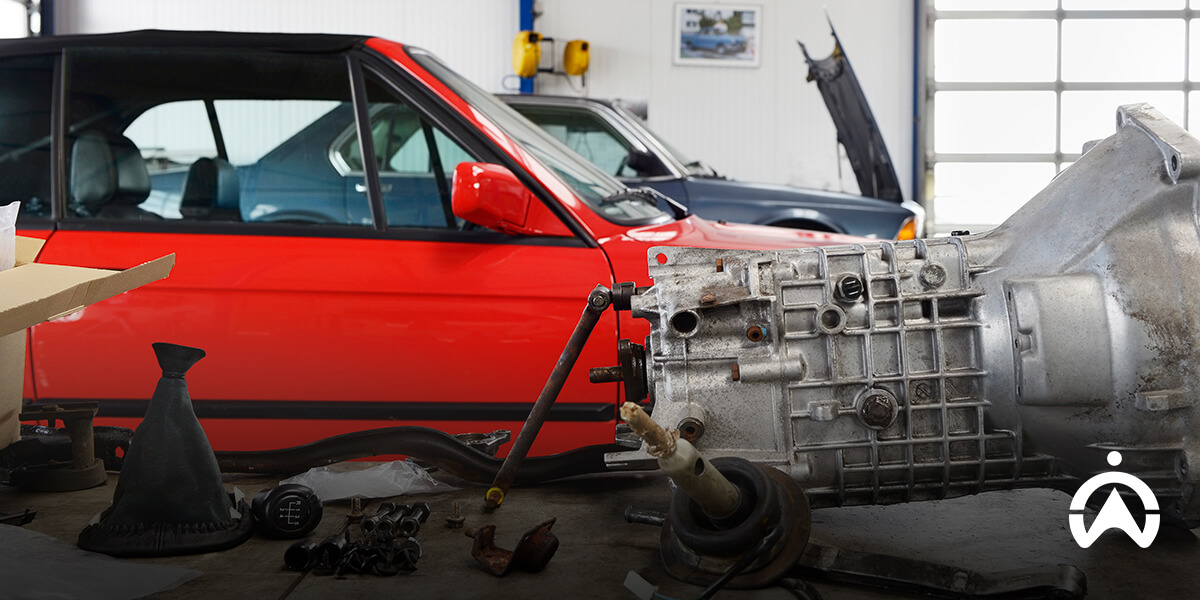
A red car is in a garage surrounded by car parts and tools, including a transmission, with a classic blue car in the background.

Why older cars may be less likely to be stolen

There is a popular saying that says, “There are two sides to a coin.” and in terms of old vehicle theft, it is also true. As much as there are reasons why old cars are more likely to be stolen, there are also factors why they are less likely to be stolen.

Here are the common factors:

Low resale value

Old vehicles have a lower value than newer ones, which means the resale value is much lower. This makes these cars less appealing to criminals wanting to make a big profit.

Less Demand

It may be true that there are old cars that are still popular. However, many old models are less popular, meaning criminals get less for them, which could deter them from targeting the car.

Outdated Technology

Old cars don’t have the modern technology that new ones have. These technologies, such as keyless systems, can be hacked easily, which makes them more attractive to criminals. However, the absence of these technologies in old cars may make them hard to steal.

How to protect your car from theft

Are you wondering how you can go about protecting your vehicle? There are various methods you can use to protect your vehicle. Here are a few you can use to minimise the risk of your vehicle being stolen, whether old or new:

Are you concerned about the safety of your older vehicle? While classic cars and older models can hold sentimental or financial value, they also face increased risks of theft. Fortunately, there are proactive steps you can take to safeguard your vehicle. Whether your car is vintage or simply old, implementing these security measures will help minimise the risk of it being stolen.

Use a steering wheel lock

A steering wheel lock, although an old-school security measure, is a cheap and simple tool you can use to deter criminals. These locks fit directly on the steering wheel, making it impossible to turn it. This is an effective way to discourage car thieves from breaking into the car.‍

Install a car immobiliser

If you own an old car that wasn’t fitted with standard immobilisers, no need to worry. You can purchase one from several companies that sell after-market immobilisers. These anti-theft devices work by disabling the fuel and ignition systems that are used to start the vehicle. This may not prevent a criminal from breaking into your car, but it will stop them from driving off with it.‍

Check that your doors are locked

You may think that this is an obvious one, but many motorists forget to lock their doors, especially when they’re making a quick stop at a local supermarket or petrol station. Before leaving your car, it is recommended that you lock your car and then check every door handle to make sure that it is locked. By doing this, you can protect yourself against possible signal-jamming attempts, which work by disrupting the signal between your remote and your car when you’re trying to lock your car.

Park in a secure area

One of the safest ways to protect your vehicle is to park it in a safe and secure area. When out shopping, park close to where there is security patrolling. In a case where you have to park your car on the street, make sure you park it in a well-lit area where there is a lot of traffic.

Install a car alarm

A car alarm is another effective theft deterrent system; it serves as a way to alert you or people close to your car that there is unauthorised tampering of your car. These systems are considered a good security measure as they are active at all times and go off immediately as soon as someone gains unauthorised access to your car. ‍

Get VIN etching on your car

VIN etching is a cost-effective way to secure your vehicle. It is done by engraving the vehicle’s unique vehicle identification number (VIN) on several parts of your car such as windows and mirrors, to make them recognisable for the authorities.

VIN etching does not guarantee that thieves won’t try to steal a car, however, this method can help police or tracking companies recover the vehicle as it makes identifying and matching the stolen vehicle with the registration documents easier.

Install a GPS tracking system

Installing a GPS tracking system in your old vehicle is crucial and one of the best things you can do for your peace of mind. This technology protects against theft and provides recovery services in the event your vehicle is stolen.

A masked individual in black clothing crouches by a car, peering intently through the window, suggesting an attempted theft.

Why choose Cartrack to protect your vehicle?

Using the tips above is a great way to protect your old car and keep criminals at bay. However, there is an even more effective way to protect your vehicle, and that is by installing a tracking device.

Investing in a vehicle tracking system like Cartrack is more than just a safety measure. It’s a choice to ensure your peace of mind. They are one of the country’s preferred tracking companies boasting an over 90% stolen vehicle recovery rate, ensuring that you are covered and supported at all times. Here’s how:

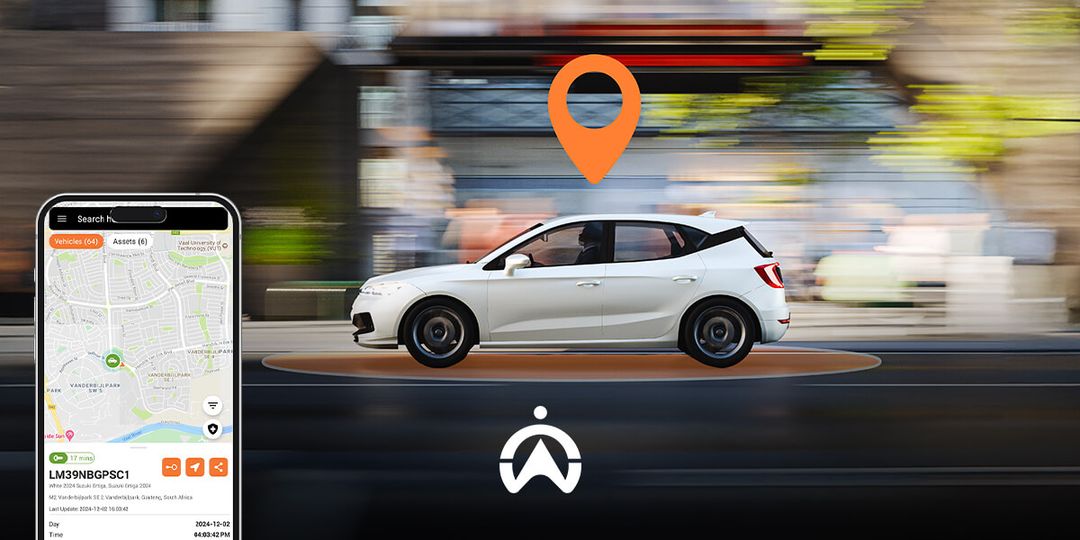
  • Real-time tracking: Whether you drive your vehicle regularly or use it occasionally. Cartrack GPS tracking devices enable you to track your vehicle remotely, wherever you are. This is a great tool to have when you have loved ones driving the vehicle. Advanced GPS technology uses satellites to pinpoint the accurate positioning of your vehicle. So it doesn’t matter where the car goes; you can always keep an eye on it.
    ‍
  • 24/7 support and recovery services: The theft of your vehicle is a traumatic event, especially if you don’t have any support. With Cartrack, you have support through our emergency support team 24/7. We are ready to assist you in the unfortunate event of vehicle theft or hijacking; they react promptly by dispatching a ground team to ensure a fast response.
    ‍
  • CarWatch: CarWatch is a feature you activate via the Cartrack App. Once activated, it keeps a virtual eye on your car while you’re out living your life. When there is unauthorised movement of your car an alert will be sent to you and Cartrack’s control room to find out if everything is okay.

You may think that old cars are less likely to be stolen, but the reality is that they remain a target of theft. By familiarising yourself with the risks and using the security tips provided, you can minimise the chances of your vehicle being stolen.

Cartrack’s vehicle tracking systems are a reliable solution to protect your vehicle; it doesn’t matter how old it is, it will be covered.

Make the move and safeguard your car today. Contact Cartrack now!

FAQs

Q: Are there specific car types that thieves prefer?

A: Yes, there are vehicle types that are targeted frequently, such as sedans, hatchbacks, and coupes.

‍Q. Are certain car colours targeted more than others?

A: The colour of your car may not be a major reason why your vehicle is targeted. However, common colours like white, black, and silver may be more attractive to thieves as they can blend into surrounding traffic or congested roads.‍

Q: Can I install modern, advanced security features into my old car?

‍A: Yes, most security features, such as immobilisers, GPS tracking systems, and alarms, are compatible with older vehicles and are a great addition to your vehicle’s security.‍

Q: Will installing a tracking device in my old car reduce my insurance premium?‍

‍A: Yes, it will. When you install a tracking device in your vehicle it increases the chances of it being recovered in the event it is stolen or hijacked. This is a factor that insurance companies consider that reduces your insurance premium.

10 Common Myths About Vehicle Tracking

The vehicle tracking industry is somewhat mysterious, have you ever wondered how much of what you have read or heard is true?

Many myths surround vehicle tracking, with some saying it isn’t necessary, and others saying it doesn’t work and is a waste of money.

This blog will debunk some common myths about vehicle tracking systems and explore how Cartrack can always protect you and your vehicle.

In this article, you will:

  • Debunk myths about vehicle tracking
  • Explore the benefits beyond theft recovery
  • Understand how GPS tracking technology works
  • Discover the importance of choosing a reputable provider like Cartrack
  • Find answers to common questions about vehicle tracking

Debunking Myths About Vehicle Tracking

Vehicle tracking systems have gained popularity over the years, especially due to the rising crime rate in Malawi. While many people are becoming desperate to safeguard their vehicles, others still hold onto misconceptions about vehicle tracking.

It is important to clarify misconceptions, such as the assumption that these tracking devices are unnecessary or are the same. By doing so, we can ensure that those who genuinely need them receive the appropriate protection.

Let’s look at 10 common myths about vehicle tracking:

Myth 1: Tracking devices are only for Stolen Vehicle Recovery (SVR)

Although stolen vehicle recovery is a significant aspect of vehicle tracking, it isn’t the only purpose. These technologies are designed for a wide range of uses that enhance safety, improve driver behaviour, and provide you with emergency services if needed.

At Cartrack, we offer more than SVR, Cartrack’s Protector provides you and your loved ones access to 24-hour medical and roadside assistance. Our 24-hour legal assistance line is available for any legal services, including roadside incidents such as roadblock arrests.

Myth 2: Tracking devices can be easily disabled by thieves

While there are methods that thieves may use to disable tracking devices, advanced tracking devices with advanced technology make it increasingly difficult for them to do so successfully.

Cartrack tracking units are not only discreetly installed, but have anti-jamming technology. In the event of a thief using a jamming device to block communication between the tracking system and the cellular network, we can switch to RF frequency, which allows us to continue communicating with the vehicle.

Myth 3: Tracking devices don’t work for motorcycles or other smaller vehicles

Unfortunately, thieves do not discriminate against the vehicles they hijack, from big cars to motorcycles and smaller vehicles; they are all at risk. In fact, there was a recent raid by Belville police where they discovered a hoard of motorcycle parts wrapped in a warehouse with an estimated street value of over R1 million.

This further stresses the need for tracking systems no matter your vehicle’s size. Cartrack’s Bike Track ensures that your motorcycle is protected at all times.

Myth 4: Insurance companies don’t consider vehicle-tracking devices when calculating premiums

Insurance companies tend to offer drivers lower premiums if they own a tracking device. This is because the tracking devices increase the chances of your vehicle being found and retrieved if it gets stolen. Ultimately making these vehicles less risky to insure.

So, insurance companies do consider vehicle-tracking devices when calculating premiums.

Myth 5: Vehicle tracking is only necessary in high-crime areas and areas with poor network coverage

While some areas may be considered safer than others, it’s important to remember that risks still exist everywhere; it doesn’t matter if the area is deemed safe or has poor network coverage. That’s why having a reliable tracking device is a smart choice no matter where you are.

Man gesturing with hand raised, holding a phone in a city street.

Myth 6: Car Tracking devices cannot provide insights beyond location

Modern vehicle tracking systems like the ones at Cartrack offer a range of features and data that extend beyond just location tracking. With the integration of mobile Apps and GPS telematics, you can view your past trips, monitor your driving behaviour, receive speeding and even request emergency services with Cartrack’s Protector.

Myth 7: Vehicle tracking systems are unnecessary since we can use our smartphones

Many people believe that smartphones can track their cars. Their GPS capabilities and applications that use this technology led them to this conclusion. However, this is far from the truth. The apps are designed to locate lost phones or track your loved ones for safety, not to monitor vehicles. This works because people are often on their phones but aren’t always in their cars, hence these apps are ineffective for vehicle tracking.

Instead, consider using a dedicated app with telematics from a reputable vehicle tracking and recovery company like Cartrack, which has a stolen vehicle recovery rate of over 90%. The Cartrack App has a feature called CarWatch, which detects and reports unauthorised vehicle activity when activated.

Myth 8: Once installed, tracking devices don’t require any maintenance

You do need to check if your device is working optimally. Otherwise, you will only notice when you really need it. For example, you discover that your vehicle is stolen but find out that it cannot be tracked and recovered because your unit was faulty all this time. This can leave you disappointed.

At Cartrack, we encourage our customers to test their units every three months. Additionally, our customers can opt-in for our Lifetime Maintenance Warranty, where we deal with all the maintenance required if needed.

Myth 9: Tracking devices drain the car battery quickly

Modern GPS tracking devices have their own batteries. Cartrack units typically draw a small amount of power from the car battery when the ignition is on, however, it is not enough to impact the battery.

Myth 10: Tracking devices are complicated to use

Tracking devices are installed in your car by a qualified technician so you do not have to worry about installing them yourself. Many tracking companies offer an easy-to-use mobile app so customers can access value-added services beyond tracking. You simply download the app, log in, and then you’re good to go.

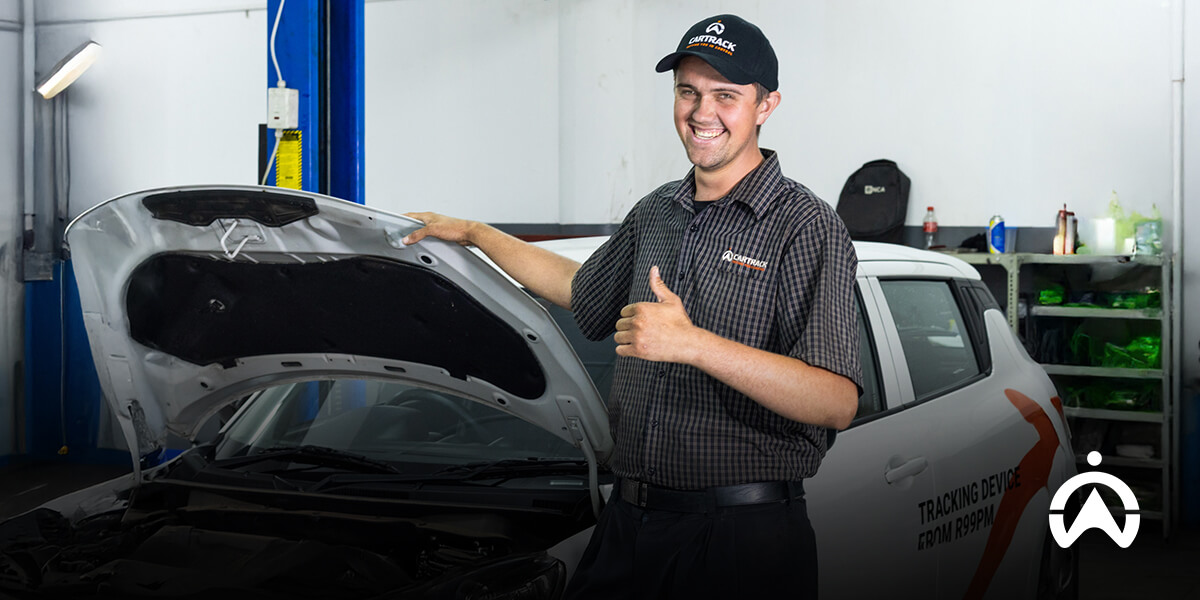
Cartrack Technician gesturing a thumbs-up next to an open car hood in a garage.

Additionally, our customer care agents are always ready to assist with any queries you may have. Contact Cartrack’s customer assistance line at 011 250 300 or clientservices@cartrack.com.

In this day and age, false information is easily spread especially through social media, and the topic of tracking solutions is no exception.

This is why it’s important to question what you hear and read; not everything is as it seems. Take the time to verify facts and choose a reliable service provider—one that understands your unique needs like Cartrack.

Looking to feel more secure on the road? Contact us today! Find out how our vehicle tracking solutions can debunk myths and keep you and your vehicle safe.

Frequently Asked Questions about Vehicle Tracking

Q: What should I do if my vehicle is stolen despite having a GPS Tracker?

A: You need to call our agents who are available 24/7, so they can dispatch the recovery team. You must then report the theft to the nearest police station where the crime occurred and produce the necessary vehicle registration information. Proceed to inform your insurer.

Q: What if criminals steal my car and flee the country with it, can it be recovered?

A: Yes, there is a high chance that your vehicle will be recovered if you choose the Cartrack tracking unit that has international roaming, allowing tracking locally and internationally. In areas with no GPRS/GSM coverage, the unit can store up to 5000 positions and events like ignition changes every 3 km of travel or deviations of 10 degrees or more. 

Q: Is there a warranty for my tracking device? 

A: Our tracking units have a one-year warranty. Additionally, you can purchase Cartrack’s Lifetime Maintenance Warranty, our technicians will repair any faults without charging you call-out fees or repair costs.

Contact our Client Services Department on +265 999 971 972 if interested in this value-added service.

7 Ways to Prevent Your Car From Being Stolen

Imagine leaving your local shopping centre, only to find your parked car vanished into thin air. Your first thought would be that maybe you forgot where you parked and so you look around, but as time goes on, you finally come to terms with the fact that your car has been stolen. That’s a reality that a lot of motorists have had to face which is why you need to know how you can possibly avoid that.

Today, we look at the different ways you can save yourself this trouble and how Cartack makes it all easier for you.

In this article, you will:

  • Learn the 7 ways you can prevent your car from being stolen
  • Read more on vehicle theft crime stats
  • Find out more about the different vehicle theft tactics
  • Discover where stolen vehicles end up
  • See the advantage of having Cartrack by your side

It’s no secret that vehicle theft in South Africa is an ongoing problem and that there is a high demand for stolen vehicles in the illegal market. The South African Police Service reported a rise in hijacking incidents across all nine provinces, with 5973 cases in the third quarter of 2023/2024. This calls for all motorists to find ways to avoid this sort of situation.

Here are 7 ways you can prevent your car from being stolen

This is how you can save yourself from the inconvenience:

  1. Lock your car
    This might sound obvious, but many people forget to lock their cars when they get out. Although the new vehicle models lock automatically even if you don’t do so immediately, it’s always better to check it yourself and be 100% sure. Thieves are always on the lookout for easy access and an unlocked car for them is like hitting the jackpot.
    Also, don’t just click the lock button and walk away, as there have been incidents where the thief sneaks in to hold one door, while an unsuspecting driver gets out of the car, assuming it’s all good. Make sure all doors are locked, not just the one by the driver’s seat.
  1. Use anti-theft devices
    Though not 100% foolproof, these are your first line of defence and could save you hours of going back and forth with the police and an increase in insurance rates after claiming for a stolen car. There are multiple anti-theft devices that you can use to protect your car. Here are a few examples that will save you from the hassle:– Steering wheel lock: Yes, they still work and are making a comeback. Steering wheel locks are low-tech solutions that have been around for many years yet some people have the perception that they are out of date and not as effective. However, recent studies have shown an increase in the purchasing of these devices since the surge of keyless car entries. If criminals manage to get into your vehicle, there should be a physical obstruction that will prevent them from getting away with your car.

    – Immobiliser: This is a security device installed into the vehicle to prevent the engine from starting unless the correct key is used.

    – Faraday pouch: As mentioned above, keyless car theft is a thing nowadays. This is done through something called a relay attack. How it works is that they use two devices, one picks up the signal from your key fob which could even be 100 meters away, while the other device is used to trick your car into thinking the key is nearby. This can happen anywhere from mall parking lots to your own home.
    Two thieves need to be present for this to be properly executed, with one standing closer to your actual keys and the other close to the car. With that said, a Faraday pouch is your best bet at preventing that from happening as it blocks your key signal from being picked up.

  1. Get a GPS tracking unit
    You can count on a GPS tracking unit if the anti-theft devices fail. This GPS vehicle tracking technology is more advanced and ensures that you know where your vehicle is at all times by giving you live location visuals. A tracking unit such as Cartrack’s will not only help you notice quicker that your car is gone but also increase the chances of it being found.
  2. Park in well-lit areas
    Criminals avoid doing things in the light so by parking in a well-lit area, you’re lowering the chances of falling victim. When parking in a busy spot, choose spots that are closer to the security camera if there are any. When going to the mall, use the parking that is secure and paid for instead of just parking it outside.
  3. Don’t leave valuables in the car
    Take your phone, wallet and laptop with you at all times if possible then keep everything else that might be of value out of sight as these make criminals pay attention to your vehicle and they might take the chance. To avoid identity theft as well, make sure you also hide any paperwork that contains any of your personal details.
  4. Strengthen your driveway security
    Whether you park your car inside a garage or just outside in your yard, make sure the area has enough security features to scare away the thieves or make it easier to identify them. Install cameras in your driveway.
  5. Try not to go to high-risk areas
    The most common provinces for carjackings are Gauteng, KwaZulu Natal and the Western Cape. This makes sense as these are big cities that have a lot of people living in them. Now we are not saying don’t stay there but rather know the hijacking hotspots in your province so you can avoid driving there at night more especially.

Know the different vehicle theft tactics

As always, criminals are always finding ways to get your car, whether parked or on the move, here are a few hijacking tactics that you should be on the lookout for:

  • Police impersonation
    This is when the thieves dress up as policemen in order to make you, a law-abiding citizen, stop so they can rob you of your valuables and take your vehicles. There have even been incidents where victims were kidnapped, taken to the ATM and forced to withdraw money from their accounts. If you get stopped by an unmarked vehicle with blue lights or you suspect that you might be stopped by bogus police officers, do not stop, drive to the nearest police station or any busy area.
  • Placing objects on the road
    It could be spikes, rocks or pieces of clothing. Always be on the lookout for any objects on the road that will distract you and force you to stop. Once your vehicle comes to a standstill the thieves will be nearby, ready to take your vehicle, your phone or your money. Avoid driving after dark as this makes it easier to miss the signs.
  • Driveway hijacking
    So you’ve spent the entire day being vigilant on the road while driving and now that you’re home you finally relax? Don’t! Always be aware of your surroundings even when you’ve reached your driveway. Look out for cars nearby, make sure no one is following, and alternate your route home because what they’ll do is corner you while driving into the yard. Another thing you can do is to switch on your indicator two or three houses early as this might make them lose interest and pass you.
  • Tollgate/drive-thru
    This is when the perpetrators use their own vehicles to box you in while in the queue at a tollgate or drive-thru at a fast food restaurant. One car will be at the front and the other at the back. Now how can you avoid this? There’s not much you can do besides paying attention to who is following you.
  • The tap-tap method
    Once again, another way to lure you out of the car. This is when the thieves drive behind you and then slightly bump you, knowing very well that you’ll stop to assess the damage and take their details. The driver will talk to you for a, maybe apologise then boom, into your car they go.

Where the stolen vehicles end up

According to Sabinet African Journals, approximately 60% of stolen vehicles remain in South Africa – especially lower-value vehicles, then approximately 30% of stolen vehicles are taken across our borders – mainly luxury vehicles. Chop shops take the remaining 10% portion. Here’s a deeper look into all three categories:

Stripped and sold

It takes about 30 minutes to completely strip a vehicle and chop shops have an estimated value of about R442 million and there is a high demand for affordable, readily available vehicle parts on the black market. The parts are harder to trace and easier to conceal making them more profitable than reselling the whole vehicle. In an article by IOL, Miway spokesperson Siyakha Masiye told the news reporter that the most frequently stolen accessories include car wheels. wheel caps, car batteries, sound equipment, vehicle mirrors and headlights.

Cloned and sold

Vehicle cloning is when the stolen vehicle is presented as legitimate. At the beginning of this year, Top Auto reported that between 3000 and 5000 cases of cloning are reported each year. How this happens is that criminals copy the VIN of a car that is parked in a public location, take a picture of the license disc then take a standard vehicle registration document and edit it in a software program so the details in the document match their target vehicle. From there, they go to a local number plate manufacturer to print the cloned plate.

These cloned vehicles are then sold to innocent people who believe everything is legit. So when buying a used car, do a background check to avoid falling victim and losing the vehicle and your money once the police find out.  Cloned vehicles are also used as a getaway for committing other serious crimes such as hijackings, kidnappings, and cash-in transits.

Out of the country? Where to?

If it’s not stripped or sold in the country then it goes to the black market abroad. Vehicles move from South Africa into the borders of neighbouring countries, mainly Mozambique, Botswana, Namibia, and Zimbabwe. Concrete fences have now been built in an effort to combat the crime but syndicates have started building makeshift bridges across solid fences because they are on a mission and the show must go on. Cars are seen crossing to the other side in broad daylight and it is said they can go from one country to the other and can get as far as Angola to the Democratic Republic of Congo.

Bonus – The 8th and most effective way to prevent your car from being stolen: Cartrack Malawi

Driving around has become a dangerous sport, always having to watch over your shoulder and all, but luckily Cartrack is here for you. Here’s how:

  • Stolen vehicle recovery 
    In the unfortunate event that your precious ride gets stolen, you can rest assured that our skilled air and ground team will be there to get it back to you. Cartrack has a 90% recovery rate, which proves that we will have your back when you need it the most.
  • Cross-border vehicle recovery
    If your vehicle gets stolen and taken out of the country, we will still have your back. Our GPS vehicle technology supports international roaming, allowing us to track your vehicle internationally.
  • Protector
    Our protector service gives a quick response to emergency services such as medical and roadside assistance. Just flick the button on your Cartrack mobile app, and a service agent will call you or your loved ones to understand and organise the kind of help you need.
  • CarWatch
    All you have to do is go on your Cartrack on your mobile app after parking your car and you’ll get an alert if the car moves without your knowledge. This means you can go about your day worry-free knowing that you will find your car exactly where you left it.
  • Jamming Detection
    For the thieves who think they can outsmart our technology, Cartrack offers signal-jamming detection as a value-added product feature so we can still track the vehicle’s location even when the signal is blocked.
  • Insurance
    Some insurance companies do not cover vehicle replacement if you do not have a tracking device installed, so make sure you get that sorted out first then get insurance. Cartrack makes it quicker and easier for you by helping you find insurance best suited for your lifestyle. You can contact us and we’ll help you find what works for you.
    ‍
  • Cartrack’s Road Vision camera solution
    Get a front-facing camera with GPS tracking technology installed into your vehicle so you can record every trip you make. This will help you document any accidents that you might encounter, plus it will scare away the thieves.
    You’ll have footage of them trying to steal your car so they can be easily identified. The footage can be easily accessed at any time on your Cartrack mobile app. But wait, there’s more—GPS technology allows you to see your vehicle’s live location at all times and you get reports of harsh driving behaviours such as speeding.
  • Limited Recovery Warranty* 
    In the highly unlikely event that your vehicle is not found, you can claim up to R150 000 cash back payment for the replacement of your vehicle. *Ts&Cs apply.

Keep your eyes on the road while we keep ours on your ride

Although it’s important to always be aware of your surroundings, we know it’s easy to get distracted and let your guard down, and that’s why we are here.

‍Contact us today and have one less thing to worry about.

Vehicle Tracking at Its Best 24/7 – The Complete Solution

Whether your vehicles are used in your business to transport materials, perform in-field services, or are mostly used for personal trips and daily commutes, you want to ensure they are always protected no matter what they are used for.

While all roads don’t actually lead to Rome, all advanced safety and fleet management methods will lead you back to vehicle tracking. So, let’s take a deep dive to see exactly how this essential technology works.

In this article, you will:

  • Discover the importance of advanced vehicle tracking for businesses and individuals
  • Understand the technology behind vehicle tracking
  • Learn why vehicle tracking services are essential for businesses
  • Find out how Cartrack stands out in the vehicle tracking industry
  • Read a case study of how Cartrack’s technology benefited a business

Advanced vehicle tracking: A must-have for businesses and individuals alike

Various industries use vehicle tracking tools to track their vehicles’ locations while on the road. From hospitals monitoring their ambulances to security companies tracking their patrol vehicles, This tiny device plays a big part in ensuring schedules are followed, vehicles are safeguarded, tasks are completed, drivers’ work hours are tracked and more.

Private vehicle owners will also be happy to know that GPS technology is not reserved just for businesses and their fleets but has some solid pros for them as well.

While businesses use this technology more extensively to better their fleet and streamline operations, everyday drivers use vehicle tracking more to always know their vehicle’s whereabouts, to keep their loved ones safe and to have peace of mind regarding their vehicle safety.

‍The technology behind vehicle tracking

Like many connectivity IoT gadgets we use, including smartphones and connected cars, vehicle tracking technology is powered by telematics technology, a global positioning system (GPS), a cellular network or radio frequency signals, and ground stations to work and track assets, vehicles and people in real time.

Use GPS’s network of satellites orbiting the earth to determine the positioning of receivers like tracking units and pinpoint the exact geolocation of your assets.

In conjunction with telematics technology, you can receive in-depth information such as:

  • Distance travelled
    ‍
  • Trip history
    ‍
  • Travelling speed
    ‍
  • Mileage
    ‍
  • Vehicle status
    ‍
  • Date and time
    ‍

This data is transmitted using a cellular or wireless network to a cloud-based platform, where the end-user (fleet manager, business owner or everyday driver) can access it on any communication device (mobile phone, tablet or laptop) by visiting a website or installing an app.


Why your business needs vehicle tracking services in Malawi

Let’s face it: Losing one of your vehicles or machinery due to theft or asset downtime is a big blow to your operations and costs. As vehicle theft is a big concern in Malawi, business owners have to consider the safety of their mobile assets and invest in solutions that safeguard them before it’s too late.

A tracking service gives fleet managers the peace of mind they need to boost operations, streamline fleet management, enhance fleet management and more.
‍

Here are some reasons why your business needs vehicle tracking that you can’t ignore.
‍

1. Security and theft prevention

As vehicle theft is one of the top challenges for businesses in South Africa, vehicle tracking technology and stolen vehicle recovery services are features that might be very enticing for businesses. Vehicle tracking services provide an added security measure by allowing for quick recovery in case of theft.
‍

Unfortunately, if you find your vehicles are not where you last parked them, the ability to track them might not be enough. Fleet owners need proactive steps like tracking and recovery services for their assets.
‍

In the long run, a stolen vehicle might cost the business more than buying a new vehicle, with:

  • Increased insurance premiums
    ‍
  • Lost profits due to unavailable vehicles
    ‍
  • Cost of purchasing a new vehicle
    ‍
  • Cost of renting another vehicle to take over activities of stolen vehicle

2. Fleet management

Vehicle tracking makes managing a fleet that much easier. By knowing the location of their mobile assets, managers can monitor vehicle usage, monitor driver behaviour, efficiently optimise routes and reduce travel time for better fuel efficiency.

This is a huge benefit for fleets that operate in logistics. With vehicle tracking, they can reroute deliveries based on traffic conditions or other obstructions and keep to the schedule, ensuring no lost time due to delays and upholding timely deliveries.

3. Improved driver safety

Driver safety and well-being are also top concerns. Vehicle tracking systems can monitor driving patterns and behaviours, informing managers of issues that require monitoring, such as speeding, abrupt acceleration after a complete stop, sudden hard braking and harsh cornering.

Managers can focus their driver training on these areas of concern and reduce the risk of accidents, ensuring the safety of their drivers and other motorists on the road. This can be most useful for fleets that spend most of their time on the road, such as transportation companies, promoting a culture of safety within the fleet.

4. Reduced insurance premiums

Besides the added safety these devices come with, insurance companies use them to offer motorists and businesses enticing incentives.
‍

Insurance companies offer lower premiums to individual drivers and businesses who have vehicle tracking devices installed on their vehicles as it shows a proactive approach to risk management and a commitment to keeping their vehicle safe as they offer a higher chance of recovery if it is ever stolen, which is good news for them as they won’t have to pay out.

5. Increased productivity

Without checking on the whereabouts of your fleet, you have more time to focus on other aspects of fleet management, enhancing overall productivity. Real-time updates on fleet location allow for more precise scheduling and quicker response times to customers.

For a courier company to be able to give you ETAs on your scheduled deliveries, they need vehicle tracking technology showing vehicle location, travel speed and distance. This allows them to update delivery status to the T and efficiently manage customer expectations, ensuring satisfied service.

6. Increased visibility

No more overusing some vehicles while others are left being underused. Vehicle tracking enhances fleet visibility and provides better control and management over your fleet’s activities. This allows for informed decision-making, balanced vehicle usage across your fleet, and updated maintenance needs.
‍
A company such as a rental business can use this feature to stay on track with their vehicle usage to prevent misuse and ensure timely returns and healthy vehicles to get leased out.

7. Compliance

Being informed of vehicle usage, vehicle health, and driver working hours helps the business comply with Malawi transportation regulations and avoid penalties or fines.
‍

One missed maintenance appointment can leave a vehicle vulnerable to potential breakdowns or accidents or even render it unroadworthy. Without keeping track of working hours, you could overwork your drivers for a few hours. Both of these would render you non-compliant with set rules and regulations. Vehicle tracking can save you from these scenarios and costly fines that can accumulate.

There is more to vehicle tracking than meets the eye. Incorporating vehicle tracking services into your operations can greatly streamline your fleet, enhance efficiency and provide cost savings, making them a jack-of-all-trades (and master of all) technology that is invaluable for any business with a fleet.

Discover the power of Cartrack’s versatile technology by learning more about our smart fleet management solutions


Beyond vehicle tracking: What other features make this technology the complete solution for fleet management?

Simply being able to view the live status and location of your vehicles in real time is a huge win, but that’s not where it ends. The technology has evolved over the years to now offer business and fleet owners much more bang for their buck.
‍

Now, fleet managers have the technology to see not only their vehicles’ whereabouts but also their fuel consumption rates, maintenance needs, safety and overall vehicle health and performance.

  1. Fuel management
    While vehicle tracking can inform you of how much fuel is being consumed per trip, Cartrack and its fleet management solutions can take it a bit further by providing real-time fuel readings with their fuel sensors and mileage with CANBus integration.
    Combined with our MiFleet cost management tool, you can track your fleet’s fuel consumption rate, ensure early fuel fraud detection, and better manage how much your fleet spends on fuel by matching fuel slips with fill-up locations, timestamps, and fuel card transactions.

    ‍All this helps you get a clearer picture of your fleet’s fuel economy and budget.

  1. Route planning and optimisation
    If your fleet is always swamped with orders or scheduled deliveries to multiple places around the city and they waste time and fuel struggling to get to every location on time, then Cartrack Delivery can assist.
    This task management tool makes it easier to manage your field service or delivery operations accordingly. Plan your fleet’s routes and efficiently order jobs to streamline each driver’s shift.  Ensure your drivers follow protocol with a digital quality control checklist that includes a customer signature as proof of job completion. These tools combined help reduce travel time and fuel consumption while increasing customer satisfaction.
  1. Driver behaviour monitoring
    Monitor your driver’s actions and driving habits on the road and encourage safe, fuel-efficient driving habits. With vehicle tracking and Cartrack, fleet managers can use trip reports to see how often their drivers practise risky driving behaviour such as harsh cornering, braking, speeding or excessive RPMs and use the driver-specific data for more effective coaching.
  1. Fleet maintenance scheduling
    Running a fleet, you can easily lose track of which of your vehicles need service, which needs small repairs and which parts need to be replaced. Vehicle tracking can provide automated reminders for regular maintenance for all your vehicles.
    For a more hands-on approach, you can use Cartrack’s preventive maintenance and start regularly performing maintenance checks to detect and stop issues early before they grow, become costly and cause breakdowns that lead to vehicle downtime.

Every essential feature a manager needs to run their fleet, all in one Cartrack platform efficiently.


Cartrack: The complete vehicle tracking solution in Malawi

There seem to be as many vehicle tracking companies as there are vehicles. Motorists are spoiled for choice when it comes to companies that can provide this service. How does Cartrack stand out?

Cartrack is a leading provider of vehicle tracking technology and fleet management solutions. We boast an impressive over 90% stolen vehicle recovery rate, one of the highest in South Africa, and we are voted the most trusted vehicle tracing company on HelloPeter.

Cartrack provides more than just your vehicle’s location. We have various fleet management solutions that use vehicle tracking data to assist in improving and optimising any fleet.

  • Smart cameras
    ‍
  • Alerts
    ‍
  • Reports
    ‍
  • MiFleet
    ‍
  • Delivery
    ‍
  • Preventative maintenance

Individual motorists are also catered to with premium vehicle safety features and service to ensure their four-wheeled prized possession is always safe whether parked in the garage or the side of the road:

  • 24/7 control room assistance
    ‍
  • Skilled on-the-ground and air recovery agents
    ‍
  • CarWatch
    ‍
  • GeoFence

The Salt Block & Deli case use of Cartrack’s vehicle tracking technology

The Salt Block & Deli and Baron’s Meat Co. specialise in transporting fresh meat and produce to their clients, for that to be possible, they need trusted vehicle tracking for their fleet.
‍
With Cartrack’s vehicle tracking and route optimisation solutions through Delivery, The Salt Block & Deli achieved on-time delivery and enhanced overall productivity


“[With Cartrack] we can plan our routes, and when we go back and look at the history, we can see exactly how long it took from one area to the next,”

Leriche Beneke, CEO of The Salt Block & Deli and the Baron’s Meat Co.

Take control with 24/7 vehicle tracking solutions

Experience premium vehicle tracking at an affordable price and enjoy peace of mind over the safety of your vehicle(s). We offer free vehicle tracking device installation, no matter the number of vehicles, and we come to you for your convenience.

‍Contact Cartrack Malawi and start today.

Powerful Benefits of the Right Vehicle Tracking System for Business

There’s more to managing a fleet than just tracking vehicles from A to B – look at the bigger picture. Reliable vehicle tracking software can help you easily oversee a large group of vehicles, optimise management operations and drastically reduce fleet costs.

It’s time to make the overwhelming weight every fleet manager carries a whole lot lighter.

Vehicle tracking systems explained

Vehicle tracking is the technology that keeps you informed of your vehicle’s whereabouts at all times, increasing its safety. Thanks to satellites, signals, and a tracking unit, you get a global GPS tracking system that can pinpoint the exact geolocation of your mobile assets at any time. Simply being able to view the live status and location of your vehicles in real time is a huge win.

Manually managing a large fleet of vehicles is often a daunting task. Luckily, with location-based technology, fleet managers can receive interactive and analytical reports in real-time and gain an advantage from using smart tracking solutions.

So, what is location-based technology? It’s GPS – aka a global positioning system. It’s used to track trucks, cars, and other mobile assets you own, like generators, trailers, and cement mixers, all via a tiny GPS tracking unit installed in a discrete location on the company asset.

A tracking unit offers a variety of advantages for fleet managers and their businesses, such as:

  • Seeing the exact location of vehicles in their fleet
  • Reducing the threat of vehicles being stolen
  • Increasing the chances of stolen vehicle recovery
  • Knowing exactly who is driving your vehicles and how they are driving them
  • Assuring your fleet remains within authorised locations
  • Increasing productivity through task management

More than locating your assets, GPS units ensure vehicles are used properly and are left in safe locations when not in use. In the event of vehicle theft, this GPS equipment often ensures its safe return.

So, how are vehicles tracked?

The GPS technology we just discussed above is a satellite-based radio navigation system that relies on ground stations, satellites and receivers to provide real-time data such as a vehicle’s:

  • Live location
  • Distance travelled
  • Travelling speed
  • Time and direction

The data is instantly transmitted using a cellular or wireless network.

This sort of technology is mainly used to increase the security of vehicles and is effective for the smooth functioning of fleet operations. It helps businesses save money and reduce dangerous driver behaviour like speeding or harsh braking.

Knowing the types of drivers in your business also helps, as employing safe drivers can lead to lower vehicle repair costs, which can in turn increase commercial profits and make your business run more efficiently, while reckless ones need further training or management and contribute to increased fleet running costs for your business.

Types of tracking methods

Looking to invest in tracking resources? It is important to first identify what type of GPS fleet tracking system is right for your business.

Here are the two ways you can track your assets:

  1. Active tracking, or two-way GPS: This is an on-the-go tracking system that automatically sends information into a central tracking system as it happens to allow for continuous monitoring and immediate action. This technology can be used to track employee behaviour by providing real-time updates and information on their whereabouts. Another example of active tracking is the GPS tracking used in ride-hailing apps like Uber and Lyft, where the location of the driver and passenger is continuously transmitted to the app’s central system to show pick-up and drop-off.
    ‍
  2. Passive tracking: This stores information within the device itself by gathering the data either internally or on a memory card, showing the exact location history of the device. This type of GPS fleet tracking is used in passive RFID tags on shipping containers or cargo and can provide businesses with the same valuable insights into their operations as above, such as identifying routes, but with the added safety measure of manually downloading the data or collecting the memory card rather than having a 3rd party platform analysing the data.

When deciding on what kind of tracking device will best aid your business needs, there are a few questions you can ask yourself. Do you prefer internally stored data that you can download whenever you want, or do you want to receive reports and live vehicle tracking directly on your device?

Regardless of the tracking systems you choose for your business or personal needs, GPS information is always accurate, no matter the situation.

‍Sought-after GPS fleet tracking benefits

Fleet operators can greatly benefit from sophisticated GPS vehicle tracking systems. Installing a GPS tracking device encourages the fleet to increase its productivity and delivery efficiency while staying ahead of its competition.

When evaluating tracking systems, keep the following must-have features in mind:

  • Real-time tracking – First and foremost, GPS tracking systems should provide real-time tracking to monitor the vehicle’s position and activities. This feature is useful for helping customers locate their valuable cargo quickly, for reassurance. The data can also be used to recover stolen assets or vehicles.
  • ‍Driver behaviour monitoring – This feature tracks negative driving habits such as harsh braking, overspeeding and distracted driving behaviour. This data is then translated into driver scorecards, which fleet managers can use to educate employees on the correct way to drive and reward them for driving well.
    ‍‍
  • Alerts – Customers can monitor vehicle-related insights such as long idle times, fuel wastage, and vehicle maintenance. The alerts are used to notify managers of errors so they can resolve issues faster. This can effectively improve the fleet’s management and visibility, leading to better driver safety.

Why do businesses need a vehicle tracking system?

If you want to successfully manage your fleet operations, you need a vehicle tracking system. Tracking systems can improve factors such as route optimisation, operating cost management, fleet visibility, employee management and lower fuel expenses, among others.

Optimise resources – Monitor the daily utilisation of each resource and use them more efficiently in real-time with powerful reporting and analytics that track technology and telematics offerings.

Optimise routing – Access daily routes to see how much time employees spend on the road and use insights on live traffic and road conditions to offer alternative route options that ensure faster delivery and safer transit.

Improve customer service – Provide better customer service by offering real-time information on your business vehicles and cargo, soothing customers’ fears, and ultimately providing timely managed services.

Increase road safety – Use GPS tracking systems to replay routes, show speeding locations, empower employees to practise safe driving, and create a positive safety culture within the fleet.

Reduce operating costs – You can reduce operating costs, which may cut down on expenses such as unnecessary overtime, fuel overconsumption, road distractions, unauthorised business vehicle usage, and invoicing problems.

Improve performance evaluations for employees -Use data on driving behaviour to evaluate time spent on deviated routes and unauthorised stops and breaks to improve staff work ethic through further training or productivity bonuses.

What about the safety of fleet vehicles?

Yes, GPS vehicle tracking can assist in pinpointing the location of your drivers and fleet at any time, but what about attempted hijackings and criminal technologies like signal jammers that prohibit the GPS device from broadcasting its whereabouts?

That’s when stolen vehicle recovery services are used – quality tracking systems exponentially increase the chance of stolen vehicles being recovered and even lower the risk of theft in the first place. Vehicle tracking has certain triggers that send alerts if a vehicle is being tampered with or may have been stolen.

Here are some examples of a few ways alerts can be triggered to increase vehicle safety:

  • If the vehicle is on the move but there is no record of the engine being started (this is done by monitoring all engine activity)
  • Pressure sensors on seats can trigger alerts if there are more people in the vehicle than there should be. This would need to be linked through CAN Bus with the tracking device
  • Depending on predetermined routes, entering specific risk areas can trigger an alert, for example, if a vehicle is crossing into an area that is not part of the planned route or is a known hijacking hotspot

Additionally, geofences can be created to keep the fleet in or out of specified areas. This is a feature used to create virtual fences around any area and notifications can be sent to you when vehicles enter or exit these areas.

Fleet management platform

Where do you find and manage all the information that GPS vehicle tracking technology gives you?

On a fleet platform of your choice.

A fleet management system is an all-in-one management solution to all your fleet problems. It’s a combination of connected software and hardware that fleet managers or transporters use to manage their vehicles and oversee tasks faster, allowing them to achieve their business’s objectives quickly.

The complete collection of data, from your vehicles to drivers, will all be available to you at the click of a button on a fleet management platform — the ultimate fleet management tool that gives you instant access to all the vital information you need regarding your fleet.

Think of it as a large cloud where you can store important business-related information, such as:

  • Documentation on bought or leased vehicles
  • Vehicle specs and their current conditions
  • Maintenance schedules
  • History of parts and services
  • Insurance, licences, and tax documents
  • Fuel transactions
  • Vehicle and operation expenses
  • In-cabin AI camera footage

How does a fleet management platform work for your business?

Apart from GPS tracking technology, two other vital elements make this platform tick:

  1. Fleet management system

    This is a large database that stores all your fleet’s records, such as your vehicle tracking history, fuel consumption monitoring per trip, and vehicle diagnostics tracking, to ensure your vehicles are operating in tip-top shape.

    Fleet managers use this interface to access all the vehicle data gathered and gain insights into how to best optimise their fleet’s performance. This allows them to recognise potential fleet problems earlier on and implement solutions quickly.
    ‍

  2. Cameras

    Fleet vehicles may be fitted with several camera systems: one, front-facing cameras that monitor how the vehicle is being driven as well as the movements of surrounding vehicles; and two, driver-facing cameras that monitor drivers’ behaviour and record their actions while driving.
    ‍
    Some fleets may also require the added safety measure of cameras that have a full view of the cargo being transported and the doors surrounding it. These can be standard cameras or an AI camera system that gives insight into any road-related incidents while ensuring your cargo arrives safe and sound.

Powerful tracking companies

Depending on what corner of the globe you live in, there are a slew of vehicle-tracking businesses to choose from. Since each country has its own safety and logistical challenges, compare vehicle tracking companies and choose the best one that suits your needs and offers the kind of services and benefits you are looking for.

If you’re in the southern hemisphere, specifically South Africa, searching websites and looking for a highly trusted company, then Cartrack Malawi is the answer.

Cartrack Malawi is a global leader in connected vehicle technology and world-class fleet management solutions that put you in control. Situated in 23 countries across the world and loved by over 1.7 million subscribers who trust in its impressive recovery rate of over 90% – Cartrack Malawi is a company that dedicates its time to putting you in control so you can keep your vehicles:

Tracked✔
Monitored✔
Productive✔
Safe✔

Cartrack Malawi is constantly searching for innovative ways to help people and businesses excel. Their advanced software can equip big and small businesses with the tools to adapt to ever-changing market trends, like insurance advice, so they can remain competitive, earn money, and continue growing.

‍https://www.youtube.com/embed/w5UWydn6rlA

Partner your company with the experts

Keeping a close eye on your fleet is easier than ever thanks to our expert fleet management and individual customer solutions.

Match companies with their perfect fleet management system and take their fleet management skills to the next level.

Partner with Cartrack Malawi and learn more today.

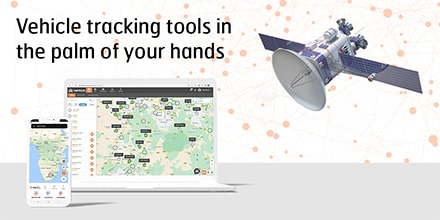
Vehicle tracking tools in the palm of your hands

With today’s technology, having to worry about your fleet is old-school. Vehicle tracking systems have created a world where fleet management has been made easier. Get peace of mind with vehicle tracking from dispatch to delivery, all in the palm of your hand.

Technology continues to make our lives easier. Today, smartphones give us access to the online world and even our household appliances like washing machines. One of the tech creations that has completely transformed the fleet industry, is GPS tracking! Fleet companies are now in the know of their entire operations from beginning to end. 

The real question is, how do you get the best vehicle tracking software with so much to choose from? By the end of this blog, you will know exactly what GPS vehicle tracking is, what to look for in vehicle tracking software and how your fleet business will benefit from vehicle tracking.  

What is a vehicle tracking system?

A vehicle tracking system is software used to determine the exact location of a vehicle at any given time. To receive real-time insights on the geographic position of a vehicle, a vehicle tracking device is connected to the vehicle and uses GPS technology.

How exactly does GPS tracking work?

Okay, let’s break it down: GPS, which stands for Global Positioning System, is a satellite constellation supporting high accurate positioning, navigation and timing (PNT) measurements worldwide. While one of the first satellite positioning systems was initially developed in the 1960s for military purposes, GPS became available for public use in 1983. 

Today, GPS has various uses in agriculture, marine surveying, and even fleet management where it is used to determine when, where, and how vehicles are being used, including driver behaviour, maintenance alerts, and more. This is done using the Global Navigation Satellite System (GNSS) network which comprises satellites that are in communication with GPS tracking devices providing information on the location, route, time, and speed of vehicles. 

How do you know you need GPS fleet tracking? 

Let’s unpack fleet tracking a bit more. Fleet tracking refers to a management system that uses GPS to monitor not just a fleet, but also tracked assets. 

Fleet tracking uses telematics technology to collect real-time data from the fleet so fleet managers can monitor and efficiently manage the entire fleet and make strategic operational decisions. 

These are some indications that your fleet business needs GPS fleet tracking:

  • A fleet manager is unable to manage drivers’ tasks and completion rates
  • There is poor visibility over your fleet and drivers, and poor task progression
  • A fleet manager is unable to assign and communicate important tasks in the event of an emergency 
  • A fleet business has poor customer experience due to the inability to reach high customer expectations 
  • Paperwork and signed proof of delivery (POD) get misplaced

4 benefits of fleet tracking 

On the flip side, effective fleet tracking translates to the smooth operation of a fleet business, regardless of the fleet size. In turn, productivity increases, saving the business time and money, and overall, improving the customer experience which is great for any business’s bottom line.

Here are 4 benefits of vehicle tracking for fleet businesses:  

  1. Driver visibility and asset tracking: Previously, fleet managers had no way of knowing the exact geographical location of the fleet and even the completion rate of the deliveries. Now, GPS tracking systems allow fleet managers to create, assign and monitor drivers’ tasks.
  2. Reduced operational costs: Whether it is reducing money or time, GPS tracking allows fleet managers to efficiently manage a fleet, increase productivity and reduce late and incorrect deliveries.
  3. Good customer experience: With vehicle tracking, customers can get real-time tracking of their cargo every step of the way from dispatch to delivery. Upon delivery, customers can sign an electronic POD and receive a delivery confirmation email.
  4. Reduced admin: Vehicle tracking allows fleet managers to reduce admin burdens with the ability to assign tasks, track drivers and fleet, and store electric PODs, all in one place. 

But with so many tracking systems to choose from, how do you know which one is best? Let’s find out. 

How to spot a good GPS tracking software

Vehicle tracking tools come in a variety of shapes and sizes from plug-ins, to hardwired, and battery-operated.  Here’s how to choose the best fleet tracking software: 

  • Find an easy-to-use platform: Simplicity ensures fleet companies don’t exhaust additional time, resources, and energy. Find tracking software that provides everything you need for your fleet in one platform so that fleet managers can focus on expanding the business.
  • Get real-time tracking: Efficiently managing a fleet operation entails having access to the right information at the right time, when it is needed. Get real-time vehicle tracking, including HD video footage, and AI-powered cameras, so fleet managers can use data received to make strategic operational decisions.
  • Mobility is a must-have: The ability to get visibility of the fleet and communicate with drivers from anywhere is essential for a fleet to operate smoothly. This way, you can manage the whole business operation (from assigning tasks to routing and dispatching, to the delivery) in the palm of your hands. 

Get vehicle tracking in the palm of your hand with the Cartrack App

Cartrack provides an easy-to-use vehicle tracking and fleet management platform. Cartrack’s vehicle tracking software puts fleet managers in complete control of your fleet, drivers, and assets.
Let’s take a look at some of the most popular features from Cartrack’s all-in-one fleet management software: 

Live-vision and AI-powered cameras: Cartrack’s easy-to-use video system provides real-time visibility of your fleet, cargo, and drivers. This AI-powered and live-stream camera technology has up to eight internal or external cameras to ensure the safety of your drivers, fleet, and cargo and includes event recording, giving fleet managers insights into driver behaviour. 

Geofence: With an accurate GPS positioning functionality alongside route histories on comprehensive street-level mapping, fleet managers can set up predefined areas (geofences) and receive notifications via SMS and email when vehicles enter or exit these areas.  

Protector: Protector is a Value-Added Service by Cartrack. At a push of a button provided on the Cartrack App or website, drivers can get medical, roadside and car hire services assistance, making their work experience as comfortable as possible. 

MiFleet: MiFleet is an easy-to-use software that can efficiently manage fleet-related operating costs. With MiFleet, fleet managers can easily import fuel transactions, highlight all fuel risks, get informed on possible fraud and investigate ways to save fuel, money, and reduce admin. 

Stolen Vehicle Recovery (SVR): If a vehicle is stolen, Cartrack’s stolen vehicle recovery uses an advanced tracking device to track and recover vehicles. With the support of a highly-trained response team, 

Get peace of mind with Cartrack

Fleet managers’ lives are made easier with Cartrack’s vehicle tracking and telematics platform, and fleet administration system which provides security, safety and control, anywhere, anytime. .  

Contact Cartrack Malawi today for peace of mind in the palm of your hand.

How vehicle tracking works and why you’ll benefit from it

To operate a successful fleet business, vehicle tracking is essential! Vehicle tracking has provided telematics technology to efficiently and successfully operate a fleet business. Let’s find out how it works and why your business will benefit from it.

The development of vehicle tracking systems began in the 1960s. Today, vehicle tracking gives fleet managers and businesses more control over their fleet. Truck, taxi, logistics and car service industries depend on vehicle tracking systems to operate efficiently. However, vehicle tracking goes beyond more than merely determining the exact geographical location of vehicles. Let’s discover what more there is to vehicle tracking.  

vehicles need a tracking system

Why do vehicles need a tracking system? 

The name says it all, a vehicle tracking system allows you to track the geographical location of your vehicle(s) in real-time. Thanks to innovation, vehicle tracking systems now go beyond just determining the exact location of a vehicle at any given time to collecting data and providing detailed reports on driver behaviour, vehicle maintenance, vehicle trip history, and even vehicle fuel consumption and management. 

For vehicle tracking to work, a GPS tracking device is required. This is a small, portable unit that is installed on a vehicle (or even asset for tracking) enabling you to track the exact location of the vehicle or asset and receive information about when, where, and how your vehicles are being used. 

Sounds similar to in-car navigation systems, right? But there are highlighting differences. On the one hand, GPS navigation systems show your location on a digital map and give you directions from point A to point B. On the other hand, GPS tracking devices use telematics technology to determine a vehicle’s exact geographical location and trip history, and further store this data in a computer, smartphone, or tablet. 

 Let’s dive into how this smart device works? 

How a GPS vehicle tracking system works

GPS which stands for Global Positioning System, is a satellite constellation supporting high accurate positioning, navigation and timing (PNT) measurements worldwide. GPS tracking systems use the position of three or more satellites from the Global Navigation Satellite System (GNSS) to determine an exact geographical location.  

There are different ways that a GPS vehicle tracking system can work. Active or commercial tracking systems provide real-time view of the geographical positioning of a vehicle while passive tracking systems or GPS loggers do not offer real-time tracking. Instead, they simply collect and store a vehicle’s GPS location and data on trips based on specific events to be viewed at a later time. 

Although both active and passive vehicle trackers are the same GPS devices, they have different functions. Fleet managers use active tracking systemsto monitor drivers ’ real-time locations and drivers’ behaviour. Whereas passive tracking systemsprovide fleet managers with data and information on the fleet vehicles’ geographic locations, driver behaviour, and other vehicle insightswhenever they need access to the information and data. 

How can vehicle tracking systems be used?

Because there are different vehicle tracking devices, there should be different ways vehicle tracking systems are used. Let’s explore the different scenarios in which vehicle tracking systems can be used:

  • To track a fleet: You are a fleet manager and you want to know the exact geographic location of your drivers and fleet. To make matters worse, customers are unsatisfied with the business’ services; complaints include late or no deliveries and missing or damaged assets. And if that’s not enough, you have piles of paperwork to deal with, including missing and unsigned proof of deliveries (PODs). 

In this case, fleet managers often use GPS tracking to monitor the whereabouts of the vehicles. With vehicle tracking, fleet managers have a simplified and uncomplicated way to manage and oversee vehicles. Fleet managers receive information on where drivers and vehicles are at any given moment, where drivers have travelled throughout the day, the deliveries that have been completed as well as electronic PODs. 

  • To keep an eye on your car: You are a car owner and need peace of mind that you will find your car exactly where you parked it. You want to have fun, live life, shop and have lunch with friends without having to worry about the security of your vehicle every second. 

You can use GPS tracking to stay informed about the exact geographic location of your vehicle at any given time, receive notifications in the suspicion of idling, and if yourvehicle is stolen it can be tracked and recovered.  

  • To access data and information when needed: You are a fleet manager and you are looking for an affordable tracking system that will provide you with the information and data you need to increase productivity, increase customer service, and effectively manage and maintain vehicles.

In this scenario, vehicle tracking is used to monitor vehicle mileage for the fleet businesses, access data and information that will assist in improving driver behaviour and reducing the misuse of vehicles. 

3 fleet management challenges solved by fleet tracking 

The purpose of fleet tracking is to collect data about a fleet using telematics technology. Fleet managers can use fleet tracking to help solve fleet management challenges. The following are three common fleet management problems that can be solved with fleet tracking:

  1. Driver accountability: Accountability can be defined as the willingness to accept responsibility or to elucidate one’s action. Fleet managers need the ability to confirm that drivers have completed tasks as expected, at the time specified and location. Real-time GPS tracking is the solution to this problem. Fleet tracking helps fleet managers set clear expectations for drivers and allows them to focus on achieving their goals and tasks.
  2. High customer expectations: With efficient delivery options such as one-week, one-day or even same-day, customer expectations have risen over the years and so have competitors. However, vehicle tracking systems have made it easier to meet high customer expectations. With vehicle tracking, fleet managers can optimise routes for drivers ensuring that deliveries are made on time and track assets from dispatch to delivery.
  3. High operational costs: From fuel usage to vehicle maintenance, vehicle theft, and even time, fleet-related operation costs can get extremely high. Vehicle tracking provides fleet managers with the information needed to monitor fleet operation costs and efficiently manage the fleet to reduce operational costs.  
benefits of vehicle tracking

9 benefits of vehicle tracking

The obvious benefit of vehicle tracking is that it provides real-time tracking of vehicles, this is a basic function that makes way for more benefits of vehicle tracking. There are more reasons why your business will benefit from vehicle tracking, here are nine: 

  1. Full visibility of drivers, fleet and assets: Previously, fleet managers had no way of knowing the exact geographical location of the fleet and even the completion rate of the deliveries. Now, GPS tracking systems allow fleet managers to create, assign and monitor drivers’ tasks all in one platform. The ability to oversee your entire fleet operation puts you in control of productivity, service delivery, and costs. 
  2. Reduced operational costs and increased profits: Whether it is reducing money or time, GPS tracking provides actionable insights about how the fleet business’ time, money, and resources are used. This way, fleet managers can analyse operating expenses and reduce unnecessary costs, time wastage,, and increase profits.
  3. Decrease vehicle downtime: Fleet vehicles are either on the road everyday (whether for long or short distances) or in some instances not in use for long periods. Whatever the case may be, vehicles cannot curb the need for regular maintenance or else they suffer from damages such as wear and tear and engine faults. 

With vehicle tracking, fleet managers receive diagnostics and alerts to ensure that potential vehicle damages are identified and vehicles get maintenance regularly. This information reduces vehicle downtime and the risk of vehicles breaking down while the drivers complete tasks and deliveries. 

  1. Increased customer satisfaction: Vehicle tracking does not only increase customer satisfaction by increasing productivity through clear task allocation and task progression tracking but it also enhances the customer experience by involving customers every step of the way. With vehicle tracking, customers can get real-time tracking of their cargo from dispatch to delivery. This allows both fleet managers and customers to communicate and stay informed on any emergency changes to the delivery. Customers can further efficiently sign electronic PODs and receive a confirmation email.
  2. Theft prevention: Another reason why fleet businesses benefit from vehicle tracking is that it provides the ability to retrieve stolen vehicles. Vehicle tracking systems help reduce vehicle theft-related crimes by making it easy and accessible to track the whereabouts of vehicles, this saves financial and resource losses that could be incurred from vehicle theft.
  3. Seamless fleet management: With vehicle tracking, fleet managers don’t only get a birds-eye-view of the whole fleet operation in real time, but they can further seamlessly create, assign and track tasks. The ability to easily assign and track tasks leads to higher productivity, a reduction in incorrect or late deliveries, and reduced operational costs.

    A game-changing benefit of vehicle tracking for fleet management is the ability to communicate efficiently in case of an emergency. When unexpected situations occur fleet managers can communicate changes with drivers, quickly decide which vehicles to send where, or decide on the best alternative routes for drivers.

  4. Minimise paperwork and admin: Managing hand-written paperwork can be stressful and time-consuming. With vehicle tracking there is no need to manually create timesheets, create receipts to record payments, or fill out and search through piles of paperwork. Vehicle tracking allows fleet managers to reduce admin burdens with the ability to assign tasks, track drivers and fleet, and store electric PODs all in one place.

The cut-down of paperwork and admin boosts employee productivity as it lifts the paperwork and admin burdenfrom employees and allows them to fully focus on completing tasks. 

  1. Increase driver accountability: The ability to seamlessly create, assign, and track tasks ensure that there are clear expectations of tasks and work ethic. With access to information and data on the accurate geographic location of vehicles, vehicle trip history and driver behaviour each employee can be held accountable for their work ethic whether good or bad. This way, vehicle tracking can foster a culture of accountability, integrity and honesty, and reduce internal and external conflict.
  2. Improved driver safety: Driver safety should be a major priority for fleet businesses as the success of the business is dependent on the drivers’ ability to efficiently and safely complete tasks. Road safety risks on the other hand can lead to accidents, driver injuries, legal issues as well as financial losses.

There are many ways vehicle tracking enhances driver safety. Some of the ways include route optimizationallowing fleet managers to create the most cost-effective, time-saving, and safe route for drivers no matter the size of the fleet business, camera solutions to monitor driver behaviour as well as driver assistance in case of emergency. Vehicle tracking tools can also allow fleet managers to monitor poor driver behaviour such as speeding, harsh braking and acceleration. 

Why you need a tracking device for your car

Regardless of being a fleet manager or a fleet business owner, getting a vehicle tracking device is beneficial as it allows you to personally monitor the geographical location of your car, at any given time. 

Here are some reasons why you should get a vehicle tracking device for your car: 

  • To ensure the security of your car at all times. 
  • To be alerted if your car is being tampered with or is stolen. 
  • To remotely deactivate your car’s ignition to prevent theft. 
  • To get quick assistance in the event that your car is stolen.
  • To recover your stolen vehicle.  
  • To receive reports on maintenance, driver behaviour, and vehicle trips.

This may sound like a whole lot of admin but it isn’t. All the above can be done remotely, on your smartphone, with the Cartrack App. 

Boost your business with Cartrack GPS features

Boost your business with Cartrack GPS features ‍

Cartrack provides an easy-to-use platform that allows fleet managers to oversee the entire fleet operation all in one place. Cartrack features ensure that fleet managers run the fleet as best as possible at the lowest costs, ensuring that your business reaps the rewards.  

Below are some Cartrack features that allow fleet managers to monitor fleet vehicles, driver behaviour, fuel usage, and more: 

  • MiFleet: With MiFleet, fleet managers can manage their fleet, drivers, and fleet-related costs efficiently. MiFleet is easy-to-use software which allows fleet managers to monitor fuel transactions, be alerted on fuel risks, get informed of possible fraud, investigate ways to save fuel and money, and reduce admin. 
  • Geofence: Geofence uses accurate GPS positioning to set boundaries on certain areas that vehicles are restricted from crossing. With this Cartrack feature, fleet managers can monitor when vehicles enter or exit the pre-set geographical boundaries by receiving a notification via SMS and email. 
  • AI-powered cameras: Cartrack’s easy-to-use vehicle video cameras provide fleet managers with real-time visibility of their fleet, assets, and drivers. With this AI-powered and live-stream camera technology fleet managers get event recordings as well as information and data that provide critical information to improve driver behaviour and productivity. 
  • Routing: This is a Cartrack feature that allows fleet managers to easily set, optimise and manage predefined routes for fleet vehicles to reduce wastage in operating costs. In the case of route deviations, fleet managers receive real-time alerts. This way, fleet managers can ensure that drivers are sticking to their tasks. 
  • Stolen Vehicle Recovery (SVR): SVR is a Cartrack feature that can save fleet business financial losses from vehicle theft.

Get 24/7 vehicle tracking with Cartrack ‍

Cartrack offers fleet businesses and car owners a variety of packages with various vehicle tracking features. This way you can find a package that is best for you based on your personal or business needs.

‍Contact Cartrack Malawi today!