7 Proven Strategies for Fuel Reduction to Cut Fleet Costs
Published
Reading time
7 minutes
Blog
Fuel Efficiency
Key takeaways:
Fuel prices are way up, so you’ve got to find smart ways to protect your profits
High-tech tools like fuel probes and GPS help you spot theft and find the best routes
You can save heaps of money just by keeping your vans well maintained and not overloading them
When you track how your team drives, it makes it easy to stop fuel-wasting habits
Some strategies for fuel reduction include route optimisation, fuel probes, preventative maintenance, telematics systems for driver monitoring and stopping unnecessary idling. If you’ve got a fleet, the chance that you’re looking for strategies to reduce fuel is probably pretty high.
And if you’re not… Data shows that in Malawi from 2020 to 2026 fuel prices have increased significantly, with petrol and diesel prices more than doubling over this period due to currency pressures and global oil price fluctuations.
These stats prove just how important it is for fleet owners to find ways to reduce fuel usage as much as possible so that your profits can still remain high. At Cartrack we know how important this is to you. In this blog we’ll break down the top strategies for fuel reduction and how we can help you keep your costs low and your profits high!
What are the top 7 strategies to reduce fuel in your fleet?
One of the main strategies to reduce fuel wastage is by installing fuel probes in your vehicles. This is how they work:
The probe floats in your fuel tank and measures your fuel levels
It send a message to your fleet pages letting you know when your tank is almost empty and when it’s being topped up
If fuel suddenly drops when the vehicle isn’t in use, you’ll get an alert
Fuel probes make sure that as the fleet manager, you’ll always know what’s happening to the fuel in your vehicles.
2 – Optimising your routes
Something you may not be aware of that’s wasting your fuel is the routes your drivers are using. By installing an advanced GPS system, you’ll be able to optimise the routes your drivers take.
You can save fuel with GPS-assisted routes by:
Avoiding high-traffic routes that keep your drivers sitting idle
Maintenance is often overlooked as a reason for fuel loss. Factors such as:
Underinflated tyres
Clogged air-filters
Old oil
Worn-out spark plugs
Dirty fuel injectors
All of these cause your vehicles to not run optimally and end up wasting fuel. When you implement a telematics system that assists you with predictive maintenance, your fleet will be on top of their game!
Preventative maintenance warns you of all the issues mentioned above before they actually start to affect your fleet. Not only saving you fuel but time as well!
4 – Stop idling
Idling burns your profits and fuel. Don’t believe us? Check this out:
According to WearCheck, an 8000 cc diesel truck idling at 650 rpm burns about 0.8 litres per hour. If you have a fleet of 50 of these trucks and each idles for around 1 hour per day, they could waste up to 40 litres of diesel daily. Over a full year of operations, this adds up to approximately 10 000 litres of fuel, which at current Malawian diesel prices (~MWK 4 900 per litre) could cost your fleet around MWK 49 million annually in wasted fuel. Proper idle management and driver training could therefore save a significant portion of this expense.
5 – Driver gamification
Your drivers play a major role in ensuring fuel isn’t being wasted. By motivating them through gamification, you can achieve this.
You can motivate and create healthy competition in your team through:
Cash incentives
Days off
Free meals
Recognition (Driver of the month)
6 – Using the right-size vehicle
A common oversight that wastes fuel is not using the right-sized vehicle for deliveries. This means not using your heavy-duty truck to deliver one fridge and not overloading your bakkie with all the stock in your warehouse.
Both overloading a small vehicle and underloading a heavy vehicle cause you to waste fuel and damage the lifespan of the vehicle.
7 – Installing a fuel management system
A fuel management system is the best way to monitor fuel usage in your entire fleet. By having the data all in one place, it makes your job as a fleet manager so much easier as well! And the best thing? This system can assist with almost all of the above strategies!
How to turn data into diesel with Cartrack’s MiFleet
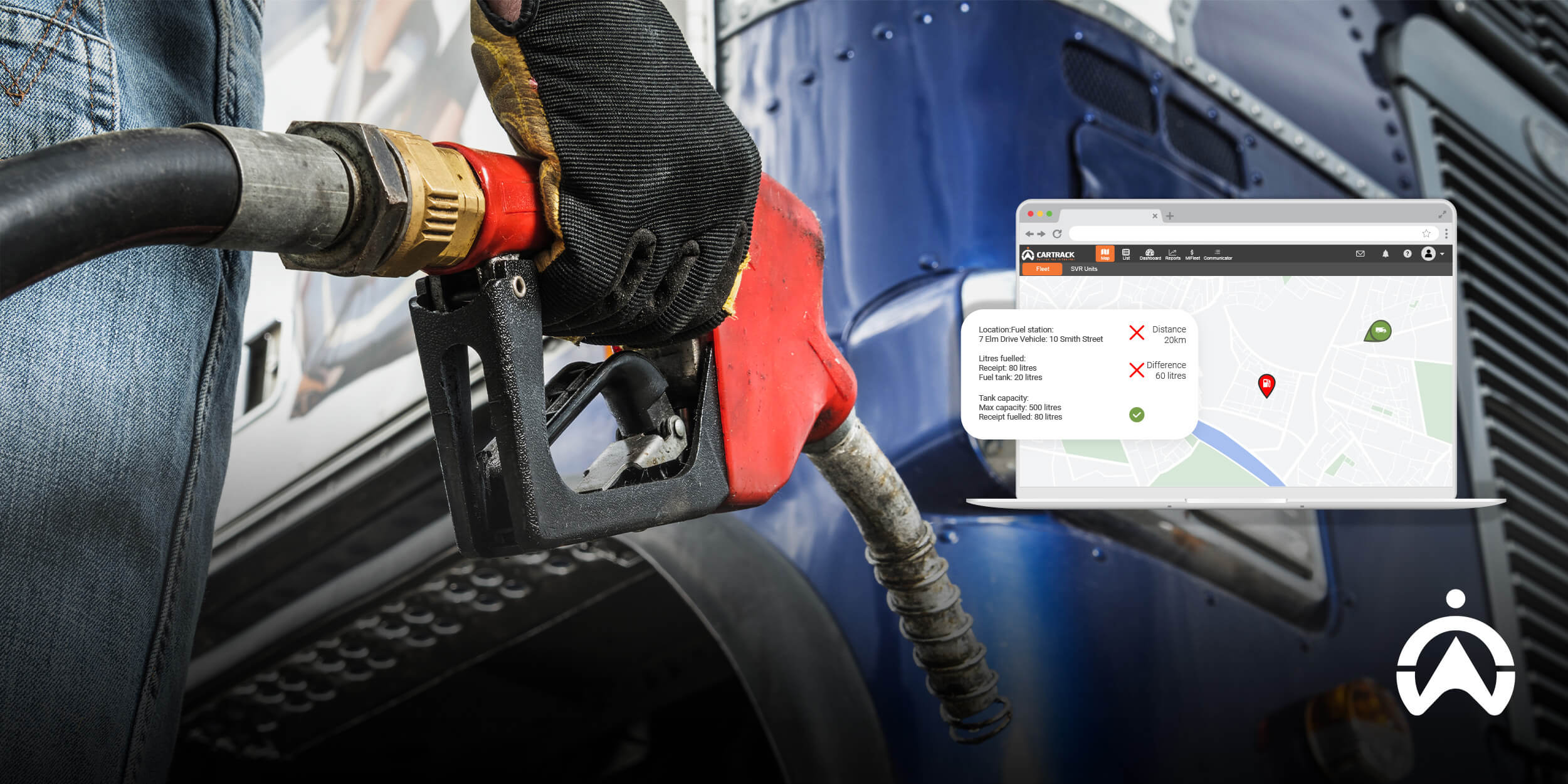
With Cartrack’s value-added MiFleet software, you’ll be able to turn your data into diesel. How? Well, according to studies, fleet management tools like MiFleet can reduce your fuel costs by up to 15%! MiFleet matches fuel spend with telematics data to pick up fuel usage patterns, so you’ll be able to easily detect excessive idling and fuel fraud.
MiFleet reduces admin mistakes
Unfortunately small errors can cost your business thousands. Lost slips or manual typing errors when calculating the entire fleet’s fuel spend are common mistakes that businesses face.
MiFleet stores all of your fleet costs and important documents in one place. Your drivers can snap a pic of their fuel slip, fuel gauge and the fuel pump readings on the driver app. You can then instantly approve or flag the transaction.
This makes your life less complicated, because all fuel slips will be automatically uploaded onto your dashboard, meaning no more lost slips and no more manual data entry errors!
MiFleet will keep track of the data and let you know in advance which truck is due for what. This means your trucks will always be running at peak efficiency, ultimately lowering fuel usage across your entire fleet!
If you’re ready to stop guessing where your gas is going, contact us today so we can take every byte of data in your fleet and turn it into extra kilometres on the road!
FAQs
Does the type or quality of fuel really impact my fleet’s consumption?
Yes, the type/quality of fuel does really impact your fleet’s consumption. Lower-quality fuel usually has water and dirt in it, which will damage your fuel injectors. This means you’ll end up forcing your engine to burn more fuel to keep up its power.
How much does “hidden” vehicle weight really cost me?
Hidden vehicle weight can reduce your fuel economy by 1% for every additional 45 kg added to the vehicle. So try not to keep any unnecessary equipment in your vehicles, and encourage your drivers to keep their trucks clean, because even the weight from dirt and debris can play a role.
Beyond driving habits, what “silent” operational factors affect my fuel bill?
Beyond driving habits, the most common “silent” operational factor that affects your fuel bill is poor weight distribution. If you unevenly load a trailer, you’ll affect the vehicle’s aerodynamics and increase the resistance on some of your tyres, meaning more fuel will be used.
Other articles for you
How Much Diesel Does a Truck Lose to Overnight Idling?
Blog
9 minute read •
A diesel truck loses anywhere between 24 and 32 litres to overnight idling, assuming you’re looking at an 8-hour overnight period. Because trucks are larger, they’re expected to lose at least 3-4 litres per hour, though the total number depends on the make & model of the truck, as well as the reason for idling. […]
The Impact of Fuel Price Volatility and How to Manage It in Your Business
Blog
8 minute read •
Managing the impact of fuel price volatility in your business is about adopting a fleet management system and smart strategies to help you stay operational. The impact is typically seen in reduced profits and increased operational costs. When you manage fuel volatility, you optimise processes, save on fuel costs, and keep yourself and your drivers in tune with fuel-saving techniques. As of April […]
What Is Fuel Calibration and How Does It Help You Monitor Fuel in All Types of Vehicles?
Blog
11 minute read •
Fuel calibration is the process of matching the raw data with the actual volume of fuel in a tank while considering each tank’s unique shape and size. You can upgrade your current fuel monitoring systems or sensors on all types of vehicles, and this way fuel levels can be accurately monitored and inefficiencies identified. According […]
 South Africa
 Botswana
 Kenya
 Namibia
 Mozambique
 Nigeria
 Swaziland
 Tanzania
 Zimbabwe
 Hong Kong
 Indonesia
 Singapore
 Malaysia
 Philippines
 Thailand
 New Zealand
 Vietnam
 Poland
 Portugal
 Spain
 United Arab Emirates