From a young age, our parents and teachers caution us that seat belts are vital to our safety. Our mother or father reminds us to fasten up whenever we get into the car.
But, as we grow up and get behind the wheel, we relax. Those warnings we heard as children began to fade. We forget that those few seconds we take to buckle up could make a world of difference.
Keep reading to re-learn the importance of safety belts.
In this article, you will:
Find out how seat belts save lives and reduce injuries
Investigate how you find yourself in hot water with the law if you are not fastened in
Grasp how failing to strap in can increase insurance and health costs
Find out how seat belt safety can enhance company safety culture
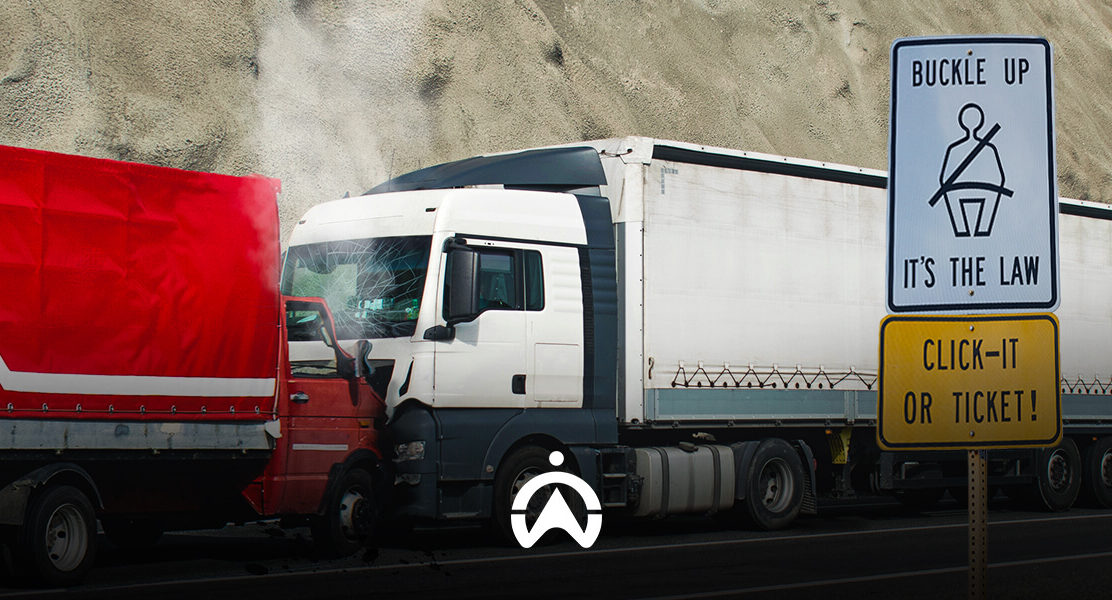
Seatbelts are the number one way to help prevent fatality and severe injury. They virtually cut the odds in half! These safety belts prevent people from ejecting or being thrown around the vehicle’s interior. When flung around inside cars, drivers or passengers can slam into each other. This impact can cause significant physical harm. Fastening your safety belt will also ensure that individuals do not hit their heads and become unconscious. This is especially true for those behind the wheel, who could easily bang their heads on the dashboard.
Effectiveness of Seatbelts
Fatality Reduction: The World Health Organization reports that wearing a seatbelt can reduce the risk of fatal injury by 40-50% for drivers and front-seat passengers, and up to 75% for rear-seat occupants.
General Impact: Road traffic injuries are a leading cause of death globally, with an estimated 1.24 million deaths annually. Malawi faces a significant burden from these injuries, highlighting the importance of effective safety measures like seatbelt use.
Current Seatbelt Usage Rates
Overall Usage: A study indicated that theoverall rate of seatbelt use in Malawi is approximately 35.8%, which is among the lowest in the world.
The percentage of vehicles that utilise seatbelts varies by category; light commercial trucks (24.2%), minibuses (17.0%), and large commercial trucks (11.5%) have the lowest percentages.
Enforcement and Compliance Challenges
Despite mandatory laws requiring seatbelt usage for all vehicle occupants, enforcement remains weak. This lack of strict adherence contributes to high injury rates among passengers who don’t use seatbelt.
That said, many people choose to believe otherwise, while some are even quite wary of seatbelts.
For example, many think that airbags can replace belts. But, they are only efficient when combined with seatbelts. If they are used independently, they cannot safeguard drivers from severe consequences. There are also valid concerns over rare seatbelt injuries, such as shoulder, abdominal and vascular injuries. However, this is a significant minority of cases. It is not worth getting in the way of keeping you and your passengers’ lives safe.
The roads of Malawi pose unique risks
Malawi’s streets have tricky characteristics that make it vital to fasten up. From reckless driving to potholes and hijacking, Africa’s wild roads present many challenges, three of which you can take on below.
Drinking and driving: You may travel with care while on the road. But, the uncomfortable truth is that not everyone shares this sentiment. In Malawi, drinking and driving is a problem, leading motorists to throw caution to the wind.
Potholes and bumpy terrain: Potholes are a massive cause of irritation for many Malawians, and who can blame them? These holes can damage vehicles. Plus, Arrive Alive says that some can cause crashes, sometimes even to the point of fatality.
Hijacking: A standard hijacking method is to drive in front of the motorist rapidly. This approach causes them to swerve off the road. Fastening those belts helps those behind the wheel avoid hitting their heads during this moment. They then remain conscious, alert, and capable and can take action, such as calling law enforcement.
You could find yourself in hot water with the law
No one likes getting in trouble with the law, and as everyone knows, not wearing a safety belt is illegal. Find out more about the laws around buckling up and why you should always adhere to them.
Malawian seatbelt laws: Malawi has many laws about buckles. Significant ones for everyday driving include:
No one may drive on a public road without a seatbelt.
No one can drive on a public road with a car whose seatbelts are not in working order or correctly fitted.
Safety belt-related fine is MWK 5,000.00
Where responsibility lies:
The law states that those controlling the wheel are solely responsible for ensuring everyone straps in.
If a fleet driver gets into legal trouble, the company must pay the relevant fines. This responsibility is imposed by common law, ‘Vicarious Liability.’ It means that employers are responsible for their employees’ offences. That said, the company can hold them internally accountable.
Increases healthcare and insurance costs
As we know,avoiding seat belt safety increases the risk of injury severity. The higher the severity, the higher the insurance and healthcare costs. If you choose not to buckle up and are hurt in a car accident, you may not receive the best compensation from your insurance company. They could even go as far as to deny your coverage, claiming negligence.
Insurance also provides for private healthcare, and in Malawi, the quality of care between private and public sectors is vastly different. You could end up paying out-of-pocket for substandard services.
Improves companies’ safety culture
Safety culture is more than a company pushing a safety-focused policy. It is also a workplace culture with an enthusiastic attitude toward compliance and safety. This cheerful and active approach to security brings many benefits, which you can learn more about below.
Reputation: If potential or current customers hear of fleets having unsafe experiences while on business time, they may choose not to purchase from them. These companies could also lose partners or investors who won’t want to look bad via association.
Strengthen driver safety with Cartrack’s trip history
Whether it’s about buckling up or not, investing in anything that improves driver safety is always a great idea. At Cartrack, everyone can do just that with our trip history feature.With the help of telematics, trip history offers the following:
Trip recording and reports: From duration, distance, routes, stops, departure and arrival times, this feature records every trip in detail. The system records data on these harsh driving behaviours that can be used to understand motorists’ poor habits. These habits include:
Speeding
Aggressive cornering
Harsh acceleration
Harsh braking
Benefits for everyday drivers: Trip history can help you and your loved ones analyse and improve one’s own or each others’ driving patterns.
Cartrack’s driver scorecards: Driver scorecards are perfect for fleet managers’ coaching needs.They source data via the trip history feature to inform their point system. Fleet drivers lose points on their scorecards if they engage in harsh behaviours. These scores motivate commercial transporters to drive more cautiously. Providing fleet managers with insights into their transporters’ specific weak spots is also a valuable coaching tool. These specifics include speeding, harsh acceleration, harsh braking, harsh turning and excessive RPM (Revolutions Per Minute). These reports vary from one to seven days and an entire month.
Ensure that your fleet straps in with Cartrack’s AI Multi-Vision
With our AI (Artificial Intelligence) Multi-Vision solution, fleet managers can ensure their drivers’ well-being. They can, for example, get real-time knowledge of whether drivers are buckled up. That said, let’s explore many of AI Multi-Vision’s features.
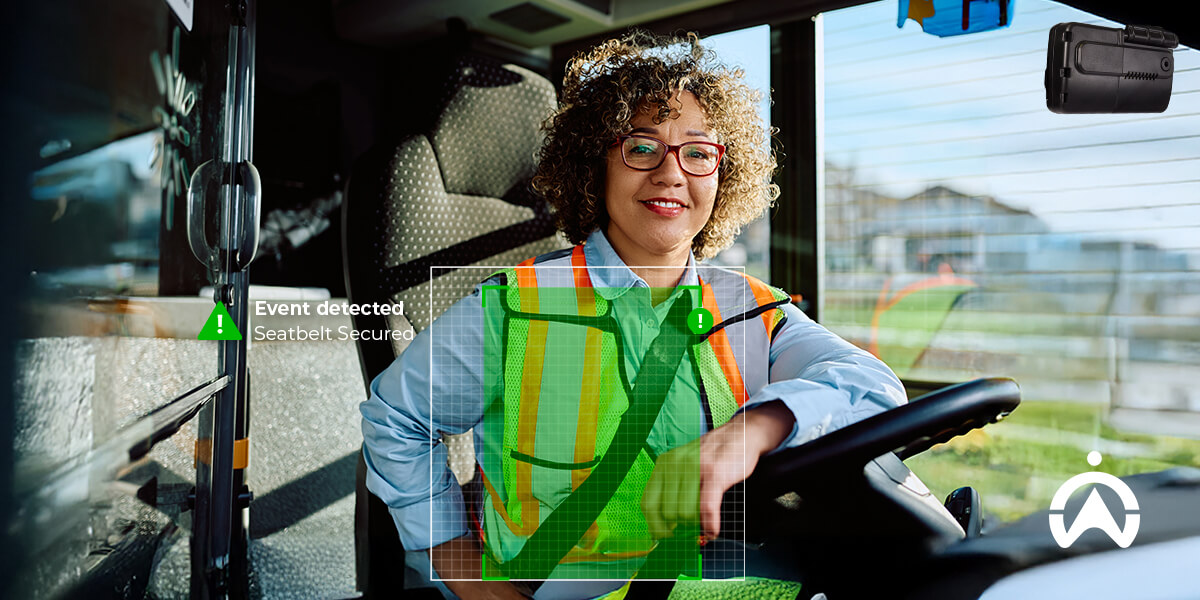
AI Multi Vision is an AI-enabled solution. It allows fleet controllers to protect fleet safety and improve coaching methods. This solution includes up to eight cameras in each vehicle, such as in-cabin road-facing, internal, and external cameras. These come with live audio streaming and direct in-cabin calling and alerts, sent to Cartrack’s web platform and our Mobile App for the fleet manager and other relevant individuals to keep track of. These real-time alerts are for high-risk safety events picked up through AI camera detection. These include fatigue, distraction, smoking, phone use, camera covering, tailgating, and, as stated, seatbelt use.
Regarding safety belt detection, the process is quite similar to all the other events in that the AI camera picks up an event via its specific “trigger.” In this case, the alert is set off when there is no visible sign of them wearing their seatbelt.
Fleet controllers can remotely request footage for evidence, and AI Multi-Vision comes with 13-27 days of recording space. It also comes with free and convenient installation and training.
Next time you get into a car, remember to buckle up. It’s not just a law, it’s a lifesaver. By prioritising seatbelt safety, you’re not only protecting yourself but also contributing to a safer road for everyone.
Want to take your fleet’s safety to the next level? Cartrack’s innovative solutions, like AI Multi-Vision, can help you monitor driver behaviour, including seatbelt usage, in real-time. Contact us today to learn more about how we can help you build a safer and more efficient fleet.
Other articles for you
How Driver Fatigue Detection Systems Work
Blog
11 minute read •
Driver fatigue detection systems work by combining AI power with sensors and/or cameras to monitor driver behaviours while they’re on the road. With those AI capabilities, facial patterns that are associated with exhaustion (like yawning or excessive blinking) are detected, which then trigger immediate alerts that act as an intervention. Analysis shows that infrared camera arrays and […]
Buying a car directly from a private owner is slightly different from buying one second-hand at a dealership. There are important quality features to check that’ll help you match up the car with what you’re paying (or should be paying). Determining the value involves looking at the history, inspecting the current condition, and trusting your […]
To instantly deal with road rage, de-escalation is key. However, driving on Malawian roads is NOT for the faint-hearted. Between the potholes, minibus taxis, motorcycle taxis (kabaza), regular tuk-tuks, elders driving on pure memory, and those massive white UN or NGO 4×4 Land Cruisers who think they own the road, experiencing frustration while driving doesn’t […]
 South Africa
 Botswana
 Kenya
 Namibia
 Mozambique
 Nigeria
 Swaziland
 Tanzania
 Zimbabwe
 Hong Kong
 Indonesia
 Singapore
 Malaysia
 Philippines
 Thailand
 New Zealand
 Vietnam
 Poland
 Portugal
 Spain
 United Arab Emirates